
Active· since Jun 17, 2026
- 90
- days running
- 0
- relaunches
Ad copy
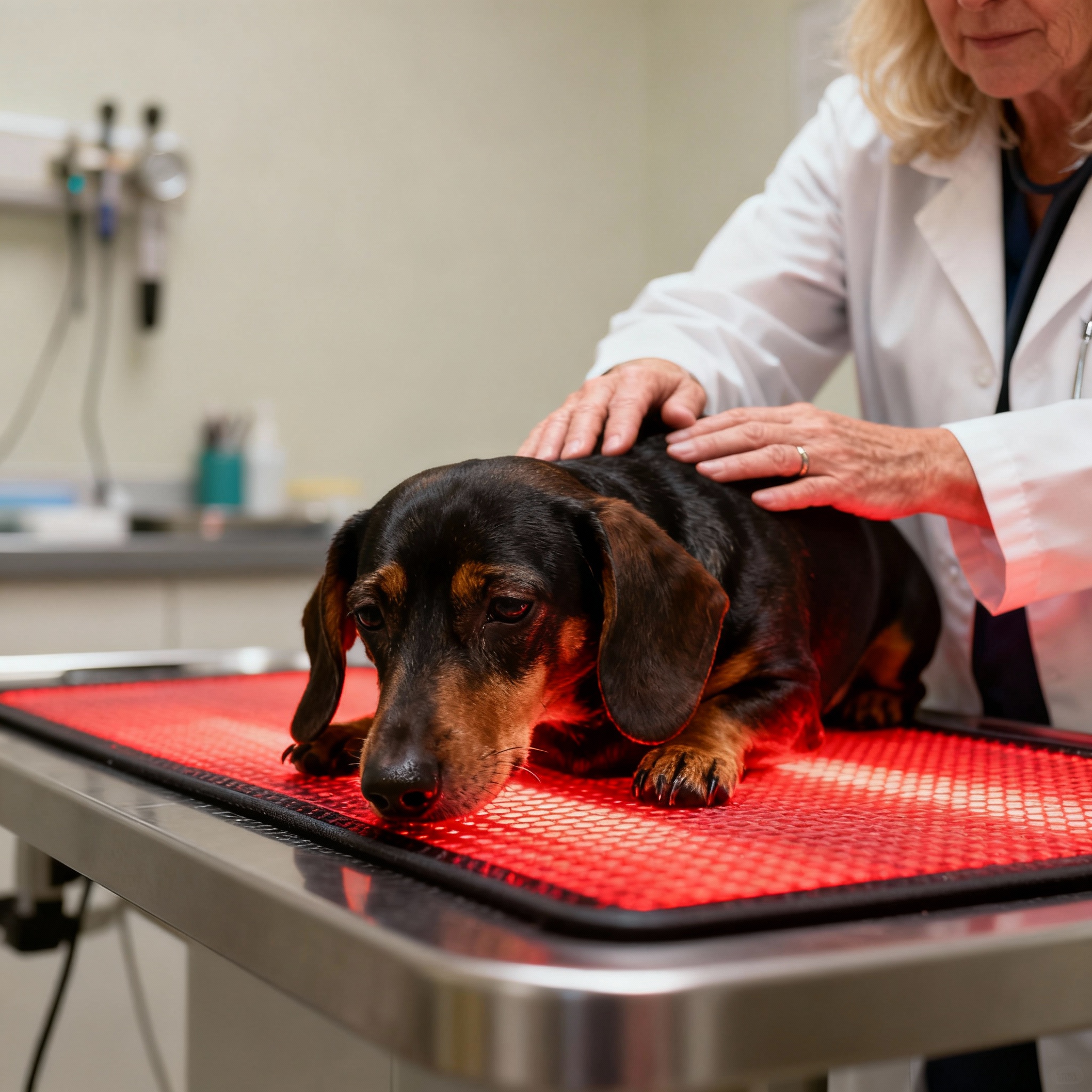
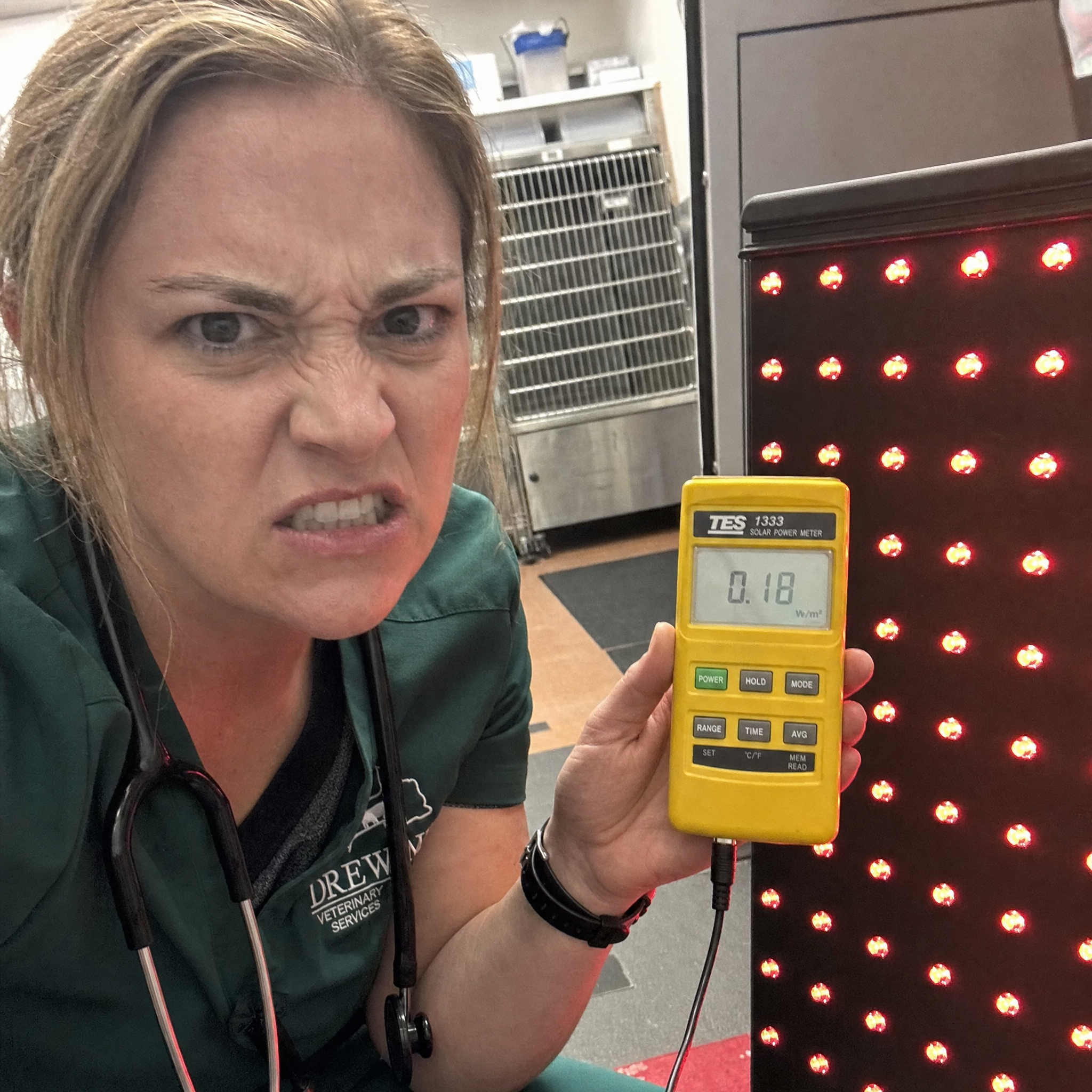
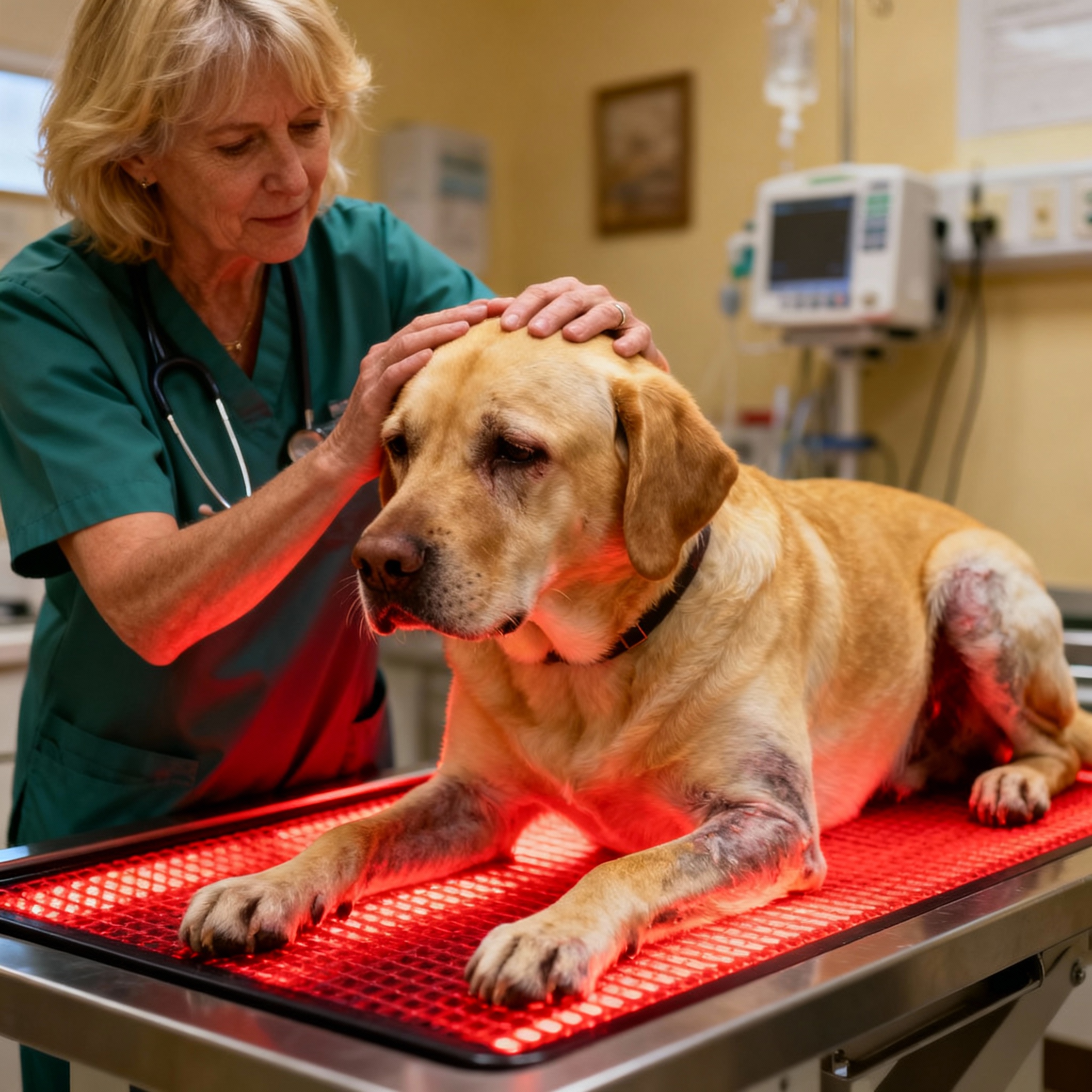
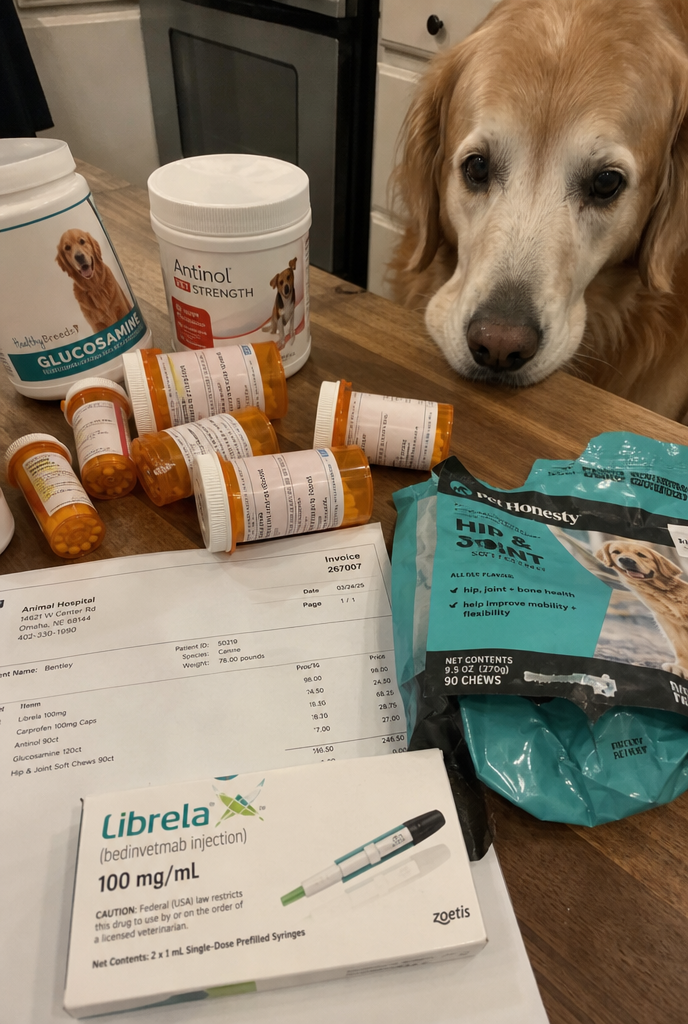
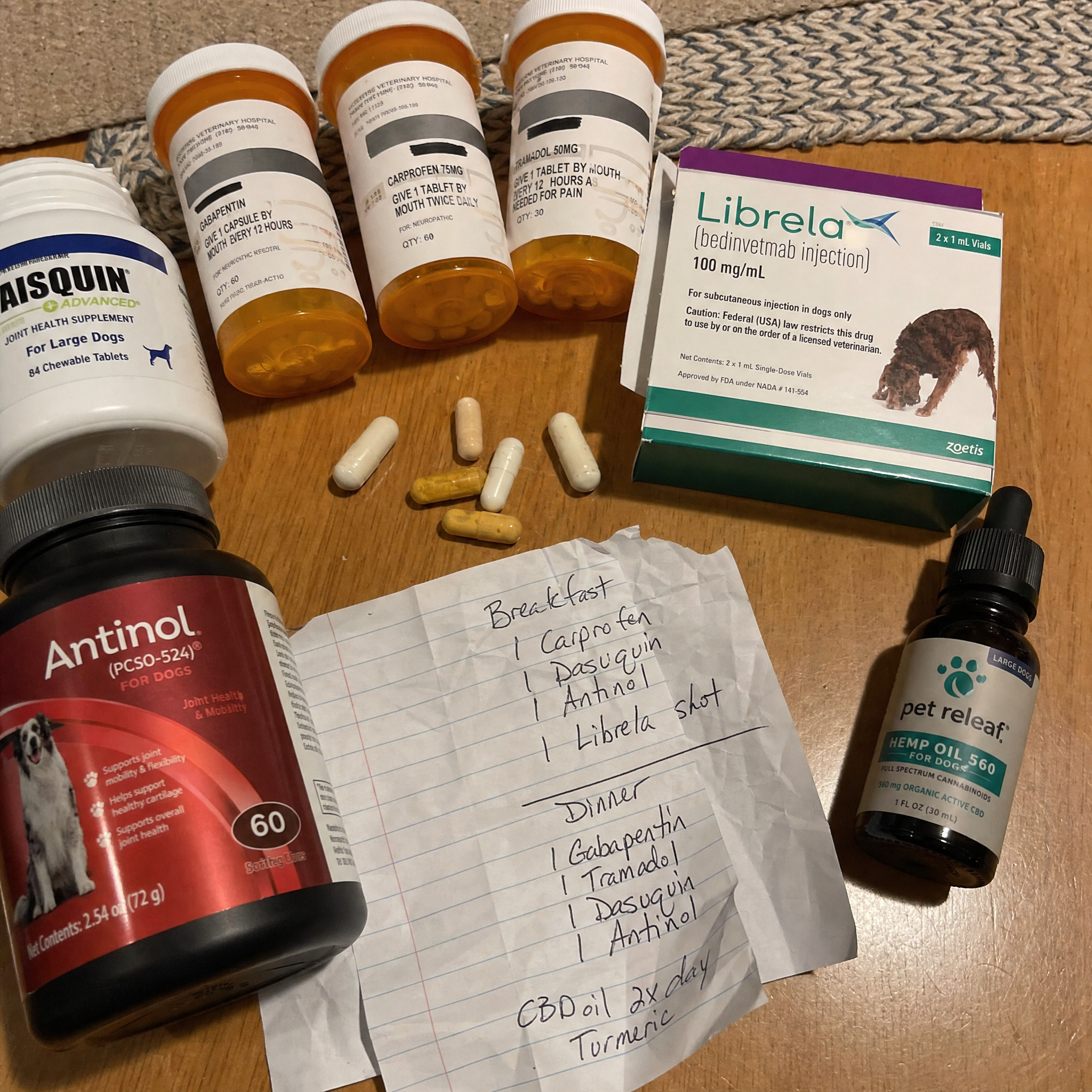
I've practiced general veterinary medicine for seventeen years. In that time I've signed more gabapentin prescriptions for arthritic dogs than I can count. Most of them I'd write differently if I could go back. I'm writing this because I can't keep doing it the same way. And by the end of this, you're going to understand why. There are three things you need to see clearly about how canine arthritis gets treated in this country. 1. Pain meds and anti-inflammatories have been the standard of care in general practice for twenty years. When you walk out of an exam room with a gabapentin script, you're not getting cutting-edge veterinary medicine. You're getting what general practice has on the shelf. 2. Those medications come with side effects we know about, warn you about, and prescribe anyway. Gabapentin causes hind-end weakness in ten to forty percent of dogs. NSAIDs strain the liver and the gut. Librela has its own list of FDA-reported adverse events. And despite all of that, they remain the number one prescribed treatments for canine osteoarthritis. Because in a twelve-minute appointment, this is what we can hand you the same day. 3. There is another treatment with almost twenty years of peer-reviewed veterinary evidence behind it. Every vet I know recommends it. We just can't make it affordable. The clinic equipment costs thousands. The sessions run two to three times a week, indefinitely. So owners say no, choose the medication route, and never come back to ask about it. The science is settled. The profession recommends it. The gap between your dog and the treatment that could replace her medications has, for two decades, been a pricing problem. I want to tell you about a dog named Bear. Because what happened to him is what closed the gap between what I recommend and what owners can afford. And it's the reason I'm writing this tonight. Bear was a yellow Labrador. I'd known him since his first puppy visit. Big blocky head, broad chest, the kind of working-bred Lab you don't see much anymore. His owner was a widow in her late sixties. Her husband had passed two years before Bear came home as a pup, and she told me at that first appointment, with her hand on his head while he tried to chew the corner of my stethoscope, that he was the reason she got out of bed in the morning. I treated him for eight years. Annual exams. Vaccines. An ear infection at three. A torn dewclaw at five. The usual. At nine, he started lifting his right hind when he walked. She brought him in worried. I did the exam. Flexed the joints. Watched his face. Ordered the films. The x-rays came back the way you'd expect a nine-year-old Lab's films to come back. Hip dysplasia, which I'd been monitoring for years. Joint space narrowing. Osteophytes forming along the femoral head. Textbook canine osteoarthritis. Moderate stage. Both hips. I told her what I tell every owner at that point. We'd start conservative. Glucosamine and chondroitin. Omega-3. Weight management. Short walks instead of long ones. A ramp for the car. Track him for three months and come back. She did all of it. She was that kind of owner. Three months later she was back. He was worse, not better. So I told her the truth. For a dog like Bear, at this stage, in this much discomfort, the treatment with the strongest evidence base for reducing joint pain and inflammation outside of pharmaceuticals was photobiomodulation. Red and near-infrared light therapy, delivered directly to the affected joints. I told her I'd watched it bring arthritic dogs off their pain medications across my career. I told her the rehabilitation clinic forty minutes north of us offered it. Class IV laser. Two sessions per week to start. She wrote it down. She thanked me. She drove home. Three days later her receptionist called mine and asked what the cost would be at the rehab clinic. I had my staff get the exact numbers. Per-session fees. Twice a week. The monthly total was more than her social security check could absorb. She lived on her late husband's pension and her social security. She told me later, when she came back in, that she'd sat at her kitchen table with the numbers in front of her and cried, because she'd already known the answer before she did the math. She asked me what the next-best option was. And I wrote her a script for gabapentin. Three hundred milligrams three times a day, dosed conservatively to his body weight. I told her it would quiet the pain signaling from his hips. I told her some dogs get drowsy on it but they usually adjust. I told her exactly what I'd been trained to tell her. Exactly what the formulary says to tell her. Exactly what I would tell any owner sitting in front of me who couldn't access the better option. Two weeks later her receptionist called and said Bear was sleeping eighteen hours a day and she was worried. I told her over the phone that the sedation was a known effect. That his body would adjust. That if he seemed more comfortable when he was awake, the medication was doing its job. Four weeks in she brought him in. He walked into my exam room and his back end crossed under him. Both hind legs scissoring across each other while his front end tried to move forward. He looked up at me from the floor with his ears flat and I watched a Lab who'd been the smartest dog in any room he ever walked into try to figure out why his own back legs weren't doing what his brain was telling them to do. That was the ataxia. The side effect we warn about. The one I knew the statistic on the day I wrote the script. I told her we could lower the dose. We dropped it to two hundred milligrams three times a day. The wobble eased some. The pain came back. So we added Galliprant. You know how this part goes. Galliprant settled the inflammation in his hips. His stomach went sideways. He stopped eating his food, then ate it too fast and threw it up. His bloodwork came back with mildly elevated liver values which I told her were not yet a concern. Six months from the day I wrote the first script, Bear had spent more of his remaining life sedated and unsteady than he had pain-free. She brought him in and she sat in my exam room with him on the floor at her feet and she asked me if there was anything else. And the answer I had to give her was a dose increase. Or a third medication stacked on top of the two he was already taking. Or a referral to a specialist who would charge her another appointment fee to tell her the same thing I'd already told her. What I didn't have was a single accessible option that would soothe the pain in his hips without putting more drugs into a dog who was already failing under the ones he was on. She put him down on a Tuesday morning. I came in early to do it because I didn't want him sitting in a waiting room. She held his head in her lap and she told him he'd been a good boy and then she looked up at me and she said one sentence I have not been able to get out of my head. She said: "I just wanted to give him more time." I drove home that night and I sat in my driveway in the dark for forty-five minutes before I could go inside. Because I'd done everything right inside a system that had handed her the wrong tools. I'd told her about the treatment that could have helped him. She'd done the math and made the only decision a person on a fixed income could make. And I'd done what every vet in my position does. I'd handed her the next thing on the shelf. And the next thing on the shelf had stolen the back end of his last six months and given them back to her sedated, wobbly, and sick to his stomach. I went inside that night and I started asking a different question. Not whether red light therapy worked. I'd known it worked for over a decade. I'd been recommending it to owners that whole time. The question was whether the same wavelengths, delivering the same effect on joint pain and inflammation, could reach a dog at home, at a price an owner like Bear's could actually pay. Without the per-session clinic fee. Without the forty-minute drive. Without the indefinite weekly visit that had ended his story before it started. Because if it could, then most of what we prescribe gabapentin and NSAIDs for could be calmed at the joint itself. Without the bloodstream. Without the sedation. Without the wobble. Without the GI issues. And the medications could come down. Or in many cases, come off entirely. That's where the rabbit hole started. The mechanism behind why this works is not complicated, and I'm going to give it to you the way I'd explain it across an exam table. Two wavelengths of light have been studied for almost twenty years for their effect on inflamed tissue. Red light at 660 nanometers and near-infrared at 850 nanometers. Both wavelengths penetrate skin and fur and reach the underlying tissue, including joint capsules. Once they reach the inflamed area, they do two things that matter for a dog with arthritis. They directly soothe pain signaling at the joint. Not by quieting the nervous system the way gabapentin does. By triggering the body's own anti-pain pathways at the tissue itself, where the pain is being generated. And they calm the inflammation at the joint itself. Not by blocking it from forming the way an NSAID does, with the liver pressure and GI effects that come with that route. By signaling the inflammatory cells already sitting in the joint to settle down and clear out, with nothing entering the bloodstream and nothing for her body to process. That's what your dog's medications are doing pharmacologically, from the bloodstream, with side effects throughout the body. Red light does it locally, at the joint, with the light source touching the skin over the inflamed area. The studies on this aren't ambiguous. They're also not new. A 2018 trial followed 20 dogs with painful elbow arthritis. They received either red light therapy or a placebo for six weeks. By the end, 9 out of 11 dogs in the light therapy group were able to reduce their pain medication. In the placebo group, not a single dog reduced theirs (https://pmc.ncbi.nlm.nih.gov/articles/PMC6091142/). A 2022 randomized trial compared red light therapy directly against meloxicam, one of the NSAIDs we prescribe most often for canine arthritis. The dogs in the light therapy group showed reduced pain and improved clinical findings comparable to the medication group. Without the medication (https://pubmed.ncbi.nlm.nih.gov/35895799/). A study of 17 dogs with chronic osteoarthritis pain found low-level laser therapy reduced pain across multiple joints, with owners reporting better mobility and less stiffness at home (https://pubmed.ncbi.nlm.nih.gov/32426264/). The dose-reduction finding in that first study is the part I want you to sit with. Nine out of eleven dogs on red light therapy were able to come off some of their pain medication inside six weeks. Zero out of nine on placebo did. That's not a small effect. That's the kind of effect a vet looks at and asks why every owner with an arthritic senior dog isn't being offered this as the first line option. The answer to that question is the per-session clinic fee. So I went looking for whether the same therapeutic effect could be delivered at home. What I'm about to tell you is the part I want you to read carefully, because it's the part that explains why some owners try a red light mat from Amazon, see no result, and write the whole thing off as a gimmick. The consumer market for canine red light devices is full of products that don't deliver what the dog studies measure. I ordered every device I could find with credible marketing behind it. I tested them at my clinic with the measurement equipment we use for our therapeutic laser. Three things have to be right or you're shining a flashlight at your dog. 1. Wavelength. The dog studies use two wavelengths consistently. 660 nanometers for surface tissue and 850 nanometers for the depth where the joint capsule lives. Most cheap mats only emit 660. That's visible red light. It looks impressive when you turn it on. It penetrates the skin a few millimeters and stops. It will not reach a hip joint through fur, skin, and underlying muscle. The dog needs both wavelengths or the joint never sees the light. 2. Power output. The amount of light energy reaching the skin per square meter has to be high enough to push photons through the fur, through the skin, through the soft tissue, and still deliver a meaningful dose at the joint capsule. Underpowered LEDs scatter and dissipate before the light gets where it needs to go. Most consumer mats have the right wavelengths printed on the box and a fraction of the irradiance the studies use. The label is accurate. The output is not. 3. Format. Panels do not work as well as mats for canine arthritis, and the reason is geometry. When you shine a panel at a dog from above, most of the light hits the air around her. For the light to deliver the dose the studies measure, the LEDs need to be in direct contact with the body. A flexible mat that drapes over the back, the hips, or the shoulder sits directly on the spot that needs treatment. The light has nowhere to scatter. It goes straight in. The one that met all three criteria, and that I've now been recommending to my patients for the better part of a year, is LumaPet. Both wavelengths, 660 and 850. Strong total output across a dense LED array. Flexible mat format. Fifteen-minute auto-shutoff. Money-back guarantee. The total cost was less than what the clinic sessions would have cost in a couple of weeks. One device. One purchase. Used at home, on the dog's bed, without an appointment. This was the thing that was missing the day she sat in my exam room and asked me what the next-best option was. I started recommending it to willing patients about ten months ago. Most of the dogs whose owners came to me before the pain had gone severe, who started on the mat alongside a low or moderate dose of gabapentin or an NSAID, have come off the medications entirely over the course of two to three months. Not at my direction. At their original prescriber's direction. Bloodwork stays clean. Behavior improves. The wobble from the gabapentin disappears because the gabapentin is gone. The GI issues from the NSAID disappear because the NSAID is gone. The dog is more comfortable, not less. Most of the dogs whose owners came to me later, where the pain was already severe and the dog was on a high dose of multiple medications, have reduced rather than fully replaced. Half doses. Single medication instead of stacked. Owners reporting their dog is more present, more alert, more themselves on what they're still taking. There's one case I'll tell you about because it's the one that made me certain. A twelve-year-old golden mix. Hip arthritis, both sides, moderate to severe on the films. She'd been on gabapentin and Galliprant for eighteen months. Sedated, wobbly, stomach off and on for the better part of a year. The owner was looking at me the way Bear's owner had looked at me. Asking me if there was anything else. I had something else now. She started the mat the next week. Twenty minutes a night. Six weeks in, we cut the gabapentin to half the dose. The wobble eased within a week. Her dog ate her food again. Started greeting the owner at the door again, which she hadn't done in close to a year. Twelve weeks in, the gabapentin was gone. Bloodwork clean. She was on a low-dose Galliprant for the worst of the inflammation, off it on most days. The owner sent me a video of her dog walking the length of the driveway and back. Slow but steady. No carrying. No stopping. Three months later the dog is still here. Off the gabapentin entirely. It is not a cure for canine arthritis. Cartilage that has already worn down does not grow back. Anyone selling you a cure is lying to you. What it is, is the only at-home tool I've seen that soothes pain and calms inflammation directly at the joint, without putting anything in the bloodstream, at a price point that's actually accessible. I still write the prescriptions when the dog needs them. I'm a vet, not an activist. I'm not telling you to refuse the script your vet writes you. What I'm telling you is that for most of the dogs I see, the script doesn't have to be the long-term plan. It can be the bridge while the mat starts working, and then it can come down, and in many cases it can come off. If your dog is slow to get up in the morning, lifts a hind leg when she walks, hesitates at the bottom of the stairs, has stopped jumping on the bed, sleeps more and plays less. Or your vet has mentioned starting her on gabapentin or Librela in the next few months. Or she's already on one of them, and you've noticed the sedation, the wobble, the stomach issues, the dog you don't quite recognize anymore. If any of that is happening, this is the window. Not in six months when the medication doses have been increased and the side effects have stacked. Right now. The mat I've been recommending is below. Both wavelengths. The mat format that wraps over the hips. The output the dog studies actually use. Money-back guarantee, which makes the downside a return label. Go get it. And give her the rest of her good years as herself, not as a dog held up by a prescription: dogspinehealth.com/pdp
I just wanted to give him more time.
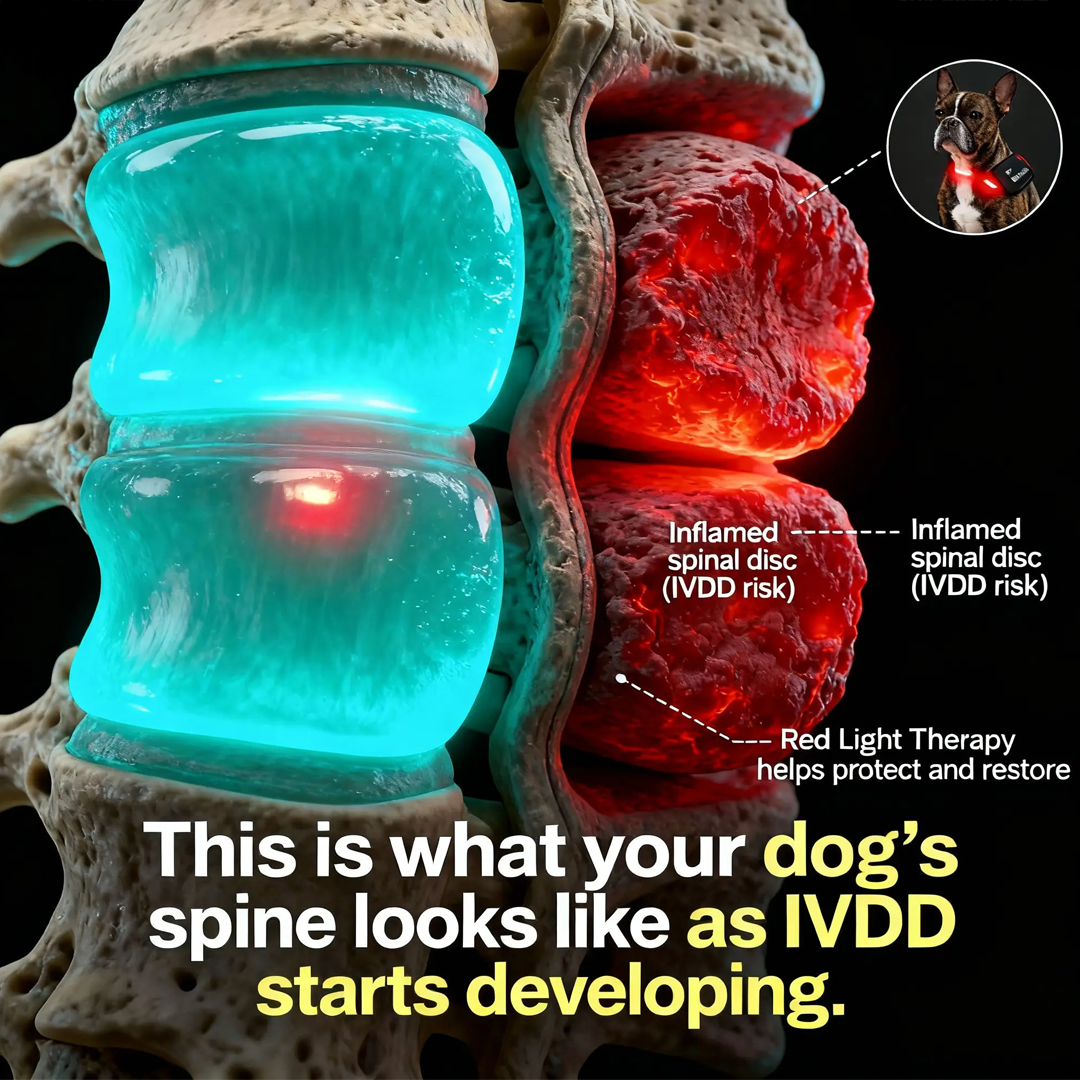
Keep Them Young, Longer: Helps maintain mobility, energy, and playfulness well into their senior years. Relief for IVDD, Arthritis & Back Pain: Reduces inflammation and eases discomfort so your dog can move freely again. Eases allergies & Skin Irritation: Boosts circulation and helps cells r...
SEE DETAILSLike this ad? Make it yours.
Crush rebuilds this exact creative around your product — your brand, your colors, your offer — in about a minute.