Mark Reeves
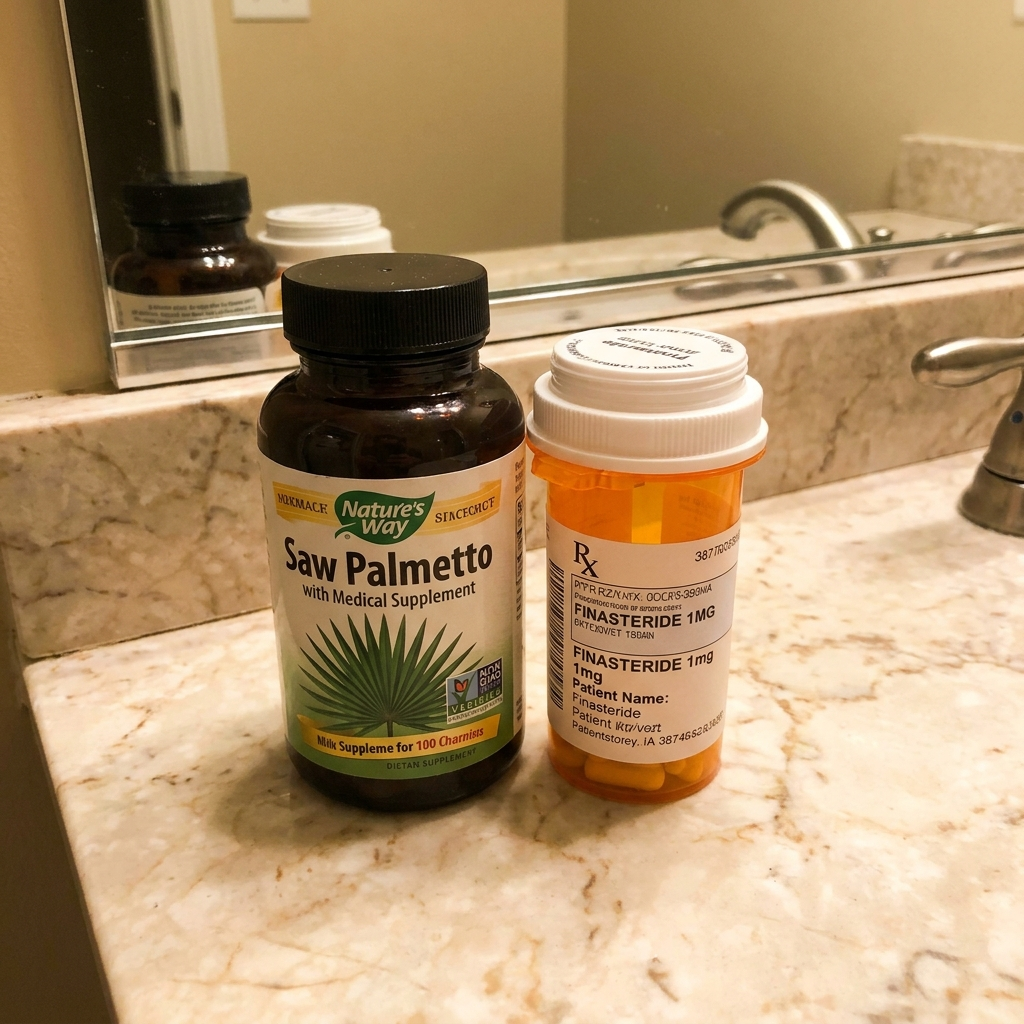
Mark Reeves Facebook ad: “Every prostate supplement on the shelf has the same…”
Ran for 15 days, from August 24 to September 8, 2026, the last day Crush saw it.
Run by Mark Reeves on Facebook. Crush is not the advertiser and does not verify its claims. See this ad in Meta's Ad Library(opens in a new tab)
Want an ad like this for your product?
Crush makes new ad images for your product from this ad: your logo, your product photo, your offer.
Trials from $19.95 USD, then $79.95 USD a month. Cancel anytime.
About this ad
- Meta Ad Library ID
- 2515367422273286
- Platforms
- Relaunches
- 0
Ad text
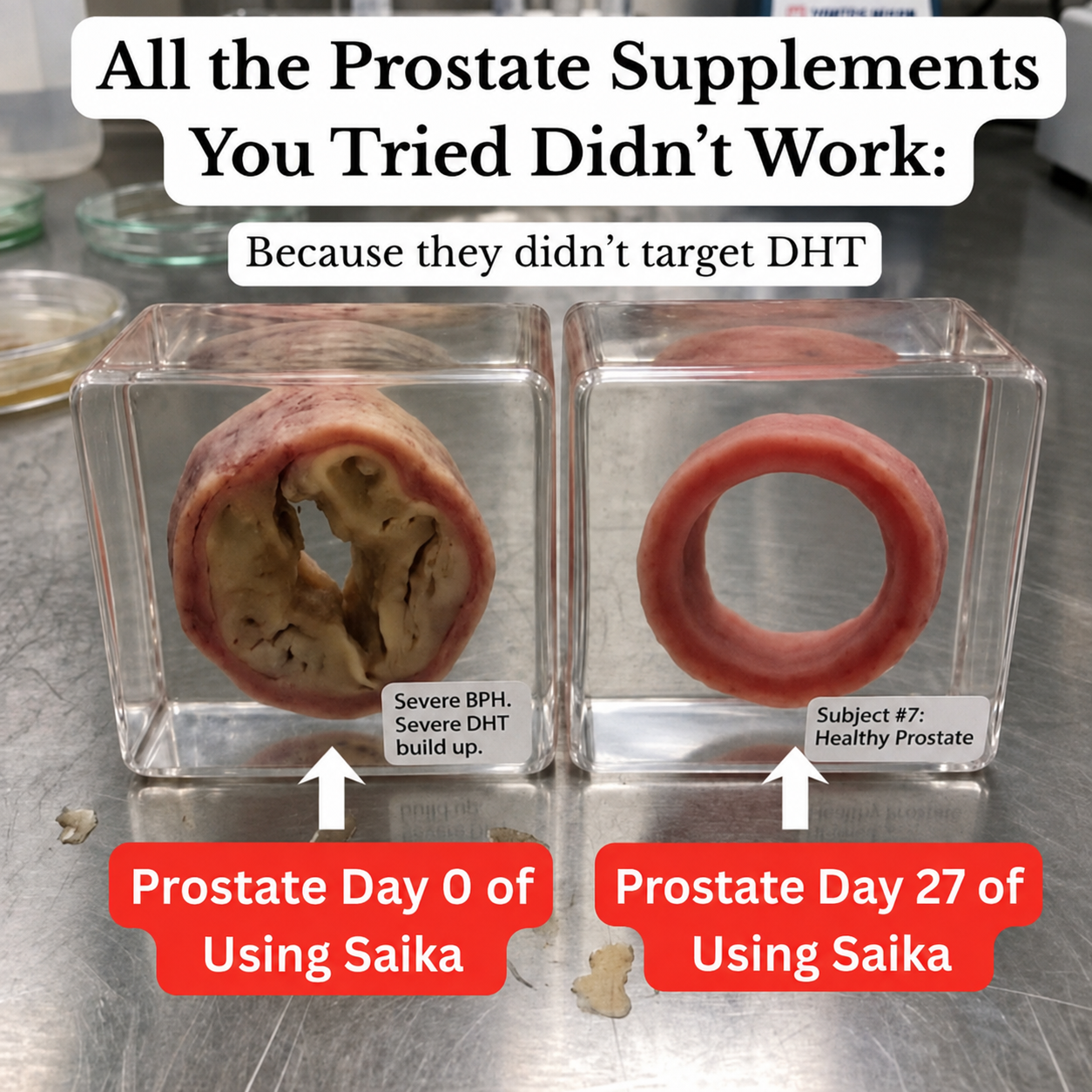
I've been taking prostate supplements for longer than some marriages last. Still getting up 4 times a night. 8 years. I started at 54. I'm 62 now. In those 8 years I've watched my daughter get married, my son finish grad school, and my first grandchild learn to walk. I've changed jobs twice. I've moved once. My wife and I celebrated our 30th anniversary. And I've been swallowing a saw palmetto capsule every single morning for all of it. Different brands. Different bottles. Same ingredient. Same result. I've tried Prostagenix, Uromen, Super Beta Prostate, Snap Prostate Health, and 2 others I can't even remember the names of. I can tell you exactly what they all have in common: they didn't work. Not "they worked a little." Not "they took the edge off." Not "I noticed a slight improvement around week 4." Nothing. Zero change. Same trips. Same trickle. Same standing over the toilet at 2 AM with my hand on the wall waiting for something to happen. 6 brands. Roughly 8 years. I couldn't tell you which I tried first or which I tried last because at a certain point they all blurred into the same bottle with a different label and the same empty promise printed on the front. I need to tell you this story because I wasted 8 years inside it and I don't want you to waste one more month. I started with saw palmetto at 54. My wife's brother had been taking it for a year and said it helped. So I picked up a bottle at CVS. $14.99. One capsule a day. Easy. At that point I was getting up twice a night. Twice. That was it. The stream was slower than it used to be — not alarming, just noticeable. The kind of thing you mention to your doctor and he says "that's normal at your age, keep an eye on it." So I kept an eye on it. And I took the saw palmetto. And I waited. After 3 months nothing had changed. But I wasn't worse, either. So I told myself it was working — holding the line, keeping things from getting worse. I told myself that for a year. I told myself that because admitting the pill wasn't doing anything meant admitting I didn't have an answer and I wasn't ready to admit that yet. By 56 the trips had climbed to 3. Sometimes 4 on a bad night. The stream had slowed to the point where I stopped using urinals at restaurants because I couldn't handle standing there for 45 seconds with nothing happening while someone waited behind me. I switched to stalls. I started planning. That's when I started shopping. I figured the CVS saw palmetto was too cheap. Too generic. You get what you pay for. So I went looking for the premium version. Prostagenix was first. Expensive. The website had a long story about a man who'd tried everything and then found their formula and his life changed in 6 weeks. I recognized myself in that story. That's what it's designed to do. I bought the 3-month supply. 3 months. $127. Nothing changed. Then Super Beta Prostate. "#1 Urologist Recommended." "Over 10 million bottles sold." The commercials were everywhere — late night TV, morning radio, ads in the magazines at my doctor's office. 10 million bottles. That many men can't all be wrong. They weren't wrong. They were just buying the same ingredient I'd already been taking for 3 years in a different wrapper. I didn't know that yet. I bought it. Took it for 4 months. Same trips. Same trickle. Same hand on the wall at 2 AM. Then Uromen. Different branding. Different story on the website. Same ingredients. I didn't check. I should have checked. I just read the testimonials and ordered because I wasn't ready to stop believing that the next bottle would be the one that worked. Then Snap Prostate Health. Then one from a company I found on Amazon with 4.5 stars and 3,000 reviews. Then one more that I genuinely can't remember the name of — it came in a dark green bottle and the label said something about "clinically studied plant sterols." 6 brands. 8 years. Roughly $2,400 if I'm being conservative. Probably more. And I'm still getting up at 3 AM. Here's the moment that cracked the whole thing open. I was standing in the supplement aisle at Whole Foods. I'd finished the Snap and I was shopping for the next one. There were 11 prostate supplements on the shelf. Different bottles, different prices, different brands, different promises. I picked up the first one and flipped it over. Active ingredients: saw palmetto extract, beta-sitosterol, pumpkin seed oil, zinc, lycopene. I picked up the second one. Saw palmetto, beta-sitosterol, pumpkin seed oil, zinc, selenium, lycopene. Third one. Saw palmetto, beta-sitosterol, pygeum, pumpkin seed oil, zinc. I went down the whole shelf. All 11. Every single one had saw palmetto. Every single one had beta-sitosterol. 9 out of 11 had pumpkin seed oil. They all had zinc. The only difference between a $14 bottle and a $54 bottle was the label, the story on the website, and the number of extra ingredients they'd sprinkled in to justify the price. I stood there in the aisle holding 2 bottles — one in each hand — and read them side by side. Same ingredients. Same doses. Same order on the label. Different brand name. Different price tag. I put them both back. And for the first time in 8 years I stopped asking "which supplement should I try next" and started asking a different question: Why doesn't any of this work? Not "why doesn't this BRAND work." Why doesn't the INGREDIENT work? Why doesn't saw palmetto do what it's supposed to do? Why have I been taking it for 8 years and nothing has changed? Why are there 10 million bottles of Super Beta Prostate on the market and men are still getting up 4 times a night? I went home and Googled "does saw palmetto actually work for prostate." And what I found made me want to throw every bottle I'd ever bought into the trash. The National Institutes of Health ran double-blind, placebo-controlled studies on saw palmetto. The gold standard. The kind of study that's supposed to settle the question once and for all. Saw palmetto performed no better than placebo. Let me say that differently so it lands the way it landed on me at 11 PM on my kitchen table after spending 8 years and $2,400 on it: Sugar pills did the same thing as saw palmetto. Nothing. The study was published. It's public. Anyone can read it. And every single prostate supplement on that shelf at Whole Foods — every one — still lists saw palmetto as its primary ingredient. 10 million bottles of Super Beta Prostate. "#1 Urologist Recommended." And the NIH said it doesn't work. I sat there in my kitchen feeling something I can only describe as a specific kind of betrayal. Not the hot, loud kind. The cold kind. The kind that comes when you realize you've been a mark. That the entire supplement aisle — the stories, the testimonials, the celebrity bottles, the doctor recommendations — was built on an ingredient that the government's own research institution said performs no better than a sugar pill. 8 years. 6 brands. The same ingredient every time. And it never worked. Not because I bought the wrong brand or the wrong dose or didn't give it long enough. Because the ingredient itself doesn't do what they say it does. But that wasn't even the worst part. The worst part is what I found next. Because saw palmetto doesn't just "not work." It works on the wrong target. And understanding why it fails is what finally led me to the thing that actually did work. Here's what nobody — not the label, not the website, not the doctor who said "keep an eye on it" — ever explained to me: Your prostate isn't growing because of inflammation. It's not growing because you're low on beta-sitosterol. It's not growing because you don't eat enough pumpkin seeds. Your prostate is growing because of a hormone called DHT. DHT — dihydrotestosterone. Your body produces more of it as testosterone declines with age. It accumulates in prostate tissue and tells that tissue to multiply. That's the growth signal. That's what's been swelling my prostate for the last decade while I stood in supplement aisles buying bottles that couldn't touch it. Year after year the tissue expands. The gland swells. And because your prostate wraps around the tube you pee through, it slowly squeezes that tube shut. Your bladder strains harder to push urine through a narrowing channel. The stream slows. The trips increase. The dribble gets longer. And the bladder muscle takes damage with every month of straining. That's what's happening. That's what's been happening. And saw palmetto doesn't touch it. Saw palmetto is a weak 5-alpha reductase inhibitor. That means it tries to block the enzyme that converts testosterone into DHT. Sounds like it should work. Here's why it doesn't: It's too weak. The dose in every supplement on the shelf — every single one — is nowhere near the concentration needed to meaningfully reduce DHT. The NIH study proved it. The conversion keeps happening. The DHT keeps accumulating. The prostate keeps growing. And here's what I wish I'd known before I swallowed the first capsule 8 years ago: Saw palmetto is in the same mechanism class as finasteride. Same approach. Block the enzyme, stop the conversion. Finasteride does it effectively — and it costs men their sex drive, their erections, their mental clarity. Some of them permanently. Saw palmetto does it poorly — and I found men on forums reporting the exact same side effects. Erectile dysfunction. Libido loss. Brain fog. Watery semen. One man reported his testosterone dropping from 727 to 288 over 27 months on saw palmetto. More than half. From a supplement. "You just can't ignore being chemically castrated," he wrote. By a supplement they sell next to the vitamins at CVS. I'd been taking something that was too weak to help my prostate and strong enough to risk my testosterone. For 8 years. Everything — every brand, every bottle, every label — was using the wrong mechanism. They were all trying to block the enzyme. None of them could do it effectively. And even the ones that got close carried the same side effect profile as the prescription drug I'd been told saw palmetto was the "safe alternative" to. That night I asked the question I should have asked 8 years ago: Is there a way to target DHT without blocking the enzyme? Not weaker. Not gentler. A completely different approach. One that goes after the DHT itself instead of the enzyme that makes it. It was midnight. I was on my 4th trip to the bathroom since sitting down. And I found the answer buried in a research paper I almost didn't click on. Equol. A polyphenolic compound produced from soy by specific gut bacteria. Not by the soy itself — by bacteria in your gut that process it after digestion. Manufactured inside the body. And here's the thing that made me stop scrolling: In Japan, where fermented soy shows up in the diet from childhood — miso, natto, tempeh — roughly 60 to 70% of men produce equol naturally. In the West, roughly 20 to 30%. The majority of American men don't produce the one compound that appears to keep DHT in check. Not because something is wrong with them. Because their diet never introduced the bacteria that make it. And equol works by a completely different mechanism than saw palmetto. It doesn't block the enzyme. It doesn't try to stop DHT from being made. It doesn't touch the conversion pathway at all. It binds directly to the DHT molecule itself. It latches onto the DHT that's already circulating — already in your bloodstream, already heading toward your prostate with the growth order — and holds it. Physically. Chemically. Before it reaches the receptor. Before it delivers the signal that tells your prostate to grow. The growth order doesn't arrive. The tissue doesn't multiply. The gland doesn't swell. And because it doesn't touch the enzyme pathway — the one saw palmetto weakly and finasteride aggressively try to block — it doesn't touch testosterone production. Doesn't touch sex drive. Doesn't touch erections. Doesn't touch clarity. Different lever entirely. I sat there at my kitchen table reading this at midnight and felt a strange combination of relief and rage. Relief because the mechanism made sense in a way nothing else had in 8 years. Rage because I'd spent 8 years and $2,400 on an ingredient that NIH said doesn't work while this compound sat in published research the entire time. Nobody put it in front of me. Not one supplement company. Not one doctor. Not one commercial between the news and the late show. Because saw palmetto is cheap and familiar and it sells. Because "saw palmetto extract" on a label is a language every man over 55 has been trained to recognize. Because the industry that profits from the ingredient has no incentive to tell you it doesn't work. Then I found the second pathway. And the rage deepened. SHBG. Sex hormone binding globulin. A protein that docks onto prostate cell membranes and causes tissue swelling through a completely separate mechanism from DHT. Different protein. Different receptor. Different pathway. Same result: more pressure on the urethra, more obstruction, more trips, more damage to the bladder. DHT tells the prostate to grow. SHBG makes it swell. Neither saw palmetto nor beta-sitosterol nor pumpkin seed oil nor zinc nor lycopene nor pygeum nor any ingredient on any label of any bottle I'd ever bought touches SHBG. Not one. But stinging nettle root does. Published work — standardized extract blocks SHBG from docking on the prostate cell membrane. The binding site gets occupied before the protein can attach. The swelling pathway gets shut down at the door. Two compounds. Two pathways. Two interruptions on the same target — the prostate pressure that had been growing underneath 8 years of saw palmetto while I cycled through brand after brand wondering why nothing ever changed. Neither compound blocks the enzyme. Neither compound carries the side effect profile of saw palmetto or finasteride. Neither compound touches testosterone production. The product was Saika — Prostate Intercept. S-Equol and standardized stinging nettle root. Both dosed at the levels used in the published studies. No saw palmetto. No beta-sitosterol. No pumpkin seed oil. No zinc filler. No 12-ingredient proprietary matrix. No celebrity on the label. No "#1 Doctor Recommended" stamp that means nothing. The first prostate product I'd ever seen that didn't contain the ingredient the NIH said doesn't work. I ordered it. Not with hope. I'd used up hope somewhere around bottle 4. I ordered it with curiosity and the specific, exhausted resignation of a man who's been wrong 6 times and has nothing left to lose but $49. Started on a Tuesday. Week 1: nothing. Same trips. Same trickle. Same 2 AM wall-lean. I expected this. 8 years of nothing had trained me to expect nothing. I almost respected it — at least this one wasn't pretending to work in the first week the way some of the others had, where you'd convince yourself something was different just because you wanted it to be. Week 2: Wednesday night I woke up twice instead of 4 times. I wrote it off. Thursday — twice again. Friday — once. Saturday morning I stood over the toilet and the stream started in about 15 seconds instead of 40. I noticed it the way you notice a sound stopping — you don't hear the silence, you just realize something that was there isn't there anymore. I didn't say anything to my wife. I'd told her about every bottle. I'd told her about Prostagenix and Super Beta and Uromen and Snap. I'd told her "I think this one might be working" at least 3 times over 8 years and every time it turned out I was wrong. I wasn't going to say it a 4th time until I was sure. Week 4: averaging one trip a night. One. After years of three and four. The stream was starting in under 10 seconds. And something else — something I'd forgotten was even possible — force. Actual force behind the flow. Not a trickle gravity was dragging out of me. Pressure from behind. Like my bladder was pushing through a channel that had opened up. I stood there on a Saturday morning staring at the toilet in disbelief. Not because it was dramatic. Because it was normal. It was a normal pee. The kind I used to take for granted. The kind that takes 20 seconds and you don't think about it and you flush and walk away. I hadn't had one of those in years. My wife noticed by week 4 because I stopped getting out of bed. She didn't say anything at first. She just laid there in the dark on a Tuesday night and listened to me not get up. At 2 AM. At 3. At 4. She told me later she'd stayed awake until 4:30 that night just waiting for me to move. I didn't. "What changed?" she asked Wednesday morning. I told her. She looked at the bottle on the counter. She looked at the shelf in the bathroom where the graveyard of old supplements still sat — 3 half-finished bottles I hadn't thrown away because throwing them away meant admitting I'd wasted the money. She looked back at me. "If this one works, you're throwing all of those away." Week 6: sleeping through. Not every night — maybe 5 out of 7. The other 2, one trip. The dribble at the end was gone. The hesitation was gone. The 45-second wait in the stall at restaurants was gone. I used a urinal for the first time in 3 years and walked away without looking over my shoulder. Week 8: I threw the old bottles away. All of them. Prostagenix, Super Beta, the green one I can't remember the name of. Into the trash. Not because I was angry anymore. Because they were taking up space that belonged to something else now. Sleeping through. Full stream. No planning, no mapping, no stall strategy, no 2 AM negotiations with my own bladder. 8 years I spent buying the same ingredient in different packaging. 8 years of saw palmetto and beta-sitosterol and pumpkin seed oil and zinc and lycopene and pygeum — none of which touches the hormone that's actually growing your prostate. 8 weeks on the two compounds that do. I'm not telling you that every prostate supplement on the shelf is a scam. I'm telling you something more specific and more useful: they're all using the same ingredient. And that ingredient — saw palmetto — does not meaningfully reduce DHT. The NIH proved it. Your bathroom at 3 AM proves it every night. The question isn't which brand to buy next. The question is why you're still buying a different label on the same ingredient that hasn't worked for any of them. Your prostate is growing right now. DHT is driving that growth right now. And every month you spend swallowing saw palmetto is another month the gland expands and your bladder strains against a channel that's narrowing while an ingredient that the government's own research institution said performs no better than a sugar pill sits dissolving in your stomach. That bladder muscle doesn't recover forever. There is a window. Your nighttime trips — 2, 3, 4 times a night — are the signal that the window is still open. Saika — Prostate Intercept. S-Equol and standardized stinging nettle root. No saw palmetto. No beta-sitosterol. No pumpkin seed oil. No proprietary blend. Two compounds. Two pathways. Both aimed at the growth signal none of those bottles ever touched. 60-day guarantee. If you don't see the change — if the trips don't slow, if the stream doesn't come back, if nothing shifts by week 8 — you email in and get your money back the same day. 8 years I wasted on the wrong ingredient. 8 weeks on the right mechanism. Don't buy another bottle of saw palmetto. Buy the thing that actually targets the molecule growing your prostate.
Where the ad sends people
getsaika.com
Every prostate supplement on the shelf has the same ingredient. The NIH says it doesn't work.
Most prostate supplements are stuffed with ingredients marketers have recycled for decades. A different approach — backed by published clinical data — is turning heads in urology circles.
Shop now: getsaika.com(opens in a new tab)