Mark Reeves
Mark Reeves Facebook ad: “Read if you drink a couple nights a week”

Ran for 4 days, from March 14 to March 18, 2026, the last day Crush saw it.
Run by Mark Reeves on Facebook. Crush is not the advertiser and does not verify its claims. See this ad in Meta's Ad Library(opens in a new tab)
Want an ad like this for your product?
Crush makes new ad images for your product from this ad: your logo, your product photo, your offer.
Trials from $19.95 USD, then $79.95 USD a month. Cancel anytime.
About this ad
- Meta Ad Library ID
- 931143712971899
- Platforms
- Relaunches
- 1
Ad text
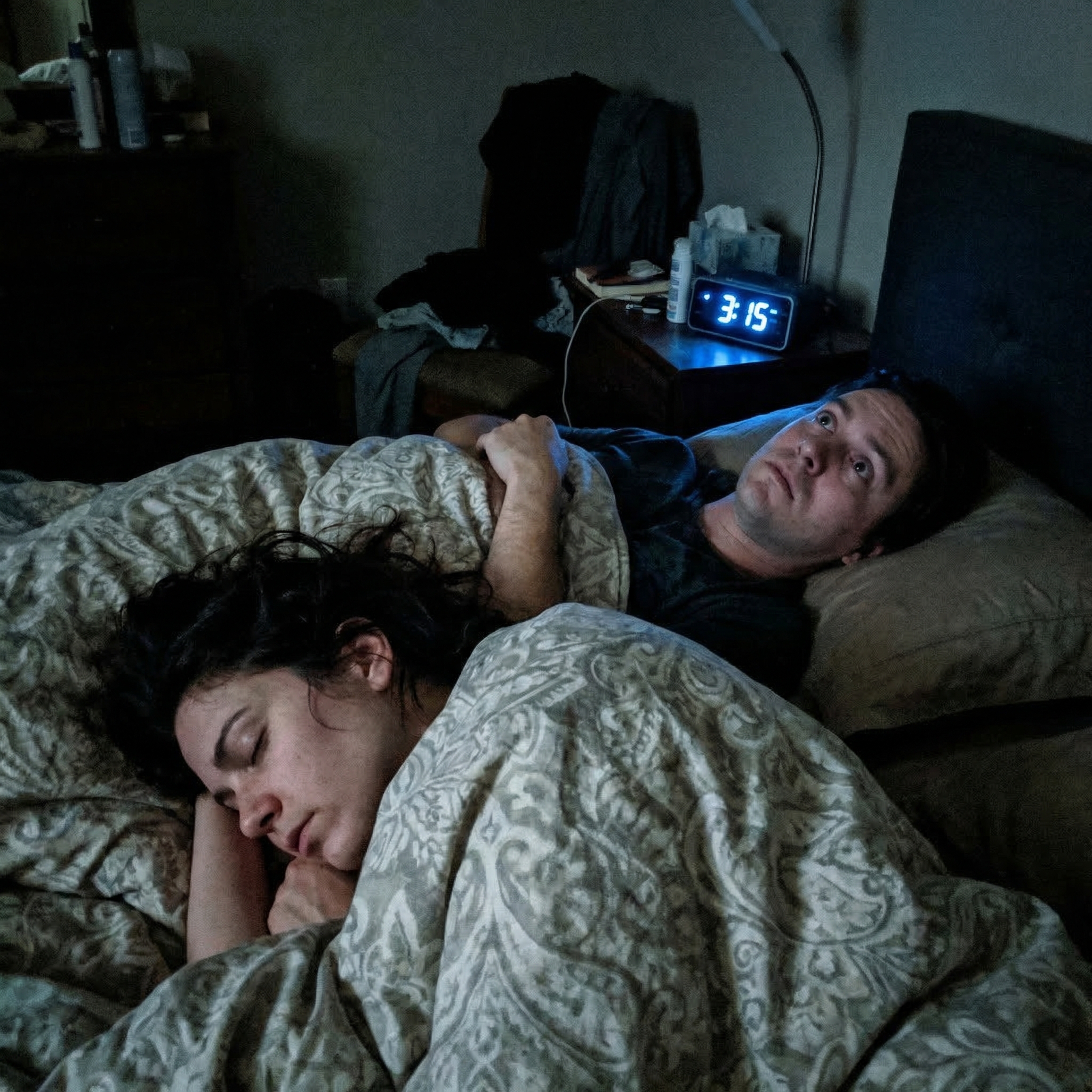
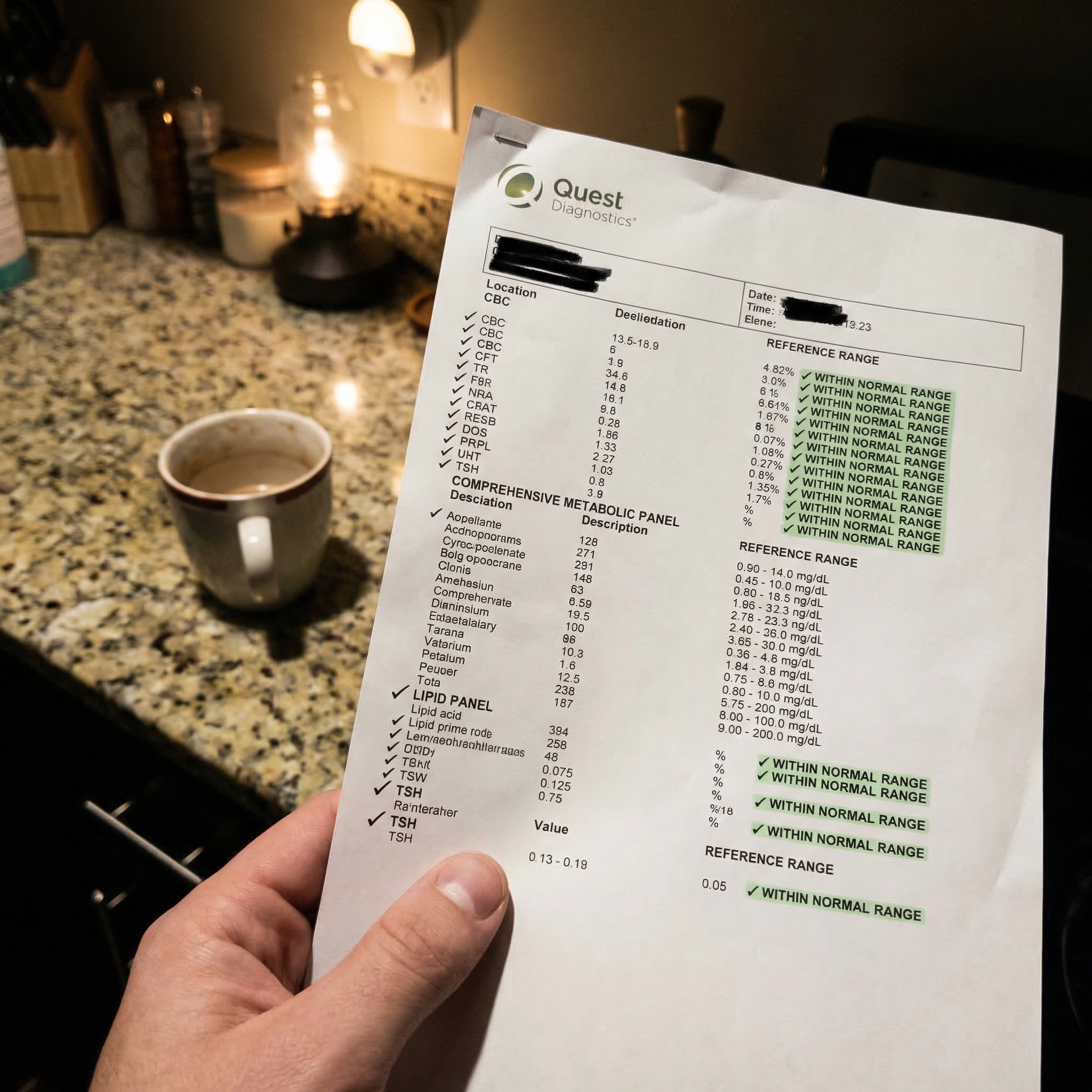
I'm 43 and I just got my first "abnormal" on a blood test. Nothing serious. Nothing alarming. But something shifted and nobody can tell me exactly why. It was my liver enzymes. AST and ALT. Both came back slightly elevated. Not flagged. Not urgent. Just a little asterisk next to each number and a note that said "marginally above reference range." My doctor pulled them up on his screen and said the words I've been hearing from doctors my entire adult life. "Nothing to worry about. Could be anything. We'll recheck in six months." Could be anything. I sat in my car after the appointment and stared at the printout. Two numbers. Two little asterisks. And this feeling in my chest that I can only describe as the beginning of something. Not panic. Not fear exactly. Just this awareness that for 43 years every test I've ever taken has come back clean and now something didn't. And "could be anything" isn't an answer. It's the absence of an answer dressed up as reassurance. I went home and Googled it. Obviously. "Slightly elevated liver enzymes causes." The list was absurdly long. Medications. Fatty liver disease. Hepatitis. Autoimmune conditions. Celiac disease. Muscle damage from exercise. Obesity. Thyroid problems. Heart failure. Infections. Supplements. A dozen more. I'm not obese. I don't have hepatitis. I don't take medications. I don't have celiac. My heart is fine. My thyroid has always been normal. I exercise regularly — maybe the muscle damage thing? I had done a hard leg workout two days before the blood draw. Maybe that spiked the AST. That can happen. I read three articles confirming it can happen. I chose to believe that's what it was. But the ALT. ALT is more specific to the liver. Muscle damage can spike AST but ALT is different. ALT elevated means the liver is doing something it wasn't doing before. And "could be anything" started to feel less reassuring the more I read. I told myself it was a one-time thing. A fluke. An artifact of the workout or the meal I ate the night before or some supplement interaction. I'd retest in six months and it would be normal and I'd forget this ever happened. But I didn't forget. Because other things started connecting. Not new things. Things that had been there for a while that I'd been filing under "getting older" without really questioning them. Things I'd noticed individually but never looked at together. The inflammation. My joints have been stiffer than they should be for the last couple years. Not injured. Just stiff. Especially in the morning. Especially after weekends. I blamed it on training hard, on not stretching enough, on sleeping in a weird position. But it wasn't tracking with anything specific in my workouts. Some of my worst joint days came after easy weeks. Some of my best came after hard ones. The puffiness. My face looks different than it did three years ago. Thicker. More swollen. Not dramatically — nobody else would notice. But I see it in photos. I see it in the mirror. This low-grade bloat that wasn't there in my late thirties and lives on my face now like it's permanent. The belly. I've always been lean. I train. I eat well. But in the last two or three years this layer of fat appeared around my midsection that won't respond to anything. Not calorie cuts. Not extra cardio. Not intermittent fasting. It just sits there like it's attached to something deeper than diet and exercise. The recovery. Everything takes longer than it used to. Workouts I'd bounce back from in a day now take two or three. Nights where I sleep poorly wreck me for 48 hours instead of one morning. My body's resilience has dropped in a way that feels disproportionate to my age. I'm 43, not 63. This shouldn't be happening yet. The fog. Not every day. But certain mornings I wake up and my brain is running at maybe 70%. Slow to start. Hard to focus. This heaviness that takes until noon to lift. I blamed it on sleep quality. But my sleep tracker shows decent numbers on most of those mornings. The data says I slept. My brain says I didn't. The mood. Subtle. Gradual. Not depression. Just a slow lowering of the baseline over the last few years. Slightly more anxious than I used to be. Slightly less motivated. Slightly less sharp. Each shift so small that I wouldn't mention it to anyone. But stacked together they paint a picture of someone who's declining in ways that don't match their age or their effort level. Every single one of these I'd explained away individually. Age. Training. Stress. Sleep. Genetics. Normal variation. And every single explanation was plausible enough that I never had to look deeper. But now I had two asterisks on a blood test. Two numbers that said something is happening inside my body that wasn't happening before. And all those individually plausible explanations started to feel less plausible stacked on top of each other with lab evidence underneath them. Something shifted. Something is different. And "could be anything" was starting to feel less like reassurance and more like a doctor who doesn't have enough data to tell me what's actually going on. So I did what I always do when I can't get an answer from a person. I went looking for one myself. I spent about two weeks reading. Not WebMD surface-level stuff. Deep reading. Pubmed papers. Clinical reviews. Longitudinal studies on liver enzyme elevation in asymptomatic adults. Research on subclinical inflammation markers. Studies on what drives ALT elevation when everything else looks normal. And one pattern kept showing up. Over and over. In study after study. In a context I wasn't expecting and wasn't looking for. Regular moderate alcohol consumption. Not heavy drinking. Not binge drinking. Not what anyone would call a problem. Regular. Moderate. Consistent. The kind of drinking that every guideline says is fine. The kind that I do. That everyone I know does. That my doctor has never once asked me about beyond a checkbox on a form. Here's what I found. Even at levels well within "moderate" guidelines — a glass or two of wine most nights — alcohol triggers a cascade of biological events that, over years, produce exactly the cluster of symptoms I'd been explaining away as aging. The liver enzymes. Alcohol is metabolized by the liver using an enzyme system that produces acetaldehyde — a toxic byproduct. Your liver neutralizes it using glutathione, your body's master antioxidant. At moderate consumption levels, this process works fine acutely. But chronically — night after night, year after year — the demand on the liver's detoxification system creates a slow accumulation of oxidative stress. Liver cells experience low-grade damage. Not enough to cause symptoms. Not enough to spike enzymes dramatically. Just enough to push them slightly above reference range over time. Two asterisks. Marginally elevated. "Could be anything." It could be this. Fifteen years of a glass or two most nights. That's all it takes. But the liver was just the beginning of what I found. The inflammation. Alcohol disrupts tight junctions in the intestinal wall. Every time you drink — even moderately — your gut permeability increases. Molecules that belong in your digestive tract leak into your bloodstream. Your immune system detects foreign material and fires an inflammatory response. At once or twice a year this is meaningless. At three to five nights a week for fifteen years, it's chronic. Low-grade. Systemic. The kind that doesn't show up as a single symptom but shows up as everything being slightly worse. Stiffer joints. Puffier face. Slower recovery. Increased immune reactivity. A general inflammatory load that accumulates so gradually you blame it on the calendar instead of the wine. The belly. Every drinking session spikes cortisol — the stress hormone — for 24 to 72 hours afterward. At several nights per week, you're essentially living in a state of semi-permanent cortisol elevation. Sustained cortisol promotes visceral fat storage specifically. Not subcutaneous fat — the kind you can pinch. Visceral fat — the kind that wraps around organs and sits in the midsection and doesn't respond to diet or exercise because it's being driven by a hormonal mechanism, not a caloric one. The belly that appeared in my early forties and won't leave isn't a diet failure. It's a cortisol consequence. The fog. Alcohol triggers a neurochemical event every time it clears your system. A glutamate surge — the excitatory neurotransmitter firing unopposed after alcohol's sedation wears off. That's why people wake up at 3AM with their heart racing after drinking. But even if you don't have the dramatic 3AM wakeup, the neurochemical disruption still happens. Serotonin gets depleted. GABA reserves get burned through. By morning your brain is starting the day in neurochemical deficit. The fog. The slow start. The heaviness that takes until noon to lift. That's not bad sleep. That's a brain running on depleted neurotransmitters. Chronically. For years. Each cycle lowering the baseline incrementally. The mood. Serotonin depletion doesn't just cause morning fog. Over time, chronic depletion lowers the mood baseline. Anxiety increases gradually. Motivation decreases gradually. Sharpness fades gradually. Each shift so small it could be anything — aging, stress, season, hormones. But the mechanism underneath them all is the same. Repeated serotonin drainage without adequate rebuilding. Year after year. Slowly lowering the floor. The recovery. Glutathione — the antioxidant your liver uses to process alcohol — isn't just for your liver. It's your body's primary defense against oxidative stress everywhere. In your muscles. In your immune system. In every cell. When alcohol monopolizes the glutathione supply several nights a week, everything else goes underprotected. Cellular repair slows down. Oxidative damage accumulates. The body's ability to bounce back from training, from illness, from stress, from bad nights — all of it degrades. Not because you're old. Because your master antioxidant system has been redirected to alcohol processing for fifteen years and every other system is running on reduced protection. I sat with all of that for a long time. Every symptom I'd blamed on aging. Every decline I'd accepted as inevitable. Every change I'd filed under "this is just what happens in your forties." All of it mapped to a single variable that I'd never once considered because it was so mundane and so normal and so universal that questioning it felt absurd. A glass or two of wine. Most nights. For fifteen years. Not a problem by any definition I've ever heard. Not something my doctor has ever flagged. Not something anyone in my life would look twice at. And yet it explained the enzymes. The inflammation. The belly. The fog. The mood. The recovery. The puffiness. The stiffness. The slow, quiet, systemic decline that I'd been watching happen to my own body and blaming on the one thing that made me feel better about it — age — instead of the one thing that was actually causing it. I wasn't aging faster than I should be. I was accumulating damage across five systems simultaneously and calling it getting older. Once I understood the mechanisms, I went looking for what could actually address them. Not a liver pill — the liver is one pathway out of five. Not a dry month — thirty days doesn't reverse fifteen years of accumulation across five systems. Not "drink less" — less damage is still damage, and I needed to address what had already been compounding, not just slow the rate. I needed something that intercepted every pathway. Simultaneously. Specifically. With ingredients that mapped to each mechanism. GABA and L-theanine to buffer the glutamate surge — the neurochemical event that disrupts sleep and depletes the brain's calming system every time alcohol clears. 5-HTP and L-tryptophan to rebuild serotonin — the neurotransmitter that alcohol drains overnight, driving the fog, the mood decline, the gradual anxiety increase. Ashwagandha at clinical dose to modulate cortisol — the hormonal spike that drives the visceral fat, the testosterone suppression, the recovery decline, the permanent stress state. L-glycine for gut lining support and anti-inflammatory action — addressing the intestinal permeability that drives the chronic inflammation, the puffiness, the joint stiffness, the immune reactivity. SAM-e to support glutathione production through the methylation pathway — feeding the master antioxidant system that alcohol monopolizes so the rest of the body's cellular defense actually functions. L-tyrosine for dopamine and norepinephrine support — addressing the motivational and cognitive fog that compounds over years of depleted catecholamines. Veltrion Deep Reset. Six pathways. One formula. Clinical dosages. Not a liver supplement. Not a hangover pill. A systemic buffer for what moderate drinking actually does to your body over time. Three months now. Here's what shifted. The fog lifted. Not gradually. Within the first two weeks the mornings changed. I wake up and my brain is just on. Not caffeinated into function. Not slowly warming up until noon. On. Clear. Present. I didn't know how much cognitive baseline I'd lost until I felt what it was like to have it back. The serotonin and dopamine support is doing something measurable every single morning. The inflammation dropped. My joints stopped aching. The puffiness in my face that I thought was permanent receded over about three weeks. Workout recovery that had been taking two or three days went back to one. The general "everything is slightly inflamed" feeling that I'd lived with for years just quietly disappeared. The glycine is doing something to gut barrier integrity that fifteen years of unprotected drinking had been slowly undoing. The belly started responding. Not overnight. But for the first time in three years, the midsection is actually changing. Same diet. Same training. The cortisol modulation from the ashwagandha seems to be allowing my body to finally metabolize the visceral fat it's been hoarding under hormonal instruction. The 3AM thing stopped. I didn't even buy this for the 3AM angle — I bought it for the enzyme scare. But the glutamate buffering killed the wakeups completely. I'd been having them for years and blaming stress. They were the neurochemical rebound. And they just stopped. And the enzymes. I retested at the three-month mark. Both numbers back within normal range. No asterisks. No marginally elevated. Clean. My doctor said "see, told you it was nothing." He doesn't know what I've been taking. He doesn't know about the five pathways. He doesn't know that "nothing to worry about" was actually five systems accumulating silent damage for fifteen years and two little asterisks were the first time any of it showed up on paper. I know. And I'm not going back to flying blind. If you're the person staring at your first abnormal result. If your doctor said "could be anything" and you left the office feeling less reassured than you went in. If you've been noticing things — the fog, the inflammation, the belly, the recovery, the mood, the slow decline that doesn't match your age or your effort — and filing them under "getting older" because that explanation doesn't require you to change anything. Look at the pattern. Not just the blood test. The full picture. Every symptom. Every decline. Every change you've noticed in the last three to five years. And then look at the one variable you've never questioned because everyone around you shares it. The two asterisks on my blood test weren't the problem. They were the first visible sign of a problem that had been building silently across five systems for fifteen years. The problem wasn't aging. The problem was what I was asking my body to process three to five nights a week while calling it normal. It is normal. Everyone does it. And everyone's body is doing the same thing mine was doing — accumulating, compensating, declining, silently — whether they've gotten the asterisks yet or not. I got mine at 43. You might get yours tomorrow or next year or in five years. Or you might never get them because you never get the test. But the damage doesn't need asterisks to accumulate. It just needs time. And it's been getting plenty of that.
Where the ad sends people
getveltrion.com
Read if you drink a couple nights a week👆
Veltrion
Learn more: getveltrion.com(opens in a new tab)