
Inactive· since Jul 1, 2026
- 13
- days it ran
- 0
- relaunches
Ad copy
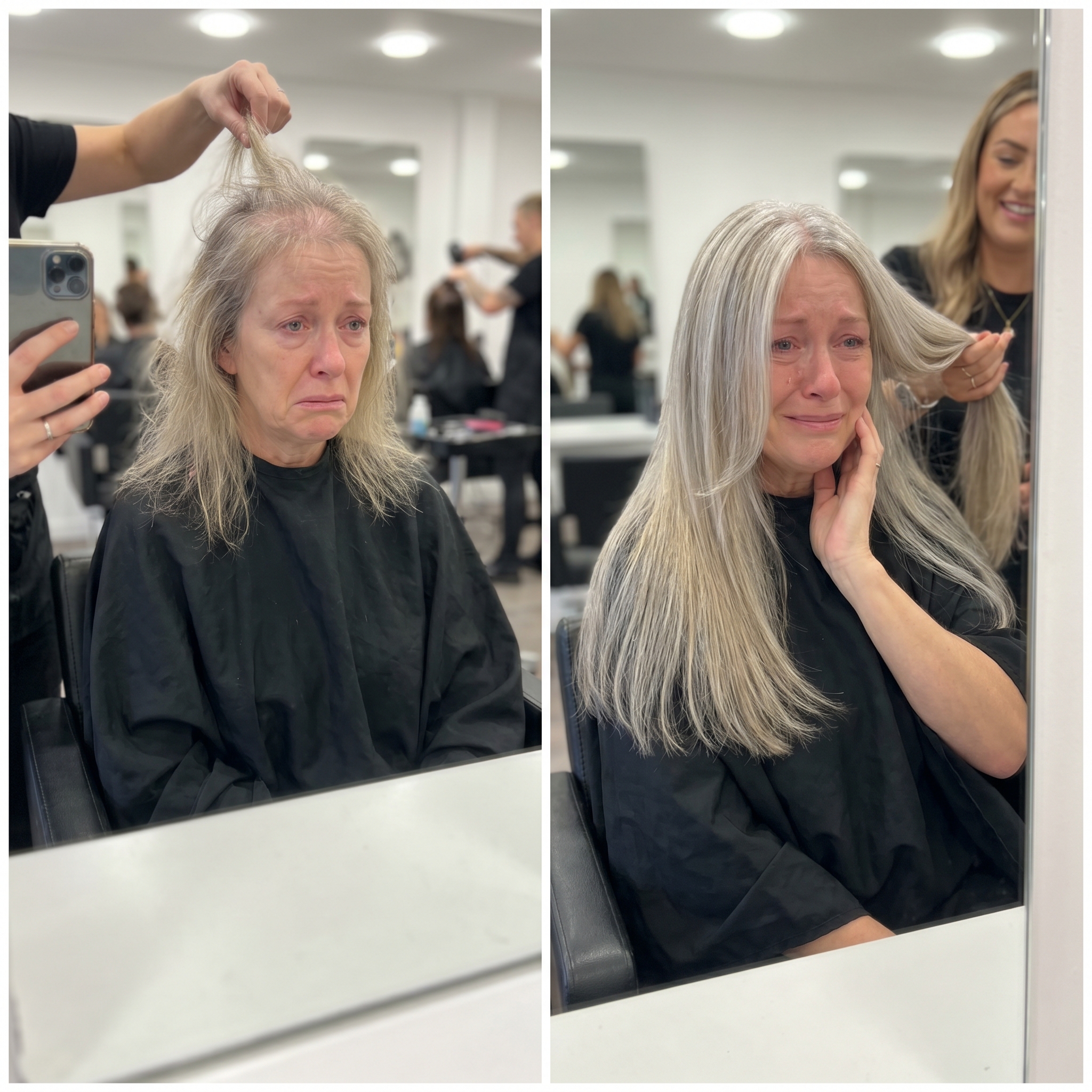
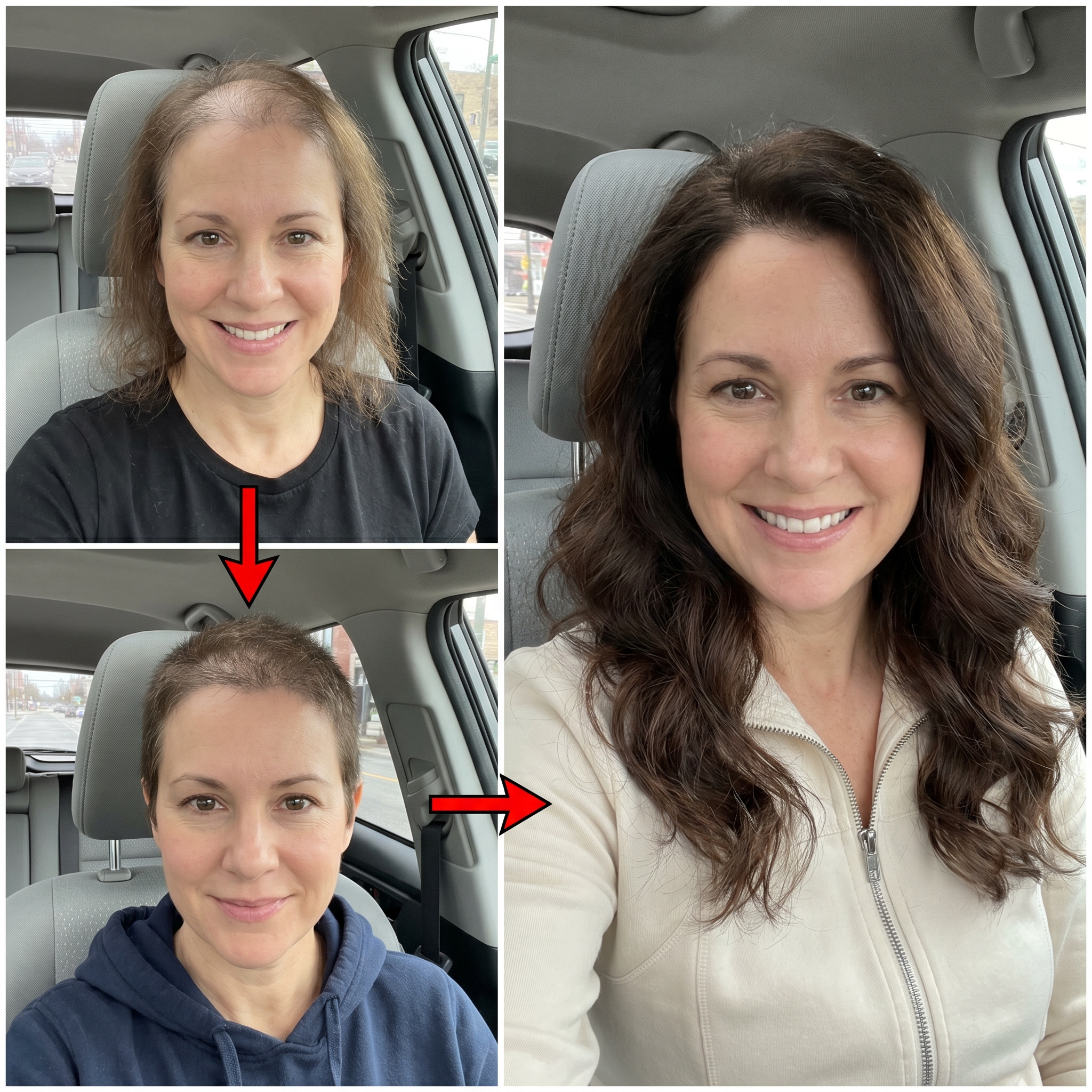
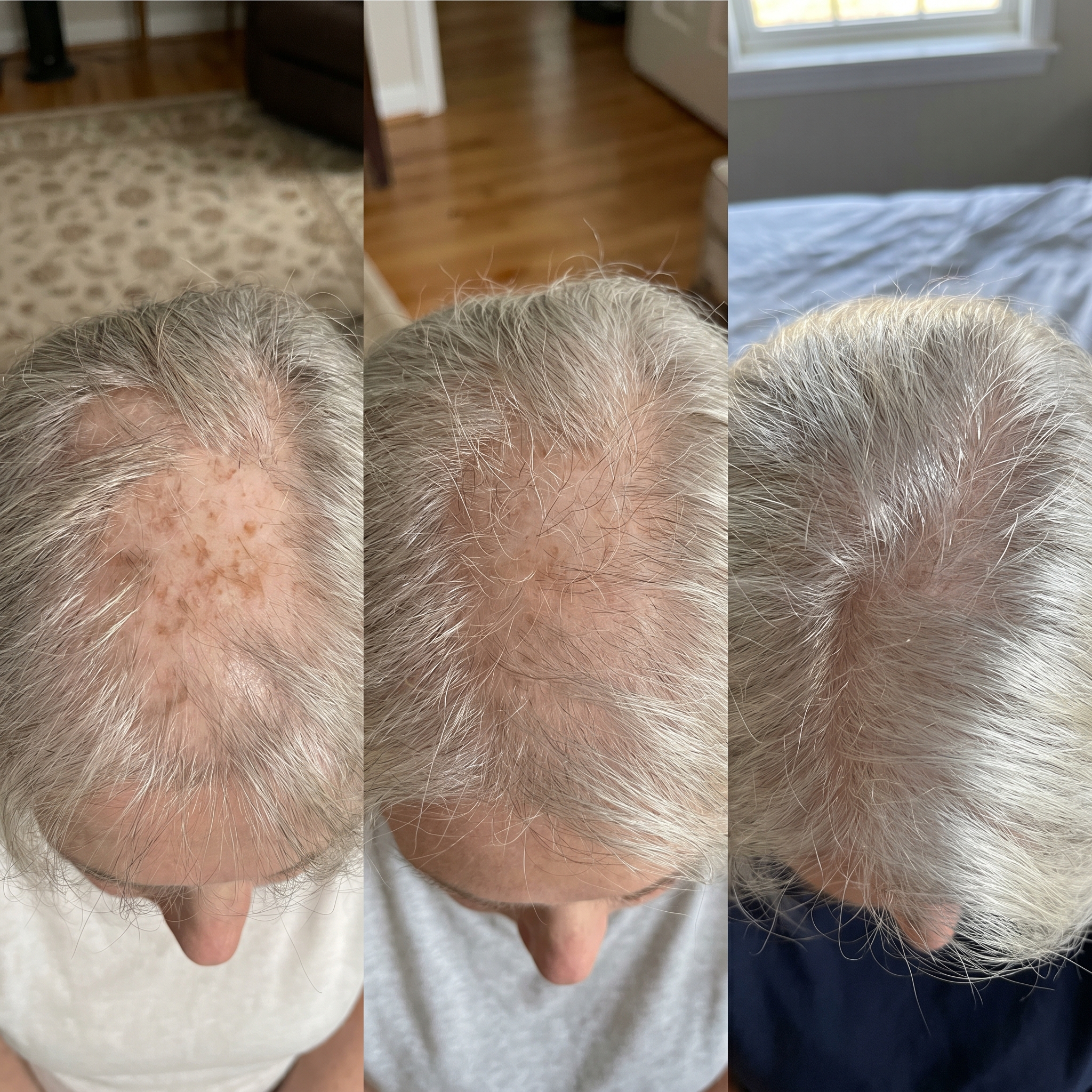
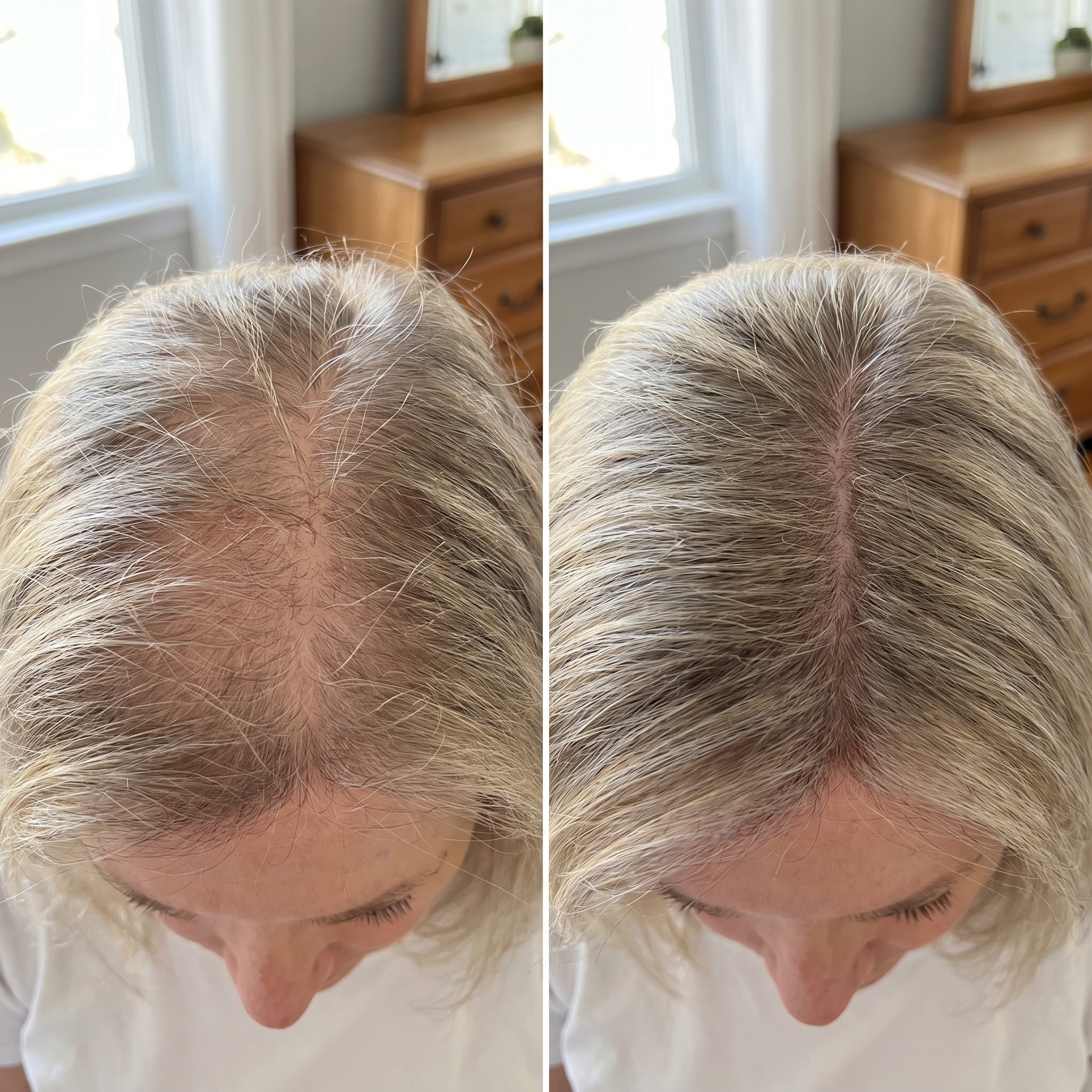
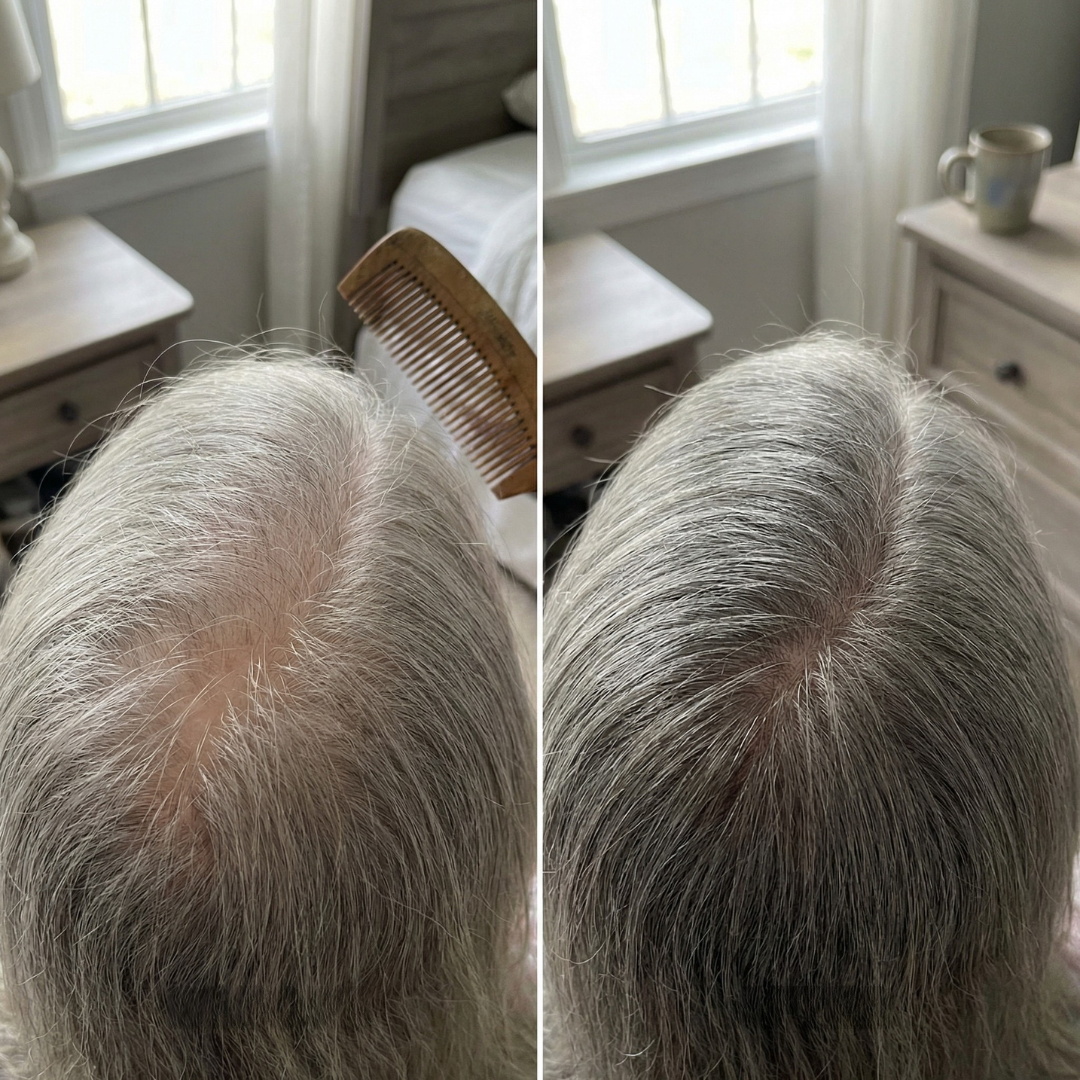
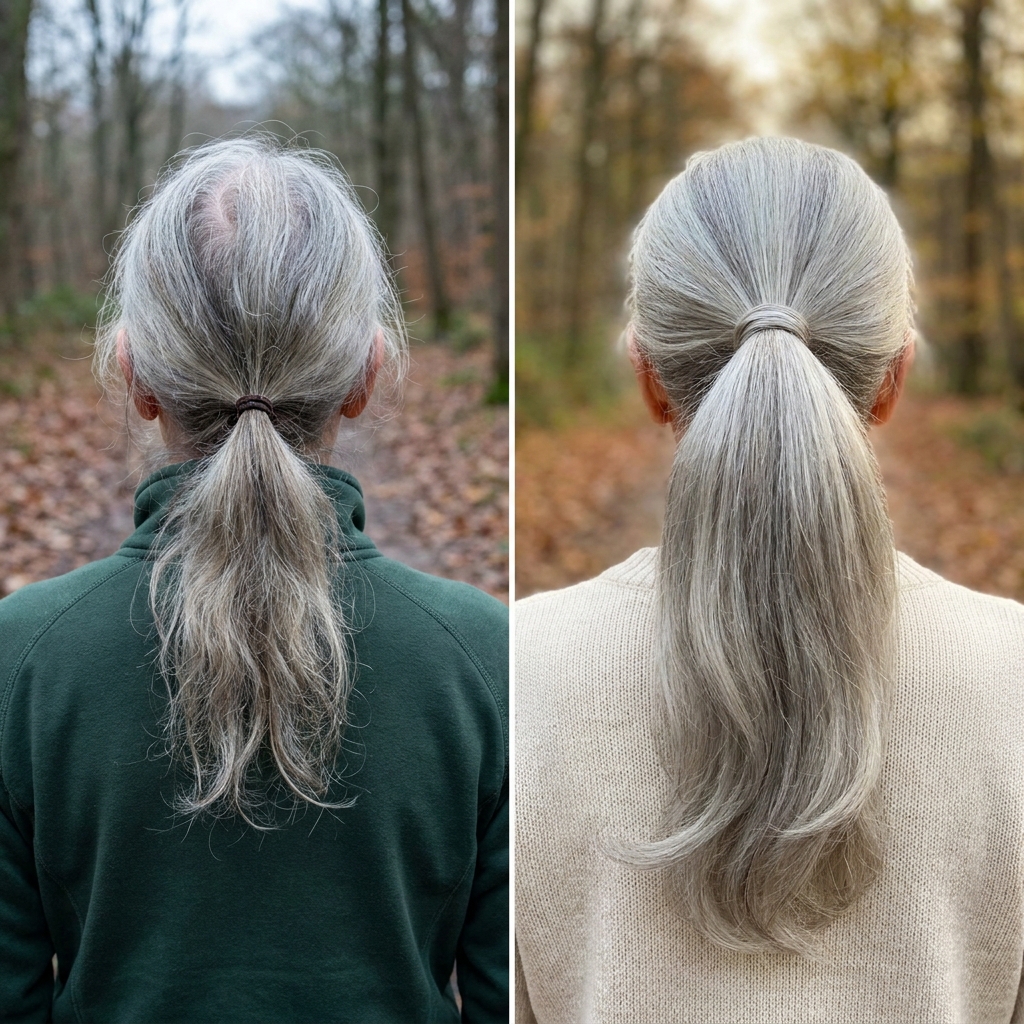
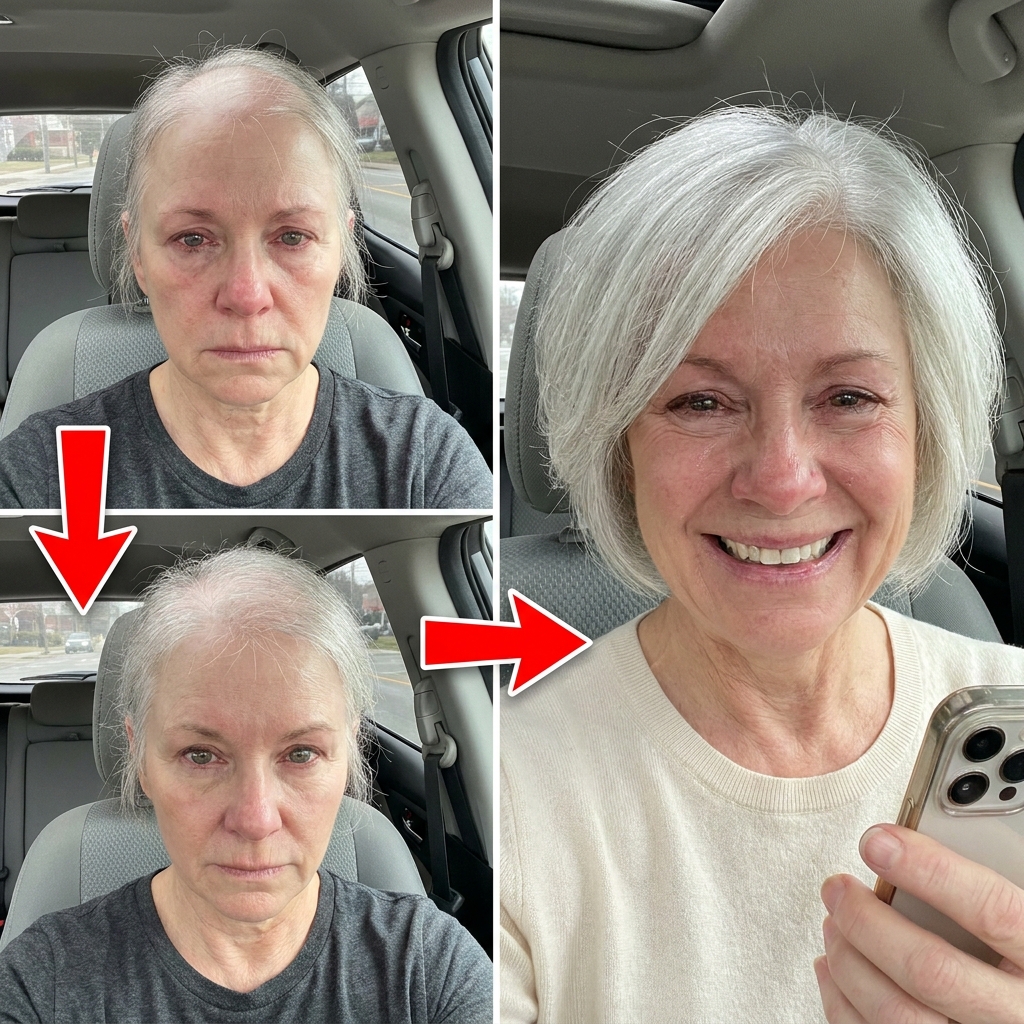
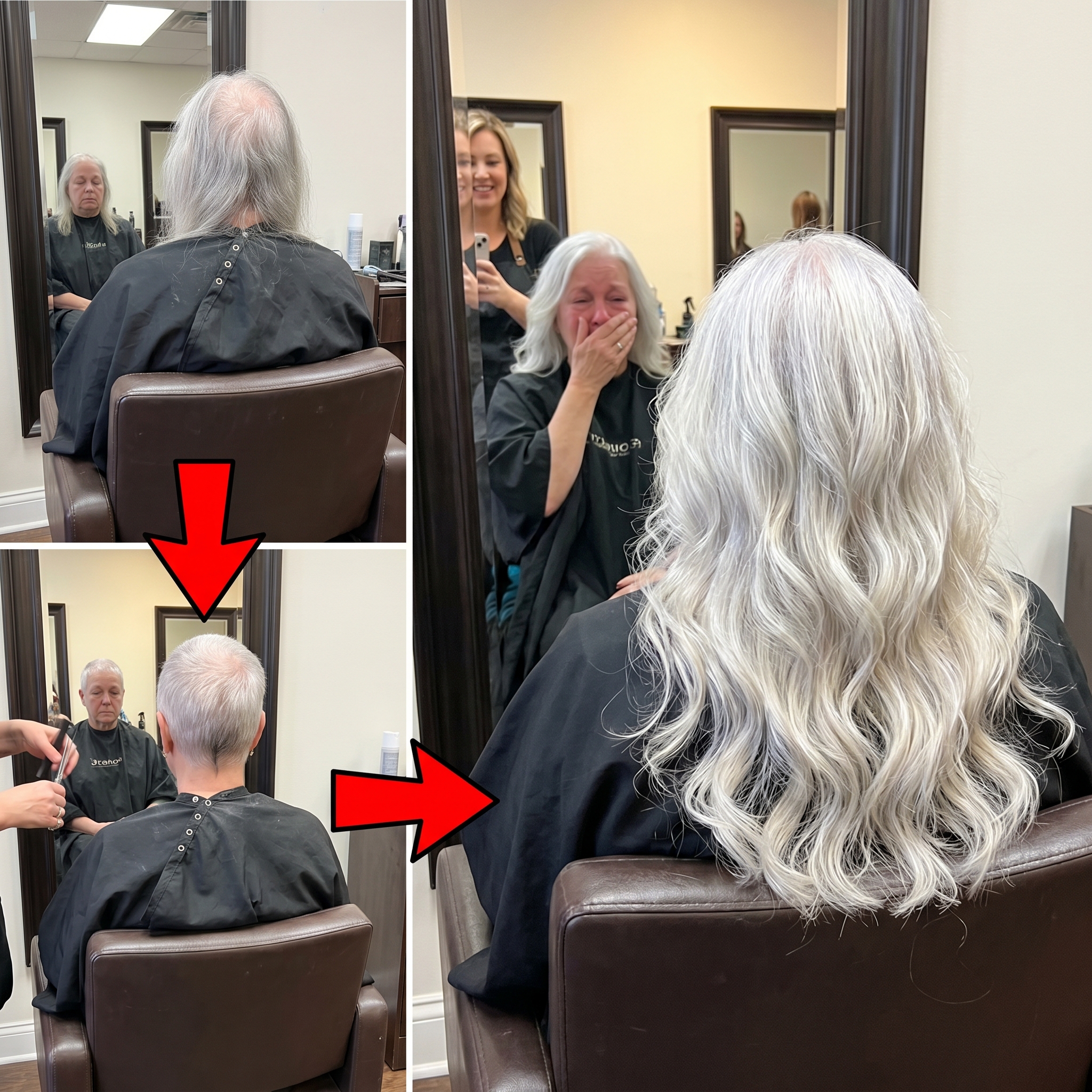
The NHS does not treat female-pattern thinning, because it is filed as cosmetic, not clinical. Once your bloods come back in range, the system has finished with you, and what it leaves you holding is the problem itself. I know how that line reads from the inside, because I have typed it. I am sixty-one, post-menopausal since fifty-three, and I have spent the last nine years as a receptionist at a GP surgery in Aberdeen. I am the person who books the appointment, who reads the letter back to the patient over the phone, who says the words "the bloods are normal, the doctor doesn't feel a referral is warranted" in a voice trained to sound like good news. What nobody warns you about being the one who knows the system is that it does not exempt you. Around fifty-six the parting at my crown began to widen, slowly, the way a thing changes when you are not watching it directly. My hair was the one feature I had never had to think about. Thick, dark, the sort other women asked about in lifts. Then it was thinning, and I had not agreed to it, and there was no form to fill in to make it stop. That is the part I could not say to anyone. Not the appearance. The fact that my own body had begun doing this without asking me, and I, who book the consultations, could not get one to mean anything. I did the thing I tell patients to do. I made an appointment with one of our own doctors, which is its own small humiliation when you sit on the other side of the desk five days a week. He was decent about it. He ran the bloods himself. Thyroid in range. Ferritin in range. B12 fine. He told me, gently, that it was almost certainly the menopause and that there was, on the NHS, not a great deal that could be done for that. He did not signpost me to anything, because there was nothing to signpost me to. I went back to the desk and answered the phone. So I went private, in my own quiet way, paying for things one at a time. Minoxidil first, the 5% — £29 for the bottle, then more bottles. Six months. My scalp went red and flaked along the part, and I read about the shedding phase and waited it out, and the part kept widening. A "thickening" tonic from a salon that a colleague swore by, £52, two bottles, nothing. Biotin from the chemist on a pharmacist's say-so, four months, £36, and I will not list it as a treatment because nothing changed. A Nutrafol order placed late one night after a bad day at the mirror, £79 a month for three months, £237, the part still widening. A laser comb off a January sale, £189, three nights a week for eight months, used faithfully, then boxed and shelved. By the time I added it up — a little over six hundred pounds — what bothered me most was not the money. It was that I had handed my problem to seven different things and not one of them had been built to address what was actually happening at my scalp. They had been built to be bought, and I had bought every one of them in good faith. The person who finally said the true thing out loud was not a doctor. It was Marian, who has coloured my hair for eleven years. She had said nothing for years. Colourists see the scalp from above, in hard salon light, more honestly than any mirror lets you. She had watched the part widen tint after tint and held her tongue, the way you do. Then one Thursday she set the brush down, tilted my head under the lamp, and said, quietly, that she had been noticing it for a while, that she saw it constantly in women my age, and that the only client of hers it had genuinely shifted for had been using something topical with caffeine in it. Not a salon range. Something the woman sprayed on at night. Marian did not oversell it. She just said it was the one thing she had watched make a visible difference, and went back to sectioning my hair. That sent me looking, and looking sent me to the thing the whole loop had managed not to tell me. The mechanism is not complicated, and it should have been the first thing anyone explained. As estrogen falls after menopause, the local DHT activity at the scalp rises. DHT shortens the anagen phase — the growth phase — of the hair cycle. The follicle spends less time producing and more time dormant, and the hair it does make comes through finer and shorter, until it looks as though the follicle has given up entirely. But it has not died. It has been silenced. The stem cells are intact, the blood supply is intact. And because the silencing is happening locally, at the scalp, the interruption has to happen there too. Topical caffeine has been studied for exactly this since the early 2010s — applied to the scalp, it blocks 5-alpha-reductase at the follicle and lets the anagen phase run longer again. The follicle wakes. That was the research the system had filed as cosmetic. A local, chemical, addressable thing, treated as a question of vanity because of where on the body it happened to show. Mellenza was the first thing I found built around that idea rather than around the shelf it sat on. A topical scalp serum. Caffeine to block 5-alpha-reductase at the follicle. Polygonum multiflorum root extract, from Korean dermatology research on follicle proliferation. Arginine for microcirculation. Biotin for the integrity of new growth. Ginger extract for anti-inflammatory scalp support. You spray it on the crown, the part and the temples at night, and you leave it. Not a shampoo. Not a volumiser. Not a supplement. A topical wake-up call for follicles that have been chemically quiet for years. I committed to twelve weeks, because by then I had read enough to know that anything judged at thirty days is judged before the hair cycle has had time to answer. Week 4. Less hair around the plughole. I had stopped counting years ago because counting only made it worse, but I noticed the drain, and I noticed I noticed. Week 6. The lengths I still had stopped feeling like thread. They felt like hair again, with some weight to them when I ran my hand down. Week 9. I took a photograph at the bathroom mirror, same light, same morning angle, and held it beside one from spring. The part was narrower. Along the edge of it, short and fine, the beginnings of new growth — the kind of thing I had quietly decided, after the bloods came back clear, that nobody was ever going to offer me. Month 4. Marian, mid-tint, paused and said she could see it at the crown, that she had not wanted to say anything in case she was imagining it. She had not been imagining it. I told her she had started it. She said she knew. Month 5. I went to a charity lunch I would have found a reason to skip the year before — a long room, low ceilings, the kind of overhead lighting I used to map the moment I walked in. I sat where I was put, near the front, under all of it, for the better part of three hours. I did not touch my parting once. I had forgotten what it was like to not be managing my own head in a room full of people. If your GP has run the bloods, found them clear, and told you there is nothing the NHS can do for menopausal thinning, that is not the end of the matter — it is the system correctly applying a rule that was never about your follicles. The mechanism is real and it is local. The interruption is topical, and it does not run through any clinic that already turned you away. The link is below. Mellenza ships from the UK with a 90-day money-back guarantee, a complimentary scalp massager, and an ebook on the menopausal hair cycle. Give it the twelve weeks. The follicle has been waiting longer than that.
The NHS rules your thinning a cosmetic problem
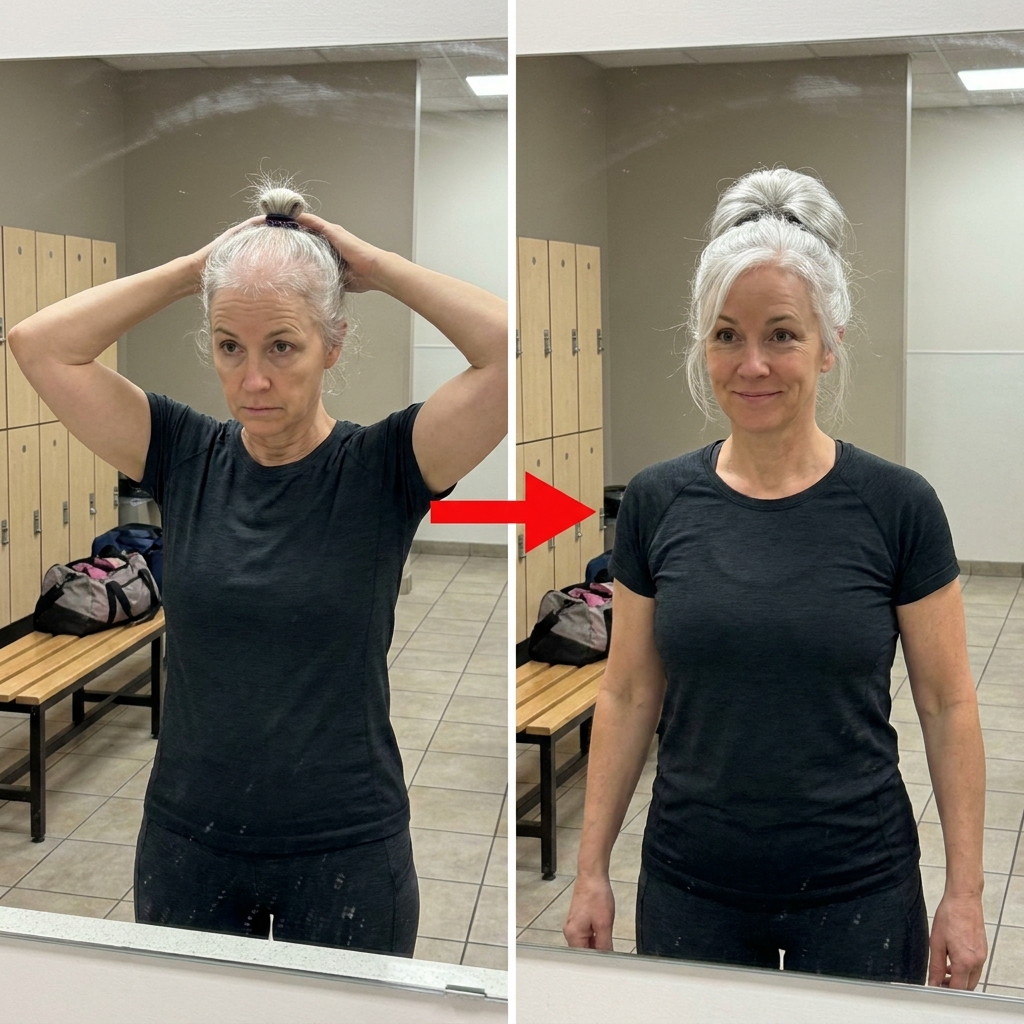
Women's Health · Updated April 2026 Menopause · Hair Routine 7 Mistakes That Make Menopausal Hair Loss Worse, And the 30 Second Ritual 10,000 Women Used to See Regrowth in 8 Weeks Dr. Sarah Mitchell — Women's Health Writer. If you're standing in front of the mirror doing the 3-elastic ponytail t...
LEARN MORELike this ad? Make it yours.
Crush rebuilds this exact creative around your product — your brand, your colors, your offer — in about a minute.