Daily Bread
Daily Bread Facebook ad: “DAILY BREAD | INDUCTIVE BIBLE STUDY”
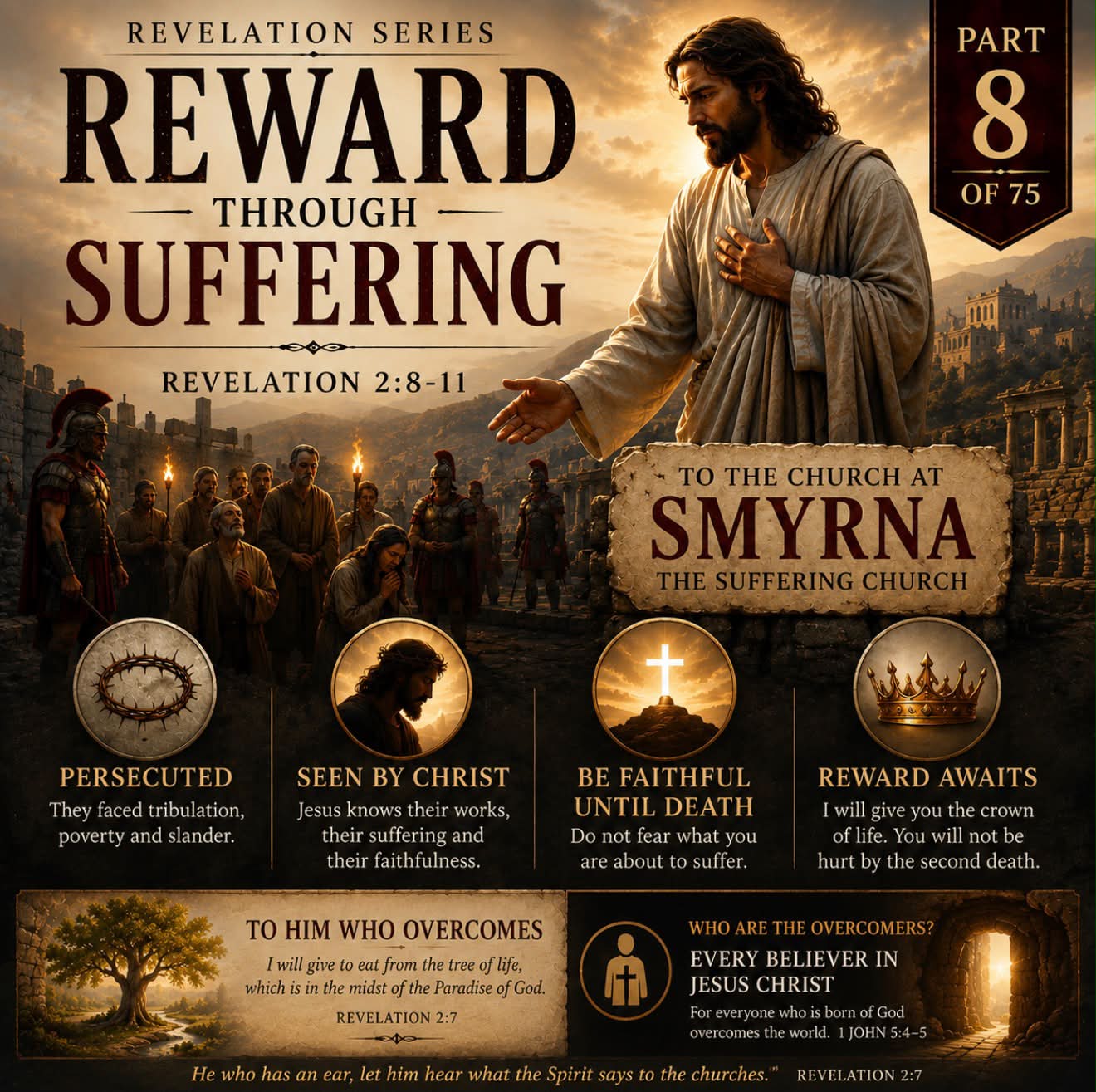
Ran for 2 days, from August 18 to August 20, 2026, the last day Crush saw it.
Run by Daily Bread on Facebook. Crush is not the advertiser and does not verify its claims. See this ad in Meta's Ad Library(opens in a new tab)
Want an ad like this for your product?
Crush makes new ad images for your product from this ad: your logo, your product photo, your offer.
Trials from $19.95 USD, then $79.95 USD a month. Cancel anytime.
About this ad
- Meta Ad Library ID
- 2611126589284270
- Platforms
- Facebook, Instagram, Audience Network and Messenger
- Relaunches
- 0
Ad text
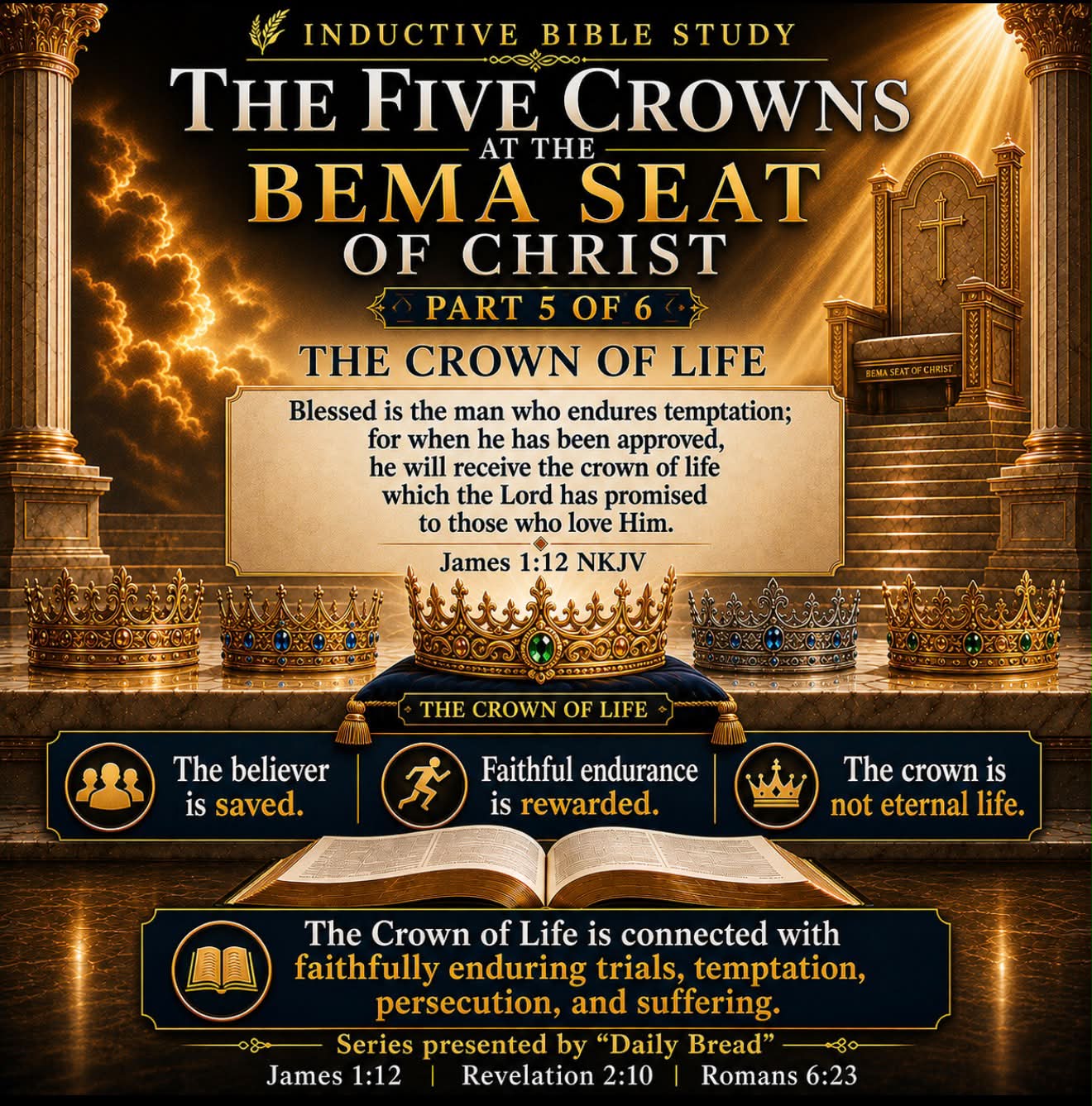
🌾 DAILY BREAD | INDUCTIVE BIBLE STUDY August 18, 2026 THE BOOK OF REVELATION SERIES | PART 8 OF 75 REWARD THROUGH SUFFERING 📖 PRIMARY TEXT: REVELATION 2:8–11 We now move from Ephesus, the church that had left its first love, to Smyrna, a church facing intense pressure from the outside. Smyrna was suffering persecution, poverty, slander, imprisonment, and the possibility of death for remaining faithful to Jesus Christ. Yet unlike Ephesus, Smyrna receives no rebuke from Christ. He knows their suffering, sees their faithfulness, and reminds them that what appears to be poverty in this world can actually be tremendous riches before God. 🔎 OBSERVATION 1. THE DESTINATION: SMYRNA “And to the angel of the church in Smyrna write…” Revelation 2:8 (NKJV) Smyrna was located about thirty-five miles north of Ephesus in Asia Minor, in the area of modern-day Izmir, Turkey. Scripture tells us very little about this congregation outside Revelation 2:8–11, but what Christ says here gives us a remarkable picture of a suffering yet faithful church. The name Smyrna is related to myrrh, a fragrant substance associated with burial and death. Myrrh appears among the gifts presented to Jesus in Matthew 2:11 and was later associated with burial preparations. That background is striking in light of Christ’s words to these believers: “Be faithful until death.” Smyrna was also deeply influenced by emperor worship. Rome did not merely expect political loyalty. Caesar could be treated as divine, placing Christians in a serious conflict of allegiance. The Christian confession that Jesus alone is Lord could not simply be merged into Roman polytheism. Jesus had said, “I am the way, the truth, and the life. No one comes to the Father except through Me” (John 14:6). Faithfulness to that truth could become costly. 2. POLYCARP AND THE LEGACY OF SMYRNA One of the best-known later leaders associated with Smyrna was Polycarp, a disciple of the apostle John. Decades after Revelation was written, Polycarp was martyred after refusing to renounce Christ and swear allegiance to Caesar. His death illustrates the kind of pressure believers in this region could face. The issue was not merely religious preference. For some believers, confessing Christ could cost possessions, status, freedom, and eventually life itself. That makes Christ’s description of Himself especially meaningful. 📖 INTERPRETATION 3. CHRIST IS “THE FIRST AND THE LAST” Jesus introduces Himself as, “These things says the First and the Last, who was dead, and came to life” (Revelation 2:8 NKJV). This reaches back to Revelation 1. Christ does not choose these descriptions randomly. He reveals exactly what Smyrna needs to remember. First, He is “the First and the Last.” He stands at the beginning and the end. History belongs to Him. He is Creator, Redeemer, Sustainer, and the coming King. For believers facing death, this matters tremendously. Rome did not control history. Caesar did not control history. Their persecutors did not control history. Jesus Christ does. Second, He is the One “who was dead, and came to life.” Christ speaks to people who may soon die by reminding them that He has already passed through death and conquered it. Because Christ conquered the grave, death will never have the final word for those who belong to Him. 4. CHRIST KNOWS THEIR SUFFERING Jesus says, “I know your works, tribulation, and poverty…” (Revelation 2:9 NKJV). Again we hear those powerful words: “I know.” Christ knows everything happening within His Body. He knows their hardship, fears, material losses, and the pressure surrounding them. The word translated “tribulation” speaks of pressure or affliction. This should be distinguished from the future Tribulation described later in Revelation. A pre-tribulational Rapture does not mean Christians are promised freedom from suffering in the present age. Jesus Himself said, “In the world you will have tribulation” (John 16:33). Believers may experience persecution from people, opposition from Satan, and hostility from the world system. What the Church is promised exemption from is the future outpouring of God’s wrath, not every form of present suffering. 5. “I KNOW YOUR POVERTY, BUT YOU ARE RICH” The poverty described in Smyrna was severe. These believers apparently possessed very little materially. Yet Jesus immediately adds: “but you are rich.” What an astonishing contrast. They were poor in the eyes of the world but rich in the eyes of Christ. Ephesians 1:3 says believers have been blessed “with every spiritual blessing in the heavenly places in Christ.” Our true wealth is not measured by bank accounts, property, possessions, health, status, or earthly comfort. Those things can disappear. Our riches in Christ cannot. Smyrna stands in sharp contrast with Laodicea. Laodicea will later say, “I am rich, have become wealthy, and have need of nothing,” while Christ says they are spiritually “wretched, miserable, poor, blind, and naked” (Revelation 3:17). Smyrna looked poor but was rich. Laodicea looked rich but was poor. That should completely reshape the way we define blessing. 6. SUFFERING DOES NOT PROVE A LACK OF FAITH Smyrna also confronts the idea that faithful Christians should necessarily experience material prosperity. Christ does not tell them, “If your faith were stronger, you would not be poor.” He does not rebuke them for poverty. He commends them. Scripture contains faithful believers who possessed wealth, but it also contains faithful believers who lived with very little. Material prosperity is therefore not a guaranteed measurement of spiritual faithfulness. God may entrust abundance to one believer and allow another believer to walk through deep material limitation. Neither circumstance determines how rich that believer is in Christ. 7. THE OPPOSITION AGAINST SMYRNA Christ also says He knows “the blasphemy of those who say they are Jews and are not, but are a synagogue of Satan” (Revelation 2:9). This statement must be understood carefully in its first-century context. Christ is addressing particular opponents in Smyrna who claimed covenant standing while opposing Jesus and persecuting His people. It is not a condemnation of Jewish ethnicity or a cancellation of God’s covenant purposes for Israel. Scripture consistently distinguishes physical descent from saving faith. Abraham himself “believed in the LORD, and He accounted it to him for righteousness” (Genesis 15:6). Romans 9:6 says, “For they are not all Israel who are of Israel.” God’s future covenant purposes for Israel remain, but physical ancestry has never replaced the necessity of faith. The same principle applies far beyond Jewish ancestry. No one has eternal life because of nationality, denomination, baptism, family heritage, church attendance, or religious affiliation. The issue is faith in Jesus Christ. 8. RELIGION CANNOT MAKE US RIGHT WITH GOD Human religion attempts to climb upward toward God through human achievement. The Gospel announces that God came down to us and accomplished what we could never accomplish ourselves. Genesis 3 illustrates this immediately after the Fall. Adam and Eve attempted to cover themselves, yet God ultimately provided the covering. That pattern points forward to the Gospel. We do not clothe ourselves with our own righteousness. God clothes the believer with the righteousness of Christ. Isaiah 64:6 describes human righteousness as filthy rags before God. Salvation therefore leaves no room for human boasting. We do not enter God’s presence proudly displaying what we accomplished. We enter because of what Christ accomplished for us. 9. SMYRNA RECEIVES NO REBUKE Normally Christ’s letters include a word of correction. Not Smyrna. There is no “Nevertheless I have this against you.” Philadelphia will also receive no rebuke. Both are churches experiencing significant opposition. Suffering itself does not automatically make a church pure, but adversity has a remarkable way of stripping away distractions and forcing believers to recognize their dependence upon God. That gives us two very different spiritual tests: Can we walk faithfully with God in the valley? And perhaps even more difficult, can we walk faithfully with God on the mountaintop? Smyrna was walking through the valley and clinging to Christ. Laodicea would later reveal how dangerous prosperity can become when it produces self-sufficiency. 10. TRIALS CAN BECOME TOOLS IN GOD’S HAND We naturally view trials as unwanted intruders, but Scripture repeatedly shows that God can use hardship to produce spiritual maturity. First Peter 1:6–7 compares trials to fire refining gold. Paul spoke of his thorn in the flesh as something “given” to him, even though it involved great difficulty. This does not mean evil becomes good or that suffering itself should be romanticized. It means God remains sovereign enough to use even painful circumstances for purposes greater than the suffering itself. A trial may expose where we have been trusting ourselves, deepen dependence upon Christ, develop endurance, refine priorities, and prepare us for future reward. 11. WHO IS THE REAL ENEMY? Jesus tells Smyrna, “Indeed, the devil is about to throw some of you into prison, that you may be tested…” (Revelation 2:10 NKJV). Rome would be the earthly instrument. Human beings would carry out the persecution. But Christ identifies the deeper spiritual enemy: the devil. Ephesians 6:12 reminds believers that “we do not wrestle against flesh and blood.” That does not remove human responsibility for evil, but it changes how we understand spiritual conflict. People are not ultimately the enemy. Satan is. And even Satan is not operating independently of God’s sovereignty. 12. SATAN IS NOT GOD’S EQUAL Christianity does not teach a cosmic struggle between two equally powerful forces. Satan is a created being. God is the Creator. There is no equality between them. Even Satan’s activity against Smyrna is limited. Christ says their tribulation will last “ten days.” Whatever the precise circumstances surrounding those ten days, the text places a boundary around the suffering. Satan does not determine the length of the trial. God does. Job teaches a similar truth. Satan could act only within boundaries God permitted. This means the believer never needs to imagine that God has somehow lost control. He has not. 13. “DO NOT FEAR” Christ commands, “Do not fear any of those things which you are about to suffer” (Revelation 2:10 NKJV). Notice that He does not promise to remove the suffering. He tells them not to fear it. Christian courage is not the promise that painful things will never happen. It is confidence that painful things can never remove us from Christ. Romans 8:38–39 includes death itself among the things incapable of separating believers from God’s love. Even death cannot separate us from the love of God in Christ Jesus. 14. “BE FAITHFUL UNTIL DEATH” Jesus then says, “Be faithful until death…” God’s measure is faithfulness, not worldly success. First Corinthians 4:2 says, “Moreover it is required in stewards that one be found faithful.” Scripture never says, “Well done, good and successful servant.” It says, “Well done, good and faithful servant.” We are responsible for faithfulness. God is responsible for the results. For Smyrna, that faithfulness might literally mean remaining loyal to Christ until death. 15. SALVATION AND REWARD MUST BE DISTINGUISHED Jesus continues, “…and I will give you the crown of life” (Revelation 2:10 NKJV). The crown of life is a reward, not eternal life itself. This distinction is essential. Eternal life is received freely through faith in Christ. Jesus said, “He who hears My word and believes in Him who sent Me has everlasting life, and shall not come into judgment…” (John 5:24 NKJV). Faithfulness under persecution is not an additional requirement for becoming saved or remaining saved. But faithfulness can be rewarded. James 1:12 similarly connects the crown of life with enduring trial. Believers do not stand for Christ publicly in order to earn heaven. We stand faithfully because we belong to Him, and Christ promises reward for faithfulness. 16. THE OVERCOMER WILL NOT BE HURT BY THE SECOND DEATH “He who overcomes shall not be hurt by the second death.” Revelation 2:11 (NKJV) Who is the overcomer? First John 5:4–5 answers: “Whatever is born of God overcomes the world… Who is he who overcomes the world, but he who believes that Jesus is the Son of God?” The overcomer is every believer in Jesus Christ. Again, identity and behavior must be distinguished. A believer may live faithfully or unfaithfully, mature or remain immature, obey or disobey. But our identity as overcomers rests upon Christ and the new birth, not upon achieving a certain level of Christian performance. 17. WHAT IS THE SECOND DEATH? Revelation interprets this expression for us. Revelation 20:14 says, “Then Death and Hades were cast into the lake of fire. This is the second death.” The second death is eternal separation from God in the lake of fire. Christ therefore comforts believers who may experience physical death by assuring them that physical death may touch them, but the second death never will. For the believer, eternal condemnation is not part of the future. Jesus Christ has already secured our eternal destiny. ❤️ APPLICATION DO NOT MEASURE GOD’S FAVOR BY MATERIAL PROSPERITY. Smyrna was deeply poor, yet Christ called them rich. What matters most cannot be measured financially. REMEMBER THAT SUFFERING DOES NOT MEAN GOD HAS ABANDONED YOU. Christ knew exactly what Smyrna was enduring. Their hardship was not evidence that they had stepped outside His care. LOOK AT CHRIST WHEN YOU ARE AFRAID OF DEATH. He is the One “who was dead, and came to life.” Because Christ conquered the grave, death will never have the final word for those who belong to Him. SEE YOUR TRUE RICHES. Everything earthly can change quickly. Your position in Christ, eternal life, spiritual blessings, and future with Him cannot be taken away. RECOGNIZE THE REAL SPIRITUAL BATTLE. People may oppose us, but Scripture tells us not to reduce spiritual warfare to flesh and blood. Our response to human opposition should remain anchored in truth, grace, and love. DON’T GIVE SATAN MORE AUTHORITY THAN SCRIPTURE DOES. Satan is dangerous, but he is created and limited. He operates beneath God’s sovereign authority, never alongside God as an equal. CHOOSE FAITHFULNESS OVER SUCCESS. God does not ask us to control outcomes. He asks us to remain faithful with what He has entrusted to us. DISTINGUISH THE FREE GIFT FROM THE REWARD. Eternal life is received through faith alone in Christ alone. The crown of life is connected with faithful endurance. Salvation and reward are not the same thing. LIVE WITH THE SECOND DEATH SETTLED. The believer may face physical death, but never the lake of fire. Our eternal destiny rests upon Christ. ❤️ FINAL THOUGHT Smyrna looked poor, but Jesus said they were rich. They looked weak, but Jesus saw faithfulness. They faced imprisonment, but Jesus remained sovereign. They faced death, and Jesus introduced Himself as the One “who was dead, and came to life.” Christ does not promise that faithfulness will always make life easier. He promises something far greater: suffering is temporary, eternal life is secure, faithfulness matters, and reward awaits. The world may take possessions, reputation, freedom, or even physical life, but for the believer it can never take Christ and it can never touch our eternal destiny. “He who overcomes shall not be hurt by the second death.” In Part 9, we move to the church at Pergamos, where the danger shifts from persecution outside the church to compromise within it. ❤️📖
Where the ad sends people
fb.com
www.fb.com
Visit profile: fb.com(opens in a new tab)