
Inactive· since Jun 18, 2026
- 27
- days it ran
- 0
- relaunches
Ad copy
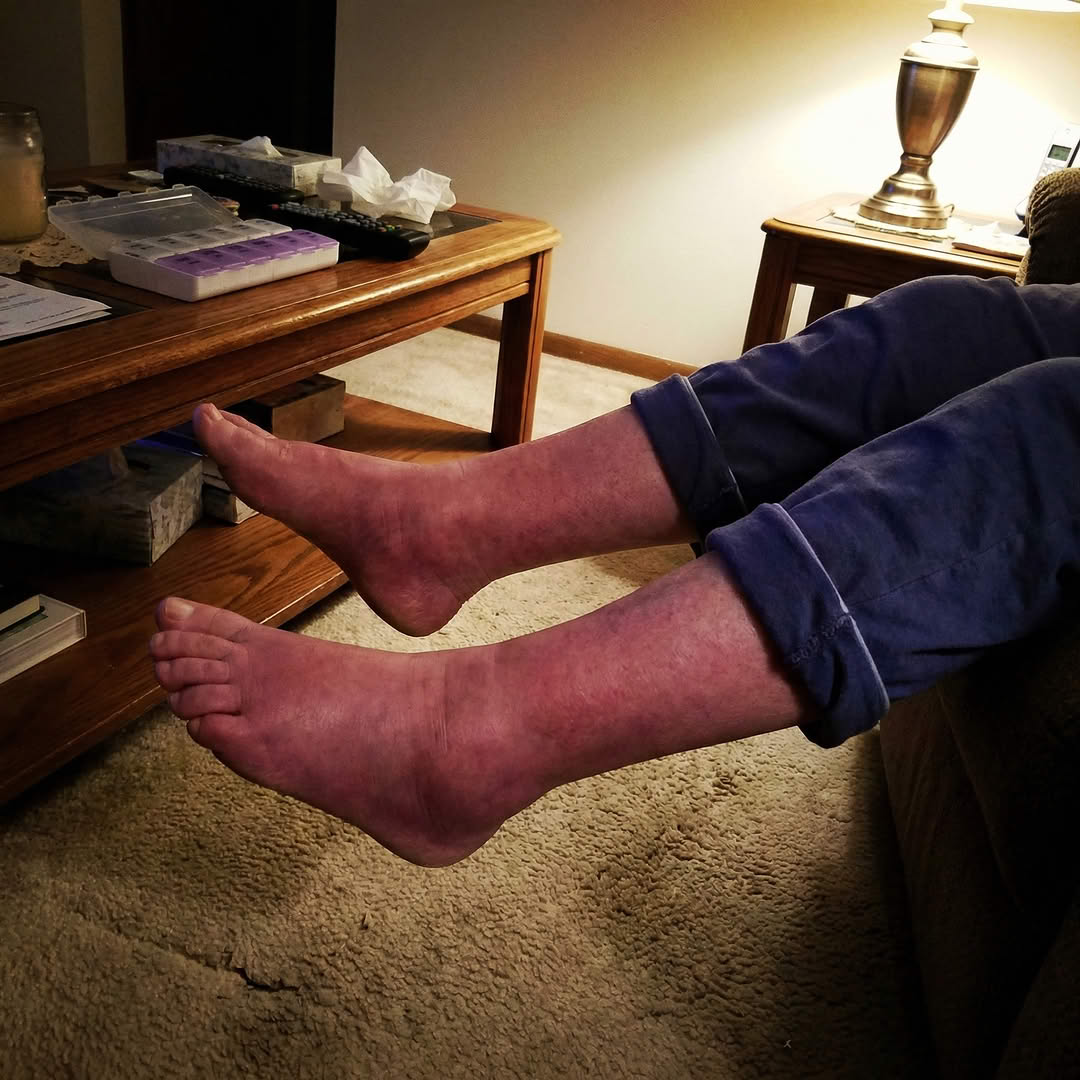
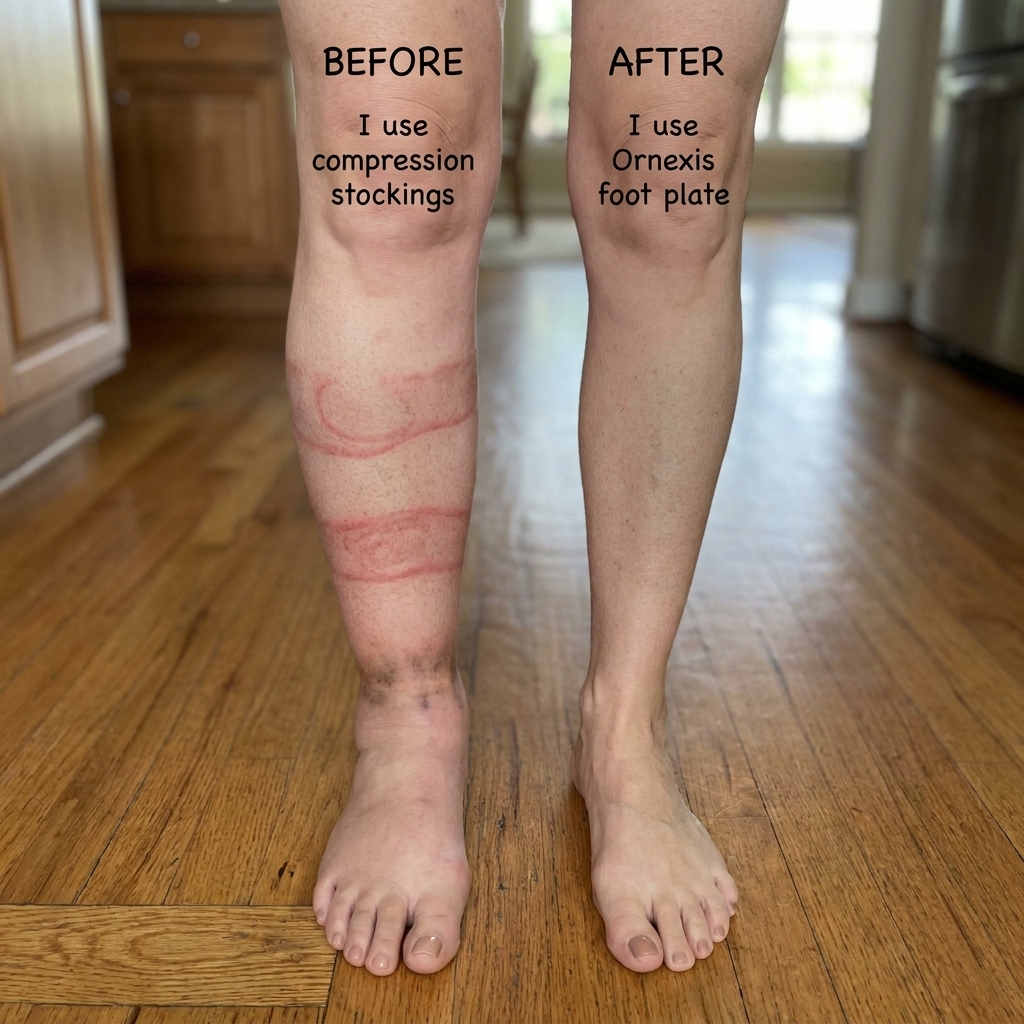
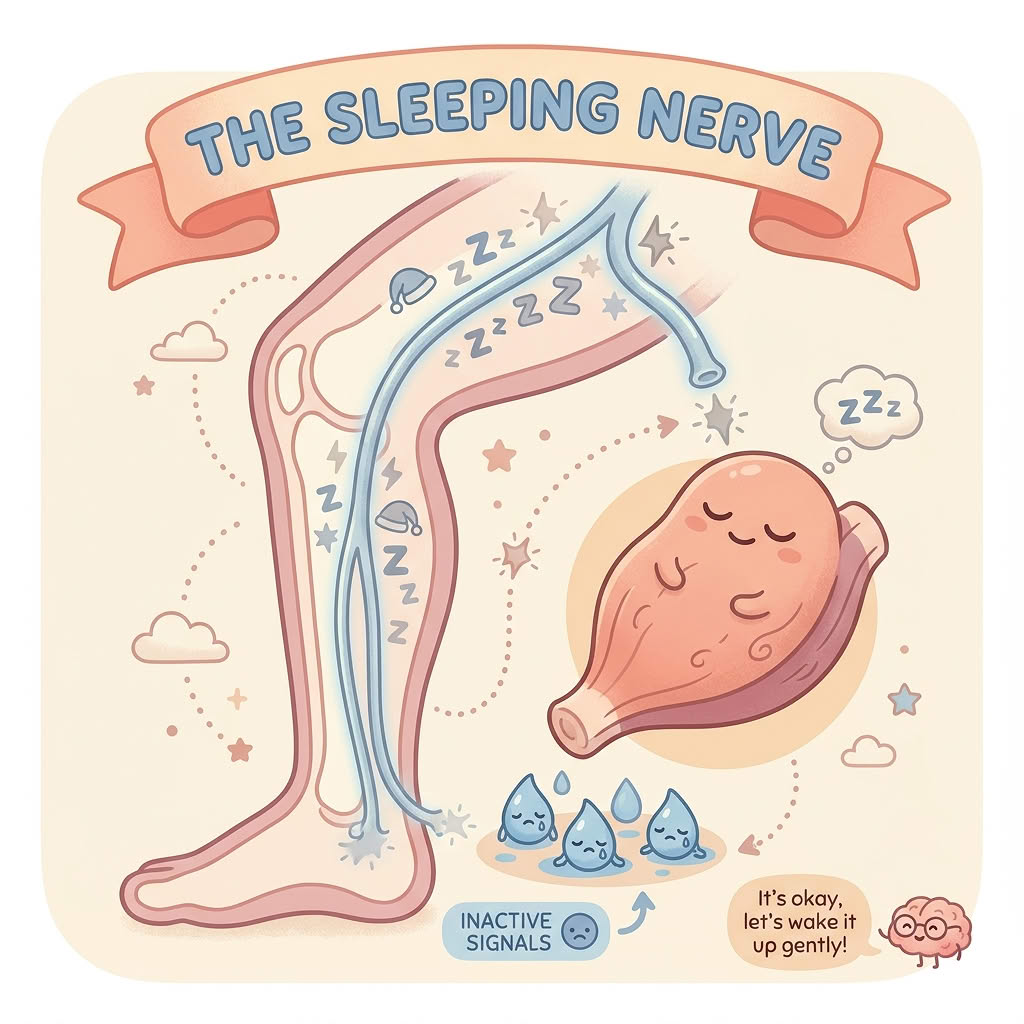
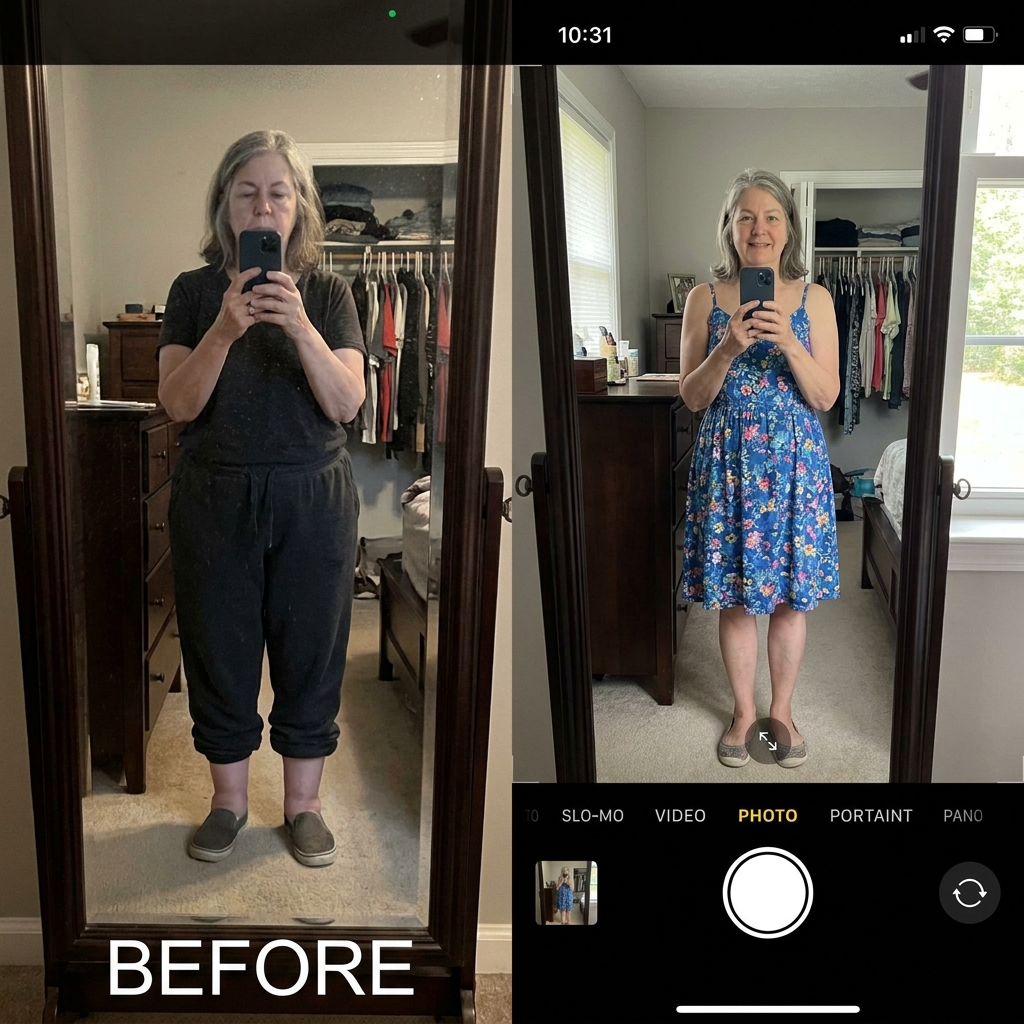
If you're one of the women whose ankles balloon by 5 PM, the specialist keeps saying "your measurements are stable," and you've tried more compression, Lasix, lymphatic massage and nothing changes... I'm about to tell you what nobody in the vascular system will ever bring up. And by the end of this, you're going to be furious. Because there are three things happening right now: One: Your "measurements are stable" label is giving you false hope while the calf pump quietly goes more dormant. Two: The medical system keeps telling you to be patient because you're "managing it," and as long as the measurements aren't catastrophic, your concerns get dismissed. Three: There's a multi-billion dollar compression and diuretic industry that profits every month you keep buying products that were never designed to address the actual cause. So let me tell you what happened with my older sister, because her story is going to open your eyes in ways you're not ready for. For almost six years, I watched my sister Linda lose her mobility. She'd always had thicker ankles since menopause hit at 54. But it didn't seem like a big deal at first. "Women swell after menopause." "She'll be fine on Lasix." The usual. By her mid-60s, the gap between what she could do and what she used to do was impossible to ignore. Her friends were still hiking, still wearing real flats, still walking the farmer's market for hours. Women she'd been jogging with in her 50s were suddenly leaving her behind. She started getting handed chairs at family gatherings. My sister would have to explain "no, I just need to elevate for a minute." Her confidence? Gone. She stopped accepting dinner invitations. Quit her walking group. Started wearing maxi pants whenever someone took a photo. Came home from a wedding one day and said "I'm tired of being the one who can't keep up." And the whole time, Linda was trying. Lasix every morning. Compression stockings every day. Custom flat-knit thigh-highs at $580 a pair. Lymphatic massage twice a month at $180 a session. She added horse chestnut and magnesium and diosmin and gave it her best every single day for almost two years. She took herself to the vascular specialist over and over. Same answer every time. "Your measurements are stable. The protocol is working. Some women just balloon more after menopause." Stable. That word drove Linda crazy. Because yes, technically, her measurements were "stable." Her right ankle hovered between 27 and 28 cm. Not catastrophic. But "stable" and "improving" are two completely different things. And as long as her measurements weren't going up by full centimeters, nobody cared. Didn't matter that she couldn't walk through a grocery store. Didn't matter that she'd been at the same swelling level for four years. Didn't matter that she was losing confidence and pulling away from everything. The specialist checked her boxes, said "stay on the protocol," and moved on to the next patient. So Linda waited. And waited. And waited. And you know what happened? Her calf pump went fully dormant at 67. Hemosiderin staining locked in. Permanent compression dependency. Pneumatic boots prescribed. That was it. Forever. All that waiting. All those stockings. All that Lasix. All those massages. All those checkups where they said "you're stable" and sent her home. None of it mattered. And here's the part that made me sick to my stomach. In six years of vascular appointments, not ONE person ever said "hey, maybe we should look at what's actually happening with the muscle that's supposed to drain her legs instead of just telling her to keep wrestling into stockings." Not one time did anyone mention that the compression was actually accelerating her calf muscle deconditioning. Not one time did anyone mention that her calf pump motor nerves were going dormant. Not one time did anyone explain that "stable measurements" doesn't mean "the cause is being addressed." They just kept saying "stay on the protocol" until there was nothing left to be patient for. And the menopause excuse? Linda is post-menopausal. So everyone just shrugged and said "well, that's what happens to women's circulation after menopause." That was the explanation. That was the sum total of vascular insight after six years. Postmenopausal woman, ballooning ankles. Case closed. Everyone accepted it. Linda accepted it. Even I almost accepted it. Until the same thing started happening to me. I'm 67. And three years ago, I started seeing the pattern. Same ankle measurement every checkup. My calf pump getting weaker. The 5 PM ballooning getting worse. That same look on my face in mirrors that I used to see on Linda's face. And the vascular specialist giving me the exact same lines my sister heard for six years. "Your measurements are stable. The protocol is working. Just stay consistent." I felt my chest tighten. Because I knew EXACTLY how this story ends. I watched it end for Linda. Pneumatic boots forever. Confidence never fully recovered. Still carries it into her seventies. And I made a decision right there. I am NOT watching this happen to me. I'm not following Linda's path. I'm not waiting for six years and blaming menopause when it's over. So at this point, I'm furious. And I started asking questions that nobody wants you to ask: Why are specialists so quick to say "stay the course" when there's a biological window they barely mention? Why do they dismiss your concerns just because the measurements are "stable"? Why does nobody ever talk about what actually needs to happen at the calf muscle level for circulation to drain properly? And why is every edema product on the market missing the one mechanism that actually matters? I told my specialist I was done waiting. She looked confused. Said "there's really nothing else to do. You're stable." But I wasn't accepting that. Not after what I watched happen to Linda. And I went down a rabbit hole. I mean a DEEP rabbit hole. I started researching everything about chronic edema. What actually happens at the muscle level. What drives venous return. Why some women improve and others just keep deteriorating. And every mainstream site was giving me the same answers. Stay on Lasix. Wear stronger compression. Elevate more. Reduce sodium. But then I found something that changed everything. A vascular rehabilitation study from a specialist studying calf pump dormancy in postmenopausal women below the recovery curve. And she mentioned something I had NEVER heard anyone talk about. Not my specialist. Not Linda's doctors. Not a single person in six years of appointments. Two mechanisms that actually drive lower-leg drainage. You know what's insane? We're told "wear your compression" and "take your Lasix" like that's all it takes. But nobody, and I mean NOBODY, ever explains that compression squeezing the surface and the calf muscle pumping fluid up are two completely different things. Or that the calf pump needs a specific signal to fire. And that's not an accident. Because once you understand these two mechanisms, you realize that everything most women are doing, the stockings, the Lasix, the supplements, the elevation, none of it addresses either one. Here's what actually needs to happen: First: Fluid needs the calf muscle contracting to reach the heart. Without active calf pump firing, fluid just pools in your lower legs. Compression squeezes the surface but doesn't fire the muscle. The muscle has to physically contract with every step to push deep venous fluid back up. Without those contractions, up to 70% of venous return can't happen. All those stockings. All that elevation. Largely working against the cause. Second: Calf pump motor nerves need clinical-grade EMS at 8-25 Hz to actually wake up. Even if you're walking, after years of compression dependency the motor nerves stop firing the muscle properly. Without specific neuromuscular reactivation, the muscle stays dormant. Like a sump pump that's been unplugged for years and doesn't know how to turn back on. When both systems are supported? Motor nerves fire. Calf muscle contracts. Drainage happens. When they're not? You get exactly what happened to Linda. Six years of stockings and Lasix and patience. And nothing to show for it but pneumatic boots. And here's what made my blood boil: The medical system KNOWS the calf pump matters. They USE clinical-grade EMS on post-surgical patients to wake the pump within 24 hours of surgery. But unless you've just had vascular surgery, they don't offer it. You're "stable." Measurements are "managed." You're "on the protocol." And as long as those boxes get checked, your concerns about ballooning ankles by 5 PM, losing confidence, withdrawing from activities, asking "why am I so heavy?"... none of that registers as a treatable problem. Because it isn't one. It's a reactivation problem. And the medical system doesn't do reactivation outside of surgical recovery. They do prescriptions. So you fall into a gap. Too "stable" for new intervention. Not improving enough to escape the protocol. And nobody on either side has an answer for you except "stay the course." Meanwhile, compression brands sell you $580 stockings and Lasix prescriptions and "leg health" gummies with no calf pump activation, no neuromuscular signaling, and cheap herbal extracts that absorb at 4%. And they make money every single month you keep buying them while nothing changes. See how that works? So I started trying to address both mechanisms myself. I pushed walking harder. Calf raises three times a day. Changed my whole evening routine to include foot circles and ankle pumps. Then I bought a vibrating foot mat from one brand. A cheap TENS unit from another. Found a "circulation booster" on Amazon that was supposed to deliver electrical pulses. Ordered another foot massager from a third company. Between the exercise overhaul and four separate devices, I was managing different brands, different settings, some plug-in, some battery-powered. Reorganizing evenings around device schedules. Arguing with myself about whether the buzzing was actually doing anything. Sneaking calf raises into kitchen prep. The whole thing was exhausting. And expensive. Between the devices and the lymphatic massages I kept up, I was spending over $300 a month on top of Lasix copays. Plus the mental load of tracking it all. But you know what? It started working. After about six weeks, I measured my ankle in the morning. The number was lower than it had been in months. Real movement for the first time in years. By month two, my right ankle had dropped from 28. 4 cm to 27. 6. Not dramatic. But measurable. More than I'd seen in the previous six months of compression and Lasix combined. By month three, my regular flats were getting loose. First time that had happened in over a year. I was thrilled. And exhausted. Because keeping this up was brutal. Four devices. Calf raise schedules every single day. Constant tracking. $300 a month I couldn't really afford on top of the rest of the protocol. And the results, while real, were inconsistent. Some weeks my ankles would slim noticeably. Other weeks the ballooning would creep back. I was never sure if I was getting the frequency right. Never sure if the cheap devices I picked were actually delivering anything therapeutic. Never sure if the "circulation booster" I found online was even penetrating past my skin. The science was working. I could see that. But my execution was messy. And I couldn't keep it up forever. That's when I went on a mission to find ONE device that actually put everything together properly. I spent weeks researching. Looking at waveform specifications. Frequency ranges. Third-party testing. Whether there was actual clinical research behind the device. Because the foot massager industry is full of products that slap "circulation support" on the label and fill the unit with cheap surface vibration. I needed clinical-grade EMS at 8-25 Hz. Not the 100+ Hz buzzing in cheap TENS units that does nothing for motor nerves. I'd figured out by now that this was probably why the cheap devices alone weren't doing as much as they could. The 8-25 Hz frequency band is what vascular rehab clinics use, and it's specifically what the calf pump motor nerves respond to. I needed bilateral plantar delivery. Both feet, both calves, simultaneously. Not single-foot devices that only activate half the system. I needed graduated intensity. So I could start where my dormancy was and progress as the muscle reactivated. I needed all of it in proper specifications. Not token settings. And I needed it in one device so I could stop managing a graveyard of foot massagers on my floor. Most products I looked at failed immediately. No clinical-grade waveform. No bilateral delivery. Cheap surface vibration. Just massagers with circulation marketing. Then I found the Ornexis EMS Foot Plate. And I almost fell out of my chair. Clinical-grade EMS at 8-25 Hz. The exact frequency vascular rehab clinics use to wake post-surgical patients' calf pumps within 24 hours. Bilateral plantar delivery. Both feet, both calves, simultaneously. So the entire pump activates, not just one side. 19 specialized programs. 99 graduated intensity levels. Different protocols for different stages of pump reactivation. Made in the USA by a small company in Wyoming. Third-party tested for safety. 100-day money-back guarantee. Everything I'd been buying separately. In the right specifications. In proper delivery. In one device. And when I looked at the price, my jaw dropped. I'd been spending over $300 a month on four separate cheap devices plus lymphatic massage. The Ornexis foot plate was a fraction of that — and it's a one-time purchase. Same science. Better waveform. Proper bilateral delivery. One device. Fifteen minutes with breakfast or in my evening recliner. That was it. I ordered it that night. Switched over the next morning. Bare feet on the plate. Pressed start. Done. No more four devices. No more calf raise schedules. No more daily exercise arguments with myself. No more $300 months. And here's what happened. The improvement didn't just continue. It got better. The inconsistency I'd been seeing with the DIY approach smoothed out. Instead of good weeks and slower weeks, the progress was steady. Month after month. I think the difference was the waveform and the bilateral delivery. The clinical-grade 8-25 Hz instead of the random buzzing I'd been partially relying on. The proper bilateral activation instead of single-foot guesswork. The graduated intensity instead of cheap fixed settings. By month three on the Ornexis plate, my right ankle had dropped to 24. 8 cm. Consistent. Steady. No plateaus. My real flats were loose again. My ankle bones were visible at 5 PM. My husband noticed without anyone saying anything. By month six, my right ankle was at 23. 9 cm. The ballooning that had defined my evenings for six years was finally reversing. And I noticed. "David, I think I can wear those flats to the wedding now." The flats had been buried in my closet for two years. I said it casually. But I could see it on my face in the mirror. It mattered. I asked David to plan a walking trip last month. First time I'd shown interest in over a year. And here's what keeps me up at night. Linda and I have the same family. Overlapping genes. Similar builds. Both went through menopause at the same age. Both had vascular specialists who said "stay on the protocol." Both had husbands who tried buying us better stockings and reminding us to elevate. Linda got six years of waiting and a menopause excuse. Her calf pump went fully dormant at 67. She's on pneumatic boots forever. I got clinical-grade EMS and bilateral pump reactivation during my window. I'm reversing. Same family. Same genes. Different intervention. Different outcome. Linda isn't trapped because of our family's circulation. She's trapped because nobody knew what to do during the six years her motor nerves were still partially firing. And everyone was too comfortable blaming menopause to look any further. I almost made the same mistake. Now here's the thing I need you to understand: Calf pump motor nerves don't stay reactivatable forever. The longer they're silenced by compression and Lasix, the harder they become to wake. Sometimes the dormancy becomes permanent. Linda's became permanent. We had no warning. Right now, if your ankles are ballooning and you've been waiting and trying the usual approaches, you can still wake your calf pump. But if you wait another year? Two years? The dormancy keeps deepening. And you won't know it's permanent until it's too late. Every month that goes by, women on long-term compression realize they should have addressed this earlier. They've waited until the pump was almost fully silent and suddenly everyone's scrambling. So if you're dealing with ANY of this: waiting years with no improvement in sight, ballooning getting worse instead of better, specialist telling you to "stay on the protocol" because the measurements are "stable," trying everything you've been told and watching nothing change, blaming menopause because nobody's given you a better explanation, watching your friends still hike and wear real flats while you fall further behind, terrified of pneumatic boots before you figure this out... this is literally the time. Not in two years when you're being fitted for boots. Right now. I put the link below. And honestly? Even if you're skeptical, grab one. Try it for 100 days. They offer a full money-back guarantee. Measure your ankle when you start. Measure again at 100 days. If you don't see results, send it back. Because the medical system isn't coming to save you. As long as you're "stable," they don't care that you're not improving. You have to take action yourself. Go get it. And watch the reversal finally happen. 👉 http://ornexis.com/pages/ems-edema
Like this ad? Make it yours.
Crush rebuilds this exact creative around your product — your brand, your colors, your offer — in about a minute.