
Active· since May 1, 2026
- 135
- days running
- 0
- relaunches
Ad copy
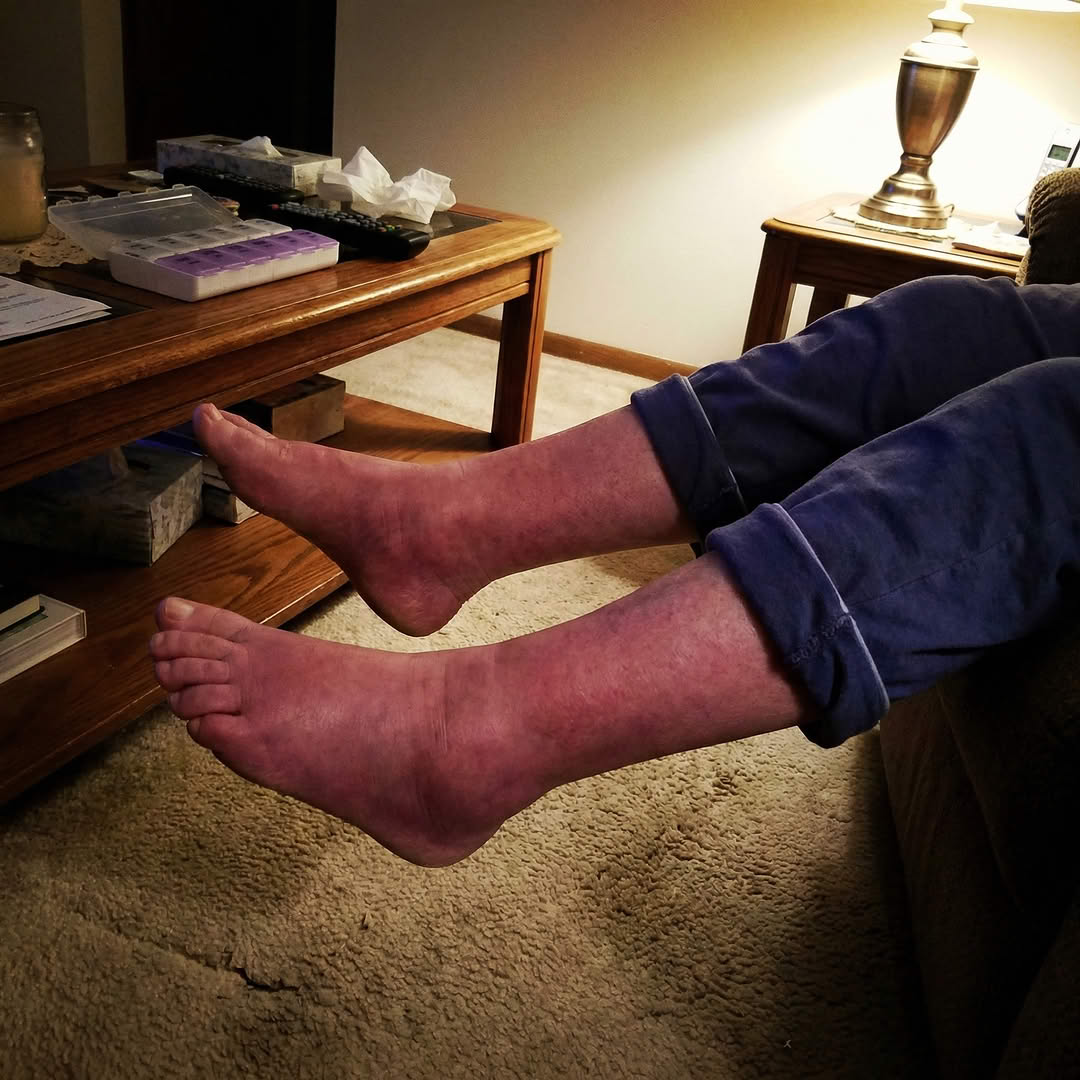
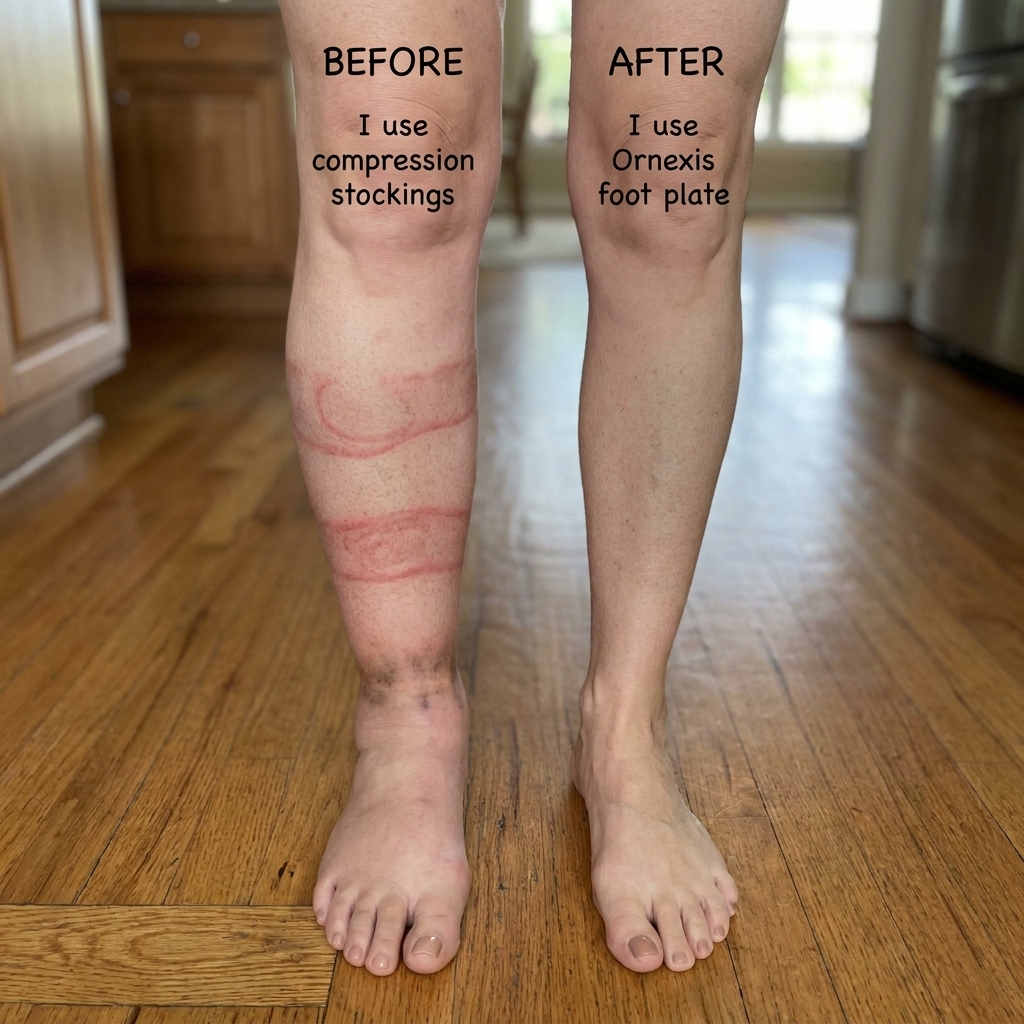
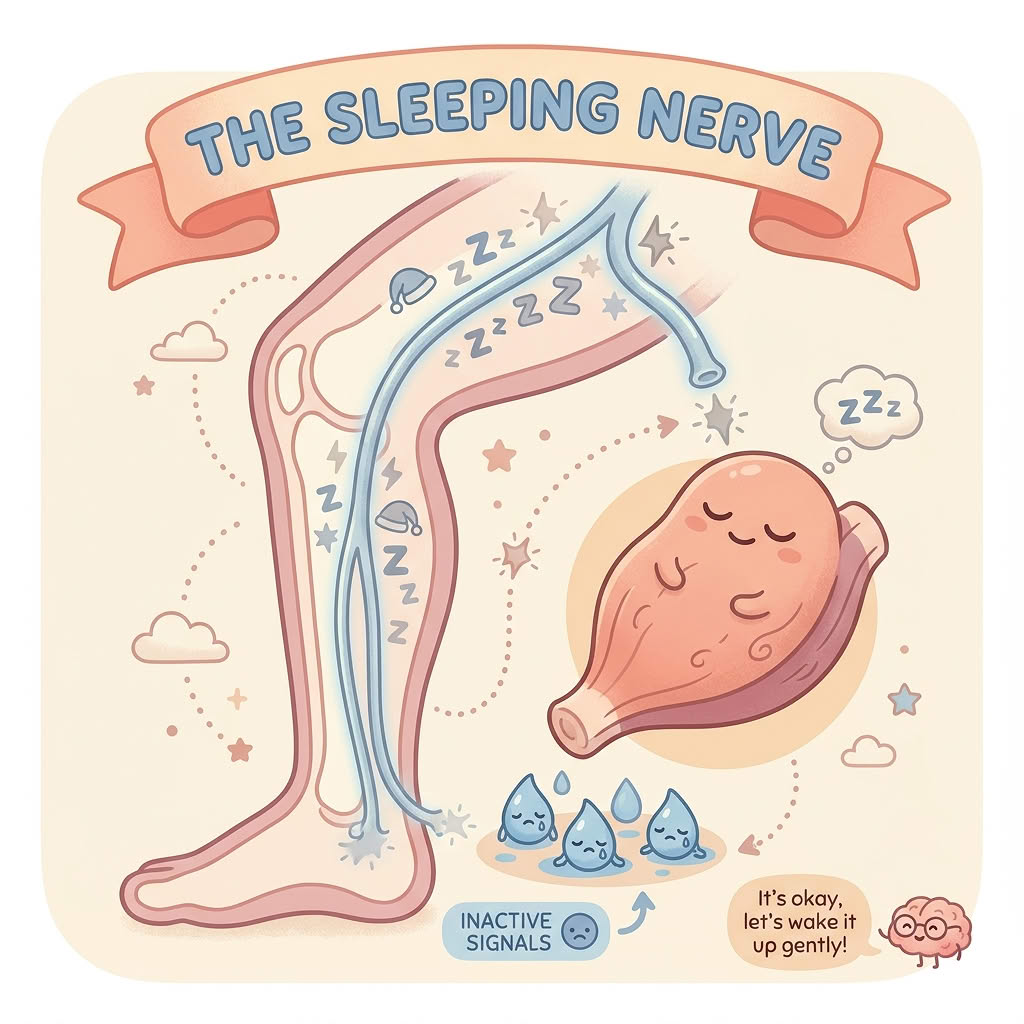
I've treated chronic edema in Germany for 20 years without lifelong compression. When I moved to America, I couldn't believe what doctors here were telling their patients. I've been a vascular specialist for 22 years. The first 20, I practiced in Munich. I moved to the United States two years ago when my wife's company transferred her to Chicago. I joined a vascular practice here. Good practice. Good doctors. And in my first three months, I saw something that kept me up at night. Women in their 60s and 70s coming in with significant swelling. Ankle bones invisible for years. Skin stretched paper-thin. Every one of them said the same thing. "My doctor has been monitoring it for years." Monitoring it. In Germany, we don't monitor chronic edema. We treat the cause. Because by the time it's severe enough to require pneumatic compression pumps or custom flat-knit garments, something has already failed — neurologically, mechanically — and those devices won't fix that. They only compress what's already pooled. --- Here's what your doctor probably hasn't told you about what chronic edema actually is. Your legs don't swell because you drink too much water or eat too much salt. The reason fluid accumulates in your lower limbs is mechanical — and specifically, neuromuscular. Your heart pumps blood down. Gravity does that work. But getting fluid back UP against gravity requires a second pump — the rhythmic contraction of your calf muscles. This is your calf muscle pump, and it moves approximately 70% of the venous return from your lower limbs. When this pump fires properly, your legs drain. Fluid moves up. Ankles stay slim. When this pump goes dormant, fluid pools. Gravity wins. The swelling begins. After age 55, your motor nerves fire less efficiently every year. By the time you're 65, nerve-conduction studies show roughly half the calf pump activity you had at 25. Your calf pump is starving for the electrical signal it was designed to run on. No amount of compression restarts that signal. Stockings apply pressure. They do not reactivate dormant motor nerves. So the fluid keeps pooling. The swelling keeps progressing. And your doctor keeps measuring your ankles and telling you to keep wearing your stockings. The Journal of Vascular Research published a 2019 meta-analysis of 14 studies across 3,142 patients. It confirmed that calf muscle pump failure — not fluid overload, not cardiac dysfunction, not kidney problems — drives chronic lower-limb edema in post-menopausal women with otherwise normal cardiovascular workups. Not fluid overload. Pump dormancy. Your diet isn't the problem. The protocol treating your diet as the problem is. --- I want to be honest about compression stockings and diuretics. Because most of my Chicago patients had been on both for years. Some had been escalated to pneumatic pumps. A compression stocking squeezes the leg from the outside. It holds fluid in place while you're wearing it. The moment you peel it off, fluid pools straight back. A diuretic drains the tank chemically. It empties fluid through your kidneys. The pump is still dormant, so the tank refills the next day. What neither of them does is address why the swelling is happening. The dormant pump is still dormant. The neuromuscular failure is still progressing. In the adjacent motor nerves, in the surrounding muscle fibers — the same process continues underneath, untouched. Compression is like bailing water from a boat that has a hole in it. The water level drops. For a while. I've seen it in patients who came to me after 10, 15, 20 years on stockings. Perfect compliance. Perfect fit. And every year, the swelling had migrated further up the leg. Because nothing had changed neurologically. --- This is what nobody tells you about where chronic edema leads if the underlying cause goes unaddressed. It doesn't stay at the ankles. The fluid continues to accumulate. Skin stretches. Loses elasticity. Becomes permanently shiny and taut. Eventually the tissue damage becomes structural — fibrosis sets in. The skin hardens. It can no longer be drained. At the next stage, skin integrity fails. Weeping legs begin — small breaks in the skin leak fluid continuously. Cellulitis, a serious bacterial skin infection, becomes a recurring medical emergency. Hospital admissions for IV antibiotics become part of life. I've had the conversation that follows more times than I should have. With women who did everything their doctor told them. Who wore their stockings twelve hours a day for twenty years. Who never missed a dose of Furosemide. Who still, over time, ended up in wound care clinics. The stockings addressed the symptom. The cause kept advancing. Silently, neurologically — until the damage wasn't manageable anymore. --- When I arrived in the US, I assumed the research on neuromuscular pump reactivation simply hadn't made it here yet. In Germany, we'd been working with NMES protocols for over a decade. It emerged from German and Austrian vascular rehabilitation research in the early 2010s — specialists studying why some patients responded to compression and others didn't, despite identical garments and identical fit. What they found was that non-responders had measurably lower calf pump function. The stockings were squeezing legs with dormant pumps inside them. It wasn't a fit problem. It was a pump problem. That research led to trials on whether restarting the calf pump electrically could stabilize — and in many cases reverse — chronic edema without lifelong compression, in early-to-moderate cases. The University of Heidelberg published a study involving 624 post-menopausal women with moderate chronic edema over 16 weeks. Two groups. Same diet guidance. Same hygiene protocol. Same cleaning schedule. Group B also used a clinical-grade NMES foot plate for 15 minutes daily, barefoot, in the evening. At 12 weeks: Group A continued to swell. Group B showed measurable ankle circumference reduction in 91% of patients. 38% showed restored ankle bone visibility — the clinical endpoint for functional pump recovery. The study conclusion: "Daily transcutaneous neuromuscular stimulation addresses the underlying pump dysfunction in age-related chronic edema, independent of fluid balance or dietary modification." Independent of fluid balance. Your diet doesn't determine this outcome. Your pump does. --- I want to tell you about one patient. Because her results are what I see when women finally address the right problem. She was 67. Had been monitoring her swelling since 59. Bilateral severe edema. Her previous vascular specialist had recommended a prescription pneumatic compression pump for home use — a large machine that would compress her legs with air cycles for two hours every day, for the rest of her life. She came to me for a second opinion. Her cardiac workup was clean. Her kidneys were fine. The swelling was real. In Germany, before we ever recommend escalating compression equipment, we ask one question: have we addressed the root cause? Compression patches the problem. It doesn't fix why the problem exists. I recommended 12 weeks of daily NMES pump reactivation before making any surgical decisions. She was skeptical. Eight years of perfect compression compliance hadn't stopped anything. She didn't believe 15 minutes a day on a plate could change what eight years hadn't. I explained it simply. Compression applies pressure. That's what it's designed to do. It does not restart muscle contraction. Your legs aren't swelling from fluid overload. They're swelling because the muscular pump that's supposed to drain them is no longer firing in sufficient rhythm from your body's own nerve signals. You can squeeze a bilge pump that's unplugged. The ship still takes on water. She agreed to try. Week 2: Legs felt lighter by evening. Less of the "cement-block" drag she'd lived with for years. Week 4: The pitting test — pressing a thumb into her shin — bounced back in four seconds instead of twelve. First time since 2017. Week 8: No 3 AM cramping. No dark welts at the calf band. She said she couldn't remember the last time either had been true. Week 12: Her clinical team measured her ankle circumference at each visit. Then measured again. Left ankle: reduced from 29. 4cm to 24. 2cm. Right ankle: reduced from 28. 9cm to 23. 9cm. Skin pitting: stabilized at grade 0 — clinically normal. Ankle bones: visible for the first time in eight years. She didn't need the pneumatic pump. In Germany, this is where we start. Not with escalating compression. With the pump itself. --- I share this because I spent two years quietly frustrated by what I see here. Women who came to me after years of being told to keep up the good work with their stockings — while their legs slowly disappeared under permanent swelling. Women who felt like they were failing. Like their bodies were betraying them despite everything they did right. They weren't failing. The protocol was failing them. American vascular training focuses on compression therapy and pharmaceutical management. Neuromuscular reactivation — restoring the pump itself — isn't part of standard training. Most American doctors graduated before this research was published. They practice what they were taught. That's not a criticism. It's just where the knowledge gap sits. But the research exists. And you don't have to wait for your doctor to find it. If you've been monitoring swelling for years with nothing to show for it but continued progression — if you've been on Furosemide and watched the swelling return the next day — if you've been told your compression is perfectly fitted but your ankles keep disappearing — The answer isn't to squeeze harder. It's to give your calf pump what it's been missing — the signal to fire again. I'll leave a link below to the device I recommend to my own patients. I have no financial relationship with this company. I recommend it because the mechanism is sound, the research supports it, and I've seen it work. You've spent years doing what you were told. It's time to address what you were never told. 👉 http://ornexis.com/pages/ems-edema
Like this ad? Make it yours.
Crush rebuilds this exact creative around your product — your brand, your colors, your offer — in about a minute.