Journal of Health & Science
Journal of Health & Science Facebook ad: “Feel Like Yourself Again”
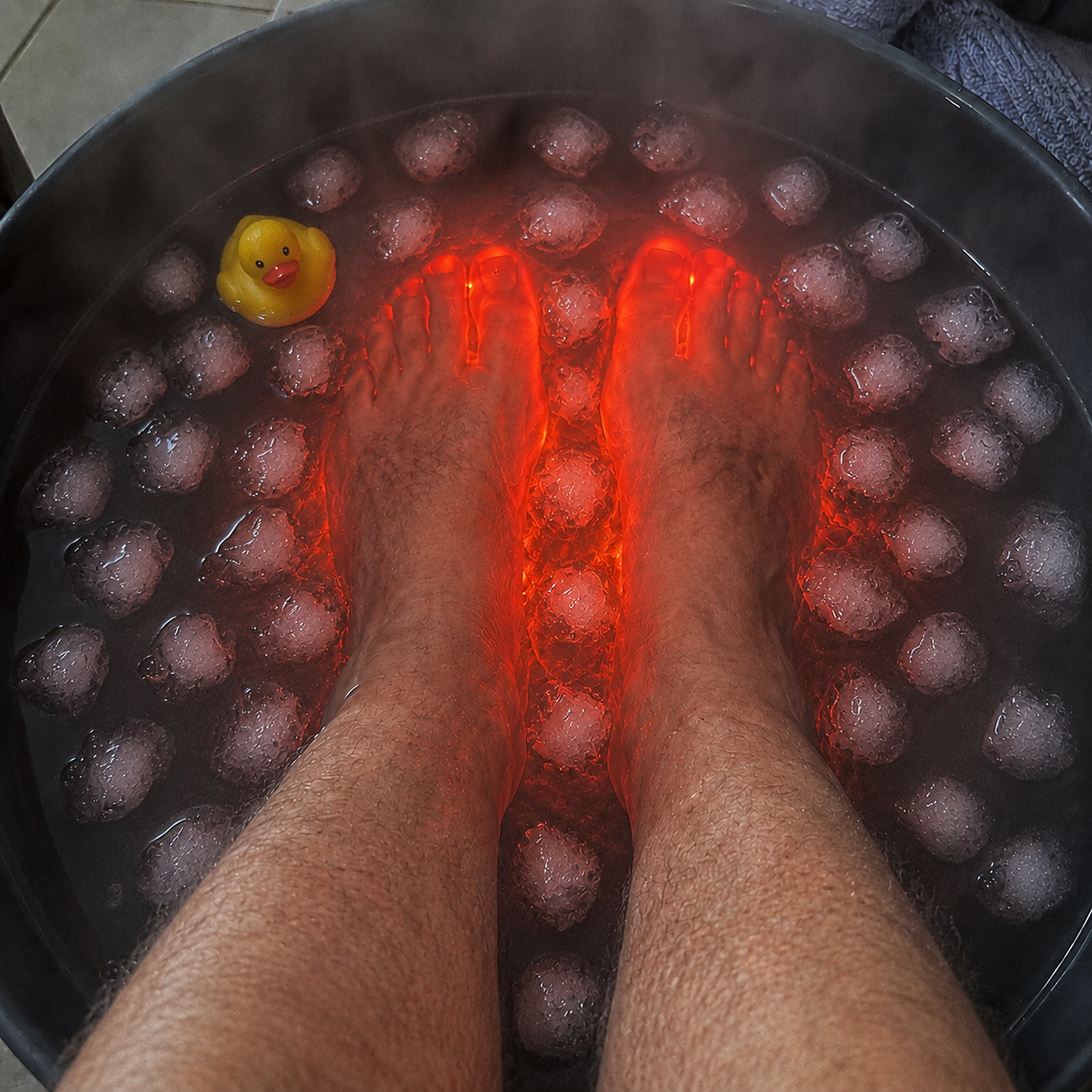
Ran for 18 days, from August 13 to August 31, 2026, the last day Crush saw it.
Run by Journal of Health & Science on Facebook. Crush is not the advertiser and does not verify its claims. See this ad in Meta's Ad Library(opens in a new tab)
Want an ad like this for your product?
Crush makes new ad images for your product from this ad: your logo, your product photo, your offer.
Trials from $19.95 USD, then $79.95 USD a month. Cancel anytime.
About this ad
- Meta Ad Library ID
- 27699178849753969
- Platforms
- Facebook, Instagram, Audience Network, Messenger and Threads
- Relaunches
- 6
Ad text
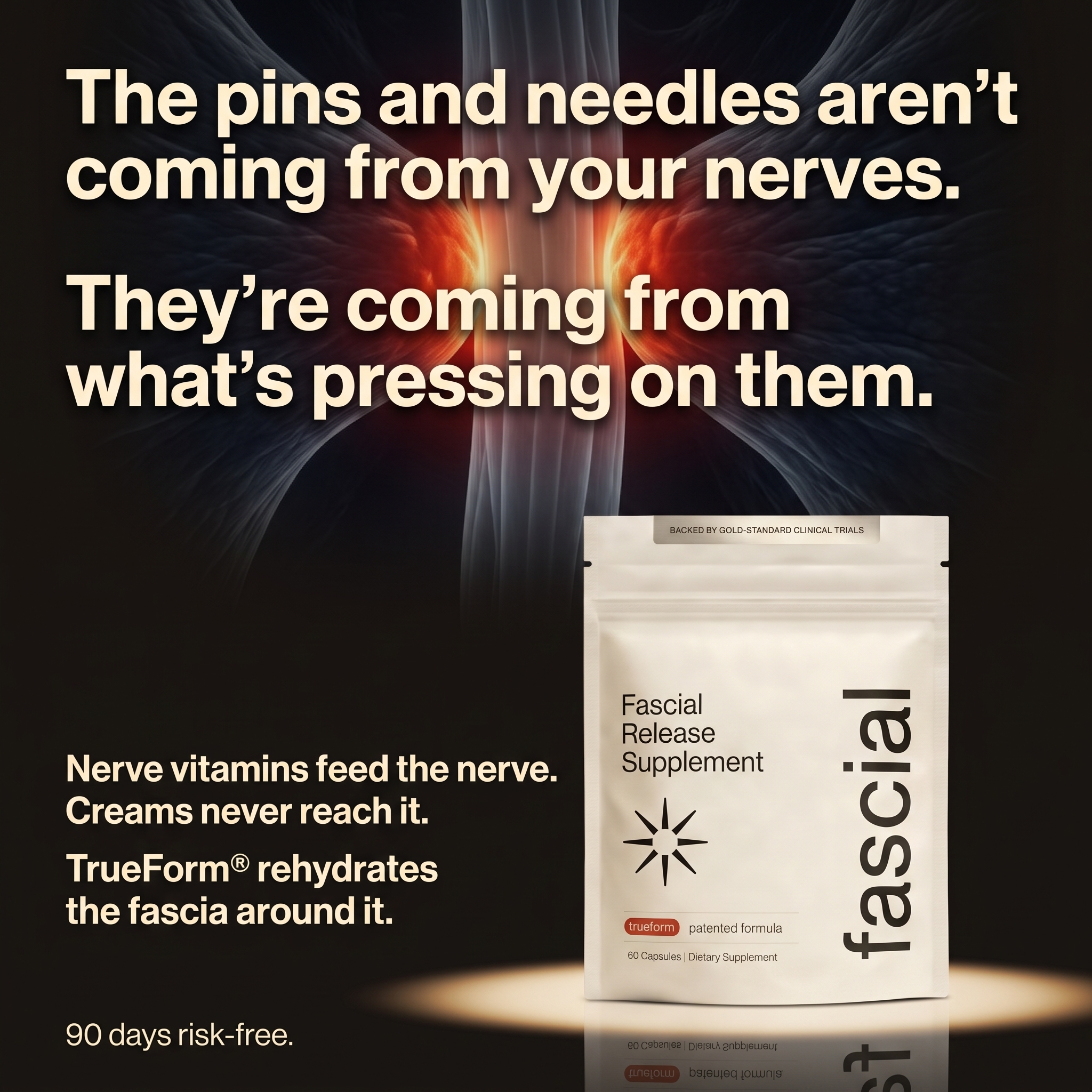
My doctor Told Me if I Refused Gabapentin, she'd Document it in my chart as Non Compliance against medical advice. I'd had fourteen minutes with her. She'd never even met me before. Dr. Barrett's retirement letter came on a Tuesday. Standard form letter. "After 41 years of practice, I'm stepping away effective March 1st. Your care will be transferred to Dr. Sasha Patel." I sat at the kitchen table staring at it. Twenty nine years. I'd been seeing Dr. Barrett for twenty nine years. He knew my history, knew what nerve medication did to my father, knew my fear of starting down that road, and he'd always worked with me. Always said the same thing. "Let's keep trying the natural approach first, Glenn. Your symptoms are manageable. You're doing the right things." Now he was gone. My first appointment with Dr. Patel was March 17th. Routine physical. Transfer of records. Meet the new doctor. I sat in the exam room, same room I'd been in for decades, same anatomy posters on the wall, different doctor. Dr. Patel walked in. Young. Maybe 35. Laptop in hand. "Mr. Whitaker." Firm handshake. All business. "I've been going through your file." She sat down, pulled up my records, scrolled, and her expression changed. "Your neuropathy history." She turned the screen toward me. "2021, mild tingling in both feet. 2022, burning at night, two to three times a week. 2023, numbness spreading into the toes, balance issues noted. 2024, burning every night, can't tolerate socks. 2025, loss of sensation across the ball of the foot. Today, you reported nighttime burning, numbness, tingling, and at least one near-fall in the last month." She looked at me. "Five years of progressively worsening peripheral neuropathy. No identified cause. No medication prescribed." "Dr. Barrett and I had a plan. B12, alpha lipoic acid, magnesium, he was monitoring..." "For five years?" Her voice was sharp. "Mr. Whitaker, your nerve damage has been progressing this entire time without treatment. I don't know what your previous doctor was thinking, but this should have been addressed aggressively years ago." My stomach dropped. "Dr. Barrett knew my history. My father had terrible reactions to..." "Your father's history doesn't change what's happening to your nerves. The burning, the numbness — you're already losing protective sensation. You're a fall risk. This condition is permanent and progressive. You could be in a wheelchair in seven years." She was already typing. "We're starting Gabapentin. 300 milligrams, three times daily." "I'd rather..." "This isn't a discussion. Your neuropathy is advancing. If you refuse treatment, I'm required to note it in your chart as non-compliance against medical advice." The printer hummed. She handed me the prescription. "Follow up in twelve weeks. We'll do a full nerve assessment and see where you're at." She stood. Left the room. The whole appointment took fourteen minutes. I sat there holding the prescription, hands shaking, the words "against medical advice" and "non-compliance" rolling through my head like a verdict. And one other word. The one that hit hardest. Permanent. In the parking lot, I called my wife Roslyn. "How was the new doctor?" "She says Dr. Barrett should have put me on Gabapentin years ago, and she wants me on it immediately." Silence. "What?" "She said five years without medication was irresponsible. She said it's permanent." "But Dr. Barrett always said you were..." "I know what he said. She doesn't care. I either take the medication or it goes in my record that I refused." That night I couldn't sleep. Just lay in bed staring at the ceiling, the burning in my feet worse than usual, feet out from under the covers because the sheets made it worse. Roslyn's breathing steady next to me. Dr. Barrett had respected my concerns. We'd worked together for almost three decades. B12, alpha lipoic acid, magnesium, daily walks when I could manage them, regular checkups every six months. My symptoms had gotten worse, yes. But gradually. No sudden flares, no emergencies, no falls. And there was one more thing that never sat right with me. Nobody had ever told me why. Every test they'd ever run came back normal. No diabetes. Nothing in the blood work. The official word on my chart was idiopathic. Which is the medical word for: we don't know. Was Dr. Barrett wrong to be patient? Was I letting something permanent set in while I waited? At 3 AM I went downstairs, sat at the kitchen table with my laptop, and started searching. is peripheral neuropathy really permanent idiopathic neuropathy getting worse nerve damage risks without medication balance loss neuropathy fall risk men 50s Every article said the same thing. Permanent. Progressive. No cure. Manage the symptoms. Maybe Dr. Patel is right, I thought. Maybe I've been reckless. But then I searched, gabapentin side effects long term. Brain fog. Memory loss. Dizziness. Weight gain. Withdrawal that's worse than the original pain. And my father's face flashed in my mind. He'd been on nerve medication for thirteen years. Started with Gabapentin, the same medication sitting on my counter right now, and the fog came within six weeks. Not a little forgetfulness. A deep blanket that settled over his whole brain, made him slow to answer questions, made him lose his train of thought mid sentence, made him stare at the TV without knowing what he was watching. They bumped him to a higher dose and the burning eased slightly, but then the dizziness came. He fell twice in one month, broke his hip the second time, and the fog got thicker. He started forgetting things. Small things at first, where he'd put his keys, what he'd gone to the store for. Then bigger things. Names of people he'd known for years. The punch line of a story he'd told a hundred times. And the fatigue. That was the worst. This was a man who coached my Little League team, built our front porch with his own hands, fixed the car in the driveway on weekends. By 65, he was napping twice a day, couldn't follow a conversation without losing the thread, lost interest in everything he used to love. Just existing. Going through the motions of a life that didn't feel like his anymore. My mother said it was like watching him disappear. He died at 70. Heart attack. While taking the medication that was supposed to help him. Thirteen years of side effects. Thirteen years of feeling like a shadow of himself. And his feet still burned the whole time. I closed the laptop, rubbed my face, and just sat there in the kitchen with the prescription on the counter mocking me from across the room. I didn't fill it. One week passed. Then two. Dr. Patel's office called. "Mr. Whitaker, our records show you haven't filled your prescription. Dr. Patel wants to confirm you're taking your medication as directed." "I need more time to think about it." "Sir, Dr. Patel noted this as urgent, she strongly recommends..." "I said I need more time." I hung up. Roslyn found me in the garage that evening. "Glenn. Talk to me." "I'm looking for options." "Options? The doctor said it's permanent. She said you could end up in a wheelchair." "She said Dr. Barrett was wrong for not putting me on a pill. But Dr. Barrett knew me for twenty nine years. He knew my father's history. He saw what those medications did to him. He was being careful with me." "But what if she's right? What if you..." Her voice broke. "I don't want to watch you disappear like your dad did." "You won't. I just need to find another way." "What other way?" I didn't have an answer. That weekend I searched everything. B12. Methyl B12. Alpha lipoic acid. Acetyl L carnitine. Benfotiamine. Magnesium. Nerve creams. Every natural neuropathy supplement with actual research behind it. I tried the top rated B12 nerve formula on Amazon. Six weeks, every morning without fail. The burning was the same. Maybe a fraction better some nights. Probably just a good night. Switched to high dose alpha lipoic acid, 800mg, eight weeks. Nothing. Tried a full nerve support stack from a specialty supplement store. ALA, B vitamins, acetyl L carnitine, benfotiamine. The most expensive thing they had. Some nights felt slightly easier. Most felt the same. I was running out of time and running out of ideas. Three weeks before my appointment I was back at my laptop at 2 AM going in circles, reading the same supplement forums, the same Reddit threads, the same dead ends. Then I changed the search. I stopped searching for supplements and started searching for the actual reason nerves misfire in the first place. Not what to take. What's actually happening. Why my symptoms kept getting worse year after year no matter what I did. And I found something that changed the way I understood all of it. It wasn't hidden. It wasn't some secret nobody wanted me to know. It was new research, most of it published in just the last five years. Just nothing anyone had ever bothered to explain to me in a doctor's office. The damage isn't the problem. The pressure is the problem. I read that line three times. Your nerves don't travel through empty space. Every nerve in your body — from your spine all the way down to your toes — runs through a layer of living tissue called fascia. It's one continuous sheet of connective tissue running from your scalp to the soles of your feet. If you could pull it out of a body in one piece, it would come out looking like a full bodysuit. Every peripheral nerve you have is wrapped in it. When fascia is healthy, it's soft. Hydrated. Slippery. It cushions the nerves running through it and gives them the room they need to fire normally. You never feel it. You're not supposed to. But that softness depends on one thing. Your body produces a specific set of nutrients, quietly, in the background, that keep the fascia hydrated. As long as they keep arriving, the tissue stays soft. As you age, that production slows down. Stress speeds up the decline. Illness speeds it up. And in some people, the supply drops far enough that the fascia stops getting what it needs. Then it dries out. Think of a wetsuit. When it's new, it's soft and stretchy. It slides on, moves with your body, you forget it's there. Now leave that wetsuit out in the sun for a year. What you pick up off the ground is stiff, shrunken, rigid. If you forced it on, it wouldn't slide. It would squeeze. That's what happens to the fascia running through your feet, your calves, your hands. The tissue that used to cushion your nerves hardens and tightens around them instead. And it doesn't squeeze for an hour. It squeezes twenty-four hours a day. For years. That's when the tingling starts. Then the burning. Then the numbness. Then the spreading. I sat back in my chair. Because here's the part that made my hands go still on the keyboard. The tests. An EMG measures how well a nerve conducts a signal. An MRI shows the structure of the nerve itself. Blood panels look for diabetes, deficiencies, inflammation. Every single one of them looks at the nerve. Not one of them was designed to look at the tissue around the nerve. That's why five years of my tests came back "normal" while my feet burned every night. That's why the word on my chart was idiopathic. They weren't finding nothing because nothing was wrong. They were finding nothing because every camera was pointed at the wrong tissue. And then it explained the other thing. The thing I'd never been able to say out loud at an appointment without feeling crazy. Why it felt like pressure. The socks that felt wadded up in my shoes when they weren't. The boots that felt too tight when they fit fine. The band around my calf, like something cutting off circulation. The feeling of walking on pebbles that weren't there. I'd been describing compression for five years. Because that's exactly what it was. A nerve being squeezed reports being squeezed. My body had been telling the truth the whole time. Then the supplements. That was why the B12 hadn't worked. Why the alpha lipoic acid hadn't worked. Why the nerve stack hadn't worked. Every one of those was aimed at feeding the nerve. Repair materials. Vitamins. Antioxidants. And in a healthy body, that's exactly what they do. But my nerves weren't sitting in a healthy body. They were being compressed around the clock by hardened tissue. The damage was happening faster than any repair could keep up. I was bandaging a hand that was still slammed in the door. That image hit me like a truck. Real money. Real months. Every capsule delivered to a nerve that was still being crushed while it tried to heal. And the Gabapentin? Gabapentin doesn't touch the tissue either. It works on the brain. It turns down the volume on the pain signal so you hear less of it. The squeeze doesn't stop. The nerve is still compressed at 2 AM. You just can't hear it screaming anymore. That's why so many people on Gabapentin keep getting worse. That's why the numbness keeps spreading even when the burning is dulled. That's why my father's feet still burned through thirteen years of the medication. We were addressing the wrong thing. So I changed what I was reading. I stopped scrolling supplement forums and pulled up the actual research. Studies. Reviews. The kind with authors, journals, and dates on them. What I found wasn't fringe. It was recent — most of it published in peer-reviewed medical journals between 2020 and 2025. Researchers had started measuring the fascia around compressed peripheral nerves. And in people with chronic nerve pain, they kept documenting the same thing. Hardening. Thickening. Loss of hydration. Tissue physically constricting the nerves running through it. It even explained why massage and stretching never hold. The tissue isn't tight from the outside. It's dried out from the inside. You can't rub water back into it. Then I found a 2025 review that went one step further. It looked at what happens when treatment targets the fascia instead of the nerve. Across multiple types of neuropathy, nerve conduction improved. Pain, tingling, and numbness dropped. Measurably. Not by numbing the signal. By easing the pressure on the nerve. I read it twice. Because it was the first time in five years anything had been aimed at the thing actually causing the problem. And the research kept pointing at two specific compounds. The first is an enzyme called serrapeptase. It breaks down hardened, built-up protein in dense tissue — the exact material densified fascia is packed with. It isn't new. Doctors in Japan and Europe prescribed it for decades for hardened, fibrous tissue. And a 2023 study showed what it does here: when the buildup inside densified fascia gets broken down, the tissue starts gliding normally again — and the nerves running through it start signaling normally again. The second is hyaluronic acid. The molecule fascia uses to hold water. Your body produces it on its own — and the research shows that production drops with age. That's the supply I'd read about. The one that falls low enough in some people that the tissue dries out and starts to squeeze. Clear the buildup. Put the water back. When that happens, the tissue softens. And softened tissue stops squeezing. The burning quiets because the pressure eases. The tingling settles because the nerve isn't being pinched. Feeling comes back because the signal can get through again. Balance returns because your feet and your brain are talking again. The hand out of the door. Finally able to heal. I stayed up until 4 AM reading everything I could find. The logic held everywhere I looked. If the tissue is dried out from the inside, nothing from the outside can loosen it. And nothing aimed at the nerve can fix it. It needs to be rehydrated. Given back the compounds it stopped receiving. As I read, one name kept coming up. Not on the wellness blogs. In the forums, from people whose stories sounded exactly like mine — except they were posting updates. Good ones. Week by week. TrueForm. Made by a company called Fascial Labs. The first formula built specifically to rehydrate densified fascia. Enteric-coated serrapeptase at a full 40,000 SPU — the coating matters, because stomach acid destroys the enzyme before it can ever reach the tissue. High-molecular-weight hyaluronic acid, the kind the research actually used. Plus a supporting matrix that reinforces the tissue while the main ingredients work. Third-party tested. Made in the USA in an FDA-registered facility. Small clinical batches. No fillers. 90-day money-back guarantee. I ordered it that night. The pouch arrived three days later. Two capsules a day. One in the morning, one at night. That's the whole protocol. I took the first dose after breakfast. Didn't expect much. I'd been wrong three times already. I knew tissue takes time. Nothing was going to happen overnight. So I told myself ninety days. Don't expect anything before then. But I noticed something by the end of the first week. The burning still came at night, but it came in quieter. I fell asleep before it could stop me. Two nights in a row. Could be placebo. Could be a good week. I wasn't counting it yet. Week two, I woke up on a Saturday morning and my feet didn't feel like they were on fire. The dull throb that had been there for years, the background hum I'd stopped noticing because I'd made peace with it, was turned down. Roslyn said something first. "You seem less heavy. Like something lifted." She was right. I didn't have a word for it until she said it. Week three, I was making coffee in the kitchen and I felt the cold tile under my feet. Not the burning. Not the numbness. The cold. Of the floor. Through my bare feet. I stood there for a full minute trying to make sure I wasn't imagining it. And I thought of my dad. Thirteen years on the medication and his feet burned the whole time. Thirteen years and he never once felt a cold tile floor through bare feet the way I was feeling it right now in my own kitchen. I called Roslyn in. "Touch my foot." "What?" "Just touch the top of my foot." She did. And I felt it. Right where she touched. Not muted. Not far away. There. She started crying. Week four, the socks. I put on regular socks — not the loose ones I'd switched to years ago — and wore them through the whole day. No wadded-up feeling. No band around my calf. They just felt like socks. Week five, I sat down with a notebook and a basic monofilament I'd ordered online, the same kind a doctor uses to test protective sensation, and I tested every spot on both feet. Three days in a row. Same routine. I was feeling things I hadn't felt in two years. Week seven, I tested again. Same routine, three days, every spot. Sensation across the whole foot. Balance better than it had been in three years. No nighttime burning for nine straight nights. I sat at the kitchen table and just breathed for a while. Two days before my appointment with Dr. Patel, I had my pre-visit nerve assessment with the nurse. Standard monofilament test, vibration test. The results would be in my chart before she walked in. At the appointment, I sat in the same exam room. Same posters on the wall. Different feeling. Dr. Patel walked in. Opened my chart. Stopped. "Protective sensation has returned across both feet. Vibration sense improved. Balance within normal range." "Yes." She looked at the previous note. Then at the new one. She set the laptop down on the counter and looked at me directly for the first time since I'd met her. "You started the Gabapentin?" "No." "No?" "Fascia support. I know how that sounds. But there's a real reason it works. The nerves in my feet don't travel through empty space. They run through connective tissue called fascia. When that tissue is healthy, it's soft and hydrated and the nerves glide through it. When the body stops producing the nutrients that keep it hydrated, it dries out, hardens, and starts squeezing the nerves running through it, around the clock. That's where the burning and the numbness come from. And no test I've ever had looks at that tissue. I've been taking an enzyme that breaks down the hardened buildup, and hyaluronic acid to rehydrate the tissue so it softens and lets go of the nerves." Long pause. "Where did you read this?" "Research on fascial densification and peripheral nerve compression. Most of it published in the last five years. I'll send it tonight." She looked at my chart again. Then at me. Something in her face changed. Not warm, exactly. But less certain than it had been fourteen weeks ago. "What specifically are you taking?" "TrueForm. Serrapeptase and high-molecular-weight hyaluronic acid. Third-party tested. Made in an FDA-registered facility." She typed it in, read for a long time, looked at the sourcing and the testing documentation. "Continue what you're doing. Back in twelve weeks. If sensation continues to improve, we'll skip the Gabapentin entirely. No medication." I walked out of that office and sat in my car for ten minutes. Called Roslyn. "Sensation has come back. She's not prescribing anything." She went quiet. Then, "no medication?" "No medication. We just keep monitoring." She didn't say anything for a moment, and when she did her voice was tight. "I knew you'd find something." That was four months ago. Last week I got my quarterly nerve assessment. Full protective sensation across both feet, normal balance, no burning, no spreading numbness. Stable. No medication. No compliance flag in my chart. Just feeling. If you're reading this, you're in the same position I was. Cornered. Pressured. Feeling like Gabapentin or one of its cousins is the only option your doctor will accept. Here's what I learned after months of failed supplements and two nights of actual research. The reason most neuropathy supplements don't work is that they're feeding a nerve that's still being squeezed. B12. Alpha lipoic acid. Magnesium. Acetyl L carnitine. All of it shows up at the door. But as long as the fascia around the nerve stays hardened and tight, the pressure keeps doing damage faster than any repair can happen. Until the tissue softens and lets go, the cycle doesn't stop, and your symptoms keep getting worse no matter how much you take. Gabapentin turns down the pain signal, but it doesn't touch the tissue either. Which is why so many people on Gabapentin keep losing feeling. And why my father did. And why his feet were still burning the day he died. TrueForm was the only formula I found built specifically for the fascia. Serrapeptase to break down the hardened buildup. High-molecular-weight hyaluronic acid to put the water back so the tissue softens and releases. Third-party tested, made in the USA in small clinical batches. I don't know if it's the only one out there. I know it's the one that worked for me. I went from waking up every night at 3 AM with my feet on fire to feeling the cold floor under my feet for the first time in years. My doctor monitors me quarterly. No medication. No lectures. No compliance flag. Just feeling she can't argue with. If you feel cornered, give it 90 days. Track your symptoms at home. Write down what you feel and what you don't. Then walk into your next appointment with the record. Two capsules a day. Stay consistent. Don't skip days. That's the whole protocol. 90-day money-back guarantee. If you don't feel a real difference, contact them for a full refund. No returns, no forms, no questions. You risk nothing. Fascial Labs makes TrueForm in small clinical batches, and a portion of every batch is reserved for the clinicians who recommend it in their practices. Whatever's left goes to the public, first come, first served. When a batch sells out, the next one takes weeks. I learned that the hard way when I tried to reorder and had to wait. I keep a spare pouch in the kitchen drawer now. Feeling is the only thing that changes a doctor's mind. 👉 https://tryfascial.com/products/trueform-fascial-release Glenn Whitaker P.S. If you want to read more research related to this first, here is the link: 👉 https://tryfascial.com/pages/emerging-2026-research-is-pointing-to-a-new-root-cause-of-neuropathy P.P.S. The burning quieted by week two, I felt the floor under my feet by week three, and my nerve assessment came back improved by week seven. She dropped the Gabapentin on the spot. Your timeline may vary, but 90 days is the window, and you risk nothing. 👉 https://tryfascial.com/products/trueform-fascial-release P.P.P.S. The reason it works is real. Your nerves aren't traveling through empty space. Something is wrapped around them — and nobody ever checked it. I did the looking. Now you have the answer. 👉 https://tryfascial.com/products/trueform-fascial-release
Where the ad sends people
tryfascial.com
Feel Like Yourself Again
The first supplement formulated to rehydrate densified fascia — recommended by 400+ clinicians for chronic pain, stiffness, and restricted mobility.
Learn more: tryfascial.com(opens in a new tab)