Paw & Co. Vet
Paw & Co. Vet Facebook ad: “78% of dogs over age 7 are silently developing arthritis…”
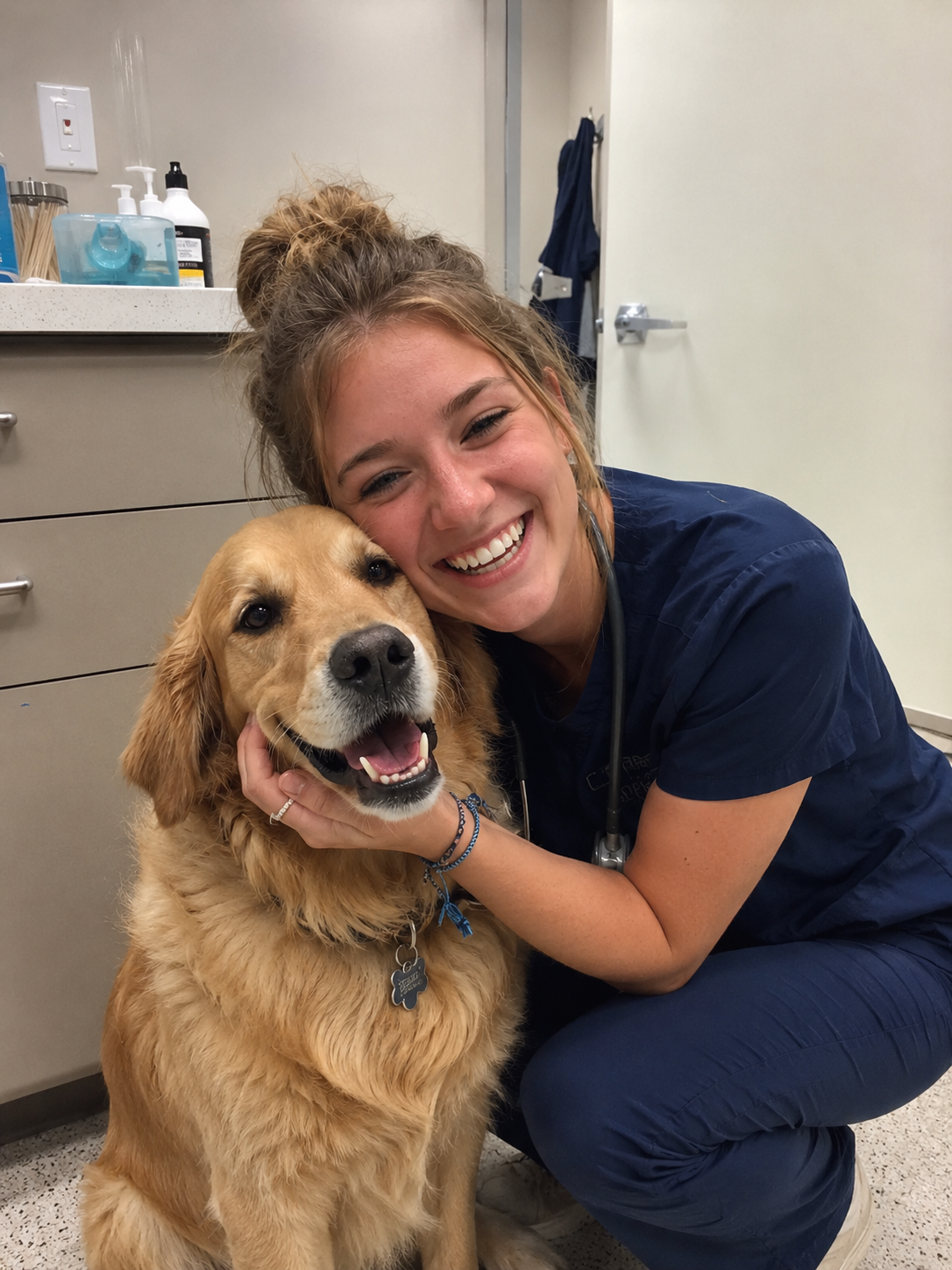
Ran for 40 days, from May 17 to June 25, 2026, the last day Crush saw it.
Run by Paw & Co. Vet on Facebook. Crush is not the advertiser and does not verify its claims. See this ad in Meta's Ad Library(opens in a new tab)
Want an ad like this for your product?
Crush makes new ad images for your product from this ad: your logo, your product photo, your offer.
Trials from $19.95 USD, then $79.95 USD a month. Cancel anytime.
About this ad
- Meta Ad Library ID
- 2780091542364775
- Platforms
- Facebook, Instagram, Audience Network, Messenger and Threads
- Relaunches
- 0
Ad text
After 14 years at Lake View Animal Hospital, I watched a client sign the euthanasia consent form for her 10-year-old golden retriever. She'd spent $5,400 on X-rays, hydrotherapy, pain injections, and four different joint supplements. Watched him decline for nine months. Everything had been "normal aging" until it was too late. I finally asked her the one question nobody else had: "When did you first notice him slowing down getting out of bed?" She looked at me, confused. "About two years ago. But my old vet said that was normal for big dogs his age." My name is Dr. Rebecca Thomson, DVM. I've treated over 15,000 dogs at Lake View Animal Hospital. And here's what the pet supplement industry doesn't want you to know about that "normal for senior dogs" advice. That client's name was Barbara. Her dog's name was Jasper. Jasper was 10 years old. Had been on Cosequin DS his entire adult life. A supplement I'd recommended myself for years as the gold standard for joint support. But nine months ago, something changed. He started sleeping more. A lot more. Barbara thought he was just getting older. Her previous vet had told her "senior dogs slow down, it's normal." Then he started hesitating at the stairs. Sometimes refusing to go up. The vet said "maybe his hips are stiff. Add an anti-inflammatory." Then he stopped meeting her at the door. Stopped following her from room to room. "He's getting old. Big dogs slow down." Then he couldn't get up off the kitchen floor without help. That's when Barbara finally brought him to me. I took X-rays immediately. Both hips: bone on bone. No visible cartilage. Both elbows: severe joint space loss. Bone spurs forming. Lower spine: degenerative changes throughout. End stage osteoarthritis. His joints were structurally gone. I sat across from Barbara in the exam room and asked: "When did you first notice any changes? Any changes at all?" She thought for a moment. "He started taking longer to get up about two years ago. Just a few extra seconds. I mentioned it to my vet. He said it was normal for big dogs his age." Two years. For two years, Jasper's cartilage had been breaking down. And nobody caught it. Because here's what they don't teach you in vet school: By the time standard X-rays show joint damage, your dog has already lost 70-75% of their cartilage. The slow rises Barbara noticed two years ago? That was the warning sign. But because her vet dismissed it as "normal aging," by the time we caught it on imaging, there was nothing left to save. I had to tell Barbara that Jasper was in constant pain. That even with maximum medication, we'd be managing his suffering, not improving it. That the kindest thing she could do was make the call. Barbara broke down. "I noticed something was wrong two years ago. I asked about it. Why didn't anyone tell me this could lead to this?" I didn't have an answer for her. Because I'd done the same thing. Told countless clients "senior dogs slow down, it's normal." It's not normal. It's the first sign their cartilage is breaking down. And we're trained to ignore it until X-rays confirm what we should have caught years earlier. That night, I went home and pulled every file from the past five years where I'd written "slowing down with age, no concern" in the notes. I found 89 files. I called every single owner and asked them to bring their dog in for a CTX-II test. A urinary cartilage breakdown marker that catches active joint damage before X-rays show structural change. 52 came in. 41 had elevated CTX-II levels indicating active cartilage breakdown. 79%. These dogs' owners had asked about the slow rises. The hesitation at the stairs. The reduced interest in walks. I'd dismissed it. And now their dogs had joint damage that could have been prevented. I sat in my office that night, staring at those test results, feeling sick. Because here's what I finally understood: A dog's joints are designed for movement that modern dogs don't get. Their ancestors walked 20 to 30 miles a day on soft, varied terrain. Their cartilage was constantly stimulated to repair itself. Modern dogs spend most of their day on hard floors. Lying still. Climbing stairs. Jumping on and off couches. That kind of joint use creates daily micro damage to cartilage. And a dog's body can only repair cartilage as fast as it has the raw material to do it. By age 5 or 6, most dogs are already running a deficit. Their cartilage is breaking down faster than their body can rebuild it. No symptoms yet. No limp. No X-ray changes. But the cartilage is thinning. Every single day. By age 7 or 8, they start showing the first signs. Not from disease. Not from injury. From a slow chronic deficit that nobody saw coming. And the first sign? Taking a few extra seconds to get up. But we've been trained to dismiss it as "normal aging." It's not aging. It's cartilage breakdown. After I discovered this, I started asking every client with a dog over five: "Have you noticed any changes in how he gets up? Any hesitation at stairs? Even subtle?" The answers were devastating: "Yeah, he takes longer to stand up now. Not a lot. Maybe 5 or 6 seconds instead of jumping up. I just figured he was getting older." "She's started taking the long way around the stairs. Walks to the ramp instead. I thought she was being lazy." "He doesn't follow me upstairs anymore. He used to be my shadow. Now he stays on the ground floor. I thought he just liked his bed down there." "He stopped jumping in the car. I've been lifting him in for a few months. I thought it was a phase." Every single one of these dogs had elevated CTX-II levels. Every single one. And their owners had noticed the signs months or even years before. But they'd been told it was "normal." If your dog shows ANY of these signs, their cartilage is likely already breaking down: Taking longer to stand up than they used to, even a few extra seconds. Hesitating before stairs. Choosing the long way around. Not jumping on the couch like they used to. Needing a boost into the car. Sleeping more than they did six months ago. Less interested in walks. Heat-seeking, especially heated beds, sunny spots, or under blankets. Following you less around the house. Muscle loss in the back legs you can feel when you pet them. These aren't "normal aging" signs. These are early cartilage breakdown signs. And by the time standard X-rays catch it, 70 to 75% of the cartilage is already gone. But there's a test most vets don't run. It's called a CTX-II urinary marker. Standard X-rays don't show abnormalities until 75% cartilage loss. CTX-II catches active breakdown at 25 to 40% loss. When there's still time to intervene. When there's still cartilage left to protect. But most vets don't run it. I didn't run it. Because the system doesn't prioritize early detection. After the Jasper case, I became obsessed with one question: Is there a way to protect cartilage before the damage shows up on X-rays? Because I knew most dog owners couldn't afford prescription joint diets. And most owners already had their dog on a joint supplement they trusted. That's when I went deep into the research on hydrolyzed collagen. Cartilage is made almost entirely of collagen. Specifically type II collagen makes up over 60% of the dry weight of joint cartilage. When cartilage breaks down, the body needs collagen to rebuild it. Not glucosamine. Not chondroitin. Not turmeric. Collagen. And here's what shocked me: 72 published clinical trials on glucosamine for dogs. 88% showed no better results than a placebo. Every joint supplement on the shelf is built around an ingredient that was proven in clinical trials to do almost nothing. Because glucosamine is cheap. Because the industry built itself around it 30 years ago. Because nobody wants to admit it doesn't work. So dogs are getting "veterinary recommended" joint chews every single day. And the cartilage is breaking down anyway. Because nothing in those products actually provides the raw material the body needs to rebuild it. But properly hydrolyzed collagen does. Here's how it works: When you supplement with hydrolyzed collagen at therapeutic levels, the molecules are small enough to absorb through the gut. They enter the bloodstream. Reach the joint. And become raw material the body uses to slow the breakdown and rebuild what's still there. Less cartilage breakdown. Slower progression. Protection from the deficit that's already accumulating. I started putting every early cartilage breakdown dog on hydrolyzed collagen supplementation. One scoop per day. Mixed right into their regular food. Within 4 to 8 weeks: Slow rises improved. Stairs got easier. CTX-II levels stabilized. In some cases, slight improvement on imaging. These dogs were still on the same food. Still on whatever joint chews they'd been on. But their bodies finally had the raw material to protect the cartilage that was left. One client, Sarah, had a dog named Oliver. Oliver was 7 years old. Golden retriever. Had been on Cosequin DS for four years. She'd noticed he was taking longer to get up about eight months earlier. Mentioned it to her vet. Was told "normal for his age." When she brought him to me, his CTX-II was 2.8 ng per mL. Early stage cartilage breakdown. X-rays were still mostly clean. I put him on hydrolyzed collagen supplementation immediately. Three months later, his CTX-II dropped to 1.6. Still elevated, but the breakdown had slowed dramatically. Sarah texted me: "Dr. Thomson, he's getting up like a young dog again. He chased a ball yesterday for the first time in over a year. Is this actually working?" Yes. It was working. Oliver is 9 now. CTX-II stable. Still eating the same food. Still on the same routine. Still moving like a dog half his age. Because his body finally has the raw material to protect his joints. I thought: Okay, just recommend hydrolyzed collagen. Wrong. I went online. Searched "hydrolyzed collagen dogs." Pages of products. All claiming "pharmaceutical grade" and "veterinary formulated." I ordered the top 8 bestsellers and sent them to an independent lab for testing. What came back made me furious. PupCollagen Plus: Only 280mg actual collagen per scoop. Label claimed 500mg. 44% less than advertised. CanineJoint Pro: The collagen wasn't actually hydrolyzed to the right molecular weight. Too large to absorb. The dog gets nothing. VetTrust Collagen: Cut with 35% rice flour and pea protein filler that blocks absorption. Not disclosed on the label. FlexiPaws Collagen: So degraded from improper storage it was barely active. JointJoy Collagen: Sourced from unverified overseas suppliers with no testing documentation. NaturalHound Collagen: Mixed with additives that interfere with collagen absorption in the gut. PetVitality Collagen: Bacterial contamination from the manufacturing facility. PremiumPaw Hydrolyzed Collagen: Incomplete hydrolyzation. Molecular weight still too high for absorption. One client's dog actually got worse on one of these supplements. When I tested that specific bottle, it contained only 50% of the labeled collagen and the molecular weight was double what it needed to be. The pet supplement industry is almost completely unregulated. Companies can claim anything on a label. Nobody verifies it unless someone pays for independent testing. I spent weeks calling manufacturers. Demanding Certificates of Analysis, batch testing, molecular weight documentation. Most wouldn't respond. Those who did sent fake certificates or refused to provide current batch data. I was about to give up. Then I found Pawrify. Skeptical at first. But when I called, someone answered immediately. I asked for their Certificate of Analysis. Emailed within an hour. From an accredited independent lab. I verified directly with the lab. I asked about sourcing. Complete documentation. Pharmaceutical grade hydrolyzed collagen, manufactured in a GMP certified facility with full traceability. I asked about batch testing. "We test every single batch. Here are the last six months of reports." They sent them. All from the same independent lab. Consistent 99% plus purity. I asked about molecular weight. "Hydrolyzed to under 3,000 daltons. That's the threshold for gut absorption in dogs. Anything above that and you might as well not bother." Only company that could answer every question. I sent it to the same lab that failed the others. Results: 503mg pure hydrolyzed collagen per scoop. Label claims 500mg, over-delivered. Molecular weight under 3,000 daltons. Fully absorbable. Zero heavy metal contamination. No fillers or additives. 99.6% pharmaceutical grade purity. The only collagen supplement I could trust. Pawrify works with ANY food and ANY existing supplement. Dry kibble, wet, raw, combination. Cosequin, Dasuquin, Glyde, anything. You don't need to change anything else you're doing. The hydrolyzed collagen bypasses the absorption barrier that fails most products. It goes straight to work providing the raw material your dog's body needs to protect their cartilage. I started recommending Pawrify to every client whose dog showed early signs of cartilage breakdown. Within four to eight weeks: "He's getting up like he used to." "She's back to chasing the ball." "He's following me around the house again." I've put over 620 dogs on this protocol. 88% show measurable improvement within 4 to 8 weeks. Jennifer's dog Max, 8 year old Labrador, on Cosequin DS for three years: "I noticed he was taking longer to get up about a year ago. My vet said it was normal. Brought him to Dr. Thomson. CTX-II was 2.9. Started Pawrify. Three months later, CTX-II dropped to 1.7. He's getting up in one motion again." David's dog Luna, 7 year old German Shepherd, on Dasuquin: "She was sleeping more, hesitating at stairs. I thought she was just getting older. CTX-II test showed early breakdown. Started hydrolyzed collagen. Within six weeks, she was running up the stairs again. Six month retest: CTX-II stable at 1.5." Patricia's dog Shadow, 9 year old golden retriever, on Glyde for years: "I'd been lifting him into the car for over a year. Mentioned it to two different vets. Both said normal for age. Dr. Thomson ran CTX-II. Active cartilage breakdown. Started Pawrify. Within four weeks, he was jumping in on his own. Hasn't needed a lift in eight months." Tom's dog Bear, 10 year old Rottweiler, on multiple supplements: "He'd been sleeping 14 hours a day. Stopped following me around. I thought we were near the end. Started hydrolyzed collagen. By week six he was up and moving with me again. He's not the dog he was at four, but he's not the dog I thought I was going to lose either." These aren't miracles. This is what happens when you give a dog's joints the raw material they need to protect cartilage, and it's actually pure. Next time you're at your vet, say this: "My dog is taking longer to get up than he used to. I'd like a CTX-II test to check for active cartilage breakdown." If they say "your dog's X-rays are normal" or "slowing down is normal for his age," say: "CTX-II catches cartilage breakdown at 25 to 40% loss. Standard X-rays don't catch it until 75%. I want the CTX-II test." But truth is: You don't need vet approval to start protecting your dog's joints. You don't need imaging first. You don't need to wait for symptoms to worsen. You don't need to change food or stop the supplements you're already giving. Hydrolyzed collagen isn't a drug. It's a protein. The exact protein your dog's joints are made of. Your dog's body uses what it needs. No toxicity risk. No side effects. No danger. You can start today. One scoop daily, mixed into current food. Hydrolyzed collagen is tasteless and odorless. Mix into any food. They won't know it's there. 88% show improvement within 4 to 8 weeks. If your dog's in the 12% that doesn't respond, something else is happening and you need more diagnostics. Most owners notice changes by week 2 to 4. Full stabilization by week 6 to 8. Existing structural damage won't reverse. But progression slows. Early intervention makes all the difference. But please, don't buy random collagen supplements without verifying what's inside. I tested them. Most are contaminated, under-dosed, the wrong molecular weight, or worthless. Some are dangerous. If your dog is showing signs right now, taking longer to get up, hesitating at stairs, sleeping more, every week you wait, more cartilage breaks down. Cartilage doesn't regenerate the way muscle does. Once it's gone, it's gone forever. But if you start NOW, before X-rays confirm the damage you can already feel coming, you can stop progression before it's too late. I've seen too many cases like Jasper. Owners who noticed the signs early. Asked about them. Were told "it's normal." By the time someone took it seriously, they were signing a euthanasia consent form. Don't let your dog become another Jasper. The difference between starting today and waiting six months could be the difference between early intervention and that conversation in the exam room. I could have stayed quiet. Kept running expensive X-rays, prescribing hydrotherapy, managing end-stage arthritis, having quality of life conversations. But I became a veterinarian to help animals. Not to watch them put down from something that could have been prevented. If you're reading this, you already sense something's wrong with your dog. Your instincts are right. The solution isn't waiting to see if it gets worse. Not dismissing slow rises as "normal aging." Not waiting for X-rays to confirm what you already suspect. It's pharmaceutical grade, third-party tested, properly hydrolyzed collagen that gives your dog's joints the one thing they actually need. The only brand I trust after testing them all: Pawrify. Get the same pharmaceutical grade hydrolyzed collagen I recommend at Lake View Animal Hospital. Most dogs show measurable improvement within 4 to 8 weeks. Start here: https://pawrify.co/pages/intake-quiz P.S. If your dog is taking longer to get up than they used to, even a few extra seconds, their cartilage is already breaking down. That's not "normal aging." That's the first sign of joint dysfunction. Most dogs show improvement within 4 to 8 weeks of starting properly hydrolyzed collagen. Every week you wait, the damage compounds. Don't wait for X-rays to tell you what your dog is already showing you. P.P.S. I don't get paid by Pawrify to recommend this. I recommend it because after testing every major hydrolyzed collagen supplement on the market, they're the only ones who passed independent third-party testing with 99.6% purity and the right molecular weight. After 14 years and 15,000 plus dogs at Lake View Animal Hospital, I've finally found something that does what glucosamine was never able to do. Your dog deserves that. https://pawrify.co/pages/intake-quiz
Where the ad sends people
pawrify.co
78% of dogs over age 7 are silently developing arthritis. Here's the warning sign vets dismiss as "normal.”
After testing hundreds of dogs, I discovered that the pet supplement industry has been hiding a massive arthritis crisis.
Learn more: pawrify.co(opens in a new tab)