
Active· since Apr 16, 2026
- 152
- days running
- 0
- relaunches
Ad copy
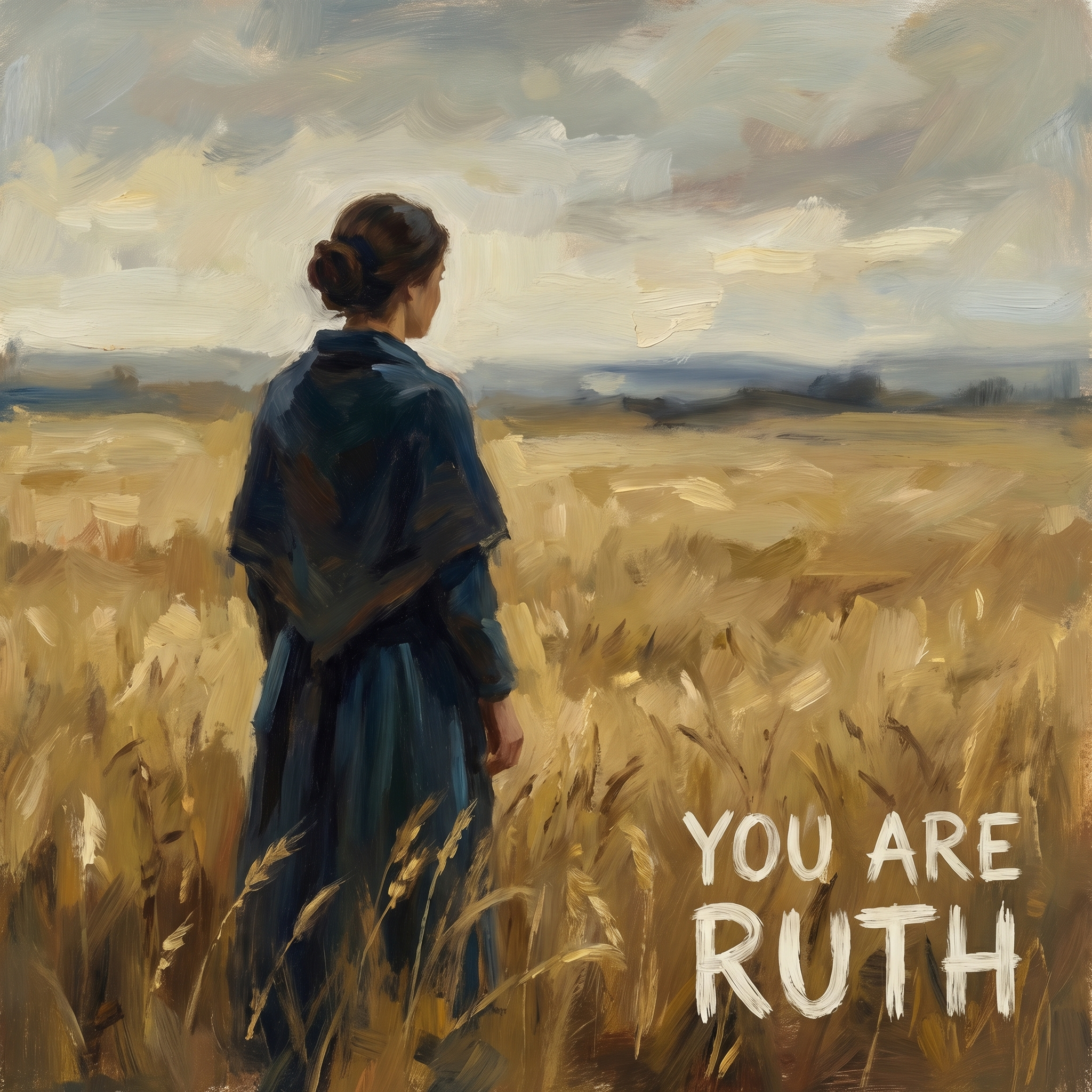
Most Christians read the book of Ruth as a sweet little love story about a woman who found a husband. It is not a love story. It is one of the most precise legal documents in the entire Bible. The book of Ruth is short. Four chapters. Most Christians can read it in twenty minutes. A young widow named Ruth follows her mother-in-law Naomi back to Israel. She works in the fields of a wealthy man named Boaz. He notices her. He protects her. He eventually marries her. End of story. Except that is not what is happening in Ruth at all. What looks like a romance is actually an ancient Hebrew courtroom proceeding executed with absolute legal precision. Every moment in Ruth 3 and 4 is governed by a specific Old Testament law most modern readers have never heard of. The law of the kinsman redeemer. The Hebrew word is goel. It described a specific male relative who held the legal right and responsibility to redeem a family member who had fallen into crisis — loss of land, loss of inheritance, loss of a husband. But the kinsman redeemer could not just step in. He had to meet four specific legally binding conditions. First, he had to be a blood relative. Not a friend. Not a stranger. A relative close enough in the family line to qualify under the law. Second, he had to be able to pay the price. Redemption was not free. The redeemer had to have the means to pay it in full. Third, he had to be willing. The law could not compel him. The role of goel was an option, not an obligation. He had to volunteer. And fourth, the transaction had to be executed publicly at the city gate before witnesses. Not in private. At the gate. Before the elders. Before the community. Legally binding. Four conditions. All required. All non-negotiable. Now read Ruth 4 again. Boaz finds the closer relative — a man who had the first legal right to redeem Ruth. That man refused. He said the obligation would cost him too much. He was unwilling. Boaz then stepped forward in his place. At the city gate. Before ten elders. Publicly. "Today you are witnesses," he said, "that I have bought from the hand of Naomi all that belonged to Elimelech and all that belonged to Chilion and to Mahlon. Also Ruth the Moabite, the widow of Mahlon, I have bought to be my wife." That is not a wedding announcement. That is a legal filing. Boaz qualified as a blood relative. He had the financial means to pay. He was willing when the first redeemer refused. And he executed the redemption publicly at the gate. All four conditions. Met perfectly. And a thousand years later, another Man met all four. He became a blood relative. Hebrews 2:14 says Jesus shared in flesh and blood precisely so He could redeem those who were kin. He made Himself our family in order to qualify as our redeemer. He was able to pay the price. Not silver. Not gold. His own life. Sinless. Of infinite value. He was willing. "No one takes my life from me," He said. "I lay it down of my own accord." No one forced Him. And He did it publicly at the gate. Hebrews 13:12 says Jesus "suffered outside the city gate to sanctify the people through His own blood." Outside the city gate of Jerusalem. Before witnesses. Before the whole world. Four conditions. The same four. Met a thousand years apart. The book of Ruth is not a love story. It is the legal blueprint of your salvation. And most Christians read those four chapters in twenty minutes without ever being told that the marriage of a Moabite widow to a wealthy Hebrew farmer was a thousand-year-early rehearsal of the cross. That is the problem I discovered last year when a young woman in my congregation pulled me aside after service. I have been teaching Scripture for 18 years. She had been attending our church for three. And that Sunday she asked me a question I had never been asked before. "Pastor, can I ask you something that might sound rude?" I told her she could. "Why is the book of Ruth in the Bible?" She was not mocking. She was not being dismissive. She was being honest. "It is such a short little story," she said. "A girl meets a boy, they get married, the end. I do not understand why God included it. The Bible has all these books about kings and prophets and miracles and wars. And then there is just this one small love story stuck in the middle. What is it doing there?" I opened my mouth to answer her. And I realized I did not have a good answer. I had preached on Ruth before. I had called it a beautiful picture of loyalty. I had said Boaz was a good example of godly manhood. I had pointed out that Ruth ended up in the lineage of King David and therefore Jesus. But I had never actually explained to her what Ruth was. I asked her to come back the next Sunday and I would walk her through it. That week I sat at my desk with my Bible open and studied the book of Ruth the way I had never studied it before. The kinsman redeemer law. The legal requirements. The public transaction at the city gate. And I wept. I had been a pastor for 18 years and I had never actually seen what was in those four chapters. I had read a love story for two decades while sitting on top of one of the most precise Old Testament pictures of Jesus ever written. The next Sunday she came back. I walked her through all four conditions. The blood relative. The price. The willingness. The public gate. Then I read Hebrews 13:12 to her. She started crying. "Pastor, I am Ruth. I am the widow. I am the foreigner. I am the one with nothing to offer. And He is my Boaz. He met every condition. He redeemed me at the gate." I drove home that night and could not stop thinking about it. How many other women in my congregation had read Ruth dozens of times without ever understanding they were reading their own salvation encoded in ancient Hebrew property law. They could not see it. And it was not their fault. Nobody had ever given them the roots. That week I opened my computer and started writing. Genesis. Everything someone needs to know before reading Genesis. Who wrote it. When. Why. What was happening. The main themes. How it connects to the larger story. Not a sermon. Not a devotional. Just the roots. Then Exodus. Leviticus. Numbers. Every single book of the Bible. Sixty-six pages. One page per book. It took me three months. Three months of putting 18 years of studying into a format any believer could use completely on their own. No pastor required. I printed her a copy and gave it to her after service one Sunday. "Read the page on Ruth first," I told her. "Then read the book again." She came back the next week with her Bible marked up in six colors. "I have never read my Bible like this before in my life. Every chapter points to something. Every story is part of one story. I finally understand what I am reading." I started giving it to other people quietly. One at a time. Every single person said the same thing. "This is the first time I have ever understood what I was reading." Not because I am some brilliant teacher. But because I finally gave them what they actually needed. The roots. And once you have those roots, the Bible you thought you knew becomes something you have never actually encountered before. Ruth and Boaz is just one moment. There are thousands more waiting in the pages you have already read. Did you know that the Ark of the Covenant contained three objects — the broken tablets, the rejected manna, and the questioned rod — and that the Mercy Seat where blood was sprinkled sat directly on top of all three? That the gospel was physically sealed inside a gold box in the desert? Did you know that when Jesus said "It is finished," the Greek word tetelestai was the same word stamped on receipts in the Roman Empire to mean "paid in full"? That His final declaration was not a statement of ending but of completion. A cosmic debt marked as settled. Context changes everything. Every single time. I call it FaithSprout. The 66 Roots Journey. 66 pages. One for every book of the Bible. Each page gives you what you need before you read. Who wrote it. When. Why. What was happening. The key themes. The symbolism. And how it connects to your actual life today. Written in plain language. No seminary terms. No complicated theology. Just the roots that make everything you have already read suddenly land with the full weight God intended. The Bible is not confusing because it is unclear. It is confusing because we are reading it without the foundation that made it clear to the people it was first written for. They read the book of Ruth and recognized a goel courtroom proceeding. They knew what the public transaction at the gate meant. They understood that every widow in Israel waited for a kinsman redeemer. And when they heard the Gospels a thousand years later, they heard Boaz in every word Jesus spoke. We read a short little love story and miss the cross entirely. This guide gives you that foundation back. If you have ever read the book of Ruth and wondered why God put such a small love story in the Bible. If you have ever read a passage of Scripture and sensed there was something deeper underneath the words that you could not quite reach. If you have ever wondered what you would find in God's Word if someone just gave you the roots first. This is what you have been looking for. God did not put Ruth in the Bible by accident. He never does anything by accident. Do not let a lack of context be the thing that keeps you from seeing the Redeemer who met every condition to bring you home. Get closer to God by actually understanding His Word. Not just the familiar parts. All of it. The whole story. That is what The 66 Roots Journey was created for. And you can start yours by clicking below.
Read this if the Bible feels harder than it should. ☝️
Understand all 66 books of the Bible more easily
SHOP NOWLike this ad? Make it yours.
Crush rebuilds this exact creative around your product — your brand, your colors, your offer — in about a minute.