
Inactive· since Sep 8, 2026
- 4
- days it ran
- 0
- relaunches
Ad copy
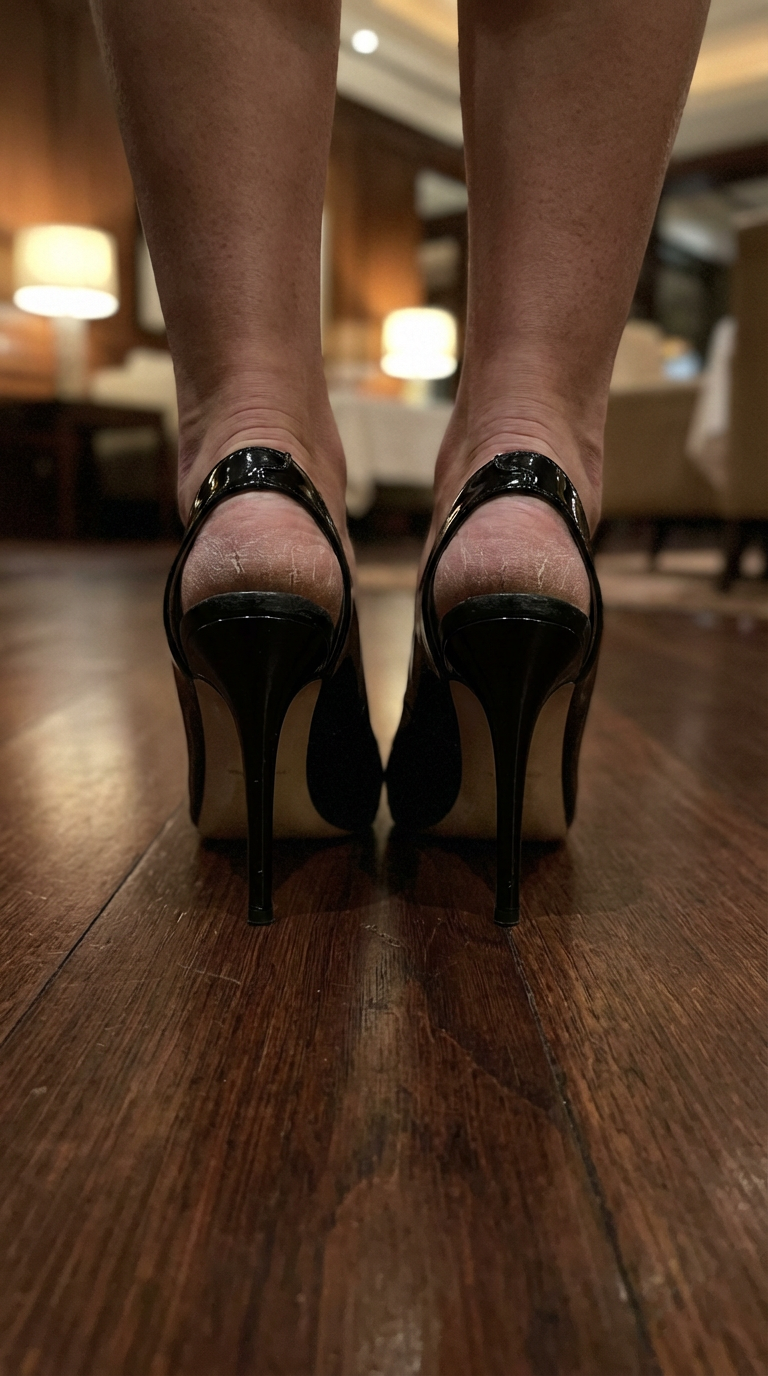
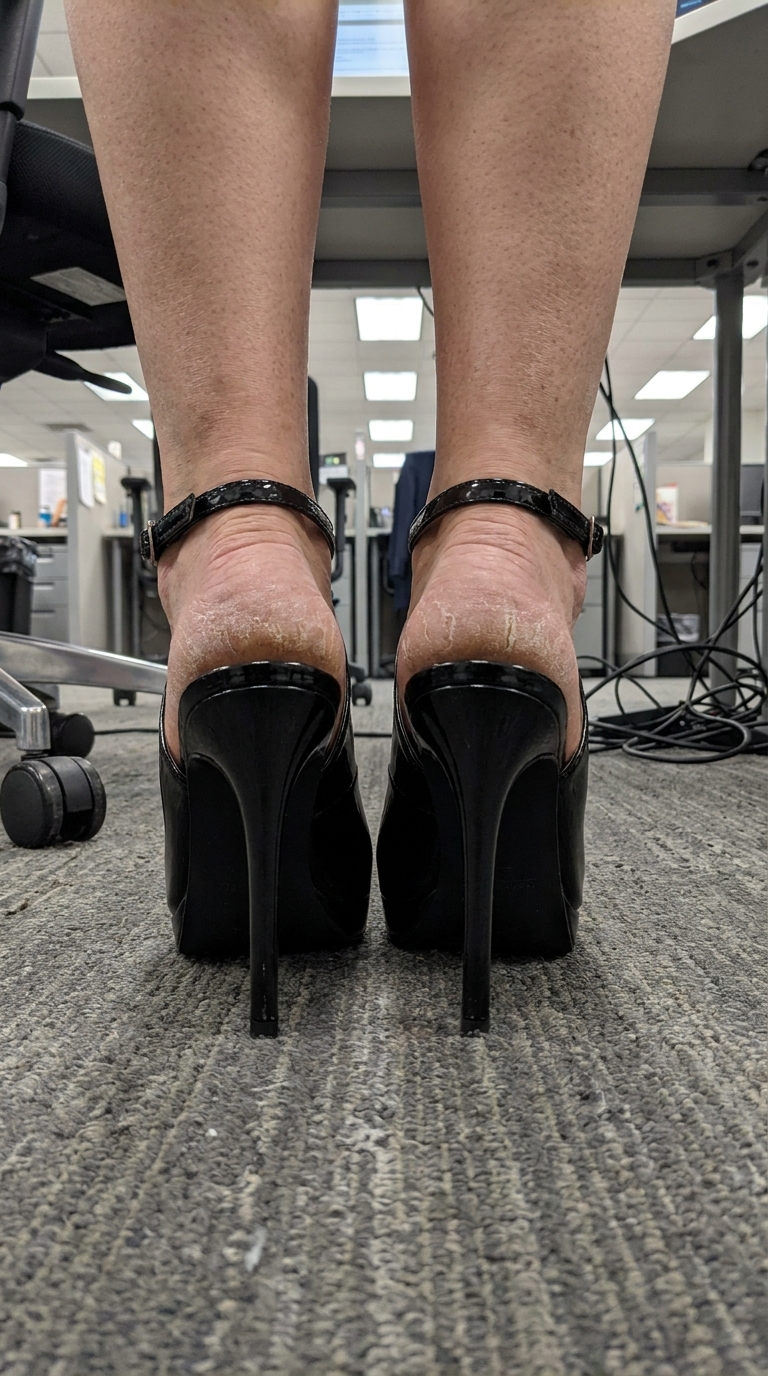
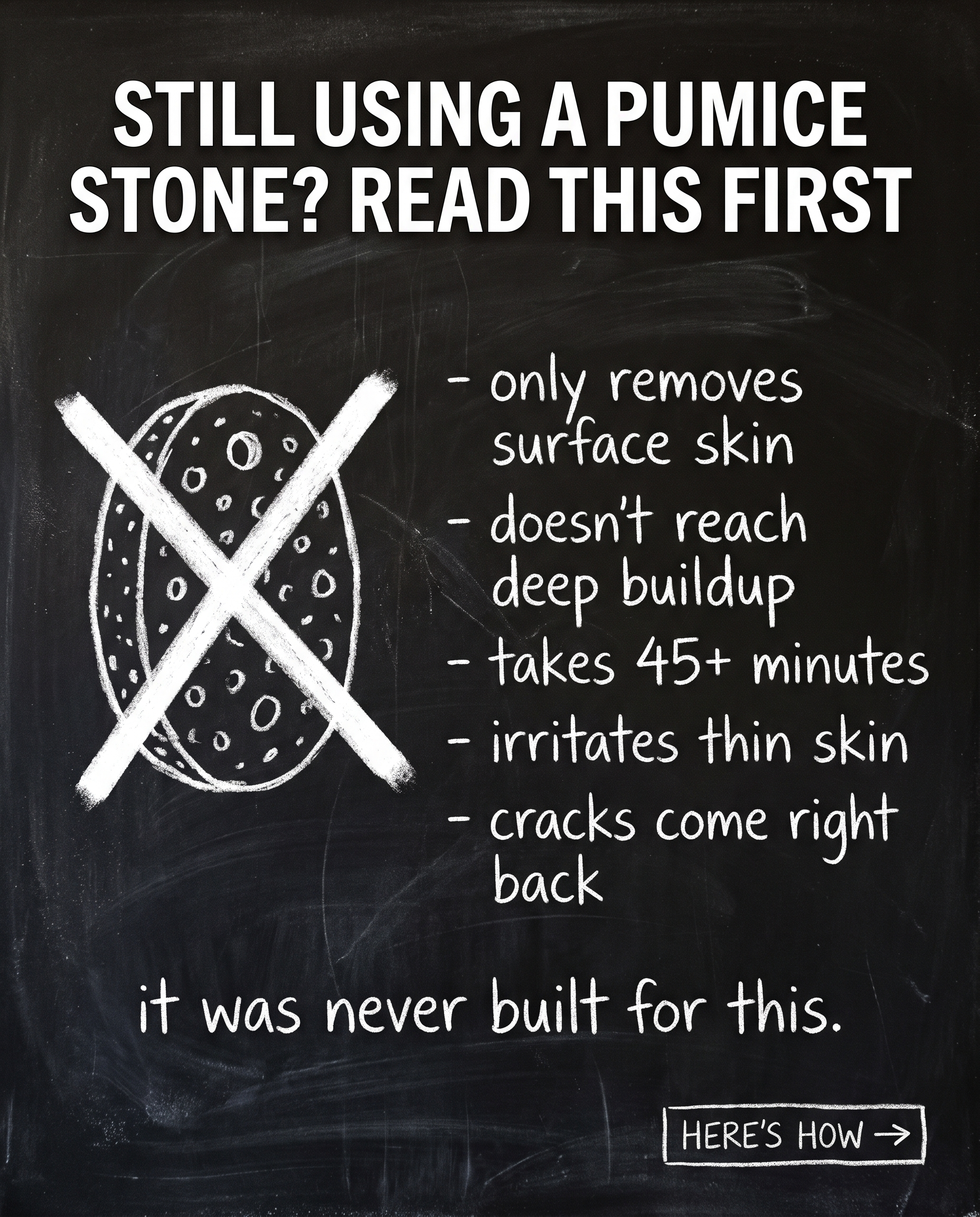
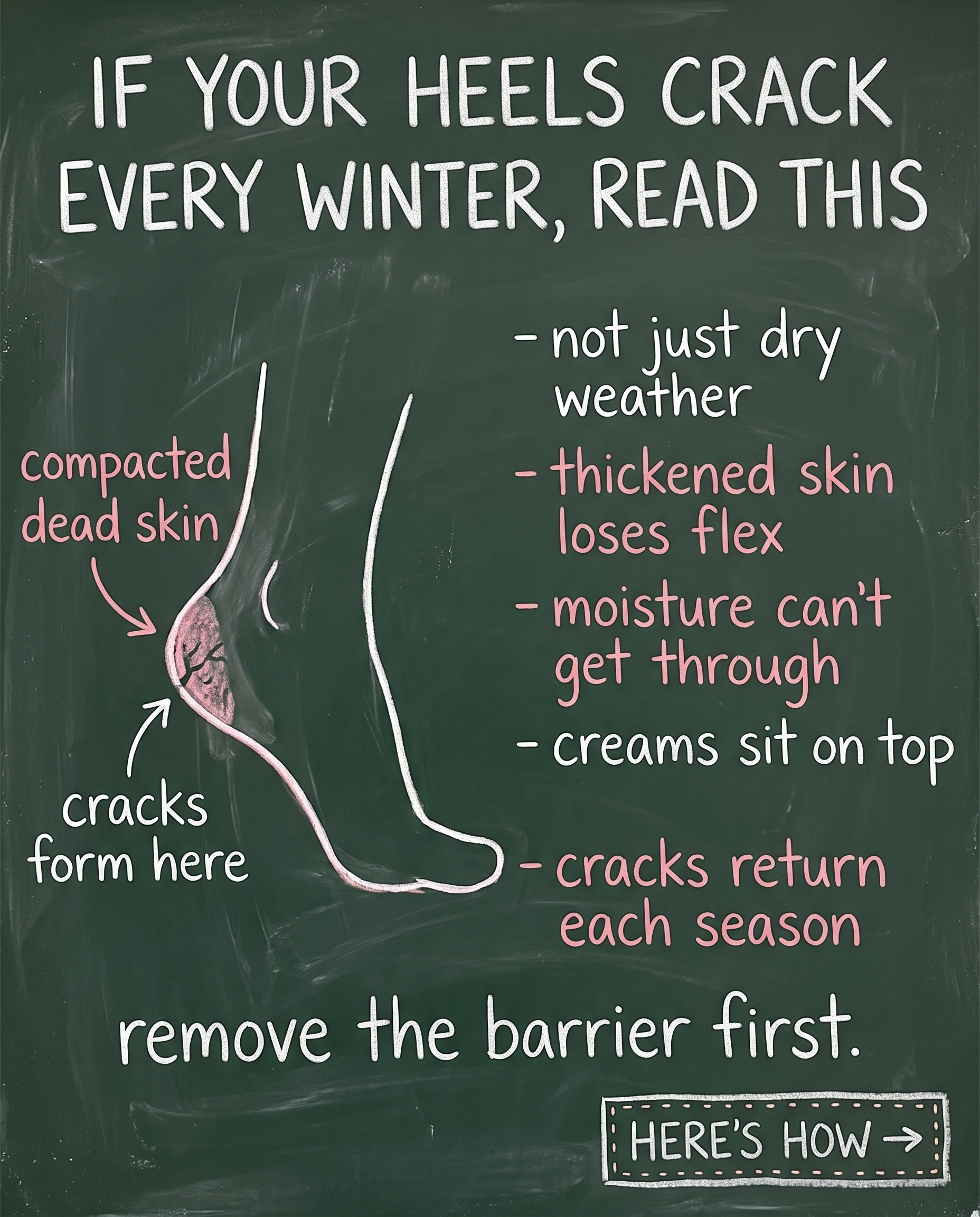
A callus is not a problem your body has. It is a solution your body built. Once I understood that, six years of failure stopped being mysterious and started being obvious, because everything I owned was designed to fight a defense system rather than remove what it had already built. My name is Aubrey Hayes. I am 42, I live in Los Angeles, and for fourteen years my job has been reviewing efficacy claims for consumer products. What that means in practice is that I spend my working life reading a claim and asking one question. What is the proposed mechanism, and does the product actually do that thing. I am very good at that question. I had also had cracked, calloused heels for six years and had never once asked it about my own bathroom shelf. That is the part that still irritates me. I audit claims for a living and I bought a foot file, a pumice stone and four creams without ever asking any of them how they were supposed to work. So eventually I sat down and did it properly. Not shopping. Research. Root cause first, tools second. Here is what I found, and I am going to start further back than anybody selling you anything ever does. Why the callus is there in the first place Your skin has one response to repeated mechanical load, and it is to build. Where pressure repeats in the same place, the body lays down extra layers of dead cells to protect the living tissue underneath. That is not a malfunction. That is the system working exactly as designed. Your heel takes more repeated load than any other skin on your body. Every step, your full bodyweight, several thousand times a day, on hard flooring you did not evolve for. So your heel builds. It is supposed to. Now the second half, which is where it goes wrong. Skin normally sheds what it builds. Old cells lift off, new ones arrive, the balance holds. Under sustained daily pressure two things happen to that balance. The build rate rises, because there is more load to protect against. And the shed rate falls, because the same pressure that triggers the building is also physically pressing the layers down and holding them in place. Build faster. Shed slower. Compress constantly. Do that for four, six, nine years and you do not have thickened skin. You have a compacted mass. Dense, layered, pressed solid. I call it the Absorption Barrier, because of what it does next. Why it cracks That compacted mass has no blood supply, no flexibility and no give. It is inert material sitting on top of living tissue that is soft and does flex. Every time you stand up, the living skin underneath moves and the slab on top does not. Rigid material bonded to flexible material, loaded thousands of times a day, fails at the same place every time. It splits. That is your crack. It is a structural failure, not a moisture failure. This is why hydration was never going to fix it, and it is also why the crack keeps returning to the same spot. The stress concentrates where it always concentrated. Why everything you own does not work, from the root Now that the mechanism is on the table, the failures are not opinions. They are predictions. The foot file. It shears material off in a flat plane, so it takes a sheet from the top and stops at the first genuinely dense layer. It also cannot distinguish dead tissue from living tissue, because it has no way to. And it has a third problem that is worse than both. Abrasion is mechanical stimulus. Your body does not know the difference between the pressure of walking and the pressure of a file. Both are load in the same place. So filing hard, repeatedly, is read by your body as an increase in load, and the body responds the way it always responds, by building more. That is the loop. The tool you are using to remove the buildup is a request for more buildup. It is not that the file fails to work. It works, and then it makes the underlying problem worse, and you have to use it again sooner. If you have ever noticed that the gap between filings gets shorter over the years, that is not your imagination. The pumice stone. It works by friction on softened surface skin, which means it has a hard prerequisite. The material has to soften first. The compacted layer does not soften. It is dense, pressed, and functionally not permeable, which is the same property that stops your cream getting in. Ten minutes in hot water softens the loose surface and nothing beneath it. So a pumice stone can only ever take what was already coming off. Which is why a stone can wear visibly flat over years while the heel it was used on does not change at all. The stone is not failing. It ran out of material it was capable of removing in the first month and has been polishing ever since. The cream. Hydration is only useful if it reaches living tissue. Applying it to a compacted, non permeable mass is applying it to a plate. There is nothing wrong with your cream. There is something on top of it. Price does not fix that. The peel mask. It loosens and sheds the surface layer over about a week. Dramatic to watch, genuinely satisfying, and it does not address the compacted mass at all, which is why the smoothness lasts days. The salon. More capable tools and a trained hand, and still the same category of approach, with a hard safety limit on how deep anyone can responsibly go in one visit. Mine told me herself she could only take the top. Every one of these does exactly what it was engineered to do. They were all engineered for the surface. What would actually be required This is where I stopped shopping and started specifying. I wrote down what a tool would have to do, based on the mechanism, before I looked at a single product. One. Remove by fine abrasion, not by shearing. Material has to come off as powder rather than in sheets, so it works down through a dense layer progressively instead of skimming the hardest surface. Two. Supply its own force. Hand power is inconsistent and falls off within about a minute, which is exactly when you would need it to be steady. A motor does not get tired and does not vary. Three. Have a pressure ceiling. This one is not about comfort. If you exceed a certain amount of force you are back to signalling load and triggering the build response, and you risk reaching living tissue. The tool has to be incapable of going too hard. Four. Two grades. One aggressive enough to clear years of accumulation, and a gentler one for afterwards, because maintenance and clearance are different jobs and using the aggressive one forever puts you back in the loop. Five. Low frequency. Whatever it is, it cannot be daily. Daily abrasion is daily load, and daily load is the original cause. It has to work well enough that once a week is sufficient. I wrote those five down before I owned anything that met them. Then I went looking, and nothing in the foot care aisle met more than two. The file meets none. The stone meets one. The cream is not in this category at all. Most electric callus removers meet two, because they supply their own force and have grades, but they shear in sheets and have no meaningful pressure ceiling, which is why so many of them leave people sore. Check your own heels against this before I tell you what I found. → Cracks that split open rather than flake → The same crack returning to the same spot → Cream at night, rough again by morning → Buildup returning faster now than it did a few years ago → A pumice stone or foot file visibly worn down while the heel has not changed → Buildup back within ten days of a pedicure → Soreness for a day or two after filing → Pain standing on a hard floor first thing in the morning If three or more are true, you are not failing at maintenance. You are using surface tools against a structural problem, and in some cases feeding it. What met all five The only thing I found that met the full specification is a device called Nuvé. I want to be clear that I found it after writing the requirements, not before, because the order matters and because I would not trust me either if it were the other way around. Against the list. It uses micro mineral rollers spinning at 2,000 RPM, and it abrades rather than shaves. Material comes off as fine powder, which is requirement one and the single most important one, because powder means it is working down through the layer instead of across the top of it. The motor supplies the force. That is requirement two, and it also removes grip strength from the equation entirely. It has an auto stop pressure sensor. Press beyond the threshold and it cuts out. That is requirement three, and it is the one almost nothing else in this category has. Two heads. Coarse for existing buildup, fine for maintenance. Requirement four. Five minutes, once a week. Requirement five. The part about maintenance that nobody explains Once the compacted layer is gone, your heel is not fixed forever. You still walk. The load is still there. Your body will start building again, because that is what it is supposed to do. The goal of maintenance is not to remove everything constantly. It is to stay ahead of accumulation with the gentlest input that works, so you are never abrading hard enough to signal load and restart the cycle. That is exactly what the fine head once a week is. Not a lighter version of the same job. A different job. What actually happened First session, Sunday evening, dark towel. Within forty seconds there was fine white powder on that towel, and I took a photo of it, because in six years nothing had ever come off my heels like that. Week one, my heels still cracked. Twice. Six years of compaction does not leave in five minutes and I would not have believed it if it had. Week two, one crack, shallow, closed on its own. Week three, none, and my cream absorbed for the first time in six years. Same cream. Same tub. The only variable that changed was what was on top of it. Week four, smooth, and holding since. Over 350,000 women have used this device, and it holds 4.9 stars across nearly 3,000 reviews. Denise, 51, Ohio, nine years of cracked heels: "The powder on the towel is what convinced me. You can see it is coming from underneath instead of off the top." Trina, 44, Georgia, same cream for three years: "The cream finally started working. Same cream, same tub. That was the part that got me." Margaret, 71, Yorkshire: "Sitting in a chair with my foot up, I can manage this. The bending was what I could not do any more." Robert, 58, Texas, bought it for his wife: "She used it Sunday, I used it Monday. We ordered a second one." Priya, 38, New Jersey, salon pedicures every two weeks for six years: "I have not booked one since June and my heels look better than when I walked out of there." These are not miracles. This is what happens when the compacted layer is removed first and hydration is applied second. Remove first. Then moisturize. Everything on my shelf could only ever do the second half. You do not need a podiatrist appointment first. It is not a medical device and it is not a prescription. You do not need to throw out your cream. It becomes useful the moment there is living skin underneath it that can absorb. You do not need to take my word for the mechanism. Put a dark towel under your foot for one session and look at what comes off, and whether it comes off as powder or as sheets. There is a 100 day money back guarantee. Link below. nuvebrand.com/silk Nuvé Silk 3 Pro. 100-day money-back guarantee. P.S. The compaction is progressive and the loop is self reinforcing. Every week of standing presses the existing layer denser, and every hard filing session in between asks your body for more of it. Six years took me four weeks to clear. The version of this you have in a year will be worse than the one you have now, and the tool most people reach for is part of the reason. P.P.S. I do not get paid by Nuvé to say any of this. I review product claims for a living, I wrote a five point specification from the mechanism before I looked at a single product, and this is the only thing I found that satisfies all five. If you want to test me, ignore everything above and just watch what comes off your heel in the first session. Powder or sheets. That one observation tells you which layer you have been working on for years. Link below.
Like this ad? Make it yours.
Crush rebuilds this exact creative around your product — your brand, your colors, your offer — in about a minute.