
Inactive· since Aug 2, 2026
- 38
- days it ran
- 0
- relaunches
Ad copy
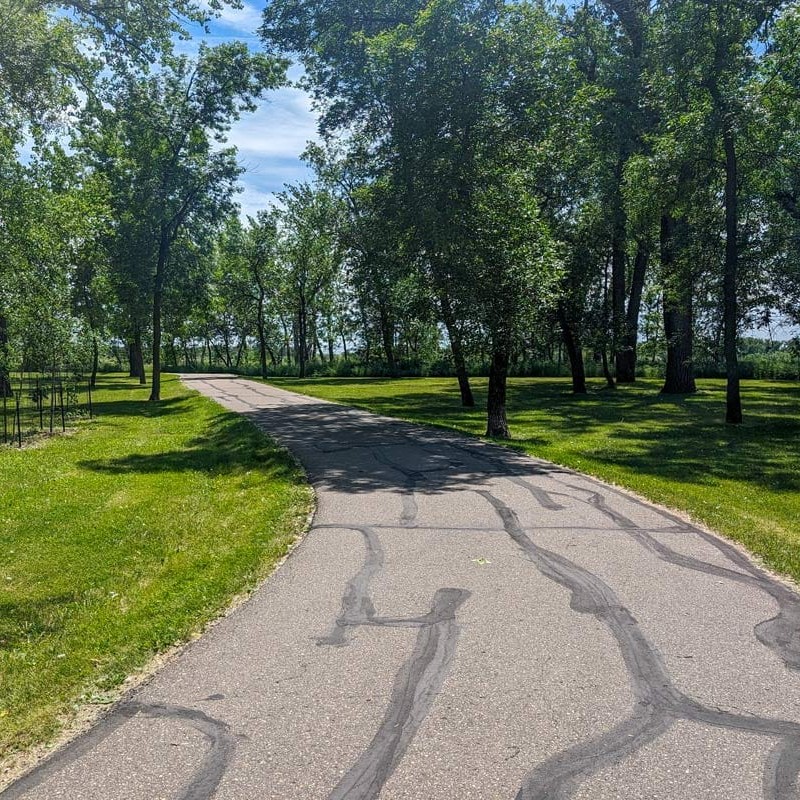
I walked behind my 84-year-old father on a gravel path at Lake Sakakawea last Sunday and I had to ask him to slow down. Not him asking me. Me asking him. I'm 59. He's 84. And I was the one losing my breath. I stopped at a bench and pretended to tie my shoe so he wouldn't see my face. Let me back up. My name is Carol. I live in Bismarck, North Dakota, in a split-level off Tyler Parkway that my husband Glenn and I bought in 1996 when our daughter was still in pigtails. Glenn passed in 2019. Heart attack on a Tuesday morning. He was buttering toast. He just sat down at the table and didn't get back up. My dad drove the six hours from Fargo the same day. He was 77 then. He drove through a snow squall in February and showed up at my door at 1:14 AM with a thermos of coffee and a casserole my mom had made before she died in 2014. That's the kind of man my father is. His name is Walter. Walt to everyone who knows him. He worked 41 years for the Burlington Northern railroad as a track inspector, walking miles of rail line every day in every kind of weather North Dakota throws at a person. Forty below in January. Hundred and four in July. Walking. Always walking. He retired at 68. Not because he wanted to. Because his knees told him to. And ever since then, I've been the one slowing down for him. That's what you do with an aging parent. You shorten your stride. You take the elevator instead of the stairs. You park closer. You pretend you also need to rest on the bench halfway down the dock so it doesn't feel like you're babying him. I did that for 16 years. And then last Sunday, on a gravel path along the south shore of Lake Sakakawea, my father walked away from me. Not on purpose. He just kept going. And I couldn't keep up. He was wearing the same brown Carhartt jacket he's worn since 2008. Same beat-up New Balance walking shoes. Hands in his pockets. Whistling. Whistling. Like he was 50 again. I was hunched over on a bench trying to breathe through the burn in my knees and the heaviness in my hips and the strange tight feeling that had been settling into my lower back for the last two years. I had told myself it was just age. Everyone tells me it's just age. My doctor in Bismarck, Dr. Vasquez, told me at my last physical that "stiffness is part of getting older, Carol. Stay active, manage your weight, and accept that the body changes." She was very kind about it. She also wrote me a prescription for naproxen and patted me on the knee like she was sorry there wasn't more to offer. I'm 59. I have a granddaughter who turns 4 in November. I want to take her to the State Fair next August and ride the carousel with her and walk the midway eating cheese curds and watching her face light up at the lights. I had started to wonder if I'd be able to. And then there was my dad, 84 years old, 25 years older than me, walking faster than I could on a flat gravel path. He came back when he noticed I wasn't behind him. Stopped, turned around, walked back to the bench, sat down next to me. He didn't say anything for a minute. Just looked out at the water. Then he said, "Carol. Honey. You're moving like your mother did at the end." That hit me harder than anything anyone has said to me in years. My mother. Who spent the last six years of her life shuffling from her recliner to the bathroom and back. Who couldn't get on a plane to my daughter's wedding because she couldn't sit that long. Who never met my granddaughter because by the time the baby came she was already gone. I started crying right there on the bench. Just sat there with my hands in my lap and cried. My dad let me. He's a quiet man. He didn't try to fix it. He just sat with me. After a while he said, "Carol, when did you last go a whole day without something hurting?" I tried to remember. I couldn't. Two years? Three? I'd gotten so used to it I'd stopped noticing. The pinch in my hip when I got out of the car. The grinding in my knees on the stairs. The way my hands didn't want to open the jam jar in the morning until I ran them under hot water. The shoulder that kept me from reaching the top shelf for the good coffee mug. The lower back that made me dread carrying laundry up from the basement. It wasn't one thing. It was everything. A little at a time. And I'd been so busy adjusting around it I'd forgotten what it felt like to just move. My dad reached into his jacket pocket. Pulled out a small brown bottle. Set it on the bench between us. "Here," he said. "I've been meaning to give this to you for three months and I keep forgetting." I looked at the bottle. It said Alevia on the label. Underneath it said Amla. I'd never heard of it. I said, "Dad, what is this?" He shrugged in that way he does. Like he didn't want to make a big deal of something he knew was a big deal. "It's what Jim down the road put me on last spring," he said. "Jim Halvorson. You remember Jim." I did remember Jim. Jim was the retired ag extension agent who lived two doors down from my dad's house on the edge of West Fargo. A wiry man in his 70s who used to walk past my dad's place every morning with a coffee mug in his hand, waving at whoever was sitting on the porch. Jim had been some kind of plant scientist for the university back when he was working. The kind of guy who reads research papers for fun. The kind of guy who would corner you at a barbecue and tell you about soil microbes for 40 minutes if you let him. "Jim gave you a bottle of something?" I said. "He gave me three bottles last March," my dad said. "Told me to just try it. Said he'd been on it for a year and his knees had stopped talking to him." I stared at my father. "Dad. You've been walking like that for how long?" He thought about it. "Since around June, I'd say. Started feeling different about three weeks in. By May I was sleeping better. By June I was out in the yard pulling weeds in the morning instead of sitting on the porch waiting for the day to start." I said, "You never told me." He looked a little sheepish. "I didn't want to be one of those old men who shoves vitamins at his kids. And honestly, I wasn't sure it was real. Figured I'd give it more time." He picked up the bottle. Turned it over in his hands. "But Carol. You're 59. You shouldn't be moving the way you're moving. Your mother was 78 when she started moving like that. You've got 20 years on her. That's not aging. That's something else." He handed me the bottle. "Just try it. For me. For my granddaughter. She wants you to be at her fair, you know." I took the bottle home. I sat on it for two days. I'm a skeptic by nature. Forty years working as a bookkeeper for a heating and cooling outfit in Mandan makes you suspicious of anything that sounds too good. I've watched too many people throw money at glucosamine and CBD and copper bracelets and turmeric lattes and come up with nothing. But Jim Halvorson wasn't a salesman. He was a man who used to do soil chemistry for a living. And my dad wasn't a man who got excited about pills. So that night, after dinner, I sat down at my kitchen table with the bottle and my laptop and started reading. What I learned changed how I thought about everything I'd been feeling. I'd always assumed joint stiffness was a joint problem. A worn-down part. A mechanical issue, like a hinge that needed greasing. That's how my doctor talked about it. That's how the commercials talk about it. That's how the supplement aisle is organized. Things for joints. Things for joint cushioning. Things for "joint lubrication." But the research I started reading that night wasn't about the joints at all. It was about the cells inside the joints. And the energy those cells were running out of. Here's what I learned, in plain English, from a few hours of clicking around at my kitchen table. The cells in your joints have a job. They're supposed to maintain the cartilage, keep things lubricated, and manage inflammation as it comes up. To do that job, they need cellular energy. A lot of it. That cellular energy comes from these tiny structures inside your cells called mitochondria. They're the little power plants. Every cell in your body has them, but the cells doing the most work, the heart cells, the nerve cells, the joint maintenance cells, they need their mitochondria running clean and strong. The problem is that as you age, and as you live in the modern world with the processed food and the stress and the pollution and the medications, your mitochondria start to wear down. They produce less cellular energy. And the cells that depend on that energy, including the cells in your joints, can't do their jobs as well. Cartilage starts breaking down faster than it can be maintained. Inflammation starts running longer than it should. The lubrication isn't being managed the way it used to be. And it shows up as the stiffness, the grinding, the morning pain, the dread of carrying laundry up the stairs. It's not really a joint problem. It's an energy problem inside the joint cells. I read that and I sat back in my kitchen chair and I thought about my dad. About Jim Halvorson telling him his knees stopped talking to him. And I thought about every joint supplement I'd ever taken. Glucosamine. Chondroitin. Fish oil. Turmeric. None of them touched the actual issue. They were all trying to deliver lumber to a construction site that didn't have any power. The materials were there. The site couldn't use them. Then I read about what Amla does. Amla is a small green fruit that grows in India. It's been used in Ayurvedic medicine for over a thousand years. They call it "the nurse." Because it's the one that takes care of the rest of the body. What modern research has found is that Amla helps activate something called AMPK. AMPK is one of the main pathways your body uses to support mitochondrial function. When AMPK is active, your mitochondria can start producing cellular energy more efficiently. The way they did when you were younger. And when the mitochondria are working better, the cellular energy flows back to the cells that have been starving for it. Including the cells in your joints. When those cells get their energy back, they can start doing what they were designed to do. Maintaining cartilage. Managing inflammation. Supporting mobility. Amla also happens to have one of the highest antioxidant profiles ever measured in a food. Which matters because the same oxidative stress that wore the mitochondria down in the first place is still happening every day. The antioxidants in Amla can help protect those mitochondria from continuing to take damage. It's not patching the joint. It's powering the cells that maintain the joint. I read for three hours that night. I closed the laptop at 11:42 PM and I poured myself a glass of water and I took two capsules from the bottle my dad had given me. I didn't tell anyone. Not even my daughter. I figured if it was going to be nothing, I didn't want to have to explain why I was disappointed. Week one, I didn't notice anything dramatic. I noticed one thing. I slept through the night Tuesday and Thursday. Which doesn't sound like anything until you realize I'd been waking up at 3:20 AM most nights for the last 18 months because my hip was throbbing and I'd have to roll onto my back and just lie there until I could fall back asleep. Two nights in a row of uninterrupted sleep. That was the first thing. Week two, I got out of my Subaru at the grocery store on a Saturday morning and walked across the parking lot without that pinching feeling in my hip. I didn't even notice it at first. I was halfway to the door when I realized I wasn't limping. I stopped in the parking lot. Stood there with my purse on my shoulder. Just stood there. Trying to figure out what was different. It was that nothing was different. Nothing was hurting. I was just walking. I started crying in the parking lot of the Cash Wise on North 19th Street like a crazy person. An older couple walking past asked me if I was okay. I told them yes. I told them I was just having a moment. They smiled politely and kept going. They probably thought I was on something. I was. I was on Amla. Week three, my granddaughter came over on a Saturday afternoon and I got down on the kitchen floor with her to do a puzzle. She's almost 4. She likes those big floor puzzles with the fish and the animals. I haven't gotten down on the floor in two years. Not because I couldn't. Because I couldn't get back up without making a face and grabbing the counter and groaning like I was 90. That Saturday, I sat down on the linoleum, crossed my legs, did the puzzle with her for 25 minutes, and stood up when she was done. I stood up. Like a person stands up. My daughter was sitting at the kitchen table watching me. She didn't say anything. But she looked at me a long time. That night when she was leaving she gave me a hug that lasted longer than her hugs usually last. And she said "Mom, you look different." Week five, I went for a walk along the Missouri River with my dad on a Sunday afternoon. He drove down from Fargo for my granddaughter's preschool open house. We walked from the parking lot at Pioneer Park out to the bridge and back. About a mile and a half. He didn't slow down for me. I didn't slow down for him. We just walked. Side by side. Two people walking. About halfway through he looked over at me and smiled the kind of smile he doesn't usually smile. A little crooked. A little watery around the eyes. "There you are," he said. That's all he said. There you are. Week eight, I went to the State Capitol gardens with my granddaughter and chased her around the fountain for 40 minutes. She kept going. So I kept going. At one point she was running and I was running. Actually running. Not jogging. Running. I haven't run since 2017. She turned around when she heard me catching up and her face just lit up. She squealed and ran faster. I caught her by the rose bushes and picked her up and spun her around and she laughed that big belly laugh of hers and I held her and I thought, this. This is what I was scared I was going to miss. I went home that night and I called my dad. I told him I'd been on it for two months. I told him about the puzzle. I told him about chasing the baby. I told him about sleeping through the night and the parking lot at Cash Wise and the laundry from the basement that I now just carry up without thinking about it. He was quiet for a long time on the phone. Then he said, "I'm glad I gave you the bottle, Carol." I told him I loved him. He said, "I love you too, kid." He's never called me kid before. Even when I was a kid. It's been four months now. I take 2 capsules every morning with my coffee. That's it. That's the whole thing. The bottle has 30 servings, which is a month. It ships from the USA. Free shipping. The company is called Alevia and the product is called Amla. It comes in a brown bottle that looks more like something you'd find at a health food co-op than something you'd buy off the internet. I'm going to the State Fair next August with my granddaughter. We're going to ride the carousel. We're going to walk the midway. I'm going to be the grandmother who keeps up. And someday, hopefully a long time from now, when my granddaughter is grown and has kids of her own, I want her to remember a grandmother who chased her around fountains. Not a grandmother who waved at her from a bench. If you're 55 or 60 or 65 and you've been telling yourself it's just age, I want you to hear me when I say this. It might not be just age. It might be that the cells doing the maintenance work in your body are running low on the energy they need to do their job. And there might be something out there that helps support those cells. It's not a miracle. It's not a cure. It's a small green berry that helps activate the pathway your body already uses to keep itself running. My dad is 84 and he walks faster than men 20 years younger than him. I'm 59 and I just chased a 3-year-old around a fountain. Make of that what you will. 👉 alevia.com/amla/33 P.S. Alevia has a 90-day money-back guarantee. If you try it and you don't feel any difference, you send it back and you get your money back. That's it. No phone calls with a sales rep. No hoops. The naproxen prescription my doctor gave me didn't come with a money-back guarantee. Neither did the glucosamine. Neither did the copper bracelet my sister-in-law bought me for Christmas in 2021 that's still sitting in my jewelry box doing nothing. You're not risking anything except being the person who didn't try. P.P.S. You'll know if it's working before anyone else does. It's the small things first. The morning you get out of bed and don't have to sit on the edge for a minute. The afternoon you bend down to tie your shoe and just bend down. The night you sleep all the way through without rolling onto your back to wait out the throbbing. You'll notice before your spouse notices. Before your kids notice. You'll know. And once you know, you won't go back to the way it was before. P.P.P.S. Alevia is a small operation. They aren't on the shelf at Walgreens. They ship from the USA and they sometimes sell out, especially when word starts to spread. I keep two bottles in my pantry now because I don't want to ever be in a position where I run out and have to wait. If you've got a granddaughter's birthday in the next few months, or a wedding, or a fair, or a trip you've been afraid to commit to, I'd rather you have the bottle than wish you did. The 90-day guarantee means the only thing you're committing to is finding out. 👉 alevia.com/amla/33
Like this ad? Make it yours.
Crush rebuilds this exact creative around your product — your brand, your colors, your offer — in about a minute.