
Active· since Jun 1, 2026
- 108
- days running
- 0
- relaunches
- 3,323
- EU reach
Ad copy
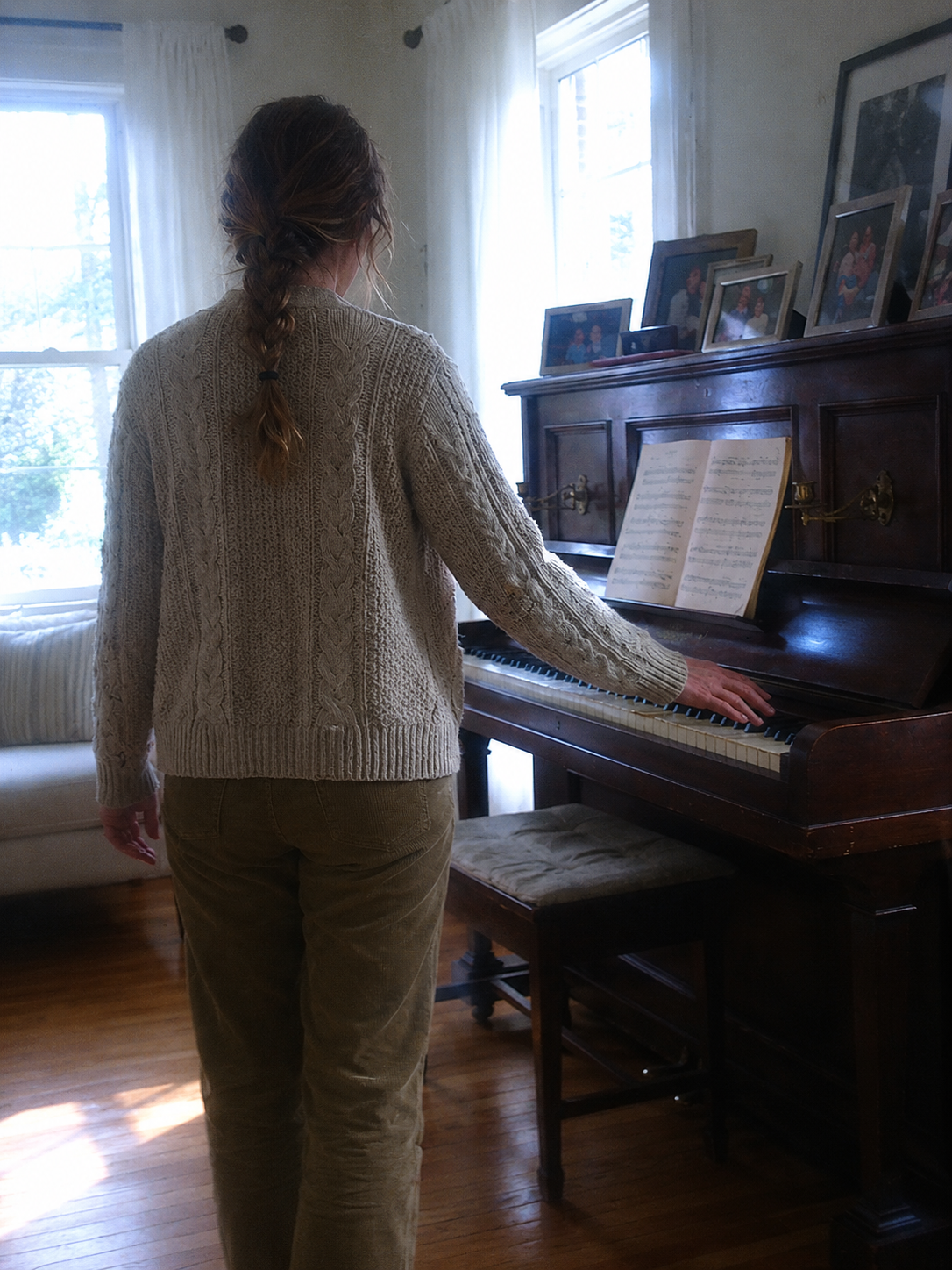
My Mother Used to Play Piano Every Morning. The Music on the Stand Hadn't Been Touched in Six Months. Here's What Brought Her Back to the Bench. I want to tell you about my mother. Her name is Eleanor. We've called her Ellie my whole life. She's 72. She's been married to my father, Frank, for fifty years. She lives with him in a small townhouse in a coastal town in Connecticut. White clapboard. Blue shutters. A small front garden Frank tends. A back patio she used to take her tea on every morning. I'm 47. I'm her only daughter. I live ninety minutes inland with my husband and my two children. My older one, Ava, is 18. That matters in this story. I'll come back to her. My mother has been a piano teacher for 45 years. She started teaching when I was three years old. She converted the back room of our first house into a studio. She put a chalkboard on one wall. She put a music stand in the corner. She put her piano in the middle. Her piano is a Steinway baby grand. She bought it secondhand in 1983 from an estate sale. She paid for it on a payment plan that took her four years to finish. The piano moved with us twice. It moved with her again when she and my father downsized into the townhouse twelve years ago. They paid extra to have it moved by people who knew how to move pianos. The piano lives in the living room now, in the corner by the window that looks out at the side garden. For forty-two years, my mother played that piano every single morning. I want to say that again because it's the kind of thing that's easy to skim over. For forty-two years. Every. Single. Morning. She'd come downstairs at 6:15. She'd put on the kettle. She'd sit at the piano. She'd play for an hour before she did anything else. She played scales for the first ten minutes. Then she played whatever she was working on. Then she played a piece for fun. She'd stop at 7:15. She'd make her tea. She'd take it out to the patio. That was the rhythm of her mornings for forty-two years. About six months ago, the rhythm stopped. The first time I noticed was at Christmas. We were at the townhouse. My family and my brother's family and my parents. Twelve of us crowded around the table for dinner. After dinner, the kids asked Mom to play. That had been a Christmas tradition for thirty years. She'd play carols. We'd sing. She'd play badly on purpose at the end of "Jingle Bells" to make the kids laugh. This Christmas, when the kids asked, she waved them off. She said: "Not tonight, lovelies. Grandma's tired. Grandpa will put on the record." My father put on a record. My niece — who was 7 at the time — stood next to the piano for a minute and ran her hand along the closed lid. She came back to the couch and curled up in my mother's lap and didn't say anything. I watched my mother absently stroke her hair while the record played. I noticed she didn't look at the piano the whole rest of the evening. I told myself she was just tired. It was Christmas. People get tired. I didn't think about it again for a few weeks. In late January, my father called me on a Saturday morning. He never called me on Saturday mornings. He'd usually call on Sunday afternoons. He said: "Madeline. Your mother canceled the spring recital." I sat down at my kitchen table. The spring recital was a thing my mother had done for the last forty years. She'd rent out the back room of a small church in town. She'd put up a sign-up sheet on her studio wall in February. Her students — eighteen or twenty of them every year, kids ranging from seven to seventeen — would sign up to play one piece each. She'd organize the program. She'd print the programs herself on cardstock. She'd buy a bouquet of flowers for the kid she'd been working with the longest to give to her at the end. She'd close the recital by playing a piece herself. For forty years. I said: "Dad. What do you mean she canceled it?" He said: "She told her students this week she wasn't going to do it this spring. She said she wasn't feeling up to it. She didn't want to overcommit. She told them they could practice for their own enjoyment and maybe she'd do it next year." He said: "Maddie. She hasn't been at the piano in two months. I haven't said anything because she gets upset if I bring it up. But it's not just the recital. It's the piano." I said: "What do you mean she hasn't been at the piano in two months?" He said: "I mean she hasn't touched it. Not once." I sat at the table. I said: "Is she sick?" He said: "Her bloodwork is fine. She had her physical in November. The doctor said her numbers were where they should be. She just — she's not herself, sweetheart. She's quieter. She's not tired exactly, but she's not awake either. She's just... in between." He said: "She's in the kitchen right now. I'm in the back hall on the cordless. I wanted you to know." He said: "I don't know what to do." I told him I'd come up the next weekend. I hung up. I sat at the kitchen table for a long time. I want to step back for a moment and tell you something about Ava. My daughter Ava is the same age I was when my mother first taught me to play. When Ava was 5, my mother sat down at the piano with her and put her small hands on the keys and showed her where C was. For thirteen years, my daughter has driven up to the townhouse every other weekend during the school year to take lessons with her grandmother. Forty-five-minute lessons. She'd play for half an hour. Then they'd talk for fifteen. They've played duets together since Ava was 9. They play a Pachelbel arrangement. They've played it for every family birthday for nine years. Ava was graduating from high school in June. She'd already asked her grandmother, before Christmas, if they could play the Pachelbel at her graduation party. My mother had said yes. When my father called me that Saturday in January, I did the math. The graduation party was in mid-June. It was five months away. The piano hadn't been touched in two. I didn't tell Ava any of it. I drove up to the townhouse the following Saturday. I let myself in with my key around 11 AM. My father was out at the hardware store. My mother was in the kitchen, sitting at the table, doing the crossword. She got up when I came in. She hugged me. She made me tea. She looked thin. Not in an alarming way. Just thinner than she'd been at Christmas. She told me she was glad I'd come up. She asked about Ava and her brother and my husband. She didn't mention the piano. After a few minutes I said: "Mom. Can I look at the piano? I want to see if it's gone out of tune since we moved it last." It was a thin pretext but it was the only one I could think of in the moment. She said: "Of course, sweetheart." She didn't get up from the table. She didn't follow me into the living room. I walked through the doorway into the living room. I stopped just inside. There was dust on the keys. Not a lot. Just enough to know. The piano in my mother's living room had been played for forty-two years. I had never, in my life, seen dust on the keys. There was a piece of sheet music on the music stand. Schumann. Something she'd been working on for a long time. The page was open to the third movement. The page was curled at the edge from sitting in the sun. The metronome on the top of the piano was wound to a number she'd set at some point I didn't know. Her piano bench was pushed all the way in. She had a piano bench that she'd had since 1985. It had a small dent in the wood at the back left corner where she'd dropped a music book on it once. The bench was pushed in so far that the dent was hidden. She didn't push the bench in. For forty-two years she'd left the bench out, ready, with her music books on it. Because she'd be sitting down again the next morning. Whoever had pushed the bench in had done it to put the room away. Not to use the room. I stood there in the doorway and I felt something open in my chest. I went back into the kitchen. I sat down across from my mother. She looked up from the crossword. I said: "Mom." She put the pencil down. She said: "I know, sweetheart." I started to cry. She did too. We sat at the kitchen table and cried for a little while. She didn't apologize. I didn't ask her to. After a few minutes she said: "I haven't been able to." She said: "I sit down at the bench and I don't have it in me. My hands feel like they belong to somebody else's body. I don't feel like the woman who used to play. I feel like a woman who used to know a woman who played." She said: "Maddie. I have been a piano teacher for forty-five years. The piano has been the thing I do when I don't know what else to do. Now I don't know what to do because I can't do the thing I do." She said: "I haven't told your father. I think he knows. But I haven't said it out loud." She said: "I haven't told Ava either. I'm going to. I'm just trying to figure out how." I reached across the table and took her hand. I said: "Mom. Tell me what's happening." She told me, sitting at the kitchen table with the crossword pushed to the side, what had been happening for the last year. She said it had started slow. She'd been less interested in her morning playing for about a year. Not because she didn't love it. Because she was tired. Because she didn't have the get-up. Because the playing took something out of her that she wasn't able to put back the way she used to be able to put it back. She said: "Sweetheart. I used to play for an hour every morning and feel better at 7:15 than I did at 6:15. Now if I play for fifteen minutes I have to lie down." She said she'd started cutting back without thinking about it. Hour to forty-five minutes. Forty-five to thirty. Thirty to fifteen. Fifteen to nothing. She said the day she didn't play at all, in late October, was the first time in forty-two years she'd skipped the piano for a reason other than illness or travel. She'd told herself it was a one-time thing. It wasn't. She said: "And then November came. And December. And January. And the piano sat there. And I sat in the kitchen with the crossword." She said: "I don't know what's wrong with me. I'm not depressed. I've been depressed. This isn't that. I'm not sick. The bloodwork is fine. I'm just — flat. Tired. Like someone took the wind out of the sails and I don't know how to put it back." She said the word flat and I noticed. I'd been looking for a word for what I'd been seeing in her, and flat was closer than anything I'd come up with. I said: "Mom. We need to talk to your doctor about this." She said: "I have, sweetheart. He says my numbers are fine." I said: "I'm not asking about the numbers. I'm asking about the woman in the kitchen." She looked at me for a long time. Then she said: "Okay." I drove home that Sunday afternoon. The ride back was the longest ninety-minute drive I've ever made. I sat at my own kitchen table that night with my laptop open. I started reading. I'm not a researcher. I'm an accountant. I'm a mom with two teenagers and a husband and a mortgage. But I read for several hours that first night. I read about women in their 70s. I read about general slowdown. I read about how the body, after a certain age, gets less efficient at the small housekeeping work it used to do without anyone noticing. The antioxidant balance the body needs to keep things running smoothly. I read about how a lot of women in their late 60s and 70s describe exactly what my mother had described. Not a diagnosis. Not a flag on a panel. Just a quieter, flatter version of themselves that they don't have a name for. I read for several more evenings that week. I read about a lot of things people add to their routines for general wellness support as the body ages. CoQ10. Adaptogens. B-complex. Magnesium. Beetroot. The beetroot one surprised me. I'd thought of beets as something my grandmother used to pickle in the basement. Not as something worth taking seriously. I kept reading. What I came away understanding — and I'm not a doctor, I'm not in healthcare, take this for what it's worth — was that beetroot contains compounds called betalains. They support the body's natural antioxidant balance. They're the same compounds that give beets their deep red color. Beetroot has been studied for cardiovascular wellness and circulation for a long time. The other thing I came away understanding was that not all beetroot supplements are the same. Betalains are sensitive to processing. Heat-processing is faster and cheaper. Slower methods preserve more of the active compound. One brand name kept coming up in the threads I was reading. Rosabella. Small company. 1,300 milligrams per serving. Cold-pressed at low temperatures. Grown in Lancaster County, in a small farming community there. The thing that made me consider it seriously for my mother was that it wasn't positioned as a replacement for anything. She wasn't on much. A blood pressure medication she'd been on for a few years. A small dose of an osteoporosis medication. That was the list. This wasn't about going off anything. It was about whether there was anything she could add to what she was already doing. It supports the body's natural antioxidant balance and overall cardiovascular wellness. Structure-function. Not a treatment for anything. You add it to what you're already doing. You don't replace your doctor's care. It just adds. I drove back up the following weekend. I waited until Sunday morning to talk to her about it. We were sitting on the back patio with her tea. The piano hadn't been touched since I'd been there the week before. I told her what I'd been reading. I told her I wasn't trying to fix her. I wasn't trying to be a know-it-all daughter who thinks she's figured out her mother's body better than her mother has. I told her about the supplement. I told her I wanted her to call her doctor's office and ask whether it would be a sensible thing to add to her routine. She said: "Sweetheart. I'll call. But I want to tell you something first." She said: "Even if this doesn't work — even if nothing works — I love you for doing this." She said: "I love you for sitting at your kitchen table at night reading about a 72-year-old woman who can't get herself to the piano." She said: "I love you for asking the question. I'd been asking the wrong one for a year. I'd been asking what was wrong with me. I should have been asking what I needed." She said: "I'll call him tomorrow." She did. The doctor saw her that Thursday. She told him roughly what she'd been telling me. The flatness. The piano. The mornings that didn't have her in them anymore. He took it seriously. He ran new bloodwork. He repeated the EKG. He listened to her, carefully, for longer than the regular visits usually ran. He went over the results with her at a follow-up the next week. My father went with her. He told her there was nothing requiring an additional medication. But he told her what she was describing was real. He told her a lot of women her age experience this. Not as a disease. As a quieter, flatter version of themselves that doesn't always show up on a standard panel. He told her the most important things were to keep moving, keep eating well, keep socializing, sleep well. She asked him about the beetroot supplement. He said it was a sensible thing to add. He said he'd had several patients her age add it to their routines and report back that they felt steadier. He said there were no interactions with her blood pressure medication or the osteoporosis medication. He told her to let him know how she felt at her three-month follow-up. She ordered the bottle that afternoon. She called me from the car. She said: "I called. I went. I told him everything. I ordered the bottle." I said: "Mom." She said: "Maddie. The graduation is in fourteen weeks." I said: "I know." She said: "I'm going to try." I said: "Okay, Mom." The bottle arrived a week later. She told me she'd opened it at the kitchen counter and noticed the color. Deep, dark red. Almost purple. I'd told her about the color. That it was the visible marker of the active compound being intact. She set the bottle next to the kettle in the kitchen. The next morning she came downstairs at 6:30 — not 6:15, but 6:30 — and took two capsules with a glass of water before she put the kettle on. She drank her tea. She didn't go to the piano. She sat at the kitchen table and looked at the crossword. She told me later that she'd thought about the piano the whole time she'd been drinking her tea. But she hadn't gone in. That was the first morning. About three weeks in, she sat down at the bench. She didn't play. She didn't open the lid. She just sat there. She pulled the bench out, in the position she used to leave it. She sat there for about ten minutes with her hands in her lap. Then she got up and made breakfast. The next morning she did the same thing. She did it the morning after that, and the morning after that. I'm going to be careful about how I describe what came next, because I know how it sounds when people tell stories about supplements. I don't know what was the supplement and what was the conversation she'd had at the kitchen table with me. I don't know what was the supplement and what was the longer appointment she'd had with her doctor. I don't know what was the supplement and what was the simple act of sitting at the bench every morning, even on the mornings when she didn't play a note. What I can tell you is that, slowly, over the next several weeks, my mother came back to the piano. She wouldn't have had me telling you in real time. She would have called it superstition. She didn't want to jinx it. But here is what I know, in the order I learned it. One Saturday in late February, my father called me. He'd been in the kitchen pretending he wasn't listening. He told me she'd played a single note that morning. Middle C. She'd held the pedal down. She'd let it ring out. She'd listened to it die. Then she'd gotten up and made her tea. He said: "I'm telling you because you should know. But don't say anything to her. Don't make it bigger than it is." I said: "I won't, Dad." He said: "I love you." He said it like he was thinking about something else. I said: "I love you too." Sometime in March, on one of our Sunday calls, she mentioned offhand that she'd played a scale that morning. One scale. C major. Two octaves, hands together. She said: "Sweetheart. It's not much." I said: "Mom. It's something." She said: "I know." By early April, she was playing pieces. Easy ones at first. The kind of thing she'd taught five-year-olds for forty years. She played them slowly. She made mistakes. She stopped. She started over. Her hands, she said, felt clumsy. Her fingers didn't always do what she asked them to do. But she was playing. She didn't make a big deal of it on the phone. I tried not to make a big deal of it either. By late April, she sent me a text. A text from my mother is a rare and precious thing. She prefers to call. The text said: I played the Schumann today. The third movement. The one that was on the stand. I made it through. I had to stop twice. But I made it through. I read the text in my office at work. I had to close my office door for a minute. A few weeks before the graduation party, she called me on a Wednesday afternoon. She said: "Maddie. Do you think Ava is still going to want to play the Pachelbel?" I said: "Mom. Are you ready?" She said: "I think I might be. If she still wants to." I said: "I'll ask her tonight." I asked Ava that night. I didn't tell her about anything that had been happening. I just said: "Honey. Have you been practicing the Pachelbel?" Ava said: "Every day, Mom. Grandma told me three months ago she was going to play it with me. I've been practicing every day." She said it the way an 18-year-old says something that her grown-ups should already know. I said: "Okay. I just wanted to make sure." I called my mother back the next morning. I said: "Mom. She wants to. She's been practicing every day." My mother was quiet on the phone for a second. Then she said: "Okay. Tell her I'll be ready." A week before the graduation party, Ava drove up to the townhouse for a practice session. She drove herself. She'd just gotten her license six months earlier. It was the first time she'd driven the ninety minutes by herself. She told me later that when she got there, my mother was sitting at the piano waiting for her. My mother had been playing scales. The piano was warm. Ava sat down next to her on the bench. They'd played the Pachelbel as a duet on that bench for nine years. They played it together once that afternoon. Ava told me on the phone that night that her grandmother had played the harder of the two parts and had only missed two notes. She said: "Mom. Grandma is back." I said: "I know, honey." She said: "I didn't know she'd been away." I said: "She'd been a little bit away. She's been working her way back." Ava was quiet for a second. Then she said: "I'm glad you didn't tell me. I would have worried." I said: "I know. That's why I didn't tell you." She said: "You didn't have to do that." I said: "I'm your mother." She said: "I know." The graduation party was on a Saturday afternoon in mid-June. We hosted it in our back yard. My mother and father drove down the morning of. My mother had her dress hung in the back seat of their car so it wouldn't wrinkle. We rented a piano for the back yard — an upright on wheels, with the cover pushed back, set up under the big oak tree near the deck. After the toasts and the food and the cake and the speeches, my mother and Ava walked out to the piano together. My mother sat down on the bench. Ava sat down next to her. They didn't say anything to the crowd. They just started. It was the Pachelbel. I've heard them play it a hundred times. This time it was different. I'm not going to try to tell you how it was different. I'm not a music critic and I don't know how to put it into words. I will tell you that I watched my father from across the yard. I watched him stand under the apple tree with a glass of seltzer in his hand and tears running down his face for the entire piece. I watched him not bother to wipe them. I watched my own daughter playing next to my mother on the bench. I watched my mother's hands move the way her hands had moved my entire life. When they finished, the back yard was quiet for a few seconds. Then it broke open with clapping and people standing up and Ava throwing her arms around her grandmother and my mother laughing the laugh I had not heard her laugh in over a year. I stood on the deck. I held my husband's hand. I cried. I didn't bother to wipe them either. I'm not going to tell you the supplement did all of this. My mother also told my father the truth. She also went back to her doctor with the things she hadn't been telling him. She also started walking with my father in the evenings. She also showed up at the piano bench every morning, even on the mornings when she didn't play a note. She also let Ava do the harder of the two parts of the Pachelbel until the last two weeks, when she took the harder part back. She changed a lot of things at the same time. I can't separate one variable from another. What I can tell you is that something shifted, and the shift held. The bottle is by the kettle now. She takes two capsules every morning with her water before she puts on the kettle. It's the first thing she does after she comes downstairs. She has for over a year now. She's not going to stop. The piano gets played for an hour every morning. The bench stays out. I started taking it too. I called my own doctor's office first. She said it was a sensible thing to add. I'm 47. I'm a long way from my mother's situation. But I'd been noticing my own afternoons getting heavier over the last couple of years. Not bad. Just heavier. I'm not going to tell you anything dramatic about my own experience. My mornings feel a little steadier. My afternoons feel a little easier. I changed a few other things at the same time — I started walking on my lunch break, I started getting to bed earlier, I started drinking more water. I can't separate one variable from another. What I can say is that I'm doing it on purpose. I want to be the kind of 72-year-old my mother is now. Up at 6:15. At the bench by 6:30. The Schumann on the stand. The bench pulled out. I watched her stop being that person for a few months. I watched her come back. I want to come back to it before I have to go away from it. My mother had her three-month follow-up about a week after the graduation party. Her doctor looked at her bloodwork. He looked at her. He told her her numbers were in a better place than they'd been in a couple of years. He told her whatever she was doing, to keep doing it. He didn't change any of her care. She called me from the parking lot. She said: "He said it. He actually said it." I said: "Said what, Mom?" She said: "He said I was doing well." She said: "Not 'you're fine.' He said I was doing well." She said: "I'd forgotten what 'doing well' felt like." I sat at my office desk and looked at the photo of her and Ava at the piano from the graduation party. I keep it on my desk. I look at it most days. I said: "I know, Mom." Here's what I'd say to anyone watching a parent quietly lose what makes them them. Not their mind. Not their health, exactly. Just the thing they did every day for years that nobody else could do quite the way they did it. You're not imagining it. The things you're noticing are real. And bloodwork in range doesn't always mean she's fine. The standard panels measure a handful of things. The body is doing a hundred things they're not measuring. If she's been doing the things she's supposed to do and the thing she loves is slipping away from her, there might be something to be added — not something to be fixed. That's the reframe that helped me. Not "what's wrong with her." But "what does her body need help doing." Have a conversation. Be gentle. Don't push. Ask her when her last appointment was. Ask her when her next one is. Ask her to make a new one if she's been avoiding it. If you want to talk to her about adding a beetroot supplement to her routine, ask her to call her doctor's office first. That phone call is the most important step in the whole thing. It's not optional. Especially if she's already on medication — for blood pressure, for thyroid, for cardiovascular concerns, for anything — talk to the doctor before adding anything new. I cannot stress that enough. The brand I used for my mother and for myself is Rosabella. 1,300 milligrams per serving. Cold-pressed at low temperatures. Grown in Lancaster County. Two capsules with water in the morning. That's the whole protocol. I'm not a doctor. I'm not in healthcare. I'm one daughter who watched her mother stop sitting at a piano she'd sat at for forty-two years. And then watched her sit back down. Take it for what it's worth. P.S. A few practical notes for anyone thinking about this. Rosabella has a 90-day money-back guarantee. If you're not satisfied for any reason, every penny back. No questions asked. That's a sensible policy for a supplement. It gives you time to actually see whether it does anything for the person you're giving it to. I'd give it a few weeks at minimum before deciding anything. Bodies are different. Some people notice something within the first week or two. Others take longer. Be patient with the person you're giving it to. Be patient with the bottle. P.P.S. My mother keeps an extra bottle in the cabinet now. So do I. They're a small operation and the harvest is seasonal. I learned to stock up after the shipping took a little longer one month. I don't want my mom to have a gap. P.P.P.S. A note about the doctor's office call. I'm going to come back to this because I think it's the part people are most tempted to skip. The temptation is to think: it's a supplement, it's not a drug, I don't need permission for a supplement. That's not why you call. You call because supplements can interact with medications. You call because her doctor knows things about her body that you don't. You call because if anything ever comes up later, you want her doctor in the loop on what she's been taking. My mother almost didn't call. She thought she was bothering him. I'm glad I asked her to. I'd ask the same of you. P.P.P.P.S. The spring recital came back. My mother announced it to her students in September. She held it in October instead of the usual May, because she said she'd missed the spring one and didn't want to wait another year. Eighteen kids played. She closed it by playing a Chopin nocturne. My father said the church was the fullest he'd seen it in years. He said three parents came up to him afterward to ask him to tell my mother thank you. He said one of them said: "She gave my son a year of his life back." He didn't know what to say to that. He just thanked them and hugged them and went to find my mother in the front row. P.P.P.P.P.S. One last thing. If you're a daughter or a son watching this kind of slow stepping-back with your own mother — and you're wondering whether to bring it up, or whether to leave her alone and let her come to it on her own — Bring it up. She's not going to bring it up on her own. She's going to keep telling you she's tired. She's going to keep telling you she'll do it next year. She's going to keep pushing in the bench. She's going to pretend nothing is changing because she doesn't want you to worry. But she'll listen to you. If you bring it up gently. If you sit at her kitchen table. If you cry a little, and let her cry a little. If you take her hand and tell her you've noticed. She raised you. You can raise her on this one thing. That's the whole thing. That's all I have. https://track.tryrosabella.com/cdc16426-3e48-40a7-9fad-21098084f6cf Individual experiences vary. These statements have not been evaluated by the FDA. This product is not intended to diagnose, treat, cure, or prevent any disease.
Support stamina and heart health every day
LEARN MORELike this ad? Make it yours.
Crush rebuilds this exact creative around your product — your brand, your colors, your offer — in about a minute.