
Inactive· since May 25, 2026
- 66
- days it ran
- 2
- relaunches
- 51,294
- EU reach
Ad copy
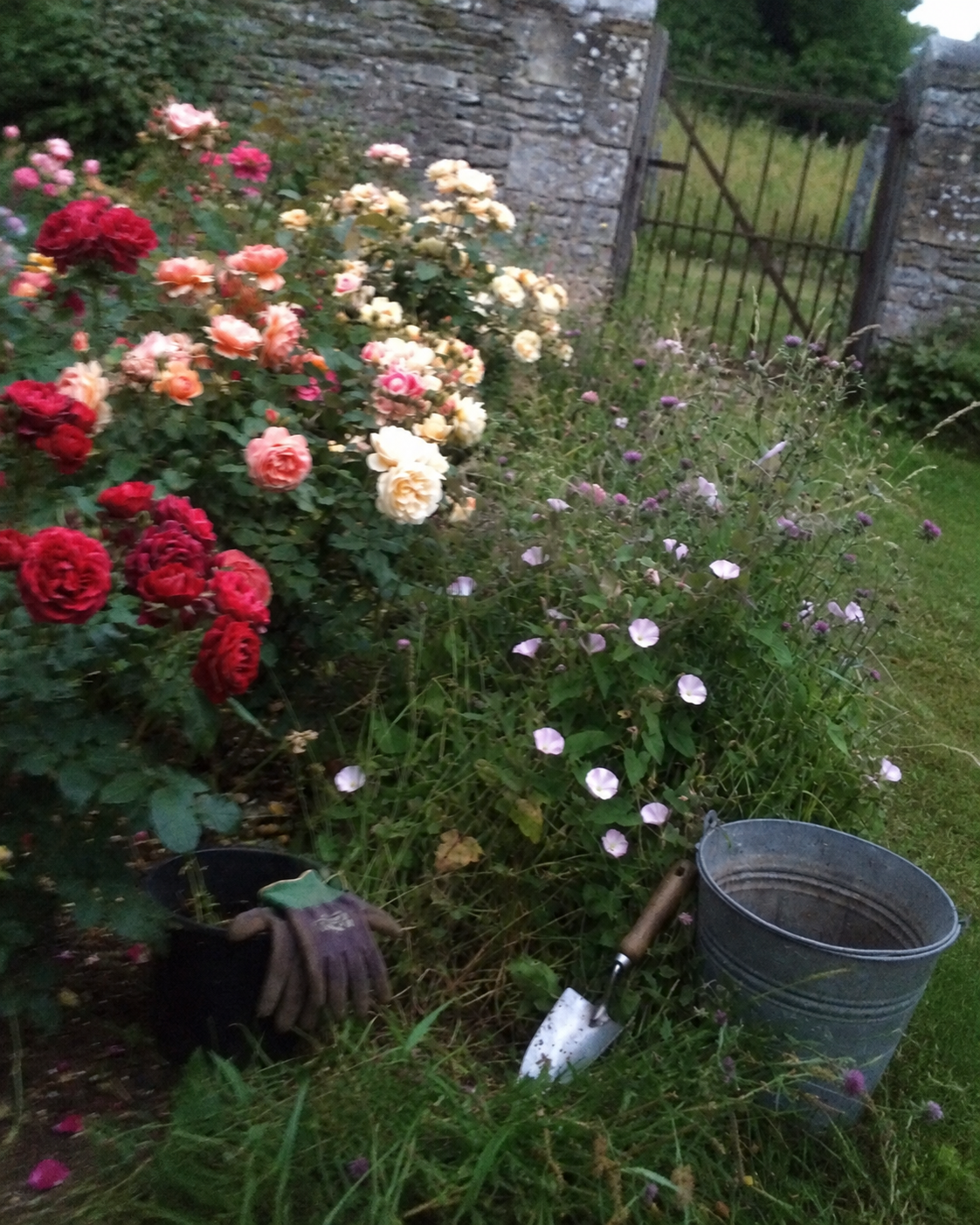
I Found a Drawer in My Mother's Kitchen Last Easter. There Were Six Years of Bloodwork Results in It. None of Them Had Been Opened. I'm 47. My mother is 74. She lives an hour east of me in the house I grew up in. I drove out for Easter last year. Me, my husband Brian, our son Ethan who's sixteen, our daughter Hannah who's thirteen. We brought the ham. We brought Hannah's deviled eggs — she'd made them by herself for the first time and was nervous about whether the paprika was even. We brought a bottle of Riesling because my mother has been a half-glass-with-dinner woman for forty years and won't buy her own. I want to tell you what happened with the drawer. But I want to back up first. Because if I just tell you about the drawer it'll sound like a thing that happened in a single afternoon. What was actually happening was a thing that had been building since 2019. My father died in May of that year. Five years before that Easter. He'd been sick for about eighteen months. Pancreatic. There's not much you can say about pancreatic that isn't in every cancer memoir already, and I'm not going to add to the genre. What I'll say is that my mother, who had been a second-grade teacher for thirty-eight years and the most relentlessly competent person I knew, took care of him at home all the way through. And then walked into the kitchen the morning after his funeral and started reorganizing the spice rack. That was her grief. She reorganized the spice rack. She alphabetized her bookshelves. She sorted forty years of photographs into archival boxes by year. Then she sat down in my father's reading chair for the first time and didn't get up for about two weeks. By two weeks I don't mean literally. I mean the spirit of it. She got up to eat. She got up to call me. She got up to walk to the mailbox. But she sat in that chair for what amounted to two weeks. And when she got up again she was a smaller woman than she'd been the day my father died. She didn't get bigger again. That's the part nobody told me about losing a parent — that the surviving parent can shrink, and that it might be permanent. About a year after my father died, my mother had her annual checkup with Dr. Patel. She'd been seeing him for about a decade by then. She likes him. He's the kind of doctor who remembers you used to teach second grade and asks about your former students. Her cholesterol numbers had crept up. She told me about it on the phone. She said it like it was nothing. "Patel says it's a little high. He says we should keep an eye on it." I said: "Are you going to need medication?" She said: "He mentioned it. He said let's try the basics first. I told him that sounded right to me." I said: "Okay." That was 2020. In 2021 the numbers had crept up again. She told me again. Same conversation. Same "let's try the basics first." In 2022 she stopped telling me what the numbers were. I asked her once that fall what Dr. Patel had said at her last appointment. She said: "He's a good doctor. We have an arrangement." I didn't ask her what the arrangement was. I thought I knew. I thought she was managing it. What I didn't know — what I didn't let myself know — is that "managing it" had quietly become "not opening the envelopes." So. Easter. We had dinner at four. Ham, the deviled eggs, asparagus, her mother's roll recipe that she's made every Easter since 1972. Hannah was watching her grandmother eat in that way teenagers watch the adults around them when they're trying to figure something out and aren't going to ask. Hannah leaned over to me at one point and whispered: "Is Grammy okay?" I said: "What do you mean?" Hannah said: "She's barely eating." I looked. She was right. My mother had pushed her ham around her plate and eaten about two bites. She'd taken one deviled egg, eaten half of it, set the rest down. She'd taken half a roll. She'd had her half-glass of Riesling and then put her hand over the rim when Brian went to refill it. I'd been so busy keeping up the table conversation — Brian's mother had broken her hip in March and was at a rehab facility, Ethan had gotten his driver's license, Hannah was about to start a summer art camp — that I hadn't looked at my mother for the first forty minutes of dinner. When I looked, she was watching us. She wasn't eating. She wasn't drinking. She was just watching. The way you watch something you're memorizing. I want to be honest that I didn't know what to do with that, in the moment. So I did what I usually do, which is keep talking. After dinner she went to bed at 8:15. Hannah looked at me with the look of a thirteen-year-old who has noticed something and would like the adults to also notice it. I told her I'd noticed. I told her Grammy was just tired from cooking all day. I told her we'd come back soon. I didn't believe what I was telling her. Hannah didn't either. We both pretended. I offered to clean up. I was loading the dishwasher when I realized I needed to put the gravy boat away. The gravy boat is the one with the chip on the lip that my grandmother gave my mother in 1969. It lives in the dining room hutch. I went to put it back and it wasn't there. I came back to the kitchen and started checking drawers. I opened the third drawer down on the right side. The one she calls the junk drawer. The one with the rubber bands and the takeout menus from restaurants that closed in 2014. The gravy boat wasn't in it. What was in it was a stack of envelopes. White. Standard letter-sized. Office-of-Dr-Patel return address on every one. Some of them had a window envelope with a printout showing through. Most of them were sealed. I counted them later, in my head, on the drive home. There were eleven. Eleven envelopes spanning about six years. Nine of them had never been opened. I stood there in my mother's kitchen with the dishwasher running and a gravy boat in my hand that I'd put down on the counter without realizing. I closed the drawer. I went and checked the hutch one more time and the gravy boat was there. It had been there the whole time. I'd looked right past it. I put the gravy boat away. I went into the living room. My mother was already in bed. Brian and Ethan and Hannah were watching something on Hannah's phone. I sat on the couch next to Brian and put my head on his shoulder and didn't say anything for the rest of the evening. On the drive home I told him about the drawer. He said: "What do you want to do?" I said: "I don't know yet." I sat with the drawer for about three weeks. I didn't bring it up with my mother. I knew what would happen if I did. She'd say "those are private." She'd be right. She'd also be hiding from herself. I called her on a Tuesday and asked her how the last checkup had gone. She said: "Fine, honey. Patel said everything was fine." I said: "When was the last one?" She paused. She said: "I'd have to check the calendar." I said: "Okay, Mom." I hung up and I knew. She hadn't been in. She hadn't been in for a while. I'm going to be careful about what I claim happened next, because what happened next was that I, a 47-year-old accountant in Madison, Wisconsin, with no medical training, decided I was going to do something about my mother's cholesterol from an hour away. That's a sentence that should make any reasonable person nervous, and I want to say up front that the way it went well was that at every step I made my mother talk to her actual doctor and not to me. I started reading. I read about cholesterol in women over 70. I read about what people on the edge of being told to start medication do. I read about diet and exercise and the things you can stack on top of the basics. I read about beetroot. Not because it was trendy. Because it kept coming up. Beetroot has been studied for decades for things related to cardiovascular wellness. The compounds in beetroot — called betalains — appear to play a role in supporting the body's natural antioxidant balance. That's about as much as I'm going to claim to understand, because I'm an accountant, not a biochemist. I read for two evenings. I came across a small brand called Rosabella. What got my attention about them, embarrassingly, was a footnote about processing. They cold-press their beets at low temperatures. The reason that matters — and I had to read it twice to follow it — is that betalains are heat-sensitive. Faster processing methods can degrade them. Rosabella decided to do it the slow way. A small farming community in Lancaster County, Pennsylvania. Cold-pressed at low temperatures. Two capsules with water in the morning. Before I did anything else, I called my own doctor's office. I'm being honest about the order of operations. I didn't call my mother. I called my own doctor. I asked about it for me. I've had my own creeping numbers the last two years and figured I might as well start there. My doctor said yes, it was reasonable, food-based, fine to add. I ordered a bottle for myself. I took it for three weeks before I said a word to my mother. I wanted to know what it felt like before I asked her to try it. What it felt like was nothing dramatic. I noticed, around week two, that I wasn't bracing my back when I got out of bed in the morning. I noticed I was getting through 4 p.m. without the gummy bear emergency I'd been keeping in my desk drawer for a year. Small. Soft. Not magic. But enough to make me drive out to my mother's house on a Saturday in May. I brought groceries. I brought tulips. I brought my own bottle of the supplement. We had coffee at her kitchen table. I told her — and I had practiced this in the car, so I'm going to give you the practiced version because the practiced version is what I said — I told her that my numbers had been creeping a little. That my doctor had mentioned the basics. That I'd been reading about things and had come across a supplement. That I'd asked my own doctor about it and she'd said it was reasonable. That I'd been taking it for a few weeks. That I felt a little more like myself in the mornings. My mother listened. She didn't say much. Then I did the thing I'd practiced hardest. I said: "Mom. I want to be honest with you. I called Dr. Patel's office before I came over. I asked the nurse what she thought of this for somebody your age with your history. She said it was something Patel would probably be fine with — but I told her I wasn't asking on your behalf. I told her you would call him yourself if you wanted to know. I just wanted to know first." My mother set her coffee down. She looked at me for a long time. She said: "Karen. You called my doctor's office." I said: "I called your doctor's office about a supplement. I didn't ask anything about you. The nurse didn't tell me anything about you. She wouldn't have. I wouldn't have asked." She was quiet for a longer time. Then she said — and this is the sentence I keep coming back to — "I haven't been to see Patel in fourteen months." I didn't say anything. She said: "I know. You don't have to look at me like that." I said: "I'm not looking at you like anything." She said: "Yes you are." We sat there. Eventually she said: "I'll call Patel on Monday. Leave the bottle. If he says yes, I'll take it. If he says no, you can have it back." I left the bottle on the counter with the receipt taped to it. I drove home. On Monday at 4:15 p.m. she called me. She said: "I have an appointment with Patel on Thursday. He wants to see me before he says anything about the supplement. He said the supplement was probably fine but he hadn't seen me in over a year and he wanted bloodwork." I said: "Okay, Mom." She said: "Don't say anything." I said: "I'm not saying anything." She said: "I can hear you not saying anything." I laughed, the way you laugh when you're trying not to cry. Dr. Patel ran the bloodwork. The numbers were what they were. He wasn't alarmed but he was honest. He said the basics had been doing some of the work but he'd be paying closer attention from here on. He said the supplement was a sensible thing to add. He said: "Marjorie, I'm not going to ask why you haven't been in in fourteen months. I'm just glad you're here now. Let's see what we can do together." She told me about it on Thursday evening on the phone. She started the bottle on Friday morning. I want to tell you about a Saturday in August. I drove out to my mother's house unannounced. I'd been doing more drop-in visits because I liked seeing her in her natural state, with no time to prepare. I pulled into the driveway. Her Buick was there. I didn't go to the front door. I went around the back, through the gate by the garage. I found her in the rose bed. The rose bed is on the south side of the house, against the cinderblock foundation. It was planted by her father — my grandfather — in 1962, when my mother was twelve. She has tended it every summer since he died in 1989. Until 2022, when she let it start going. The quack grass had been crowding the roses for two years. The bed had been getting smaller every summer. I'd watched it happen and not said anything because I didn't know what to say. My mother was on her hands and knees in the dirt. Her gloves were off. There was dirt under her fingernails. Her hair, which she'd let go gray over the last three years, was pulled back in a kerchief I recognized as one of my father's old bandannas. She was pulling quack grass out of the bed by the roots, piling it next to her on the lawn. She was humming. I stood at the corner of the garage and watched her for I don't know how long. Long enough that I realized I'd been holding my breath. She looked up. She saw me. She said: "I didn't hear you pull in." I said: "I just got here." She said: "I'm getting this damn grass out of my father's bed." I said: "I can see that." She said: "Go in the shed and get me the small pruners. The ones with the green handles." I got the pruners. I knelt down next to her in the dirt. We worked the rose bed for the next hour and a half. We didn't talk about the supplement. We didn't talk about the drawer. We didn't talk about Dr. Patel or the fourteen months or the six years. We just worked the bed. When we were done she stood up — without using her hands to push herself off the ground — and she looked at the bed and she said: "There. That's better." I drove home that night and pulled over at a Kwik Trip about twenty minutes from my house because I was crying too hard to drive. I'm not a crier. I'm an accountant. I cried at my wedding and at my father's funeral and at the birth of each of my kids. That's the list. This was a fifth thing. That was nine months ago. She's been at Dr. Patel's now three times since. Her numbers are in better shape than they've been in a few years. Patel said the combination — the supplement, the fact that she's actually showing up, the small changes she's making in her kitchen — is doing something good. He didn't say it like a miracle had happened. He said it the way a doctor says it when his patient finally decided to show up. I'm not going to give you specific numbers because I don't have permission from my mother to share specific numbers, and also because it doesn't matter. What matters is that she's showing up at her own house. She's showing up at our Sunday dinners. She showed up at Ethan's varsity game in October — drove herself, sat through both halves, ate a hot dog. She made the pies for Thanksgiving. She made them at her own house. She drove them over. She told Hannah she'd teach her the roll recipe in the spring. I want to be careful about what I'm claiming, and I want to be honest about a thing I should have said earlier. I'm not a doctor. I'm not in healthcare. I'm one 47-year-old accountant in Wisconsin who watched her mother shrink for five years after her father died, and finally figured out — late, embarrassingly late — that part of what was happening was that her mother had stopped going to her own doctor's appointments. The supplement is part of what changed. So is showing up at the appointments. So is having a daughter who finally said something. So is my mother deciding, on some Tuesday in May at her own kitchen table, that she wasn't going to hide from her own bloodwork anymore. I can't tell you which of those things did the most work. What I can tell you is that the combination put my mother back in her father's rose bed. If something I've said sounds familiar — if you've got a mother who's been "managing" something for a few years, who's been getting smaller in ways nobody can quite name, who has a drawer somewhere in her kitchen full of envelopes you're not supposed to know about — the only thing I'd encourage you to do is have a conversation. Not about the medication. Not about the supplement. About the appointments. When was the last one. When's the next one. Has she been going. If she's been going, you have nothing to worry about and you can stop reading this and go do something else. If she hasn't been going, you have a different conversation to have. I had mine in a kitchen in May. It didn't go well in the moment. It went well eventually. ~ Karen R. P.S. — Rosabella has a 90-day money-back guarantee. If you're not satisfied for any reason, every penny back. That's a reasonable policy for a supplement. It gives you actual time to see whether it helps. I'd give it at least a month before deciding anything. Bodies are slow, and my mother's body — which has been carrying her since 1950 — was particularly slow. She told me she didn't feel anything for the first three weeks. She told me she felt "a little different" around week five. She told me she felt "more like myself" sometime in the second month. She wouldn't have told me any of that without me asking, by the way. She would have kept it to herself. Mothers like mine don't volunteer information about themselves. You have to ask. P.P.S. — Hannah is at my mother's house this weekend. She drove herself out — she got her learner's permit in August and my mother said she'd give her the highway hours for her license. I'm letting them have the weekend without me. When I called this morning, Hannah picked up on the second ring. She said: "Grammy made cinnamon rolls. From scratch. The dough rises overnight. She says the trick is the butter." I said: "How is Grammy?" Hannah said: "She's good, Mom. She's really good. She's teaching me the rolls and the pie crust this weekend. She said by Christmas I'll be ready to make the Thanksgiving pies for next year." I said: "Did Grammy ever teach me the pie crust?" Hannah said: "I don't know. Did she?" She didn't. I'd asked her once, in my twenties, and my mother had said: "Karen, your father loves you, but he can't bake. You don't need to know how to make pie crust. Just marry someone who likes the way I make it." I'd been a little annoyed at the time. I'm not annoyed about it anymore. She kept the pie crust for the granddaughter. She kept it on purpose. She was waiting for the right person. That's a thing a woman does when she's planning to be alive long enough to teach a thirteen-year-old how to make pie crust. P.P.P.S. — Rosabella is a small operation. The farms harvest on their own schedule. I waited nine days for the second bottle I sent my mother because they were between bottlings. She keeps an extra one in her cupboard now. She wrote "Karen's beetroot" on the lid with a Sharpie even though it's hers. It's been "Karen's beetroot" in her house since the day I left the first bottle on her counter. She's not going to call it her supplement. I'm not going to make her. P.P.P.P.S. — I went to my mother's house last month for her birthday. I went into the kitchen at some point to get a knife for the cake. I opened the junk drawer. It was empty. She'd cleared it out at some point. I don't know when. I don't know what she did with the envelopes — whether she opened them and read them, whether she shredded them, whether she just threw them out. I closed the drawer. I didn't ask her about it. I never asked her about it. I'm never going to ask her about it. She knows I know. I know she knows I know. That's all the conversation we're ever going to have about it. And it's enough. P.P.P.P.P.S. — One thing I want to say to other daughters, if any are reading this. If you have a mother who's been alone for a while. If she's been "managing" something for a few years. If her phone calls have been getting shorter. If she's been pushing back when you offer to come over. If she's been telling you "everything's fine" in the voice that means she doesn't want to be asked about it. If you've noticed yourself accepting "everything's fine" because asking more would be intrusive. It is intrusive. You have to be intrusive anyway. We are the daughters of a generation of women who did not ask for help. Who built lives where asking for help was a kind of failure. Who carried their own bloodwork around in junk drawers because they couldn't face it and couldn't ask anyone to face it with them. That generation needs us to be the ones who ask. You don't have to do it well. I didn't do it well. You just have to do it. I called my mother's doctor's office before I asked her if she was okay. That was probably wrong. I'd do it again the same way. Some things you can only do sideways. Mothers like ours don't take help if it's offered straight on. They take it when it's already happening and they can pretend they didn't ask for it. If you're the daughter of one of those mothers — and you'd know if you were, by the way, you don't have to be told — start sideways. Leave a bottle on a counter with a receipt taped to it. Have her own doctor be the one who tells her it's fine. Drop in unannounced on a Saturday. Don't ask about the drawer. She'll get to it on her own time. She'll get to it. https://track.tryrosabella.com/bfcb877b-9f52-4175-9be6-9bc1a89ce3a8 Individual experiences vary. These statements have not been evaluated by the FDA. This product is not intended to diagnose, treat, cure, or prevent any disease.
Support stamina and heart health every day
LEARN MORELike this ad? Make it yours.
Crush rebuilds this exact creative around your product — your brand, your colors, your offer — in about a minute.