Daily Wellness Support
Daily Wellness Support Facebook ad: “My Husband Didn't Tell Me the Doctor Mentioned Surgery. I…”
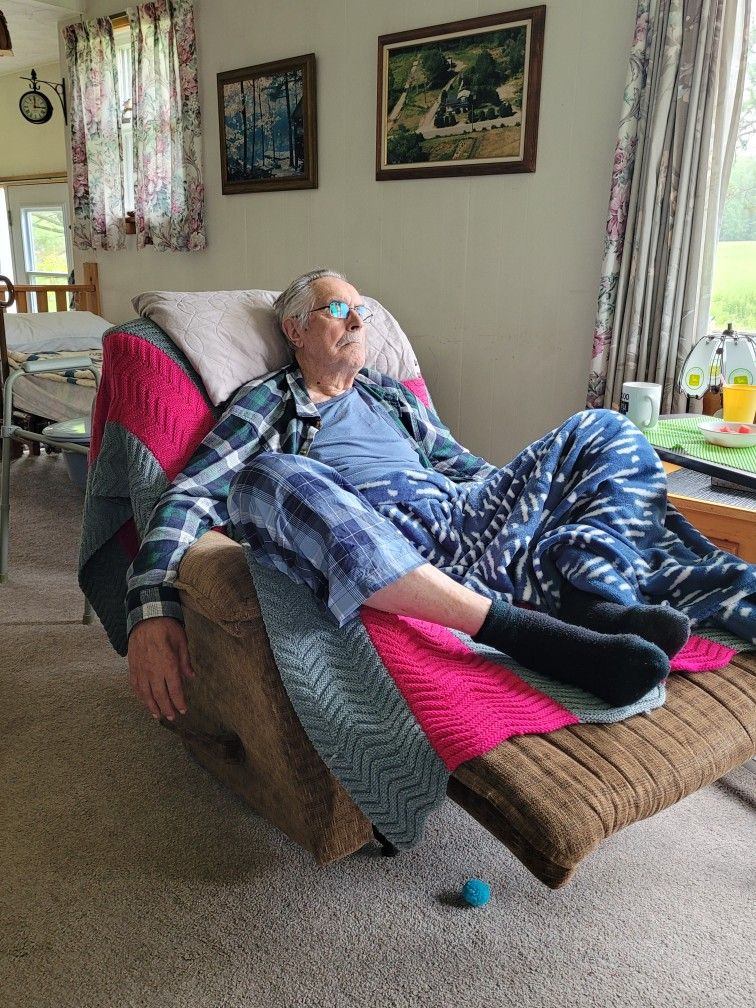
Ran for 5 days, from June 13 to June 18, 2026, the last day Crush saw it.
Run by Daily Wellness Support on Facebook. Crush is not the advertiser and does not verify its claims. See this ad in Meta's Ad Library(opens in a new tab)
Want an ad like this for your product?
Crush makes new ad images for your product from this ad: your logo, your product photo, your offer.
Trials from $19.95 USD, then $79.95 USD a month. Cancel anytime.
About this ad
- Meta Ad Library ID
- 3179272878927684
- Platforms
- Facebook, Instagram, Audience Network, Messenger and Threads
- Relaunches
- 0
Ad text
My husband has been getting up four times a night to use the bathroom for three years. He doesn't talk about it. That's the arrangement. He eases out of bed quietly, trying not to wake me. I always wake up. I never say so. I've watched what it does to him. The exhaustion that sleep doesn't fix. The man who used to be up at six making coffee started needing an alarm. Started falling asleep in his chair by eight-thirty. Started saying no to things. The late dinners, the long drives, the trip his brother kept planning. Anything that required energy or a bathroom he wasn't sure would be close enough to. I watched what it did to us. The closeness you take for granted in a long marriage started to change. He pulled back. Not coldly. Carefully. Like a man managing something he's ashamed of and doesn't want to explain. I didn't push. That became the arrangement too. He doesn't explain and I don't ask and we both pretend the distance isn't growing. He tried everything. Saw palmetto first. His doctor mentioned it. Three months, nothing. A different brand a man at his office swore by. Something called beta-sitosterol from a men's health forum. A fourteen-ingredient blend with a professional-looking website. The Costco one, because if something isn't working you may as well not spend a lot on it. None of it touched the nights. None of it touched the urgency. None of it touched the flow that he described once, in a rare unguarded moment, as something that had just stopped cooperating. Three years of that. Then he had an appointment on a Tuesday. He came home, made a sandwich, watched the news, went to bed. Didn't say a word. He never says anything. That's always been the arrangement. He goes, comes home, everything's fine, nothing to report. But this time the quiet was different. Not the quiet of a man who's tired. The quiet of a man carrying something he's decided not to put down in front of you. I waited three days. On the fourth day I called the office and asked them to send me the visit notes. Gary has me listed as his healthcare proxy. He set that up years ago without really thinking about what it meant. It means I'm allowed to see his records. I sat in the kitchen and read them. "Patient presents with persistent lower urinary tract symptoms consistent with moderate BPH. Nocturia 4-5x nightly. Reduced flow rate. Incomplete emptying. Conservative management and current supplement regimen have not produced meaningful improvement over 18 months. Discussed possible escalation of treatment. Patient was informed that if symptoms continue to progress, procedural intervention may be warranted." Procedural intervention. That's what they call it in the notes. Gary had come home, made a sandwich, watched the news, and gone to bed without telling me that his doctor had mentioned surgery. I'd done my own reading over the years. The kind of reading you do when you love someone who's struggling and won't ask for help. I understood the basics. The prostate swelling, the urethra getting squeezed, the bladder receiving signals it shouldn't. I understood why it disrupted sleep and flow and everything downstream of those two things. What I didn't understand was why nothing he'd taken had made any difference. After I read those visit notes, I needed to understand that. It was late. Gary was asleep. He'd gone up at nine, exhausted the way he always was now. I was at the kitchen table with my laptop and a cup of tea that had gone cold. I wasn't looking for anything specific. I was just reading. Following one link to the next the way you do when you can't sleep and can't stop thinking. Somewhere around midnight I found a research paper I almost skipped. It was a study done on men who were scheduled for prostate surgery. Before their operations, one group took pomegranate extract capsules. Concentrated extract, not juice. Four weeks. The other group took a placebo. After the surgeries, researchers analyzed the removed tissue. In the men who had taken the pomegranate extract, the pomegranate compounds were physically measurable inside the prostate gland itself. Not in the bloodstream. Not working at a distance. Inside the tissue. I read that paragraph three times. Then I started reading backward. Trying to understand what it meant, and why I'd never come across it in three years of research. Here's what I pieced together sitting at that kitchen table. Every supplement Gary had taken was trying to help from the outside in. Saw palmetto adjusts certain hormones in the bloodstream. Beta-sitosterol helps urine flow a little. The fourteen-ingredient blends targeted multiple things at once. But none of them ever reached inside the tissue itself. The real problem isn't in the bloodstream. The prostate was swollen because of inflammation sitting right inside the gland. In the tissue cells themselves. Pressing against the surrounding tube, squeezing it just enough to disrupt flow, just enough to keep sending his bladder signals it shouldn't be getting. To actually address that, something has to get inside the tissue and reach it. For three years, nothing Gary took ever got there. The pomegranate compounds. Specifically ones found in the rind and peel, not the juice. They're converted in the gut into molecules small enough to penetrate the prostate tissue directly. That's not a theory. That's what the researchers found when they examined the tissue after surgery. The compounds were there. Inside the gland. Exactly where they needed to be. Once there, they do three things at once: they quiet the swelling that's been causing the squeeze, they slow down the signal telling the gland to keep growing, and they improve blood flow to tissue that hasn't been circulating well in years. That's not managing the squeeze from the outside. That's going inside the tissue and addressing what's causing it. I sat at the kitchen table at twelve-forty in the morning and thought about three years of supplements that had never reached the right address. I kept reading. Most pomegranate supplements on the market aren't what was used in that study. A lot of them are simply dried fruit powder. No guarantee of how much of the active compound is actually in the capsule. Some use heat in the processing that breaks down the very thing that makes it work. Others are cut with fillers that reduce the dose before you've even opened the bottle. You could take the wrong version for months and feel nothing. Then conclude that pomegranate doesn't work. It works. The wrong version just never reaches where it needs to go. Same as everything else Gary had tried. I spent another hour that night reading labels and looking for brands that matched what the research actually required. A source you could verify, clear disclosure of the active compound on the label, third-party testing, and low-temperature processing that preserved what made it effective in the first place. I almost gave up. Most brands didn't disclose enough to know. Then I found one that did. It was called Avoria. Everything I'd spent that hour looking for was right there on the label and confirmed by a third-party certificate. I don't know why I hadn't found it before. Maybe I hadn't been looking for the right things until that night. I ordered a bottle before I went to bed. I didn't tell Gary what I'd found right away. I put the bottle in the cabinet where he kept his other supplements and the next morning told him I'd read something and ordered something new. I showed him the label. He looked at it the way he looks at all of them now. With the patience of a man who has stopped expecting anything to work but doesn't want to disappoint me. "Pomegranate," he said. "The extract. Not the juice. It's different." "Okay," he said. And he took two capsules with his coffee. That was his review. Okay. I tracked everything quietly. The way I'd been tracking everything quietly for three years. The first week I noticed nothing. I hadn't expected to. The second week he got up twice one night instead of four. I know because I was awake both times, the way I'm always awake. I didn't say anything. By the end of week three something had shifted in the mornings. He was up before the alarm twice that week. He made the coffee. He was in the kitchen when I came downstairs, which hadn't happened in longer than I wanted to calculate. Week four we drove an hour to his sister's for dinner. He didn't ask to stop once on the way there. I didn't say anything about it on the drive. But I reached over and put my hand on his arm and he put his hand over mine and we drove like that for a while. By week six the nights had changed. Not every night. But most nights. Two trips instead of four, then one, then sometimes none. I started sleeping through. I hadn't realized how much of my own sleep I'd lost in three years of waking every time he eased out of bed. Week eight I woke up at three in the morning and the other side of the bed was still warm. Gary was still there. Still asleep. I lay there in the dark for a long time. At the ten-week mark Gary had his follow-up. I waited at home. When he came in he looked like a man who'd just heard something he'd stopped expecting to hear. "He said whatever I'm doing is working," Gary said. "He said everything looks markedly improved. He said we can hold off on any further discussion about procedures." He stood in the kitchen for a moment. "He asked what I changed." "What did you tell him?" "I told him about the pomegranate. He wrote it down." Gary sat down at the table. He was quiet for a moment. But a different kind of quiet than the one I'd been watching for three years. "You found this," he said. It wasn't a question. "You came home and didn't tell me about the surgery conversation," I said. "So I called the office and read the notes." He looked at me for a long moment. "I didn't want you to worry." "Gary. I've been worried for three years. I just didn't say so because you didn't say so." He was quiet again. Then: "I'm sorry I didn't tell you." That was the thing I'd been waiting for without knowing I was waiting for it. Not the results at the doctor's office. Not the better nights or the drive to his sister's. That moment at the kitchen table when he finally put down the thing he'd been carrying alone. We'd been carrying things separately for three years that we should have been carrying together. We're at fourteen weeks now. Gary takes two capsules every morning with his coffee. The nights are mostly clear. The urgency is still there sometimes. But it's the kind you notice and actually get ahead of, not the kind that runs the day. The flow is consistent. The quiet bathroom logistics that had become the invisible background of our life have mostly dissolved. His follow-up is in six weeks. Neither of us is worried about what it will show. What I want to say to the women reading this. And I know some of you are here, because you've been doing the same quiet research I was doing, following links at midnight while he's asleep, watching someone you love struggle with something he won't name. This is what I want to say: The supplements he's tried have probably all been working at the wrong address. Not because he chose wrong. Because almost everything in the prostate supplement category was built around working around the gland from the outside without ever actually reaching the tissue where the real problem lives. Pomegranate extract reaches the tissue. That's been confirmed in a controlled study on actual human prostate tissue. The compounds were physically measurable inside the gland itself after four weeks. Nothing else in the prostate supplement category has shown the same thing. But it has to be the right extract. Standardized for the active compound, processed in a way that keeps it intact, tested by a third party so you know what's actually in the capsule. Avoria is the only one I found that disclosed all of it and backed it up. The 30-day money-back guarantee means the first month costs nothing if it doesn't work. After three years of things that never reached the right place, that's the first time I felt like the risk was genuinely on the other side. You don't have to tell him everything you read tonight. I didn't either. I just put the bottle in the cabinet and told him I'd found something new. https://getavoria.com/products/pom-2 P.S. The study that stopped me wasn't a theory or a diagram. It was researchers looking at real prostate tissue under a microscope and finding pomegranate compounds inside it after four weeks of supplementation. Saw palmetto never shows that. Beta-sitosterol never shows that. Everything Gary had tried was landing somewhere other than where the problem was. That's not a failure of effort. That's a failure of address. P.P.S. Most pomegranate supplements are just dried fruit powder with no way to know how much of the active compound made it into the capsule. That version doesn't reach the tissue. Avoria lists the active compound, the extraction method, and the third-party test result right on the label. If a brand doesn't show you all three, you're buying the version that was always going to fall short. The same way everything else did. P.P.P.S. He didn't want me to worry. He'd been carrying this alone for three years because that's what men do with things that embarrass them. If the man in your life is doing the same thing. Going quiet in that particular way, managing the logistics without naming them, coming home from appointments with nothing to report. He's not fine. He's just decided not to say so. The 30-day guarantee means the only cost of trying is a conversation you probably both need to have anyway. https://getavoria.com/products/pom-2
Where the ad sends people
getavoria.com
My Husband Didn't Tell Me the Doctor Mentioned Surgery. I Found Out Anyway. Then I Found Something Else.
Avoria
Learn more: getavoria.com(opens in a new tab)