
Inactive· since Aug 2, 2026
- 18
- days it ran
- 0
- relaunches
Ad copy
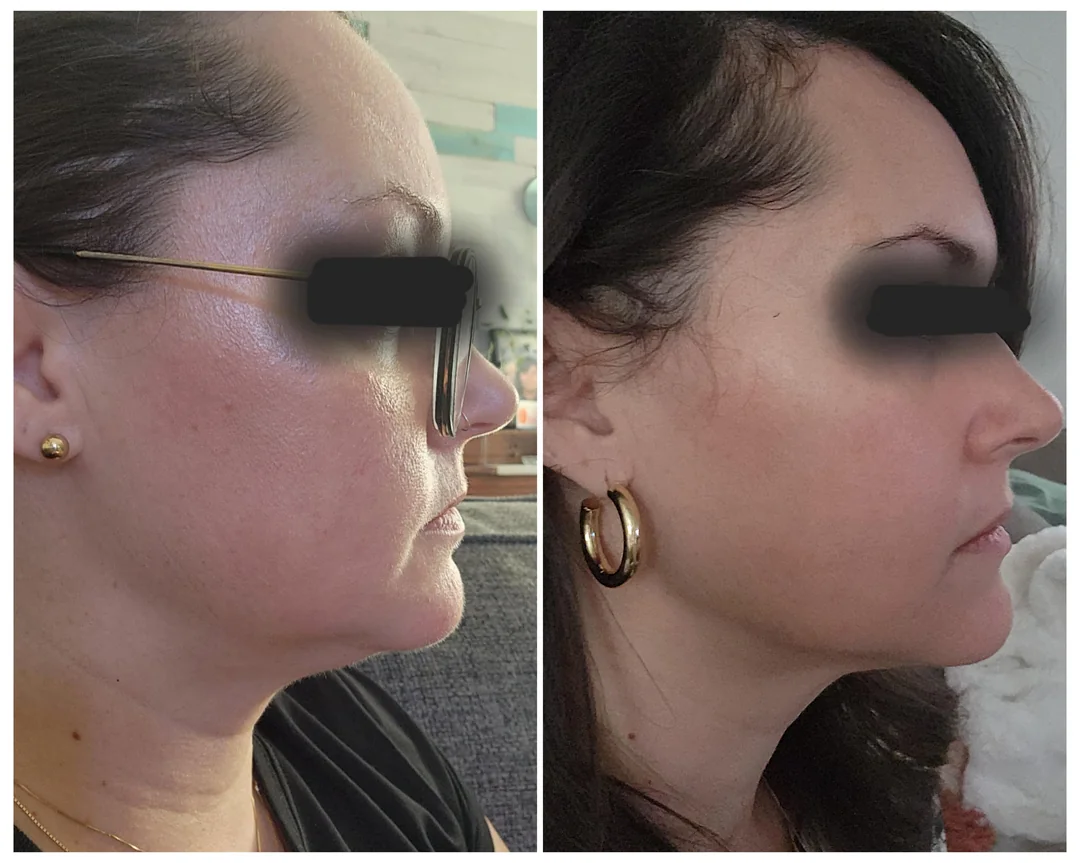
Last week a patient of mine asked to reduce her Levothyroxine dose. Not because she gave up. Because her TPO antibodies had dropped from 891 to 203 in five months. Her Free T3 had moved into the upper third of the range for the first time since her diagnosis. And she had lost 24 pounds without changing her medication once. I spent the rest of that week trying to understand what she knew that 19 years of endocrinology never taught me. I'm an endocrinologist. I've been treating Hashimoto's for 19 years. I know thyroid disease the way a mechanic knows an engine. I can look at a thyroid panel and tell within 30 seconds what trajectory that patient is on. How fast the antibodies are climbing. How much the conversion is stalling. How long before the dose needs to go up again. I know the pattern because I see it every single day. Last week, I couldn't read it. A woman came in expecting the usual. Her TPO antibodies had been over 890 for three years. Her Free T3 was perpetually stuck at the bottom of the range despite what appeared to be an optimized TSH. She was on 125mcg of Levothyroxine. She had tried every supplement, every diet protocol, every dose adjustment I had recommended over six years. I expected to see what I always see. Exhausted. Puffy. Defeated. Except she wasn't. I pulled up her new labs. And I just stopped. Her TPO antibodies had dropped from 891 to 203. Her Free T3 had moved into the upper third of the range for the first time since her diagnosis. Her TSH was tighter than I had ever seen it on the same dose. And her face — the puffiness that had been there for three years — was visibly reduced. I looked at her. "What have you been doing differently?" "Nothing crazy. Just something I found that my sister told me about." I didn't believe her. "New medication? Different brand of Levo? Did you add Cytomel?" "Nothing like that. Just this one thing I've been taking for five months." I pulled up her previous labs and compared them side by side. Her antibody trajectory had reversed by what looked like three years. Her conversion ratio was improving. Her inflammatory markers were dropping. I sat back in my chair. "I'm going to be honest with you. I don't think you need 125 micrograms anymore." She looked confused. "But my Hashimoto's—" "Your thyroid is functioning better than it was three years ago. Your body is converting T4 to T3 more efficiently than I have seen since your diagnosis." Long pause. "So what do I do now?" "Keep doing whatever you're doing. Because it's working better than anything I was about to adjust." She walked out. And I spent the rest of that week wondering what she knew that I didn't. Here is what bothers me. I have been in endocrinology my whole adult life. I know every treatment, every drug, every protocol that is supposed to work. And I see the same thing in my office every single day. That crushing fatigue that no amount of sleep fixes. Sleeping ten, twelve hours and still waking up feeling like they haven't slept at all. Like they have been hit by a bus in the night and are just now crawling out of the wreckage. A body that feels like it is running on a battery below 35% — will shut down in approximately ten minutes — no matter what they do to recharge it. "Every single morning I wake up feeling like I have been hit by a bus." "No matter how much sleep I get I haven't woken up feeling refreshed in over four years." "It's like you are an old battery. You wake up at 75 to 80% when others are at 100%. Regular tasks like cooking and laundry would take someone else 5% of their energy. It takes us 20%." I hear those sentences every single week. Women who are sleeping ten, twelve hours and dragging themselves through the day feeling like they haven't slept at all. Women who used to run four to six miles a day who now can barely get off the couch. Women who used to work ten-hour days who now can't get through the afternoon without crashing completely. "I used to run 4 to 6 miles a day. Every single day. Now I can barely get off the couch." "As soon as I'm off work I am exhausted. I can maybe wash dishes once or twice a week if I push myself. It takes everything I have to make dinner for my kids." "I have two young children and by the time I go to pick them up from school I literally feel like I can just about stay awake to tend to their needs." I look at their labs. TSH within range. Dose appears correct. Numbers look fine. I send them home with a 12.5 microgram adjustment and tell them to come back in three months. They come back in three months. Still exhausted. Numbers look fine. Adjustment wasn't enough. Try another 12.5. Then there is the weight. "The weight WILL NOT come off. I feel hopeless." "I was lifting weights four times a week. Eating mega healthy. Yet I was getting fat. I was miserable. This disease had pretty much affected most facets of my life." "When I tried to calorie restrict I'd only get more fatigued and sluggish." "I gained 20 pounds in six months and nothing makes sense." Women eating 1,200 calories and gaining weight. Women exercising six days a week and gaining weight. Women who have done everything right and are watching the scale go the wrong direction anyway. I tell them their thyroid is being managed. I tell them weight loss is difficult with Hashimoto's. I tell them we may need to look at other factors. What I don't tell them — because I didn't know — is that their medication is delivering T4 that their liver cannot convert into the active T3 their cells need to actually run their metabolism. I didn't know because nobody taught me to look there. Then there is the brain fog. "Brain fog feels like there's a coating between me and the world. Like I'm grasping at thoughts or words but they just slip away." "I can't always hear or comprehend what people are saying to me from the brain fog. I feel stupid. I feel like I'm losing my mind." "I will literally put off doing tasks or having conversations with my family because it's so bad." "Brain fog to the point of mental breakdowns because of how scary it is how quickly I forget everything in my life." Educated, accomplished women sitting across from me describing what sounds like early cognitive decline. Scared. Convinced something worse is happening to them. I order cognitive screenings. They come back fine. I tell them it's the Hashimoto's. I adjust their dose. They come back three months later. Still foggy. Numbers look fine. I send them home again. Then the hair. "My hair was falling out in clumps. I'd find it on my pillow. In the shower drain. In my brush every single morning." "I had a ponytail half the size it used to be." "I was pulling handfuls out in the shower and trying not to cry." I add biotin to the recommendation. I check ferritin. I look for other causes. I find none. I tell them it's the Hashimoto's. I adjust their dose. They come back three months later. Still losing hair. Numbers look fine. I send them home again. And the worst part of all of it — the part that has stayed with me for 19 years — is what the people around them say. "My family and significant other don't believe me when I say I'm sick. They think I'm just being dramatic or lazy." "They tell me just get more sleep, rest up — as if it were that easy." "My husband says Hashimoto's isn't a big deal and that I'm lazy." "Just have a salad. That will make you feel better." "I am so sick and tired of being sick and tired." "I was not lazy. I had Hashimoto's disease. I told myself I was lazy over the years as the subtle symptoms left me feeling like nothing was ever good enough." Women who are genuinely, profoundly ill — being told by the people closest to them that they are making it up. And coming to my office hoping I will finally be the person who believes them and fixes it. I believe them. I always believe them. But for 19 years — I was sending them home with dose adjustments that addressed the wrong step. Before most of my Hashimoto's patients reach my office they have already been through the loop. "I've already tried the Amazon thyroid blends, the ashwagandha, the selenium, the diet changes. Nothing has really moved the needle." "15 years ago I tried to offset hypo with supplements under the care of a naturopath. Tried selenium, zinc. Didn't provide enough offset." "I went gluten-free for a year and the scale never noticed." "I spent thousands of dollars on things that didn't work over five years. Nothing sustainable. Thyroid still struggling." "Starting to wonder if this is just how I live now." I hear those sentences constantly. And I know now why nothing worked. Because every single one of those things was addressing Step 2 of a two-step process. Nobody — not their naturopath, not their previous endocrinologist, not their supplement stack, not me — was ever doing Step 1 first. I called her that evening. "I know this is unusual. But I can't stop thinking about your labs. What are you actually taking?" She didn't hesitate. "Something that targets the liver conversion pathway. Liquid drops." We talked for 40 minutes. She told me she had spent years trying everything. Adjusted her Levothyroxine — fought her previous doctor to test Free T3 not just TSH. Numbers shifted slightly. Symptoms stayed the same. Tried selenium — the supplement everyone in the r/Hashimotos and r/Hypothyroidism communities on Reddit recommends. Helped a little. Antibodies dipped for a month. Then plateaued. Went gluten-free for eight months. Bloating improved slightly. Antibodies didn't move. Exhaustion continued. Tried ashwagandha — energy improved for two weeks then leveled off completely, didn't touch the weight, the hair loss, or the fog. Tried a thyroid support supplement from Amazon with every vitamin and mineral listed on the label. Did nothing. She called it expensive urine. She said she was about to accept that this was just her life. Just existing. Not living. A shell of the woman she used to be. Then five months ago something changed. She started researching not treatments. Mechanisms. Why does Levothyroxine fail so many women even when the dose appears correct and the labs look fine? And she found the answer that I — with 19 years of endocrinology — had never told her. "It does seem like you're just holding on to T4 and not converting well." That is what women in the r/Hashimotos and r/Hypothyroidism communities on Reddit had been saying for years before most doctors would acknowledge it out loud. Here is what she learned. And what I should have known. Your thyroid medication — Levothyroxine, Synthroid, Armour, whatever you're on — gives your body T4. T4 is a storage hormone. Inactive. Your body cannot use it the way it arrives. Before the exhaustion can lift. Before the fog can clear. Before the weight can shift. Before you can stop waking up every morning feeling like a bus hit you in the night — your body has to convert that T4 into T3. The active form. The form your cells can actually open the door to and use. And about 60% of that conversion happens not in your thyroid. In your liver. When you have Hashimoto's the chronic low-grade inflammation that has been running quietly in your body — for years, maybe decades — slows your liver down. The enzyme responsible for that conversion becomes sluggish. Stalls. Stops finishing the job. So your T4 just sits there. In storage. Unused. Your TSH looks fine on paper. Your doctor — me — says everything looks normal. You walk out of that appointment and go home and lie on the couch because you're too exhausted to do anything else. "I thought crawling out of quicksand was how everyone felt in the morning. I had no idea that wasn't normal." Because the problem was never your number. It was the step that comes after. The step your liver was too exhausted and too inflamed to finish. I sat there listening to her describe this and thinking about how many women I had sent home over 19 years with a 12.5 microgram adjustment while this was happening downstream of every prescription I had ever written. She said most thyroid supplements give you selenium and zinc and call it thyroid support. But they skip the most important step of all. Before any mineral can support the conversion — before selenium can power the deiodinase enzymes, before zinc can support the conversion reaction, before magnesium can regulate the nervous system downstream — the liver pathway has to be opened first. She described it to me this way. Imagine trying to pour water into a drain that is completely blocked. Doesn't matter how clean the water is. Doesn't matter how much you pour. Doesn't matter how long you stand there. It goes nowhere until you open the drain first. That is what every supplement she had ever taken was doing. Pouring minerals into a liver too sluggish and too inflamed to process them. Straight through the gut. Out the other side. She paid for them. Her body never got them. The drain was clogged. And nobody was opening it first. The formula she found was called Pureveen Thyroid Balance. The same formula Carol found that reversed five years of Hashimoto's progression — clinical-grade Milk Thistle to open the liver first, then selenium, zinc, magnesium, and copper in liquid form to finish the conversion. All five in one dropper. And that's exactly what you get with Pureveen. She told me it works in sequence. Not all at once. In order. First — clinical-grade Milk Thistle Extract. 100mg. 80% Silymarin concentration. The specific concentrated form that goes in first and opens the liver pathway. Not the token dose in a drugstore multivitamin. Cold-extracted. Concentrated. So that everything coming after it actually has somewhere to go. This is the step every other thyroid supplement skips entirely. This is the step I had never addressed in 19 years of prescribing the hormone those enzymes are supposed to convert. Then — the minerals the liver needs to finish the job, delivered in the sequence and form the body can actually absorb. Selenomethionine — the bioavailable form of selenium that powers the deiodinase enzymes performing the T4 to T3 conversion. Not cheap selenite that passes straight through. The form that reaches the bloodstream and powers the conversion machinery. This is what starts lifting the fog. The coating between you and the world. The words that keep slipping away mid-sentence. The conversations you keep putting off because your brain won't cooperate. Zinc Citrate — required for the conversion reaction itself. Not zinc oxide from a mass-market multivitamin. The absorbable form. This is what starts moving the scale — not from a new diet, but from a metabolism finally receiving the active T3 it has been starved of. Magnesium Glycinate — this is what addresses the wired but tired feeling. The 3pm crash. The heart pounding on a single flight of stairs. The anxiety that hits at 2am. "It's like a hangover when it's activated. Foggy. Exhausted. Feels endless." Magnesium Glycinate is what starts lifting that hangover from the inside — in the form that actually reaches the nervous system without wrecking digestion. Copper Citrate — to balance the zinc, because most thyroid formulas skip this entirely and quietly create a new deficiency while trying to fix the old one. All five delivered in liquid form. Not capsules. Because with Hashimoto's the gut lining is very likely compromised — capsules break down in stomach acid and studies show they deliver as little as 30 to 40% of what is on the label. Pureveen absorbs sublingually, held under the tongue for 30 seconds, delivering up to 95% of the formula directly into the bloodstream and bypassing the gut entirely. Zero iodine. By design. Because supplemental iodine can flare Hashimoto's antibodies. Most thyroid supplements on the shelf right now contain it. Women in the r/Hashimotos community on Reddit know this. Pureveen was built knowing this. No ashwagandha. Because too many women with autoimmune profiles react badly to it. And most of my patients have already found that out the hard way before reaching my office. Works alongside existing medication — Levothyroxine, Synthroid, Armour, Tirosint — taken 30 to 60 minutes apart from the morning thyroid dose. She told me what happened month by month. The first two weeks, honestly not much. She almost convinced herself it was another waste of money. By week three the brain fog started lifting. She could finish sentences. She wasn't searching for words in the middle of conversations. "I had no clarity about any thoughts all day. Then around week three something shifted. I could think again." By week four she noticed she wasn't crashing at 2pm. She had energy after work for the first time in years. The battery that had been running on 35% started holding its charge longer. Week six — the puffiness in her face and hands started going down. Her rings fit again. She looked in the mirror and saw something she hadn't seen in years. Her face. Week eight — the hair stopped falling out in clumps. "THE HAIR. That's it. That's the whole review." She told me she stood in the shower crying when she realized the drain wasn't covered anymore. Month three — the scale moved for the first time in two years. In the right direction. Not because of a new diet. Because her body was finally processing and converting what it had been holding in storage. Month five — the labs I saw in my office. Antibodies down 77%. T3 in the upper third of the range. TSH tighter than I had ever achieved through dose adjustment alone. "My Free T3 actually moved for the first time in years. My endocrinologist asked what I was doing differently. When I told her she wrote it down." That endocrinologist was me. I ordered a bottle that night. Not for her. For myself. I am 49. I have had subclinical Hashimoto's for seven years. My TPO antibodies hover around 220. My TSH is within range. I follow the diet I recommend to my patients. I take selenium. I exercise. My numbers were stable. Better than most of my patients. But I had the fatigue. The afternoon crash I blamed on long clinic hours. The puffiness I blamed on aging. The brain fog I blamed on a busy practice. The five pounds a year I couldn't explain and couldn't stop. I was managing. Not improving. Week one — energy in the afternoons. Subtle but noticeable. Week three — the puffiness around my eyes in the morning started fading. Week five — I woke up feeling rested for the first time in years. Not dragging myself out of bed. Actually rested. "I thought crawling out of quicksand was how everyone felt in the morning. I had no idea that wasn't normal." Week eight — I ran my own labs. My TPO antibodies had dropped for the first time in four years. My Free T3 had shifted into the upper third of the range. Week ten — a colleague stopped me in the hospital corridor. "Christie — did you do something different? You look like you got five years younger." She wasn't asking about my thyroid. She was asking about my face. My energy. The way I was moving through the day. "It's amazing how much energy I got back. I had no idea normal was supposed to feel like this." I am an endocrinologist. People ask me about thyroid health constantly. I prescribe the medication that replaces what the thyroid can no longer produce. I manage decline. I keep women functional. But I was never addressing why their bodies couldn't convert the hormone I was prescribing. That sits in a gap between the endocrinologist who manages the thyroid and nobody — because nobody is paid to look at the liver conversion step that follows the prescription. I have now discussed liver conversion pathway support with every Hashimoto's patient I have seen in the last three months before adjusting their medication dose. Three of them have started Pureveen. All three are seeing TPO antibody reductions of 35% to 52% and meaningful weight loss for the first time in years. Here is what I know now that I wish I had known 19 years ago. Your medication is delivering T4. If your liver is too inflamed and too sluggish to convert that T4 to T3, it does not matter how optimized your dose is. The T4 sits in storage. Your cells starve of T3. The exhaustion continues. The weight stays. The fog stays. The hair keeps falling. And your labs look fine. You can't fix that with a higher dose of Levothyroxine. The hormone reaches your blood — but it can't reach your cells when the conversion step downstream is failing. You can't fix it with selenium alone. Selenium fuels the conversion enzymes — but if the liver pathway is too sluggish to process it, the fuel doesn't help. You can't fix it by going gluten-free. That reduces inflammatory input but doesn't open the liver drain that has been clogged for years. You need to open the drain first. Then deliver the minerals in the sequence and form the liver can actually use. That is what Pureveen does. That is the step I was never taking. That is the step your previous supplements almost certainly skipped. You are not lazy. You are not dramatic. You did not fail your diet or your supplement stack or your dose adjustment or your supervised program. You were doing Step 2 without anyone ever opening Step 1. If your labs look normal but you still feel exhausted. If you are eating as little as you can and still gaining weight. If your brain fog makes you feel twenty years older. If your hair is falling out in clumps despite normal labs. If your doctor says you are fine but you know something is wrong. It is not your medication failing. It is not your fault. It is the liver conversion step that nobody checked. Right now Pureveen is running their biggest sale of the year — up to 74% off until they sell out. Every order is backed by a 90-day money-back guarantee. No questions. No fine print. If you feel nothing in 90 days, every dollar comes back. Pureveen is a small US-based company. Every batch is small by design — that is how the quality stays consistent. Word of mouth inside the r/Hashimotos community on Reddit and in private Hashimoto's Facebook groups has been moving faster than production for months. The last sale sold out the 3-bottle bundles in under 72 hours. A lot of women had to wait six weeks for the next batch. If you want to skip the wait — put yourself on the monthly subscription at checkout. Subscribers ship first every single time. Cancel any time with one click. I spent 19 years helping women manage their Hashimoto's decline. Five months ago I found the step that actually starts to reverse it. You just found it without waiting 19 years. 👉 Tap below and grab your bottles before this sale closes.
Everyone with Hashimoto's who's been told their labs look fine needs to see this ☝️
⭐️⭐️⭐️⭐️⭐️ Excellent 4.81/5
LEARN MORELike this ad? Make it yours.
Crush rebuilds this exact creative around your product — your brand, your colors, your offer — in about a minute.