
Inactive· since Mar 6, 2026
- 10
- days it ran
- 0
- relaunches
Ad copy
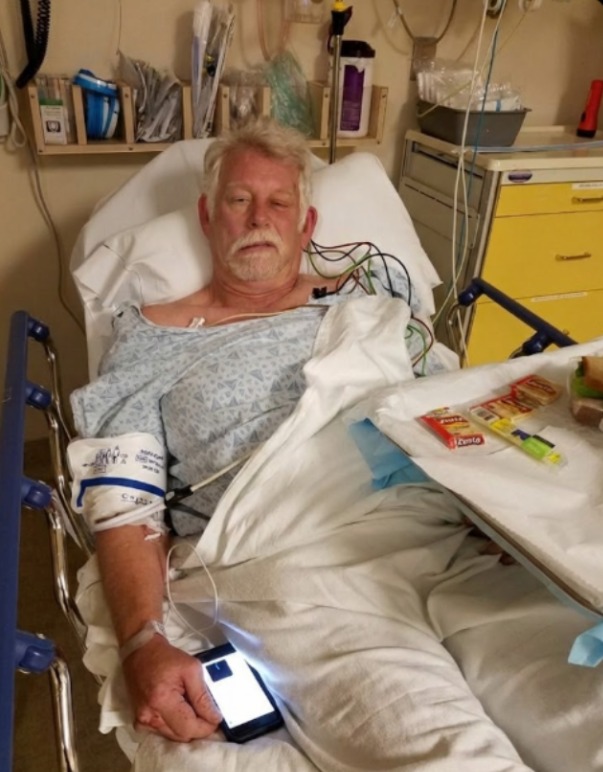
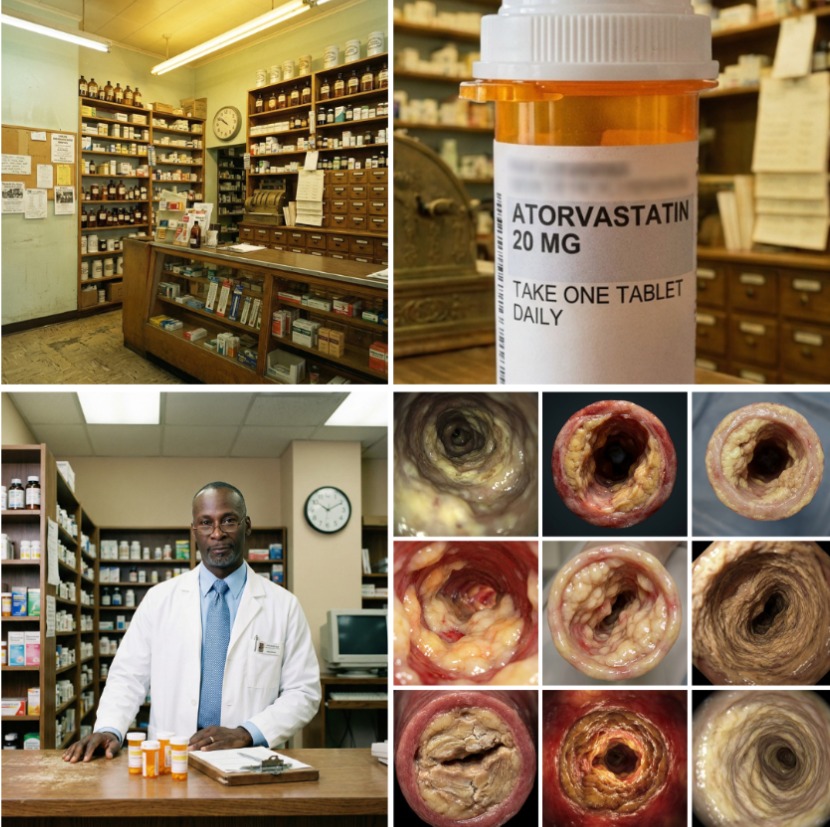
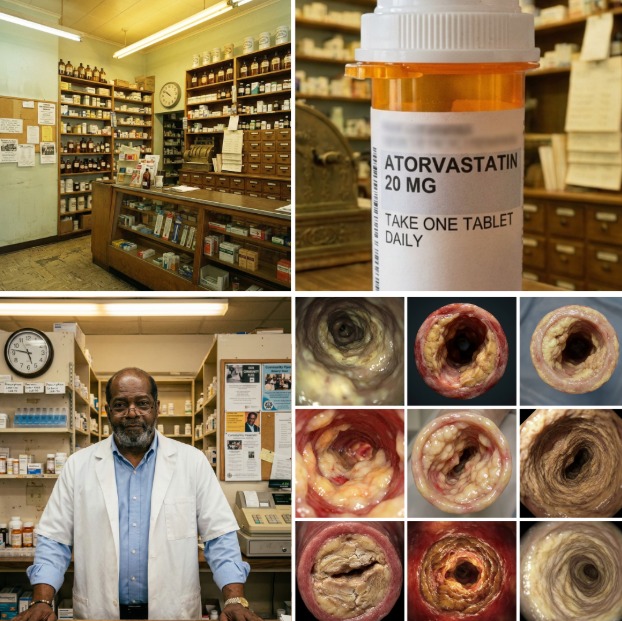
My mother took Rosuvastatin for 15 years. Her cholesterol numbers were perfect the entire time. By the end, she didn't know my name. She'd look at me — her only daughter, the person who'd been feeding her and bathing her and sleeping in the chair next to her bed for two years — and her eyes would search my face like I was someone she'd met once at a party and couldn't quite place. "Are you the nurse?" she asked me one morning. Sweetly. Politely. Like she was making conversation with a stranger. I'm not the nurse, Mom. I'm Diane. I'm your daughter. She smiled. Nodded. Went back to staring at the window. I stood in that doorway and cried. Not quietly. The kind of crying that bends you in half. And she didn't look up. Didn't react. The woman who raised me, who knew my voice before she knew my face — she heard her own daughter sobbing three feet away and it meant nothing to her. She was 73 years old. She'd been on cholesterol medication since she was 58. Her doctors called her numbers excellent. Her LDL was 96 for fifteen years straight. They never once suggested anything was wrong with her treatment. They were watching a number on a screen while her brain disappeared. I'm 58 now. The same age she was when they put her on the medication. I've been on Atorvastatin for six years. My LDL is 144. My doctor is satisfied. And three months ago, I stood in my kitchen and couldn't remember the word for refrigerator. I stared at it. I knew what it was. I knew what it did. The word was RIGHT THERE — I could feel it, like a shape behind frosted glass. But it wouldn't come. Twelve seconds. I counted them in my head. Twelve seconds of standing in my own kitchen unable to name an appliance I've used every day of my life. The word came back. Refrigerator. Of course. Refrigerator. But something cracked open in my chest that hasn't closed since. Because I know what this is. I've seen it before. I watched it take my mother for fifteen years. And now it's starting in me. What I found — after three weeks of research so desperate I barely slept — brought my LDL from 144 to 112 and my oxidized LDL to 24. Without Atorvastatin. Without ANY statin. Without the medication that was slowly doing to my brain what it did to my mother's. But you need to understand what fifteen years of "excellent numbers" actually looked like inside my mother's head. Because your doctor will never tell you this story. And it might be the most important thing you read this year. --- My mother was a sharp woman. I need you to understand that before anything else. She was an executive assistant to the CFO of a manufacturing company for twenty-two years. Managed his calendar, his correspondence, his travel, his files. She could recite phone numbers for every person she'd ever worked with. Did the household books in her head. Balanced the checkbook without a calculator. Never forgot a birthday, a meeting, or a name. That was the brain she had before the medication. At 58, her doctor put her on Rosuvastatin. 10 milligrams. LDL was 181. Family history of heart disease — her father had died of a heart attack at 71. The medication worked. On paper. Her LDL dropped to 103, then settled around 96 where it stayed for fifteen years. Her doctor was delighted. "Your numbers are textbook, Margaret." The first thing I noticed was the sticky notes. My mother had never needed lists. She kept everything in her head — groceries, appointments, birthdays, phone numbers. All organized, all accessible, all perfect. Three years into the medication, there were sticky notes everywhere. On the refrigerator. On the bathroom mirror. On the dashboard of her car. "Pick up dry cleaning." "Call dentist Tuesday." "Diane's birthday — March 14th." My own birthday. On a sticky note. From the woman who'd never forgotten a single date in her life. I asked her about it. She laughed. "Getting older, I guess. Memory's not what it used to be." She was 61. That's not old. And her cholesterol? 96. Perfect. "Your numbers look wonderful, Margaret. Keep doing what you're doing." By year seven she'd retired — not because she wanted to, but because the errors at work had become impossible to hide. She came home and sat at the kitchen table for three hours without moving. I don't think she was sad. I think she was terrified. Because she knew something was happening that she couldn't stop. And her cholesterol was still perfect. One morning — I'll never forget this — she looked at the framed photo on the hallway wall. Our family photo. Taken at Christmas. Her, my father, me, my husband, my daughter. She touched the glass. Touched the image of herself. "Who is this?" she asked. My throat closed. "That's you, Mom." She frowned. Looked closer. Shook her head. "No. That's not me." She was 72. Her LDL was 94. The medication was working perfectly. She died at 74. Pneumonia. Her body just stopped fighting. But my mother had already been gone for years. The woman who remembered every phone number, every birthday, every meeting — she'd been gone since somewhere around year eight. What was left was her body, walking the hallways of my house, looking for someone or something she couldn't name. And the whole time — the WHOLE TIME — she took her Rosuvastatin every single night. Her cholesterol was perfect. Her doctor was satisfied. Nobody ever asked whether the medication that was lowering her cholesterol was also lowering the cholesterol her brain needed to survive. --- I need to tell you what I found. Because it explains everything. After my mother died, I couldn't let it go. The timeline haunted me. Medication at 58. Cognitive decline starting by 61. Lists by 63. Getting lost by 67. Diagnosis at 70. Gone by 74. Fifteen years. A straight line from the first pill to the last breath. I started researching. Not to blame anyone. To understand. The first thing I found stopped me cold. The human brain is approximately 25% cholesterol by dry weight. It contains more cholesterol than any other organ in the body. Cholesterol is essential for the formation and maintenance of synapses — the connections between brain cells that make memory, language, and cognition possible. Your brain doesn't just use cholesterol. It DEPENDS on it. Every thought you have, every memory you access, every word you speak — cholesterol makes it possible. Statins lower cholesterol. ALL cholesterol. Including the cholesterol your brain is built from. I sat at my kitchen table and felt the blood drain from my face. For fifteen years, my mother took a medication designed to lower cholesterol — the very molecule her brain needed to function. And as her cholesterol numbers went down and down and stayed "perfect" at 96, the cholesterol in her brain was being depleted. The synapses were weakening. The connections were breaking. The memories were dissolving. Not because of Alzheimer's. Not because of genetics. Because the medication was starving her brain. And her doctor watched a number on a screen and said "your numbers look wonderful." --- But that's only half of what I found. Because there's a second mechanism that nobody told us about. Three weeks into my research — reading clinical papers at 1 AM the same way I'd spent years reading about Alzheimer's trying to help my mother — I found a cardiology lecture on YouTube. Posted by a university medical channel. Less than a thousand views. The lecturer was a cardiologist named Dr. Reeves. His specialty was oxidative stress and cardiovascular disease. He explained something that made my hands shake. "Statins lower the AMOUNT of LDL in your body. They do this effectively. Your doctor tests LDL, sees a low number, says you're doing well." He paused. "But statins do NOT stop the OXIDATION process. The LDL that remains — even at that lower amount — is still vulnerable to hydroxyl radical attack. It can still oxidize. Become sticky. Damage your arteries. Form plaque." He showed a diagram of oxidized LDL burrowing into an artery wall. White blood cells gorging on it. Foam cells forming. Plaque building. "This is why patients with optimally controlled LDL still have heart attacks and strokes. The number is down. The oxidation continues." I thought about my mother's father. Heart attack at 71. While on medication. While his numbers were "controlled." The medication hadn't saved him either. But Dr. Reeves wasn't done. "Hydroxyl radicals — the free radicals that oxidize LDL — don't just attack cholesterol in your bloodstream. They attack cholesterol everywhere. Including in the brain." He clicked to a new slide. "The brain is the most metabolically active organ in your body. It generates enormous quantities of free radicals through normal function. Under healthy conditions, the brain's own antioxidant systems manage this. But when hydroxyl radical production exceeds the brain's defense capacity — which increases with age, stress, and environmental factors — oxidative damage accumulates." He paused again. "This oxidative damage to brain cholesterol is increasingly recognized as a contributor to cognitive decline and neurodegenerative disease. And statins, by lowering total cholesterol — including the cholesterol the brain uses for repair — may reduce the brain's capacity to recover from this oxidative damage." I stopped the video. Two mechanisms. Not one. Two. Mechanism one: Statins deplete the cholesterol your brain needs to function. Synapses weaken. Connections break. Memory dissolves. This is the slow disappearance — the sticky notes, the lost grocery store route, the daughter's name that won't come. Mechanism two: Statins don't stop hydroxyl radicals from attacking the cholesterol that remains — including in the brain. So the reduced cholesterol your brain is trying to survive on is also being OXIDIZED. Attacked. Damaged. Made useless. Your brain is being starved of cholesterol by the medication. And the cholesterol it does have is being destroyed by oxidation that the medication can't prevent. Two mechanisms. Both active. Both invisible on a standard cholesterol test. Both happening silently while your doctor says "your numbers look wonderful." My mother. Fifteen years. And now me. Six years on Atorvastatin. Standing in my kitchen unable to say the word "refrigerator." --- Dr. Reeves had introduced something in the lecture that I rewound three times to make sure I'd heard correctly. Molecular hydrogen. H2. The smallest molecule in existence. A selective antioxidant that specifically targets hydroxyl radicals — the ones oxidizing cholesterol in the bloodstream AND in the brain. "H2 neutralizes hydroxyl radicals and converts them to water," he explained. "It leaves beneficial free radicals untouched. And because it's the smallest molecule in existence, it crosses the blood-brain barrier. It reaches the brain directly. It can neutralize oxidative damage inside neural tissue where no other antioxidant can penetrate." I sat forward. Crosses the blood-brain barrier. An antioxidant that could get inside my brain and stop the oxidation that was damaging the cholesterol my brain needed to function. Without LOWERING cholesterol. Without starving my brain. It doesn't reduce the amount of cholesterol. It protects the cholesterol you have from being destroyed by free radicals. "Over 2,000 peer-reviewed studies," Dr. Reeves continued. "Molecular hydrogen has shown neuroprotective effects in multiple models of cognitive decline. Reduced oxidative stress markers. Improved cognitive function. Protected neural membrane integrity." Neuroprotective. The word I'd been searching for since the day my mother looked at her own photograph and didn't recognize herself. --- I spent two weeks researching molecular hydrogen. The science was real. Published in journals I could verify. Clinical trials with measurable results. Institutions in Japan, Korea, Germany, the United States. Over 2,000 peer-reviewed studies. Molecular hydrogen selectively neutralizes hydroxyl radicals. Crosses the blood-brain barrier. Protects cholesterol from oxidation without lowering cholesterol levels. No side effects because it leaves beneficial free radicals intact. It was the opposite of what statins do. Statins lower cholesterol — including what your brain needs — and fail to stop oxidation. Molecular hydrogen stops oxidation — including in your brain — without lowering cholesterol. The research had been there for over twenty years. My mother took Rosuvastatin for fifteen years. Not one of her doctors mentioned oxidized cholesterol. Not one mentioned that her brain was 25% cholesterol. Not one suggested that lowering cholesterol systemically might have consequences for the organ that depends on it most. I wasn't angry at first. I was too exhausted from grief to be angry. Then I was furious. --- I needed to find the right hydrogen product. Dr. Reeves had warned that most products don't deliver therapeutic concentrations. Hydrogen is the smallest molecule — it escapes from bottles, machines, pre-made water. By the time you consume it, you're getting trace amounts. The delivery method that works: magnesium-based effervescent tablets. Drop in water, drink immediately while the reaction is happening. Hydrogen generates in your stomach. Absorbs directly into your bloodstream. Full concentration. Most brands deliver 2-4 PPM. Clinical studies used 10-12 PPM. One brand kept coming up in the research forums and clinical discussions. PrimeCell H2. 12 parts per million. Magnesium-based effervescent formula. Third-party lab tested. Certificate of Analysis published. GMP-certified facility in the USA. I ordered it. And I stopped taking Atorvastatin. My doctor was not happy. I told him I'd explain at my follow-up. He warned me about cardiovascular risk. I told him I understood the risk and was willing to monitor closely. What I didn't tell him was that I was more afraid of what the medication was doing to my brain than what my cholesterol was doing to my arteries. Because I'd seen the artery risk play out. My grandfather. Heart attack at 71. On medication. And I'd seen the brain risk play out. My mother. Dementia by 70. On medication. The medication hadn't saved either of them. But it had definitely destroyed one of them. I was not going to be the third. --- The first tablet went into a glass of water on a Wednesday morning. I watched it fizz. Drank it immediately. Sat at my kitchen table — the same table where my mother used to sit and stare at her sticky notes, trying to remember what they meant. Fourteen minutes. I felt my head clear. Not gradually. Like a curtain being pulled back. The cottony, muffled quality that had become my mental baseline — the thing I'd blamed on stress, on menopause, on bad sleep, on getting older — it just... thinned. And kept thinning. I looked around the kitchen. Everything was sharper. Colors. Sounds. The hum of the refrigerator. Refrigerator. The word came without searching. I started crying at the kitchen table. Because I realized, in that moment, how bad the fog had actually been. I hadn't known how thick it was until it started lifting. Like living with a dirty windshield for years and not realizing how dirty it was until someone wiped it clean. --- I tracked everything. Baseline: LDL 148 (slightly higher without the Atorvastatin, as expected). I was prepared for the number to climb before it dropped. Week one: LDL 151. The number went up slightly. Expected. But the fog was lifting every day. I remembered my coworker's phone extension without looking it up — something I hadn't been able to do in months. I remembered where I parked at the grocery store. I remembered the name of the restaurant my daughter had mentioned wanting to try. Small things. But each one felt like finding something I'd lost. Week two: LDL 142. Dropping now. And something else — I was sleeping through the night. Hadn't done that consistently in two years. My energy at 3 PM — the time I usually hit a wall and couldn't think straight — was holding. My daughter called. We talked for forty minutes. She said something I'll never forget. "Mom, you're... different. You're finishing your sentences. You're remembering things I told you last week. You sound like you did before..." She trailed off. Before what? Before the medication? Before your grandmother's diagnosis? Before the fog rolled in? "I just sound like me," I said. "Yeah," she said quietly. "You do." Week three: LDL 133. Week four: LDL 124. I stared at the number. Tested again. 123. Lower than it had been on Atorvastatin. Without the medication. In four weeks. And my mind — my mind was coming back. I could feel it. Not just the absence of fog. The presence of clarity. The ability to hold three things in my head at once. To follow a complex conversation. To read a dense article and retain it. To remember what I'd had for breakfast, what I'd done yesterday, what my schedule looked like next week — all without sticky notes. I hadn't felt this sharp in years. And it occurred to me — sitting at that kitchen table, staring at a number on a monitor that was better than anything the medication had ever achieved — that what I'd been calling "getting older" wasn't aging at all. It was the medication. Six years of Atorvastatin. Six years of lowered cholesterol. Six years of my brain being quietly starved of the molecule it needs most while my doctor smiled at a number and said I was doing great. --- My follow-up with Dr. Morrison was at eight weeks. Blood drawn. Full lipid panel. I'd requested oxidized LDL. He'd been skeptical. "That's not a standard test, Diane." "I know. Please order it." The results. He walked in. Opened his laptop. Looked at the screen. Looked at me. "Diane." "Yes?" "Your LDL is 112." Down from 144 on medication. Lower than the medication had ever achieved. And I'd been off Atorvastatin for seven weeks. "Total cholesterol 198. Down from 221." He scrolled. "Oxidized LDL — 24 units per liter." He stopped. Read it again. "That's... remarkably low. I'd expect someone your age, off statin therapy, to have oxidized LDL in the 55-65 range. You're at 24." He closed the laptop halfway. Looked at me. "What are you doing?" I told him everything. My mother. The research. The brain-cholesterol connection. The oxidation mechanism. Dr. Reeves' lecture. Molecular hydrogen. PrimeCell H2. He listened. He didn't interrupt. When I finished, he was quiet for a long time. "I'll be honest, Diane. I'm not familiar with molecular hydrogen research for cardiovascular or cognitive protection. But your LDL is 112 without medication. Your oxidized LDL is 24. Those numbers are better than what I was seeing on Atorvastatin." He paused. "I'm not ready to say the statin caused your mother's cognitive decline. That's a complex question with—" "I'm not asking you to say that. I'm asking you to look at my numbers and tell me whether I need to go back on the medication." Another pause. "No. Not at this time. These numbers don't warrant statin therapy. I want to see you in three months." I walked to my car. Sat there with the engine off. LDL 112. Oxidized LDL 24. No Atorvastatin. No brain fog. No searching for words. No standing in my kitchen wondering what a refrigerator is called. My mother's LDL was 96 for fifteen years. And it didn't save her heart. And it didn't save her brain. My oxidized LDL is 24. My cholesterol is PROTECTED from oxidation. And my brain — my brain has more cholesterol to work with now than it's had in six years. Because I stopped taking the medication that was depleting it. I thought about the word "refrigerator." How I'd stood in my kitchen three months ago, unable to find it. I said it out loud in the car. Just to hear it. "Refrigerator." And then I said my mother's name. Margaret. --- If you're reading this, and you're on cholesterol medication, and you've noticed the fog. The word that won't come. The story you told twice. The appointment you forgot. The name that slipped away mid-sentence. And you've told yourself it's aging. Stress. Menopause. Bad sleep. Too much on your plate. Maybe. Maybe it is. Or maybe it's the medication that's supposed to be saving your life quietly destroying the organ that makes your life worth living. Your brain is 25% cholesterol. Statins lower cholesterol. Not selectively — everywhere. Including your brain. And the cholesterol that remains? It's still being attacked by hydroxyl radicals. Still oxidizing. Still getting damaged. In your arteries AND in your brain. The medication is starving your brain AND failing to protect it from oxidation. Two mechanisms. Both silent. Both invisible on a standard cholesterol test. Both happening right now if you're on a statin. That's why people on statins still have heart attacks. And that's why researchers are finding links between long-term statin use and cognitive decline. Your doctor doesn't test oxidized LDL. Your doctor doesn't measure the cholesterol in your brain. Your doctor watches one number on a screen and tells you you're doing great. My mother's doctor said the same thing. For fifteen years. --- PrimeCell H2 addresses both mechanisms — and it does it without lowering the cholesterol your brain depends on. Molecular hydrogen selectively neutralizes hydroxyl radicals — the free radicals that oxidize cholesterol in your arteries AND in your brain. It converts them to water. Leaves beneficial free radicals untouched. No side effects. And because H2 is the smallest molecule in existence, it crosses the blood-brain barrier. It reaches your neural tissue directly. It protects brain cholesterol from oxidative damage where no other antioxidant can reach. PrimeCell uses magnesium-based effervescent tablets — drop in water, drink immediately. The hydrogen generates in your stomach and absorbs directly into your bloodstream. Full therapeutic concentration. 12 PPM — four to six times higher than typical hydrogen products. This is the clinical dose. The concentration used in the studies. Third-party tested. Certificate of Analysis published. Made in the USA in GMP-certified facilities. You can verify what you're getting before you take your first dose. Within 15-20 minutes of your first dose, you'll feel the fog clear. That's not marketing — that's the hydroxyl radicals in your brain being neutralized in real time. I felt it at fourteen minutes. And I cried because I realized how much I'd already lost without knowing it. --- Try PrimeCell H2 for 90 days. Track your cholesterol. Track your cognition. Pay attention to the fog — when it lifts, how fast, how much. Get your blood work done. Ask your doctor to include oxidized LDL. See the numbers for yourself. If you're not satisfied — if you don't see improvement — contact customer service for a full refund. No questions asked. You risk nothing. --- You're standing where I stood three months ago. One path: Keep taking the statin. Keep watching the number on the screen. Keep telling yourself the fog is just aging. Keep hoping the word comes back when you're reaching for it. Keep ignoring the pattern you've already noticed because noticing it is too terrifying. And every time you forget a name. Every time you tell a story twice. Every time you stand in a room and can't remember why you walked in — ask yourself: Is this how it started for my mother? My father? The person I loved who disappeared before they died? Because I asked myself that question every single day for two years. And by the time I stopped asking, it was almost too late. Another path: Do what I did. Address the oxidation without destroying the cholesterol your brain needs. Try something that crosses the blood-brain barrier and protects your brain at the cellular level while also protecting your arteries from the plaque that statins can't prevent. Track everything. Verify the results. Prove it to yourself. Then prove it to your doctor. Ninety days. Zero financial risk. Your brain and your arteries. Protected. Not depleted. I chose the second path. My LDL is 112 — lower than it ever was on medication. My oxidized LDL is 24. My brain fog is gone. Not managed. Not "better." Gone. I can think. I can remember. I can finish a sentence without searching for the word. My mother couldn't say that. By the time anyone realized what was happening, she'd already lost too much. I found it in time. Barely. But I found it. You still have time too. But the fog doesn't get better on its own. And the medication doesn't stop the damage. It IS the damage. Don't wait until your daughter looks at you the way I looked at my mother. Don't wait until you can't remember why. — Diane Cavallo https://shop.getamalahealth.com/pch/sp P.S. — I felt the fog clear within 14 minutes of my first dose. Saw measurable LDL improvement by week two. Was off Atorvastatin completely from day one and my numbers are better than they ever were on the medication. Your timeline may be different. But you won't know until you try. P.P.S. — My friend Laura from work started taking PrimeCell H2 four weeks ago after I told her about my results. She'd been on Rosuvastatin for 8 years. Her LDL went from 158 to 126 and she called me crying because she could remember her morning meetings without writing everything down for the first time in three years. PrimeCell is a small company. They sell out frequently. If you click and they're in stock, don't wait. https://shop.getamalahealth.com/pch/sp
Fix Yourself at the Cellular Level
PrimeCell H2 is a next-generation molecular hydrogen tablet designed to selectively neutralize the most damaging free radicals in your body - at the cellular level, right where aging actually happens.
LEARN MORELike this ad? Make it yours.
Crush rebuilds this exact creative around your product — your brand, your colors, your offer — in about a minute.