Dennis Callahan
Dennis Callahan Facebook ad: “My new VA doctor trained in Zurich. She spent 40 minutes…”

Ran for 1 day, from June 17 to June 18, 2026, the last day Crush saw it.
Run by Dennis Callahan on Facebook. Crush is not the advertiser and does not verify its claims. See this ad in Meta's Ad Library(opens in a new tab)
Want an ad like this for your product?
Crush makes new ad images for your product from this ad: your logo, your product photo, your offer.
Trials from $19.95 USD, then $79.95 USD a month. Cancel anytime.
About this ad
- Meta Ad Library ID
- 4005921029716115
- Platforms
- Facebook, Instagram, Audience Network, Messenger and Threads
- Relaunches
- 1
- EU reach
- 4
Ad text
I saw nine American doctors about my prostate over four years. Got the same answer every time. "Your numbers look normal. BPH is common. We'll monitor it." It took a doctor from Switzerland to tell me what was actually wrong — and why every supplement I'd spent $1,100 on was never going to fix it. The American system wasn't designed to solve this. It was designed to monitor it. There's a difference. And that difference cost me four years. Her name was Dr. Meier. She'd done her fellowship at the University of Zurich Hospital before coming to the States. The VA assigned her to my clinic four months earlier when my regular doctor retired. I almost rescheduled. I need to tell you what four years of monitoring actually looked like. The urgency first. Not a gentle suggestion. A hard, sudden clench that felt like someone had reached inside and made a fist around my bladder. No warning. No negotiation. I started keeping a mental map of every men's room at every Home Depot, every gas station on Route 40, every bar I'd walked into for thirty years. I used to close out Hannigan's on a Friday night. By year two I was nursing one drink for two hours because I didn't trust what would happen if I got up and the line was long. It became a running joke at Hannigan's. Tommy, who I've been drinking with since 1987, started calling me "Clockwork" somewhere around year two. Said I disappeared to the bathroom on a schedule you could set your watch to. The first time he said it everyone laughed. I laughed too. By the sixth or seventh time I stopped going on Fridays altogether. Easier than pretending it was still funny. The nights. Up twice before three. Sometimes three times. I'd stand at the toilet and push and get maybe a thin trickle — stand there for two full minutes working for something that felt like trying to squeeze water through a straw that had been pinched shut at both ends — void two ounces if I was lucky, then lie back down and spend twenty minutes convincing my body it was over. After a year of that the exhaustion stopped feeling like tiredness and started feeling like just the way things were. The flow. Any man reading this knows. You stand there and wait. It starts. It stops. It starts again. You finish and you're not convinced you actually finished. You wait. You shake and wait again. You wash your hands and walk out and before you've sat back down you're already calculating when you'll need to be back. The pressure. Not sharp. Just a dull, low weight sitting in the lower belly like something that didn't belong there had taken up permanent residence. Every morning. Every time I sat down. I stopped registering it as a symptom because it had been there so long it had become part of the landscape of being me. I did everything right. I cut caffeine after noon. I drank water. I bought every supplement every doctor mentioned in passing and several they didn't. I read men's health forums at two in the morning after my third trip to the bathroom and bought whatever the thread said was working. Saw palmetto. Beta-sitosterol. The twelve-ingredient Advanced Prostate Formula. The German one at $58 a bottle. The Costco blend with the man hiking on the label. Four years. Eleven products. Over $1,100. And at every appointment, a different doctor looked at the same chart and said the same thing. "Numbers still look normal. Keep monitoring." The appointment with Dr. Meier was a Tuesday morning in February. She came in, introduced herself, shook my hand, and sat down. Not at the computer. At the chair across from me. She had my file open on a tablet in her lap but she wasn't looking at it yet. She said: "I've read through your history. I want to ask you some questions that might not be in here." She asked me about sleep. Not "are you sleeping okay" — she asked how many times I was getting up, what time, whether I was getting back to sleep, how long it had been since I slept a full night. She asked about urgency. She asked about the flow. She asked whether the pressure was worse in the morning or the evening. Twelve minutes went by. We were still talking. I'd never had a prostate appointment last more than twelve minutes. This one went forty. At about the thirty-minute mark she pulled up something on her tablet and turned the screen toward me. "I want to show you something. Where I trained in Zurich, we approached BPH from a different direction than what's standard here. It took me a while to understand why American practitioners hadn't caught up to this. I think it explains why nothing you've tried has moved the needle." I looked at the screen. It was a research study. Published. A controlled clinical trial. She said: "The standard supplements for BPH — saw palmetto, beta-sitosterol, most of the blends — they all work on mechanisms that are downstream of the actual problem. Hormones, flow mechanics. They're not wrong, exactly. They're just not reaching the thing that's actually causing your symptoms." I asked her what was actually causing the symptoms. She turned the tablet back toward herself, looked at it for a moment, then looked at me. "Inflammation," she said. "Chronic, low-grade inflammation sitting inside the prostate tissue itself. The tissue around the urethra swells. Not dramatically. Quietly. Persistently. Just enough to squeeze the channel running through the center of the gland. Just enough to send false signals to your bladder that the tank is full when it isn't. Just enough to make every bathroom trip feel incomplete and every night feel interrupted." She let that sit for a second. "The inflammation is the source of what you're feeling. Everything you've been taking addresses things that sit downstream of it. The tissue is still inflamed. The channel is still compressed. You've been managing the squeeze, not the cause of it." I sat there and thought about eleven products over four years. Saw palmetto working on hormones somewhere upstream. Beta-sitosterol doing something with flow mechanics. The twelve-ingredient blend hitting every target except the one that mattered. All of it working around the outside of the problem. None of it ever getting to where the problem actually lived. I'd been mopping the floor for four years while the pipe stayed broken. She turned the tablet back toward me. The study she was showing me was a controlled clinical trial on men scheduled for prostate surgery. One group had taken pomegranate extract capsules — concentrated, standardized, not juice — for four weeks before the operation. The other group had taken a placebo. When they analyzed the prostate tissue after surgery, the pomegranate compounds were physically measurable inside the gland itself. Not circulating in the bloodstream. Not working on hormones at a distance. Inside the tissue. Where the inflammation lives. Dr. Meier said: "That's the first time any supplement compound has been shown to reach prostate tissue directly at measurable concentrations. Saw palmetto doesn't do that. Beta-sitosterol doesn't do that. The tissue penetration is what makes this completely different from everything else you've tried." Once those compounds reach the tissue they go to work on the inflammation directly. The swelling that's been compressing the channel eases. The false signals to the bladder quiet down. The flow stops fighting itself. That's not managing the problem downstream. That's reaching the source of it. I asked her why pomegranate specifically. She said the active compounds in pomegranate — concentrated most heavily in the peel and rind — are unlike anything else studied for this purpose. When extracted correctly and standardized for potency, they survive digestion and reach tissue that other compounds never access. "This is something practitioners in Switzerland have known for years," she said. "The research was always there. It just never made it into the American standard of care." She paused. "I've been recommending this to patients since I arrived. The men who see results are the ones who find the right form of it. Most of what's on the market isn't the right form." I asked her what the right form looked like. She said most pomegranate supplements on the market are cheap dried fruit powder. No standardization. No third-party testing. Processed at high heat that destroys the active compounds before the capsule is ever sealed. Heat processing is faster and cheaper. It's also the thing that turns a therapeutic compound into expensive powder. "The active compounds are heat-sensitive," she said. "High-temperature processing eliminates them. What's left in the capsule will say pomegranate extract on the label. It just won't do anything. This is a problem I never encountered in Switzerland. The European supplement market has stricter standards. Here, a company can put anything on a label and call it extract." She wrote four criteria on a notepad and slid it across the desk to me. Standardized for active compound content — not just "pomegranate extract" with no specification. Third-party tested for potency. Low-temperature extraction. No fillers cutting the active dose. "If a brand doesn't meet all four," she said, "you're buying the version that was never going to work." I went home that night and did what I'd done eleven times before. Sat at the kitchen table after my wife went to bed and started searching. Except this time I wasn't looking for whatever had the best reviews on Amazon. I had four specific criteria written in someone else's handwriting and I wasn't moving until something hit all four. Most failed in the first thirty seconds. No standardization on the label. Fillers in the supplement facts. No certificate of analysis. One brand had a slick website and a doctor photo and nothing behind it. Another had "clinically studied" in the same font size as every other brand that had never done a study in its life. Two evenings. Every brand I could find. The only one that hit every criterion on Dr. Meier's list was Avoria. Organic. Standardized for active compound potency. Third-party tested. Low-temperature extraction. No fillers. Made in the USA. Every box checked. I ordered a bottle that night. The first week I kept my expectations flat. I'd been down this road eleven times. The urgency was still there. The nights were still interrupted. The pressure was still sitting in the same place it always sat. End of week two something shifted. That dull low weight in the lower belly — the one I'd been carrying so long I'd stopped calling it a symptom — had eased. Not gone. Eased. Enough to notice it was different when I sat down in the morning. Week three I got through my morning coffee without the hard clench that usually showed up around the forty-minute mark. Once. Then twice. Then most mornings. Week four the flow had changed. The stop-and-start that I'd quietly accepted as just how things were had smoothed out. Not completely. But enough that I stood at the sink one morning and registered: that was different. I didn't tell my wife yet. I didn't want to make something of it before I was sure. By week six I was sure. The urgency was manageable. The kind you notice, respond to, and it listens. Not the kind that dictates the schedule. The nights had changed. Getting up once instead of two or three times. Then most nights not at all before five. The flow was consistent. Not fighting itself anymore. Not the pinched straw I'd been living with for four years. Just — working. I told my wife. She said she'd noticed the sleep two weeks earlier and hadn't said anything because she didn't want to get my hopes up. At ten weeks I went back to see Dr. Meier. She looked at her notes. She looked at me. She said: "How are the nights?" I told her. She nodded. Not surprised. Satisfied. The way someone looks when a thing they expected to work did. She updated my file and told me to keep going. That was nine weeks ago. I'm at nineteen weeks on Avoria now. Last Friday I closed out Hannigan's for the first time in three years. Sat at the bar from seven to midnight. Tommy called me Clockwork out of habit when I walked in. I didn't get up once all night. He stopped using the nickname somewhere around ten o'clock. Didn't say anything about it. Just stopped. I drove home and slept until six. I still have the notepad Dr. Meier slid across the desk to me. Four criteria, her handwriting. It's in the top drawer of my desk. It's the first piece of paper in four years that told me something true about what was actually wrong — and it came from a doctor who learned it somewhere the American system hadn't gotten to yet. If you've been through saw palmetto, beta-sitosterol, the Costco blend, the twelve-ingredient Advanced Prostate Formula — you are not crazy and you are not failing. That entire category was built around mechanisms that sit downstream of the actual problem. The inflammation was always there. The tissue was always compressed. Nothing you took ever reached it. Pomegranate extract reaches it. That's been confirmed in a controlled clinical study on human prostate tissue. No other prostate supplement has shown the same thing. But only the right extract. Standardized and tested. No fillers. Low-temperature processing. Avoria checks every box. Two capsules every morning with water. A man named Gary — 61, retired electrician, same carousel I was on for three years — told me he noticed the pressure easing around week two. "I'd been carrying that weight so long I forgot what it felt like without it," he said. "Then one morning I sat down and it just wasn't there the same way." His VA doctor told him at his next visit to keep doing whatever he'd changed. Avoria offers a 30-day money-back guarantee. If you take it for 30 days and don't notice any change in urgency, flow, or sleep — they'll refund every cent. After four years and over $1,000 on things that never reached the tissue, that guarantee is the first time the risk is on someone else's side. Take it for 30 days. Give the inflammation somewhere to go. 👉 https://getavoria.com/products/pom-2 P.S. What Dr. Meier showed me in that forty-minute appointment is what nine doctors over four years never covered. The supplements on the shelf work on hormones and flow mechanics downstream of the inflammation. The tissue is still swollen. The channel is still compressed. Until something gets inside the gland and addresses that directly, you're mopping the floor. Pomegranate extract gets inside the gland. That's been shown in a controlled clinical study. Nothing else in the prostate supplement category has demonstrated the same thing. P.P.S. Most pomegranate supplements on Amazon will not do what Avoria does. Cheap powder with no standardization on the label is not the same compound the researchers studied. Heat processing destroys the active compounds before the capsule is sealed. If a brand doesn't specify what it's standardized to, doesn't have third-party testing, and doesn't use low-temperature extraction — you're buying the version that was always going to leave you where you started. Dr. Meier's four criteria are not optional. All four or none. In Switzerland this is standard. Here you have to find it yourself. P.P.P.S. The 30-day guarantee covers the window where most men first notice the shift — pressure easing around week two, urgency becoming manageable by week four, flow following after that. After four years on things built around the wrong mechanism, 30 days with a full refund is the easiest decision I've made in this space. 👉 https://getavoria.com/products/pom-2
Where the ad sends people
getavoria.com
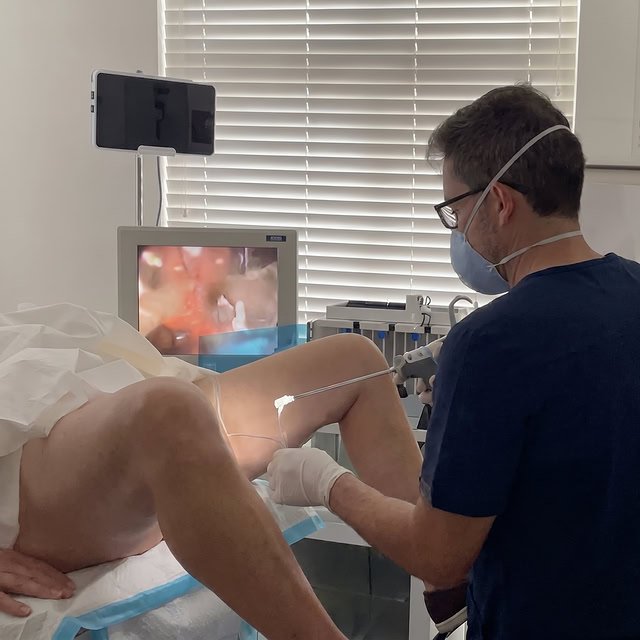
My new VA doctor trained in Zurich. She spent 40 minutes with me instead of 12. She pulled up one study and turned the screen toward me. Four years of failure made sense in about 90 seconds.
After 4 years of "monitor it" from my urologist, a VA doctor who trained in Switzerland showed me why everything I'd tried was built to fail.
Learn more: getavoria.com(opens in a new tab)