Dr. Amanda Graham Trichologist
Dr. Amanda Graham Trichologist Facebook ad: “I Tested 10 Pumpkin Seed Oils. Only 1 Worked.”
Ran for 28 days, from July 16 to August 13, 2026, the last day Crush saw it.
Run by Dr. Amanda Graham Trichologist on Facebook. Crush is not the advertiser and does not verify its claims. See this ad in Meta's Ad Library(opens in a new tab)
Want an ad like this for your product?
Crush makes new ad images for your product from this ad: your logo, your product photo, your offer.
Trials from $19.95 USD, then $79.95 USD a month. Cancel anytime.
About this ad
- Meta Ad Library ID
- 4170368663096384
- Platforms
- Relaunches
- 1
Ad text
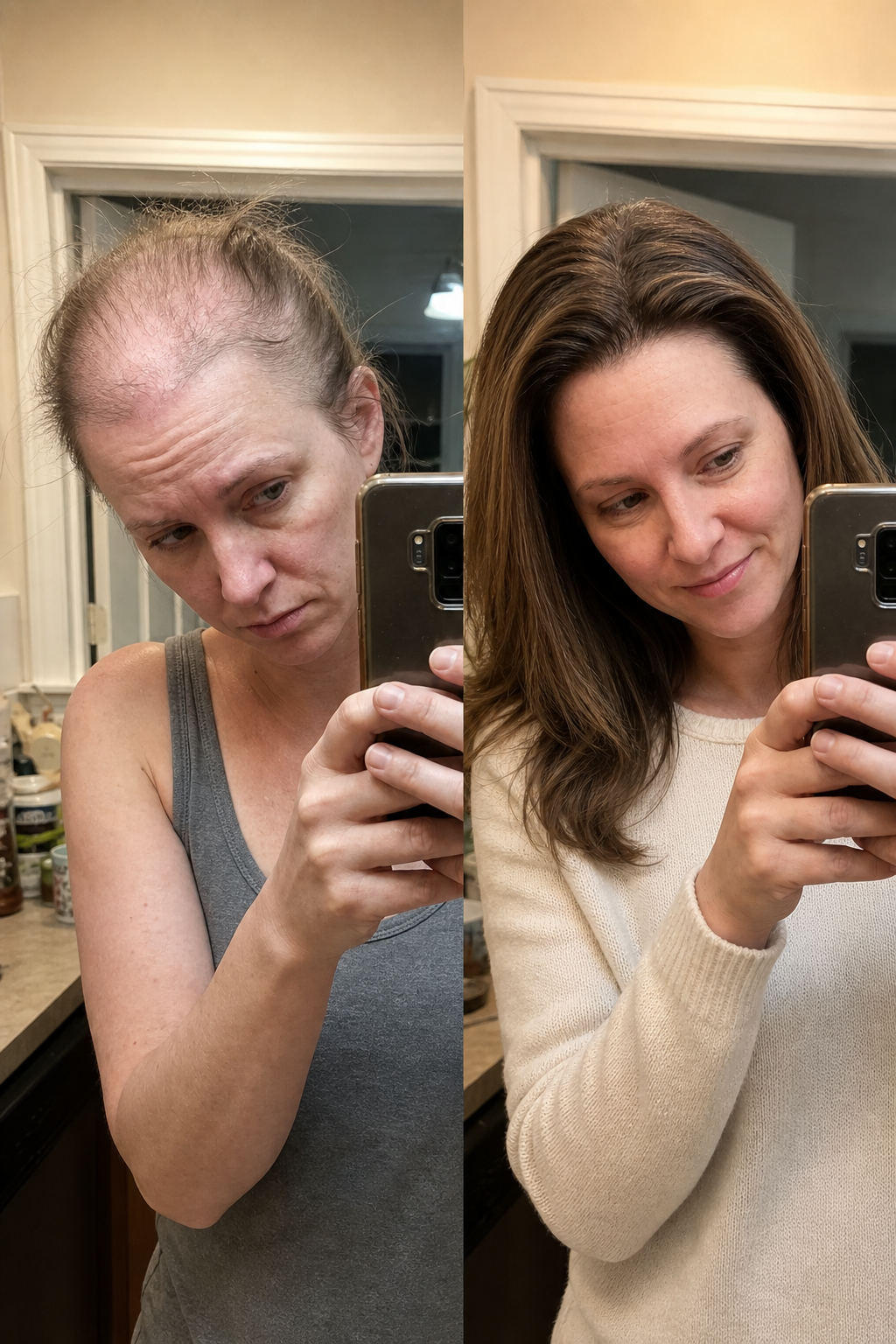
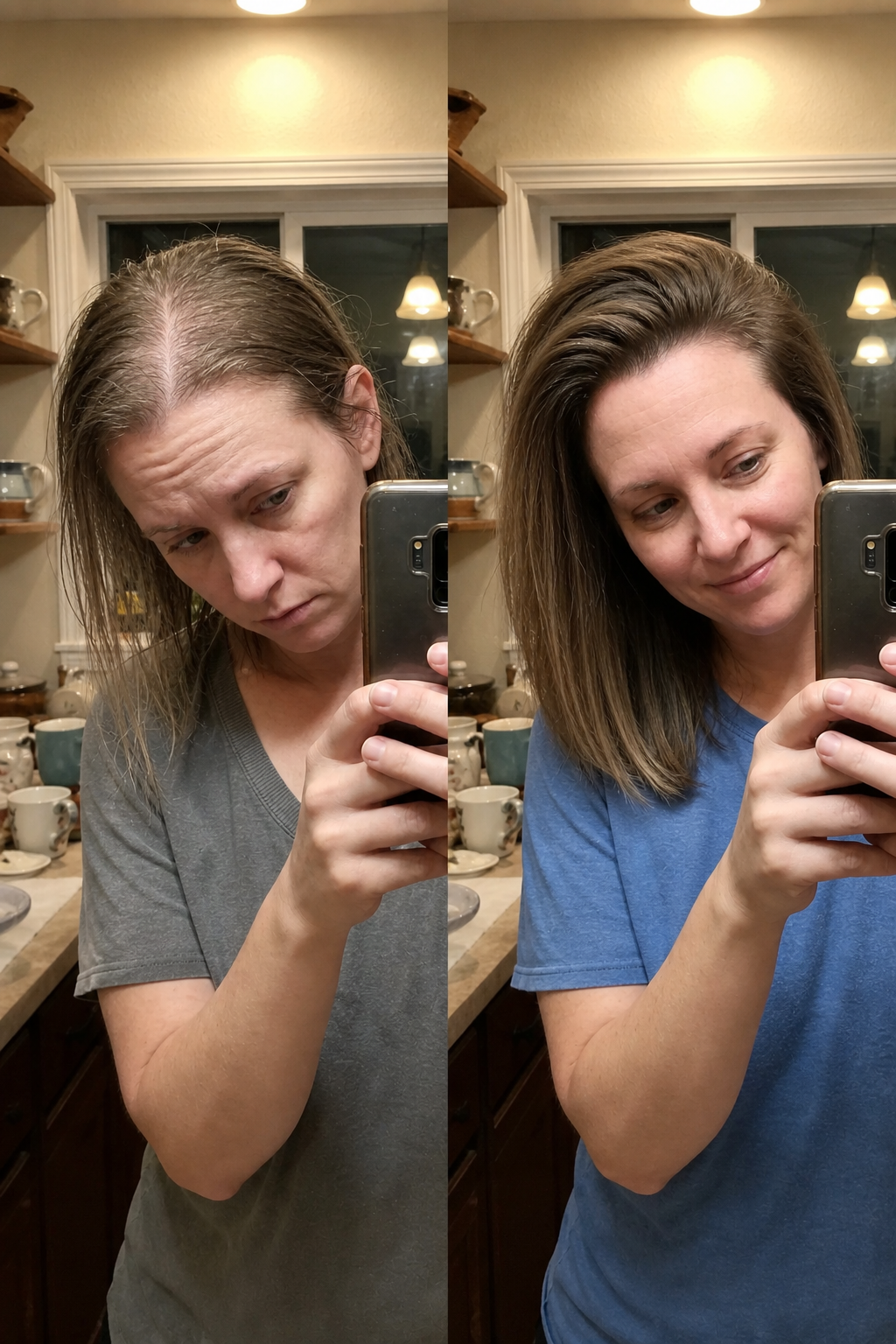
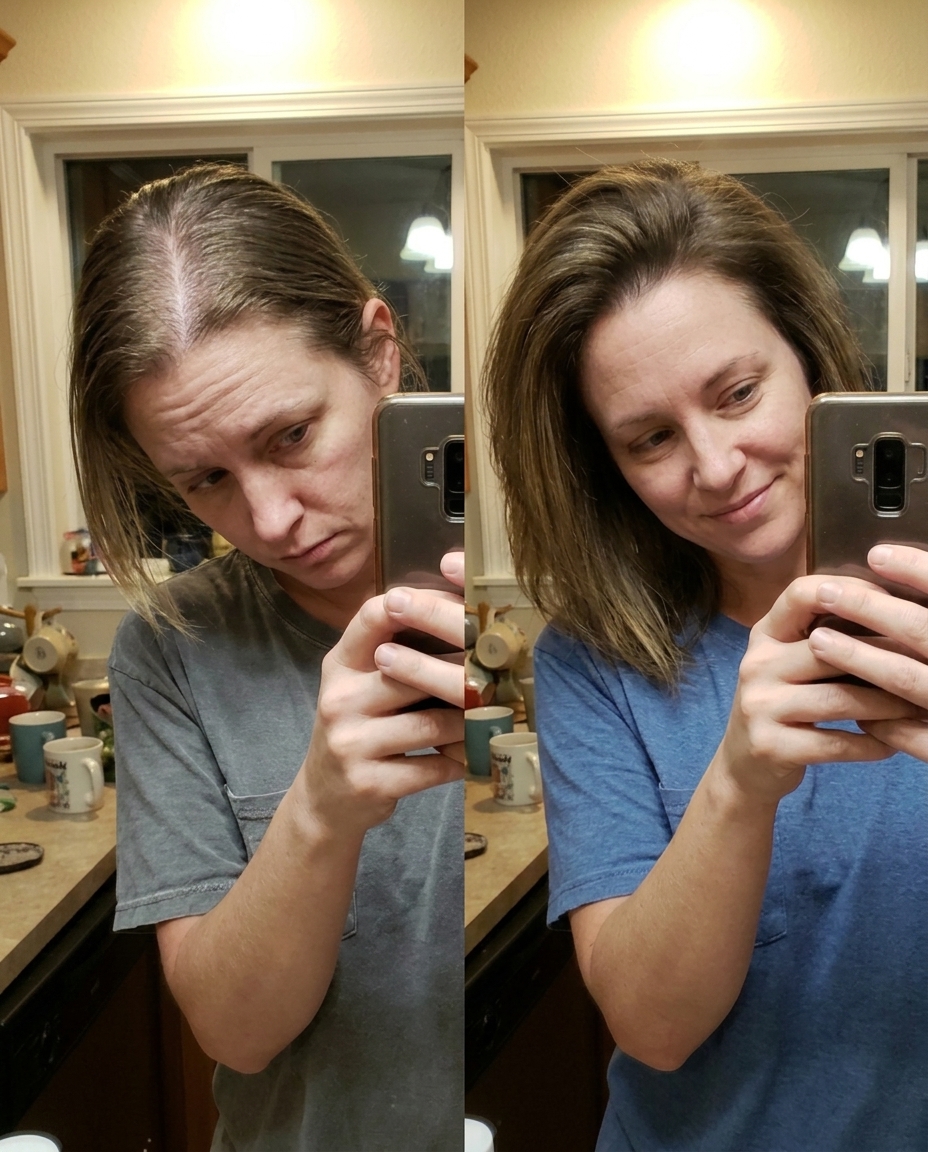
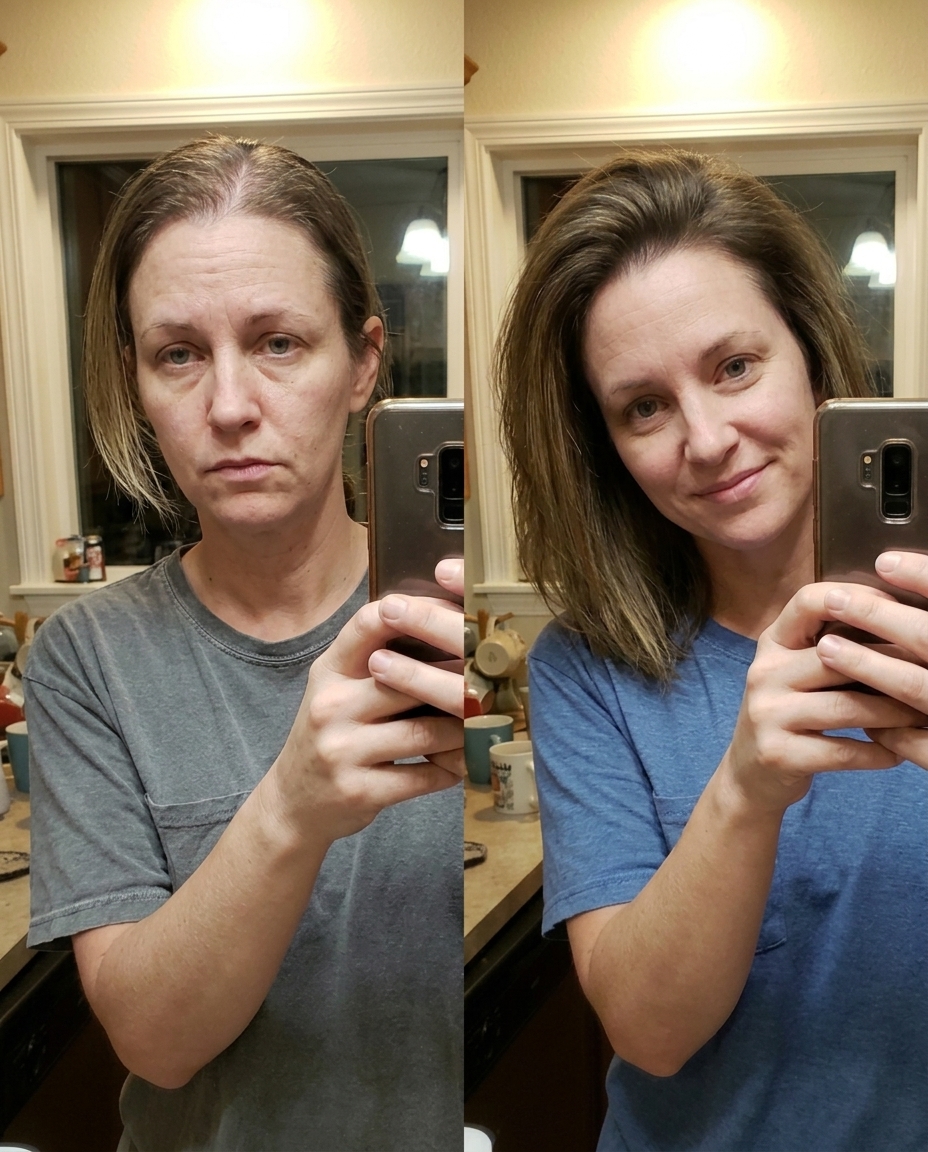
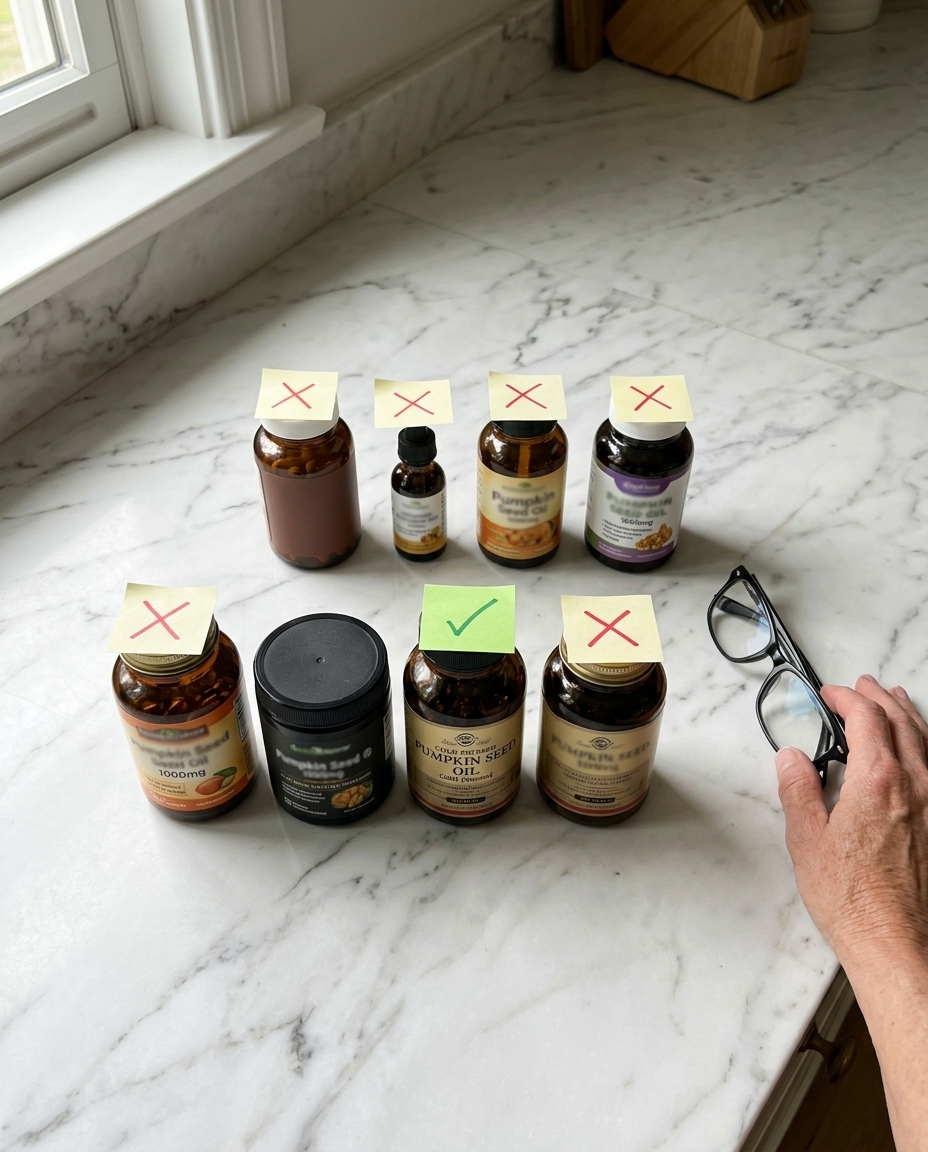
Last November, a woman named Denise sat in my consulting chair, took a deep breath, and pulled a gallon-sized ziplock bag out of her purse. She emptied it onto my desk. Seven bottles of pumpkin seed oil. Seven. From seven different brands. All bought in the previous ten months. All started, all stopped, all abandoned when the mirror didn't change. She looked at me and said, "Amanda, I have spent almost nine hundred dollars on these. Tell me what I'm doing wrong." I've been a trichologist for almost twenty years. I have looked at more menopausal scalps under magnification than I can count. And the pattern I'm seeing right now, with pumpkin seed oil specifically, has become the single most maddening thing in my practice. Because the science is real. Pumpkin seed oil, cold-pressed, at a clinical dose, taken alongside the right synergist ingredients, is one of the most effective natural interventions we have for female pattern hair loss. The data has been building since the mid-2010s. There's a Korean study, an Iranian trial on postmenopausal women, work published in Evidence-Based Complementary and Alternative Medicine. Consistently, the mechanism is the same. It inhibits 5-alpha-reductase. It slows the enzyme that turns testosterone into DHT, the hormone that miniaturizes your follicles. But the wellness industry, once it smelled the trend, did what the wellness industry always does. It flooded the market with bottles that had "pumpkin seed oil" on the front and almost nothing meaningful inside. After Denise emptied her ziplock on my desk, I made a decision. I was going to buy ten of them myself. Ten different pumpkin seed oil hair loss formulas, marketed to women with androgenic alopecia. I was going to tear every single label apart. I was going to send samples for third-party verification. I was going to know, definitively, which ones were legitimate and which ones were expensive placebo. I spent almost three weeks doing it. Nine out of ten were a waste of money. All nine of them failed for the exact same reason. Before I tell you what that reason is, I need you to understand what pumpkin seed oil is actually supposed to be doing inside your body, because the marketing on most of these bottles will never explain it to you clearly. Every day, your body converts a small amount of testosterone into a much more potent hormone called DHT. Every woman has DHT. You have always had DHT. It was never the enemy on its own. The enemy is DHT reaching your hair follicles. For forty years of your life, estrogen sits on top of your follicles like a protective coating. It keeps DHT from binding. That's why women in their twenties and thirties almost never see the widening part, the thinning temples, the ponytail-that-used-to-wrap-three-times problem. Then perimenopause happens. Estrogen drops. The coating thins. And within a few years, DHT has direct access to receptors that have been shielded your entire life. It binds. It miniaturizes the follicle. Every hair that follicle grows comes in thinner and weaker and shorter than the one before it, until eventually the follicle produces nothing at all. That is androgenic alopecia. That is what your dermatologist means when he says "female pattern hair loss." Your hair isn't gone. Your follicles are being strangled by a hormone that finally got through the front door. Cold-pressed pumpkin seed oil, at the doses used in the clinical trials, slows the production of DHT. It turns the faucet down. But there is already DHT sitting on your scalp receptors right now, this second, doing damage as you read this. Slowing production doesn't do anything about the hormone already there. For that, you need saw palmetto. Saw palmetto is a receptor blocker. It physically blocks DHT from attaching to the follicle receptor. In the clinical literature, pumpkin seed oil and saw palmetto together outperform either one alone by a wide margin. It is not optional. It is not a nice-to-have. If a hair loss formula for women in menopause does not contain saw palmetto alongside the pumpkin seed oil, it is doing half the job. One turns the faucet down. One puts a lid on the drain. You need both. Full stop. Now. Back to the ten bottles I ordered. Nine of them did not contain saw palmetto. Not "the dose was low." Not "it was a proprietary blend." I mean the ingredient was not in the softgel. It was not on the label. Nine out of ten pumpkin seed oil products, marketed specifically to postmenopausal women dealing with androgenic alopecia, were selling half of the science and pocketing the money. And that was only where the failures started. Of those nine, five were heat-processed pumpkin seed oil. I want you to understand this because it's the single most common trick in this category. Cold-pressing pumpkin seeds preserves the delta-7-sterols, which are the compounds the studies actually measured. Heat-pressing is cheaper. It's faster. It produces higher yield. It also destroys the compounds you're paying for. Heat-processed pumpkin seed oil is essentially a cooking oil in a capsule. It will not do what the trials showed. Three of them were underdosed. The clinical work uses around 400mg per day. Three of the ten I tested had less than 200mg per softgel, and their serving suggestion was one softgel a day. One of them had 60mg. Sixty milligrams. In a bottle that retailed for fifty-two dollars. Two of them padded their label with biotin. I need to say this because it keeps coming up in my practice. Biotin does not treat DHT-driven hair loss. Biotin helps you if, and only if, you have a clinical biotin deficiency, which almost no adult woman in the developed world actually has. Biotin is on the label because it's cheap, it sounds hair-related, and it lets a brand list five ingredients instead of two so their product looks impressive. One of them, I am not making this up, was almost entirely flaxseed oil with pumpkin seed oil listed sixth on the panel. I sat at my kitchen table on a Tuesday night, staring at nine bottles of expensive garbage, and I thought about Denise. I thought about my patient Vera, sixty-one, who'd started three different pumpkin seed oil brands over two years and stopped each one because "nothing was happening." I thought about the woman at my last conference who cornered me at the coffee station and asked if pumpkin seed oil was "actually a scam." It isn't a scam. The science is real. The bottles are the scam. Nine of them were. One of them wasn't. GLOV Beauty Pumpkin Seed Oil, Advanced Hair Loss Complex. I want to walk you through what was actually in that softgel, because this is the panel I'm now handing to every patient who asks. Cold-pressed pumpkin seed oil at the clinical dose. This matters. Cold-pressed, meaning the delta-7-sterols survive the extraction. At the dose meaning it matches what the trials used, not a fraction of it. Saw palmetto as a concentrated standardized extract. Not the powdered berry that goes into cheap prostate supplements at the drugstore. A standardized extract, which means the fatty acid content is quantified and consistent from batch to batch, which is what the receptor-blocker mechanism actually requires. Biotin at a supporting dose. Reasonable. Not padded. It's clearly there as a hair-health cofactor, not as the star of the show. A bioavailability enhancer, so what's in the softgel actually crosses into your system and reaches your scalp instead of exiting the way most supplements exit. Made in the USA. Third-party tested. Every ingredient listed at a dose you can actually read. No "proprietary complex." No fluff. No filler. I ordered a second bottle from a different batch to confirm the panel was consistent. It was. Then I did what I do before I put my name on anything in this profession. I took it myself for eight weeks. I'm fifty-two. My mother lost the crown of her hair in her late fifties. My aunt, the same, only earlier. I know what genetic script I'm reading from, and I've been quietly aware of my own thinning at the part for the better part of three years. A trichologist is not immune to any of this. If anything, we notice it earlier, which makes the mirror worse. Week two: the shedding in my shower drain dropped visibly. Not gone. Reduced. Enough that I stopped reflexively counting the strands wrapped around my fingers when I ran them through my hair after washing. Week five: my part looked less bright. That's how I describe it to patients. When a follicle miniaturizes, the scalp underneath catches more light because there's less hair covering it. Reversing miniaturization means the part looks less lit. Mine did. Week eight: baby hairs. A halo of fine new growth along my hairline and at my temples. Under the scope, I could see follicles producing a healthier caliber of hair than they had been six months earlier. I put Denise on it in December. At her twelve-week follow-up in March, I watched her walk into my office and she was almost bouncing. Her part had narrowed by close to a third. Her temples had regrown a soft band of new hair. She had done nothing else different. Same shampoo. Same diet. Same everything except she was on the right formula for the first time. She said, "I stopped bringing my fiber powder in my purse. I don't need it. I just forget about my hair now." That is the sentence I work for. So here is what you need to take away from this whole exercise. If you are currently spending money on a pumpkin seed oil hair loss product, pause reading this, go find the bottle, and check three things. First, is saw palmetto on the panel. If it isn't, you are taking half a solution. Full stop. Second, does it say cold-pressed. If it just says "pumpkin seed oil" without specifying, assume heat-processed until proven otherwise. Email the brand. If they don't answer clearly, that's your answer. Third, is the pumpkin seed oil dose at or near 400mg per daily serving. If it's a fraction of that, you're taking a marketing dose, not a therapeutic dose. Nine out of ten will fail one of those three checks. Some will fail all three. The one I recommend now is the one that passed all of them. GLOV Beauty is a small brand. They sell out constantly. Once you look at what they've put into the softgel at the doses they're using, you understand why they can't compete with the bigger brands on volume. They're not cutting the corners those brands cut. They have a buy two, get one free promotion running right now. I would take the three-bottle bundle if I were you, because DHT-blockers on a menopausal scalp need a full three months before you can honestly judge whether they're working. Follicles don't turn over faster than that regardless of what you spend. Menopause changes a lot. It doesn't have to take your hair. Not with this in place. If your part is opening up, if your temples are wisping into baby hair, if you have been rotating through the pretty bottles at the wellness store hoping the next one will be different, this is the one to buy. I am not paid by GLOV. I bought all ten bottles out of my own pocket. I have no financial relationship with them beyond being a customer myself. I am telling you which one worked because too many of the women in my chair have already lost too much money on the ones that didn't. PS. If you already have a bottle at home, do the three-check test before you buy anything new. Saw palmetto present, cold-pressed specified, dose near 400mg. If your current product fails any of those, the buy two, get one free bundle below is what I hand to my patients. Three months is the honest minimum, and this is the only bundle I've found that gets you through a real trial without paying twice. 👉 https://glovbeauty.com/products/pumpkin-seed-oil-advanced-hair-loss-complex-softgels
Where the ad sends people
glovbeauty.com
I Tested 10 Pumpkin Seed Oils. Only 1 Worked.
Our Advanced Hair Loss Complex combines cold-pressed Pumpkin Seed Oil with Saw Palmetto - two clinically studied ingredients that work together to naturally balance DHT levels, the leading cause of hair thinning and loss.
Learn more: glovbeauty.com(opens in a new tab)