
Inactive· since Jul 9, 2026
- 51
- days it ran
- 0
- relaunches
Ad copy
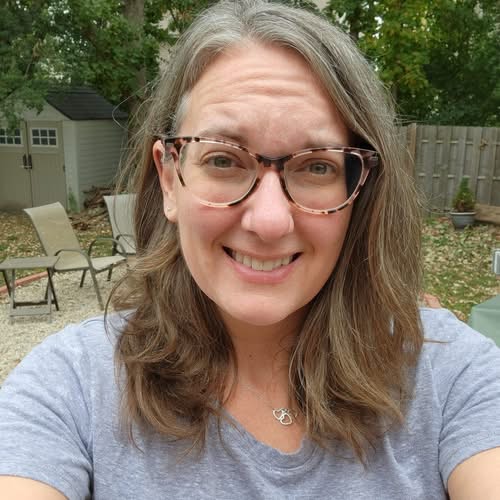
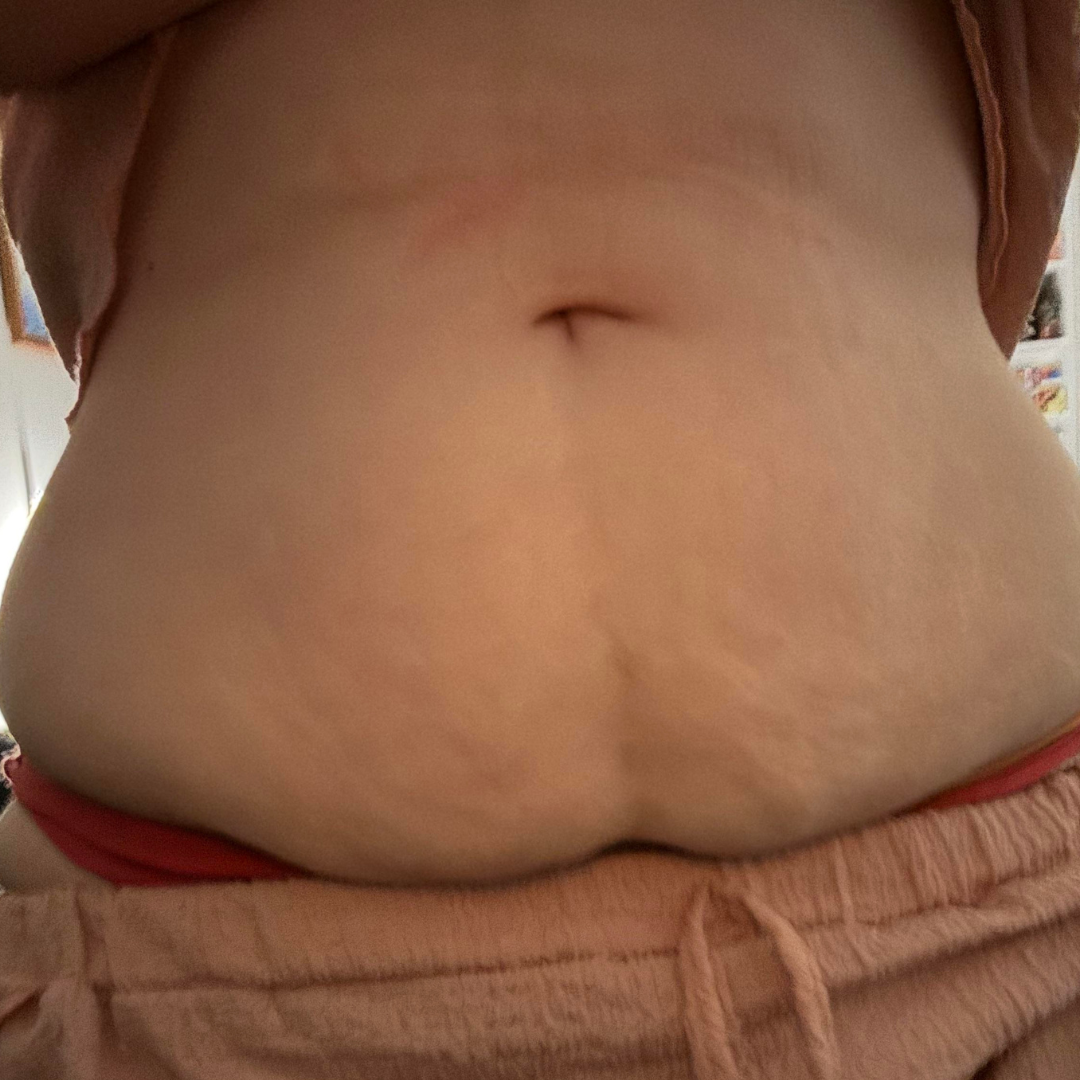
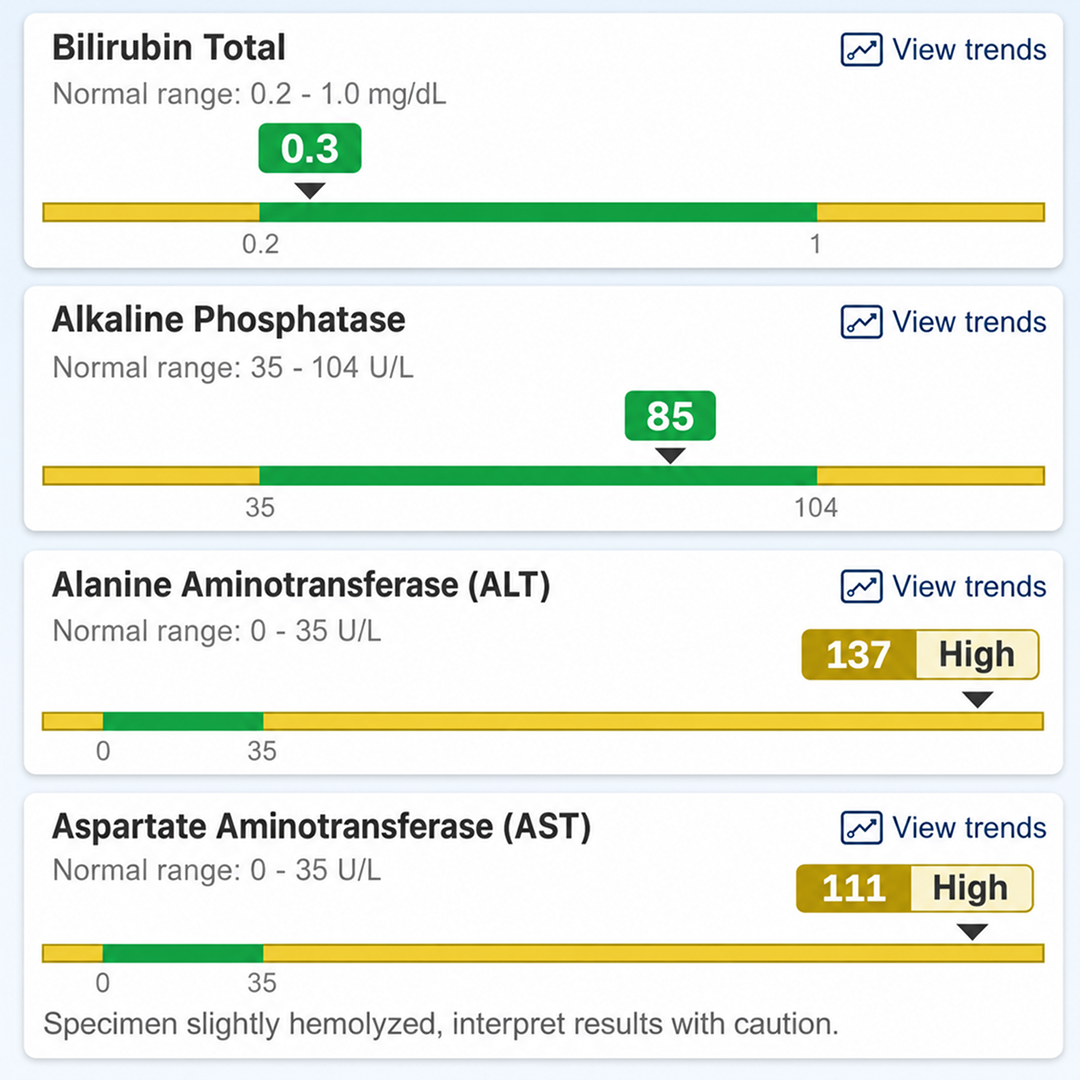
My husband is a hepatologist. I'd felt a dull ache under my right ribs for three months. When I finally mentioned it, he told me it was probably muscle strain from lifting my granddaughter and ordered bloodwork just to be safe. It wasn't muscle strain. ALT 137. AST 111. FibroScan CAP score 328. The first thing he did after the diagnosis was hand me a diet plan. No alcohol. No fructose, including whole fruit. No refined carbs. Under 1,500 calories a day. Whole foods, measured, monitored, tracked in a food journal he'd review every Sunday morning. I followed it perfectly. For five months. Weighed every gram of chicken breast on a kitchen scale so many times my daughter asked if I was "training for something." Gave up my morning bowl of blueberries, a fruit I'd eaten every morning for 30 years, because my husband the hepatologist said that's what you do when your liver is failing. My ALT went from 137 to 128. Nine points. Five months. The ache under my ribs was still there. That's when he put me on Ozempic. He didn't ask. He called it in himself. Four months later, I stopped taking it. In secret. He still doesn't know. And the reason I'm writing this, the reason I'm risking everything by putting this out there, is that what I found in his own hospital's medical library contradicts everything he's spent 30 years telling his patients about fatty liver disease, diet, and medication. I need to be careful how I say this. Not because I'm afraid of the medical establishment. Because I'm afraid of what it means for my marriage. My name is Jeanie Carolyn. I'm 62. I've been married to Dr. James Carolyn for 34 years. James is a board-certified hepatologist. He has a practice of over 3,400 patients. He is on staff at two hospitals. He has been named to the regional "Top Doctors" list nine years running. He has saved lives. Many of them. I love my husband. I need you to know that before I tell you the rest. --- For 34 years, I've been Dr. Carolyn's wife. That's not a complaint. It's a description. When you're married to a hepatologist, his career becomes your atmosphere. You breathe it. You absorb it. You learn the language without taking the classes. I know what a FibroScan is. I know the difference between simple steatosis and steatohepatitis. I can follow a conversation about transaminases and hepatic fibrosis at a dinner party and know when to nod. I've attended hospital galas in floor-length dresses and stood next to James while he shook hands with the chief of medicine. I've hosted dinners where every guest had "M.D." after their name and the conversation was transplant waitlists and MELD scores and which pharmaceutical rep brought the best lunch to the office that week. I've heard James on the phone with patients at 10 PM reassuring them about their liver numbers. Calm. Confident. Authoritative. "Cut the alcohol completely. Cut the fructose. Watch the refined carbs." "The GLP-1 data on liver fat reduction is genuinely impressive." "Your numbers are stable. Trust the process." I've heard those phrases so many times they became the background music of our marriage. So when my own liver panel came back, ALT 137, AST 111, FibroScan CAP score 328, I didn't expect a conversation. I expected instructions. And that's exactly what I got. James was reading my results on his iPad at the kitchen counter. Sunday morning. Coffee. He was still in his bathrobe. Reading my lab report the way he reads hundreds of lab reports every week. Clinically. Efficiently. "Jeanie, your ALT is 137. AST 111. CAP score 328. That's severe steatosis territory, and your enzymes are three and a half times the upper limit. We need to get ahead of this. No alcohol, obviously. Cut the fructose entirely, that includes fruit. Refined carbs out. I'll write up a meal plan for you tonight. And we're going to weigh you Sunday mornings. Target is 10 percent body weight in six months." He didn't look up from the screen. Not "What do you think?" Not "Here are the options." Not "How do you feel about restructuring your entire diet?" He prescribed me a diet the way he prescribes his patients. Decided for me the way he decides for them. Because in his world, there is nothing to discuss. Fatty liver means dietary intervention first. That's the algorithm. That's the training. That's the thirty years. "Okay," I said. What else do you say? Your husband is a hepatologist. He's not asking. He's informing. And the entire weight of his career, his expertise, his authority, the authority you've spent 34 years deferring to at dinner parties and hospital events and every medical decision your family has ever made, is behind that sentence. I followed the diet perfectly. Five months. Every grocery run planned around James's meal plan. I stopped buying blueberries, something I'd eaten every morning for 30 years. I weighed every gram of chicken and fish on a kitchen scale. I measured olive oil by the teaspoon. I skipped my granddaughter's christening luncheon because I couldn't eat a single thing that would be served, the pasta salad, the fruit platter, the cake, the sparkling cider. All of it off limits. My retest at five months: ALT 128. AST 104. CAP score 322. Nine points. Seven points. Six points. The ache under my ribs hadn't moved either. James looked at the numbers on his iPad. Frowned. Then picked up his phone. Called the pharmacy. "Ozempic. Starting dose. Weekly injection. I want it picked up today." Fifteen seconds. Done. I picked it up that afternoon. The pharmacist walked me through the injection technique with a demo pen. "Dr. Carolyn called this in for you. You're in good hands." She meant it kindly. I gave myself the first injection that night. Alcohol swab on my thigh. Uncapped the pen. Pinched the skin the way the pharmacist had shown me. James was flossing next to me at the sink. He didn't watch me do it. Didn't need to. In his mind, it was handled. Diet failed. Medication prescribed. On to the next patient. Except I wasn't his next patient. I was his wife. --- The first month was unremarkable. Mild nausea in the mornings. I lost three pounds without trying. I chalked it up to my body adjusting. Month two. The nausea. It stopped being mild. It became the background of every hour. A constant, low-grade wave of queasiness that never fully lifted, that spiked hard whenever I smelled food cooking, that made me put a hand to my mouth every time I opened the refrigerator. Not a rash. Not an allergy. Just relentless, unshakable nausea that came from somewhere deep and stayed. The nausea. That's important. It never stopped. I'd fight it through dinner. I'd fight it through conversations. I'd wake up at 2 AM to dry-heave over the toilet quietly, holding my hair back with one hand, running the tap so James wouldn't hear because he had early rounds and I didn't want to wake him. Before James woke up. That's important. I didn't want him to hear me being sick. Because I knew what he'd say. I'd heard him say it a thousand times. "Nausea is a known side effect. Occurs in nearly half of patients on the higher doses. Usually manages down over the first three months as your body acclimates. The metabolic benefits far outweigh the discomfort." Month three. The exhaustion. And the ache under my ribs, the one I'd been living with for eight months by then, actually got louder. The exhaustion came on gradually. Not normal tiredness. A bone-deep fatigue that started somewhere behind my ribs and radiated outward. I'd wake up feeling like I hadn't slept at all, even after eight hours. My arms felt weaker going up the stairs. I'd lost 14 pounds in three months without meaning to, and my face looked hollow in the mirror in a way I didn't recognize. By mid-afternoon I'd be sitting in a chair staring at nothing, too tired to read, too tired to call a friend, too tired to care. And the ache had turned into something else. Not sharp. Not the "call an ambulance" kind. Just a constant, low-grade pressure that had grown in intensity, that I could feel every time I took a deep breath, every time I bent to tie my shoe, every time I turned in bed. Like something was inflamed and complaining, louder now than it had been before the medication. I knew what this was. Not because I'm a doctor. Because I've spent 34 years listening to doctors. I've heard James's patients describe this exact pattern. Every week. Sometimes every day. They call the office. They come in for visits. They say: "Doctor, ever since I started the injection, I'm sick to my stomach all the time. I'm exhausted. The pressure under my ribs is worse. I'm getting worse, not better." And I've heard James's response. Over dinner. On the phone. In the hallway between the kitchen and his home office. "The nausea typically resolves as your body acclimates to the dose. The fatigue may be related to your liver disease, not the drug. The right-upper-quadrant discomfort is common with steatosis. The trial data on GLP-1s for MASLD is the strongest we've seen in years. The alternative is unmanaged progression toward fibrosis." He doesn't say it dismissively. He says it with genuine conviction. He believes it. He was trained to believe it. The guidelines he follows, the studies he cites, the colleagues who agree with him, they all believe it. I believed it too. For 34 years, I believed it. Until it was happening to me. --- The dinner party was in March. Eight guests. All physicians and their spouses. James and I host these twice a year. It's part of the practice. Relationship maintenance. Referral networks. The social glue of medicine. I'd been on Ozempic for three and a half months. The nausea was at its worst. I'd spent the afternoon cooking for eight people while trying not to vomit into the marinade, keeping a sleeve of crackers on the counter and nibbling one every twenty minutes to keep the queasiness manageable. I'd made three trips to the bathroom to be sick before the guests arrived. Everyone was seated. Wine poured. James was holding court the way he does. The natural storyteller. The room's center of gravity. He was telling a story about a patient from that week. "She comes in convinced her liver is healing. Convinced. 'Doctor Carolyn, I've been taking this supplement and my ALT dropped 60 points. I feel different. I have more energy. My skin looks better.' So I retest. Her ALT had gone from 118 to 58 at the previous visit. Retest comes back at 91." He paused. Took a sip of wine. The table was leaning in. "I showed her the results. I said, 'Mrs. Delgado, transaminases fluctuate by 20 to 40 points between tests depending on hydration, when you last ate, whether you'd been to the gym that morning, and lab variance. What you experienced was regression to the mean, plus behavior change from starting a supplement, plus better food logging. The supplement didn't heal your liver. Your liver enzymes fluctuated within their normal range for someone with your condition.'" The table laughed. Knowing nods. The gastroenterologist across from me said, "Every single week. Every single patient. They all think the supplement is doing it." James smiled. "I told her to start on Ozempic. We're slowing her progression from steatosis toward steatohepatitis and fibrosis. That's what matters." I was sitting at the end of the table. Three feet from my husband. Ozempic in my bloodstream. Nausea so persistent I'd learned to keep a cracker in the napkin on my lap to nibble on between sentences. Exhausted. Right side aching against the back of my chair, sharper than it had been in months. I hadn't touched the food I'd cooked. ALT still elevated, my last retest had come back at 121. His patient was right. Mrs. Delgado was right. The improvement was real. The supplement was doing something. And my husband, the man I've loved for 34 years, the man I trust with my life, was sitting three feet away telling a room full of doctors that women like her are imagining it. I excused myself. Went to the powder room. Sat on the closed toilet lid and pressed my palms against my eyes. I couldn't tell him. I could not tell this man, this respected, accomplished, genuinely caring man who has built his entire career on the foundation that fatty liver disease is manageable through diet, weight loss, and now finally a real medication, that his wife's liver enzymes were still elevated on his medication and his patient might have found something better. Because what would that mean? If I was right, he was wrong. Not wrong about me. Wrong about Mrs. Delgado. Wrong about the thousands of patients he'd reassured over thirty years. Wrong about the fundamental approach he'd built his professional identity on. I couldn't hand him that. I couldn't walk into the kitchen after the guests left and say "James, your medication isn't reversing my numbers and your patient's supplement might actually be doing what your drug can't, and you just told a room full of doctors she was imagining it." That's not a conversation about my liver. That's a conversation about everything. So I said nothing. And for three more weeks, I injected the pen every Sunday night and dry-heaved into the toilet at 2 AM and said nothing. --- The medical library was my rebellion. James has admitting privileges at the university hospital. The medical library is on the third floor. A quiet, wood-paneled room with journals lining the walls and a handful of computer terminals along the windows. Most doctors don't use it anymore. Everything's online. But the library is still there. Still staffed. I went on a Tuesday afternoon. Told James I was going shopping. Parked in the hospital garage and walked through the lobby with my sunglasses on like a woman having an affair. Which, in a way, I was. An affair with information my husband hadn't authorized. I didn't know what I was looking for. I just knew that something was wrong, with the medication, with the diet, with the whole model James believed so completely, and I needed to understand it for myself. I sat down at a terminal and typed: "GLP-1 fatty liver mechanism side effects cellular" I read for an hour. The results were mixed. Some studies showing benefit in reducing liver fat percentages. Some showing modest effect in fibrosis regression. Several showing meaningful weight loss without corresponding improvement in liver histology. All of them hedged with the academic caution that means "we're not sure but the current protocol is the best we have." Then I typed: "fatty liver diet caloric restriction hepatic fat clearance" That's when the floor shifted. Study after study showing that caloric and dietary restriction, the central strategy for every fatty liver patient in America, addresses the incoming flow of fat to the liver but does not directly clear the fat already stored inside the hepatocytes. That losing 10 percent body weight, the gold standard target, resolves steatosis in some patients but leaves others with persistently fatty livers even after significant weight loss. That your liver doesn't accumulate fat just because you eat too much of it. It accumulates fat because the machinery that normally ships fat OUT of the liver cells has broken down, and diet alone doesn't rebuild that machinery. And I nearly threw my laptop across the table. Five months. Five months of no blueberries, no cake at my granddaughter's christening, weighed chicken breast, measured olive oil, followed by 14 pounds of Ozempic-driven weight loss, and the research showed that dietary restriction and appetite suppression primarily reduce new fat DELIVERY to the liver without addressing the actual CLEARANCE machinery that had already stopped working. James's approach was closing the tap without opening the drain. But one thread, buried in the hepatology cellular biology literature, not in the mainstream clinical journals but in the phosphatidylcholine metabolism and hepatic VLDL export research, offered a completely different explanation for why fat gets stuck in the liver in the first place. Choline deficiency. And oxidative damage to the cellular machinery that packages fat for export. "Can I help you find something?" I looked up. A woman about my age, salt-and-pepper hair pulled back, reading glasses on a chain around her neck. Her badge said "Margaret Chen, Medical Librarian." "I'm just doing some research," I said. Carefully. She looked at my screen. Then at me. And something in her expression shifted. From professional courtesy to recognition. "Are you looking into hepatic VLDL export and choline metabolism?" I nodded. She pulled a chair next to mine. Sat down. "I've been a medical librarian here for 24 years. I've watched the hepatology research evolve, or not evolve, over that entire time. I catalog every new study that comes through. I've read more liver research than most of the hepatologists in this building." She spoke quietly. Not conspiratorially. Just quietly. The way you speak in a library. "The cellular research on why fat accumulates in the liver is some of the most robust and most ignored research in hepatology. Here. Let me show you." She typed a search query. Pulled up a series of studies. "A healthy liver ships fat out of its own cells continuously. It's called VLDL export. Every day, your liver takes the fat that arrives from your diet and from your body's storage, packages it inside a lipoprotein carrier made of phosphatidylcholine, and sends it out into the bloodstream to be used elsewhere or stored appropriately. That's what a healthy liver does. Every day. Automatically. The liver is the clearance organ." She turned to me. "When choline runs low, and the American diet is chronically low in choline because most people don't eat enough eggs and liver, the phosphatidylcholine carriers can't be built in adequate supply. The fat that arrives at the liver cells has no vehicle to leave in. So it stays. And accumulates. And accumulates. And what looks like a fatty liver from bad eating is actually a fatty liver from a broken clearance mechanism inside the hepatocytes. The ache under the right ribs that most patients feel is those swollen hepatocytes pressing against the liver capsule." The ache. I put my hand under my ribs without meaning to. She opened another study. "Caloric restriction, the dietary strategy your husband recommends, reduces the incoming DELIVERY of fat to the liver. Less food means less fat arriving. And in theory, that should let the liver catch up. But it doesn't address WHY the fat that's already stored won't leave. The clearance machinery inside the hepatocytes is still broken. The choline is still deficient. The oxidative damage to the cellular structures is still occurring. So the incoming stream slows, but the drain stays clogged. Weight comes off, and the liver stays fatty. That's why nearly a third of successful weight-loss patients still have persistent steatosis on follow-up imaging. It's the same reason many patients on Ozempic and similar drugs lose significant weight but don't see meaningful improvement in their liver enzymes. The appetite suppression works. The clearance restoration doesn't happen. Your body gets smaller. Your liver stays sick." She opened a third study. "GLP-1 medications work by reducing appetite and slowing gastric emptying. That produces weight loss, which produces some benefit for a fatty liver. But it doesn't restore the choline. It doesn't repair the oxidative damage. It doesn't rebuild the VLDL export machinery. It works on the intake side while three broken mechanisms on the clearance side stay broken. And a significant percentage of patients see minimal liver enzyme improvement despite meaningful weight loss. Meanwhile the side effects, the nausea, the muscle loss, the exhaustion, the delayed gastric emptying, are dose-dependent and predictable." My hands were in my lap. I realized they were shaking. "Why doesn't anyone," I started. "Talk about this?" She smiled. Gently. "Because the current model works. It works on the metrics it was designed to address. ALT declines slower than expected. Weight comes off. That's measurable. That's publishable. That's what guidelines are built on. Restoring hepatic clearance machinery at the cellular level is harder to measure, harder to standardize, and, frankly, harder to monetize. There's no pharmaceutical blockbuster for choline repletion and hepatic oxidative protection the way there is for a GLP-1 agonist that also drives weight loss." She paused. Let that sit. "There is, however, a substantial body of clinical evidence around three specific compounds that address the actual cellular dysfunction." She pulled up another study. A randomized controlled trial. "NAC. N-acetylcysteine. It's the raw material your liver uses to build its own primary antioxidant, glutathione. Glutathione is what neutralizes the toxic byproducts that damage the cellular machinery inside your hepatocytes. Not from outside. From inside. When glutathione runs low, the oxidative damage accumulates and the cellular structures break down. NAC restores the supply. The clinical trials on NAC for fatty liver have shown ALT reductions that most medications can't match." Another study. "Choline. This is the one nobody's talking about, and it's the linchpin of the entire mechanism. Choline is the specific nutrient your liver uses to build the phosphatidylcholine wrappers that package fat for export out of your hepatocytes. Without adequate choline, the fat literally cannot leave your liver cells. Studies going back to the 1930s showed that choline-deficient diets produce fatty liver in every mammal tested, and choline repletion reverses it. The Institute of Medicine set an Adequate Intake for choline in 1998. The average American consumes about half that." Another study. "And then silymarin. The active compound in milk thistle," I stopped her. "I've tried milk thistle," I said. "My sister-in-law recommended it four years ago. I took it for four months. Nothing happened." Margaret didn't look surprised. She looked like she'd heard this a hundred times. "Where did you buy it?" "A drugstore. One of the big bottles off the vitamin aisle. I don't remember the brand." "That's the answer. The problem isn't milk thistle. The problem is what most commercial brands are selling as milk thistle." She turned back to her screen and pulled up a page. "Independent lab testing over the past decade has repeatedly found that the majority of drugstore and online supplement brands don't match their labels. Some contain a fraction of the stated silymarin content. Some contain essentially none. The extract is inconsistent, the standardization is often fabricated, and the dose is well below what any of the clinical trials use. Third-party watchdog groups and the FDA have both flagged the category repeatedly. This isn't a fringe finding. It's the norm." She pulled up another window. "The German and Austrian trials that established silymarin as a hepatic protective compound used a specific pharmaceutical-grade extract standardized to 80 percent silymarin content, sourced from a specific European variety of milk thistle harvested at a specific stage, extracted with pharmaceutical-grade solvents, and dosed at levels that actually reach the liver in meaningful concentrations. Most drugstore brands are 30 to 40 percent extract at best, often much less, dosed at levels that maybe reach the liver in trace amounts. You didn't try milk thistle. You tried a product that had milk thistle on the label." She turned to face me. "And there's a second piece that matters even more. Silymarin alone, even at pharmaceutical grade, works slower than silymarin combined with NAC and choline. The three compounds address three different failure points in the same cellular process. NAC restores the antioxidant defense so the cellular damage stops. Choline provides the raw material so the fat can actually leave the hepatocytes. Silymarin stabilizes the cell membranes so damaged liver cells can recover. Together, the trials show meaningful ALT reductions within 8 to 12 weeks. Silymarin alone, at drugstore purity, at drugstore dose, works in months, if at all. That's why your sister-in-law's recommendation didn't work. Wrong grade. Wrong dose. Wrong compound combination." She pulled up one more page. "There's a critical detail on where to buy. Most liver supplements sold on Amazon fail independent purity testing. It's been documented repeatedly. The manufacturers are aware. Amazon is aware. Consumers assume that a well-reviewed product is a well-manufactured product, and that assumption is wrong for supplements. The brands that take quality seriously usually sell direct, so they can control the supply chain end to end. That's the pattern to look for." She closed the laptop halfway. Looked at me. "May I ask, are you researching this for personal reasons?" I hesitated. Then: "I'm on Ozempic. After five months of a fatty liver diet that didn't work. My husband prescribed it. He's a hepatologist here." Her expression didn't change. She didn't ask who. She didn't need to. "I've seen this before," she said quietly. "Physician families. The hardest patients to reach are the ones closest to the prescriber." She reached into her desk drawer. Wrote something on a notepad. Tore it off and slid it to me. "Happy Liver by Ritual Labs. European pharmaceutical-grade silymarin at 80 percent standardization, the same grade used in the German trials. Clinical-dose NAC. Choline dosed for hepatic fat export, not just cognitive support. Third-party tested with published certificates of analysis. Sold direct, not on Amazon. This is what I'd point you to if you were my sister." I folded the paper and put it in my purse. "Thank you, Margaret." "Come back anytime. The library is always here. And it doesn't require a prescription." --- I ordered Happy Liver from my phone that night. In the bathroom. With the door locked. While James watched a hepatology webinar downstairs. Part of me still hesitated. I'd been burned by milk thistle before. That drugstore bottle had sat in my cabinet for four months and done nothing. But everything Margaret had said had a different quality to it. Not "try this and see." Explanations. Mechanisms. Reasons why the other version had failed and this one wouldn't. I clicked buy. It arrived three days later. I intercepted the package before James got home. Put the bottle in my bathroom drawer, behind the tampons, behind the cotton balls, in the back where he never looks. I stopped taking Ozempic that same week. Skipped the next Sunday injection. I know you're supposed to consult before stopping medication. I didn't care. The next morning, Tuesday, James left for the hospital at 6:30 AM. By 6:35, I was at the kitchen table. Three capsules with a glass of water. Nothing dramatic. Nothing ceremonial. Just three capsules and water and the quiet decision to try something my husband would never have written down. I sat at the table. Watched the light come in through the kitchen window. And I noticed something that first week that I didn't trust enough to believe. The nausea, the maddening, persistent, sleep-destroying nausea that had been my constant companion for three and a half months, was quieter. Not gone. Quieter. Like a radio turned down three notches. By the end of the first week without an injection, the nausea stopped entirely. Not gradually. Just gone. I ate a full meal without gagging. I opened the refrigerator without having to hold my breath. I went a whole night without waking up sick. The thing that had defined my mornings and my nights for months simply wasn't there anymore. And the ache under my ribs. The thing I'd been living with for 11 months. By the end of the second week, when I took a deep breath, it was quieter. By the end of the third week, it was gone. Not less. Not manageable. Gone. I could bend to tie my shoes without noticing anything. I could turn in bed without feeling anything push back. The pressure that had been the background of my body for nearly a year had simply left. I ordered an Everlywell home liver panel. Hid the kit in the same drawer. Did the fingerstick blood collection on a Saturday morning while James was at the hospital seeing weekend consults. Mailed it out. Waited. Week six results came back to my phone while I was folding laundry: ALT 89. AST 72. From 121 to 89 in six weeks. Without Ozempic. I had started eating normally again. I'd added back my morning berries. I'd had a small piece of chocolate at my granddaughter's birthday party. My appetite had come back and I was actually enjoying food for the first time in months. Week ten I ordered a second panel. ALT 61. AST 49. I was sitting at the kitchen table staring at the number, 61, when I heard the garage door open. James was home early. I closed my email. Wiped my eyes. I hadn't realized I was crying. "Hey Jeanie. Good day?" "Good day," I said. --- My follow-up bloodwork was at 12 weeks. James ordered it himself. Standard for any patient he'd started on Ozempic. He expected to see the medication slowing the disease. Holding steady. "Managed progression." I let him order it. Let the lab draw the blood. And waited. The results came through his patient portal. He pulled them up on his iPad at breakfast. Wednesday morning. Coffee and oatmeal. His routine. He frowned. "Huh." "What?" "Your ALT is 43. AST 37. CAP score is 252." He scrolled. "Fibrosis score has actually pulled back. That's unusual." He looked at the screen for a long time. The frown deepened. "These are excellent, Jeanie. Better than I'd expect with the current protocol." He paused. "Actually, these are better than most of my MASH patients at 12 weeks on Ozempic. Significantly better. Your ALT dropped 94 points. From 137 to 43. I almost never see that with medication alone. And the CAP score, moving from severe steatosis to moderate in three months, I don't see that." He set the iPad down. Looked at me. "How are you feeling on the medication? Any side effects?" This was the moment. Thirty-four years of marriage. Thirty years of his career. Everything balanced on what I said next. "James. I need to tell you something." He waited. The way he waits with patients. Attentive. Clinical. His hands still around his coffee cup. "I stopped taking the Ozempic." The stillness in his face didn't change. But something behind it did. "When." "About 12 weeks ago." He set the coffee down. "12 weeks ago," he repeated. Not a question. A man doing math. "I was sick to my stomach constantly. Up half the nights being sick. Exhausted. Losing muscle. The ache under my ribs was worse, not better. And my ALT was barely moving, it was 121 on the last retest while I was on the medication. The same symptoms," I stopped. Steadied. "The same symptoms your patients describe. The ones you tell them are manageable and worth the disease-modifying benefit." His jaw tightened. I kept going before he could answer. "I went to the medical library at the university hospital. I didn't tell you. I know I should have told you, and I didn't, and I'm sorry for that part. But I needed to understand what was happening to me without, I needed to look at it myself." "Jeanie," "Please let me finish." He was quiet. "I found the cellular biology research. The VLDL export research. The choline deficiency literature. The clinical evidence on silymarin, NAC, and choline." I opened my phone, pulled up the Everlywell email, slid it across the table. He didn't reach for it. "I've been taking a supplement called Happy Liver every morning for 12 weeks. Three capsules. That ALT, the 43, that's not the Ozempic. I haven't taken the Ozempic." Silence. "A supplement," he said. Flat. The voice. "Yes. And before you say it, I know. I tried milk thistle years ago from a drugstore shelf. I know what that did. Nothing. This isn't that. The silymarin in this one is European pharmaceutical grade, standardized to 80 percent. The same grade the German trials use. And it's not silymarin alone. It's silymarin with NAC and choline in the doses that actually reach the liver." My throat was tight. I hadn't expected it to tighten. "Silymarin stabilizes the hepatocyte membrane so damaged cells can recover. NAC restores glutathione so the oxidative damage can stop. Choline provides the raw material for the phosphatidylcholine carriers that ship fat OUT of the liver cells. That's what's actually been happening in my liver, James. Not just fat coming in. Fat unable to leave. Because the choline was low. Because the cellular machinery was damaged. Because the antioxidant defense was depleted. The diet didn't work. You know it didn't. Nine points in five months. Because caloric restriction slows delivery but the clearance machinery had already broken down, and Ozempic suppresses appetite but doesn't rebuild the machinery, and the research, the research is in your own hospital's library, it's been there for decades," "Jeanie. You stopped a prescribed medication," "I know." "without telling me." "I know. I know I did. But I couldn't tell you." My voice was steady but barely. "How was I supposed to tell you? Sit down at this table and say, what? 'The diet you've been prescribing for thirty years was reducing incoming fat without restoring the clearance machinery, and the injection you put me on after that diet failed suppresses appetite while the cellular damage continues, and your patients keep progressing toward fibrosis'? Do you understand what I'm asking you to hear right now?" He looked at the phone. Still didn't open it. "The supplement uses European pharmaceutical-grade silymarin at 80 percent standardization. That's the standard used in the German trials. Not the 30 percent drugstore version I tried years ago that did nothing. And it's not silymarin alone. The combination with NAC and choline is what makes it work in weeks instead of months." I was pressing through it now. The facts were armor and I needed them. "Randomized controlled trials on the three-compound approach. Significant reductions in liver enzymes. Steatosis regression on imaging. Not through appetite suppression. Not through caloric restriction. Through direct restoration of the cellular machinery that clears fat from the liver." He was looking at me. Not the phone. Me. "Without repairing the clearance machinery, nothing else matters. Cut every gram of fructose on the planet, your hepatocytes are still full of fat they can't export and still being damaged by oxidative stress. Ozempic makes you eat less but it doesn't restore the choline and it doesn't repair the oxidative damage. Stop the Ozempic, my liver enzymes should have climbed. Instead they dropped. Because the supplement addressed the thing your medication never did. The cellular restoration. The actual repair. James, you've never tested my choline status. You've never tested any of your patients' choline status," "That's not," "You test ALT. AST. Occasionally FibroScan. Numbers move slower than expected, you declare it managed progression. But the cellular damage continues. Unmeasured. Unaddressed. While the hepatocytes that are supposed to be clearing fat from your liver are choline-deprived and oxidatively damaged and no GLP-1 injection and no amount of skipping blueberries is going to stop that." My hands were flat on the table. I didn't know when I'd put them there. Quiet. The refrigerator hummed. Outside, a car reversed out of a neighbor's driveway. "My ALT is 43," I said. "Down from 137. Without the Ozempic. Without the strict diet. My nausea is gone. I can eat again. The ache under my ribs is gone for the first time in almost a year. I ate a bowl of blueberries this morning. I came back." He looked at the phone again. "I'd like you to order a GGT panel," I said. "Gamma-glutamyl transferase. It's a liver-specific marker of oxidative stress. Add it to my results. And then look at all of it, the way you would look at it for any patient." He didn't answer immediately. He sat there for a long moment with his hands around a coffee that had gone cold. Then he picked up his phone and called the lab. --- The GGT result came back three days later. 26 U/L. James pulled it up on his screen at home. Read it. Read it again. "For someone with your fatty liver history and your starting ALT of 137, I'd expect GGT in the 90 to 140 range. Indicating significant hepatic oxidative stress. You're at 26. Well within normal." He closed his laptop. Sat back in his chair. He didn't say "you were right." He didn't say "I was wrong." He's a hepatologist. They don't talk like that. What he said was: "I'm not going to schedule the follow-up FibroScan for six months. We can do it at 12." And then he said: "I'd like to read those studies. The ones from the library." --- I need to be honest about what happened next and what didn't. James did not become a Happy Liver evangelist. He did not throw away his prescription pad. He did not start recommending Ritual Labs to his 3,400 patients. He read the studies. He asked me questions. Clinical questions, mechanism questions, the kind of questions he asks pharmaceutical reps when they come to his office with new drugs. I answered what I could. For the rest, I directed him to Margaret's reading list. He was quiet about it for weeks. Thinking. Processing. Doing what hepatologists do when confronted with data that doesn't fit their model, which is to interrogate it harder than they interrogate data that confirms it. Then one evening, three weeks after he'd read the research, we were cleaning up after dinner. He was drying dishes. I was washing. The kind of quiet, domestic moment where truth sometimes slips out sideways. "I've been thinking about Mrs. Delgado," he said. Mrs. Delgado. The patient from the dinner party. The woman who told him the supplement was improving her liver enzymes. The woman he diagnosed with regression to the mean in front of eight laughing physicians. "What about her?" He dried a plate. Set it down. "I think she might have been right." Six words. He said them to the dish rack, not to me. But he said them. That's not a revolution. That's a crack. A hairline fracture in thirty years of certainty. But it's something. And it started because his wife, the woman who sat at the end of his dinner table absorbing his authority for three decades, quietly, secretly, stopped taking his prescription, ate a bowl of blueberries for breakfast, and found something better. --- If you're reading this, I think I know where you are. You're in a household where medicine is gospel. Where the doctor's word, whether it's your husband, your father, your brother, or your own physician, carries the weight of training and authority and institutional credibility that you feel you can't question. And something feels wrong. You've cut alcohol, cut sugar, restricted carbs, lost weight, walked every morning, and your ALT barely moved. Or you're on a GLP-1 injection and the nausea won't stop and the exhaustion won't lift and your enzymes are still elevated. Or maybe, like me, you've tried a milk thistle bottle from the drugstore, watched nothing happen, and concluded milk thistle doesn't work. And nobody believes you. Or nobody will listen. Or you're afraid to say it because saying it means challenging the person or the system you've trusted your whole life. Here's what I learned in a medical library on a Tuesday afternoon. The problem isn't the calories. It's not the blueberries. It's not what you're eating. The problem is what's happening inside your liver cells. The clearance machinery that's supposed to ship fat OUT of your hepatocytes has broken down. Choline is depleted. Oxidative damage is accumulating. And no amount of dietary restriction or appetite suppression restores the machinery that's actually broken. The reason drugstore milk thistle didn't work for me, and probably didn't work for you, is that most drugstore brands don't match their labels, don't use the pharmaceutical-grade extract the trials use, and don't combine silymarin with the other two compounds that address the parts of the machinery silymarin alone can't reach. Happy Liver by Ritual Labs addresses the actual cause. Three capsules every morning. Silymarin at European pharmaceutical grade, 80 percent standardization, the same grade used in the German clinical trials, to stabilize the cell membranes and let damaged hepatocytes recover. NAC to restore glutathione and stop the oxidative damage from continuing. Choline dosed for hepatic fat export, so the fat trapped inside your liver cells finally has a vehicle to leave in. Sold direct, third-party tested, not the drugstore version you already tried. This is meant to work alongside conventional care, never instead of it. If you're on prescribed medication, talk to your doctor before making any changes. https://rituallabs.shop/products/happy-liver --- Try Happy Liver for 60 days. Track your liver enzymes. Get your bloodwork done. Ask your doctor about GGT, the marker that shows the deeper oxidative process your conventional treatment isn't measuring. If you're not satisfied, if you don't see improvement, if you don't feel the difference, contact Ritual Labs for a full refund within 60 days. No questions asked. You risk nothing. https://rituallabs.shop/products/happy-liver --- You're standing where I stood a little over a year ago. One path: Keep restricting fructose. Keep injecting the GLP-1. Keep fighting nausea through the night. Keep feeling the pressure under your ribs and telling yourself it's part of aging. Keep watching your enzymes stay elevated and telling yourself it's slowing down, it's being managed, it's the best they can do. Keep sitting at dinner tables listening to people dismiss the treatments you've tried. Keep quiet. Keep compliant. Keep progressing. Another path: Do what I did. Find the research. Restore the cellular machinery. Get your numbers down without the drug that's supposed to save your liver while slowly destroying your sleep, your energy, and your right side. Track your numbers. Watch them improve. Feel the ache under your ribs quiet down and then leave. Feel your energy come back. Eat a bowl of blueberries. And when the evidence is undeniable, when the data speaks louder than the authority, have the conversation you've been afraid to have. 60 days. Zero financial risk. Full money-back guarantee. I chose the second path. My ALT is 43. Down from 137. My AST is 37. My GGT is 26. My nausea is gone. The ache under my ribs is gone. My husband is reading the studies. And I had blueberries with breakfast this morning. I found my answer in his own hospital's library. The evidence was always there. It was just waiting for someone to look. Jeanie Carolyn P.S. The nausea stopped within a week of my last Ozempic injection. The bone-deep exhaustion that four months of medication had built, gone within the second week. The ache under my ribs that I'd been living with for almost a year, gone within three weeks. My ALT went from 137 to 43 in 12 weeks. My husband, a board-certified hepatologist, chose not to escalate my treatment after seeing my results. He didn't endorse Happy Liver. He just looked at the numbers and stopped writing prescriptions. That silence spoke louder than any endorsement. P.P.S. Margaret, the medical librarian, has been cataloging cellular hepatology research for over a decade. She told me she's watched the evidence accumulate, study by study, while the clinical guidelines haven't changed. "The choline deficiency research goes back to the 1930s," she said. "The silymarin membrane stabilization research goes back to the 1970s. Decades of subsequent research have confirmed both mechanisms. But most hepatologists are still prescribing the same caloric restrictions. And most American consumers are still buying drugstore silymarin that doesn't match its own label. The research is ahead of the practice. It usually is. Sometimes by decades." If you have access to a medical library, at a university, a hospital, even through your local library system, search for "hepatic VLDL export choline" and "silymarin membrane hepatocyte." Read what's there. The evidence isn't hidden. It's just unread. P.P.P.S. If you've tried milk thistle before and given up on it, I understand. So had I. Four months of a drugstore bottle from the vitamin aisle, and nothing happened. What I didn't know then, and what most people don't know, is that most drugstore and online liver supplements have been shown by independent testing to contain a fraction of what their labels claim, at purity levels that make the extract essentially inert, at doses well below what the clinical trials use. That's not milk thistle failing. That's a bad product failing. The pharmaceutical-grade version in Happy Liver, standardized to 80 percent silymarin content and paired with NAC and choline in clinical doses, works in weeks, not months. Different grade. Different dose. Different result. If you write off milk thistle because a drugstore bottle did nothing, you're writing off the wrong compound. P.P.P.P.S. You'll notice the difference within the first week. Not just the liver numbers, those take a few weeks. The energy. The nausea stopping, if you're on a GLP-1. The pressure under your ribs easing. The first morning you open the refrigerator and don't have to hold your breath against the smell. Pay attention to that first week. Your body will tell you what your doctor won't. And an important note: talk to your prescribing physician before stopping any medication. I made my own choice about my own body. Yours is yours to make with your own doctor. P.P.P.P.P.S. Ritual Labs is a small company. They sell direct because they control the supply chain end to end, and because Amazon has repeatedly failed independent purity testing on liver supplements. I keep two bottles now, one in the kitchen where the food scale used to be, and one in my travel bag. I will never go back to the Ozempic. Not because I don't trust my husband. Because I trust the data more. And the data is in my bloodwork, in my energy, in the blueberries I eat every morning without guilt, and in the six words my husband said to the dish rack three weeks after reading the research: "I think she might have been right." https://rituallabs.shop/products/happy-liver
Like this ad? Make it yours.
Crush rebuilds this exact creative around your product — your brand, your colors, your offer — in about a minute.