
Inactive· since Aug 18, 2026
- 10
- days it ran
- 0
- relaunches
Ad copy
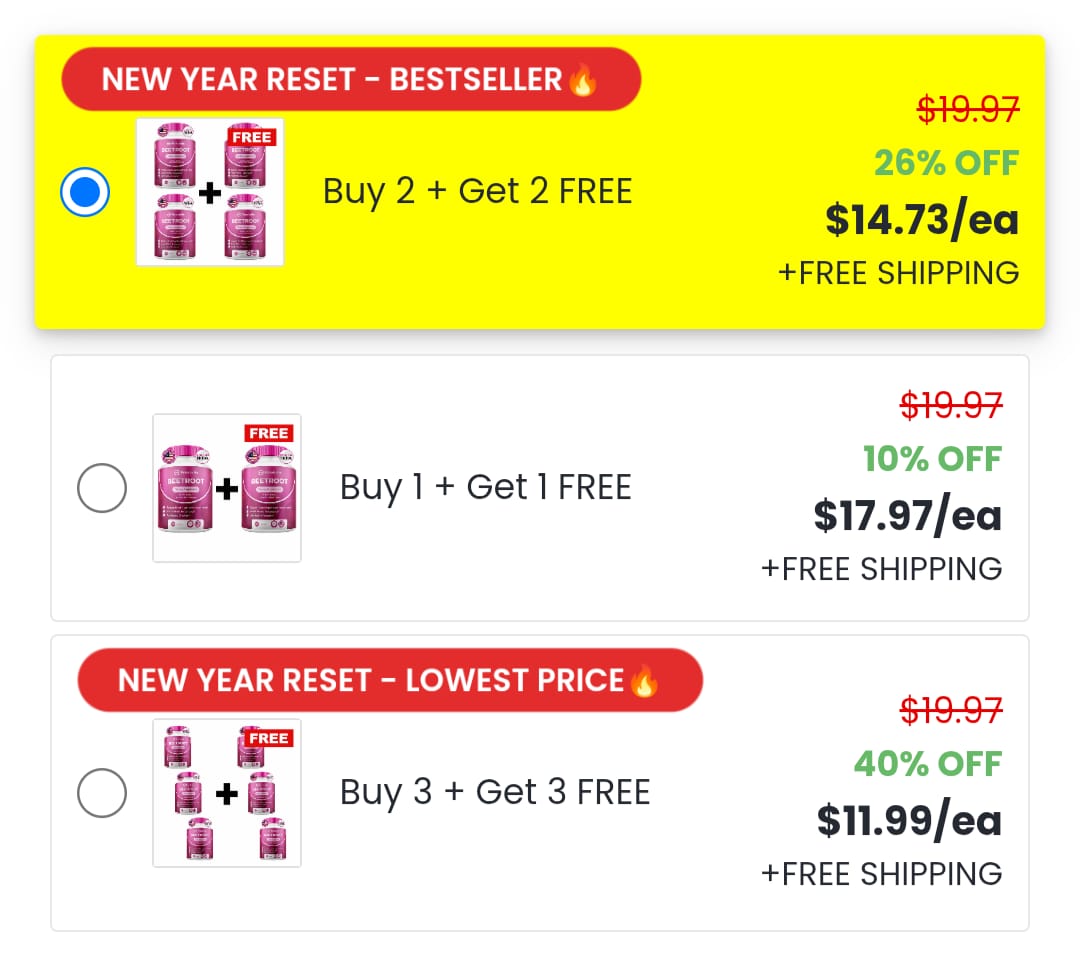
I took beetroot every single morning for eleven weeks. My kidney function dropped another point and the foam never cleared once. And I say that as someone who spent ten years in a renal research lab before I ever put on scrubs. My name is Marlene Hoyt. I am 61 years old. I believed in beetroot the way people who read the primary literature believe in things. Not casually. Not as a maybe-this-will-help afterthought. Not because I saw an ad. I believed because of what I spent that decade doing. Oxidative stress in the glomerular capillaries. I drew that pathway on a whiteboard so many times I could still draw it in my sleep. I understood the mechanism. Your kidneys are a filter — about a million microscopic units in each one, woven into the finest mesh you can imagine. Two things destroy it. Corrosion first. Put that filter under strain — by sugar, by pressure, by the ordinary overwork of years — and it throws off free radicals, the most destructive ones your body makes, and they eat the mesh from the inside. Not sand wearing down a screen. Acid dissolving it. And it feeds on itself: every filter that corrodes throws its work onto the ones still standing, and the ones still standing strain harder, and strain throws off more. That slope is what everyone calls the natural course of the disease. Pressure second — blood hitting those delicate filters too hard, forcing them to overwork. I was on lisinopril for exactly that. It turns the pressure down and I took it every day. But it never touched the corrosion. It slows the current. The mesh keeps dissolving. Beetroot was the first thing I ever read about that did both. The deep red-violet pigment in a beet is a class of antioxidants called betalains, one of the most powerful in the food supply, and they neutralize the exact free radicals corroding the mesh. In animal kidney-injury models, beetroot extract cut oxidative damage by roughly fifty-eight percent. Animal models. I say that because it matters. The human data is why I ordered anything at all. Six hundred and forty patients, kidney function already reduced, given dietary nitrate — the compound a beet delivers — against placebo. Kidney injury cut by about seventy percent. Major adverse kidney events cut sixty-two percent over the following year. Not a reversal trial. Nobody claimed that. Protection, measured, in kidneys already under strain — which was more than anything else on my shelf had ever been shown to do. And the nitrate does the other half. Your body converts it to nitric oxide, which relaxes the vessels and turns the pressure down inside the filters. The entire job my lisinopril was hired to do. One root did what my prescription does. And the one thing my prescription can't. My creatinine had gone from 0.9 to 1.4 in two years. My GFR came down at every draw. Sixty-eight. Sixty-five. Sixty-one. Fifty-seven. Fifty-three. Forty-nine. Forty-six. Forty-four. Eight quarterly panels, eight neat little rows, every one of them followed by the words continue current management. My ankles were over the sock line by three in the afternoon. My wedding ring came off by noon. I was up two and three times a night. And one morning I flushed the toilet and the foam sat there. Thick. Frothy. Sitting on top of the water the way I had watched it sit in the toilets of patients I had discharged to home care two decades earlier. I know what that foam is. Protein leaking through mesh that has already started to tear. It belongs in your blood. It should never be in the bowl. Here is the part that should frighten anyone reading this. Your kidneys have no nerve endings. You do not feel them go. By the time you feel anything, most of the function is gone — and what you do feel, you blame on something else. The fatigue, on your job. The ankles, on the heat. The three trips a night, on the water you drank. The fog, on being sixty-one. I was Type 2. Twelve years. On metformin, and on lisinopril since my fourth draw, added for kidney protection. Everything by the book. And I was watching my own body walk the exact trajectory I had spent thirty-eight years watching other people walk. The science was clear. Beetroot was going to be part of my answer. I was sure of it. I found a health blog with dosing that matched what the research had used. Two heaping teaspoons of beetroot powder daily. I ordered a two-pound bag of organic beetroot powder from a certified supplier online. Thirty-eight dollars. Every single morning. Seven days a week. Two teaspoons stirred into hot water, drunk before my shift. The powder never fully dissolved. No matter how long I stirred. There were always specks. Gritty specks that sat at the bottom of the mug and coated the back of my throat like wet sand. The taste was earthy at first. Then sweet in a way that turned metallic. Then just overwhelming. By week three the smell of it made my stomach turn before I even lifted the mug. Every. Single. Morning. My husband started stirring the mug for me some mornings when I left early for a shift. He would leave it waiting on the counter with a sticky note. Drink me. Little heart drawn underneath. We were in this together. There is no home meter for a kidney. So I did what ten years in a lab teaches you to do with something you can see but cannot measure. I made it a number. Every morning I flushed, started the stopwatch on my phone, and timed how long the surface took to clear. Date. Seconds to clear. Foam, yes or no. Ankles. Nights up. Week 1: Ninety seconds. Foam yes. Ring off by noon. Three trips. Give it time, my husband said. The studies said it takes a few weeks. Week 2: Ninety-five. Foam yes. Week 3: Ninety. Still standing on the water when I brushed my teeth. Week 4: Over two minutes. I started the stopwatch a second time to be sure. Over two minutes. I sat down at the kitchen table. The empty mug still had a ring of dull brown residue at the bottom. Powder caked on the sides. I pushed it away. It takes longer, my husband said from the doorway. He did not sound convinced. Week 6: Eighty-five. Week 8: Ninety. Week 11: Ninety. Eleven weeks. Seventy-seven consecutive mornings. Over thirty dollars a week. A mug with a brown ring no amount of scrubbing would take out. My next appointment was months away and I could not wait for it. I drove to a walk-in lab on a Saturday and paid for a panel out of my own pocket. Creatinine 1.4. GFR 43. One point down. Eleven weeks of doing everything right, and the line had not even paused. My next visit with Dr. Reyes was in ten weeks. She had been clear at the last one. If your next panel shows the same trend, Marlene, we are adding another medication. And honestly, if the GFR keeps dropping, we need to start having a different conversation. I knew what conversation she meant. I had listened to that conversation from the other side of the bed for thirty-eight years. That night I could not sleep. I lay in the dark and thought about the corrosion. The betalains. The nitrate. The pathway I had spent a decade on. The pathway is real. The compound answers it. I have watched that data reproduce. If the mechanism was real, and I had been taking a compound that was supposed to answer that mechanism, and nothing in my body was responding — then something was wrong with what I had been taking. Not the compound in the abstract. The compound in the mug. At 2:30 in the morning I got out of bed, walked down to my kitchen, and pulled the two-pound bag off the counter. I read the label. Organic beetroot powder. Sourced in the USA. GMP certified. No certificate of analysis. No seed line. No potency data. No heavy metal testing. I stood there at 2:30 in the morning holding a bag that told me nothing about what was actually inside it. I had verified the compound. I had never once verified the container. The next morning I did what I would have done in the lab with an unknown sample. I called a former colleague from my research years who now runs varietal verification and potency assays on commercial botanical products. I asked if I could send her some. She said yes. I overnighted her half a teaspoon of my powder. She called me back six days later. Marlene, she said, I don't want to be the one to tell you this. But this is not an heirloom beet. The varietal markers put it in the commercial sugar line — the beet we spent a century breeding sweeter, which bred the pigment and the nitrate out of it. Second, what is in there tests at a fraction of the published reference for heirloom stock. And third, both compounds are heat-sensitive, and this was spray-dried. Cooked before it was ever sealed. That is why it is brown instead of red. She said, Marlene, you have been taking the wrong beet, at a fraction of the compound, already dead in the bag. Three failure points. All at once. I sat down at my desk. Eleven weeks. Seventy-seven mornings. Thirty dollars a week. A body that had been telling me for two months that nothing was reaching the filter, and a bag of powder that could not have reached it under any circumstance. Then I looked over at the sink. At the mug with the brown ring in the bottom of it. The pigment is the medicine. If it is brown, the medicine is gone. I had been looking at the answer every single morning for eleven weeks and I rinsed it down the drain seventy-seven times. The mechanism was not the problem. The bag was. I asked her what an American consumer was supposed to buy that could actually deliver what the research had used. She was quiet for a moment. Then she said, we tested one recently that surprised me. Rosabella. A named heirloom seed line, verified. Thirteen hundred milligrams printed plain on the label. Cold-extracted, never high-heat dried. And they publish a third-party certificate of analysis for every batch. She said, we ran their varietal assay and their potency assay against that certificate. The results matched their label. Which almost never happens in this category. Most of what comes across my bench is a fraction of what it claims, when it is even the right plant. I want to walk you through what she confirmed, because if you have taken beetroot and nothing moved, the reason is almost certainly one of three things. First — the seed line. We have been breeding beets for sugar for over a hundred years. Sweeter every decade. The betalains and the nitrates are what got bred out to make room. What is sold as plain beetroot powder, with no strain named anywhere on the bag, is that beet. It is candy. It is the reason people say beetroot does nothing. If the label does not name the seed line and back it with a published certificate of analysis, assume it is the sugar beet. I have stood in the kitchens of patients I discharged and seen the same two-pound bags on the same counters mine was on. Second — the dose. The research uses a real dose, standardized, every subject, every day. Most consumer beetroot delivers a fraction of it, buried inside a proprietary blend where they hope you never ask. Betalains are not aspirin. There is no half-effect at a quarter dose. A betalain is not a switch that turns something on — it is a supply. Each one neutralizes a radical and is spent doing it. A quarter of the supply does not slow the corrosion by a quarter. It runs out by mid-morning and the mesh corrodes for the other twenty hours. Third — the heat. The pigment is the compound. That deep red-violet is not decoration, it is the medicine, and it does not survive high-heat drying. Neither does the nitrate. They leave together. A brown powder is a dead beet, and you cannot tell that from the front of the bag. One more thing keeps me up as a nurse. A beet is a root, and a root pulls up whatever is in the soil it grew in. A two-pound bag with no certificate of analysis has never been tested for what came up with it. I have watched patients be diligent about their supplement routine for years and never move a single lab marker, because what they swallowed every morning was never going to do anything. Powder cannot guarantee the seed. Powder cannot guarantee the dose. Powder cannot survive the heat. Rosabella solved all three. An heirloom seed line called Blutwurzel, grown by Amish families in Lancaster County — six generations on the same fields, never crossed with the sugar beet, so it still carries close to ten times the betalains and ten times the nitrates of a grocery beet. Hand-harvested after the first frost. Cold-extracted, never high-heat dried, so the pigment and the nitrate reach the capsule alive. Thirteen hundred milligrams per capsule, printed plain. No proprietary blend. Third-party tested, certificate of analysis published for every batch — everything the bag on my counter had told me nothing about. That same Lancaster County soil is where a Penn State study found a cardiovascular death rate seventy-four percent lower than the rest of the state. Cardiovascular disease kills more kidney patients than anything else on earth. I ordered it the day she called me back. It arrived Monday. I took the first capsule that evening with a glass of water. No mug. No stirring. No grit. No cleanup. I sat on my back porch. Skeptical in a way I had not been eleven weeks earlier. But Dr. Reyes had given me ten weeks, and between the audit and the assay and the shipping, I had eight of them left. About seventeen minutes later, something changed. A lift in my head, and a kind of quiet under my chest. Like someone had turned the lights up half a stop in a room I had not noticed going dim. I wrote it down and I did not trust it. A feeling is not a finding. The log was going to be the proof, not the feeling. But I noted one thing in the margin. In seventy-seven mornings of powder, I had never felt anything at all. Not once. That had been data too, and I ignored it. By the third morning, the fatigue that had been dragging me through every afternoon of every shift was lighter. The grogginess that normally lasted until 10 AM was gone before 8. I stood in the bathroom, flushed, and started the stopwatch. Fifty-five seconds. Ninety seconds had been the good days for eleven weeks. Fifty-five. Please let this be real. I did not tell my husband. Not yet. Did not want to get his hopes up. Not again. I took it every morning. Same time. One capsule with breakfast. Thirty seconds. No prep. No mess. Day 5: Thirty seconds. Ankles easing by the end of a twelve-hour shift. Two trips in the night instead of three. My husband noticed before the log did. I was awake at 6 AM on a Sunday. Making coffee. Humming. I had not hummed in months. You seem different, he said carefully. I feel different. Day 10: Twelve seconds. Day 14: The water was clean. And my wedding ring went back on and stayed on all day. I showed him the legal pad. Date. Seconds. Foam, yes or no. Ankles. Nights. His eyes tracked down the numbers. The slow, steady descent. The column of yeses turning to noes. His hand came up to his mouth. Marlene. I know. But the powder. We did everything right. It was not the beet that was wrong. It was everything else. Wrong seed line. A fraction of the dose. And cooked before it was ever sealed. The mechanism was fine the whole time. Nothing was ever reaching the filter. Day 21: Sleeping through the night. No trips at all. I called a woman I trained with that weekend. Denise, a charge nurse. Her GFR has been a little low for three years and her doctor keeps telling her they will watch it. The foam is gone, I told her. She said, what foam. I said, protein leaking into your urine. It is the first thing your kidneys do when the filters start to tear. Mine cleared in ten days. I explained everything. The assay. The seed line. The dose. The heat. The one product whose certificate matched its label. I am sending you a bottle, I said. Stop buying the powder. It is not the same thing. Then, at week six, everything stopped. Not backward. Just still. Eleven days where nothing improved, and I was sure I had found the ceiling of whatever this was going to do. I kept taking it and made myself wait. Week eight was my appointment with Dr. Reyes. The nurse took blood. I sat in the room for twenty minutes. Dr. Reyes walked in. Pulled up my chart. Looked at the screen. Looked at me. Marlene. Your creatinine came back at 1.3. It was 1.4 at your last panel. Silence. Your GFR is 47. It was 44. She scrolled. And your protein spillage is 190. It was 340. She scrolled back through two years of my chart, slowly, the way you do when you are checking your own arithmetic. This line has gone one direction since the day you became my patient, she said. This is the first time it has gone the other way. What changed. Nothing else had. Same metformin, same dose. Same lisinopril. Same diet. Same A1C. One thing changed, and I told her what it was. The powder. The eleven weeks. The assay. The seed line, the dose, the heat. The one that published its certificate. She listened. Took notes. Nodded slowly. Marlene, she said, you spent ten years on oxidative stress in the glomerulus. If the corrosion is finally being answered and the pressure is coming down at the same time, the direction makes sense to me. She closed her laptop. No additional medication. No dialysis conversation. Keep doing exactly what you are doing. I want to see you again in twelve weeks. No additional medication. No dialysis conversation. I sat in my car afterward with my hands on the steering wheel. I have watched a lot of people cross that parking lot after appointments in that building. I understood for the first time what those minutes feel like when the appointment did not go the way the last one had. I called my husband. Creatinine 1.3. GFR 47. Protein down by almost half. No new medication. No dialysis conversation. I heard him gasp. Then silence. Then a sound that might have been a laugh or might have been a sob. You did it, he whispered. We did it. We just needed the right form. That was three months ago. At the twelve-week recheck my GFR was 50. Creatinine 1.2. Protein spillage 90. No foam. No swelling. No brown mug in the sink. No gritty water at six in the morning. One capsule. Thirty seconds. Done. Last weekend my husband and I spent an entire afternoon in the backyard building a raised garden bed for our grandchildren. Four hours of digging, leveling, hauling soil. I did not sit down once. I finished a twelve-hour ICU shift on Monday morning and drove straight to the community garden and worked in it two more hours before I went home to sleep. I have not felt like this since I was in the research lab in my early forties. If you are reading this, you see yourself somewhere in this story. You believe in the science. You have done the research. But the powder is not working for you. Or the capsules from Amazon. Or whatever you have been taking every morning for weeks or months. Your numbers are not moving. The foam is still there. And your next appointment is getting closer. I spent eleven weeks stirring beetroot powder into hot water every single morning. Thirty dollars a week. A brown-stained mug. Grit on the back of my throat before every shift. And my kidney function went down another point anyway. I thought beetroot was overrated. I thought the research did not translate to real people. I thought I was walking the same trajectory I had watched patients walk for thirty-eight years. I was wrong. The beet works. My bag did not. Wrong seed line, a fraction of the dose, cooked before it reached me. You were not wrong to try. The bag was wrong. I checked the compound for ten years and never once checked the container, and I am the person who should have known better. I was doing the right thing in the wrong form. If your numbers are not moving, do not give up on beetroot. Give up on powder. Get a capsule from a named heirloom seed line, cold-extracted, at a dose printed plain, with a certificate you can actually read. Give it an honest trial. Your kitchen will thank you. Your kidneys will too. Rosabella. Heirloom Blutwurzel beetroot, six generations on the same Lancaster County fields, never crossed with the sugar beet. Harvested after the first frost, cold-extracted, never high-heat dried. Thirteen hundred milligrams per capsule, printed plain. Certificate of analysis published for every batch. One capsule with a glass of water. That is the whole protocol. Buy 3 bottles, get 3 free. 90-day money-back guarantee. If the foam does not clear. If the swelling does not go down. If your next panel does not move. If you see no difference in ninety days. You pay nothing. Time the foam in the morning. Watch your ankles at the end of the day. Count the nights. Then go back for your next panel. You will know inside ninety days whether the form was what your body has been waiting for. Marlene Hoyt RN, ICU, 38 years Former renal research P.S. A few things I wish somebody had told me eleven weeks before I sent my own powder out to a lab. 1. The seed line is everything. A century of breeding beets for sugar bred the pigment and the nitrate out of them. If the label does not name the strain and back it with a published certificate of analysis, assume you are holding the sugar beet — and assume it will do what mine did. 2. Dose matters absolutely. Thirteen hundred milligrams printed plain, not a fraction hidden inside a proprietary blend. Betalains are a supply, not a switch. Each one neutralizes a radical and is used up doing it. There is no half-effect at a quarter dose. 3. Heat kills it, and you can check this yourself tonight. Twist one of your capsules open over a white saucer. If the powder is deep crimson, almost violet, the betalains are alive. If it is brick-brown, it was cooked before it reached you and you are swallowing dust. Let a drop of water fall on it — real pigment bleeds across the saucer instantly. 4. Rosabella solves all three, and publishes the certificate for every batch. That is what closed the gap between the mechanism I understood as a researcher and the numbers on my own chart. 5. 90-day money-back guarantee, and they run a buy 3 get 3 free. If your markers do not move, you pay nothing. 6. One heirloom seed line, hand-harvested once a year after the first frost. It cannot be scaled, and when a season's batch is gone it is gone. If it is available, order now. If it is out of stock, sign up for the notification. 7. If your next panel is inside twelve weeks, and your nephrologist has already used the words another medication, or said your GFR in a certain tone of voice — do not wait. Order tonight. That was the difference between the appointment I had eight weeks after I switched, and the appointment I would have had ten weeks after the powder failed. https://track.tryrosabella.com/cdc16426-3e48-40a7-9fad-21098084f6cf
Support stamina and heart health every day
LEARN MORELike this ad? Make it yours.
Crush rebuilds this exact creative around your product — your brand, your colors, your offer — in about a minute.