James Hudson
James Hudson Facebook ad: “The Most Potent Formula Ever Created”
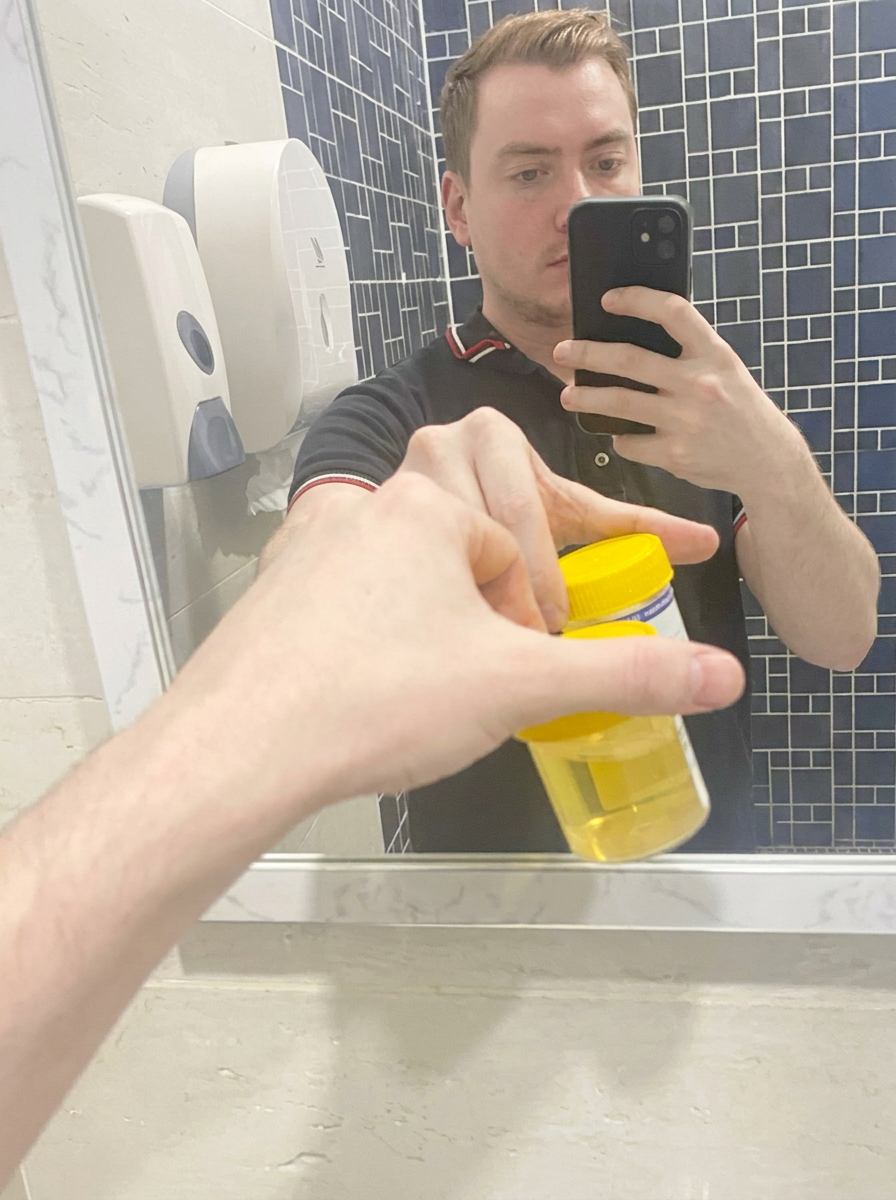
Ran for 2 days, from June 21 to June 23, 2026, the last day Crush saw it.
Run by James Hudson on Facebook. Crush is not the advertiser and does not verify its claims. See this ad in Meta's Ad Library(opens in a new tab)
Want an ad like this for your product?
Crush makes new ad images for your product from this ad: your logo, your product photo, your offer.
Trials from $19.95 USD, then $79.95 USD a month. Cancel anytime.
About this ad
- Meta Ad Library ID
- 4482603338688744
- Platforms
- Facebook, Instagram, Audience Network, Messenger and Threads
- Relaunches
- 2
- EU reach
- 26
Ad text
If you've tried Flomax, tried adding Avodart when Flomax stopped holding it, tried Proscar, tried Rapaflo, tried Cardura, tried Cialis daily 5mg for BPH, tried saw palmetto from the supplement aisle, tried pumpkin seed oil, tried stinging nettle tea, tried pygeum, tried the $2,000 men's health clinic prostate protocol, tried beta-sitosterol capsules, tried zinc and lycopene from the vitamin shop — and your nighttime trips are still climbing, your stream is still weakening, your prostate volume keeps growing on every ultrasound... I'm about to tell you exactly why every single one of those failed. And why they were always going to fail. And by the end of this, you're going to be furious. Because there are three things happening right now: One — Every treatment you've tried targeted your urethra, your prostate hormones, or one isolated nutrient your prostate uses. Not one of them touched the organ that's actually feeding the dysfunction. Which means not one of them could have worked. Not because you did anything wrong. Because they were aimed at the wrong target from the start. Two — The medical system has a protocol for an enlarged prostate. Alpha-blocker. 5-ARI. Combination therapy. Eventually a procedure — Rezum, UroLift, TURP. Each step more aggressive than the last. None of them ask why the previous step failed. None of them look upstream. None of them test the organ sitting two feet north of your prostate that's been running the dysfunction the entire time. Three — There's a multi-billion-dollar industry built around keeping you moving through that protocol. Because the day someone tells you the real answer, you stop needing all of it. And that day is not in their financial interest. So let me tell you what happened with my brother-in-law Mark, because his story is gonna open your eyes to how broken this really is. For THREE YEARS my brother-in-law Mark watched his prostate keep growing — and every doctor he saw treated his urethra or his hormones. He was diagnosed with NAFLD at 48. Non-alcoholic fatty liver disease, already showing inflammation on the ultrasound. His hepatologist told him to lose weight, eat clean, monitor. Standard protocol. Nothing about anything else. Eight months later the urinary symptoms started. At first it was small. He'd get up once a night when he used to sleep through. His stream wasn't quite what it used to be. Hesitancy at the urinal where there hadn't been any before. He chalked it up to age. He was 48. Then it got worse. The nighttime trips went from one to two to three. By the time he saw his primary care doctor he was getting up four times a night. The stream had weakened enough that he was standing at the toilet for thirty seconds before anything happened. The urgency hit out of nowhere — he'd be in a meeting and suddenly need a bathroom in the next four minutes. He started mapping his routes around bathroom access. The drive to his contracting job sites — fifty minutes each way — became a logistical problem. He went to a urologist. Prostate ultrasound showed 48cc — mildly enlarged. PSA 3.2. Post-void residual 78ml. "Mild to moderate BPH. Let's start you on tamsulosin." He got the prescription. Worked the first three weeks. Nighttime trips dropped from four to two. Then started creeping back up. He went back. Volume now 53cc. The urologist added finasteride 5mg. "This one shrinks the prostate. Six months to see the full effect." Six months later the volume was 56cc. It had grown. On the combination therapy. He went to a "men's health" clinic — one of the chains with the billboard. They sold him a six-month protocol for $2,200. Hormonal optimization, anti-inflammatory support, prostate "support" supplements. Volume went to 58cc. He went to a functional medicine doctor. "Inflammation. Estrogen dominance driving the prostate growth." Anti-inflammatory protocol. $180 a month. Six months. Volume 61cc. He tried saw palmetto from the supplement aisle. Pumpkin seed oil. Stinging nettle. Pygeum. Beta-sitosterol. A "complete prostate support" stack from one of the big brands at $90 a month for five months. Volume kept climbing. He saw a different urologist for a second opinion. "Your protocol is appropriate. If we can't hold it on dutasteride, we should discuss Rezum or UroLift in the next year." Five different specialists. Three years. Three prescriptions. One men's health clinic protocol. Six different supplements. A second opinion. And every six months when he saw his hepatologist for the NAFLD follow-up, his ALT kept climbing. 67. 74. 81. His FibroScan went from 7.2 to 8.4 to 9.6. Not one — NOT ONE — of his prostate workups ever included a liver function review. Not one of his liver workups ever asked about prostate symptoms. He called me from his car after his second-opinion urology appointment. The Rezum conversation had rattled him. "They're talking about steam ablation. They're talking about cutting tissue out of me. I'm forty-eight." The urinary symptoms had become the center of his daily life. He was planning every meeting around bathroom access. He'd stopped his morning runs because the urgency that hit out of nowhere was unmanageable without a bathroom within thirty seconds. He'd stopped going to his son's longer baseball tournaments — the kind that meant sitting in bleachers for four hours with one porta-potty. He left his daughter's college graduation early because he couldn't make it through the ceremony. He didn't tell anyone why. His sleep was destroyed. Three to four trips a night for two years. He was waking up at 5 AM exhausted and going to bed at 9 PM bracing for the night ahead. His wife had started using earplugs because the bathroom door opening four times a night was waking her up too. Between the prescriptions, the men's health clinic protocol, the urology co-pays, the supplements, the functional medicine protocol, the second opinion, and the imaging — he'd spent over $9,400 across three years. His prostate was bigger than when he started. His nighttime trips were back to four. His stream was weaker than before he started any medication. His PSA had climbed from 3.2 to 4.8. His ALT was 81 and climbing. And every specialist he saw was treating the part of him that wasn't broken at the source. At this point I'm not frustrated anymore. I'm angry. Because I'm watching my brother-in-law — a man who built a contracting business and raised three kids — slowly become a man whose entire life schedule revolves around bathroom access. While four different categories of specialist throw pills and procedures at the urethra and the prostate. While the actual organ feeding the dysfunction sits in his abdomen with elevated enzymes and a FibroScan score climbing and nobody on the prostate side of his care has even looked at it. Managing. The. Prostate. Not asking what's reaching the prostate tissue from upstream. Not asking what hormonal cascade is failing in the organ that regulates every sex hormone in his body. Not asking what inflammatory load is being dumped into his bloodstream and accumulating in the most hormonally responsive tissue in his male anatomy. And that's when I started asking the questions nobody wants you to ask: Why do urologists work up BPH without ever evaluating liver function? Why does a NAFLD diagnosis on the chart never trigger an inquiry about prostate symptoms — and a BPH complaint never trigger a liver workup? Why is the entire field of "prostate health" treated as if the prostate exists in isolation from the organ responsible for clearing estrogen, processing testosterone, producing the sex hormone binding globulin that regulates bioavailable hormones, filtering inflammatory cytokines, and managing the metabolic environment the prostate sits in? Why does every prostate supplement on the market target the prostate locally — when the upstream cause of accelerating BPH progression in a huge percentage of men is hepatic dysfunction? And why does NOBODY ever explain to a NAFLD patient that the same fatty liver impairing his liver function is also clearing his estrogen wrong, dumping inflammatory cytokines into his prostate tissue, and amplifying the entire BPH cascade — including the smooth muscle hypertrophy around his urethra — every day? So I went down a rabbit hole. A deep one. I started researching the connection between NAFLD, NASH, hepatic fibrosis, and prostate enlargement. Every mainstream medical site gave me the same recycled answer. "BPH is multifactorial. Age-related. Manage symptoms. Consider procedural options." Procedural options. While the published research was screaming the actual answer. Then I found a paper that changed everything. Not a blog. Not a wellness influencer. A peer-reviewed paper in The Journal of Urology cross-referenced with parallel papers in Hepatology and Prostate. And it laid out — in language so clear I couldn't believe nobody in three years of Mark's appointments had said it to his face — exactly how a fatty liver accelerates prostate enlargement. The hepato-prostatic axis. Now pause for a second. You know what's insane? Every conversation about an enlarged prostate focuses on the prostate. DHT. Smooth muscle. The urethra. The prostate tissue itself. That's the model. That's why every workup is a prostate workup. That's why every drug targets the prostate or the urethral muscle. That's why every supplement promises "smaller prostate" or "better flow." But nobody — and I mean NOBODY — in standard prostate care asks what the liver is doing to the system that drives prostate growth. What hormones it's clearing wrong. What inflammatory load it's adding. What estrogen it's failing to clear from male circulation. What sex hormone binding globulin it's mismanaging. What metabolic environment it's creating that the prostate tissue is sitting in for every minute of every day. And that's not an accident. Here's what I learned. Your liver is the master regulator of the entire male hormonal cascade. It clears estrogen from male circulation — and men who can't clear estrogen end up with relatively elevated estrogen that directly stimulates prostate tissue growth. Estrogen receptors exist in prostate tissue. When estrogen lingers in male circulation because the liver can't clear it efficiently, those receptors get activated continuously. Tissue grows. Independent of DHT. Independent of anything your 5-ARI is targeting. The liver also manufactures sex hormone binding globulin (SHBG). A fibrotic liver overproduces SHBG in some patterns and underproduces it in others — both of which dysregulate the testosterone-to-estrogen ratio inside the prostate tissue itself, and the testosterone-to-estrogen ratio is one of the primary regulators of whether prostate tissue stays in its normal size range or starts proliferating. The liver clears inflammatory cytokines that damage tissue when they accumulate. When the liver is fibrotic, those cytokines accumulate systemically — and the prostate, being one of the most hormonally and immunologically active tissues in the male body, accumulates them locally. Chronic prostatic inflammation drives smooth muscle hypertrophy around the urethra. The smooth muscle thickens. The urethra narrows. The stream weakens. The nighttime trips climb. Independent of any drug your urologist has prescribed. Every single one of those mechanisms feeds prostate enlargement. Now consider what happens when the liver is fibrotic. Hepatic fat accumulates. Stellate cells activate. Collagen production runs continuously through three pathways — TGF-β1, AMPK suppression, glutathione depletion. Scar tissue builds. Functional liver tissue is replaced. Hepatic capacity declines. But here's the part nobody told Mark. The first thing a fibrotic liver loses isn't its capacity to process alcohol or filter ammonia. The first thing it loses is its capacity to do the quiet maintenance work — the hormone clearance, the SHBG production, the inflammatory cytokine processing. The stuff that doesn't show up on any standard blood panel because nobody is testing for it. Subclinical hepatic dysfunction starts at F1 and F2. The ALT may only be in the 60s or 70s. The FibroScan may be 7 or 8. The hepatologist calls it "monitor and lose weight." Meanwhile: Estrogen clearance slows. Estrogen levels rise in male circulation. Estrogen receptors in prostate tissue get continuously activated. Glandular tissue expands. SHBG dysregulates. The testosterone-to-estrogen ratio inside the prostate destabilizes. The hormonal environment the prostate sits in becomes growth-favorable. Inflammatory cytokines accumulate. Prostatic inflammation rises. Smooth muscle hypertrophy around the urethra accelerates. Stream weakens. Nighttime trips increase. Urgency intensifies. 5-alpha reductase activity rises inside prostate tissue specifically — driven by the inflammatory environment the liver is no longer filtering. More DHT in the local prostate environment. More growth signal. Independent of any 5-ARI dose your urologist prescribes. Your prostate volume reads 58cc. "Moderate." But the actual driver of why it keeps climbing — your liver mismanaging the hormonal and inflammatory environment your prostate sits in — is never measured. Your urologist is treating the symptom of an upstream organ failure. The prostate enlargement cascade fails not at the prostate. It fails at the liver. And here's the critical part. The part that explains exactly why every prostate intervention Mark tried failed. Tamsulosin doesn't restore hepatic estrogen clearance. Finasteride doesn't normalize SHBG. Dutasteride doesn't filter inflammatory cytokines. Saw palmetto in isolation doesn't address the upstream hormonal mismanagement feeding the entire cascade. Cialis daily doesn't repair the liver tissue producing the dysfunction. The men's health clinic protocol doesn't deactivate the stellate cells dumping inflammatory load into his prostate every minute of every day. None of them address the upstream organ producing the dysfunction. You can suppress DHT systemically with a 5-ARI and the liver is still dumping estrogen, inflammatory cytokines, and dysregulated hormones into the prostate environment every minute of every day. The BPH workup is treating a downstream symptom. The actual mechanism is in the liver. And here is what enraged me most. The medical system knows this. The urology and hepatology literature has documented the hepato-prostatic connection for over two decades. NAFLD patients have measurably higher rates of accelerated BPH progression, larger prostate volumes for their age, and faster medication escalation patterns compared to matched controls without fatty liver disease. The mechanism is replicated. The connection is not contested. But the clinical protocol for BPH doesn't include a liver workup. The clinical protocol for NAFLD doesn't include prostate screening. The urologist doesn't ask about ALT. The hepatologist doesn't ask about nighttime trips. Because there's no pharmaceutical drug for hepato-prostatic dysfunction. You can't patent it. There's no money in telling a 48-year-old man with progressive BPH that his prostate isn't the source — that his liver is failing to do the quiet hormonal and inflammatory maintenance work — and that there's a category of compound the hepatology research has been documenting for decades that addresses the actual mechanism. There IS money in tamsulosin, daily, for life. Dutasteride, daily, for life. Cialis daily prescriptions. Annual urology workups. Quarterly PSA tests. Rezum at $5,000. UroLift at $8,000. TURP at $15,000. Specialist referrals across four different fields, each managing a piece of a problem nobody is treating at the source. See how that works? Run a prostate ultrasound. Treat the prostate. Add an alpha-blocker. Add a 5-ARI. Add daily Cialis. Suggest a procedure. Never test the organ that's producing the dysfunction. Never address the mechanism. Never resolve the cause — only manage the consequence. Because the second you deactivate the stellate cells producing the fibrosis, the liver starts doing its hormonal and inflammatory maintenance work again. Estrogen clears. SHBG normalizes. Inflammatory cytokines drop. The prostate stops sitting in a growth-favorable environment. The prostate stops growing. Not because something at the prostate got fixed. Because the upstream organ stopped feeding the cascade. That's what happened with Mark. But before I tell you that, I need to tell you what I found in the research. I kept digging. Reading hepatology journals. Urology journals. Research on TGF-β1 suppression and fibrosis reversal. Studies on hepatic estrogen metabolism and prostate tissue response. Clinical evidence on glutathione restoration and the hepatic contribution to systemic hormonal balance. And I found compounds that kept appearing — not in prostate supplement marketing, in peer-reviewed research — as specific interventions for stellate cell-driven liver dysfunction that was producing downstream hormonal and inflammatory failure. Silybin-phosphatidylcholine complex. Not standard milk thistle. Not the silymarin extract in any "liver support" supplement Mark had ever passed on the shelf. The specific fat-soluble form of silybin wrapped in a phospholipid carrier that crosses into hepatocyte membranes and reaches stellate cells at concentrations that actually affect TGF-β signaling. When silybin at this form and concentration reaches stellate cells — TGF-β1 signaling drops. Collagen production slows. Existing scar tissue becomes available for remodeling. The liver's hormonal and inflammatory maintenance capacity begins to recover. Simultaneously — as berberine activates the AMPK pathway, resveratrol suppresses TGF-β1 at the master signal level, and ALA restores intracellular glutathione — the four pathways underlying fibrosis collapse together. And as the liver recovers, the hormonal environment downstream changes. Estrogen clears at a normal rate. SHBG normalizes. The testosterone-to-estrogen ratio inside the prostate normalizes. Inflammatory cytokines drop. The local 5-alpha reductase amplification eases. The smooth muscle hypertrophy around the urethra stops being driven. The prostate — which was never overgrowing because of "age" — stops being fed by the upstream cascade. The growth slows. On serial ultrasound, the volume often reduces. Mark tried to find a formula that matched what the research actually described. First: the highest-rated liver supplement on Amazon. Thousands of reviews. 4.7 stars. Eight weeks. Nothing changed. Looked at the label: milk thistle at 250mg standard extract. No silybin concentration listed. No berberine. No resveratrol. Fairy dust with good reviews. Second: a "men's vitality" formula at $95 a month. Marketed as supporting "hormonal balance and prostate health." Ten weeks. Nothing. Looked at the label: tribulus, fenugreek, zinc, milk thistle 200mg (no standardization), proprietary blend obscuring the actual doses. No silybin in the phosphatidylcholine complex. No berberine. No resveratrol. He went back to the research. Read the methodology. The studies showing stellate cell deactivation and downstream hormonal normalization used silybin-phosphatidylcholine complex at 94% concentration — 376mg silybin daily. The phosphatidylcholine isn't an add-on. It's the carrier molecule that wraps the silybin and allows it to cross the hepatocyte membrane. Without it, silybin doesn't reach stellate cells at therapeutic concentration. It doesn't matter how many milligrams are in the capsule. He flipped over both bottles. No phosphatidylcholine complex listed on either. No concentration ratio. No standardization to active compound content. He'd been taking the wrong form at the wrong concentration with no absorption support and two of the four pathway mechanisms missing entirely. Not because the research was wrong. Because what was on the supplement shelf wasn't what the research used. Then I found a thread in a men's health forum that stopped me completely. A guy wrote: "I had a NAFLD diagnosis at 51 and progressive BPH that nobody connected to it for four years. Three urologists. Combination therapy. Procedure conversation starting. None of it stopped my prostate from growing because none of it addressed my liver. Then I started researching the hepato-prostatic axis. The liver wasn't a separate issue — it was the source. I found a formula that addressed the stellate cell deactivation pathways simultaneously. Six months in: prostate volume down 11cc. Stream stronger than it had been in five years. Nighttime trips from four to one. My urologist asked me what I'd changed." I froze. He continued: "The prostate workup never finds the liver. That's why every guy in this forum has the same story. Years of pills, years of medication escalation, years of urology. Nobody addresses the organ feeding the dysfunction. When I finally addressed the liver, everything came back." The replies: "NAFLD diagnosis at 49. BPH started at 47. Three years of tamsulosin then dutasteride. Volume kept climbing on the medications. Six months on this formula: prostate volume down 8cc on ultrasound, nighttime trips from three to one, off dutasteride entirely. The liver was the answer the whole time." "Lost 18 pounds, ALT down from 82 to 38, FibroScan from 9.4 to 6.8, and my prostate volume regressed for the first time in six years of monitoring. My urologist couldn't explain it." "Two years of urology workups, Rezum recommended, no other answer. Started this. Three months: volume down, flow rate up, post-void residual normal. Procedure cancelled. The liver was the answer the entire time." "Stream is finally strong. I'd forgotten what it felt like to actually empty in one go. The nighttime trips dropped from four to one inside six weeks. I'm sleeping through the night for the first time since I was 45." My hands were shaking. Someone listed the formula: Milk thistle as silybin-phosphatidylcholine complex at 94% concentration — crosses hepatocyte membranes, deactivates stellate cell TGF-β signaling, restores liver capacity for hormonal clearance and inflammatory filtering that the entire male hormonal cascade and prostate environment depend on Berberine 500mg — activates AMPK, stops stellate cell proliferation, restores hepatic insulin sensitivity that drives the inflammatory environment damaging prostate tissue Resveratrol 200mg — suppresses TGF-β1 at the master signal level; documented anti-inflammatory benefits in addition to hepatic action ALA 600mg — regenerates intracellular glutathione; supports hepatocyte regeneration; restores systemic antioxidant capacity that prostate tissue depends on Green Tea EGCG 400mg — inhibits stellate cell proliferation through a separate pathway; additive alongside berberine and resveratrol Zinc at clinical dose — cofactor for 300+ liver enzymes including those in hormone metabolism; deficiency directly impairs both hepatic function and prostate cellular regulation BioPerine 10mg — without this, fat-soluble compounds don't reach hepatocytes at therapeutic concentration; most formulas skip it because it costs more Third-party tested. Made in the USA. Certificate of analysis published. Every ingredient listed with exact amounts. No proprietary blends. "How do you know it's working before the bloodwork?" someone asked. "Week two: nighttime trips start dropping — inflammation reducing in the smooth muscle around the urethra. Week three: ALT starts dropping — hepatocytes regenerating. Week four: stream noticeably stronger. Week six: morning urination feels complete for the first time in years — full hepatic and prostate environment recovery layering in. Week twelve: bloodwork and ultrasound reflect what you already know. ALT down. FibroScan moving. Prostate volume reduced." The brand was Boostiva. I ordered it for Mark that night. After two weeks? He texted me at 6:30 in the morning. "Got up once last night. ONCE." He hadn't done that in two years. After four weeks? His nighttime trips were averaging once. His stream was visibly stronger. He called me on a Monday afternoon from his car. "Something's changing. I don't know what. But something's different." After six weeks? He went back to his urologist for a scheduled follow-up. Post-void residual: 38ml. Down from 92ml. Flow rate: 18 ml/s. Up from 11 ml/s. His urologist asked what he was doing. After eight weeks? ALT 41. Down from 81. His prostate had stopped feeling like the center of his daily schedule. He sat through his daughter's full graduation ceremony — three hours, no bathroom break. First time in two years. After twelve weeks? Full panel and a FibroScan and a repeat prostate ultrasound. FibroScan: 6.8 kPa. Down from 9.6. ALT 38. Down from 81. Normal. Prostate volume: 52cc. Down from 61cc at his highest reading. Nine cc smaller. The first reduction in three years of measurements. PSA: 3.4. Down from 4.8. Post-void residual: 18ml. Normal range. Flow rate: 22 ml/s. Normal range. Nighttime trips: one. Often zero. In twelve weeks — without escalating any medication, without a procedure — his liver had regressed two stages and his prostate had regressed nine cc. His urologist looked at the results. "This is... unusual. Prostate volume reduction like this without dutasteride escalation — I want to understand what changed." "I treated my liver," Mark said. "My prostate was never the source. My liver was failing to clear estrogen, dysregulating SHBG, and dumping inflammatory cytokines into my prostate tissue every day. The minute the liver started working again, everything downstream came back into line." "What did you do for your liver?" "Silybin-phosphatidylcholine complex. Berberine. Resveratrol. ALA. The compounds that deactivate the stellate cells producing the fibrosis. It's in the hepatology and urology literature. Nobody prescribes it because it can't be patented." Silence. "Whatever you're doing — continue. Let's hold off on increasing your dutasteride. I'd like to recheck you in six months." Continue. Not three more years of escalating BPH medications while the liver kept feeding the cascade. Not a Rezum procedure. Not a UroLift. Not the conversation about TURP. Continue — because the actual mechanism was finally being treated. Now here's what I need you to understand. Stellate cell activation doesn't wait for you to figure this out. Every month those cells keep running — producing collagen, building scar tissue, reducing your liver's hormonal and inflammatory maintenance capacity — your estrogen lingers longer in male circulation. Your SHBG dysregulates more. Your prostate sits in a more hormonally distorted, more inflammatory environment every month. Your prostate volume climbs. Your nighttime trips climb. Your medication dose climbs. Your procedure conversation moves closer. And here's the metabolic part that should stop every man reading this cold. Accelerating BPH in middle-aged men is the canary in the coal mine for the broader hormonal and metabolic deterioration that follows untreated hepatic dysfunction. The same liver mismanagement that's enlarging your prostate is dysregulating your testosterone, dumping inflammatory load into your cardiovascular system, accelerating insulin resistance, and creating the metabolic environment for the long list of downstream consequences NAFLD patients quietly develop over the next decade. Your prostate is telling you the truth. The medical system is selling you a drug that masks what it's saying while the upstream organ keeps deteriorating. So if you're dealing with ANY of this — BPH that started in your 40s or 50s, climbing nighttime trips, weakening stream, prostate volume that keeps growing on the medications, plus elevated liver enzymes on bloodwork or a NAFLD/NASH diagnosis on your chart — this is the time. Not next year when the dutasteride isn't holding it. Not when your urologist starts talking about Rezum. Not when the same hepatic dysfunction that's been feeding your prostate for five years finally shows up somewhere more serious. Right now. The brand is Boostiva. Silybin-phosphatidylcholine complex at 94% concentration. Berberine 500mg. Resveratrol 200mg. ALA 600mg. Green Tea EGCG 400mg. Zinc at clinical dose. BioPerine 10mg for absorption. Every ingredient listed with exact amounts. Third-party tested. Made in the USA. No proprietary blends. No hidden doses. 60-day money-back guarantee. Run your bloodwork. Track your nighttime trips. Track your stream. If your ALT doesn't drop, your prostate volume doesn't stop climbing, and your urinary symptoms don't ease — you pay nothing. Mark spent $9,400 on tamsulosin, finasteride, dutasteride, urology workups, the men's health clinic, supplements, the second opinion, and the imaging across three years while his prostate kept growing. Then he addressed the organ that was actually feeding the dysfunction — and in twelve weeks his prostate regressed for the first time in three years of measurements. His prostate was never the broken organ. It was the downstream consequence of a broken organ. Fix the upstream one, and the rest comes back into line. 👉 https://boostiva.com/products/liposomal-nad-for-men-1
Where the ad sends people
boostiva.com
The Most Potent Formula Ever Created
🔥 Boostiva Liposomal NAD+ for Men — Revive Your Energy, Focus & Vitality Unlock your peak performance with Boostiva Liposomal NAD+ for Men — the advanced men’s wellness formula engineered to support real energy, strong circulation, hormonal balance, stamina, and overall vitality as you ...
Shop now: boostiva.com(opens in a new tab)