Will to Heal LLC
Will to Heal LLC Facebook ad: “Control vs. Safety (Part 2)”
Ran for 7 days, from May 24 to May 30, 2026, the last day Crush saw it.
Run by Will to Heal LLC on Facebook. Crush is not the advertiser and does not verify its claims. See this ad in Meta's Ad Library(opens in a new tab)
Want an ad like this for your product?
Crush makes new ad images for your product from this ad: your logo, your product photo, your offer.
Trials from $19.95 USD, then $79.95 USD a month. Cancel anytime.
About this ad
- Meta Ad Library ID
- 4532703340295419
- Platforms
- Relaunches
- 0
- EU reach
- 63
Ad text
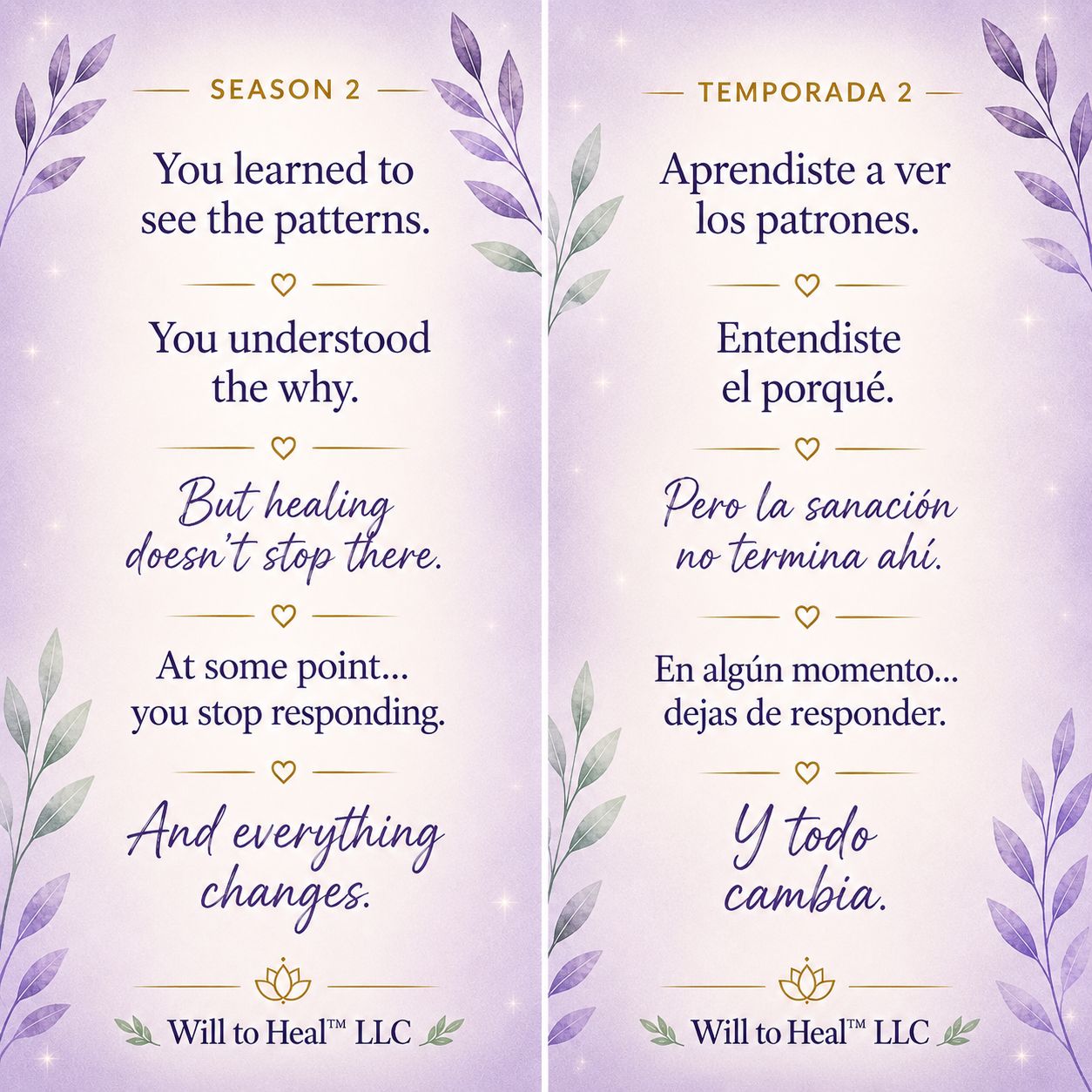
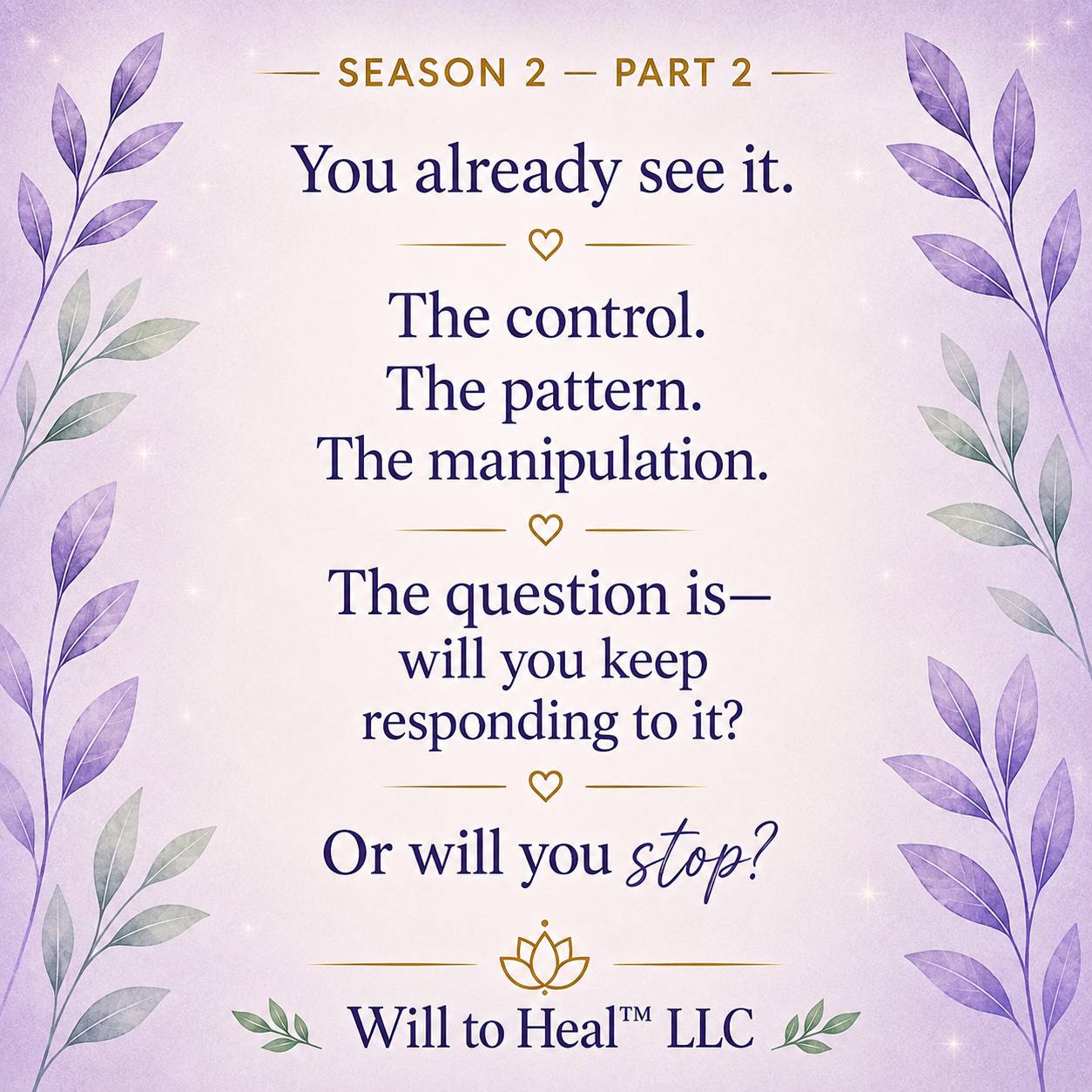
Control vs. Safety (Part 2) by Jaymie Wright Deese, MS (Spanish translation following English) There comes a point in healing where you stop trying to understand people even though you finally can. You see the patterns. The control. The manipulation. The why behind it. And for a while, that awareness feels powerful. Until one day it doesn’t matter anymore. Not because you’re ignoring it. But because you no longer feel responsible for responding to it. That’s the difference between control and safety. This doesn’t apply to every co-parenting relationship. But if you’re in a high-conflict dynamic, you already know the difference. And depending on your child’s age, this may look different in practice. But the responsibility should never fall on the child to manage the relationship. In high-conflict co-parenting this doesn’t always look obvious. It sounds like: “You’re almost an adult. You can tell me what you want.” Not empowerment. Shifting responsibility onto the child. It looks like: Expecting the child to be the one to reach out to maintain the relationship Not connection. Emotional responsibility placed on the child. But let’s be clear about something. Not placing emotional responsibility on your child does not mean you stop facilitating the relationship. It means the responsibility stays with you. That can look like: “Do you want to send them a picture of that?” “Do you want to tell them about your day?” Or simply: “Today is call night.” Not pressure. Not guilt. Not emotional weight. Just consistent opportunity. Because there’s a difference between: supporting the relationship and making your child responsible for it. And your child should never have to carry what belongs to the adults. It looks like: Showing them a life a place an experience and saying: “Wouldn’t it be nice if you could be here?” Not an invitation. A comparison. It sounds like: “Well, you can do that with them… but not with me.” Not fairness. Guilt. That’s manipulation. That’s triangulation. That’s projection. And this is where most people get stuck. Because you see it. You recognize it. But you still respond to it. So let’s make this simple. You do not correct it. You do not explain it. You do not defend against it. You change how you respond. When you hear: “You can decide what you want.” You don’t pull your child into the middle. You say: “Adult decisions stay with the adults.” When you see: the child being made responsible for maintaining the relationship You don’t reinforce it. You say: “That’s not their responsibility.” When you see: comparisons pressure “wouldn’t it be nice if…” You don’t compete. You don’t engage. You say: nothing or “We’re not doing that.” When guilt is used: “Well you can do it with them but not with me…” You don’t justify. You say: “That’s the decision.” Safety is not created by winning the conversation. It’s created by ending the pattern. And patterns only continue when they get a response. As a parent, this matters more than anything. Because your child is not learning from what you say. They are learning from: what you engage with what you tolerate what you walk away from And when they watch you stay grounded without reacting that’s where safety begins. But this is where it gets harder. Because for many parents, the struggle isn’t seeing the pattern. It’s what comes up when you stop participating in it. The guilt. The shame. The questions about what kind of parent that makes you. That’s where we’re going next. Conscious Parenting Season 2, Part 3: Guilt, Shame, and Identity as a Parent If this resonated with you, follow along for what comes next. Because understanding the pattern is one thing. Learning how to hold your ground inside of it is everything. Will to Heal™ LLC El control vs. la seguridad (Parte 2) por Jaymie Wright Deese, MS Llega un momento en la sanación en el que dejas de intentar entender a las personas aunque finalmente puedas hacerlo. Ves los patrones. El control. La manipulación. El porqué detrás de todo. Y por un tiempo, esa conciencia se siente poderosa. Hasta que un día deja de importar. No porque lo estés ignorando. Sino porque ya no te sientes responsable de responder a ello. Esa es la diferencia entre el control y la seguridad. Esto no aplica a todas las relaciones de coparentalidad. Pero si estás en una dinámica de alto conflicto, ya conoces la diferencia. Y dependiendo de la edad de tu hijo, esto puede verse diferente en la práctica. Pero la responsabilidad nunca debe recaer en el niño para gestionar la relación. En la coparentalidad de alto conflicto esto no siempre se ve de forma evidente. Suena como: “Ya casi eres un adulto. Puedes decirme lo que quieres.” No es empoderamiento. Es trasladar la responsabilidad al niño. Se ve como: Esperar que el niño sea quien inicie el contacto para mantener la relación No es conexión. Es responsabilidad emocional puesta en el niño. Pero dejemos algo claro. No poner la responsabilidad emocional en tu hijo no significa que dejes de facilitar la relación. Significa que la responsabilidad sigue siendo tuya. Eso puede verse como: “¿Quieres enviarle una foto de eso?” “¿Quieres contarle sobre tu día?” O simplemente: “Hoy es día de llamada.” Sin presión. Sin culpa. Sin carga emocional. Solo oportunidad constante. Porque hay una diferencia entre: apoyar la relación y hacer responsable al niño de ella. Y tu hijo nunca debe cargar con lo que corresponde a los adultos. Se ve como: Mostrarles una vida un lugar una experiencia y decir: “¿No sería bonito si pudieras estar aquí?” No es una invitación. Es una comparación. Suena como: “Bueno, puedes hacerlo con ellos… pero no conmigo.” No es equidad. Es culpa. Eso es manipulación. Eso es triangulación. Eso es proyección. Y aquí es donde la mayoría se queda atrapada. Porque lo ves. Lo reconoces. Pero sigues respondiendo a ello. Así que hagámoslo simple. No lo corriges. No lo explicas. No te defiendes de ello. Cambias la forma en que respondes. Cuando escuchas: “Puedes decidir lo que quieres.” No pones a tu hijo en el medio. Dices: “Las decisiones de adultos se quedan con los adultos.” Cuando ves: que el niño está siendo responsable de mantener la relación No lo refuerzas. Dices: “Esa no es su responsabilidad.” Cuando ves: comparaciones presión “¿no sería bonito si…?” No compites. No participas. Dices: nada o “No vamos a hacer eso.” Cuando se usa la culpa: “Puedes hacerlo con ellos, pero no conmigo…” No justificas. Dices: “Esa es la decisión.” La seguridad no se crea ganando la conversación. Se crea terminando el patrón. Y los patrones solo continúan cuando reciben una respuesta. Como padre, esto importa más que nada. Porque tu hijo no aprende de lo que dices. Aprende de: lo que aceptas lo que toleras de lo que te alejas Y cuando te ven mantenerte firme sin reaccionar ahí es donde comienza la seguridad. Pero aquí es donde se vuelve más difícil. Porque para muchos padres, la lucha no es ver el patrón. Es lo que surge cuando dejas de participar en él. La culpa. La vergüenza. Las preguntas sobre qué tipo de padre eso te hace. Ahí es donde vamos después. Crianza Consciente Temporada 2, Parte 3: Culpa, Vergüenza e Identidad como Padre Si esto resonó contigo, sigue el contenido para lo que viene. Porque entender el patrón es una cosa. Aprender a mantenerte firme dentro de él lo es todo. Will to Heal™ LLC