
Inactive· since Aug 4, 2026
- 7
- days it ran
- 0
- relaunches
Ad copy
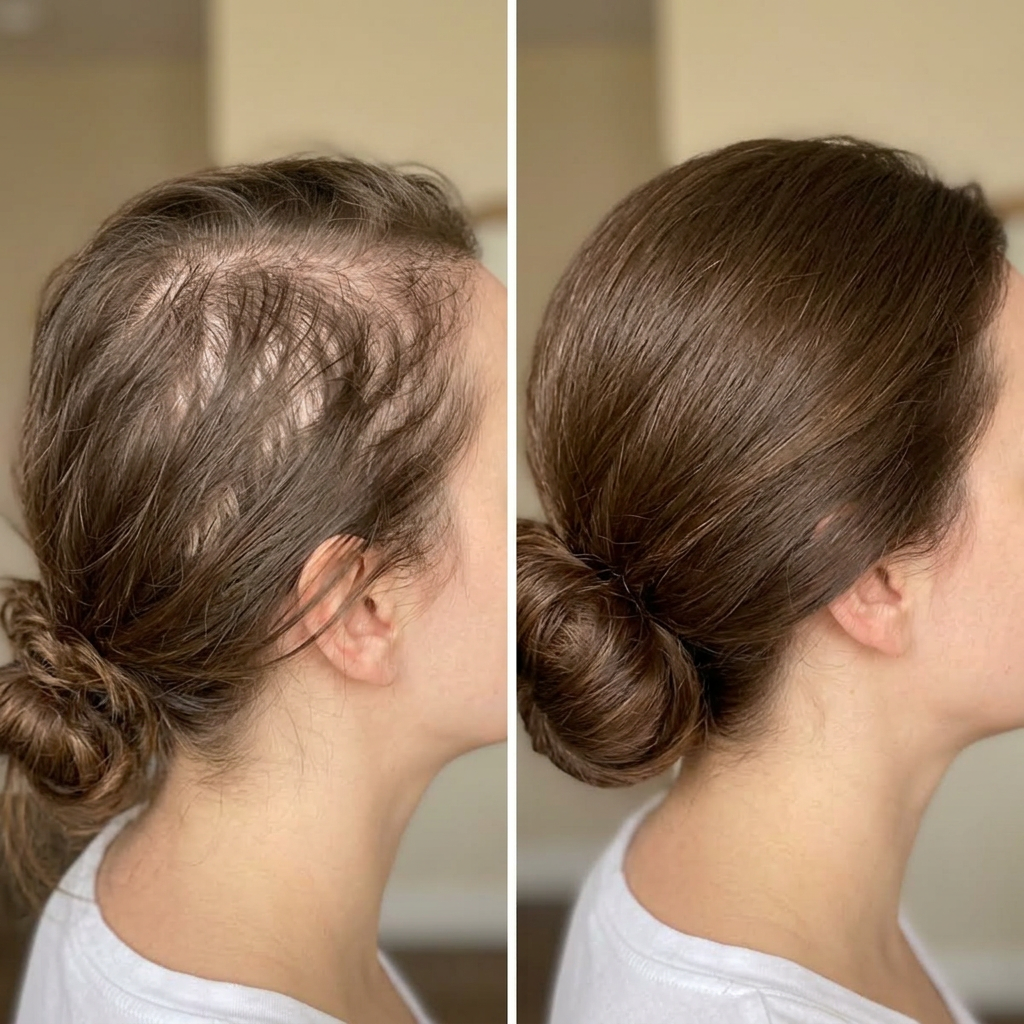
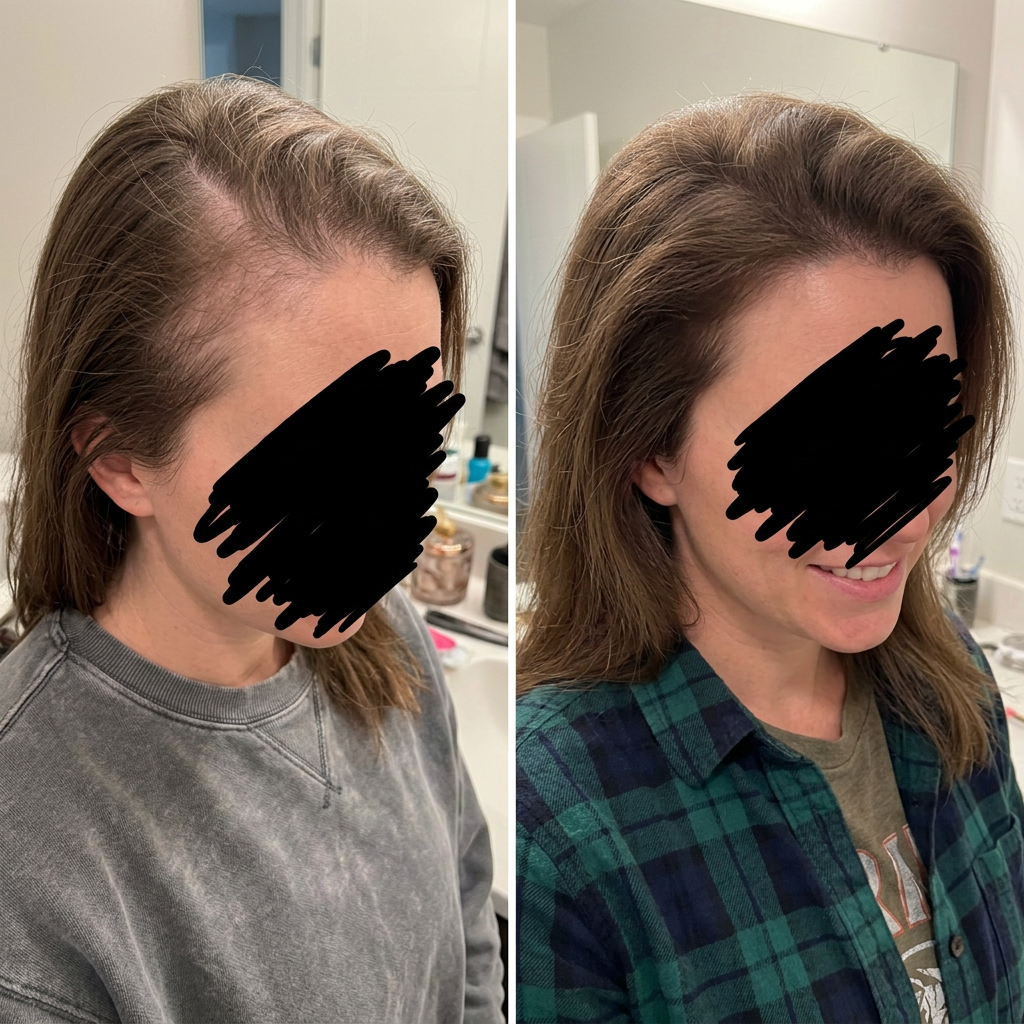
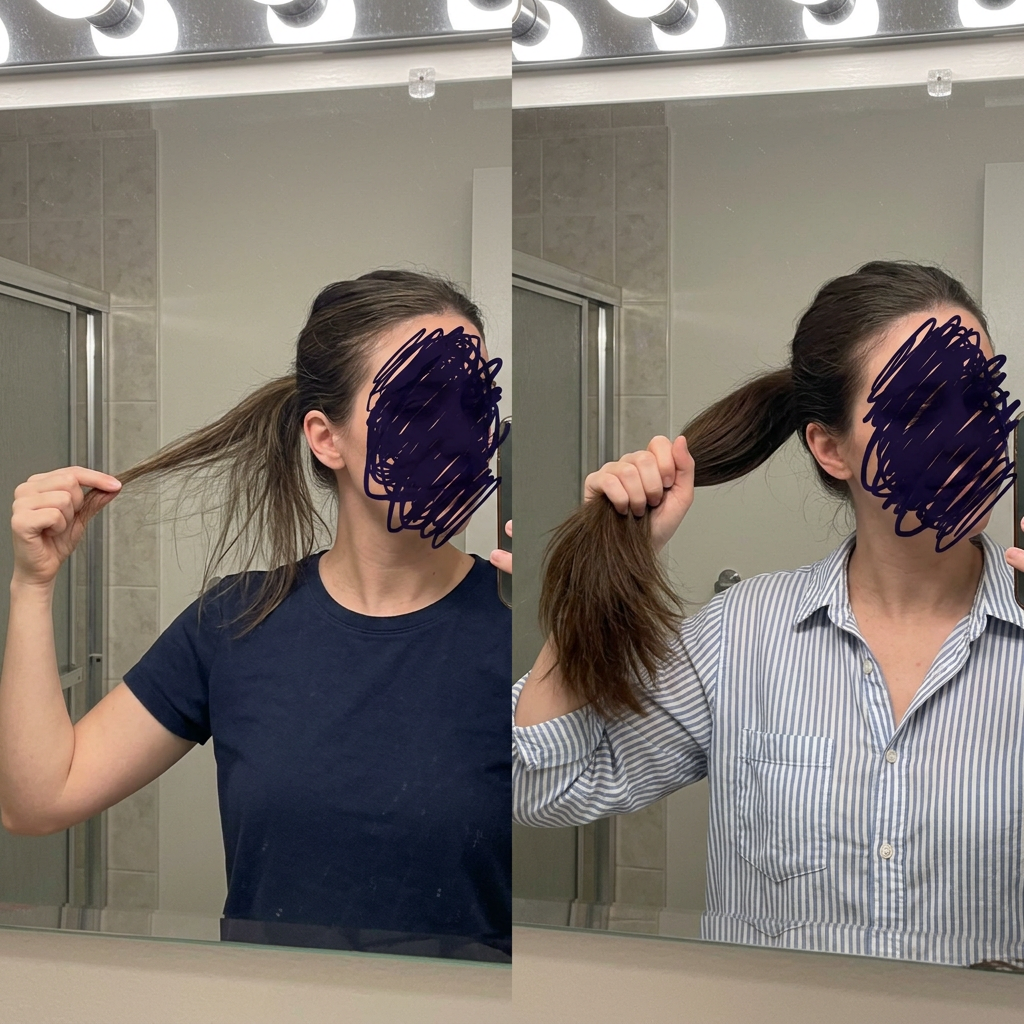
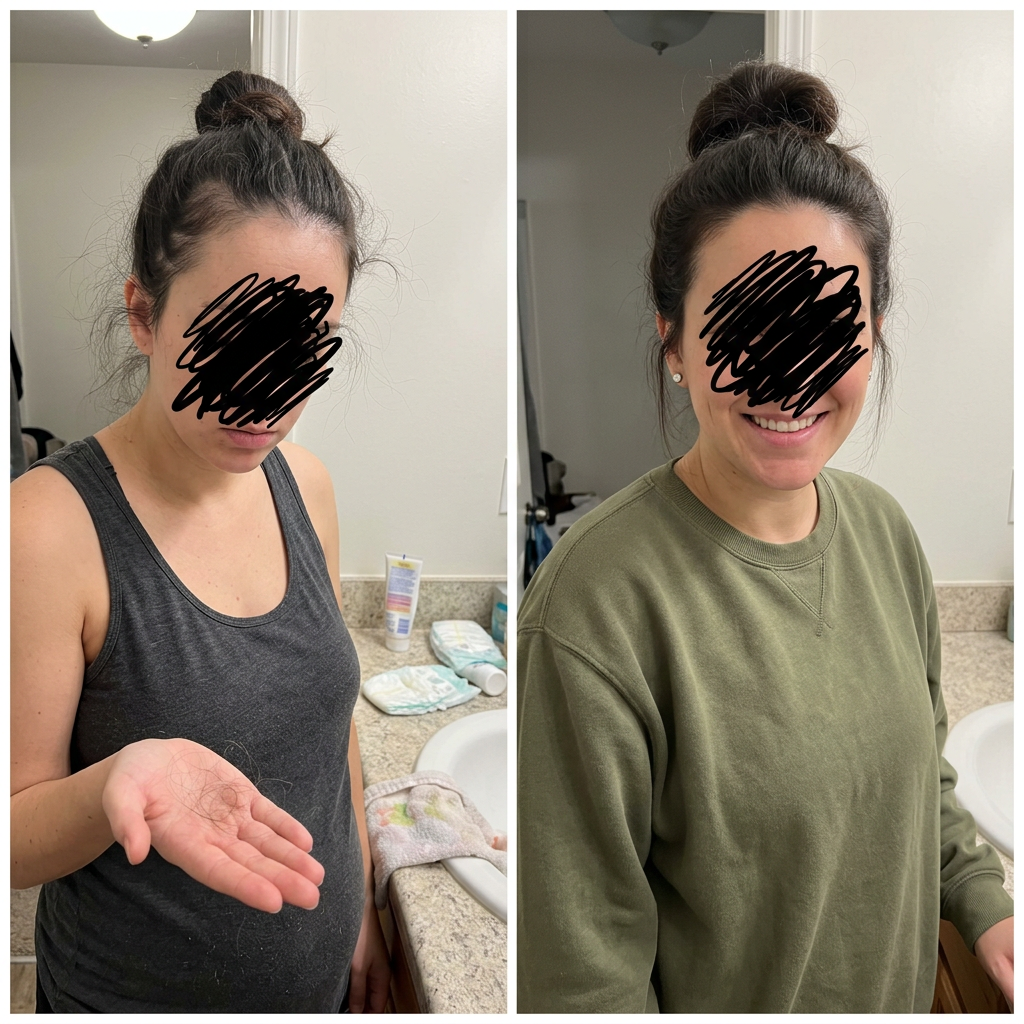
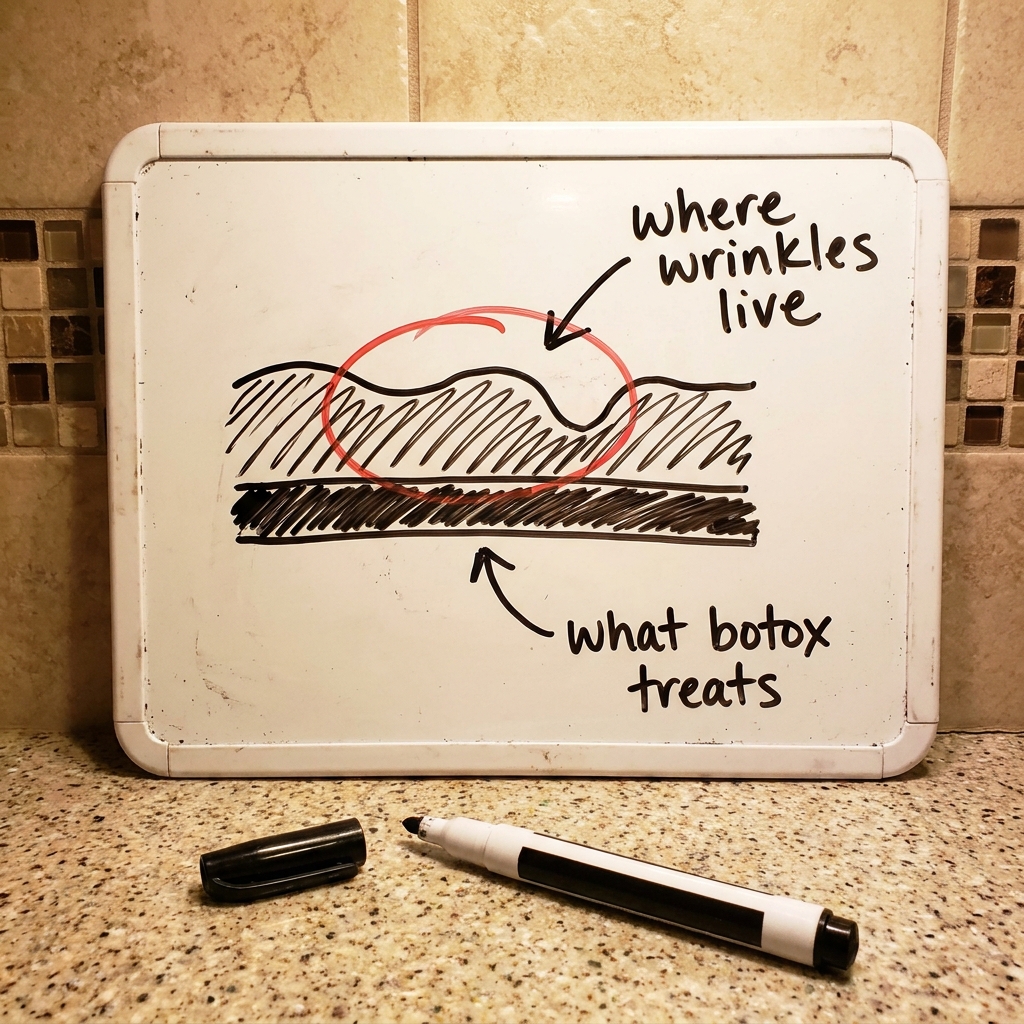
Please STOP booking your next Botox appointment until you've heard what I found in a 1987 pharmacology textbook. It cost me two dollars. It ended a three-year habit that was costing me two thousand a year. I know how that sounds. Stay with me, because I promise you the textbook part is real, and I can tell you the page. I'm Susan. I'm 43. I live in Madison, Wisconsin, with my husband Paul and our twin boys. I teach tenth grade biology. Nineteen years in the same classroom. Every spring, somewhere around March, I teach the integumentary system. That's skin, to normal people. I draw the same diagram on the board that I've drawn nineteen times: epidermis, dermis, the collagen mesh that holds it all up, the sebaceous glands that oil it, and underneath all of it, separate, the muscle. I can draw a sebaceous gland from memory. I was also freezing my forehead with Botox every twelve weeks. Both of those things were true about me for three years, and the fact that I never once put them next to each other is the most embarrassing part of this story, and I'm telling it anyway, because if it happened to a biology teacher it is definitely happening to you. I started at 40. Not for a dramatic reason. I had my mother's two vertical lines between my eyebrows, and a coworker had a girl, and the med spa was next to the good coffee place. $500 a visit, every three months, like a quarterly tax on my face. Twelve visits over three years. Six thousand dollars. And look, it did what it says. The lines went quiet. I looked rested in yearbook photos. But here's what teaching teenagers for nineteen years gives you: an audience with no filter. Sophomores do not pretend. Somewhere in year two, I overheard a kid in my third period explain to his lab partner, with total scientific neutrality, that "Ms. K only moves the bottom half of her face." He wasn't being cruel. He was being observant. I'd have given him full marks. I laughed about it in the moment. Then I went home and stood in the bathroom and tried to look surprised, and watched a woman attempt surprise with her chin. I should mention the science department, because the science department is its own study. Four women, all of us between 38 and 55, and at any given lunch there are two tubes of prescription retinoid in the room and at least one fresh forehead nobody comments on. Karen, who teaches chemistry, once gave us an unsolicited eight-minute lecture on retinoid conversion rates, tretinoin versus retinal, while icing her lip filler. Chemistry teachers are not immune. Nobody is immune. We are women who can balance redox equations and we were all quietly paying rent on our own faces. And here's the detail I keep returning to: we all knew the word retinoid means vitamin A. We SAY it to students. Not one of us ever asked the next question, which is: what is the delivery vehicle our skin actually evolved to take its vitamin A in? Spoiler: it is not a $90 serum with a pump. The cycle part you either know or you don't: around week ten the freeze thins out, the lines start seeping back, and you feel this low dread until the next appointment, like a lease coming due. I never felt done. I felt maintained. There's a difference, and you know exactly what I mean if you're in it. Now the bookstore. Paul and I have a Saturday routine: farmers market, then the used bookstore on Monroe Street while he gets the good coffee. I collect old science books. The illustrations, mostly. It is exactly as cool a hobby as it sounds. Last November I pulled a fat, water-stained pharmacology textbook out of the two-dollar bin. 1987. The kind of book with a library smell you can feel in your teeth. I bought it for the anatomical plates. Paul looked at it in the car and said, "You have a problem." Correct. I have a problem and it was about to pay for itself better than any book I've ever bought, including the ones that got me my teaching license. I read it in bed like a lunatic, because see above, and somewhere in the middle there's a long, dry chapter on ointment bases. The stuff medicine gets mixed into before you spread it on skin. And there, in a 1987 textbook, in a numbered table, was rendered animal fat. Tallow. Listed as a standard base for skin preparations. Not as folklore. Not as a wellness trend. As pharmacy. The text underneath explained why, in one sentence I have now read out loud to my husband, my sister, and one very patient waitress: animal fats were valued as skin preparations because their fatty acid composition closely resembles that of human sebum. Sebum. The oil your own skin makes. The thing I draw a gland producing, on a whiteboard, every March. I sat up in bed. Paul asked what was wrong. What was wrong was that I suddenly understood my own forehead, and it had taken a two-dollar book from the year I was in elementary school. Follow the logic with me, because it's short, and it's the whole thing: Wrinkles live in the skin. The skin is a tissue that constantly rebuilds itself, and to do it, it needs materials: fats that match its own, and the fat-soluble vitamins, A, D, E, K, that collagen production runs on. You already know vitamin A matters because the entire skincare industry sells you retinoids, which are vitamin A derivatives, at ninety dollars an ounce. Botox does not touch any of that. It goes underneath the skin and paralyzes the muscle so the skin stops getting folded. That's it. That's the entire mechanism. The skin itself, the wrinkled thing, the depleted thing, the thing that has been asking for materials since I turned 40, gets nothing. I teach this. The layers are separate. The injection treats the bottom layer. The problem lives in the top one. I drew it on the twins' homework whiteboard at the kitchen counter that weekend, the same diagram I draw for sophomores, and I looked at it for a while, and then I called and cancelled my January appointment, and Paul, who had not been consulted, applauded from the couch like I'd landed a plane. Where do you buy pharmacy-grade beef fat for your face in the year 2026? Not at the med spa, I'll tell you that. Old pharmacies rendered their own. What I found instead, after a week of reading labels online with my teacher glasses on, was a small company called Based Supplies that makes a Tallow & Honey Balm the way the old formulations read: grass-fed and grass-finished tallow, raw honey, beeswax, cold-pressed olive oil. That's the entire ingredient list of the fragrance-free one. Four things. A little 2-ounce glass jar with a metal lid, $30, with a 30-day money-back guarantee. Thirty dollars against the five hundred I'd just declined to spend was not a hard risk assessment. I set the experiment up the way I'd want it run: same window, same Sunday morning light, one photo a week, no conclusions before week four. No peeking at day three and declaring an outcome, which is the exact error I mark sophomores down for every single year, and which I still almost committed by day five. What happened next, graded honestly, the way I'd grade a lab report: Week 1: hydration only. Dramatic hydration, my skin drank it and the tight 4 p.m. papery feeling I'd had for years disappeared, but the lines themselves: unchanged. Hypothesis not yet supported. Week 2 to 3: makeup stopped collecting in the two vertical lines by lunch. First observable data point. I told no one and kept measuring. Week 5: the horizontal creases read as lines now instead of grooves. Softer at the edges. Present, honest, moving when my face moves and settling back after, which frozen skin does not do and which I had forgotten my face could do. Week 8: Paul, unprompted, at the sink: "Your forehead looks like it did in the camping photos." The camping photos are from 2019. That is a peer-reviewed result as far as I'm concerned. And in June, the honest capstone: a girl in my fourth period, packing up on one of the last days, said, "Ms. K, you look less tired than you did at the start of the year." Teenagers are a brutal instrument, but they are calibrated. That one sentence outweighed every compliment I ever got in the frozen years, because she wasn't reacting to smoothness. She was reacting to a face that was participating. There was also March. I taught the integumentary system in March, like I have nineteen times. Drew the diagram: epidermis, dermis, collagen mesh, sebaceous gland, muscle underneath, separate. And for the first time in three years I drew it as a person with no professional conflict of interest, and when I got to the sebaceous gland I heard myself telling thirty sophomores, with real feeling: "This gland is making something your skin is designed around. Remember that when the internet tries to sell you things." A kid in the back asked why I was smiling. I said the gland was my favorite gland. It went in the class quote board. I stand by it. It has been seven months. My lines are not gone. I want to say that in my clear teacher voice: I am 43 and I have a 43-year-old forehead, and when I raise my eyebrows, which I can do, all the way, it folds and then it settles. The folds are shallower than they were in November by a margin I can see in my photos. The skin around them stopped looking thirsty. That's the result. Managed, fed, mine. Not erased. And I can't promise your skin runs my timeline. Some women see the turn in two weeks, some need ten, and biology being biology, somebody sees nothing, which is what a money-back guarantee is for. Run it like a lab: photo on day one, photo on day 30, and let your own data decide. But I'll leave you with the part that actually made me angry, standing in my kitchen with a 1987 textbook. None of this is new. Tallow salves were standard skin pharmacy for most of recorded medicine, in the textbooks, in the numbered tables, until they were replaced by petroleum bases that were cheaper to make and easier to shelve. Not better for skin. Better for margins. Two generations later, the same industry that quietly dropped the thing that matched your sebum is charging you $500 a quarter to paralyze a muscle and $90 an ounce for synthetic vitamin A. Your skin never stopped needing the materials. Everyone just stopped selling them to you. The jar I use is the Tallow & Honey Balm from Based Supplies. Small family company, small batches, they sell out and restock. That's the whole plug. Susan P.S. Timeline again, because I hate vague testimonials: week 1 hydration only, weeks 2-3 makeup stopped sinking into the lines, week 5 visibly softer, week 8 the camping-photos comment. Take the day-one photo. You will not trust your memory, and you shouldn't; memory is a terrible instrument. P.P.S. For the person who will ask: the textbook is a 1987 clinical pharmacology text, the ointment-bases chapter, the table of fatty bases. I photographed the page and it is, at this moment, the lock screen on my phone, over the objections of my entire family. P.P.P.S. I get the fragrance-free jar because I react to essential oils. Same four ingredients I listed, nothing else. If your skin is reactive like mine, that's the one.
Like this ad? Make it yours.
Crush rebuilds this exact creative around your product — your brand, your colors, your offer — in about a minute.