
Active· since Apr 7, 2026
- 161
- days running
- 0
- relaunches
Ad copy
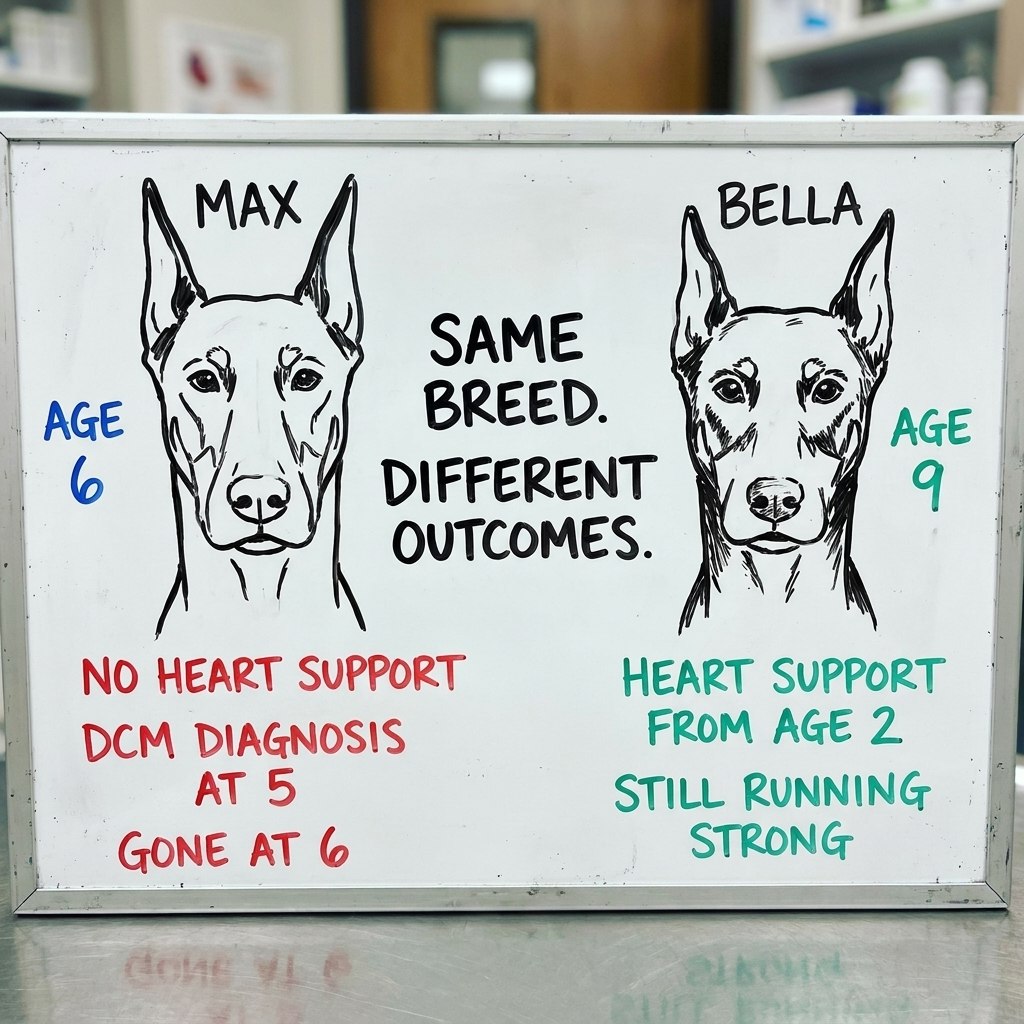
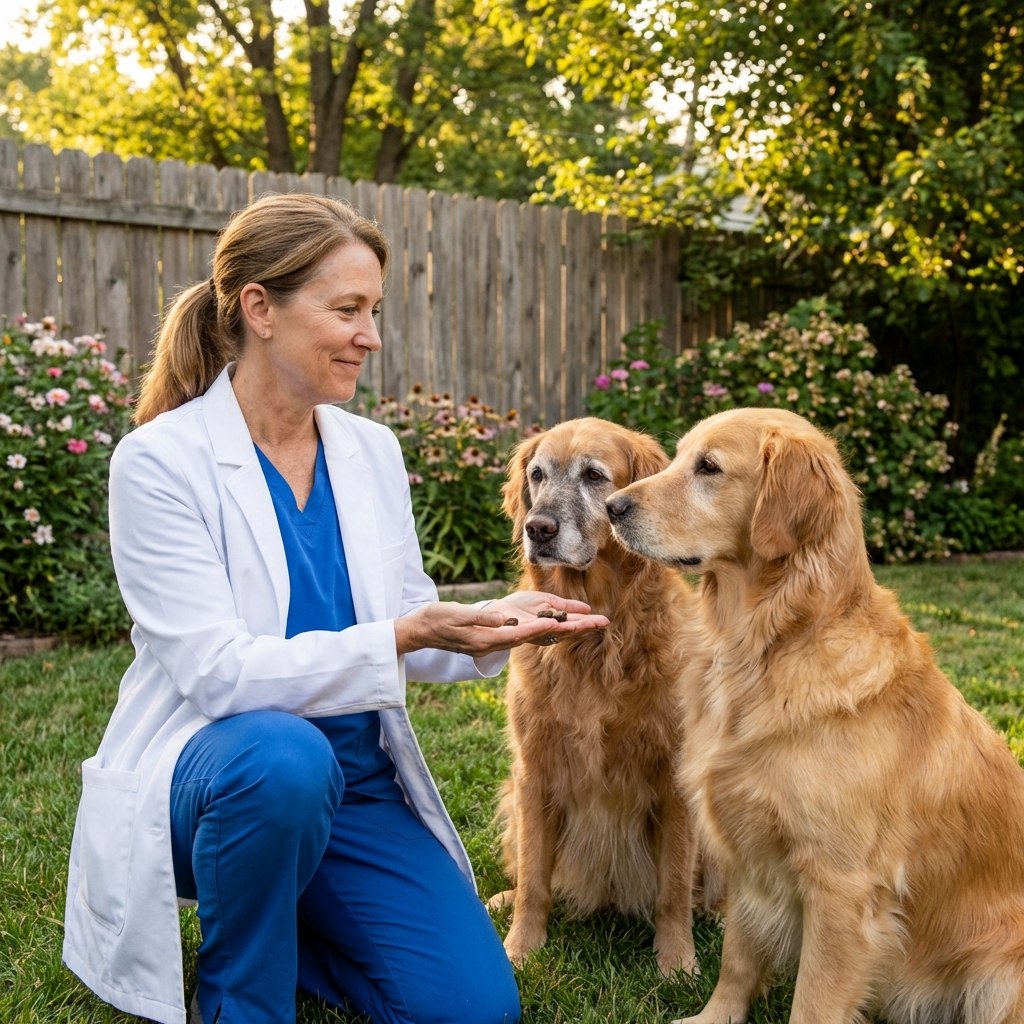
If you bought your Golden Retriever in America, your dog's life expectancy is 10 to 11 years. If you bought the exact same breed in Scotland or England, it would be 12 to 14. Same breed. Same size. Same goofy smile. Same obsession with tennis balls. Same tendency to steal exactly one sock from every person who enters your house. Three to four extra years. And the reason has nothing to do with diet, exercise, or how many belly rubs you give. If you own a Golden Retriever and that sentence just made your stomach drop, stay with me. Because I need to explain where those missing years went, why your vet has never brought this up, and what you can do about it that the entire veterinary system is currently ignoring. My name is Dr. Sarah Meadows. I am a board-certified veterinary specialist in cellular health based in Raleigh, North Carolina. I have been studying why Golden Retrievers lose years that other breeds keep for 14 years. I trained at UC Davis, which is where some of the most important research on this breed has been conducted. I do not set broken bones. I do not trim nails or express anal glands. I study one thing: why cells stop working the way they should. And if you own a Golden Retriever, your dog's breed is the reason I never have a slow week. I need to tell you something that veterinary professionals talk about with each other but rarely say to clients. Out of earshot of dog owners, a lot of veterinarians call Golden Retrievers "the heartbreak breed." That is not a joke. That is not an exaggeration. That is what we call them when you are not in the room. 60% of Golden Retrievers will have their lives cut short by the same silent cellular breakdown. Not a broken bone. Not an infection. Something happening deep inside their cells that produces zero symptoms until it is too late. That number is not from a blog post. It is from the Morris Animal Foundation Golden Retriever Lifetime Study, which enrolled 3,044 Golden Retrievers in 2012 and has been tracking their health data every year since. It is the largest breed-specific health study in veterinary history. The data is devastating and it is getting clearer every year. 60%. For comparison, the average rate across all dog breeds is 25 to 33%. Golden Retrievers are double. Here is what makes that number terrifying for anyone who has ever owned one. The most common form of cellular breakdown in Goldens attacks the spleen or heart. It produces zero symptoms until it ruptures. Your dog is playing fetch on Saturday. By Tuesday she is gone. I have seen owners walk into my clinic carrying a dog that was sprinting through a park 36 hours earlier. You cannot screen for it with a routine vet visit. Bloodwork two months before a rupture will come back normal. An annual checkup three weeks before a rupture will come back clean. Your vet will say she looks great. And she does look great. Until the morning she does not. That is why the "I thought I had more time" posts flood Golden Retriever groups every single week. Because this condition does not give you time. It gives you a cliff. Now let me explain where those missing years went. When Golden Retrievers came to America from Scotland, a small number of champion males were bred hundreds, sometimes thousands of times. One male producing 100 or 200 litters. Breeders paid for champion lines. They got genetic concentration. European registries maintained stricter breeding limits. No single male could dominate the gene pool. The gene pool stayed wider. European-line Golden Retrievers lose their dogs to this cellular breakdown at a rate closer to 38%. American-line Goldens: 60%. 22 percentage points. Same breed. The reason is not food, not exercise, not love. It is what happened at the cellular level when we narrowed the gene pool. Less genetic diversity means fewer options for cellular defense. Less variation in the surveillance systems that catch abnormal cells before they multiply. Your American Golden has the same personality as a European Golden. Same heart. Same goofy soul. But her cellular defense systems are working with a smaller toolkit. That is why she is twice as likely to lose years off her life. And this is where I need to tell you something about the veterinary system that makes me uncomfortable as someone who works inside it. Your vet is not talking to you about this. Not because they do not care. But because the system was not built for prevention. There is a protocol for when your Golden develops a mass. Imaging. Biopsy. Staging. Treatment. There is no protocol for supporting cellular health before something goes wrong. No billing code. No standard of care. Monitoring is detection. Detection finds the fire after it started. Nobody is fireproofing the house. I had bloodwork done on a Golden named Biscuit every six months for three years. Perfect panels. In March, everything looked great. In May he collapsed on a walk. Ruptured spleen. His owner spent $9,400 and he was gone in 11 days. The bloodwork was never designed to catch what was happening at the cellular level. Let me tell you about Luna. Luna is a Golden Retriever owned by a woman named Amy from Charlotte, North Carolina. Amy is a dental hygienist. She is 41. She bought Luna at 8 weeks from a breeder who said the parents were health-tested. When Luna turned 4, Amy's neighbor lost their Golden at age 7. From Friday to Sunday. Clean bloodwork three weeks before. Amy sat on her kitchen floor that night holding Luna's face in both hands. Not sadness. Terror. The specific kind where you realize you are powerless to protect something you love. She found the 60% stat at 1 AM. The European gap at 2. By 3 AM she was reading the Penn Vet Turkey Tail mushroom study. In 2012, researchers at the University of Pennsylvania School of Veterinary Medicine gave Turkey Tail mushroom extract to dogs with the most aggressive form of this cellular condition. The dogs on the highest dose survived a median of 199 days compared to the historical median of 86 days. 130% longer. Published in a peer-reviewed journal. On the deadliest condition Golden Retrievers face. Amy called her vet the next morning. Her vet said Luna was healthy and that there was nothing to do until something showed up. "We will keep monitoring her." Amy found me because she did not accept that answer. I told Amy what I am about to tell you. The products most Golden Retriever owners buy when they start worrying about their dog's health are generic senior multivitamins. The ingredient lists look like a children's gummy bear. Vitamin C. Vitamin E. A sprinkle of fish oil. Maybe some glucosamine thrown in because every dog product seems to contain glucosamine whether the dog needs it or not. None of these contain Turkey Tail mushroom at a dose that matches the Penn Vet study. None contain CoQ10 in ubiquinol form, which is the form that actually supports mitochondrial energy production in aging cells. None contain the specific combination of antioxidants that target the oxidative stress pathways most relevant to this breed. You are buying the nutritional equivalent of a multivitamin for a problem that requires targeted cellular support. It is like putting a Band-Aid on a broken bone. The Band-Aid is not bad. It is just irrelevant. I started Luna on the healthy cellular longevity chews I now recommend to every Golden Retriever owner I see. One chew a day. Turkey Tail mushroom. CoQ10 in ubiquinol form. Omega-3 EPA and DHA. Curcumin with BioPerine for absorption. Astaxanthin. Selenium. Vitamin E. Every ingredient based on published research. Every dose calibrated for a Golden Retriever. Luna is 6 now. Her energy is absurd. She still brings Amy three tennis balls at once because apparently one is never enough. She still sleeps on her back with all four paws in the air. I cannot promise the chews are why Luna is thriving. These are cellular support chews, not medicine. They do not replace your vet or any treatment if something develops. But Amy told me: "For two years I have not felt helpless. Every morning I do something. I do not just check for lumps and hope." That is the difference between detection and prevention. And it is a difference the veterinary system is not offering you. I know what you are thinking. "She seems fine. I will think about this later." I hear it every week. Then I see those same owners 18 months later carrying a dog that was fine on Saturday. Writing checks for $8,000 to $15,000 in emergency treatment that buys, on average, 4 to 6 extra months. $40 a month. Or $12,000 on the table and it does not give you years. It gives you months. Every Golden Retriever owner I have ever met says the same thing when it is too late. I thought I had more time. Your dog is probably near you right now. Maybe on her back with her paws in the air. Maybe with a stolen sock she has no intention of returning. You found this post for a reason. Do not bookmark this. The cells do not wait. 60% is not a number that happens to other people's dogs. It is the breed. It is your dog. One chew a day. Start today. weston-animal.co/products/golden-years P.S. European Goldens: 38%. American Goldens: 60%. Same breed. Different cellular support. The gap exists. What you do about it is up to you. One chew per day: weston-animal.co/products/golden-years P.P.S. Check the label on whatever you are currently giving your Golden. If it does not contain Turkey Tail mushroom, CoQ10 in ubiquinol form, and omega-3 at a therapeutic dose, it was not designed for what this breed actually faces. Generic multivitamins are not cellular longevity support. The right ingredients for the right breed: weston-animal.co/products/golden-years
Like this ad? Make it yours.
Crush rebuilds this exact creative around your product — your brand, your colors, your offer — in about a minute.