Sarah's Skincare Blog
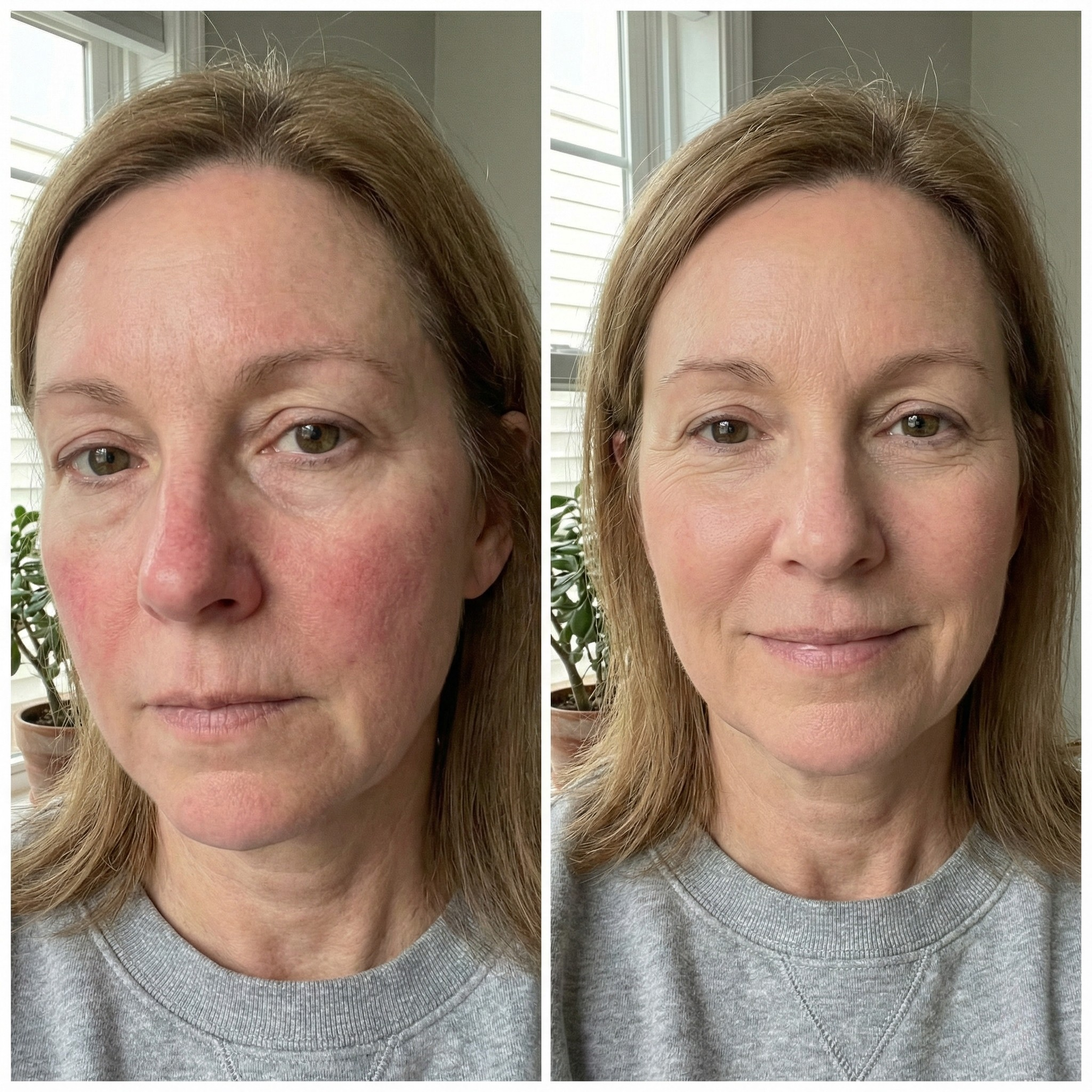
Sarah's Skincare Blog Facebook ad: “The hidden reason makeup stops working after 50”
Started on January 19, 2026.
Run by Sarah's Skincare Blog on Facebook. Crush is not the advertiser and does not verify its claims. See this ad in Meta's Ad Library(opens in a new tab)
Want an ad like this for your product?
Crush makes new ad images for your product from this ad: your logo, your product photo, your offer.
Trials from $19.95 USD, then $79.95 USD a month. Cancel anytime.
About this ad
- Meta Ad Library ID
- 659805383825658
- Platforms
- Facebook, Instagram, Audience Network, Messenger and Threads
- Relaunches
- 0
Ad text
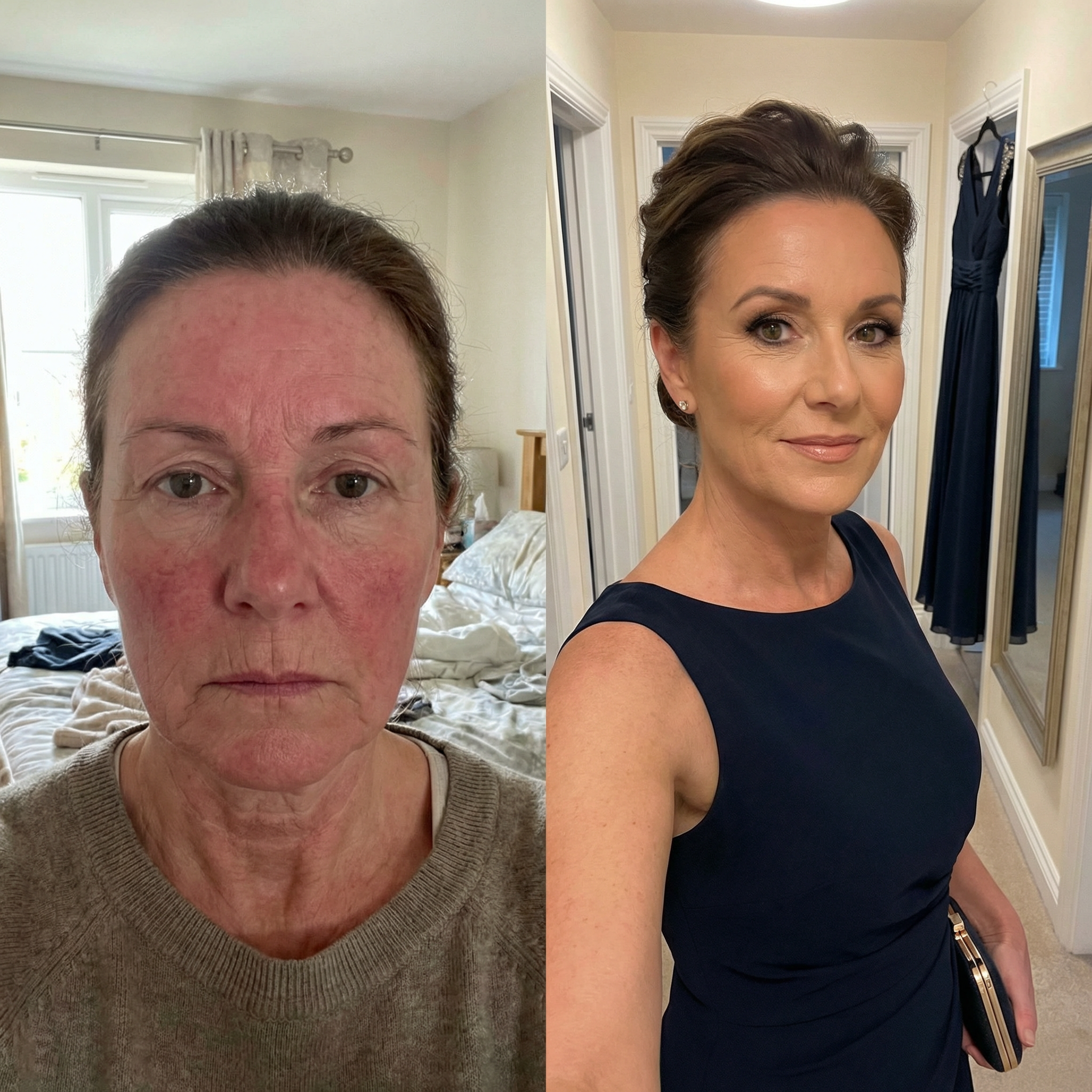
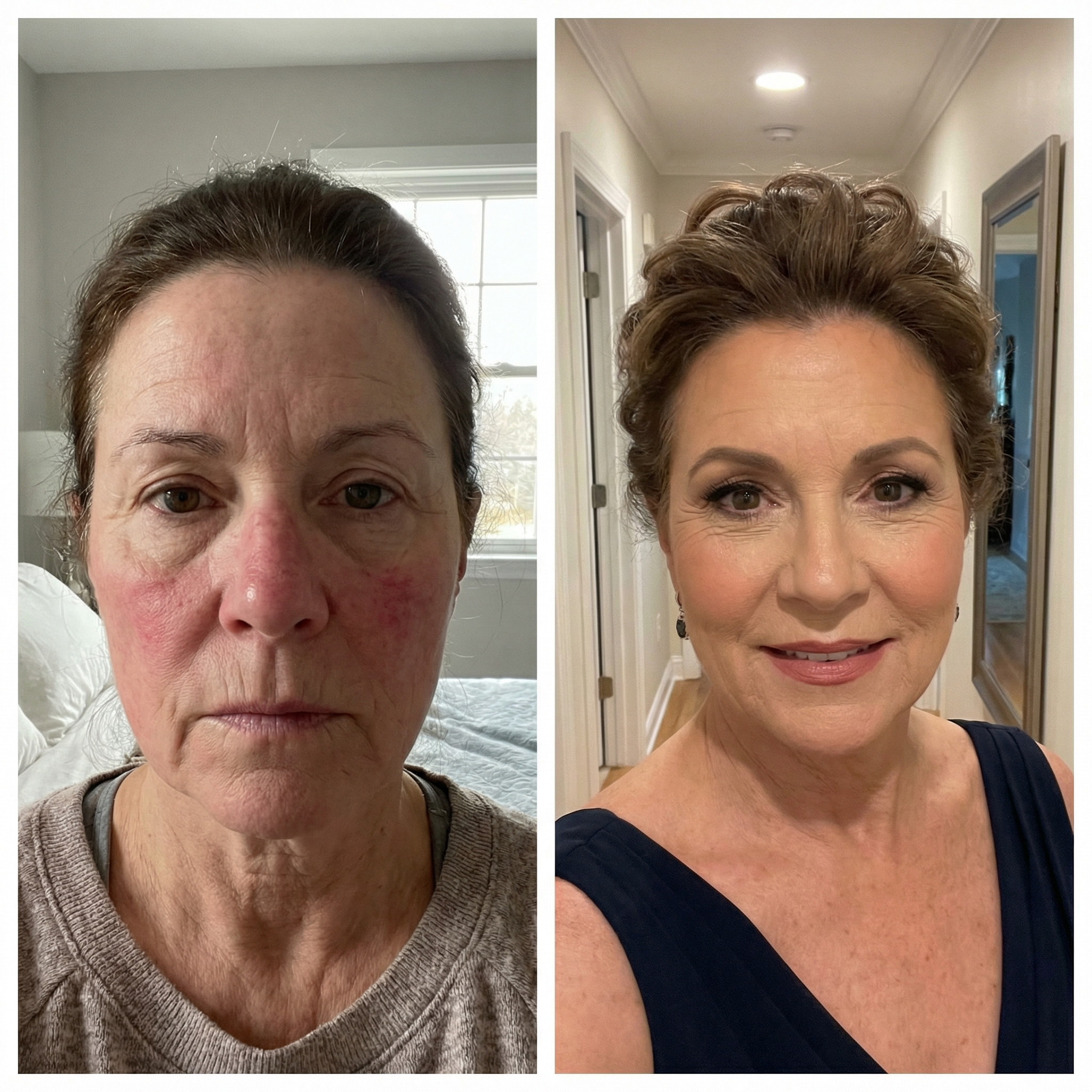
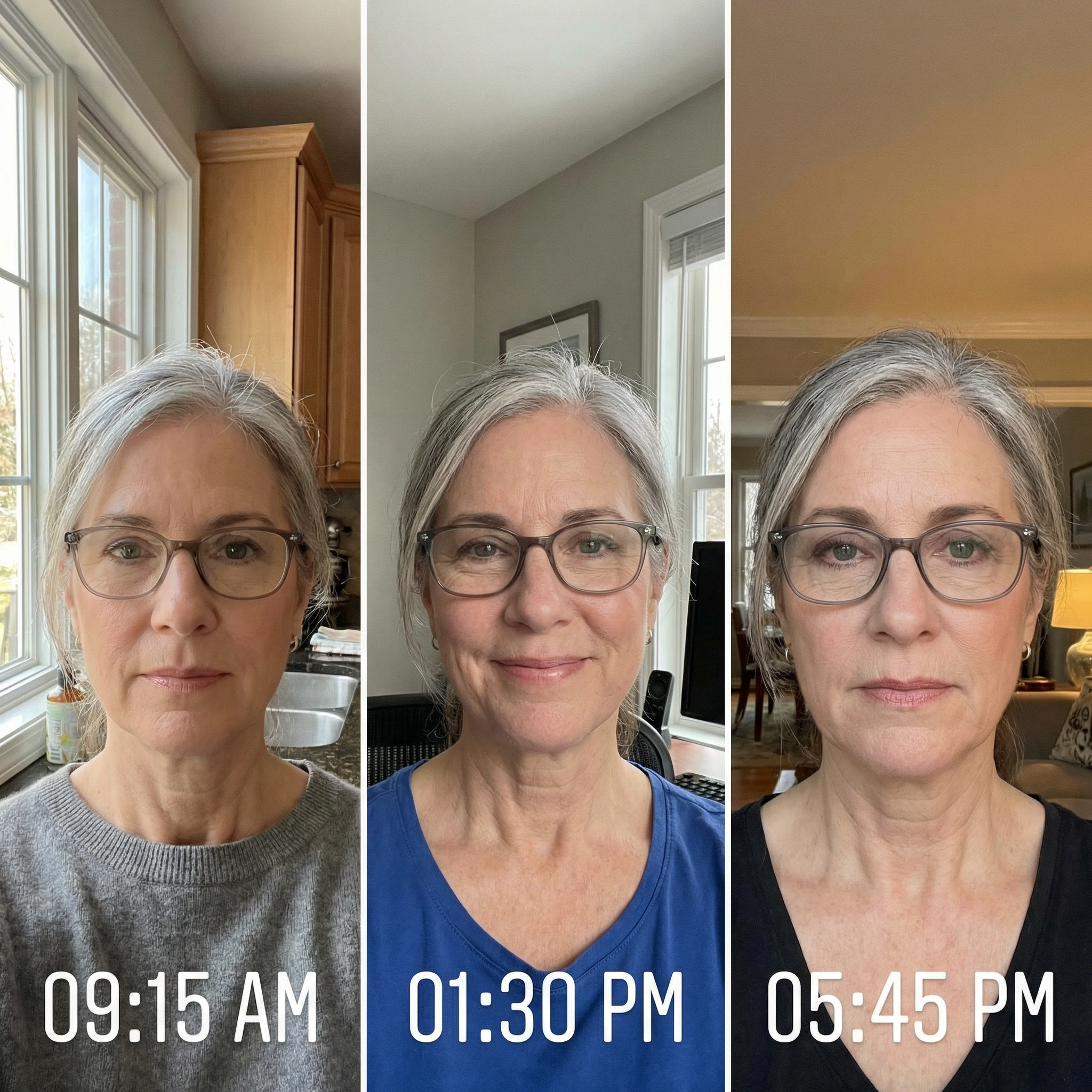
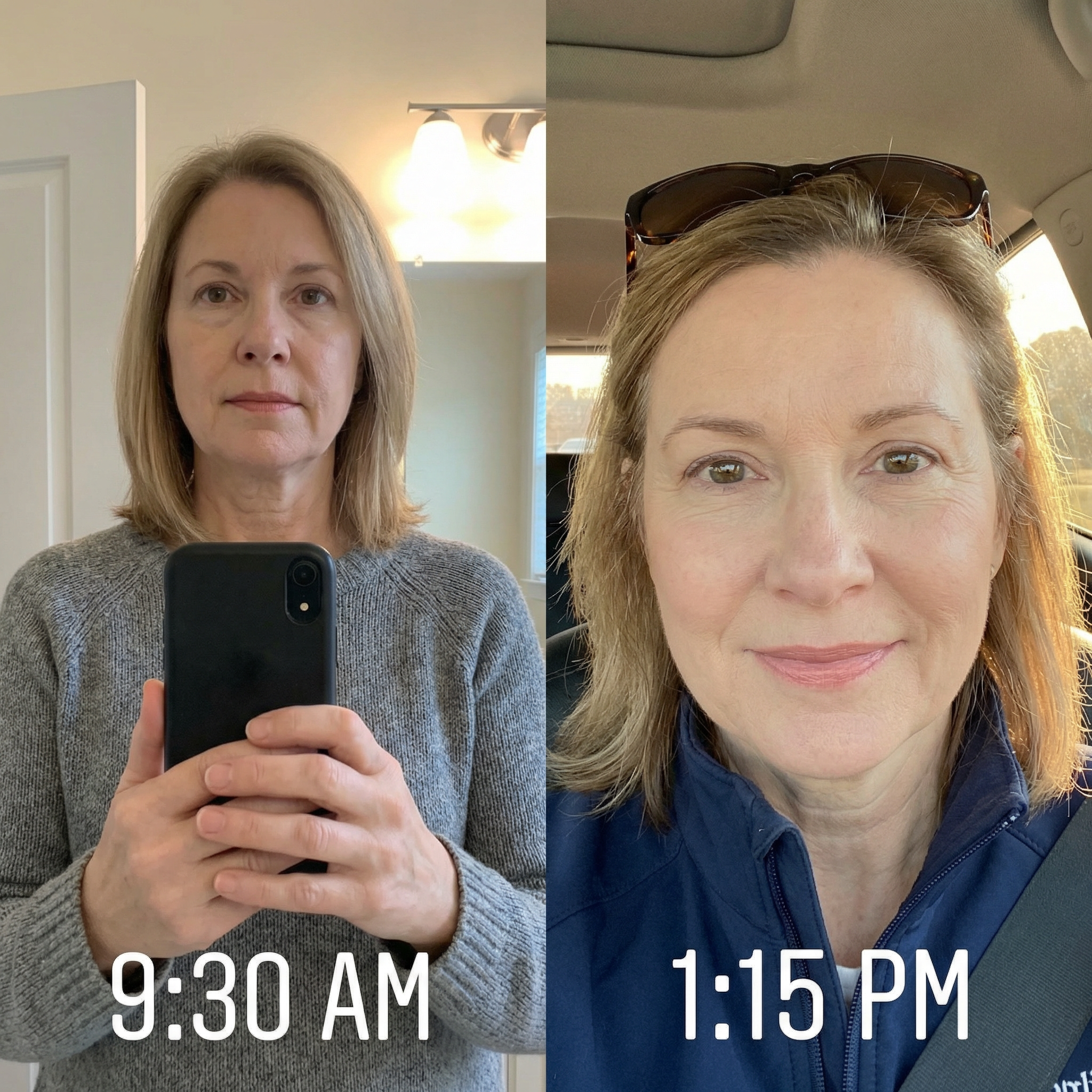
How To Keep Foundation From Settling Into Lines (Even After Menopause) IT Cosmetics CC+ Cream was my holy grail for eight years. $45 a tube. Worth every penny. Looked flawless at application. Lasted all day. Made my skin look like... my skin. Just better. And then I turned 54. Same tube. Same application. Same routine I'd perfected over nearly a decade. But by 11 AM, I could see it settling into the lines around my eyes. By 1 PM, every expression line on my forehead had a visible crease of foundation pooled in it. I thought maybe the formula changed. Companies do that—reformulate without telling anyone. So I bought a fresh tube. Different batch number. Maybe the old one had gone bad. Same thing. Settled by noon. Fine. Maybe IT Cosmetics wasn't what it used to be. I switched to Laura Mercier Tinted Moisturizer. $48. Recommended by three different beauty influencers over 50. "The only foundation I trust on mature skin." Day 1: Looked beautiful. Light, dewy, natural. Day 3: Settled into the same lines by 2 PM. I tried L'Oréal Age Perfect Serum Foundation. $15.99. "Specifically formulated for mature skin." Settled by lunchtime. Kosas Tinted Face Oil. $42. "Skin-like finish, never cakey." Settled. Kosas Revealer Super Creamy. $38. Different formula, same brand. "Buildable coverage." Settled by hour three. I tried the Kosas BB Burst too. Third formula. $38. Guess what happened. By the end of six months, I'd spent over $400 on seven different foundations. Drugstore. Prestige. Serum. Cream. Oil-based. Water-based. "For mature skin." "Hydrating." "Lightweight." Every single one looked perfect when I applied it at 9 AM. Every single one had settled into my fine lines by 1 or 2 PM. And I came to the same conclusion a lot of women my age come to: I'm just too old for foundation to work anymore. --- Maybe you're in the same place right now. Maybe you've tried IT Cosmetics. Laura Mercier. Kosas. L'Oréal Age Perfect. Charlotte Tilbury. The "holy grails" that beauty editors recommend for women over 50. Maybe you've spent $200. $400. $600. And every single one—regardless of price, regardless of brand, regardless of marketing claims—does the same thing. Looks smooth at application. Settles into lines by midday. I know that exhaustion. I know what it feels like to stand in Sephora staring at a wall of foundations, knowing you've already tried half of them, and wondering if you're just wasting money testing the other half. I know the creeping thought: "Maybe I'm just not supposed to wear foundation anymore." Maybe you've had that thought too. I had it. That's why I stopped wearing foundation entirely for four months. Bare skin felt better than foundation that made me look older by lunchtime. But here's what I couldn't figure out: Why did seven completely different foundations all fail the exact same way? Different brands. Different price points ($15 to $48). Different formulas (serum, cream, oil, tinted moisturizer). But identical results. Settled into lines by hour 2-3. Every time. If it was about the *brand*, at least one should have performed differently. If it was about *price*, the $48 should have outperformed the $15. If it was about *formula type*, the oil-based should have behaved differently than the water-based. But they didn't. They all failed the same way. At the same time. In the same places. That's when I stopped trusting beauty blog recommendations and started reading actual cosmetic formulation research. And that's when I found out why every foundation I'd tried—every foundation you've probably tried—can't work for more than 2-3 hours on aging skin. --- Look at everything you've tried. IT Cosmetics: Cream base Laura Mercier: Moisturizer base Kosas: Oil base, water base, serum base L'Oréal Age Perfect: Serum base Charlotte Tilbury: Liquid base See the pattern? They're all WET FORMULAS. All of them—serum, cream, oil, liquid, tinted moisturizer—contain water or silicone bases that require evaporative drying to set. That means every single one has a "wet phase" that lasts 2-3 hours after you apply it. During those 2-3 hours, the formula is still drying. Still setting. Still *wet*. And during those 2-3 hours, your face is moving. You talk. You smile. You squint at your screen. You chew. You laugh. You make thousands of tiny micro-expressions. Every time your face moves, your skin folds in the same places. Your expression lines. And every time your skin folds, the wet formula pools into those creases. By the time the foundation finally sets (2-3 hours later), it's already been pooling into your lines for three hours. Hundreds of micro-expressions. Hundreds of opportunities to settle deeper. That's why it looks smooth at 9 AM (just applied, hasn't had time to pool yet) and settled by noon (wet phase during peak face movement). It's not the brand. It's not the price. It's not your skin. It's the WET PHASE. --- Now here's the part that made me angry when I figured it out: "For mature skin" marketing doesn't address this at all. IT Cosmetics "for mature skin" = better skincare ingredients (peptides, antioxidants, SPF) Laura Mercier "for mature skin" = more hydrating base L'Oréal Age Perfect "for mature skin" = retinol and vitamin C added Those things are GOOD. The skincare benefits are real. But they're all still wet formulas with 2-3 hour evaporative drying times. They gave you better ingredients in the same settling mechanism. And here's what really got me: The expensive ones ($42-48) and the cheap ones ($15) both use evaporative drying. Both have wet phases. Both settle during the same 2-3 hour window. I paid extra for better skincare actives. I got better skincare actives. But I didn't pay extra for *different physics*. Because physics doesn't care about price points. A wet formula is a wet formula. Whether it costs $15 or $48, it still needs 2-3 hours to dry. And during those 2-3 hours, your expressions are still moving it into your lines. That's why all seven failed identically. I wasn't testing seven different solutions. I was testing the same wet-formula mechanism seven times with different packaging. --- But here's what kept bothering me even after I figured that out: If ALL foundations use wet formulas with evaporative drying... Then how is ANY foundation supposed to not settle? I mean, I'd been wearing foundation for 35 years. It worked fine in my 30s. Worked fine in my 40s. IT Cosmetics worked beautifully from age 46 to 54. What changed? I asked my dermatologist. She pulled up a study on her computer. Showed me a chart. "You went through menopause when?" "52, maybe 53." She nodded. "Look at this." The study tracked collagen loss in women post-menopause. First five years after menopause: 30% collagen loss. 30%. Collagen is what keeps skin firm, bouncy, resilient. It's the structural scaffolding under your skin's surface. When you lose 30% of that scaffolding, you get: - Deeper expression lines - Larger pores - Less elasticity - More pronounced skin texture Your skin structure fundamentally changes. "So the same wet formula that used to glide over your collagen-rich skin at 48," she said, "is now encountering a completely different terrain at 56." More crevices for wet formula to pool into. Less structural support keeping product on the surface. Same foundation. Same wet phase. But now there are deeper creases for it to settle into during those 2-3 hours. The formula didn't change. My skin's biology changed. And wet formulas—all wet formulas, regardless of brand or price—can't adapt to that change. They're designed for one skin structure. When your structure changes (collagen loss), they fail. That's why my holy grail from age 46-54 suddenly stopped working at 54. That's why everything I tried after it failed the same way. They were all wet formulas encountering post-collagen-loss skin. --- I sat with that information for a week. So... there's no solution? Just accept that foundation doesn't work anymore after menopause? That seemed insane. Then I found a 2019 article from a cosmetic chemist. She'd worked at Estée Lauder for 15 years. Formulated some of their best-selling foundations. And she said something that changed everything: "The industry standard is wet formulas because they're easy to manufacture and consumers are used to them. But there's no reason foundation HAS to have a wet phase. You can formulate for instant-set if you're willing to use a different mechanism." Instant-set. No 2-3 hour wet phase. No window for expressions to move product around. The formula sets the second it touches your skin—before your face has made even one micro-expression. I started searching. "Instant-set foundation." "Non-evaporative foundation." "No wet phase foundation." Most results: nothing. The industry runs on wet formulas. But then I found Chromia. Not a wet formula. A color-changing powder formula with microencapsulated pigments. You apply it like normal foundation. But instead of sitting wet on your skin for 2-3 hours waiting to dry, the capsules break on contact with your skin and release pigment immediately. The color develops in 30 seconds based on your skin's pH and moisture. And then it's set. Bonded to your skin's surface. Not wet. Not drying. Not waiting to pool into your lines during the next 2-3 hours of facial expressions. It sets before your face has moved enough to create pooling. --- I ordered it skeptical. I'd spent $400 on seven foundations that all claimed to be "different" in some way. Chromia said it was different because of the mechanism (instant-set vs. evaporative drying). I'd heard "different" before. But the 30-day guarantee covered return shipping. So I had nothing to lose except another $45. It arrived on a Tuesday. I applied it at 9 AM. Watched it change color in about 30 seconds to match my skin tone (that part was weird but cool). Felt dry to the touch after a minute. Not tacky. Not wet. I went about my day. 11 AM: Checked the mirror in my bathroom. The usual time IT Cosmics started settling. Still smooth. No creasing around my eyes. 1 PM: Checked again. The time everything else had visibly settled. Still smooth. I touched my forehead. Smiled big to create the expression lines. Looked closely. No foundation pooled in the creases. 2 PM: Same thing. Smooth. By 5 PM I was taking pictures because I couldn't believe it. The foundation that was on my face at 5 PM looked like the foundation I'd applied at 9 AM. No settling. No creasing. No pooling. I wore it the next day. Same thing. Day 3: Same. Week 2: I stopped checking the mirror every hour. It wasn't settling. At all. The difference was observable, immediate, and exactly what the mechanism predicted: No wet phase = no window for expressions to pool product into lines. --- Here's what happened over the next 30 days: Week 1: Wore it daily. Checked constantly (still skeptical from seven previous failures). Never saw settling. Week 2: Tested it under harsh conditions. Outdoor lunch in bright sun (makes everything look worse). Still looked smooth. Week 3: Wore it to dinner with friends. Sat under restaurant lighting. Asked my friend to check if she could see it in my lines. She said, "I can't even tell you're wearing foundation." Week 4: Stopped wearing it one day to compare. Bare skin at 2 PM vs. Chromia skin at 2 PM the day before. The Chromia day looked better. Not "covered up" better. Not "masked" better. Just... smoother. More even. Like my skin on a good day. That's when I realized I'd been asking the wrong question. The question wasn't "Which wet formula settles the least?" The question was "Why am I limiting myself to wet formulas at all?" --- Chromia isn't a better wet formula. It's a different category of formula. No water base. No silicone base. No evaporative drying. Just microencapsulated pigments in a powder-serum hybrid that sets on contact. The mechanism is different. That's why the result is different. IT Cosmetics couldn't do this. It's a wet cream. Laura Mercier couldn't do this. It's a wet tinted moisturizer. Kosas couldn't do this. All three formulas are wet bases. They're excellent products with excellent ingredients. But they're all fighting the same physics problem: wet phase + expressions + aging skin structure = settling. Chromia sidesteps that problem entirely by eliminating the wet phase. No wet phase = nothing for expressions to move around. Your face moves all day. But the foundation set 30 seconds after application. There's nothing left to pool. --- You can get Chromia right now. One bottle (1 oz): $45 But right now they're running Buy 1 Get 1 Free. So you get two bottles for $45. (That's $22.50 per bottle.) Includes: - Chromia 4-in-1 Color-Changing Foundation - Free mystery gift - Application guide 30-day money-back guarantee. If it settles into your lines like everything else, full refund. If it doesn't match your skin tone, full refund. If you don't see a difference from wet formulas, full refund. They even cover return shipping. Why? Because if instant-set actually prevents settling (and it does—the mechanism is physics, not marketing), you'll see the difference within one wear. And if you don't, you shouldn't pay. [Get Chromia - Buy 1 Get 1 Free - 30-Day Guarantee] --- You can keep trying wet formulas. Maybe the eighth foundation will be different. Maybe there's a $60 serum out there that's finally cracked the code. Maybe if you just prep your skin better, or apply it differently, or use a different brush, the next wet formula won't settle by hour 3. But you know now: They're all wet formulas. They all have 2-3 hour evaporative drying phases. During those 2-3 hours, your face makes thousands of micro-expressions. And every micro-expression pools product into the lines created by 30% collagen loss. That's not speculation. That's physics. The wet-formula category can't solve a wet-phase problem. --- Or you can try the formula that doesn't have a wet phase. Apply it at 9 AM. It sets by 9:01 AM. Your face moves all day—but there's no wet product left to pool. See if it's still smooth at 2 PM like it was for me. $45. Two bottles. 30-day guarantee. If it settles like everything else, you pay nothing. But if the mechanism is right (and it is), you'll finally get the result wet formulas couldn't deliver: Foundation that doesn't make you look older by lunchtime. Foundation that looks at 5 PM like it did at 9 AM. Foundation that works WITH aging skin structure—not against it. The result you've been trying to get with seven different brands? You weren't failing. You were shopping in the wrong category. [Get Chromia - Buy 1 Get 1 Free] --- P.S. - The 30-day guarantee means zero risk. Wear it for a week. Check the mirror at 2 PM like you've been doing with every other foundation. If you see settling, get every penny back. But if instant-set works the way physics says it should, you'll finally have foundation that doesn't betray you by noon. And you'll wonder—like I did—why you spent $400 testing seven versions of the same wet-formula mechanism.
Where the ad sends people
trychromia.com
The hidden reason makeup stops working after 50
Chromia
Learn more: trychromia.com(opens in a new tab)