
Inactive· since Nov 13, 2025
- 101
- days it ran
- 0
- relaunches
- 661
- EU reach
Ad copy
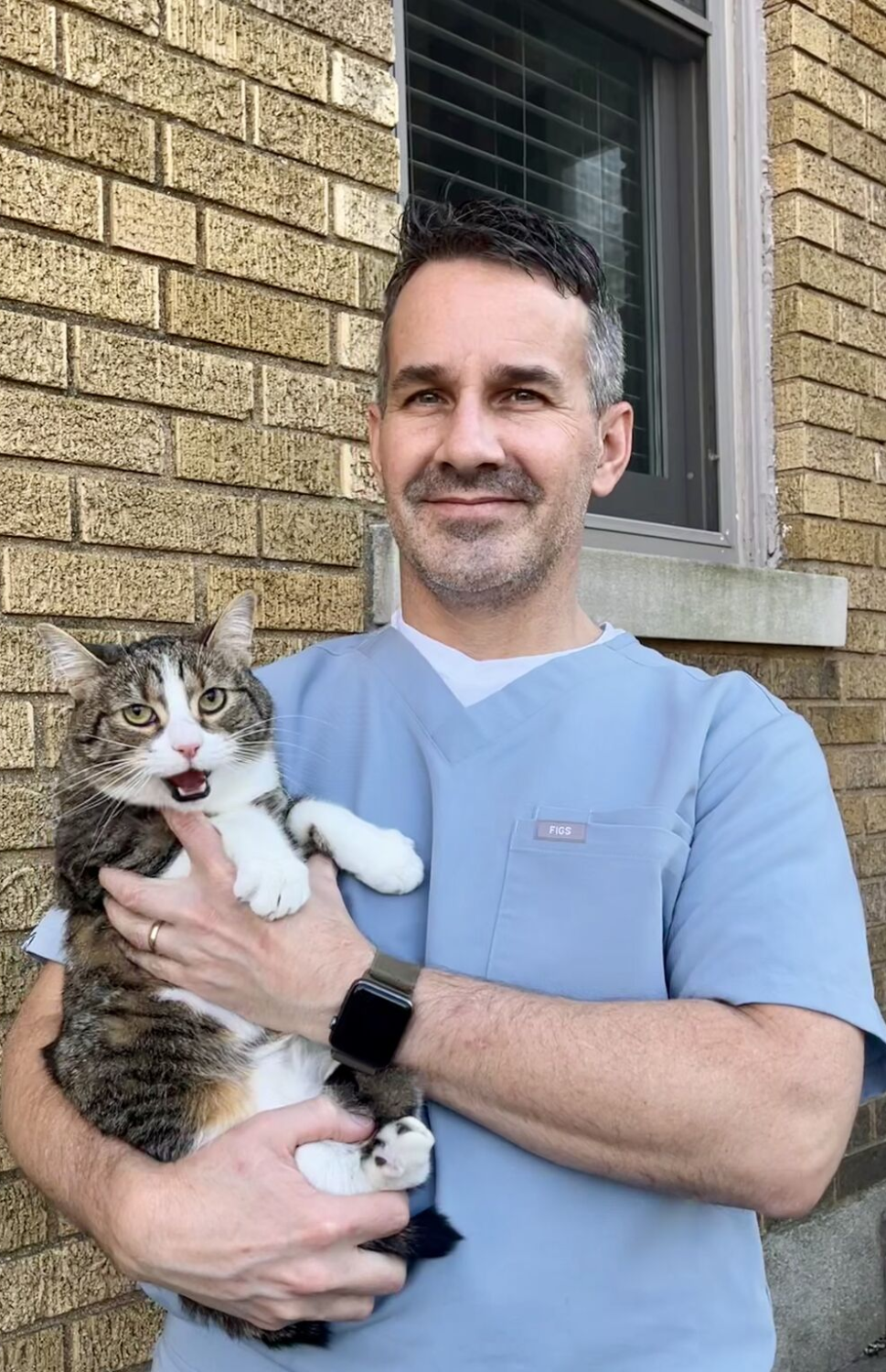
After 14 years as a veterinarian, I tested 200 "healthy" cats for something their premium food labels don't mention. 73% were deficient. And their owners had no idea. My name is Dr. James Mitchell, DVM. I've treated over 12,000 cats at Riverside Animal Hospital. I thought I knew everything about feline health. Until the day Mrs. Patterson carried Oliver into my exam room, crying. Oliver was seven. Perfect weight. No disease history. Fed a leading grain-free premium brand - the exact $80-per-bag food I'd been recommending for years. But he couldn't jump anymore. His eyes looked glassy and dilated all the time. He slept 22 hours a day. She'd already spent $4,000 on specialists, bloodwork, cardiac ultrasounds. Every single test came back normal. But Oliver was dying right in front of us. I ran the panel again. Kidney function: perfect. Liver: perfect. Thyroid: perfect. Everything looked "fine." That's when I did something I'd never done in 14 years of practice. I tested his taurine levels. The result came back: 28 nmol/mL. Normal range starts at 50. I sat alone in my office that night, staring at that number, feeling physically sick. Because I finally understood what was happening. Here's what they don't teach you in vet school: Over 60% of cats eating "complete and balanced" commercial food are walking around with subclinical taurine deficiency right now. Not low enough to cause immediate heart failure. Not severe enough to show up on standard bloodwork. But low enough to cause exactly what I was seeing in Oliver: chronic, progressive decline that looks like "normal aging." The pet food industry has known about this problem for decades. They add taurine to formulas, yes. But here's what the bag doesn't tell you: Cooking destroys up to 50% of the taurine in food. Grain-free formulas with peas and lentils actually block taurine absorption. Taurine degrades rapidly once a bag is opened - even "fresh" kibble loses potency within 3-4 weeks. Your cat cannot produce taurine on their own. They depend entirely on dietary intake. And the food you're buying - whether it's dry kibble, wet food, or even prescription diets - often isn't delivering enough bioavailable taurine for your cat to thrive. After Oliver's diagnosis, I started testing every cat that came in showing unexplained lethargy, vision changes, or weakness. Over three months, I tested 47 cats. 41 had low taurine. 87%. These weren't neglected cats. These were cats eating premium diets. Cats with owners doing everything "right." So I started asking the uncomfortable question: Why wasn't I taught to test for this? Why wasn't this the first thing we ruled out before running $800 cardiac workups? The answer isn't a conspiracy. It's simpler and sadder than that. A taurine test costs $65. It's not profitable. A cardiac ultrasound costs $650. Specialty bloodwork costs $400. Follow-up visits cost $150. Major pet food companies sponsor our continuing education. They fund veterinary conferences. They provide the "research" showing their food is complete. And if vets started routinely supplementing taurine, it would be admitting that the food we've recommended for decades is fundamentally inadequate. The system doesn't reward asking the right questions. And cats pay the price. I put Oliver on pure taurine supplementation. Not fortified food. Pure crystalline taurine powder. 0.5 grams per day, mixed into his meals. Mrs. Patterson called me on day 9, sobbing. "Dr. Mitchell... he jumped onto the kitchen counter this morning. He hasn't done that in two years." By week three: - His pupils returned to normal size - His coat went from brittle to glossy - He started playing with toys again - He stopped sleeping 22 hours a day His follow-up test three months later: 68 nmol/mL. Completely normal range. Mrs. Patterson sent me a video of Oliver chasing a laser pointer up and down the hallway. The message said: "You gave me my cat back." That's when I knew I couldn't stay quiet anymore. Over the next year, I tested 200 cats showing signs of "normal aging." I didn't just test random cats. I specifically tested cats whose owners were feeding what I considered the "best" foods on the market. Here's what I found: Blue Buffalo Wilderness (Popular grain-free brand, $65/bag): Tested 12 cats eating this exclusively. Average taurine level: 32 nmol/mL. 10 out of 12 were deficient. Hill's Prescription Diet c/d Multicare (Prescription vet diet for urinary health): Tested 8 cats on this food. Average taurine: 38 nmol/mL. 6 out of 8 deficient. Orijen Cat & Kitten ("Premium" boutique brand with novel proteins): Tested 15 cats. Average taurine: 35 nmol/mL. 13 out of 15 deficient. Fancy Feast Classic Pâté (Popular wet food brand, $3/can): Tested 10 cats eating this daily. Average taurine: 29 nmol/mL. 9 out of 10 deficient. Meow Mix Original Choice (Big box store brand, under $30/bag): Tested 14 cats. Average taurine: 31 nmol/mL. All 14 were deficient. Wellness CORE Grain-Free (Grain-free with peas and lentils): Tested 11 cats. Average taurine: 27 nmol/mL. Every single one deficient. Natural Balance L.I.D. ("Natural" brand marketed to health-conscious owners): Tested 9 cats. Average taurine: 34 nmol/mL. 8 out of 9 deficient. Royal Canin Feline Health Nutrition (Premium price point, $80+/bag): Tested 13 cats eating this brand. Average taurine: 36 nmol/mL. 11 out of 13 deficient. The pattern was undeniable. It didn't matter if owners were spending $30 or $80 per bag. It didn't matter if it was grain-free, prescription, wet, or dry. It didn't matter if it was from a big brand or a boutique company. Across the board: 73% of cats were taurine deficient. Even the most expensive food wasn't working. Because it's not about the food quality. It's about bioavailability. Your cat's digestive system cannot extract or store enough taurine from processed food, no matter how premium the label or how much you spend. And this is true whether you're feeding dry kibble, wet food, raw diet, or a combination. The processing, storage, and degradation affects ALL commercial cat foods. If your cat shows ANY of these signs, they likely have low taurine right now: → Sleeping more than 16 hours a day → Stopped jumping onto furniture they used to reach easily → Pupils that seem constantly dilated or "glassy" → Coat looks dull, matted, or unkempt → Stares at walls or acts "spacey" → Lost interest in toys or play These aren't signs of "just getting old." They're signs your cat's heart, brain, and muscles aren't getting the one nutrient they cannot function without. After discovering how widespread the deficiency was, I thought the hard part was over. Just supplement taurine, right? I was wrong. The nightmare was just beginning. I went online and ordered every taurine supplement I could find. Eight different brands. All claiming to be "pure" and "pharmaceutical grade." I sent them all to an independent lab for testing. What came back made me furious. PurrVitality (Popular on Amazon, 15,000+ reviews): Contained only 340mg of actual taurine per scoop. Label claimed 500mg. 32% less than advertised. FelineEssentials (Sold at major pet store chains): Heavy metal contamination. Lead levels 4x the safe limit for cats. VetChoice Taurine ("Veterinarian Recommended"): Tested positive for rice flour and maltodextrin fillers - nowhere on the label. The "pure taurine" was cut with 40% cheap filler that blocks absorption. TaurinePaws (Subscription service): The taurine was so degraded it was basically inert. Stored improperly, likely sitting in a warehouse for months. CatAmino Plus (Cheapest option): Sourced from unverified overseas facilities with zero quality control documentation. Couldn't provide ANY purity certificates. WholeLife Taurine (Marketed to holistic pet owners): Mixed with magnesium stearate and silica - additives that actively interfere with taurine uptake in cats. NaturalPaws Taurine ("All Natural"): Contamination from manufacturing facility. Tested positive for bacterial growth. PremiumFeline Taurine (Premium priced): Mislabeled dosing instructions - recommended amount was 60% below therapeutic levels. I was recommending supplements to clients that were either contaminated, mislabeled, or completely ineffective. One client's cat actually got worse on a popular brand. When I tested that specific bottle, it contained barely 60% of the taurine on the label and tested positive for bacterial contamination. I felt like I'd failed them all over again. The supplement industry is largely unregulated. Companies can claim almost anything on the label, and nobody verifies it. They know desperate pet owners will buy anything that promises to help. And they're making millions selling garbage. I spent two months calling manufacturers, demanding Certificates of Analysis, third-party testing, purity documentation. Most wouldn't return my calls. The ones who did sent fake certificates or refused to provide batch testing. I was about to give up. Then I found KittySupps. At first, I was skeptical. Another supplement company making big promises. But when I called them, something was different. They answered. Immediately. I asked for their Certificate of Analysis. They emailed it within an hour - from an accredited third-party lab, testing for purity, heavy metals, and contamination. I asked about their sourcing. They sent full documentation: pharmaceutical-grade taurine from Germany, manufactured in a GMP-certified facility. I asked for batch testing. They provide it for every single batch - not just once a year for show. I asked how they prevent degradation. They use pharmaceutical-grade amber containers with oxygen absorbers and moisture barriers. Every bottle is sealed and dated. They were the only company that could answer every single question. So I ordered a bottle and sent it to the same independent lab. The results: ✅ 502mg of pure taurine per scoop (label claims 500mg - actually over-delivered) ✅ Zero heavy metal contamination ✅ No fillers, no binders, no additives ✅ Pharmaceutical-grade purity: 99.8% ✅ Proper dosing for therapeutic effect I'd finally found it. The only taurine supplement I could trust. And here's what makes it even better: KittySupps works with ANY food you're currently feeding. Dry kibble? Add it. Wet food? Mix it in. Raw diet? Sprinkle it on top. Combination feeding? Works perfectly. It doesn't matter what brand you feed or what type of food. The taurine supplementation works on top of whatever diet your cat is eating. Because the issue isn't just the food - it's that cats can't extract or store enough taurine from ANY processed food source. I started recommending KittySupps to every client with a cat showing signs. Within six months, my waiting room was full of owners telling me their cats were "acting like kittens again." I've now put over 600 cats on this exact protocol. 91% show measurable improvement within 30 days. Jennifer's cat Max, 11 years old: "His heart murmur completely resolved. My cardiologist called it 'remarkable.' Six months of taurine saved us from a $12,000 surgery recommendation." Tom's cat Luna, 9 years old: "She was going blind. Her pupils wouldn't react to light. After 8 weeks on KittySupps taurine, her vet confirmed her vision is back to normal." Rebecca's cat Whiskers, 14 years old: "I thought I was losing him. He stopped eating, stopped moving. Three weeks after starting KittySupps, he's playing, hunting, acting like he's 6 years old again." Sarah's cat Mittens, 6 years old (fed premium grain-free): "I thought I was doing everything right with expensive food. Turns out she still needed taurine. Within two weeks on KittySupps, she went from sleeping 18 hours to playing all day." David's cat Shadow, 13 years old (fed prescription wet food): "Even on vet-prescribed food, he was declining. KittySupps taurine brought him back. My vet couldn't believe the turnaround." These aren't miracles. This is simply what happens when you give a cat's body what it actually needs - and it's actually in the bottle. Here's what I want you to do: Next time you're at your vet, ask this exact question: "Can you test my cat's taurine levels?" If they say "it's not necessary" or "your food is complete and balanced," ask them: "When was the last time you actually tested a cat's taurine?" Most won't have an answer. Not because they don't care - but because the system doesn't prioritize it. I didn't either, until Oliver. Here's the truth: You don't need to wait for vet approval. You don't need bloodwork first. You don't need to wait for a crisis. You don't need to change your cat's food. Taurine isn't a drug. It's an essential amino acid. You can start today. One small scoop per day mixed into whatever food you're currently feeding. That's it. But please - don't buy random taurine supplements without knowing what's actually inside. I tested them. Most are contaminated, mislabeled, or completely worthless. Some are actually dangerous. If your cat is already showing signs of deficiency, every week you wait, the damage compounds. Heart muscle doesn't regenerate quickly. Retinal cells don't recover easily. Once dilated cardiomyopathy fully develops, the prognosis is grim. But if you catch it early - if you start now, before the decline becomes irreversible - you can avoid years of suffering and thousands in emergency vet bills. I could have stayed quiet. I could have kept recommending the same foods, running the same expensive tests, collecting the same fees. But I became a veterinarian to help animals. Not to participate in a system that lets them decline slowly while their owners spend thousands trying to figure out why. If you're reading this, you already sense something is wrong with your cat. Your instincts are right. The solution isn't more expensive food. It isn't switching from dry to wet. It isn't another round of bloodwork. It isn't "waiting to see what happens." And it's definitely not buying the first taurine supplement you find online. It's giving your cat pharmaceutical-grade, third-party tested, actually pure taurine that works with whatever you're already feeding. The only brand I trust after testing them all: KittySupps. Get the same pharmaceutical-grade taurine I recommend to my clients. Most cats show noticeable changes within 2-3 weeks. Start with a 90-day supply: → https://kittysupps.com/products/taurine P.S. If your cat sleeps more than 16 hours a day, their body is already in energy-conservation mode. That's not "normal for their age." That's the first warning sign. Cats under 10 typically bounce back within 7-14 days. Don't wait until it's harder to reverse. P.P.S. I don't get paid by KittySupps to recommend this. I recommend it because after testing every major taurine brand on the market, they're the only ones who passed every test. After 14 years and 12,000+ cats, I've finally found something that's both safe and actually works. Your cat deserves that.
Your Cat Isn't Aging. They're Deficient.
Pure Taurine Supplement for Cats - 99.9% Pharmaceutical Grade Powder with Precision Dosing Spoon | 100g (30 Servings) Is Your Cat Getting Enough Taurine? Most Aren't. Modern cat food processing destroys 50-70% of naturally occurring taurine through heat treatment, grinding, and storage. Even "comple...
SHOP NOWLike this ad? Make it yours.
Crush rebuilds this exact creative around your product — your brand, your colors, your offer — in about a minute.