Dr. Erik Lindqvist
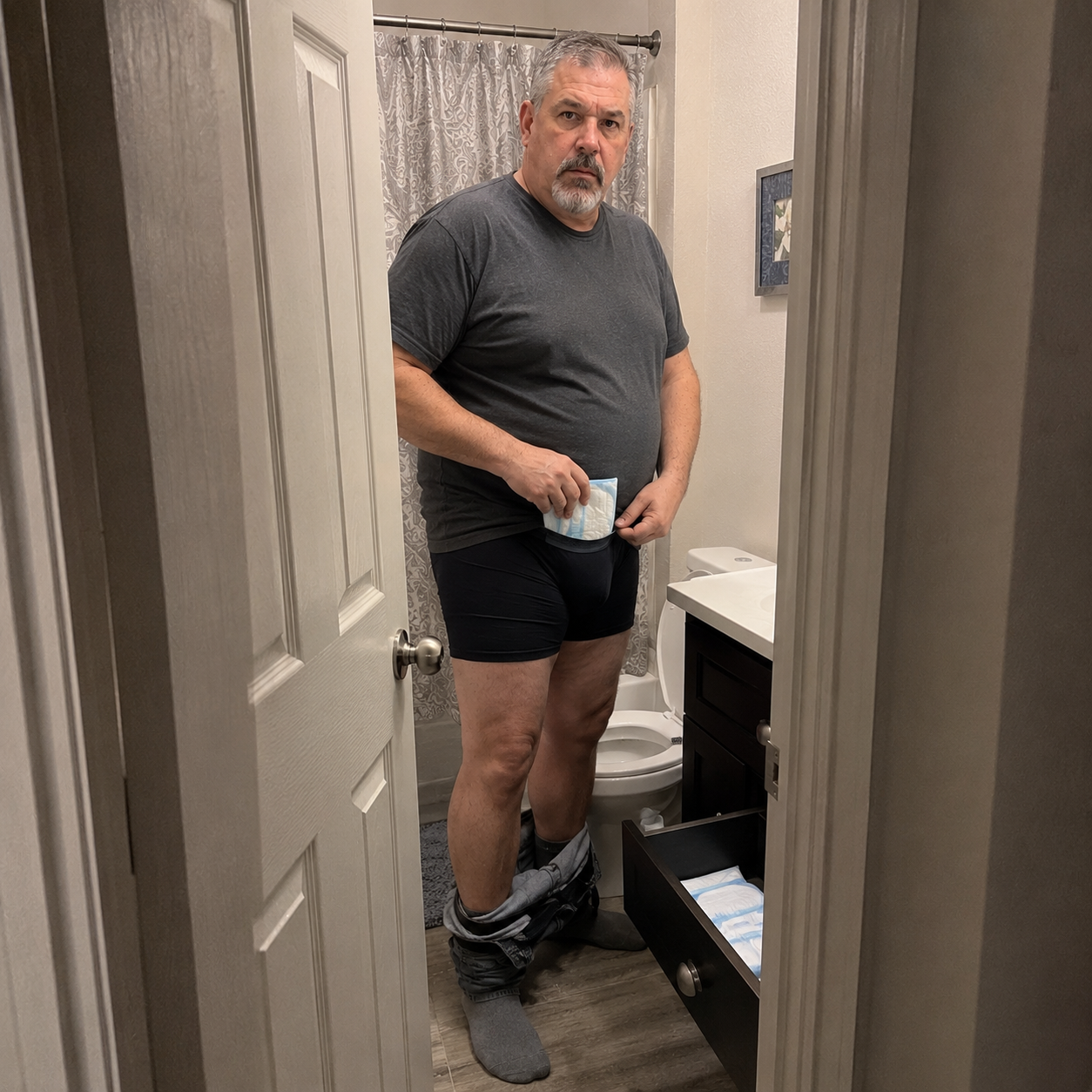
Dr. Erik Lindqvist Facebook ad: “My father wore pads at 67. Never me.”
Ran for 3 days, from June 23 to June 26, 2026, the last day Crush saw it.
Run by Dr. Erik Lindqvist on Facebook. Crush is not the advertiser and does not verify its claims. See this ad in Meta's Ad Library(opens in a new tab)
Want an ad like this for your product?
Crush makes new ad images for your product from this ad: your logo, your product photo, your offer.
Trials from $19.95 USD, then $79.95 USD a month. Cancel anytime.
About this ad
- Meta Ad Library ID
- 791650577274824
- Platforms
- Facebook, Instagram, Audience Network, Messenger and Threads
- Relaunches
- 0
Ad text
I watched my father end up in pads at 67. I refused to inherit that. I'm 54. My father was a stoic man. He told no one when his urgency started at 56, when he stopped accepting dinner invitations at 59, when he started sleeping in the spare room at 62. By 65 he was leaking. By 67 he was wearing pads. Three weeks before he died, he told me he'd thought it was just what happened to men in our family. His father went the same way. He didn't want me wearing pads at 67 too. That was four years ago. I've spent every year since making sure I wouldn't. Here's what I've learned. None of it is what I was told. My father's story wasn't ageing. It wasn't his prostate. It wasn't bad luck. And it certainly wasn't genetic destiny — though that's the comfortable lie our whole family told ourselves for decades. What it was, was a muscle that had been quietly tightening for fifteen years before he ever wore a pad. And nobody — not his GP, not his consultant, not the chemist who handed him three different prescriptions — ever once examined that muscle. Let me tell you about the canary. Coal miners used to carry canaries into the mine because the bird felt toxic gas before the men could. When the canary stopped singing, the miner had minutes to act. The whole point was: the canary was the warning, not the disaster. Your bladder muscle is the canary. It is one of the most microvascular-sensitive smooth muscles in the body — it feels strain before almost any other tissue you have. When it starts clenching, tightening, signalling urgency at half-full instead of full, when your nights start getting broken at 1am and 3am and 4:30am — that is the canary singing. My father's canary started singing in his fifties. He silenced it with prescriptions. Each one worked for a year or two, then faded, then a second was added. By the time he hit 67, the canary had stopped singing entirely — because the muscle underneath had been clenched solid for so long the system had given up. Pads. Aisle seats. The spare room. Mine started singing in my early fifties. I listened. Here are the five things I learned, in the order I learned them. One. It isn't ageing. Ageing doesn't make a muscle clench. Ageing without intervention does, year after year, until the muscle forgets how to stay relaxed. Two men of the same age, one with a chronically tense detrusor and one without, look nothing alike inside. Two. It isn't the prostate. This was the one that cost my father the most. Three prescriptions aimed at his prostate. The prostate wasn't the problem. The bladder muscle was. The two are two centimetres apart and the difference is everything. Three. Medication doesn't fix the tension. It silences the urgency signal. The muscle stays just as clenched underneath. That's why the dose climbs and the years tick by and the canary gets quieter while the gas builds in the room. Four. The window narrows with each year. A man who addresses it at 55 typically restores full bladder control. A man who waits until 70 faces a much harder restoration path. The five years between 55 and 60 are not the same as the five years between 65 and 70. Five. The muscle responds to direct intervention if you act in time. This was the part nobody had ever told my father. Eighteen months after my father died, I sat in front of a urologist — Dr. Erik Lindqvist, who'd built his career on the muscle, not the gland. He told me about Crataeva nurvala. A botanical used for 1,500 years for urinary disorders, and in 2018 finally validated in a placebo-controlled clinical trial. The researchers concluded its effect came from an antispasmodic action — improvement in the tone of the bladder's muscles. Direct relaxation. Not signal-blocking. The formulation he pointed me to is called FYNE Arctic Bladder Control. 400mg of Crataeva at the clinical dose, stacked with Lindera, pumpkin seed at the clinical 200mg, magnesium, and vitamin D3. Formulated in Sweden to pharmaceutical-grade standards. Third-party batch tested. I started at 54. By week three I was sleeping from eleven to five with one trip in the night, sometimes none. By week eight, daytime trips had dropped from nine to four. By week twelve, I was sitting through a meal with my grandchildren without once thinking about where the toilet was. I haven't worn a pad. I haven't moved into the spare room. My wife sleeps through. I sleep through. I am not going to be my father at 67. If you are in your fifties, this is your window. Twelve thousand UK seniors are now on Arctic Bladder Control. The men who started in their early fifties report the most complete restoration. The men who waited until their late sixties report harder, slower progress. Buy 2 and Get 2 Free Gifts with your order. 90-day money-back guarantee. If your canary doesn't start to sing differently, every penny back. FYNE can't mass-produce it. Arctic Bladder Control has sold out eleven times. Don't reach for the cheap prostate capsules. They aim at the wrong organ at a fraction of the right dose. My father wasted nineteen months and three prescriptions on that route. I refused. The decline isn't destiny. It is a muscle. And if you act while the canary is still singing, the muscle still responds. Try Arctic Bladder Control today.
Where the ad sends people
fynesupplements.com
My father wore pads at 67. Never me.
Fyne
Learn more: fynesupplements.com(opens in a new tab)