Everyday Pet Health
Everyday Pet Health Facebook ad: “Vet Industry's Hidden Little Secret About”
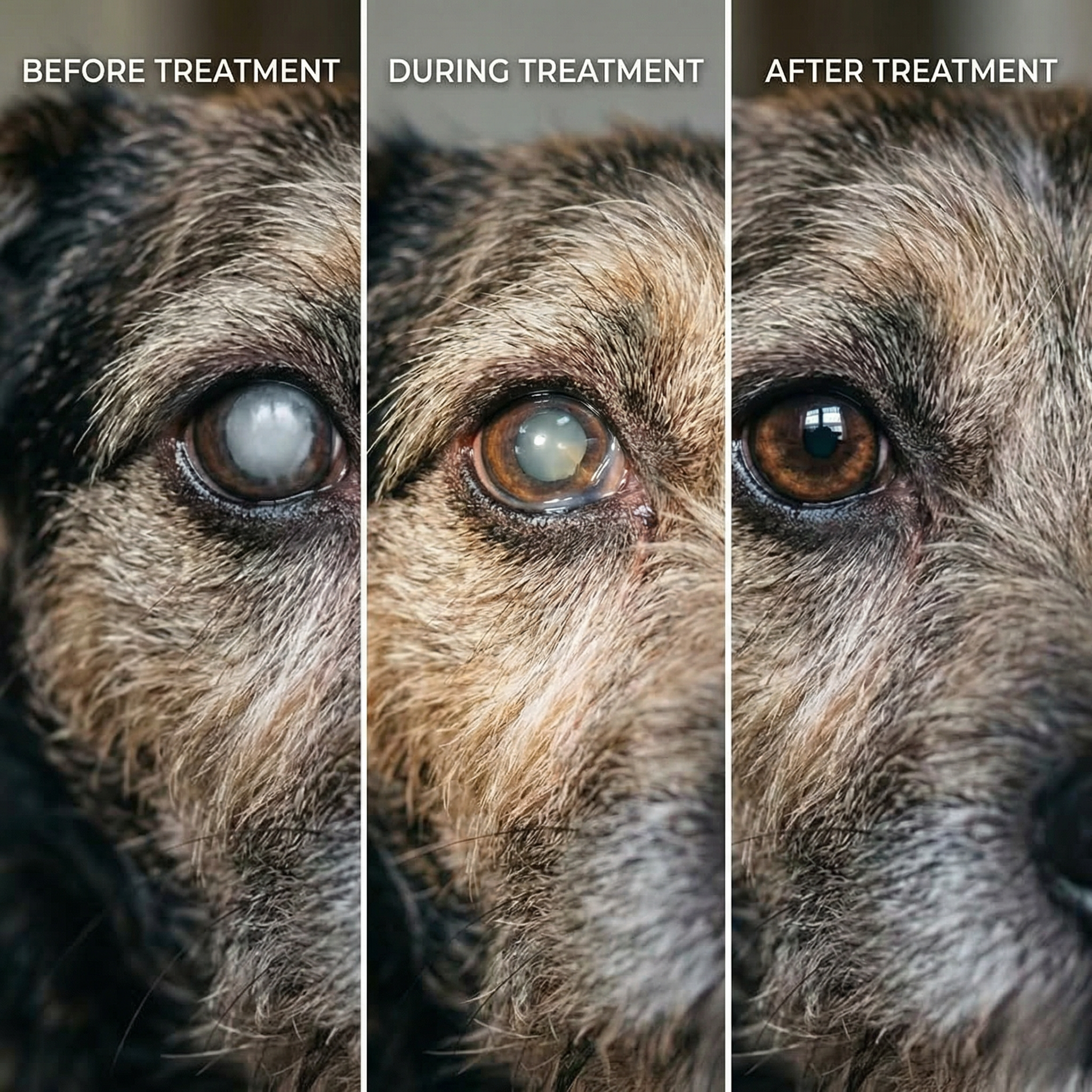
Ran for 69 days, from April 21 to June 28, 2026, the last day Crush saw it.
Run by Everyday Pet Health on Facebook. Crush is not the advertiser and does not verify its claims. See this ad in Meta's Ad Library(opens in a new tab)
Want an ad like this for your product?
Crush makes new ad images for your product from this ad: your logo, your product photo, your offer.
Trials from $19.95 USD, then $79.95 USD a month. Cancel anytime.
About this ad
- Meta Ad Library ID
- 807013255416999
- Platforms
- Facebook, Instagram, Audience Network and Messenger
- Relaunches
- 1
Ad text
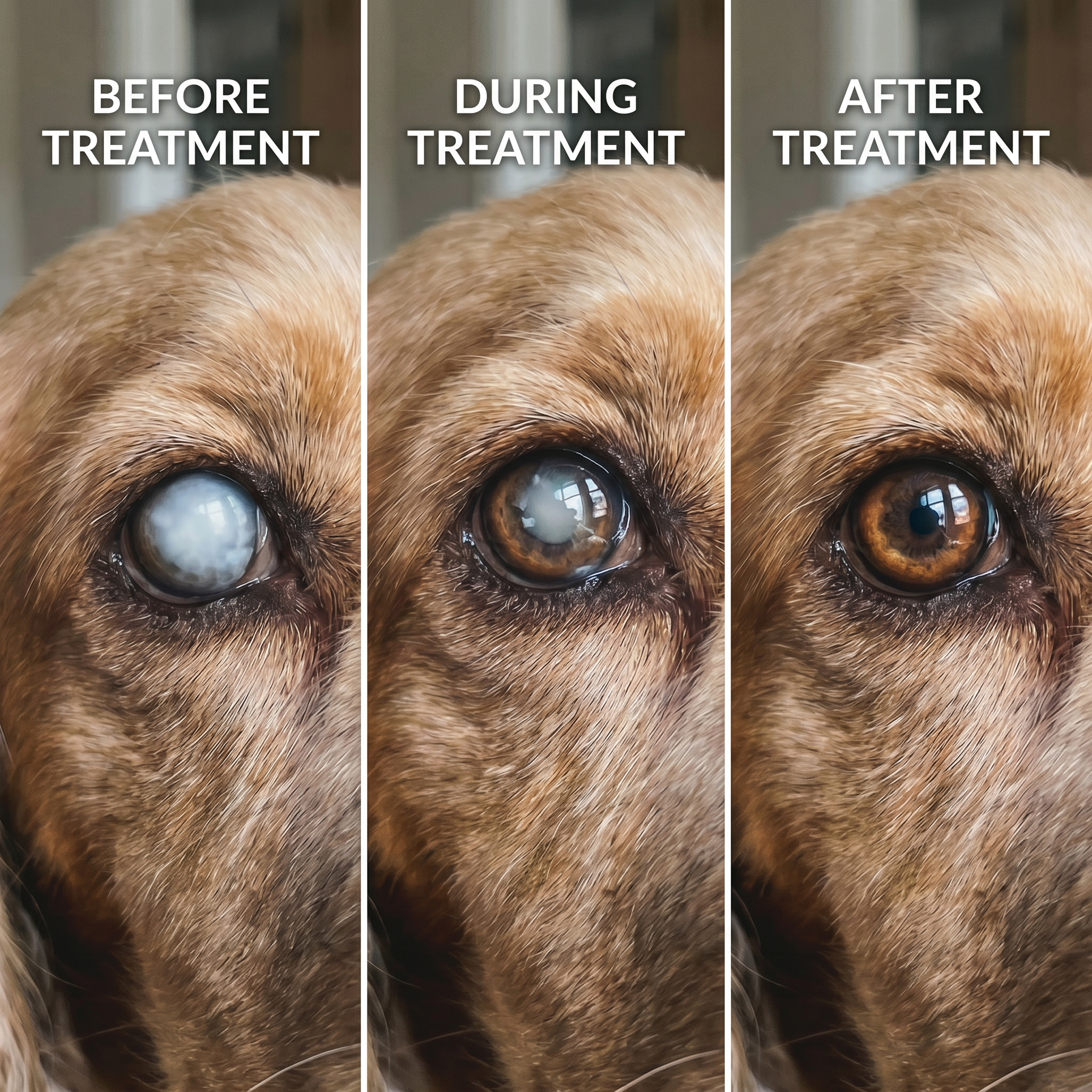
Here is what most vets — including the one who recommended the supplement you are currently giving your dog — never explain about why antioxidants don't clear the cloudiness. The cloudiness you are looking at is not a retinal problem. It is not caused by oxidative stress at the back of the eye. It is caused by protein crystallization happening inside the lens itself — a completely different structure in a completely different location that the antioxidants you are giving were never designed to reach. This is not a failure of the supplements. It is a failure of the explanation that should have come with them. I want to give you that explanation now. Not because I am selling you something. Because I spent six months without it and I watched what that cost in photographs that kept getting worse every two weeks. My dog's name is Margo. An eleven-year-old vizsla mix with the kind of alert, intelligent presence that makes you feel watched in the best possible way. She has been my shadow for a decade — the thing that gets me out of the apartment on the mornings I don't particularly want to be out of it, the creature whose entire body communicates something about loyalty that I find myself thinking about at unexpected moments. I noticed the cloudiness in her right eye at her annual checkup. The vet noticed it at the same appointment — she had been about to mention it when I asked first. She explained it calmly and thoroughly. Nuclear sclerosis. Protein changes in the lens. Very common in dogs Margo's age. Some effect on vision in very low light but generally not significantly impairing. She used the word cosmetic. She recommended an antioxidant supplement — bilberry, lutein, zeaxanthin, omega-3 — and said to come back in three months for a recheck. I went home and ordered the supplement. I gave it to Margo every morning mixed into her food without missing a single day. I photographed her eyes every two weeks in the same window light I had started using after reading that consistent conditions make tracking more reliable. I did this for six months. The photographs got worse in a direction that felt almost deliberate. Not dramatically — the cloudiness did not double overnight. But frame by frame, across twelve sets of photographs, the haze that had started in her right eye spread and thickened and began appearing at the edge of her left, and the supplement I was giving her every day had not slowed it in any way I could see. I went back to the vet at month four. She looked at Margo's eyes and said the progression was within the range she expected. She said give it more time. I gave it more time. I went back at month six with my phone and showed her the photographs lined up in order and asked her directly whether the supplement was working. She said it was supporting Margo's overall eye health. I drove home with the specific frustration of someone who has been given a technically accurate answer to a question they did not ask. Supporting overall eye health was not what I was trying to do. I was trying to stop the cloudiness from spreading. I was trying to understand why six months of daily supplementation had produced no visible effect on the one thing I was trying to address. That night I went looking for the answer she hadn't given me. Not for a different product. For the biology. I wanted to understand what was happening inside Margo's lens at a structural level — not what it looked like from the outside but what was physically occurring in the tissue that was clouding. I wanted to know why the antioxidants were failing and I was not going to find that answer in supplement reviews or vet FAQ pages. I went to the primary research. I found the paper at 11:23 PM. I know the time because I took a screenshot of it when I realized what I was reading and the timestamp is still there. The lens of the eye is made of proteins called crystallins. In a healthy, young lens, these proteins are arranged with architectural precision — a specific structural organization that makes the lens transparent. Light enters the lens, passes through that organized structure cleanly, and arrives at the retina as a coherent image. The organization is not passive. It is actively maintained by a compound called Lanosterol, which the lens produces naturally and which functions as a molecular chaperone — keeping the crystallin proteins correctly folded, preventing them from aggregating. When Lanosterol production is sufficient, the lens stays clear. When it declines — as it does in every aging dog — the proteins begin to misfold in its absence. They aggregate. They cluster. The clusters accumulate in layers across the lens until the structure that used to transmit light cleanly is now scattering it through something denser and more diffuse. This is the cloudiness. Not a retinal phenomenon. Not caused by oxidative stress at the back of the eye. A structural failure at the front of the eye, in the lens proteins themselves, driven by the age-related decline of a specific maintenance compound. I sat with that for a while. Because what it meant was not complicated once I understood it. The antioxidants I had been giving Margo — the lutein, the zeaxanthin, the bilberry, the omega-3 — were reaching the retina. The tissue at the back of the eye. The light-sensing cells. Tissue that benefits genuinely from antioxidant support. Tissue I am glad was being supported. But the cloudiness is not in the retina. The cloudiness is in the lens proteins at the front of the eye. And the compounds reaching Margo's retinal tissue were not traveling to the lens proteins. They were not designed to travel to the lens proteins. They were going somewhere real and doing something real — just not the thing I needed them to do. Not the thing the cloudiness required. I had been treating the right eye with the wrong address for six months. So had my vet. So, I would later discover, had almost every owner in the same situation — because the supplement category marketed for dog eye health is largely a retinal category, and the lens protein mechanism is not what it is aimed at, and this distinction is not explained on any of the labels. The compound that addresses lens protein crystallization directly is Lanosterol itself — delivered externally to replace what the aging lens has stopped producing internally. Paired with NAC, N-Acetylcarnosine, which addresses the oxidative environment inside the lens specifically rather than the broader ocular environment the retinal antioxidants reach. Two compounds. One location. The lens proteins themselves. I ordered the formula at 12:51 AM. I did not order it with confidence. I ordered it with the specific rational commitment of someone who understands a mechanism well enough to know why this one reaches the right place and why everything before it hadn't. I took a photograph of Margo's eyes the next morning before I gave her the first dose. Same window. Same light. Same angle. I noted the date and put the photograph in a folder separate from the six months of photographs that had already told their story. Week two — nothing definitive. I compared and noted and continued. Week five — I showed the most recent photograph to my partner, who had been watching all of this without comment, and asked her what she noticed. She looked at it for a moment and then at the photograph from week one of the new formula and said the haziness around Margo's right iris looked different. Less uniform, she said. Like something was shifting at the edges. I did not tell her what I hoped she would say. Week eight — Margo's regular vet, at an appointment I had scheduled before any of this started, examined both eyes and then looked at me and asked what had changed. She said the presentation in both eyes looked different from Margo's last visit. She said she wanted to look into what I had been using. I sent her the paper I had found at 11:23 PM. She responded two days later and said she was going to start asking different questions at appointments where cloudiness came up. She said she had not known the distinction between retinal supplementation and lens protein intervention — that it had not been part of her training in the way it apparently needed to be. What I understand now that I did not understand during those six months: the antioxidant supplement your vet recommended is not wrong. It is aimed at the wrong structure for this specific problem. The cloudiness in your dog's lens requires a compound that reaches the lens proteins directly — not the retinal tissue behind them. That distinction is the only thing that explains why diligent, consistent, correctly-followed supplementation has not changed what you see in the photographs. The window during which the lens protein mechanism can be meaningfully addressed is not permanently open. Protein crystallization continues in one direction and what is possible in the early stages differs from what is possible once the cloudiness has reached greater density. I say this not to create urgency in the sales-tactic sense but in the way that I wish someone had said it to me at month one instead of letting me spend month six looking at photographs that had been answering the question for a long time. I'm not asking you to stop seeing your vet. I'm asking you to read what I found at 11:23 PM before you spend another month giving the right supplement to the wrong part of the eye. The formula that changed what Margo's vet saw at week eight is here: 👉🏻https://trypetrelief.com/products/advanced-vision-formula-for-dogs Take a photograph today before you start. Same light, same angle, every week. Let the photographs tell you what they told me — because they will be more honest than any explanation that should have been given six months earlier and wasn't.
Where the ad sends people
trypetrelief.com
Vet Industry's Hidden Little Secret About
About Dog Eye Health Exposed
Shop now: trypetrelief.com(opens in a new tab)