
Inactive· since Apr 5, 2026
- 160
- days it ran
- 0
- relaunches
Ad copy
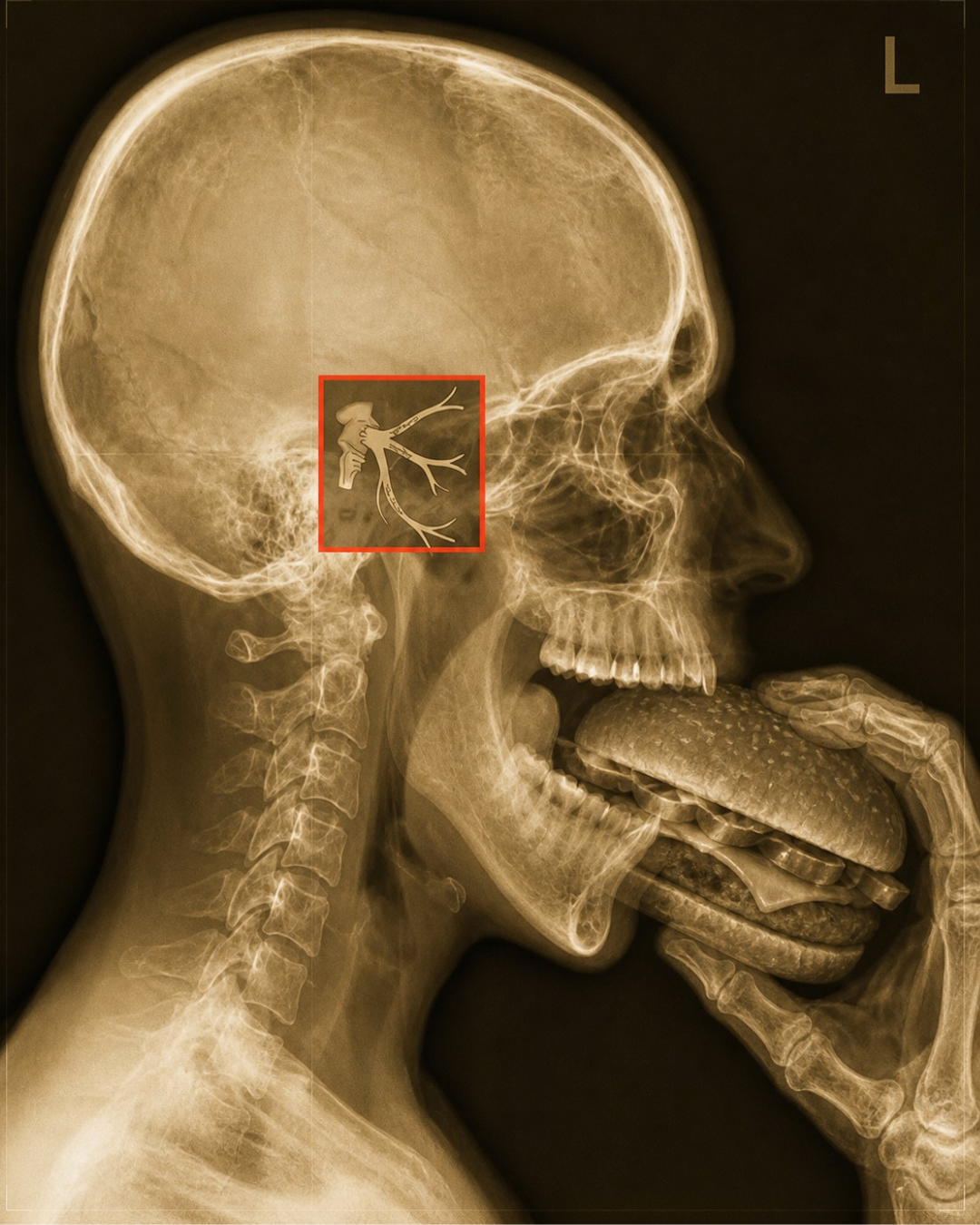
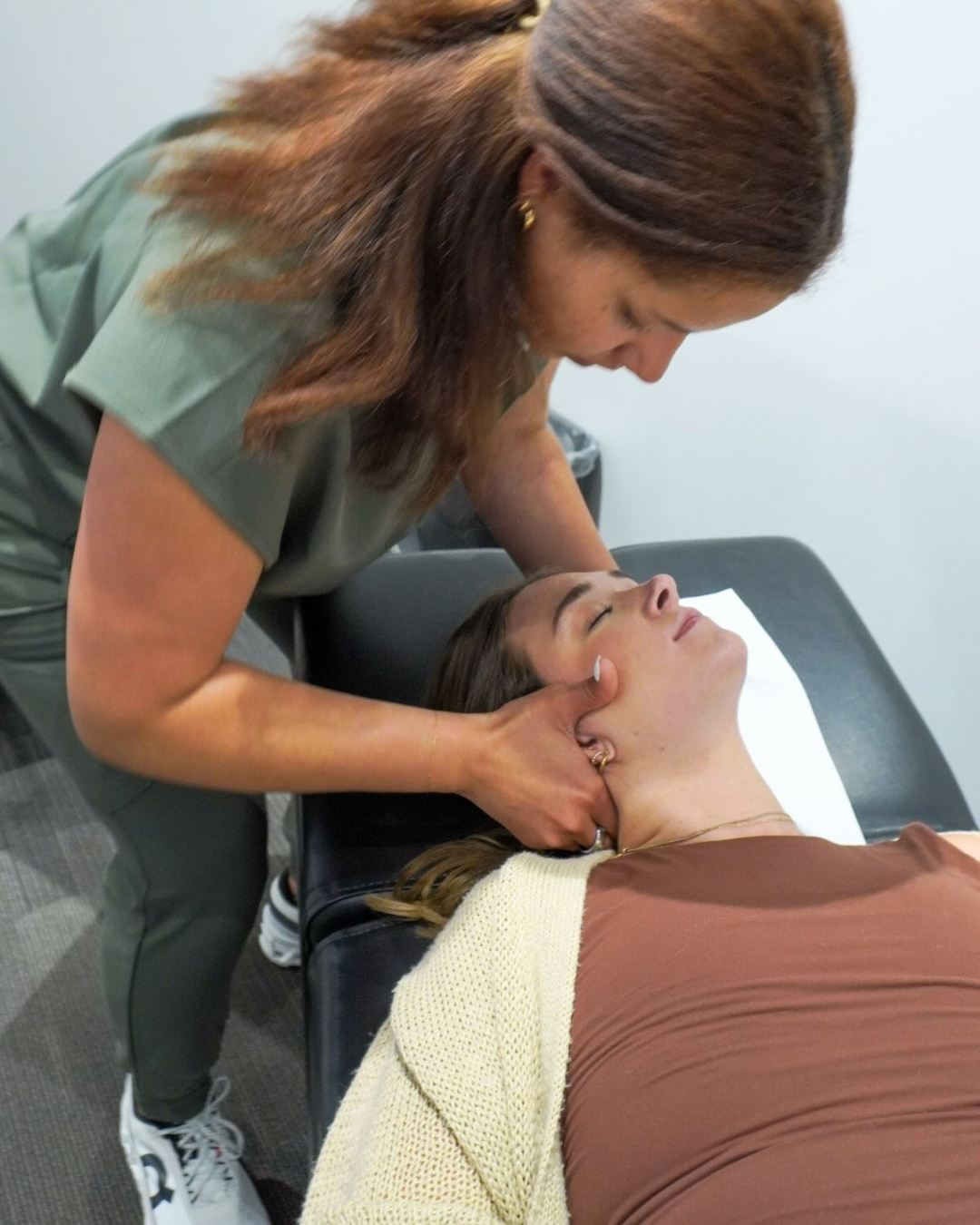
I'm a craniosacral therapist. Yesterday, I put my hands on a patient's cranium and felt something I've never felt in nine years of practice. I placed my fingers at the temporal bones, where I always start. I closed my eyes and listened for the craniosacral rhythm — the subtle expansion and contraction of the cranial bones that tells me where the restriction is, where the body is holding, where the pain is stuck. But there was nothing to find. The temporal bones were mobile. The sphenoid was balanced. The fascia at the occipital ridge — the tissue that's been locked up tight on this particular patient for 14 months — was already soft. Released. Breathing. I opened my eyes. "What did you do before you came in today?" She looked slightly nervous. Like she'd done something wrong. "Oh — I rolled something on my temples and neck about 20 minutes ago. Is that bad?" Let me back up. I practice craniosacral therapy. CST. It's a form of manual therapy that works with the craniosacral system — the membranes and fluid that surround the brain and spinal cord. I use extremely light touch — about five grams of pressure, the weight of a nickel — to detect and release restrictions in the fascia, the cranial bones, and the spinal column. If you've never heard of CST, that's normal. It's not mainstream. Most people find me after they've tried everything else — neurologists, medications, Botox, acupuncture, chiropractors — and nothing has fully resolved their migraines. CST is often the last stop on the treatment train. My patients are the deeply chronic ones. The 15+ migraine days a month. The ones who've been called "treatment-resistant." The ones whose neurologists have said "we've exhausted our options." I see about 30 patients a week. About 60% come for migraines or chronic headaches. Sessions are $135 each. Most come biweekly. The work is subtle but profound. I can feel the craniosacral rhythm change when someone is in a migraine state. The temporal bones lock up. The sphenoid shifts. The fascia at the base of the skull — the suboccipital membrane — becomes rigid, almost glassy. It's like the tissue is armored against the pain. When I release those restrictions, the rhythm normalizes. The fascia softens. The patient's breathing changes. Some of them cry — not from pain, but from the release. The body has been holding so tightly for so long that letting go feels emotional. Elena has been seeing me biweekly for 14 months. Chronic migraines. She tried everything before finding me: three neurologists, topiramate, propranolol, sumatriptan, Botox, nerve blocks, two rounds of IV infusion at a headache center. When she first came to my table, I placed my hands on her skull and the restriction was immediate. The temporal bones were locked. The occipital ridge was concrete. The craniosacral rhythm was barely perceptible — compressed, dampened, like her entire system was in survival mode. Over 14 months, I made progress. Session by session, the fascia loosened incrementally. Her migraines went from 18 days a month to about 10. The intensity dropped from 8s and 9s to 6s and 7s. She started sleeping better. The chronic neck tension eased. But every session, I started from the same place. The occipital fascia was locked up. The temporal bones were restricted. The body had reset to its defense pattern between our biweekly appointments. I could release it. She'd feel better for 3-5 days. Then the pattern would return. The nervous system kept re-armoring because the trigeminal nerve — the nerve that generates migraine signaling — was still firing between sessions. My releases couldn't outrun the nerve. Until yesterday. When I placed my hands on Elena's cranium and felt the tissue already soft — already released, already mobile — I knew something had changed. Something external was calming the nerve between my sessions. Something was doing in the interval what I could only do on the table. That's when she told me about the roll-on. Her daughter had seen it online. A neurologist-developed topical formula. Five ingredients: Magnesium Glycinate, Feverfew Extract, Menthol Crystals, Wild Peppermint, Eucalyptus. Applied directly to the temples, behind the ears, and the base of the skull. Twice a day. She'd been using it for about three weeks. I asked her to show me exactly where she applies it. She traced the path: across both temples. Behind both ears. Down the occipital ridge to the base of the skull. That path is my treatment map. Those are the exact structures I assess and release in every single session. The temporal bones. The mastoid processes behind the ears. The occipital ridge. The suboccipital membrane. She was applying clinical-grade nerve-calming compounds directly to the tissue I spend 60 minutes manually releasing. And she was doing it twice a day, every day. I asked to see the bottle. Amber glass. Metal roller ball. Matte black cap. I read the mechanism description. The menthol crystals activate TRPM8 cold-sensing receptors on the trigeminal nerve surface. This interrupts the pain signaling cascade at the nerve level. The magnesium glycinate reduces nerve excitability — the same reason epsom salt baths help migraines, but delivered directly to the nerve instead of systemically. The feverfew reduces neurogenic inflammation at the site. In craniosacral terms: the formula was downregulating the very nerve activity that was keeping Elena's fascia locked up between our sessions. The nerve fires. The fascia armors around it. I release the fascia. The nerve fires again. The fascia re-armors. But if something calms the nerve between sessions — if the nerve stops firing so aggressively — the fascia doesn't re-armor as tightly. And when the patient comes to my table, I'm not starting from zero. That's exactly what I felt yesterday. Elena's tissue was already 80% released before I put my hands on her. My session took her from 80% to 100% instead of from 0% to 60%. The quality of the session was unlike anything I'd experienced with her in 14 months. I could feel deeper layers. I could access the sphenoid restrictions that had been impossible to reach when the superficial fascia was armored. I found movement in her craniosacral rhythm that had been completely absent before — like hearing a note in a song that had been drowned out by static. When the session ended, she said: "That was the best session I've ever had. I felt things I've never felt before on this table." I know why. Because for the first time, we weren't spending 40 minutes just getting the surface tissue to let go. The roll-on had already done that work. I could go straight to the deeper restrictions that had been hiding underneath the armor for 14 months. I went home and ordered the roll-on for myself. I get migraines — probably from the intensity of the work, the quiet, the deep concentration for hours every day. I applied it to my temples and occipital ridge before bed. The tissue release was immediate. Not dramatic — subtle, the way craniosacral work is always subtle. But the chronic tightness I've carried at the base of my skull for years softened. I slept deeply. Woke up without the morning head pressure I'd normalized. Over the last three weeks, I've started recommending it to my migraine patients. I frame it exactly as it is: "This calms the nerve between our sessions. It does the maintenance so my sessions can go deeper." The results so far are consistent. Patients whose tissue was always locked up at the start of every session are coming in softer. More mobile. The craniosacral rhythm is stronger. I can access deeper restrictions that were always hidden beneath the surface tension. One patient told me: "Your sessions have gotten better." My sessions didn't get better. Her nervous system arrived in a different state because the roll-on had been calming the trigeminal nerve for two weeks between our appointments. I don't sell products. I've never recommended a product in nine years of practice. My treatment philosophy is that the body heals itself when you give it the right conditions. This roll-on creates the conditions. It calms the nerve that drives the fascial armoring that keeps my patients stuck. It does between sessions what I can only do on the table. And it lets my hands go deeper than they've ever been able to go. Florus Relief Roll-On. 5 clinical-grade ingredients. Applied directly to the trigeminal nerve pathway — temples, behind the ears, base of the skull. Cooling relief in seconds. Developed by a neurologist who gets migraines herself. 7,405+ five-star reviews. 60,000 bottles sold. 90-day money-back guarantee. I spent 4 years learning to feel what this bottle does in 30 seconds. I'm not threatened by it. I'm grateful for it. Because it lets me do work I've never been able to do before. → Click the link below to learn more about Florus Relief.
I'm a Craniosacral Therapist. I Put My Hands on Her Skull and Felt Something I've Never Felt in 9 Years of Practice.
If you're still getting migraines after trying everything, a Neurologist explains what's actually happening and why pills can't fix it.
LEARN MORELike this ad? Make it yours.
Crush rebuilds this exact creative around your product — your brand, your colors, your offer — in about a minute.