Jennifer Carlson
Jennifer Carlson Facebook ad: “Yesterday I got an email from my son's teacher.”
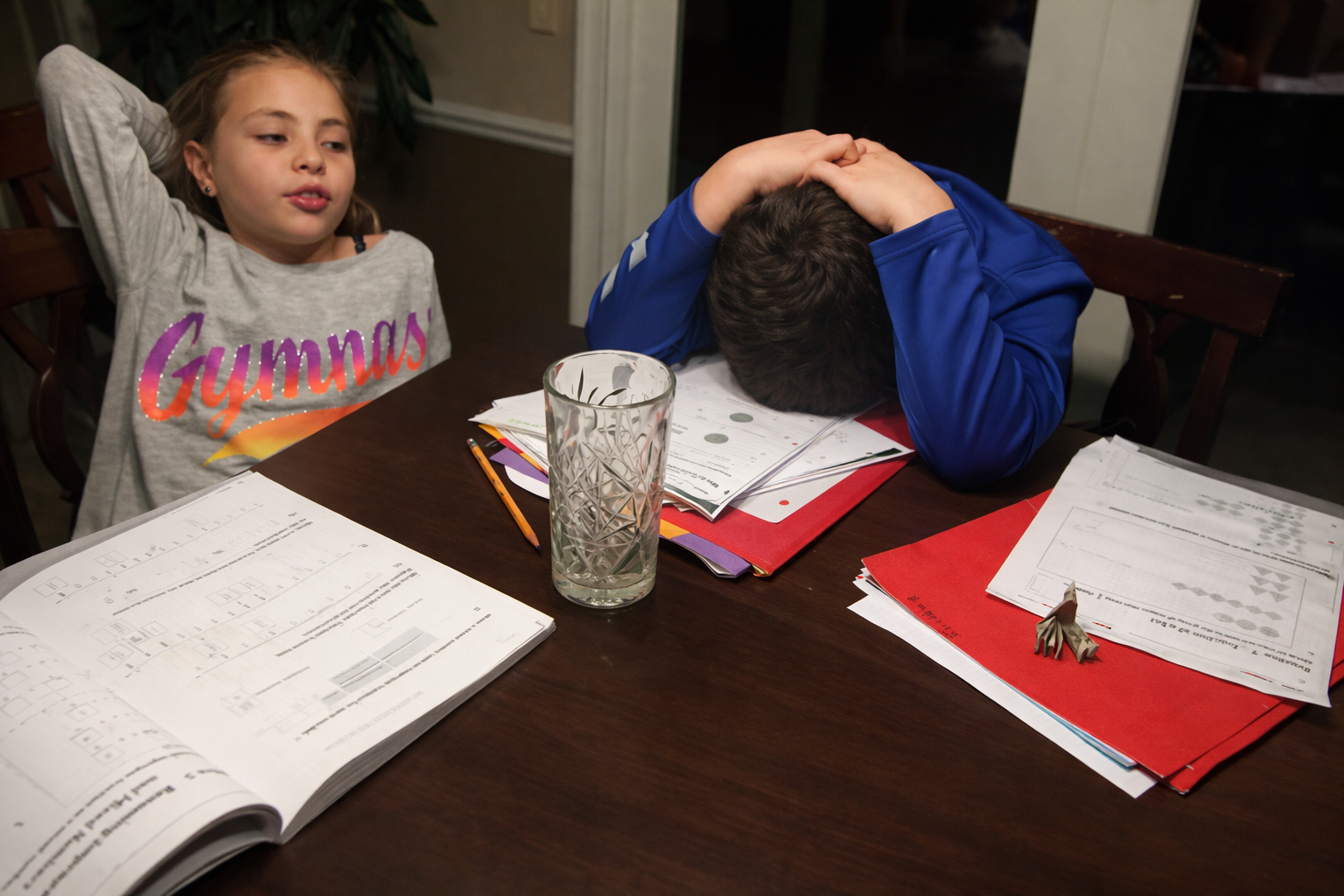
Ran for 5 days, from March 3 to March 8, 2026, the last day Crush saw it.
Run by Jennifer Carlson on Facebook. Crush is not the advertiser and does not verify its claims. See this ad in Meta's Ad Library(opens in a new tab)
Want an ad like this for your product?
Crush makes new ad images for your product from this ad: your logo, your product photo, your offer.
Trials from $19.95 USD, then $79.95 USD a month. Cancel anytime.
About this ad
- Meta Ad Library ID
- 847990364964891
- Platforms
- Facebook, Instagram, Audience Network, Messenger and Threads
- Relaunches
- 0
- EU reach
- 31
Ad text
Yesterday I got an email from my son's teacher. I almost didn't open it. Because for the last two years, every email from school meant the same thing. Another incident. Another "we need to talk." Another reminder that my kid was the problem. But this one was different. She said that it had been his best week in school yet. She said he raised his hand three times in class, that he had waited his turn before blurting out the answer, and that he helped another student with their worksheet. That he's been one of the most improved kids she's seen all year. I read it twice. And then I sat at my kitchen table and sobbed. Because three months ago, I got a very different phone call from his teacher. He'd made an impulsive choice that hurt another child — not out of anger, not because he's "bad," but because his ADHD brain reacted faster than he could reason. And now he was sitting in the principal's office with tears running down his face. Full of guilt. Full of fear. Full of heartbreak. When I picked him up he was quiet. Small. Not the loud, bouncing, can't-stop-talking kid I'm used to. He stared out the window the whole drive home. And then at bedtime — in that tiny voice he only uses when something is really heavy — he looked at me and said: "Why did God make me this way?" Nothing prepares you for that. Nothing. Not the books. Not the podcasts. Not the other parents who "get it." Nothing prepares you for your child looking at you and asking why they're different. Why their brain won't let them control their emotions. I held him and told him there was nothing wrong with him. That his brain was beautiful. That he just needed a little extra help sometimes. But after he fell asleep, I went to my room and fell apart. Because I didn't know how to help him. I'd been trying for years. The charts. The consequences. The reward systems. The therapy. I was doing everything right, and nothing was changing. And my son — my bright, funny, loving son — was starting to believe he was broken. That was my rock bottom. Not a meltdown. Not a phone call from school. My child asking what was wrong with him. I couldn't let that be the story he grew up with. — Two weeks after that night, my friend Jess called me. Her son has ADHD too. He's a year older than mine. Same kind of kid — big heart, big energy, big feelings that come in too fast and too hot. She could hear it in my voice. I didn't even have to tell her what happened. She just said: "How bad?" I told her everything. The principal's office. The car ride. The bedtime question. The part where I fell apart after he fell asleep. She was quiet for a minute. Then she said: "I need to tell you what happened with Ethan. But you have to let me finish before you say anything." She told me that six months ago, Ethan was exactly where my son was. Same calls from school. Same meltdowns. Same spiral. Same look on his face at the end of a bad day — that look where they're not angry anymore, just defeated. She'd tried everything I'd tried. Therapy. OT. Reward charts. Calm-down corners. Supplements that he either refused to take or that did nothing. Two different parenting books. A behavioral plan that worked for three days and then stopped. Then she took him to a pediatric nutritionist. Not a therapist. Not a psychiatrist. A nutritionist who specializes in kids with ADHD. The nutritionist ran bloodwork. And when the results came back, she sat Jess down and said something that changed everything. "You're trying to fix behavior. But behavior is the last thing in the chain. Before behavior, there's emotion. Before emotion, there's the nervous system. And before the nervous system, there's brain chemistry. If the chemistry is off, nothing downstream works. You can't teach a brain to regulate itself when it doesn't have the chemicals to do it." Jess said she just sat there. Because it was the first time anyone had explained why all the strategies only worked sometimes. Why the calm-down corner worked on Tuesday but not Thursday. Why the breathing exercises helped at 10 AM but were useless by 3 PM. It wasn't that the strategies were bad. It was that his brain only had enough fuel to use them part of the time. And by the afternoon — after six hours of holding it together at school, managing noise and sitting still and processing instructions and suppressing impulses — the tank was bone dry. And a brain on empty can't use a strategy any more than an empty car can use a GPS. The nutritionist explained that kids with ADHD are frequently running low on two specific brain chemicals. Dopamine — the one behind focus, motivation, and impulse control. The thing that lets a brain stick with a boring task, wait its turn, and pause before reacting. When it's low, every demand feels enormous. Every instruction feels like the last straw. Every worksheet feels impossible even when the kid is smart enough to do it in his sleep. And that's also why he can play video games for three hours but can't do homework for ten minutes — video games flood the brain with dopamine. Worksheets don't. Serotonin — the one that stabilizes mood and tells the nervous system "you're safe." When it's low, emotions come in at full volume. A small frustration hits like a catastrophe. A broken crayon feels like the end of the world. And the anxiety — the stomachaches before school, the bedtime spirals, the constant worry about messing up and getting in trouble — that's the nervous system stuck in fight-or-flight because serotonin isn't there to tell it to calm down. She told Jess: "Your son isn't choosing to melt down. His brain doesn't have the brakes. You can't teach brakes. You have to build them." And then she told her about saffron. Not the cooking spice. A clinical-strength extract — two compounds called crocin and safranal — that has been studied for its ability to support the brain's natural production of both dopamine and serotonin. Both. At the same time. Jess said: "There's a study that compared it head-to-head with Ritalin in kids with ADHD. Not as a side supplement. Directly compared. The results were comparable. For focus, behavior, everything — rated by both parents and teachers." I didn't say anything. I was doing the thing she told me not to do — mentally rolling my eyes. Because I'd tried supplements. They didn't work. She knew. She said: "I tried them too. They were garbage. Most of what's on the shelf is underdosed filler. The saffron amount is decorative. The magnesium is the wrong form. You give it to your kid for a month, nothing happens, and you decide the whole approach is a dead end. But it's not the approach. It's the product." The nutritionist had recommended a specific one. Clinical-dose saffron extract — the actual concentration used in the studies, not a marketing sprinkle. Magnesium to calm the nervous system. Lion's mane for clarity. B vitamins to fuel the whole dopamine and serotonin production chain. Everything in one gummy that these kids actually take. A gummy. Not a capsule he'd choke on. Not a liquid that tasted like medicine. Not drops I'd have to fight him on every morning. A gummy that her son Ethan chews every morning in ten seconds and asks for more. "Jess. Does it actually work?" She didn't give me a sales pitch. She just said: "Ethan hasn't been sent to the office in four months. He sleeps through the night. His teacher called me last week to say something nice. When's the last time a teacher called you to say something nice?" I couldn't answer. Because it had never happened. I ordered it before we hung up. — I didn't tell anyone. Not his dad. Not his teacher. Not my mom. Because I could not handle one more person watching me try something and waiting for it to fail. He chewed the first one on a Monday morning. Said it was good. Asked if he could have another one. I said no, just one. Week one — I watched him like I was waiting for a bomb to go off. Looking for any change. Looking for the flatness I'd read about with medication. Looking for anything. I didn't see much. Maybe Tuesday was slightly better than usual. Maybe he came home from school a little less wrecked. But I couldn't tell if I was seeing something real or just wanting it so badly that I was inventing it. I almost stopped. — Week two. Wednesday morning. His alarm went off. He came downstairs. I braced — because mornings in our house are usually the first fire of the day. The shirt's wrong. The cereal's wrong. The routine is a minefield of small demands that his brain treats like emergencies. He sat down. Poured his cereal. Ate it. Got up. Brushed his teeth without being told. Put his shoes on. I was standing at the counter holding my coffee, and I realized I hadn't said a single thing. Not "get dressed." Not "brush your teeth." Not "we're going to be late." Not one prompt. He just… moved through it. I didn't react. I was terrified to breathe wrong. Like if I acknowledged it, it would disappear. We got in the car. His sister was talking. He answered her. Not snapping. Not yelling at her to be quiet. Answering. Like a brother. Like a normal morning. I dropped him off. He said "bye, Mom" and walked in without pausing at the door. Without freezing. Without looking back. I sat in the parking lot for five minutes because I couldn't drive. My hands were shaking. Not from fear. From the weight of two years of terrible mornings suddenly lifting off my chest. — Thursday after school he had homework. Math worksheet. Ten problems. I put it on the table. He looked at it. I waited. This is normally where it starts. The groan. The "I can't." The head on the table. The pencil that ends up across the room. The spiral that turns a ten-minute assignment into a ninety-minute war. He picked up the pencil. Did the first problem. Did the second one. Got stuck on the third. I held my breath. He stared at it. Erased something. Stared at it again. Then said: "Can you show me how to do this kind?" Just asked. No meltdown. No "I'm stupid." No shutdown. He just asked for help like it was the most normal thing in the world. I showed him. He finished the rest. Seventeen minutes. Put the worksheet in his folder. Went to play. Seventeen minutes. I used to count homework in hours. — Bedtime that weekend. He brushed his teeth. Got in bed. I read him a chapter. He said goodnight. I waited in the hallway. Five minutes. Ten minutes. No footsteps. No "Mom?" No door opening. I peeked in. He was asleep. Completely out. Mouth open, arm hanging off the bed, the way kids sleep when their brain feels safe enough to actually let go. Fifteen minutes. Start to finish. I stood in his doorway for a long time. Because I was looking at something I hadn't seen in years. My son. Sleeping. Peacefully. Not because he was exhausted from fighting his own brain all day. But because his brain was finally calm enough to rest. — By the end of the first month, his teacher asked to talk to me. I braced myself. Out of habit. Because that request has never meant anything good. But she said he was different. Calmer. More engaged. Not shutting down when things got hard. She said he'd been participating — actually raising his hand instead of blurting out or zoning out. She asked what changed. I just smiled and said "we're trying something new." That was two months ago. And yesterday — yesterday I got that email. The one that said he helped another student. That he's been one of the most improved kids in her class. That she's proud of him. She's proud of him. Do you know how long I've waited to hear someone other than me say that about my son? — Last night at bedtime I was tucking him in. Same bed. Same room where three months ago he asked me why God made him this way. He was lying there — calm, sleepy, his face soft the way it only gets when his brain isn't racing. And he said: "Mom? I think I want to be a scientist." "Yeah? What kind?" "The kind that studies space. Because there's stuff out there nobody's found yet and I want to be the one who finds it." Three months ago he asked me what was wrong with him. Last night he told me he wants to discover things nobody's found yet. Same bed. Same kid. Same brain that moves a million miles an hour. But three months ago that brain was his enemy. Last night it was his superpower. Nothing is fixed. Nothing was ever broken. His brain just finally has what it needs. And the world is getting to see what I've always seen. — He's the same kid he was three months ago. Same big heart. Same loud laugh. Same brain that talks about space until he runs out of breath. But the struggle isn't the loudest thing about him anymore. If you're where I was three months ago — getting the calls, wiping the tears, wondering if it ever gets better — I need you to hear this. It does. Your child isn't bad. They never were. Sometimes the brain just needs fuel. And sometimes the thing that changes everything is smaller than you think. One gummy. Every morning. Twelve seconds. That's what changed our life. EDIT: Everyone keeps messaging me asking what I use. Here's the exact gummy — clinical-dose saffron extract, magnesium, lion's mane, L-theanine, Rosemary, B6, B12. The real concentrations, not filler. This is what he takes every morning: [uselumexa.com/pages/saffron-2]
Where the ad sends people
uselumexa.com
Yesterday I got an email from my son's teacher.
Lumexa
Learn more: uselumexa.com(opens in a new tab)