
Active· since Apr 23, 2026
- 145
- days running
- 0
- relaunches
Ad copy
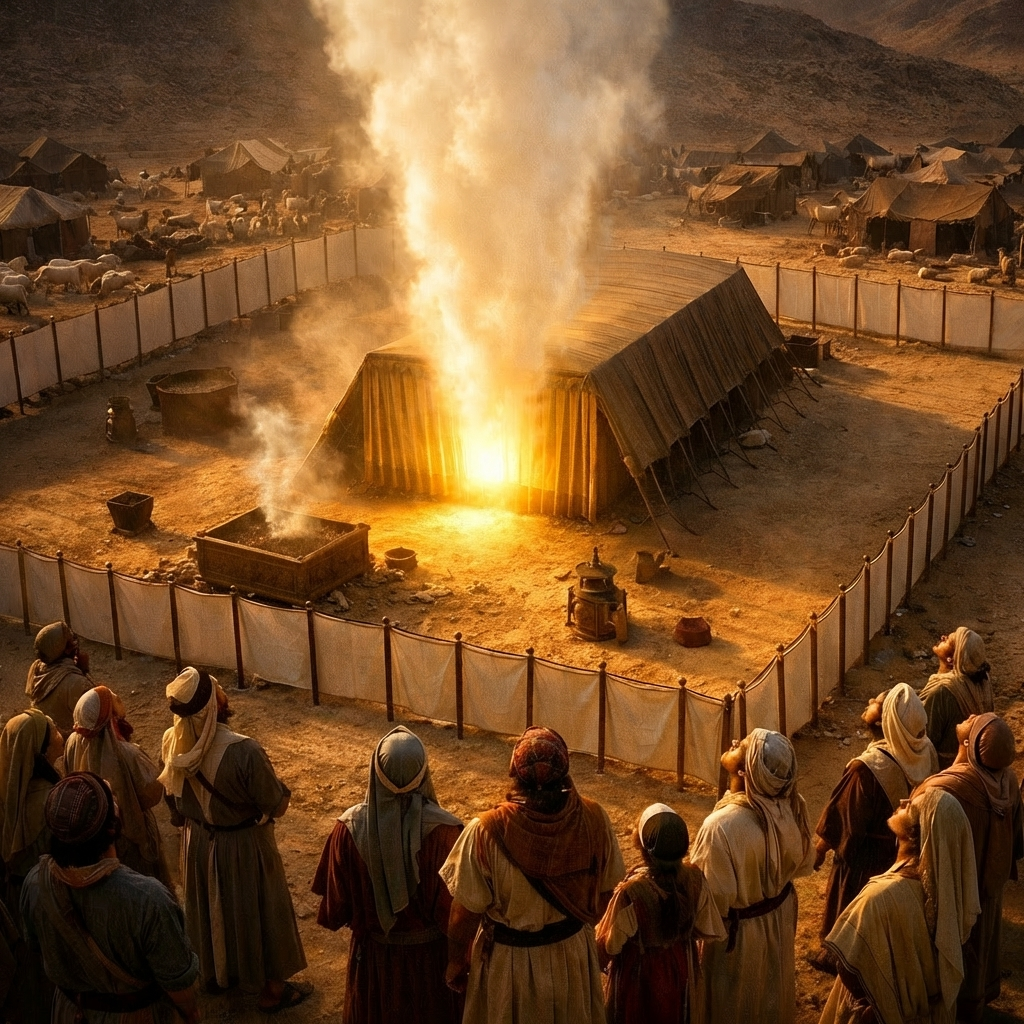
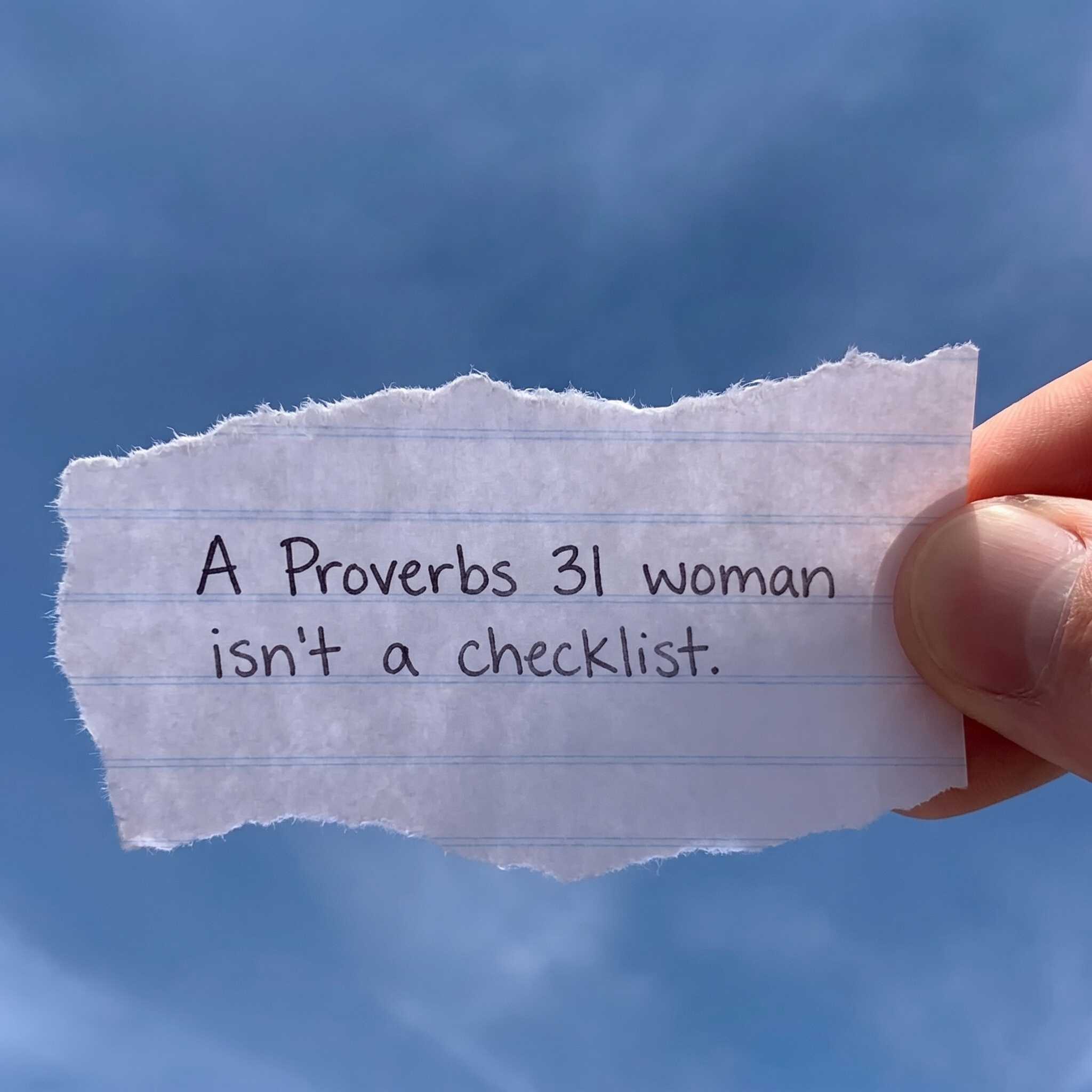
The most misunderstood chapter in the entire Bible is the one that has been used to make women feel like failures for centuries. It is Proverbs 31. And it does not say what you have been told it says. Every Christian woman has heard of the Proverbs 31 woman. She wakes before dawn. She makes her own clothes. She buys property. She runs a business. She feeds her family. She serves the poor. She never complains. Her children call her blessed. Her husband praises her. She is perfect. And she has been silently crushing Christian women for generations. Because somewhere along the way, the church turned a poem into a performance review. And millions of women have been grading themselves against it ever since. Here is what Proverbs 31 actually is. It is not a checklist. It is not a job description. It is not a standard you are supposed to measure yourself against every morning while you are trying to get your kids dressed and your coffee made. It is a Hebrew acrostic poem. Each verse begins with a successive letter of the Hebrew alphabet. Aleph. Bet. Gimel. Dalet. All the way through to Tav. Twenty-two verses. Twenty-two letters. In perfect alphabetical order. That structure matters. Because in the Old Testament, the Hebrew acrostic form was reserved for one specific purpose. Worship. The same literary structure is used in Psalm 119 — the longest psalm in the Bible — to praise the character of God. It is used in Lamentations to cry out to God in the depths of despair. It is the form Hebrew poets used when they wanted to express something complete, total, and sacred. The author of Proverbs 31 used the literary form reserved for worshipping the Almighty to describe a woman. That is not a checklist. That is a hymn. But the most important word in the entire chapter is the one that has been translated wrong in almost every English Bible. "Who can find a virtuous woman? For her worth is far above rubies." The word translated "virtuous" is the Hebrew word chayil. That word appears 243 times in the Old Testament. Nearly every other time it appears, it is translated as "warrior." "Army." "Mighty force." "Valiant soldier." It is the word used to describe David's elite fighting men. It is the word used for armies marching into battle. It is the word used for strength, power, and military might. 243 times. And in almost every instance it describes soldiers and warriors. Except here. In Proverbs 31. Where English translators softened it to "virtuous." The question is not "who can find a virtuous woman." The question is "who can find a warrior woman — a woman of mighty force — whose worth is far above rubies." Proverbs 31 is not a domestic performance review. It is a battle hymn. Written in the literary form reserved for praising God. Using the word reserved for warriors. And for generations, women have been reading a poem that calls them mighty and hearing a checklist that calls them inadequate. The woman in Proverbs 31 is not described as perfect because she does everything right. She is described as chayil because she fights. She provides. She builds. She creates. She protects. She endures. That is not a standard to feel crushed by. That is an identity to stand in. And most Christian women have never been told any of this. That is the problem I discovered last Mother's Day. I have been teaching Scripture my whole adult life. More than 18 years. And last May I preached the sermon every pastor preaches on Mother's Day. Proverbs 31. The virtuous woman. I talked about her hard work and her faithfulness and how she was an example to every wife and mother. After service a woman in my congregation asked to speak with me. She was a single mother of three. She worked two jobs. She had not missed a Sunday in four years. She was crying. "Pastor, I cannot hear that chapter anymore. Every Mother's Day someone stands up and reads me a list of things I will never be. I do not wake before dawn to make clothes. I wake before dawn because I work the early shift. I do not buy fields. I cannot afford my rent. I love God. I love my children. And every year this chapter makes me feel like I am failing at both." I stood there in the hallway of my own church and I had no answer. Because she was right. I had been preaching Proverbs 31 as a standard for 18 years. I had never once told my congregation it was a poem. I had never explained the acrostic structure. I had never told them what chayil actually means. I had been reading a battle hymn to exhausted women and presenting it as a checklist they could never complete. I drove home that afternoon and sat at my desk and looked up the word chayil. When I saw that it was the same word used for David's mighty warriors — the same word used for armies — I put my head in my hands. That woman was not failing Proverbs 31. She was living it. Working two jobs. Raising three children alone. Showing up every Sunday. Fighting every single day. She was chayil. And nobody had ever told her. I could not see it. And it was not my fault. Nobody had ever given me the roots. That week I opened my computer and started writing. Genesis. Everything someone needs to know before reading Genesis. Who wrote it. When. Why. What was happening. The main themes. How it connects to the larger story. Not a sermon. Not a devotional. Just the roots. Then Exodus. Leviticus. Numbers. Every single book of the Bible. Sixty-six pages. One page per book. It took me three months. Three months of putting 18 years of studying into a format any believer could use completely on their own. No pastor required. I started giving copies to people in my church quietly. One at a time. Every single person said the same thing. "This is the first time I have ever understood what I was reading." Not because I am some brilliant teacher. But because I finally gave them what they actually needed. The roots. And once you have those roots, the Bible you thought you knew becomes something you have never actually encountered before. Proverbs 31 is just one chapter. There are thousands more moments like it waiting in the pages you have already read. Did you know that the Ark of the Covenant contained three objects — the broken tablets, the rejected manna, and the questioned rod — and that the Mercy Seat where blood was sprinkled sat directly on top of all three? That the gospel was physically sealed inside a gold box in the desert? Did you know that when Jesus said "It is finished," the Greek word tetelestai was the same word stamped on receipts in the Roman Empire to mean "paid in full"? That His final declaration was not a statement of ending but of completion. A cosmic debt marked as settled. Context changes everything. Every single time. I call it FaithSprout. The 66 Roots Journey. 66 pages. One for every book of the Bible. Each page gives you what you need before you read. Who wrote it. When. Why. What was happening. The key themes. The symbolism. And how it connects to your actual life today. Written in plain language. No seminary terms. No complicated theology. Just the roots that make everything you have already read suddenly land with the full weight God intended. The Bible is not confusing because it is unclear. It is confusing because we are reading it without the foundation that made it clear to the people it was first written for. They heard the acrostic structure and recognized a worship poem. They heard chayil and thought of warriors. They read Proverbs 31 and felt honored, not crushed. We read a translated checklist and feel like we are never enough. This guide gives you that foundation back. If you have ever read Proverbs 31 and felt like a failure instead of a warrior. If you have ever read a passage of Scripture and sensed there was something deeper underneath the words that you could not quite reach. If you have ever wondered what you would find in God's Word if someone just gave you the roots first. This is what you have been looking for. God did not write Proverbs 31 to crush you. He wrote it to crown you. He never does anything by accident. Do not let a lack of context be the thing that keeps you from hearing what He actually said about you. Get closer to God by actually understanding His Word. Not just the familiar parts. All of it. The whole story. That is what The 66 Roots Journey was created for. And you can start yours by clicking below.
Read this if the Bible feels harder than it should. ☝️
Understand all 66 books of the Bible more easily
SHOP NOWLike this ad? Make it yours.
Crush rebuilds this exact creative around your product — your brand, your colors, your offer — in about a minute.