
Inactive· since Jun 17, 2026
- 27
- days it ran
- 0
- relaunches
Ad copy
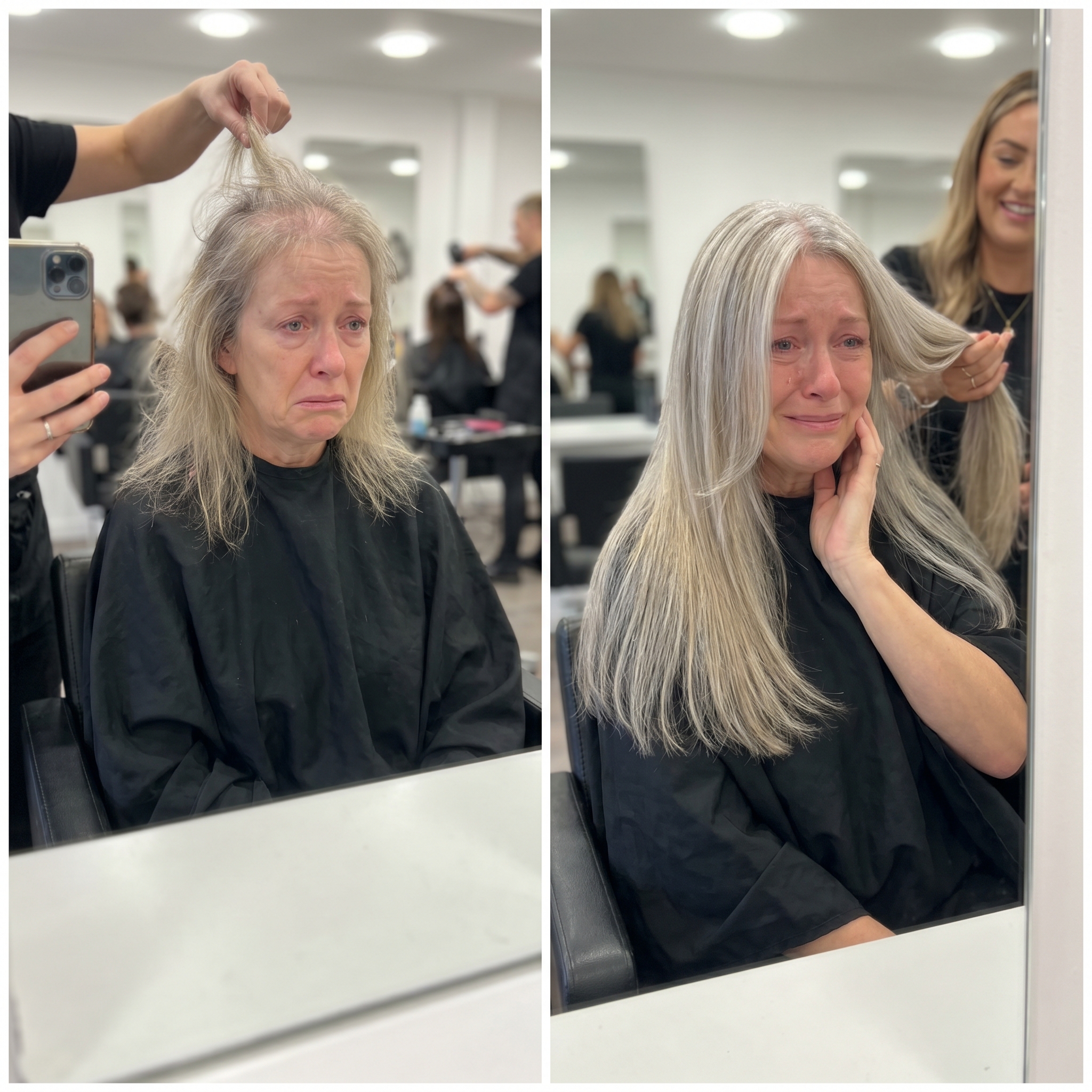
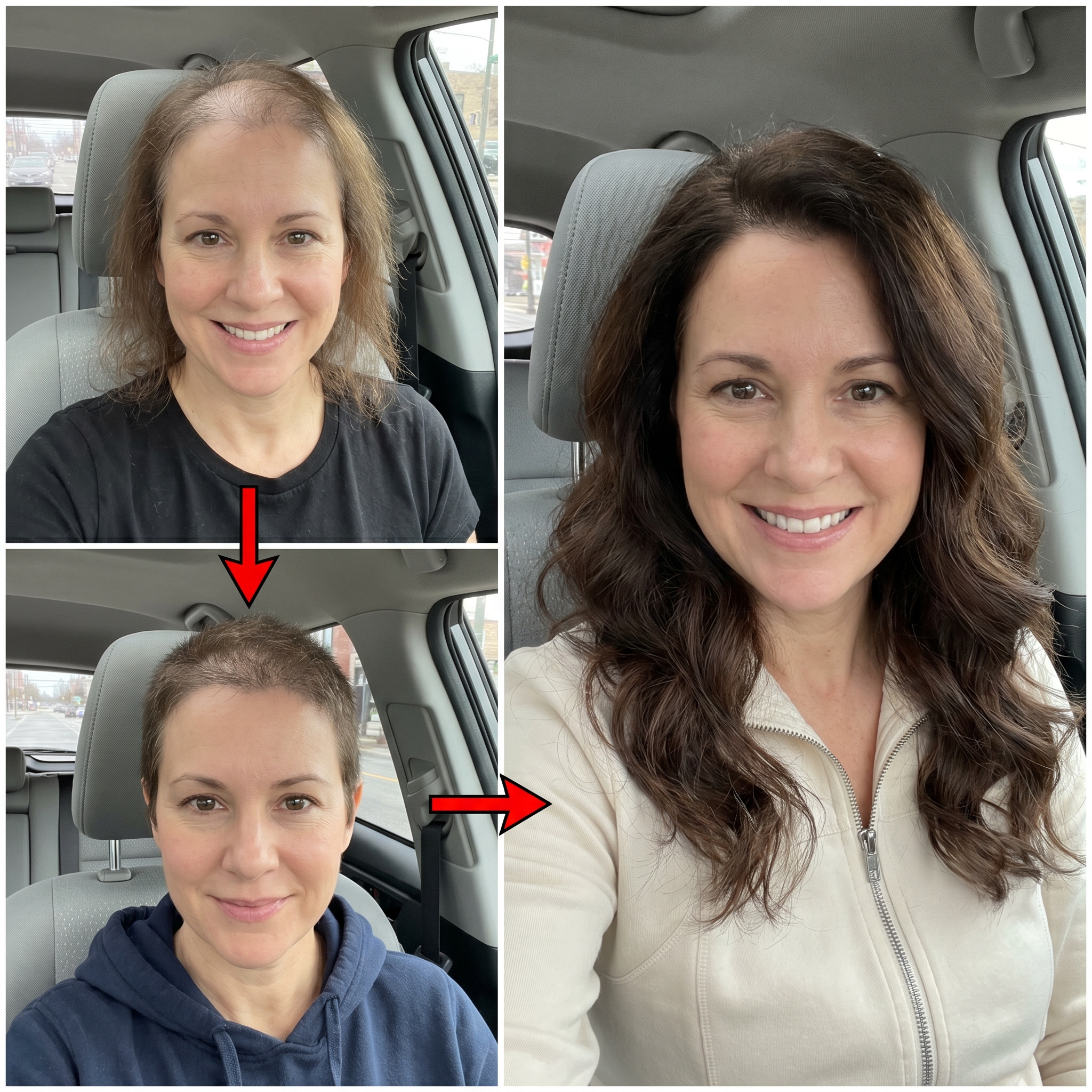
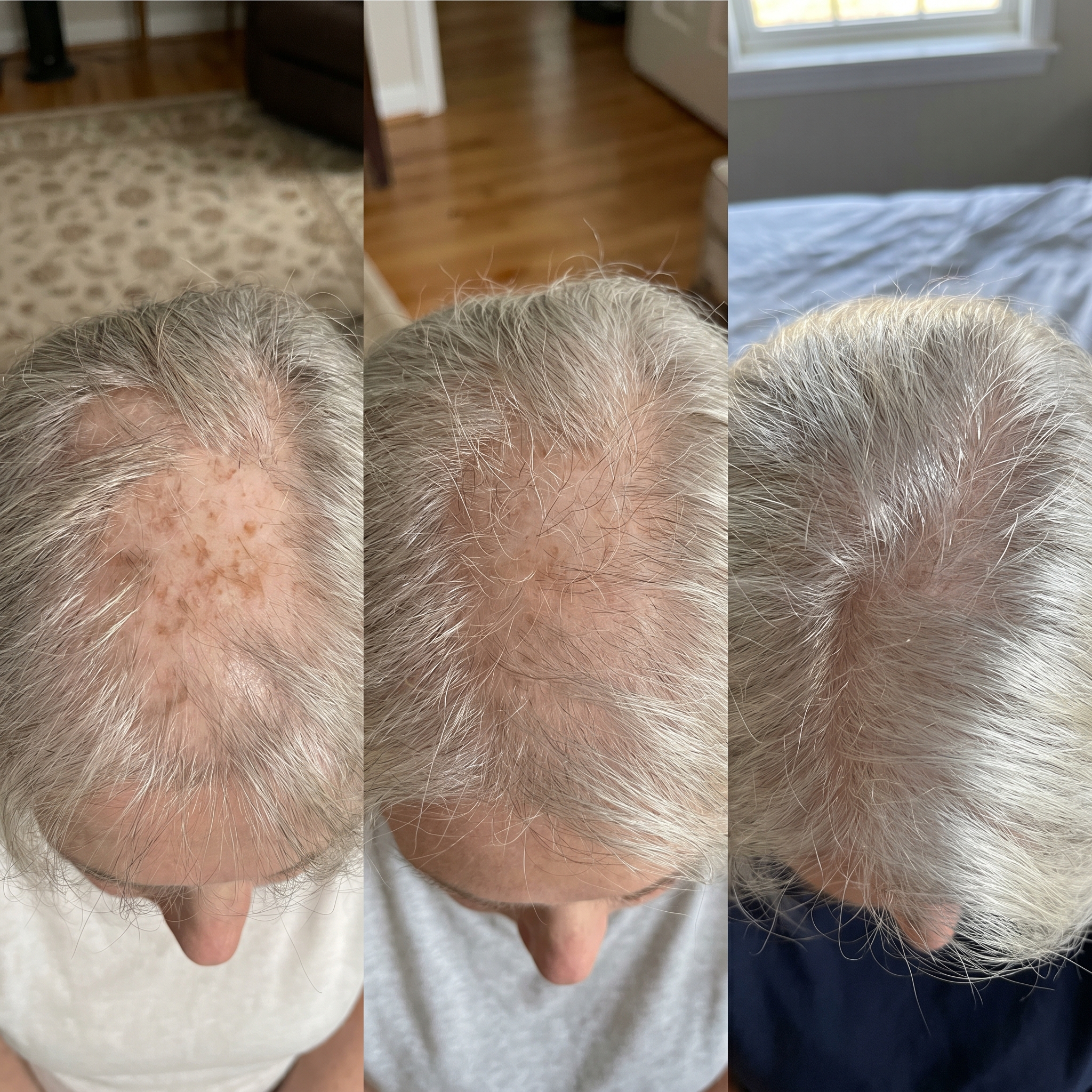
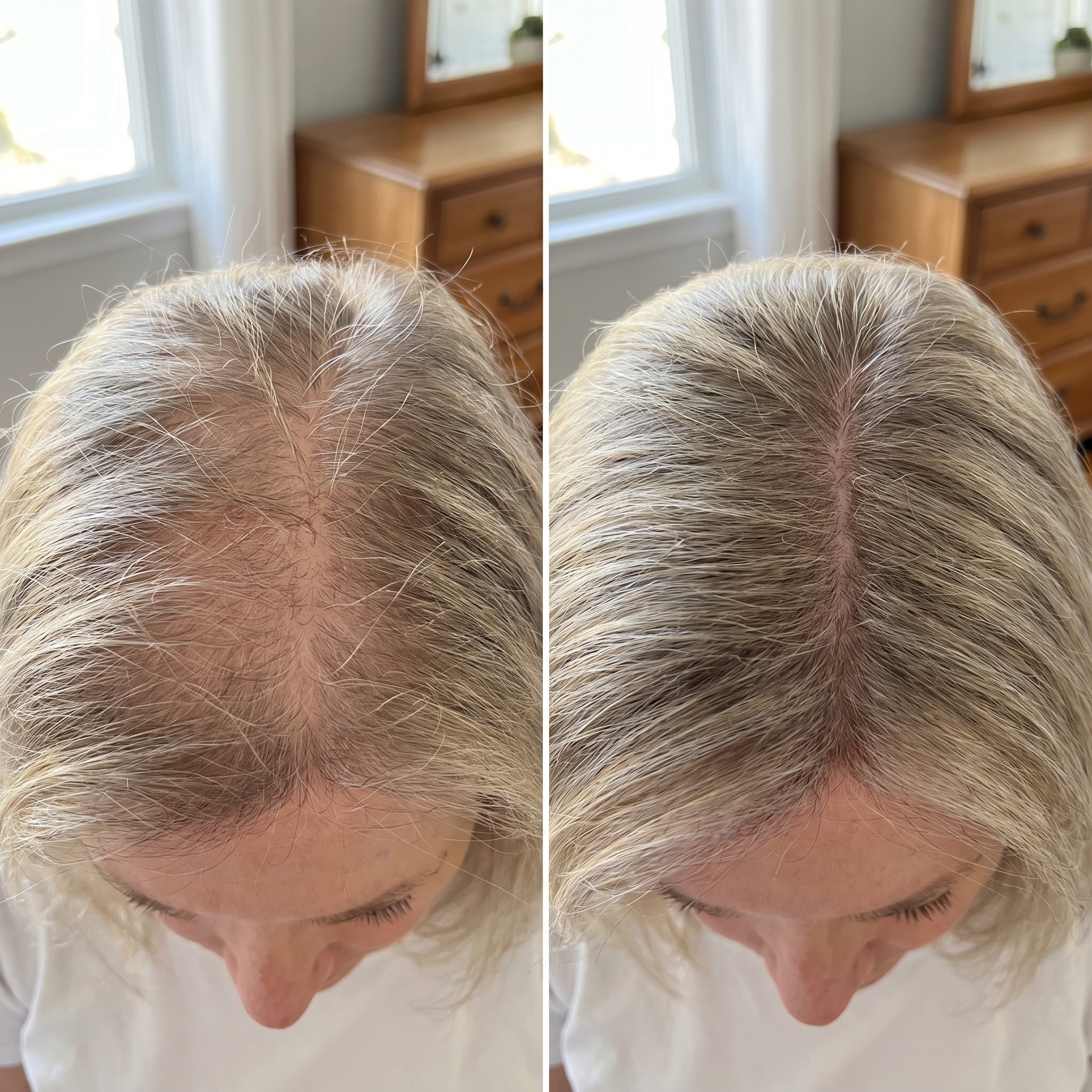
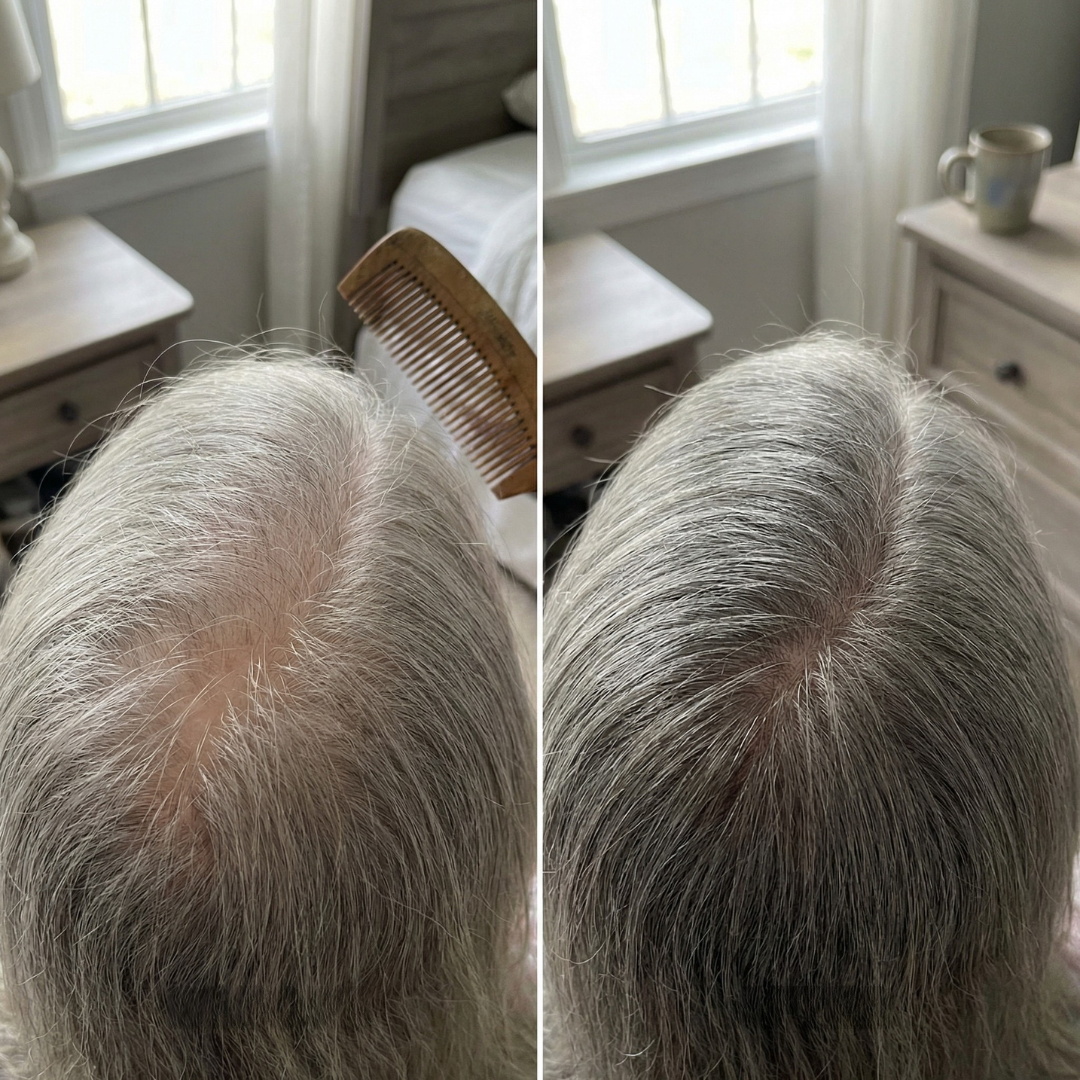
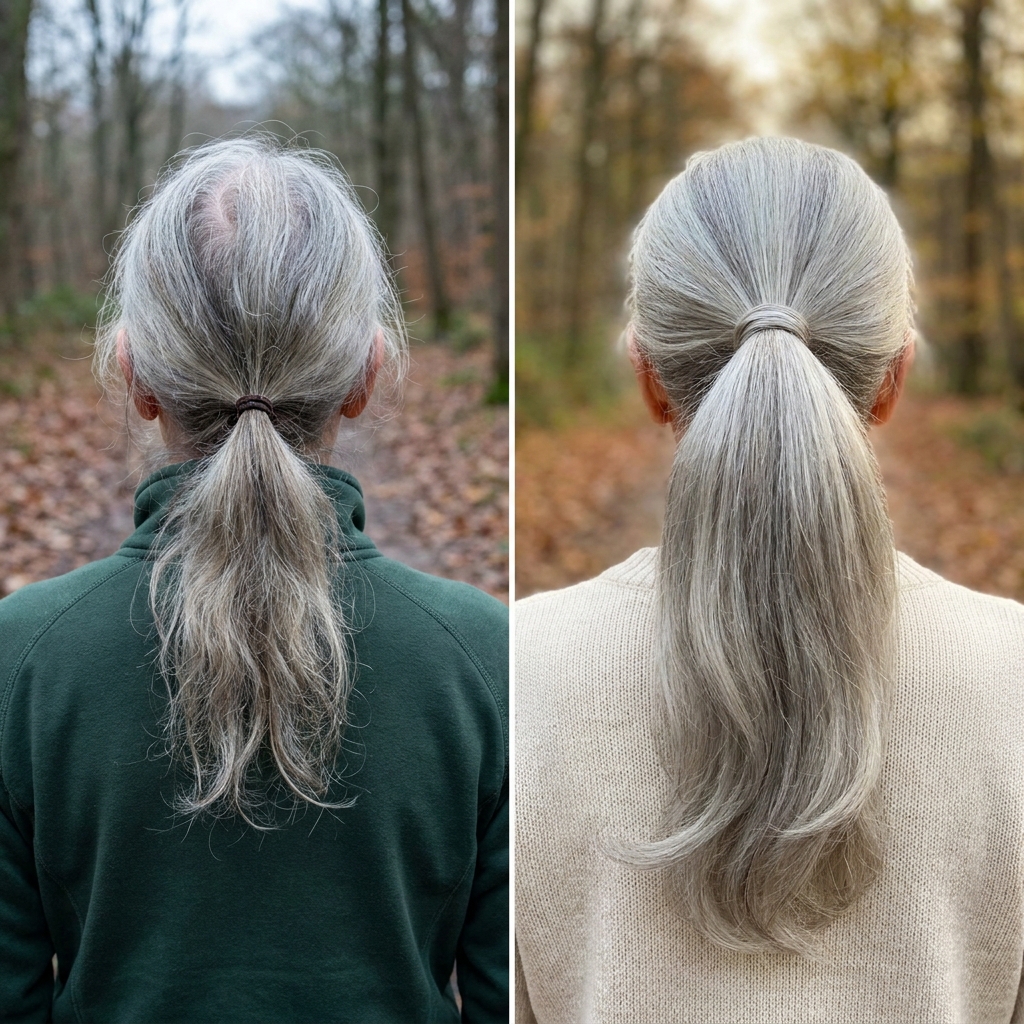
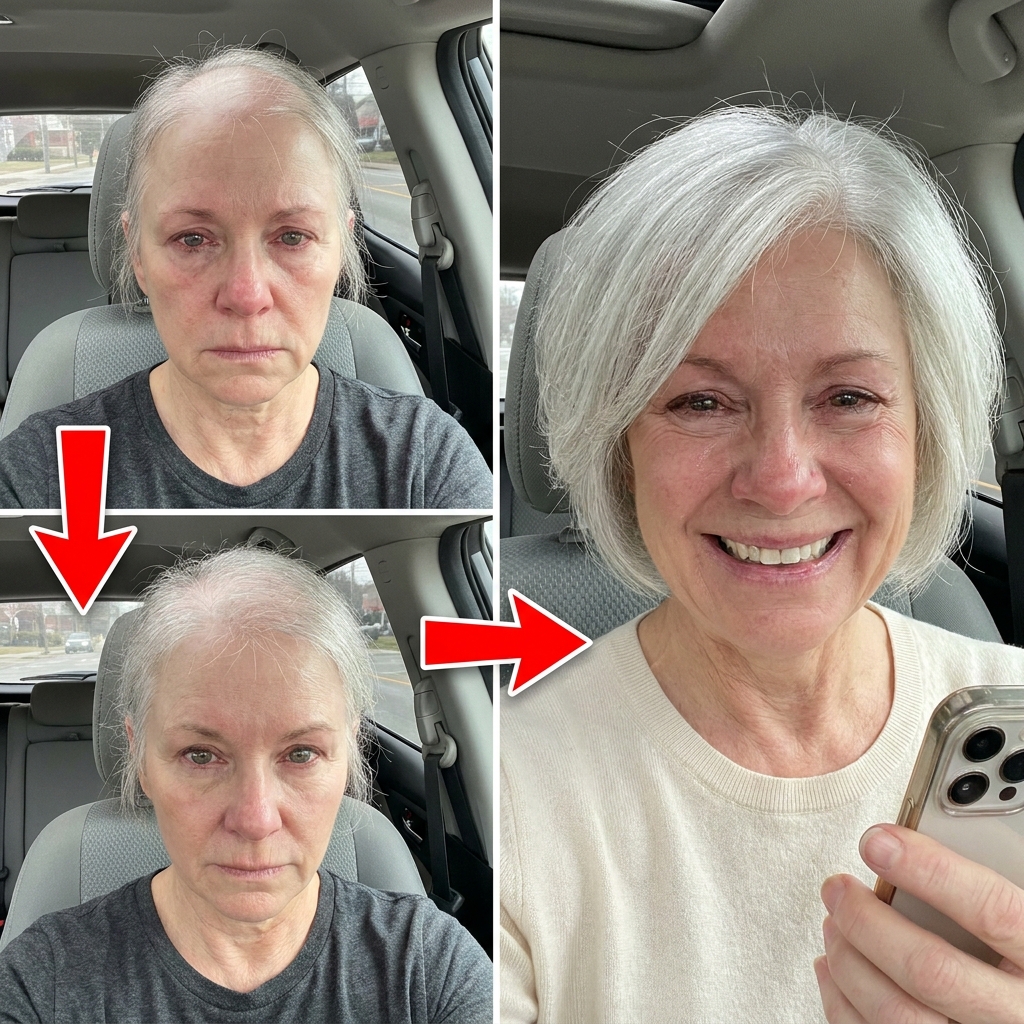
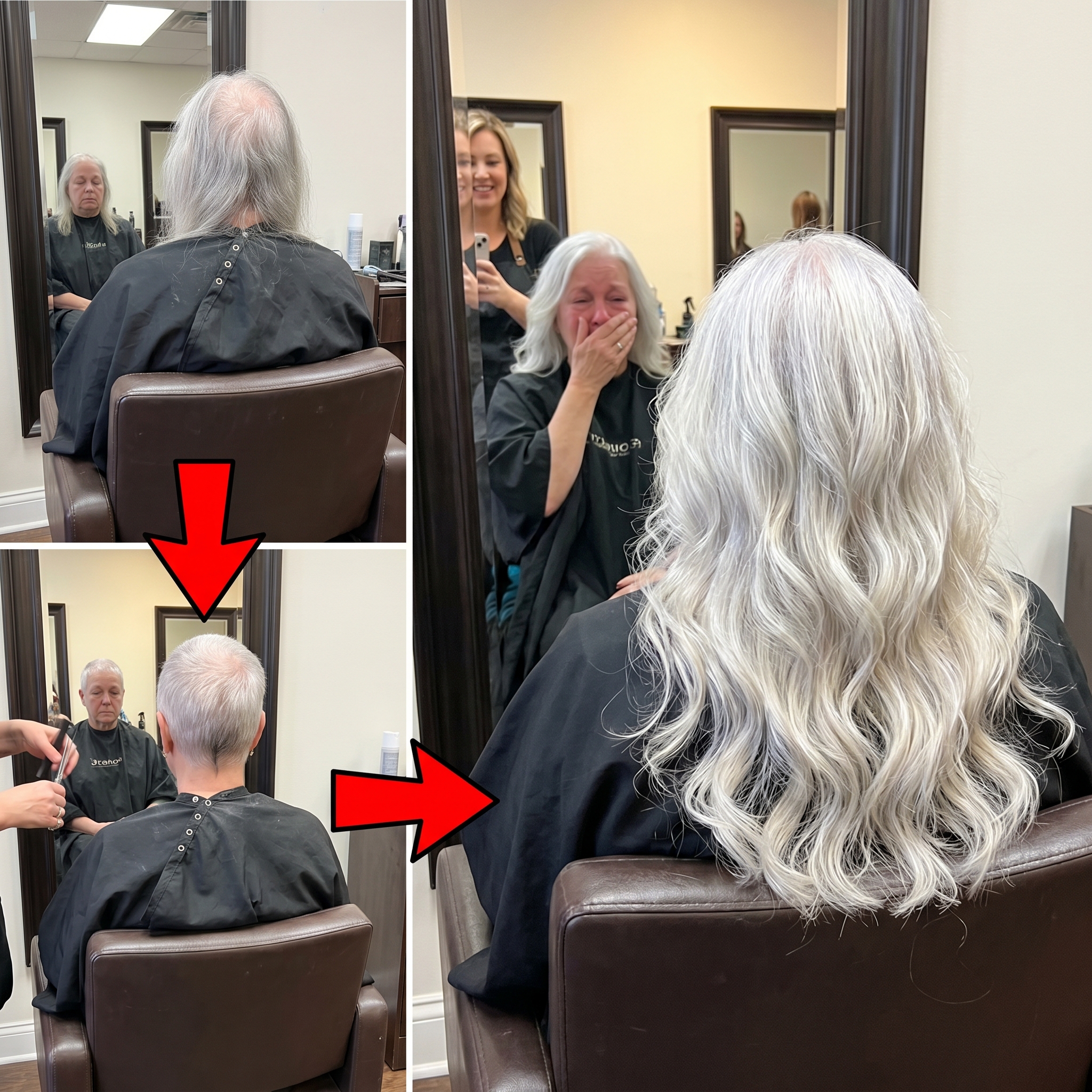
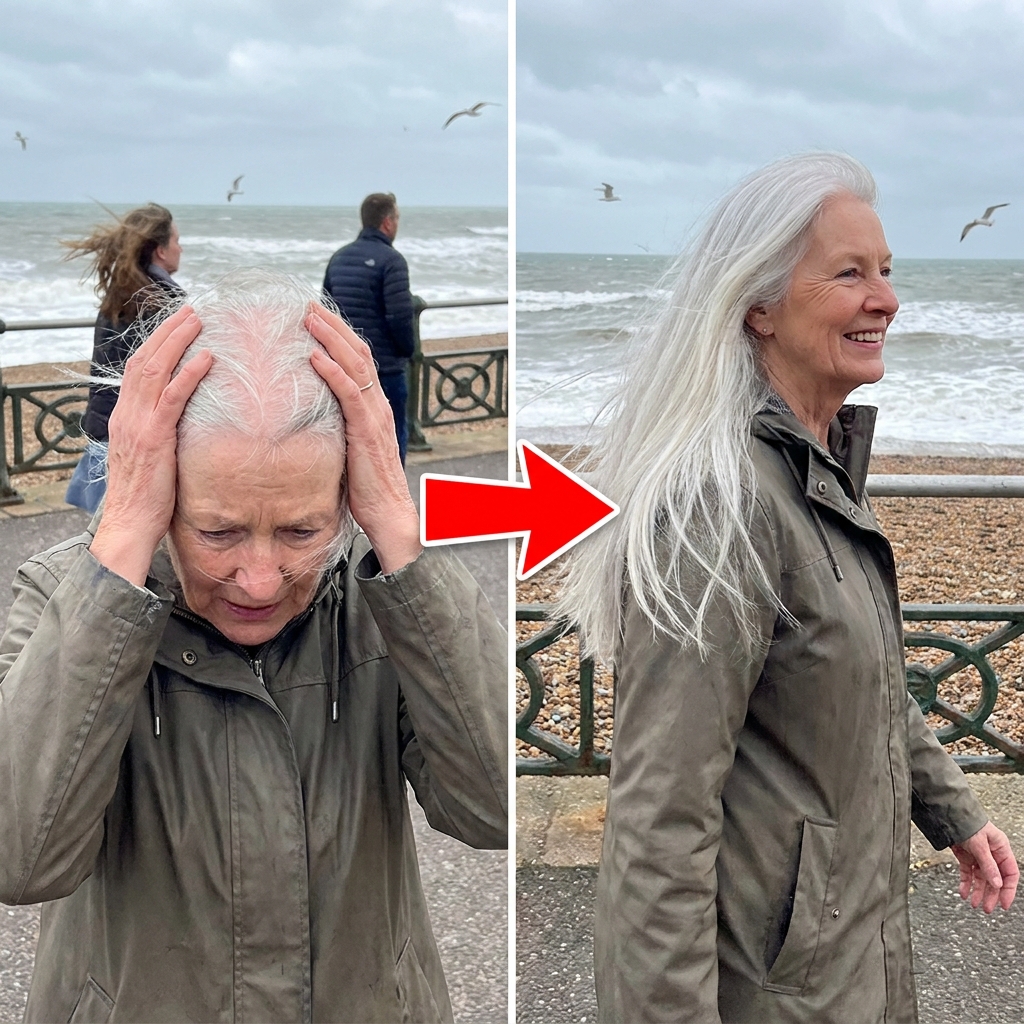
The thicker a product promises to make your hair, the less likely it is touching the reason your part keeps widening. Read that again, because it explains why your bathroom shelf is full and your parting is still spreading. I am 48, I live in Chester, and I am an HR business partner. I spend my working days reading people — watching for the thing they are not saying in the meeting. So it is a particular kind of irony that I missed what was happening on my own head for the better part of a year. I noticed it properly one Tuesday morning, doing the parting in the magnifying side of the bathroom mirror. The line down the centre had a width to it now. A pale stripe where there used to be a thin seam. I tilted my head, changed the angle, parted it the other way. The stripe followed me. I stood there longer than I would admit, turning my head under the light like I could find the angle where it had not happened. So I did what a problem-solver does. I started buying. The first thing I bought was a peptide "growth" serum, the kind with a dropper and a label that read like a chemistry paper. £42 a bottle, and the bottle lasted six weeks, so call it the better part of £130 over the three months I gave it a fair run. I applied it morning and night, exactly as instructed, and I marked the calendar so I could not lie to myself about consistency. Then came the derma roller, because a forum told me the serum would "penetrate better" if I rolled first. £24 for the roller, plus the small ritual of cleaning it, plus the part nobody mentions, which is that rolling a tender scalp at eleven at night is not relaxing. After that, the big one. A minoxidil course. £29 a month, and I lasted seven weeks before I abandoned it, because the shedding got worse before anyone promised it would get better and my scalp itched in a way that made me self-conscious in meetings. Seven weeks at £29 is roughly £51, and I threw the rest of the bottle away. Let me total the receipt, because I actually did, sitting at the kitchen table one evening with the empties lined up in front of me. The peptide serum: £130. The derma roller: £24. The abandoned minoxidil: £51. Two hundred and five pounds, and a parting that was, if anything, slightly wider than when I started. I had treated the surface of the problem from three different angles and never once touched the problem itself. That is a strange thing to admit when reading people is supposedly your profession. Here is the part I wish someone had said to me at the very beginning. Almost everything sold for thinning hair works on the strand — the hair you have already grown. Volumisers coat it, serums condition it, sprays lift it at the root so it stands further from the scalp. All of that is cosmetics on the visible fibre. None of it reaches down into the follicle, which is the small factory under the skin where the next strand is actually made. The strand is the output. The follicle is the machine. And in perimenopause, the problem is at the machine. Polish the output all you like — if the machine has slowed, you are dressing up less and less hair each month. The mechanism is not complicated once a person explains it plainly. As oestrogen falls in perimenopause, the local DHT activity at the scalp rises. DHT shortens the anagen phase — the growth phase — at the follicle. So the follicle spends less time producing hair and more time sitting dormant between cycles. Each new strand comes through a little finer, a little shorter, until from the outside the follicle looks as though it has simply stopped. It has not. The stem cells are there. The blood supply is there. The structure of the follicle is intact. It is silenced, not dead. A European dermatology team published findings around 2011, extended in the years since, describing exactly this — the menopausal follicle as chemically quietened rather than finished. Somehow that is still not said plainly in most consultation rooms. And once you understand that the silencing happens locally, at the scalp, the rest follows. You have to interrupt it locally too. Quieten the local DHT where the follicle actually lives, and the growth phase extends again; the follicle goes back to producing a normal strand. That is the whole logic. It is also why everything I had bought was beside the point. Every one of those products lived on the strand or on top of it. Not one of them ever reached the machine where the next strand is decided. They were all addressing the wrong floor of the building. When I found Mellenza, what caught me was that the actives were chosen for the follicle, not for the fibre. Caffeine is the lead — it blocks 5-alpha-reductase right at the follicle and extends the anagen phase, which is the exact lever the mechanism points at. Polygonum multiflorum root extract is in there, drawn from Korean dermatology research on follicle proliferation. Arginine, to improve the microcirculation around the follicle, so the blood supply doing the work has an easier route in. Ginger extract for anti-inflammatory scalp support, calming the ground the follicle sits in. And biotin, working at the scalp to support the integrity of the new growth as it comes through — a finisher, not the headline. It is a spray. You apply it at night to the crown, along the part, and at the temples. Topical, because the silencing is local and the answer has to reach the same place. Not a shampoo. Not a volumiser. Not a supplement. A topical wake-up call for follicles that had been kept dormant for too long. I will be honest about the timeline, because I am tired of products that imply a fortnight. Nothing happened in the first three weeks, and I had braced for that. Around week four, the shedding eased — the small dark count on the shower wall thinned out, and the drain stopped being the thing I dreaded each morning. By week six the texture was different in my hands. Heavier somehow, less brittle, the way hair feels when it is being made properly rather than barely. Week nine was the one that made me sit down. I had taken a phone photo of my parting back in week one, the way I take a photo of a meter reading, and when I held them side by side the line was visibly narrower, and along the edge of it there was a fringe of short, fine, new growth standing up like the start of something. By month four I had stopped checking, which is its own kind of progress. And then the thing that made it real. I have a book group, the same six of us once a month, and one of them — a friend I have known for years, the sort who notices a new haircut from across a car park — stopped mid-sentence pouring the wine and said, "Your hair. What have you done to your hair." Not a question really. A noticing. I had not told a soul I was using anything. That is the moment you cannot buy and cannot fake — when someone who was not looking for it sees it anyway, and means it. The proof, for me, was not in any mirror. It was Whitby, a few weekends ago, walking the seafront with my husband, the wind coming off the water hard enough that I had spent every coastal walk for two years with a hand half-raised, ready to flatten and tuck and cover. I walked the whole front with my hair down and the wind doing what it wanted to it and my hand stayed by my side. I did not think about it once until afterwards. That is the whole point. Not perfect hair. Just hair I had stopped managing. If the strand-versus-root thing landed for you — if you have, like me, been treating the output and never the machine — then it is worth giving a topical that targets the follicle a proper run, the same twelve weeks the mechanism actually needs. Mellenza ships from the UK with a 90-day money-back guarantee, a complimentary scalp massager, and an ebook on the menopausal hair cycle. P.S. Keep the receipt of everything you have already bought, the way I did. Add it up once. The number is usually the thing that gets people to stop buying the strand and start treating the root.
Why thickening promises miss the real cause
Women's Health · Updated April 2026 Menopause · Hair Routine 7 Mistakes That Make Menopausal Hair Loss Worse, And the 30 Second Ritual 10,000 Women Used to See Regrowth in 8 Weeks Dr. Sarah Mitchell — Women's Health Writer. If you're standing in front of the mirror doing the 3-elastic ponytail t...
LEARN MORELike this ad? Make it yours.
Crush rebuilds this exact creative around your product — your brand, your colors, your offer — in about a minute.