
Active· since Aug 21, 2026
- 29
- days running
- 0
- relaunches
- 1,376
- EU reach
Ad copy
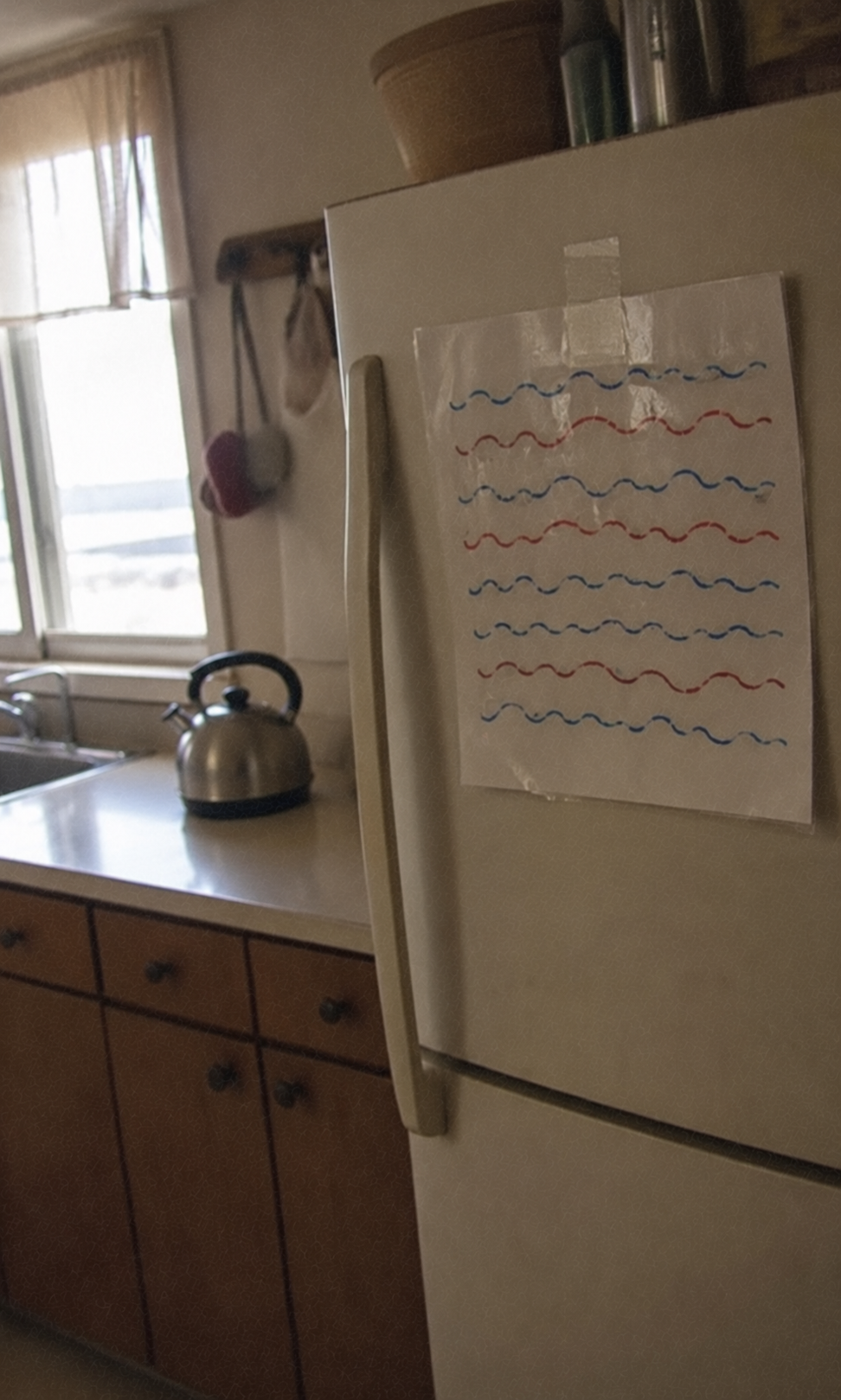
A Town That Runs on One Schedule Nobody Chose, and the Sister Who Couldn't Stop Watching It Work. Picture a town where everyone checks the same piece of paper before they make a single plan. Not the news. Not a feed. A tide chart — printed, taped to fridges and shop doors and the ferry kiosk, the same chart in every window. Now picture a woman arriving in that town for a week, with a rolling suitcase and a phone full of reminders she's already behind on. Call her Marianne. The town is where her sister lives now. Call the sister Gail. And what happens to Marianne in that town takes seven days, two folding chairs, and one laminated piece of paper — and it's going to follow her home. Let me back up. You need to know Marianne first, and you do know her. There's a Marianne in your family. There may be one in your mirror. Marianne is sixty-one. She works part-time doing the books for two small businesses, sits on one board she keeps meaning to rotate off of, and is the person her whole family calls when anything needs organizing. She is organized. That's the thing everyone would say about her, and it's true. Her calendar is color-coded. Her lists have lists. And here is the other true thing, the one nobody would say because nobody sees it: Marianne rebuilds her entire life every single morning. Look at how her days actually start. The color-coded calendar is full, but nothing in it repeats — every day is a fresh negotiation. What gets done first. What can slide. Which of the lists is the real list today. Every morning, a new ruling on everything. She is, in effect, the judge, jury, and appeals court of her own day — and court is in session the moment her eyes open. And somewhere in the last few years, a pattern set in that she has never once said out loud. The things with other people's names on them always survive the morning negotiation. The clients' books. The board packet. Her mother's pharmacy run. And the things with her own name on them — the walk she means to take, the thing she means to start, the small daily somethings she keeps deciding to begin — those get rescheduled by the court, every day, with excellent reasons. Not abandoned. Never abandoned. Rescheduled. There's a difference, and the difference is what lets it go on for years. By evening, the negotiation itself has taken most of the day — and the last items on the list roll forward to tomorrow, where the court will hear their case again, first thing, right after everything else. Marianne would tell you she needs a better system. Marianne has told herself that for eleven years. She has bought the better system several times. The systems were all good. The court overruled them all. So: the visit. Gail moved to the harbor town three years ago, after the shipping office she'd managed for thirty years finally let her retire. Everyone expected her to last one winter. She calls it the best decision of her life, and she says it in a way that has started to annoy the family, which is how you know she means it. Marianne arrives on the afternoon ferry with work in her bag — of course there's work in the bag — planning to relax and catch up on a few things, a sentence that has never once been true in the history of luggage. And the first thing she notices, before the suitcase is even unpacked, is the piece of paper on Gail's fridge. A tide chart. Laminated. The month's tides, printed in two colors, high and low, morning and evening. "What's this for?" "Everything," says Gail, and puts the kettle on. Marianne assumes that's a joke. It takes her about two days to learn it isn't. The town runs on the tide. Not poetically — operationally. The boats go out when the water says so, and not an hour before or after, because the harbor mouth is shallow and the tide doesn't take meetings. The fish shop opens when the boats come in. The café fills when the fish shop opens. The ferry runs on the deep water. The men who mend the traps do it on the low tide, on the same stretch of gravel, because that's when the gravel is there. Even the walkers — and the town is full of walkers, Gail among them — go out when the flats open up, because that's when the beach is a beach. Nobody in that town negotiates their morning. The morning arrives pre-decided. The water already ruled. You just check the chart and slot yourself in. Marianne finds this, for the first two days, mildly horrifying. She says so, over chowder: "Doesn't it drive you crazy? You can't just decide to do something. The schedule's not even yours." And Gail — who managed a shipping office for thirty years and has watched her sister run her own personal courtroom for longer — stirs her bowl and says the thing Marianne will be turning over on the ferry home. "That's the gift, Mare. The schedule's not mine. I never have to fight myself about it." She lets that sit, and then: "You know what I noticed after thirty years of scheduling other people? A decision costs something. Every single one. Doesn't matter how small. And back home I was spending mine like a drunk — deciding the same ten things fresh every morning, forever. Here, the tide decides the shape of the day, and I just live in it. I haven't argued with a morning in three years." Marianne, who has argued with every morning since before her lists had lists, changes the subject. But she starts watching. She watches Gail's mornings, specifically, because Gail's mornings are the strangest thing in the town: they contain no decisions at all. The kettle goes on at the same time. The walk happens when the chart says the flats are open — not when Gail feels like it, when the chart says — and because the chart says it, it happens, every day, in weather Marianne wouldn't take out a trash bag in. The two folding chairs go out to the seawall for the evening high tide, both of them, every evening, because that's when the boats come back through the harbor mouth, and watching them in is apparently a thing one simply does. Nothing about any of it is willpower. That's what gets under Marianne's skin by day four. Gail was never the disciplined sister. Marianne was the disciplined sister — ask anyone, ask their mother. And yet Gail's days have a spine, and Marianne's have a courtroom. By day five, Marianne is doing the arithmetic on the seawall while the boats come in. You knew this was coming. So did she. Her days don't fail from laziness — nobody who knows her would dare say the word. They fail from negotiation. Every one of her routines is in-house — self-issued, self-enforced, self-appealed. Every morning, each one has to win its case again, against everything with someone else's name on it — and the ones with her own name on them keep losing on the merits, because the merits are always somebody else's emergency. Gail's routines never argue their case. They're anchored to something outside the courtroom entirely — a schedule that doesn't negotiate, doesn't reschedule, and doesn't care how the morning feels. The tide isn't discipline. The tide is jurisdiction. The morning is simply not Marianne's court's business, in that town. And the last thing Gail says at the ferry, handing her sister a paper bag of smoked fish for the trip, is the town's whole philosophy in one sentence, delivered the way sisters deliver things — sideways, while looking at the boat: "Stop putting your own name on the docket, Mare. Tie the thing to a tide instead." Which brings this story — through that door, and no other — to beets. People have been eating beets for thousands of years. They were in the root cellars and soup pots and pickle jars of half the world's grandmothers long before anyone could say why — kept, replanted, and put up every autumn on nothing more than the accumulated verdict of generations. Today the why is better understood: beetroot naturally contains dietary nitrates, and the body converts those into nitric oxide, a molecule that helps support healthy blood flow.* Beets also carry betalains — the deep crimson pigments that give them their color and a cutting board a week of memories. Nature did the formulating a long time ago. But the beet, in every traditional form, is exactly the kind of case that dies in Marianne's court. The roasting is a project needing an open evening — a docket item, arguing for a slot against everything with a name on it. The juicing is equipment and cleanup — a bigger docket item. Every classic form of the beet files its motion daily and loses to the emergencies, which is the only reason a food this old keeps vanishing from lists like hers. Rosabella Beetroot exists to be the form that never enters the courtroom: two capsules, once a day. Too small to need a ruling. Small enough to tie to a tide — and every modern morning still has one tide left in it. The kettle. The coffee maker. The thing that happens anyway, pre-decided, before the negotiating starts. What's in it reads in one breath. 1,300mg of organic beetroot powder per serving — a serving being those two capsules. One active ingredient, with the dose printed plainly on the label, nothing to decode. Non-GMO, third-party lab tested, produced under GMP, made in the USA from globally sourced ingredients. It contains no caffeine. Sixty capsules in a bottle; thirty days. And now the part you don't usually read in something like this, so read it twice: Nobody here is going to promise you a transformation. We're not going to tell you what you'll feel or when. Bodies are different, and yours doesn't owe an advertisement anything. Marianne has bought eleven years of better systems that each promised a new woman by spring; we're not filing another one. What can be promised is what's on the label — and a form small enough to skip the docket entirely. One thing before anything goes in a cart: talk to your doctor or pharmacist before adding any supplement, especially if you take any medication. This goes alongside the rest of a routine — the meals, the walks, the sleep — not in place of any of it. On Amazon, Rosabella Beetroot sits at 4.4 out of 5 across more than 14,000 ratings as of August 2026. And there's a 90-day guarantee: if you're not satisfied for any reason, return it within 90 days of delivery for a full refund. The ending is small, and by now you know why. Marianne goes home on the afternoon ferry. She does not move to the coast. She does not buy a boat. The court reconvenes Monday morning, because some institutions are permanent. But two things came off that ferry with her. The first is taped to her fridge: the tide chart. Expired now — the month is over — but that was never the point. It hangs there the way a diploma hangs, to certify a thing that was learned. The second is next to the kettle. Because Marianne found her one tide. The kettle goes on every morning of her life — it always has; it's the single item that never once needed the court. And now the bottle stands beside it, and the smallest thing with her own name on it happens right there, pre-decided, before the docket opens. Nothing else about her mornings changed, and that's the honest part. The negotiations continue. The lists still have lists. But one thing stopped needing to be decided — and one, it turns out, was exactly the number that was missing. The routine got simpler. Not the life. The life is the life. Just the routine — one small piece of it, moved outside the courtroom, tied to a tide that was already coming in every morning anyway. P.S. If you run your days from a courtroom too — every routine self-issued, self-enforced, and re-argued every single morning — the finding of this story is worth saying plainly: the things that survive in a busy life are the ones that stopped being decisions. Don't look for a better system. Look for a tide you already have — the kettle, the coffee, the thing that happens anyway — and tie the smallest item with your own name on it to that. P.P.S. What it is, plainly: organic beetroot powder in capsules — 1,300mg per two-capsule serving, one active ingredient, dose on the label, no caffeine, non-GMO, third-party lab tested. Thirty days a bottle. That's the whole story. P.P.P.S. The guarantee is satisfaction-based: not satisfied, for any reason, return it within 90 days of delivery for a full refund. Enough time to find out whether it becomes the one item that skips your docket — which is the only test that matters for deciding that. Individual experiences vary. These statements have not been evaluated by the Food and Drug Administration. This product is not intended to diagnose, treat, cure, or prevent any disease.
Support stamina and heart health every day
LEARN MORELike this ad? Make it yours.
Crush rebuilds this exact creative around your product — your brand, your colors, your offer — in about a minute.