
Inactive· since Jul 9, 2026
- 51
- days it ran
- 0
- relaunches
Ad copy
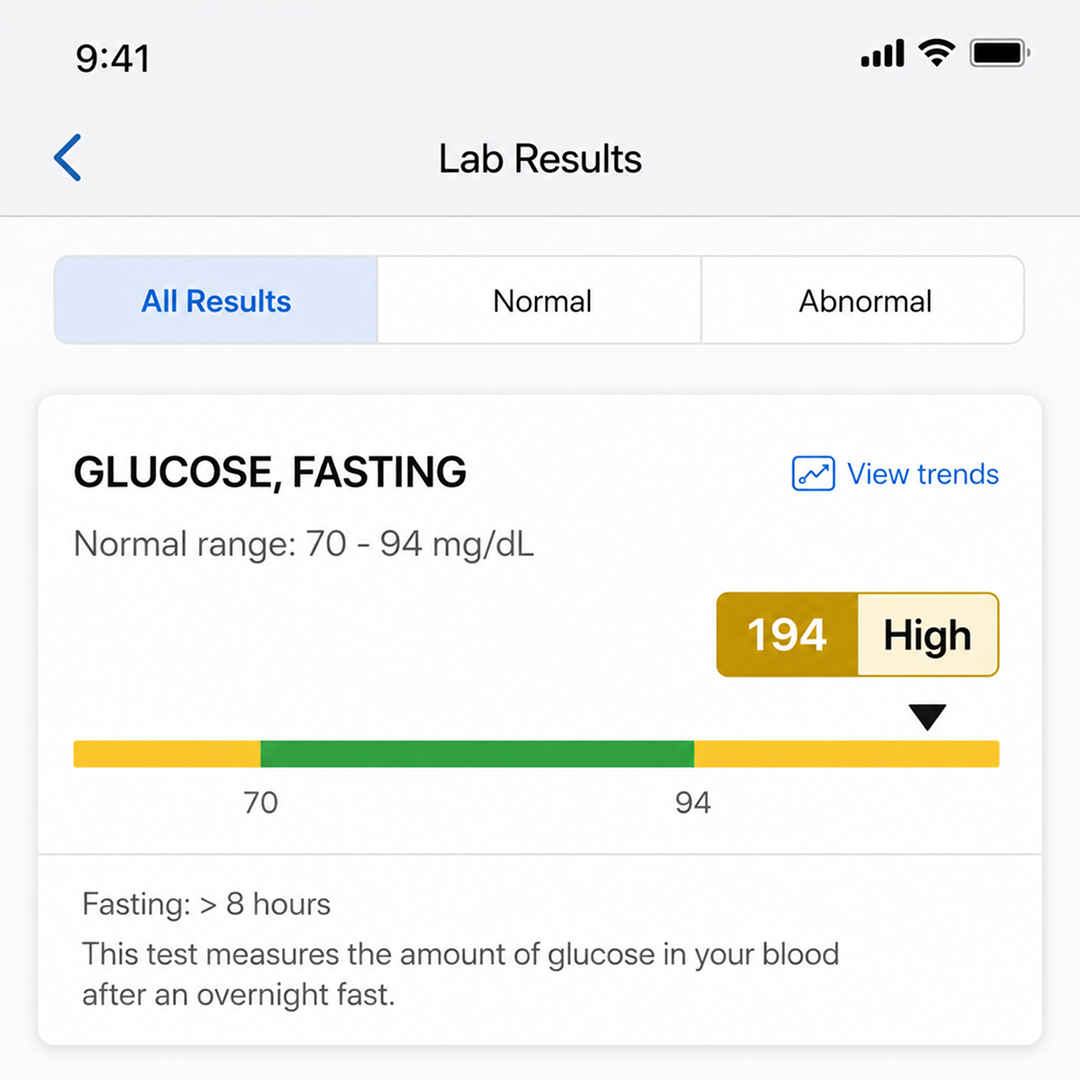
My husband is an endocrinologist. When my bloodwork came back, A1C 8.4, fasting glucose at 194, the first thing he did was hand me a diet plan. Carbs restricted to 45 grams per meal. No white rice. No bread. No pasta. No bananas. No potatoes. Sugar under 15 grams a day. Everything measured and monitored. I followed it perfectly. For five months. Weighed every serving of rice on a kitchen scale so many times my daughter asked if I was "training for something." Gave my bananas to the neighbor, a fruit I'd eaten every morning for thirty years, because my husband the endocrinologist said that's what you do when your blood sugar is out of control. My A1C went from 8.4 to 8.2. Two-tenths of a point. Five months. That's when he put me on metformin. He didn't ask. He called it in himself. Four months later, I stopped taking it. In secret. He still doesn't know. And the reason I'm writing this, the reason I'm risking everything by putting this out there, is that what I found in his own hospital's medical library contradicts everything he's spent 30 years telling his patients about diabetes, diet, and medication. I need to be careful how I say this. Not because I'm afraid of the medical establishment. Because I'm afraid of what it means for my marriage. My name is Jeanie Carolyn. I'm 62. I've been married to Dr. James Carolyn for 34 years. James is a board-certified endocrinologist. He has a practice of over 3,400 patients. He is on staff at two hospitals. He has been named to the regional "Top Doctors" list nine years running. He has saved lives. Many of them. I love my husband. I need you to know that before I tell you the rest. For 34 years, I've been Dr. Carolyn's wife. That's not a complaint, it's a description. When you're married to an endocrinologist, his career becomes your atmosphere. You breathe it. You absorb it. You learn the language without taking the classes. I know what an A1C measures. I know the difference between Type 2 and prediabetes. I can follow a conversation about GLP-1 agonists and insulin sensitivity at a dinner party and know when to nod. I've attended hospital galas in floor-length dresses and stood next to James while he shook hands with the chief of medicine. I've hosted dinners where every guest had "M.D." after their name and the conversation was continuous glucose monitors and insulin pump algorithms and which pharmaceutical rep brought the best lunch to the office that week. I've heard James on the phone with patients at 10 PM reassuring them about their blood sugar numbers. Calm. Confident. Authoritative. "Restrict the carbs. Watch the sugar. Keep the portions consistent." "The metformin is protecting your remaining insulin sensitivity." "Your numbers are stable. Trust the process." I've heard those phrases so many times they became the background music of our marriage. So when my own bloodwork came back, A1C 8.4, fasting glucose 194, I didn't expect a conversation. I expected instructions. And that's exactly what I got. James was reading my results on his iPad at the kitchen counter. Sunday morning. Coffee. He was still in his bathrobe. Reading my lab report the way he reads hundreds of lab reports every week. Clinically. Efficiently. "Jeanie, your A1C is at 8.4. Fasting is 194. We need to get ahead of this. Carbs down to 45 grams per meal, weigh everything. No bananas. No white rice. No potatoes. Sugar under 15 grams. I'm going to set you up with a diabetes educator." He didn't look up from the screen. Not "What do you think?" Not "Here are the options." Not "How do you feel about restructuring your entire diet?" He prescribed me a diet the way he prescribes his patients. Decided for me the way he decides for them. Because in his world, there is nothing to discuss. A1C above 8 means dietary intervention first. That's the algorithm. That's the training. That's the thirty years. "Okay," I said. What else do you say? Your husband is an endocrinologist. He's not asking. He's informing. And the entire weight of his career, his expertise, his authority, the authority you've spent 34 years deferring to at dinner parties and hospital events and every medical decision your family has ever made, is behind that sentence. I followed the diet perfectly. Five months. Every grocery run planned around James's instructions. I stopped buying bananas, something I'd eaten every morning for thirty years. I weighed every serving of grain on a kitchen scale. I counted carbs to the gram. I skipped my granddaughter's birthday party because I couldn't eat a single thing that would be served, the cake, the ice cream, the pizza, the fruit salad. All of it off limits. My retest: A1C 8.2. Fasting 187. Two-tenths of a point. Five months of deprivation. James looked at the number on his iPad. Frowned. Then picked up his phone. Called the pharmacy. "Metformin. The standard starting dose. Start it tonight." Fifteen seconds. Done. I picked it up that afternoon. The pharmacist smiled at me. "Dr. Carolyn called this in for you. You're in good hands." She meant it kindly. I took the first dose that night. Swallowed it with water while James brushed his teeth next to me. He didn't watch me take it. Didn't need to. In his mind, it was handled. Diet failed. Medication prescribed. On to the next patient. Except I wasn't his next patient. I was his wife. The first month was manageable. Some queasiness after meals. Mild. I ate slower, kept crackers in my purse, adjusted. Month two. The bathroom emergencies. They started three or four times a week. Then daily. A sudden, urgent, unignorable pressure that meant I had exactly 60 seconds to find a bathroom. I stopped taking long drives without mapping out rest stops. I skipped a trip to the botanical gardens with my sister because I couldn't be that far from a toilet. I started keeping a change of clothes in the trunk of my car. The bathroom issues. That's important. They never stopped. I'd excuse myself in the middle of dinner. Mid-conversation with a friend. I'd wake up at 4 AM with the pressure and lie in the dark trying to calculate whether I could make it to the bathroom without waking James, because he had early rounds and I didn't want him to hear. Before James woke up. That's important. I didn't want him to hear. Because I knew what he'd say. I'd heard him say it a thousand times. "The GI issues are a known side effect. They typically resolve within six to eight weeks. If they persist, we can switch to extended release. The glycemic control benefits far outweigh the discomfort." Month three. The exhaustion. It came on gradually. Not normal tiredness, a bone-deep fatigue that had no obvious source. I'd wake up feeling like I hadn't slept at all, even after nine hours. By mid-afternoon I'd be sitting in a chair staring at nothing, too tired to read, too tired to call a friend, too tired to care. And the fog. I hadn't expected the fog. I'd read enough of James's continuing education materials to know that metformin depletes B12 over time, and B12 deficiency causes cognitive slowing. I'd be reaching for a word, a common word, and it wasn't there. I called my sister-in-law "Kate" for two minutes before I remembered her name was Karen. I knew what this was. Not because I'm a doctor. Because I've spent 34 years listening to doctors. I've heard James's patients describe this exact pattern. Every week. Sometimes every day. They call the office. They come in for visits. They say: "Doctor, ever since I started the medication, I can't leave the house without knowing where the bathroom is. I'm exhausted. I can't think straight. I'm getting worse, not better." And I've heard James's response. Over dinner. On the phone. In the hallway between the kitchen and his home office. "The GI issues usually improve. The fatigue may be related to your diabetes, not the medication. We're managing your progression. The alternative is unmanaged decline." He doesn't say it dismissively. He says it with genuine conviction. He believes it. He was trained to believe it. The guidelines he follows, the studies he cites, the colleagues who agree with him, they all believe it. I believed it too. For 34 years, I believed it. Until it was happening to me. The dinner party was in March. Eight guests. All physicians and their spouses. James and I host these twice a year, it's part of the practice. Relationship maintenance. Referral networks. The social glue of medicine. I'd been on metformin for three and a half months. The bathroom issues were at their worst. I'd spent twenty minutes that afternoon calculating whether to eat anything before guests arrived, whether the pasta salad on the buffet would be a mistake, whether I could position my chair near the door. Everyone was seated. Wine poured. James was holding court the way he does, the natural storyteller, the room's center of gravity. He was telling a story about a patient from that week. "She comes in convinced her A1C dropped from 8.2 to 6.4 because of a supplement. Convinced. 'Doctor Carolyn, I've been taking this and my numbers changed and I feel different.' So I retest. Her A1C had gone from 8.2 to 6.4 the visit before. Retest comes back at 7.3." He paused. Took a sip of wine. The table was leaning in. "I showed her the results. I said, 'Mrs. Delgado, A1C reflects three months of glycation. If you had truly improved that dramatically, your fasting glucose would be in the normal range. Yours is still in the 140s. What you experienced was a lab artifact and a behavior change. You started paying attention to your carbs when you started the supplement. The supplement gets credit for what your grocery list actually did.'" The table laughed. Knowing nods. The endocrinologist across from me said, "Every single week. Every single patient. They all think the supplement is working." James smiled. "I told her to stay on the metformin. We're managing her progression from A1C 8.2 to a stable 7.3. That's what matters." I was sitting at the end of the table. Three feet from my husband. Metformin in my bloodstream. Bathroom pressure I'd been suppressing for the last hour. Exhausted. Brain foggy enough that I'd lost the thread of the conversation twice. A1C still declining, my last check had come back at 7.9 while I was on the medication. His patient was right. Mrs. Delgado was right. Her supplement was doing something. And my husband, the man I've loved for 34 years, the man I trust with my life, was sitting three feet away telling a room full of doctors that women like her are imagining it. I excused myself. Went to the powder room. Sat on the closed toilet lid and pressed my palms against my eyes. I couldn't tell him. I could not tell this man, this respected, accomplished, genuinely caring man who has built his entire career on the foundation that Type 2 diabetes is manageable but progressive, that his wife's blood sugar was still worsening on his medication and his patient might have found something better. Because what would that mean? If I was right, he was wrong. Not wrong about me. Wrong about Mrs. Delgado. Wrong about the thousands of patients he'd reassured over thirty years. Wrong about the fundamental approach he'd built his professional identity on. I couldn't hand him that. I couldn't walk into the kitchen after the guests left and say "James, your diet plan didn't move my numbers and the metformin you put me on is destroying my life and your patient's supplement might actually be doing what your medication can't, and you just told a room full of doctors she was imagining it." That's not a conversation about blood sugar. That's a conversation about everything. So I said nothing. And for three more weeks, I took the pill twice a day and mapped out bathrooms and said nothing. The medical library was my rebellion. James has admitting privileges at the university hospital. The medical library is on the third floor, a quiet, wood-paneled room with journals lining the walls and a handful of computer terminals along the windows. Most doctors don't use it anymore, everything's online. But the library is still there. Still staffed. I went on a Tuesday afternoon. Told James I was going shopping. Parked in the hospital garage and walked through the lobby with my sunglasses on like a woman having an affair. Which, in a way, I was. An affair with information my husband hadn't authorized. I didn't know what I was looking for. I just knew that something was wrong, with the medication, with the diet, with the whole model James believed so completely, and I needed to understand it for myself. I sat down at a terminal and typed: "metformin diabetes mechanism progression insulin resistance" I read for an hour. The results were mixed, some studies showing benefit in slowing decline, some showing modest effect at best, most of them showing that A1C reduction on metformin plateaus around one point and rarely gets patients to normal range without additional medications. Then I typed: "carbohydrate restriction Type 2 diabetes disease progression" That's when the floor shifted. Study after study showing that carb restriction, the central dietary strategy for every diabetic patient in America, has a far more modest impact on disease progression than clinical practice suggests. That your body's blood sugar problem isn't primarily driven by what you eat. It's driven by the liver. The liver. I sat and stared at the screen. In 34 years of dinner conversations, I had never once heard my husband talk about the liver as the central organ in Type 2 diabetes. Pancreas, yes. Insulin resistance in muscle and fat, yes. The liver had never been the story. And I nearly threw my laptop across the table. Five months. Five months of no bananas, no rice, weighed portions, skipped birthdays, sugar counted to the gram, and the research showed that carbohydrate restriction primarily reduces the glucose LOAD your body has to process without addressing the actual DYSFUNCTION that's driving your blood sugar out of range. James's diet advice was treating the symptom of load while the cause of dysregulation continued unchecked. One thread, buried in the hepatology literature, not in the mainstream endocrinology journals but in the hepatic insulin resistance and liver function research, offered a completely different explanation for why blood sugar climbs. The liver. "Can I help you find something?" I looked up. A woman about my age, salt-and-pepper hair pulled back, reading glasses on a chain around her neck. Her badge said "Margaret Chen, Medical Librarian." "I'm just doing some research," I said. Carefully. She looked at my screen. Then at me. And something in her expression shifted, from professional courtesy to recognition. "Are you looking into hepatic insulin resistance and blood sugar regulation?" I nodded. She pulled a chair next to mine. Sat down. "I've been a medical librarian here for 24 years. I've watched the endocrinology research evolve, or not evolve, over that entire time. I catalog every new study that comes through. I've read more diabetes research than most of the endocrinologists in this building." She spoke quietly. Not conspiratorially, just quietly. The way you speak in a library. "The hepatic insulin resistance literature in Type 2 diabetes is some of the most robust and most ignored research in endocrinology. Here. Let me show you." She typed a search query. Pulled up a series of studies. "Carbohydrate restriction, the dietary strategy your husband recommends, reduces the glucose LOAD on your body. Less starch, less sugar, less to process. And in theory, that should get your numbers down. But it doesn't address WHY the regulation is broken in the first place. Most patients who restrict carbs still see gradual progression. Their A1C creeps back up. Their doses creep up. A second medication gets added. A third." She opened another study. "The actual driver of Type 2 diabetes progression is hepatic dysfunction. Your liver is supposed to store glucose after meals and release it in slow, controlled amounts between them. A healthy liver regulates blood sugar automatically, every minute of every day, without you thinking about it. When the liver cells are damaged by years of oxidative stress, accumulated cellular burden, chronic inflammation, they lose that precision. The liver keeps releasing glucose when it shouldn't. That's why your fasting numbers were 194 when you hadn't eaten anything in twelve hours. Your organ was still dumping glucose into your bloodstream while you slept." She turned to me. "Metformin, the medication your husband prescribed, works by forcing your liver to produce less glucose. That's the mechanism. It's actually a liver drug, even though it's marketed as a blood sugar drug. But it doesn't RESTORE the liver. It overrides it. It suppresses the output. The underlying damage to the cells continues. That's why metformin plateaus. That's why doses go up. That's why patients on metformin still progress to insulin. The medication manages the output. The oxidation keeps destroying the cells doing the work." My hands were in my lap. I realized they were shaking. "Why doesn't anyone," I started. "Talk about this?" She smiled. Gently. "Because the current model works. It works on the metrics it was designed to address. A1C comes down with metformin. That's measurable. That's publishable. That's what guidelines are built on. Hepatocyte function at the cellular level is harder to measure, harder to standardize, and frankly, harder to monetize. There's no pharmaceutical blockbuster for restoring liver cell function the way there is for suppressing glucose output." She paused. Let that sit. "There is, however, a growing body of clinical evidence around three compounds that restore hepatocyte function. 16 clinical trials covering more than 1,300 patients." She pulled up another study. A randomized controlled trial. "Silymarin, from milk thistle, protects and rebuilds the specialized cells inside the liver where blood sugar regulation actually happens. NAC, N-acetyl cysteine, is what your body uses to produce glutathione, the master antioxidant your liver runs on. It clears the oxidative damage that's been accumulating. Choline is what the liver uses to package and move fats out of the cells so the regulatory machinery isn't buried under them. Together they address what carb restriction and metformin never touch. The dysfunction inside the organ itself." She looked at me. "You'll hear about berberine and cinnamon in the Facebook groups. They're the popular supplements. Berberine is called 'nature's metformin' because it works through a similar pathway. It targets the same output signaling. And it plateaus the same way. Cinnamon has some insulin-sensitizing effect but doesn't address the organ dysfunction either. The three compounds I just mentioned work differently. They restore the organ instead of overriding it." I stared at the data. My husband's hospital. His library. His institution's research databases. The evidence was right here. "There's a critical detail," Margaret said. "Not all milk thistle works. Silymarin content is highly dependent on standardization and processing. The clinical research uses European pharmaceutical-grade extract standardized to 80 percent. Most American supplements are 30 to 40 percent, and the extract quality is inconsistent because the FDA doesn't require pre-market verification for supplements the way European pharmaceuticals require it. Independent testing has repeatedly found American brands don't match their labels. What's on the shelf at most drugstores is essentially flower dust from a therapeutic standpoint." She closed the laptop halfway. Looked at me. "May I ask, are you researching this for personal reasons?" I hesitated. Then: "I'm on metformin. After five months of a diabetic diet that didn't work. My husband prescribed it. He's an endocrinologist here." Her expression didn't change. She didn't ask who. She didn't need to. "I've seen this before," she said quietly. "Physician families. The hardest patients to reach are the ones closest to the prescriber." She reached into her desk drawer. Wrote something on a notepad. Tore it off and slid it to me. "Happy Liver by Ritual Labs. European pharmaceutical-grade silymarin at 80 percent standardization. Paired with clinical-dose NAC and choline in the same formula. Third-party tested with certificates of analysis published on their website. Two capsules with breakfast. Most brands charge for a fraction of the formula. This one includes all three at the doses the research uses." I folded the paper and put it in my purse. "Thank you, Margaret." "Come back anytime. The library is always here. And it doesn't require a prescription." I ordered Happy Liver from my phone that night. In the bathroom. With the door locked. While James watched an endocrinology webinar downstairs. It arrived two days later. I intercepted the package before James got home. Put the bottle in my bathroom drawer, behind the tampons, behind the cotton balls, in the back where he never looks. I stopped taking metformin that same day. Cold. Didn't taper. I know you're supposed to taper. I didn't care. The next morning, Tuesday, James left for the hospital at 6:30 AM. By 6:35, I was at the kitchen table. Two capsules. A glass of water. I sat there while the coffee brewed, waiting for something to happen or nothing to happen. Nineteen minutes in I felt something in my stomach. Not pain. A warmth. Like something was moving. I checked my fasting glucose that morning before I ate anything. 156. Down from the 190s at the start of all this. Down from the 165s I'd been holding on the metformin. My meter reads 156 with the metformin OUT of my system for one full day. I bought a small notebook that afternoon. Kept it in the liner of my purse. Documented every fasting reading. The next 12 weeks were the strangest of my life. Week 1: Fasting glucose 148. Then 142. And by the end of the week, something I hadn't noticed I'd been doing finally stopped. For years I'd been waking up with a bone-dry mouth and reaching for water before I was fully awake. That first Sunday, I woke up and my mouth wasn't dry. I hadn't realized how much I'd been thirsty all night. That had been my baseline for so long I'd forgotten it was a symptom. Week 2: Fasting in the 130s. And the bathroom emergencies stopped. Not from stopping metformin, that would have resolved in days. This was different. My digestion was different. The bloat I'd been carrying was gone. Week 3: Fasting 128, 124, 121. The afternoon fog lifted. I was getting work done at 3 PM again. Names came back. I called Karen "Karen" without hesitation. My husband said I looked "less tired" one morning at breakfast and I nearly cried into my coffee. Week 4: Fasting 118, 112, 108. Week 6: Fasting 92, then 89. I read the meter three times to make sure. I hadn't seen a number that started with 8 in eight years. Week 8: Fasting in the low 80s. Week 10: Fasting in the 70s. 78, 74, 79. I was sleeping through the night, not getting up to use the bathroom, waking up rested, eating a banana with breakfast for the first time in almost a year. Week 12: The number stayed there. I was sitting at the kitchen table one morning staring at 76 on the meter when I heard the garage door open. James was home early. I closed the notebook. Put it in my purse. Wiped my eyes. I hadn't realized I was crying. "Hey Jeanie. Good day?" "Good day," I said. My follow-up bloodwork was at 12 weeks. James ordered it himself, standard 3-month follow-up for any patient he'd started on metformin. He expected to see the medication doing its job. A1C down a point, maybe a point and a half. "Managed progression." I let him order it. Let the lab draw the blood. And waited. The results came through his patient portal. He pulled them up on his iPad at breakfast. Wednesday morning. Coffee and oatmeal. His routine. He frowned. "Huh." "What?" "Your A1C is 5.8. Fasting is 78." He scrolled. "That's not..." He looked at the screen for a long time. The frown deepened. "These are exceptional, Jeanie. Better than I'd expect with the metformin alone. Actually, these are better than any of my Type 2 patients get on metformin monotherapy at 12 weeks. The A1C dropped 2.1 points. I almost never see that kind of movement without adding a second agent." He set the iPad down. Looked at me. "How are you feeling on the medication? Any side effects?" This was the moment. Thirty-four years of marriage. Thirty years of his career. Everything balanced on what I said next. "James. I need to tell you something." He waited. The way he waits with patients. Attentive. Clinical. His hands still around his coffee cup. "I stopped taking the metformin." The stillness in his face didn't change. But something behind it did. "When." "Ten weeks ago." He set the coffee down. "Ten weeks ago," he repeated. Not a question. A man doing math. "The bathroom emergencies weren't stopping. The fatigue was getting worse. My A1C on the medication went from 8.2 to 7.9 in four months, that's less than what I'd hoped, and I'd stopped believing you were saving me from anything." I stopped. Steadied. "The same symptoms," I said. "The same complaints your patients describe. The ones you tell them are manageable and worth the glycemic control benefit." His jaw tightened. I kept going before he could answer. "I went to the medical library at the university hospital. I didn't tell you. I know I should have told you, and I didn't, and I'm sorry for that part. But I needed to understand what was happening to me without, I needed to look at it myself." "Jeanie." "Please let me finish." He was quiet. "I found the hepatic insulin resistance literature. The hepatocyte dysfunction research. The clinical evidence on silymarin, NAC, and choline." I opened my purse and pulled out the notebook. Slid it across the table. He didn't reach for it. "I've been taking a specific formula every morning for the last twelve weeks. Two capsules with water. That A1C, the 5.8, that's not the metformin. I haven't taken the metformin in ten weeks." Silence. "A supplement," he said. Flat. The voice. "It restores the liver cells. The ones that are supposed to be regulating blood sugar automatically. That's what nobody told me for 34 years." My throat was tight. I hadn't expected it to tighten. "The problem isn't the pancreas. It's not just insulin resistance in muscle and fat. It's the liver. The organ that dumps glucose into your bloodstream while you sleep. My fasting was 194 because my liver was still releasing glucose at 6 AM when I'd been sleeping for eight hours and hadn't eaten anything. The diet didn't touch that. You know it didn't. Two-tenths of a point in five months. Because carb restriction reduces the load but doesn't repair the organ that's malfunctioning. And metformin overrides the output but doesn't restore the cells. Your patients keep progressing because you're managing outputs while the underlying dysfunction keeps advancing. The research is in your own hospital's library, it's been there for years." "Jeanie. You stopped a prescribed medication." "I know." "Without telling me." "I know. I know I did. But I couldn't tell you." My voice was steady but barely. "How was I supposed to tell you? Sit down at this table and say, what, 'The diet you've been prescribing for thirty years reduces glucose load without restoring liver function, and the medication you put me on after that diet failed forces the same organ to produce less without repairing why it's malfunctioning, and your patients keep progressing to insulin because you're never treating the actual cellular dysfunction'? Do you understand what I'm asking you to hear right now?" He looked at the notebook. Still didn't open it. "The formula is silymarin at European pharmaceutical grade, 80 percent standardized, paired with clinical-dose NAC and choline. All three at the doses the research uses. Not the drugstore variants that don't have the concentration. Sixteen clinical trials, more than 1,300 patients, published in peer-reviewed journals." I was pressing through it now. The facts were armor and I needed them. "Silymarin protects and rebuilds the hepatocytes. NAC restores glutathione so the cells can clear oxidative damage. Choline moves the accumulated fat out of the cells so the insulin receptors aren't buried. All three targeting what your diet and your medication never touched. The dysfunction inside the organ." He was looking at me. Not the notebook. Me. "Without restoring the liver, nothing else matters. Restrict every carb on the planet, your organ is still malfunctioning and still releasing glucose overnight. Metformin forces the liver to produce less but doesn't repair the cells that are damaged. Remove the metformin, blood sugar should climb, but mine went DOWN. Because the compounds addressed the thing your medication never did. The dysfunction. The actual cellular damage. James, you've never tested my hepatic insulin resistance. You've never tested any of your patients' HOMA-IR. You test A1C. You test fasting. But you don't test what's actually driving the disease." "That's not." "You test the outputs. The number comes down slower than expected, you declare victory. But the organ dysfunction continues. Unmeasured. Unaddressed. While the liver cells that are supposed to be regulating your blood sugar are being destroyed by oxidative damage and no metformin and no amount of skipping bananas is going to stop that." My hands were flat on the table. I didn't know when I'd put them there. Quiet. The refrigerator hummed. Outside, a car reversed out of a neighbor's driveway. "My A1C is 5.8," I said. "Fasting is 78. Without the metformin. Without the diabetic diet. My bathroom emergencies are gone. I can sleep through the night. I ate a banana with breakfast this morning. I came back." He looked at the notebook again. "I'd like you to order a HOMA-IR panel," I said. "Fasting insulin. Add it to my results. And then look at all of it, the way you would look at it for any patient." He didn't answer immediately. He sat there for a long moment with his hands around a coffee that had gone cold. Then he picked up his phone and called the lab. The HOMA-IR result came back three days later. 1.1. James pulled it up on his screen at home. Read it. Read it again. "For someone with your diabetes history and your starting A1C," he said slowly, "I'd expect HOMA-IR between 4 and 7. Indicating significant insulin resistance at the hepatic level. You're at 1.1." He closed his laptop. Sat back in his chair. He didn't say "you were right." He didn't say "I was wrong." He's an endocrinologist, they don't talk like that. What he said was: "I'm not going to add the second medication." And then he said: "I'd like to read those studies. The ones from the library." I need to be honest about what happened next and what didn't. James did not become a milk thistle evangelist. He did not throw away his prescription pad. He did not start recommending Happy Liver to his 3,400 patients. He read the studies. He asked me questions, clinical questions, mechanism questions, the kind of questions he asks pharmaceutical reps when they come to his office with new drugs. I answered what I could. For the rest, I directed him to Margaret's reading list. He was quiet about it for weeks. Thinking. Processing. Doing what endocrinologists do when confronted with data that doesn't fit their model, which is to interrogate it harder than they interrogate data that confirms it. Then one evening, three weeks after he'd read the research, we were cleaning up after dinner. He was drying dishes. I was washing. The kind of quiet, domestic moment where truth sometimes slips out sideways. "I've been thinking about Mrs. Delgado," he said. Mrs. Delgado. The patient from the dinner party. The woman who told him her supplement dropped her A1C. The woman he diagnosed with lab artifact and behavior change in front of eight laughing physicians. "What about her?" He dried a plate. Set it down. "I think she might have been right." Six words. He said them to the dish rack, not to me. But he said them. That's not a revolution. That's a crack. A hairline fracture in thirty years of certainty. But it's something. And it started because his wife, the woman who sat at the end of his dinner table absorbing his authority for three decades, quietly, secretly, stopped taking his prescription, ate a banana for breakfast, and found something better. If you're reading this, I think I know where you are. You're in a household where medicine is gospel. Where the doctor's word, whether it's your husband, your father, your brother, or your own physician, carries the weight of training and authority and institutional credibility that you feel you can't question. And something feels wrong. You've restricted carbs, cut out fruit, measured portions down to the gram, and your numbers barely moved. Or you're on metformin and the bathroom emergencies won't stop and the exhaustion won't lift and your A1C is still climbing. And nobody believes you. Or nobody will listen. Or you're afraid to say it because saying it means challenging the person or the system you've trusted your whole life. Here's what I learned in a medical library on a Tuesday afternoon: The problem isn't the carbs. It's not the bananas. It's not what you're eating. The problem is what's happening inside your liver. Years of oxidative stress and accumulated cellular burden are damaging the hepatocytes, the specialized cells that are supposed to be regulating your blood sugar automatically. A healthy liver stores glucose after meals and releases it in slow, controlled amounts between them. A damaged liver dumps glucose into your bloodstream at 4 AM when you haven't eaten anything since dinner. Carbohydrate restriction reduces the load. Metformin forces the output down. Neither one repairs the cells doing the work. Happy Liver addresses the actual dysfunction. Two capsules every morning. European pharmaceutical-grade silymarin at 80 percent standardization. Clinical-dose NAC. Clinical-dose choline. All three at the concentrations the research uses. No side effects. No bathroom emergencies. No prescription required. https://rituallabs.shop/products/happy-liver Try Happy Liver for 60 days. Track your blood sugar. Get your bloodwork done. Ask your doctor about HOMA-IR, hepatic insulin resistance, the marker that most endocrinologists never run because it doesn't fit the standard prescribing pathway. If you're not satisfied, if you don't see improvement, if you don't feel the difference, contact customer service for a full refund. Send back the bottles. Get every dollar back. You risk nothing. You're standing where I stood five months ago. One path: Keep restricting carbs. Keep taking metformin. Keep mapping bathrooms. Keep watching your A1C creep up point by point and telling yourself it's being managed, it's slowing down, it's the best they can do. Keep sitting at dinner tables listening to people dismiss the supplements you've tried. Keep quiet. Keep compliant. Keep progressing. Another path: Do what I did. Find the research. Restore the organ. Get your numbers to normal without the drug that's supposed to save your blood sugar while slowly draining your energy, your dignity, and your voice. Track your numbers. Watch them improve. Feel your energy come back. Eat a banana. And when the evidence is undeniable, when the data speaks louder than the authority, have the conversation you've been afraid to have. Sixty days. Zero financial risk. Full money-back guarantee. I chose the second path. My A1C is 5.8. My HOMA-IR is 1.1. My fasting is 78. My bathroom emergencies are gone. My husband is reading the studies. And I had a banana with breakfast this morning. I found my answer in his own hospital's library. The evidence was always there. It was just waiting for someone to look. Jeanie Carolyn https://rituallabs.shop/products/happy-liver P.S. The bathroom emergencies stopped within three days of my last metformin dose. The bone-deep exhaustion that four months of the medication had built, gone within the first week. My A1C went from 7.9 to 5.8 in twelve weeks. My husband, a board-certified endocrinologist, chose not to add a second medication after seeing my results. He didn't endorse Happy Liver. He just looked at the numbers and stopped escalating treatment. That silence spoke louder than any endorsement. P.P.S. Margaret, the medical librarian, has been cataloging hepatic insulin resistance and diabetes progression research for eight years. She told me she's watched the evidence accumulate, study by study, while the clinical guidelines haven't changed. "The UKPDS defined diabetes management in 1998," she said. "Thirty years of subsequent research has qualified nearly every one of its conclusions about progression. But most endocrinologists are still prescribing the same carbohydrate restrictions and the same medication escalations. The research is ahead of the practice. It usually is. Sometimes by decades." If you have access to a medical library, at a university, a hospital, even through your local library system, search for "hepatic insulin resistance Type 2 diabetes progression." Read what's there. The evidence isn't hidden. It's just unread. P.P.P.S. You'll notice the difference within the first week. Not just the fasting numbers, those take a few weeks. The energy. The bathroom emergencies stopping. The morning thirst going away. The first night you sleep through without waking up to use the bathroom. If you've been on metformin and blamed the bathroom issues on food, the fatigue on aging, the brain fog on stress, pay attention to that first week off the medication and on Happy Liver. Your body will tell you what your doctor won't. P.P.P.P.S. Happy Liver is a small company. They sell out regularly. I keep two bottles now, one in the kitchen where the kitchen scale used to be, and one in my travel bag. I will never go back to metformin. Not because I don't trust my husband. Because I trust the data more. And the data is in my bloodwork, in my energy, in the banana I eat every morning without guilt, and in the six words my husband said to the dish rack three weeks after reading the research: "I think she might have been right." https://rituallabs.shop/products/happy-liver
Like this ad? Make it yours.
Crush rebuilds this exact creative around your product — your brand, your colors, your offer — in about a minute.