
Stopped· since Mar 14, 2026
- 64
- days it ran
- 0
- relaunches
Ad copy
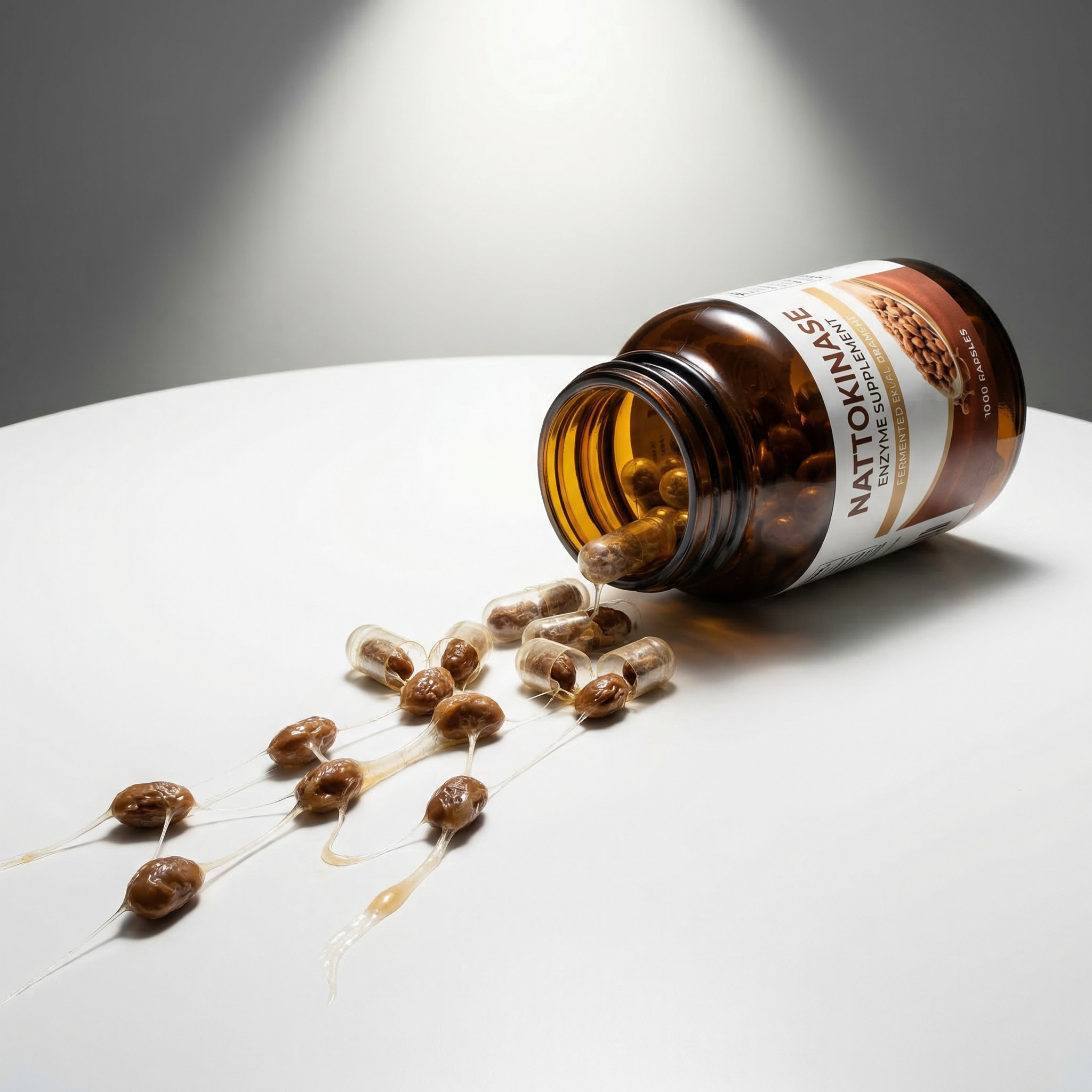
I started nattokinase to avoid blood pressure medication. 2,000 FU daily, on an empty stomach, everything by the book. For the first week I felt fine. No side effects. I thought it was working. Then I checked my blood pressure for the first time since starting. 163/98. My baseline before nattokinase was 148/94. It had gone up fifteen points. I thought it was a fluke. Stress. Bad sleep. I checked again the next morning. 167/99. Two days later: 171/101. I was in dangerous territory — taking a supplement specifically to lower my blood pressure — and it was climbing higher than it had ever been. I stopped immediately. Three days after stopping it was back to 149/93. Back to baseline. The nattokinase was doing the opposite of what it was supposed to do. I need to be honest about something: I don't fully understand why nattokinase raised my blood pressure. Neither does the medical literature. But after weeks of research, here is the best explanation I found — and it matches what cardiologists and researchers are starting to piece together. Nattokinase is a fibrinolytic enzyme. Its primary action is breaking down fibrin — the protein mesh that contributes to blood clotting and blood thickness. In a healthy cardiovascular system, this is broadly beneficial. Thinner blood flows more easily. Less clotting risk. Lower pressure. But cardiovascular systems are not uniform. Some people have stable plaque. Some have unstable plaque. Some have endothelial dysfunction that makes their arteries rigid and unable to adapt to changes in blood flow dynamics. When you suddenly thin the blood in a system with stiff, non-adaptive arteries, the system does not always respond the way you expect. The heart compensates by pumping harder. The arteries, unable to flex and absorb the change, react with vasospasm — temporary constriction. Blood pressure goes up instead of down. This is not unique to nattokinase. Any rapid change in blood viscosity can trigger compensatory responses in a compromised vascular system. The difference is that prescription blood thinners are titrated under medical supervision with regular monitoring. Nattokinase is something you buy online and dose based on a forum comment. There is no standard dose. I have seen people taking anywhere from 2,000 FU to 12,000 FU per day. One forum user was splitting 8,000 FU into morning and evening doses on an empty stomach. Another was taking 10,000 FU daily for 18 months. The dosing chaos is real — and in a compound that affects blood coagulation, chaos is dangerous. After I stopped nattokinase and my blood pressure returned to baseline, I spent two weeks doing nothing but reading. Not forum threads. Not supplement reviews. Clinical literature. What I found was a pattern that matched my experience almost exactly. The people for whom nattokinase works brilliantly tend to have one primary issue: elevated blood viscosity. Their blood is too thick. Fibrin levels are high. Nattokinase breaks down the fibrin, blood flows better, pressure drops. Clean mechanism. Predictable result. The people for whom nattokinase fails — or causes adverse reactions — tend to have a different primary issue entirely. Endothelial dysfunction. Their arteries are stiff. The inner lining is not producing enough nitric oxide. The arteries cannot flex and adapt. For this second group, thinning the blood without supporting the arteries creates an imbalance. You are changing one variable in a system that cannot compensate for the change. The result is unpredictable — sometimes neutral, sometimes helpful, sometimes harmful. I was in the second group. My arteries were the problem, not my blood thickness. Nattokinase was the wrong tool entirely. What I needed was something that addressed the arteries directly. Not blood viscosity — arterial flexibility. Not fibrin degradation — endothelial repair. And critically, after my nattokinase experience, I needed something with a predictable safety profile. Not anecdotes. Not forum posts. A documented mechanism I could understand and a consistent result I could monitor. That search led me to capsaicin. Not cayenne sprinkled on food. Not hot sauce. A clinically studied dose of pure capsaicin — the active compound in chilli peppers — delivered in a softgel that does not release until it is past your stomach. No heat. No burn. No pepper burps. You do not feel a thing. Here is the mechanism — and why it is the right tool for the problem nattokinase could not fix. Capsaicin activates TRPV1 receptors inside the vascular endothelium. The same damaged cells that stopped producing nitric oxide. The same stiff, non-adaptive arteries that made nattokinase dangerous for people like me. When TRPV1 is activated, it triggers a calcium influx into the endothelial cell that directly phosphorylates eNOS — the enzyme responsible for manufacturing nitric oxide at the source. Not thinner blood. Not fibrin degradation. Not an external supply of nitric oxide that clears from your system in a few hours. Your own endothelium. Reactivated. Producing what it was always supposed to produce. Continuously. Through the same TRPV1 pathway, capsaicin supports the upregulation of SIRT1 — a cellular repair protein that reduces the oxidative stress damaging arterial walls and suppresses the inflammatory signals that accelerate endothelial decline. It also reduces the expression of p21 — the biomarker of premature endothelial cell ageing that drives arterial stiffening in the first place. Where nattokinase works on blood viscosity and leaves the arteries unchanged, capsaicin works on the arterial wall itself — restoring the endothelial function that keeps blood pressure regulated from the inside. This is why the two compounds fail for opposite groups of people. If your primary issue is thick blood and high fibrin, nattokinase addresses it directly. The mechanism is correct for your problem. If your primary issue is arterial stiffness and endothelial dysfunction — if your arteries cannot flex and self-regulate — nattokinase changes one variable in a system that cannot adapt. Capsaicin repairs the system itself. The nattokinase debate online is full of people insisting it works. They are probably right. For their specific issue, it probably does. What nobody explains clearly enough is that the same mechanism that helps one group of people can actively harm another — because the underlying cardiovascular problem is fundamentally different. I needed to know which group I was in before I put anything else in my body. After the nattokinase experience I was not going to take anything without understanding exactly what it was supposed to do and watching the numbers respond in real time. What I found with capsaicin was the opposite of what I experienced with nattokinase. No spikes. No volatile swings. No mornings staring at the monitor in fear of what I was about to see. Just a slow, steady, consistent decline. Morning readings and evening readings moving together in the same direction. The gap between them closing rather than widening. Numbers that held through dinner instead of climbing back up. A body that was finally regulating itself rather than being overridden by something that was changing the wrong variable. My doctor looked at the chart at my last appointment and said something I had not heard in years. "Your numbers are excellent. Whatever you have found — keep doing it." I do not blame nattokinase companies. Their product does what it claims — it breaks down fibrin and reduces blood viscosity. That is real. That is measurable. For the right person with the right underlying issue, it works. But they never explain which type of cardiovascular problem their product is actually suited for. They never tell you that if arterial stiffness is your primary issue, thinning the blood in a system that cannot adapt may make things significantly worse. They never explain endothelial dysfunction or why the arteries themselves — not blood thickness — are the root cause of elevated pressure for a large portion of the people buying their product. Because if they did, you would ask: is there something that repairs the arteries directly rather than changing what flows through them? And the answer would lead you away from their product. I spent two terrifying weeks watching my blood pressure climb to 171 over 101 before I understood what was actually broken. Not because nattokinase is dangerous for everyone. It is not. But because applying the wrong mechanism to the wrong problem does not just fail — it can actively make things worse. And nobody taking it has any way of knowing which group they are in until something goes wrong. Capsaicin repairs the arteries themselves. After researching the available formulations, I found Aurivita. Here is why: ✅ 3mg of pure capsaicin per serve — the clinically studied dose that directly activates TRPV1 and triggers eNOS phosphorylation inside vascular endothelial cells, addressing arterial stiffness at the source rather than changing blood viscosity ✅ Softgel delivery, completely tasteless — the capsaicin is sealed inside a softgel that bypasses your throat and oesophagus entirely. Zero heat. Zero burn. Zero spice. Most people feel nothing at all ✅ BioPerine included — the patented piperine extract that inhibits the hepatic enzymes responsible for rapid capsaicin clearance, keeping active concentrations in the bloodstream long enough to reach and activate endothelial cells ✅ Vitamin K2 included — activates Matrix Gla-Protein to redirect calcium away from arterial walls and back into bone, directly addressing the arterial calcification that drives stiffening in the first place — the same underlying issue that made nattokinase the wrong tool for me ✅ 60 servings per bag — because endothelial repair takes 90 days. Most competitors sell 30-day supplies. You stop just as the regenerative process is compounding If nattokinase worked for you — that is genuinely good. Your primary issue was likely blood viscosity and it addressed it correctly. If nattokinase did not work — or if it made things worse — your primary issue is likely arterial stiffness and endothelial dysfunction. You need a different mechanism entirely. And if you are hesitant to try anything after an adverse experience, I understand that more than most. That is why the mechanism mattered to me more than any review. Not anecdotes. Not forum posts. A direct, documented pathway from capsaicin to TRPV1 activation to eNOS phosphorylation to restored nitric oxide production inside the arterial wall itself. No spikes. No chaos. No mornings staring at the monitor in fear. Just your endothelium learning to do its job again. 120-day money-back guarantee. If the numbers do not come down steadily and consistently, you pay nothing. 👉 https://aurivita.co/products/cayenne-pepper-softgels
Why I stopped taking nattokinase
Discover why 12,000+ seniors over 60 trust Aurivita Capsaicin Power for better circulation.
LEARN MORELike this ad? Make it yours.
Crush rebuilds this exact creative around your product — your brand, your colors, your offer — in about a minute.