
Inactive· since Jun 9, 2026
- 15
- days it ran
- 3
- relaunches
Ad copy
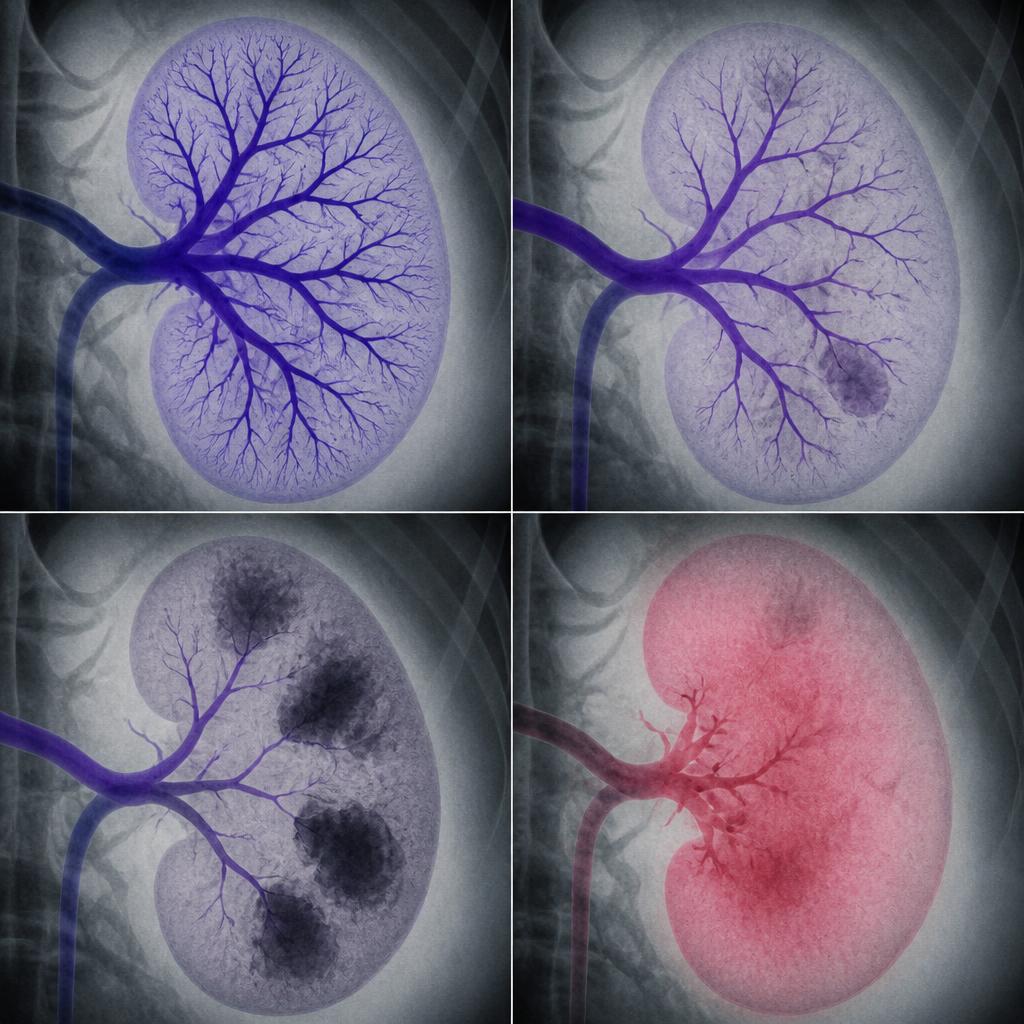
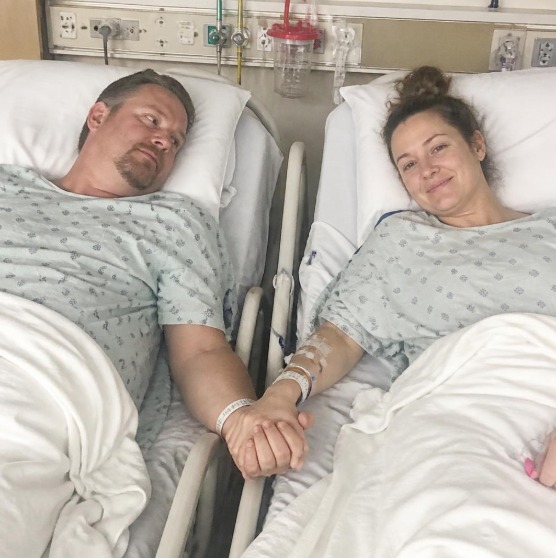
You can divorce a cheating husband. You can cut off a betraying sister. You can't take back a kidney. I need to tell this in order because if I skip ahead I'll lose my nerve. I met Daniel when I was 27. Married him at 30. Had Ella at 33, Max at 36. Normal life. Happy — or what I thought happy looked like. Daniel was diagnosed with chronic kidney disease two years ago. Stage 4. His kidneys were failing and without a transplant, he was looking at dialysis for the rest of his life. I got tested. Perfect match. I didn't hesitate. Not for a second. That's what you do when you love someone. You don't weigh the risks. You don't calculate. You just say yes. The night before surgery, I lay next to him in our bed. He was already asleep. I ran my hand over my left side — over the skin that would be opened in twelve hours. The kidney underneath it had been filtering my blood since before I was born. It had been mine my entire life. And tomorrow I was giving it away. I wasn't scared. That's the part I keep coming back to. I wasn't scared at all. I was certain. The way you're certain about feeding your children or locking the door at night. It wasn't bravery. It was just what needed to happen. The surgery was eight hours. Recovery was something nobody prepares you for. Not the pain — I expected that. It was the helplessness. The absolute dependence on other people in your own home while your husband, the person you just gave an organ for, is recovering in his own bed ten feet away and can't help you either. Max was four. He didn't understand why I couldn't pick him up. He'd stand at the side of my bed with his arms raised, fingers opening and closing, making that sound — not crying exactly, more like a whimper that builds into a wail when you don't respond. I'd look at Daniel's mother and she'd scoop him up and carry him out of the room while I pressed my face into the pillow so he wouldn't hear me. Six weeks before I could lift my own son. Ella was seven. Old enough to understand that mommy had surgery, not old enough to understand why. She started bringing me glasses of water without being asked. Setting her stuffed animals on my nightstand. Standing in the doorway checking on me the way I used to check on her. My seven-year-old was mothering me because I'd chosen to save her father. Then Daniel's body started showing rejection signs. Fever spikes at 2 AM. I'd hear the alarm on his medication timer — I'd set it myself, programmed into my phone because he'd sleep through his own — and I'd get up, still sore from the incision, still moving like my body was held together with tape. Walk to the kitchen. Count out the pills. Bring them to him with water. Check his temperature. Write it in the log the transplant team required. His body. My organ. My alarm. My log. For eleven months, I managed his recovery like a second job. His medication schedule. His dietary restrictions. His follow-up appointments — I drove him to every single one because the anesthesia had done something to his confidence behind the wheel and he wasn't ready. I reorganized my work schedule three times. My manager stopped asking why and started approving the requests with a look that said she felt sorry for me. I didn't notice when I stopped talking to my friends. Didn't notice when the last conversation I'd had about anything other than Daniel's kidney function was over two months old. My mother called one evening and asked how I was doing and I started reciting his creatinine levels before I realized she was asking about me. I didn't have an answer for that. I hadn't thought about me in months. For eleven months, my life was his body. I came home early on a Thursday. His follow-up had gone well — great, actually. GFR holding strong. The kidney was thriving. I'd stopped at the store on the way home. Picked up steaks, a bottle of wine. I was going to surprise him. Celebrate the fact that the worst was behind us. I heard them before I saw them. Not what you're imagining. No sounds from the bedroom. Just laughter. Coming from the kitchen. My sister Kara's laugh — I'd know it anywhere. That high, breathless sound she makes when she's being charmed. I stood in the hallway. Grocery bags in both hands. Kara was sitting on the counter. Daniel was standing between her knees. Her hand was on his arm — not his shoulder, not his back. His forearm. Her thumb making small circles on the inside of his wrist. Nobody touches someone's inner wrist like that unless — Daniel saw me first. His face didn't shift to guilt. It shifted to calculation. I watched him decide, in real time, what story to tell. That's the detail that destroyed me. Not the affair. The math he did on my face while the grocery bags were cutting into my fingers. "Mere—" I set the bags on the floor. Walked back to the car. Drove to the elementary school parking lot and sat there with the engine running and my hands shaking on the steering wheel until I could see straight. I didn't go home that night. I drove to a Holiday Inn off the highway. Paid for one night. Sat on the edge of the bed under fluorescent light that hummed. And I counted backward. Kara at the hospital the day after surgery. Sitting in the chair next to my bed. Holding my hand. Telling me I was the bravest woman she'd ever known. Was it already happening then? Kara at Thanksgiving, three months after the transplant. Offering to clean up the kitchen so Daniel could rest. Daniel staying behind to help her. The laughter I heard from the living room while I put the kids to bed. Kara offering to watch Ella and Max on Saturdays so I could drive Daniel to his follow-ups. How generous that seemed. How grateful I was. Kara texting Daniel recovery tips she'd "read online." I saw the texts and thought my sister is so thoughtful, she's researching for him. I sat on that Holiday Inn bed and rebuilt the timeline. Every visit. Every excuse. Every moment I'd been grateful for her support — rewritten. She held my hand in the recovery room. She already knew what she was doing. The divorce took seven months. Custody was vicious — not because Daniel fought for the kids, but because his lawyer fought for leverage. He wanted the house. He wanted reduced support. He wanted a narrative where the marriage failed mutually, where nobody was at fault, where the kidney donation was irrelevant to the settlement. His lawyer actually argued that the donation was a "voluntary gift" with no bearing on the division of assets. A voluntary gift. Kara was cut from the family. My parents, my brothers — everyone chose me. Not out of loyalty. Because what she did was indefensible. My mother still can't say her name without her voice going flat. But here's the thing nobody tells you about donating a kidney to your cheating husband. You can't get it back. It's inside him. Filtering his blood. Keeping him alive. The organ I grew, the recovery I endured, the weeks I couldn't hold my own children — it's his now. Permanently. I gave the most irreplaceable part of my body to a man who was sleeping with my sister while I was still managing his post-surgery medication schedule. There is no legal remedy for that. No divorce settlement that accounts for it. No amount of money that replaces a kidney. It is the most permanent consequence of a decision I made out of love, and it lives inside a person who didn't deserve it. It was a Tuesday custody exchange when I saw it. Daniel's apartment complex. I pulled up to the curb. He walked Max to the car. Something was wrong. His face was bloated. Not weight gain — the puffy, stretched look of fluid retention. A faint yellow tinge under his eyes that I recognized from his pre-transplant days. He was breathing harder than he should've been for a walk across a parking lot. Max climbed into his car seat. I buckled him in. Daniel leaned on the open car door. Not casually. For support. "He had a good weekend," he said. Slightly out of breath. I looked at him. At the face I'd woken up next to for twelve years. At the body I'd given an organ to save. And I could see it — the drinking, the missed medication, the late nights, the stress of a life he'd chosen over the one I'd built for him — it was all showing up in the kidney I'd given him. My kidney. He was destroying it the same way he destroyed our marriage. Through carelessness. Through neglect. Through the absolute certainty that what he's been given will always be there, so he doesn't need to take care of it. I said nothing. Closed Max's door. Drove away. That kidney loved him more than he deserved. So did I. What I didn't expect was my own body keeping a tab. It started small. Tiredness that sleep didn't fix. I blamed the divorce. I blamed single parenting. Two kids, full-time job, no help. Of course I was exhausted. Then the fog rolled in. I'd be at my desk at work and realize I'd read the same email three times without absorbing a word. I'd drive to pick up the kids and miss the turn I'd made a thousand times. I'd stand in the kitchen at 6 PM with a pan on the stove and forget what I'd planned to cook. Stress. Emotional trauma. Divorce brain. That's what I told myself. Then the swelling. My ankles, mostly. By the end of the day they'd be puffy enough that the strap marks from my shoes stayed indented in my skin for an hour. I bought new flats a half size up. Told myself I'd been on my feet too much. My rings stopped fitting. I moved my wedding band to a box in the dresser — I thought the symbolism was almost funny. But my other rings didn't fit either. My college ring. The silver band my mother gave me. I kept them in a dish by the sink and told myself it was the weather. Humidity. Water retention. One night — it was a Wednesday, the kids were at Daniel's — I sat down on the couch at 7:30 to watch something on TV. I woke up at 2 AM. The TV was still on. I'd slept through six hours on the couch without moving. No alarm. No awareness of time passing. I sat there in the blue light of the television and felt, for the first time, genuinely afraid. Not of the divorce. Not of Daniel or Kara or the custody schedule or the finances. Of my body. Of something wrong inside me that I'd been explaining away for months. I made an appointment with my transplant nephrologist. The morning of, I sat in the waiting room filling out the same forms I'd filled out a dozen times for Daniel. My phone buzzed. Max's name on the screen. "Mommy? When are you coming to get us?" He was at Daniel's. It wasn't my day. But Max doesn't understand the schedule — he just knows when he misses me. "Tomorrow, baby. I'll be there tomorrow morning." "Promise?" "Promise." I hung up. Pressed the phone against my chest. The nurse called my name. I followed her down the hallway. Sat on the exam table. The paper crinkled underneath me. I could still hear Max's voice in my ear. Dr. Navarro pulled up my labs and I watched her face change. "GFR 51. Down from 55 six months ago. Down from 62 the year before that." She turned the screen toward me. I could see the line on the chart — each dot lower than the last. A downward slope with no sign of leveling off. "Meredith. Your remaining kidney is compensating — it's doing the work of two. But it's under strain. The hyperfiltration is causing damage to the tissue faster than I'd like." "What kind of damage?" She leaned forward. Drew a small circle on her notepad. "Your kidney has millions of tiny filtration units called glomeruli. Think of them like a water filter — like a Brita filter, but microscopic. Millions of them, inside your one kidney, constantly filtering waste from your blood." She tapped the circle. "When you have two kidneys, the workload is split. Each filter handles its share. But with one kidney, every single filter is working double duty. And when they're under that kind of strain, your body produces more hydroxyl radicals — the most destructive free radicals we know of." "What do they do?" "Think of them as bleach running through your water filter. They corrode the mesh. They eat tiny holes in the filtration membrane. At first you don't notice — your kidney still works. But the holes get bigger. More waste slips through. Your GFR drops. And the damage accelerates because the more damaged the filters get, the harder the remaining ones have to work, which produces more radicals, which—" "Which corrodes more." "Exactly. It's a cycle. And once it's accelerating, it's very difficult to slow down." I sat with that for a moment. "The tiredness. The fog. The swelling. Is that—" "Yes. That's your kidney struggling to filter properly. The waste products that should be getting cleared efficiently are building up. Not at a dangerous level yet. But enough that you're feeling it." Everything I'd blamed on the divorce. The exhaustion. The fog. The ankles. It wasn't stress. It wasn't emotional. It was my kidney failing to do a job it was never supposed to do alone. "So what do we do?" She exhaled. "I can manage your blood pressure with an ACE inhibitor. That reduces the workload on the filters — turns down the water pressure, essentially. And I can monitor your GFR every six months." "But?" "But I don't have anything in my toolkit that stops the corrosion itself. The oxidative damage is happening at a level my medications can't reach. I can turn down the pressure. I can't neutralize the bleach." I sat in the car afterward. Engine off. Hands on the steering wheel. She'd told me exactly what was killing my kidney. Named it. Drew me a picture. Explained why I'd been exhausted and foggy and swollen for months. And then told me she couldn't stop it. That night I sat at the kitchen table. The house was empty. The kids were still at Daniel's. The same table I'd sat across from Daniel for twelve years. The same table where I'd organized his medication schedule after the transplant. Where I'd spent hours researching kidney disease when it was HIS diagnosis. Where I'd printed out dietary protocols and post-surgery care plans and anti-rejection drug interactions — all for him. Now I was sitting there alone. With a napkin. Doing math. GFR dropping 4–5 points every six months. Stage 3b in a year. Stage 4 in two and a half. Dialysis in three. Max would be ten. Ella would be thirteen. I pressed my palms flat on the table and stared at those numbers until they blurred. I had given everything — my marriage, my organ, my trust, my sister — to a man who threw it away. And now my body was failing because of that sacrifice. The next morning I picked up the kids. Made dinner. Helped Ella with her homework while Max built something out of Legos on the living room floor. Normal evening. Normal sounds. That night, after they fell asleep, I stood in their doorway. Ella had kicked her covers off — she always does. Max was clutching that stuffed elephant he's had since he was two. Ears matted flat from being squeezed every night for five years. I didn't do any math this time. I already knew the numbers. I just looked at them. At the two people who needed me to be standing up, functional, present, alive. Who had already lost their family once. Who couldn't afford to lose what was left. I'm going to be here for you. Both of you. Whatever it takes. I started with what I could control. Cut my sodium in half. Drank more water. Started a renal diet — the same kind I'd researched for Daniel two years earlier, pulling up the same bookmarks, the same meal-planning spreadsheets I'd built for him. Using them for myself this time. That felt like something. But I also needed to know what I was facing if the diet wasn't enough. I researched dialysis. Not the medical part — I already understood that. The logistics. The life. Three sessions a week. Four hours each. Monday, Wednesday, Friday — or Tuesday, Thursday, Saturday. Twelve hours a week strapped to a machine while your blood circulates outside your body and gets filtered by something that does the job your kidneys can't. I looked up the nearest dialysis center. Twenty-two minutes from my house. Forty minutes from the kids' school. I called my insurance. The coordinator was patient. She walked me through coverage, copays, out-of-pocket maximums. She asked if I had a support system. I told her I was a single mom. There was a pause on the line. "You may want to start thinking about care arrangements for your children during treatment sessions," she said. I hung up and sat there. Care arrangements. For my children. Because I would be hooked to a machine three days a week while they needed to eat dinner and do homework and get to school. For two weeks I did everything the standard playbook offered. The renal diet. The water intake. The ACE inhibitor Dr. Navarro prescribed. And none of it could touch what she'd described — the corrosion at the cellular level, the bleach eating through the mesh. I was managing the pressure. I wasn't stopping the damage. So I did what I'd done for eleven months when it was Daniel's body failing. I researched. I joined three Facebook groups for people with chronic kidney disease and single-kidney donors. I scrolled through them late at night after the kids were asleep — hundreds of posts about GFR numbers, medication side effects, dialysis logistics, transplant waitlists. Most of it was people in the same situation I was in, asking the same questions nobody was answering. Then one night I saw a post that stopped me. A woman — single kidney, congenital condition — wrote that her GFR had stabilized after fourteen months of steady decline. She posted her labs. Before and after. The decline had stopped and reversed by three points. She said the only thing she'd changed was adding molecular hydrogen. I almost scrolled past it. I'd seen supplement claims in these groups before. Somebody's always pushing something — kidney detox tea, alkaline water, turmeric, cranberry capsules. None of it ever came with a mechanism that made sense. It was always just "this worked for me" with no explanation for why. But her numbers were specific. Her timeline was specific. And her situation — one kidney, no backup, GFR in the fifties and dropping — mirrored mine too closely to ignore. I started reading. Not the wellness blogs. The actual studies. Kidney research from Japan showing molecular hydrogen reducing oxidative markers in renal tissue. Korean studies documenting improved GFR in patients with chronic kidney disease. And the mechanism papers that explained how it works at the cellular level. Molecular hydrogen is the smallest molecule in existence. Smaller than oxygen. Smaller than water. It crosses every biological barrier — cell membranes, mitochondrial walls — and penetrates kidney tissue at a level nothing else can reach. And it selectively neutralizes hydroxyl radicals. Only the destructive ones. The bleach Dr. Navarro told me she couldn't stop. It leaves the beneficial free radicals — the ones the immune system needs — completely alone. I read that three times. This was what Dr. Navarro said didn't exist in her toolkit. Something that could reach the corrosion at the cellular level. Something that could neutralize the bleach before it ate through more of the mesh. I printed out four studies and brought them to my next appointment. Dr. Navarro read through them at her desk. Turned pages. Went back to the first one. Read a section again. I sat in the chair across from her and waited. She looked up. "Where did you find these?" "A kidney support group. And then the journals." She was quiet for a moment. "The mechanism is sound. H2 selectively targets hydroxyl radicals — that's well-documented. It crosses the blood-kidney barrier at the cellular level. There are no contraindications with your current medications, and no interactions with the ACE inhibitor." She set the papers on her desk. "I can't prescribe this. It's not a pharmaceutical. But the research is compelling, and I don't see a downside for you." "If I find the right product — what should I look for?" "Concentration. The studies you found used doses far higher than what most commercial supplements deliver. If you find something that matches those concentrations, I want to see your labs in six weeks." That night I had my laptop open at the kitchen table. The same thoroughness I'd once poured into saving Daniel's life, I was now pouring into saving my own. The same late nights. The same tabs open until 1 AM. The same obsessive need to understand every piece of the science before trusting it. Except this time, the body I was trying to protect was mine. The first product I found was on Amazon. Top-selling molecular hydrogen supplement. Over four thousand reviews. 4.6 stars. Clean white packaging. The label said "high concentration molecular hydrogen." I added it to my cart. Then I did what most people don't. I searched the brand name plus "independent lab test." Three pages into the results, I found a forum where someone had actually sent a sealed bottle to a third-party lab. The real hydrogen concentration at the point of absorption was a fraction of what the label claimed. Not even close. The reviews were real — people genuinely believed it was working. But they were drinking a trace amount of hydrogen and attributing every good day to the supplement. I closed the tab. Removed it from my cart. I have one kidney. One filter. I was not going to pour a trace amount of anything at the corrosion that was destroying it and hope for the best. Then I researched hydrogen water — the machines, the bottles, the pouches. The idea is simple: dissolve hydrogen in water, drink the water. But molecular hydrogen is the smallest molecule in existence. It escapes through plastic, metal, even glass. By the time you pour it and lift the glass, half the hydrogen has already risen into the air. You're drinking water with a memory of hydrogen in it. Not hydrogen itself. I eliminated that entire category. What the clinical studies actually used was magnesium-based tablet technology. Drop the tablet in water. Drink immediately while the reaction is still happening. The hydrogen generates in your stomach and absorbs directly into your bloodstream through your stomach lining. No time to escape. No concentration loss. The full dose reaches your cells. I narrowed my search to magnesium-based effervescent tablets. And found that most of them still delivered only 1 to 2 parts per million — a fraction of what the Japanese and Korean studies had used. Low enough that the hydrogen reaching your kidneys would be negligible. Low enough that you'd feel nothing, conclude it doesn't work, and move on. Just like the Amazon product with the four thousand five-star reviews. Three weeks into the research, I found one that delivered 12 parts per million. Six times the concentration of everything else I'd tested. Effervescent tablet, dissolves in under 90 seconds. And unlike the Amazon product that lied on its label, this one published its third-party test results. Real numbers from a real lab. I pulled up the Amazon product's claimed concentration and compared it to PrimeCell's verified results side by side. It wasn't close. PrimeCell H2. No fillers. Made in the USA. The magnesium-based delivery system matched what the clinical studies had used. I ordered it that night. Same kitchen table where I'd done the math on the napkin. Same seat. Different math. The bottle arrived on a Tuesday. I dropped the first tablet in a glass of water that evening. Watched it fizz. The kids were asleep. The house was quiet. I drank it at the kitchen table and waited. I didn't expect anything. I'd been disappointed too many times. By the marriage. By the justice system. By my own body. Expecting nothing was safer. About twenty minutes later, I felt something. A lift. Subtle. Like someone had turned up the contrast on my thoughts. The low-grade heaviness I'd been carrying behind my eyes — the one I'd assumed was just the permanent weight of being a 43-year-old single mother with too many problems — it lightened. I sat very still. Waiting for it to fade. It didn't. I went to bed that night and slept through until morning for the first time in weeks without waking at 3 AM to stare at the ceiling. The next morning I woke before my alarm. Not startled awake. Not dragging myself out of sleep. My eyes opened and my mind was already running. Clear. I made that the day I stopped waiting and started tracking. The first week, the exhaustion changed. Not vanished — I was still a single mom with two kids and a full-time job. But the bone-deep, cellular tiredness, the kind that felt like my body was running on a dying battery, that was different. I was tired at the end of the day. Not drained at the beginning of it. The fog lifted gradually. I noticed it at work first — I read an email once and understood it. Drafted a response without rereading it three times. Small things. But I hadn't done that in months. The swelling took longer. About two weeks before I noticed my ankles looked normal at the end of the day. I put on the shoes — the ones I'd had before I bought the half-size-up pair. They fit. I stared at them for a long time. But I didn't trust any of it. Not yet. I'd watched Daniel's numbers stabilize and then climb after the transplant. I knew that bodies can lie. That good days don't mean good trends. The numbers were what mattered. Everything else was anecdotal. Six weeks. Follow-up labs. I sat in Dr. Navarro's waiting room and counted the tiles on the floor. My hands were cold. I'd been here before — the waiting room, the anticipation, the fear of a number on a screen. Except before, it had been Daniel's number. Daniel's chart. Daniel's future. Now it was mine. The nurse called my name. Drew blood. I went back to the waiting room. Forty minutes. Dr. Navarro came in with her laptop. Pulled up my chart. "GFR: 51." The same as my last reading. Not higher. But not lower. She scrolled back through my history. The downward slope. Each dot lower than the last. Eighteen months of steady decline. And then — a flat line. A hold. "For the first time since your donation, the decline has stopped." I nodded. My throat was too tight to speak. "Your creatinine has stabilized. Oxidative markers are trending down. The hyperfiltration stress appears to be reducing." She looked at me. "This is encouraging, Meredith. I want to see you again in six weeks." I made it to the parking lot before I cried. Not relief. Not exactly. More like the feeling of setting down something unbearably heavy that you've been carrying so long you forgot it had weight. The number didn't go up. But it stopped going down. And after eighteen months of watching my future shrink with every test, a plateau felt like a miracle. The next six weeks were the hardest. Not physically — physically, I felt better than I had in a year. The energy was consistent. The fog was gone. I was present with the kids in a way I hadn't been in months. Actually hearing Max's stories about school instead of nodding while my mind ran calculations. Actually watching Ella's soccer practice instead of staring at my phone. The hardest part was the hope. Letting myself believe the plateau would hold. That the next test wouldn't show a drop. That my body wasn't just pausing before another decline. I kept taking it. Every morning. Tablet in water. Fizz. Drink. Twenty minutes later, the lift. Consistent. Repeatable. Not placebo — you can't placebo away ankle swelling and brain fog for six straight weeks. Three months from my first dose. Follow-up labs. I sat in the waiting room and this time I didn't count tiles. I read a magazine. An actual magazine. My hands weren't shaking. Dr. Navarro pulled up the chart. Stared at it. Scrolled back through the eighteen months of decline. The plateau at six weeks. And then— GFR: 54. She blinked. Clicked something. Scrolled again. "That's a three-point increase." She ran the test again. Left the room. Came back twenty minutes later. "54. Confirmed." She sat down across from me and pulled the laptop onto her knee. I could see her scrolling through the full timeline — the post-donation baseline, the first signs of decline, the acceleration, the plateau, and now an upward turn that wasn't supposed to happen. Single kidneys don't reverse course. They compensate, they hold, they decline. They don't climb. "Your oxidative markers are down significantly. Creatinine is improving. The filtration function is — it's trending the right direction." She looked at me. Not with enthusiasm. With the careful, measured expression of a doctor who is seeing something she didn't predict and doesn't want to overstate. "Meredith. Whatever you're doing — keep doing it." She didn't say "molecular hydrogen." She didn't endorse a supplement. She looked at my chart and she told me to keep going. That was enough. I'm not writing this because of Daniel. I'm not writing this because of Kara, or the affair, or the divorce, or the fact that an organ I can never replace is inside a man who didn't deserve it. I'm writing this because I spent two years giving everything I had to the wrong person. And I almost let that mistake cost my children their mother. I sat at the kitchen table and calculated my dialysis date. I called my insurance company and a woman on the phone told me to start thinking about "care arrangements" for my kids. And then I found a way to stop the numbers from falling. The same fierceness that made me say yes when Daniel needed a kidney — the love, the refusal to give up, the willingness to sacrifice anything for someone I cared about — I turned it inward. Toward myself. Toward Ella. Toward Max. I couldn't get my kidney back. But I could protect the one I have left. Last Saturday, Ella had a soccer game. Early morning. Cold. Six months ago, I would have watched from the car with the heater running. Too tired to stand on the sideline. Too foggy to follow the plays. Present in body. Absent in everything else. Last Saturday I stood on the sideline the entire game. Yelled when she made a breakaway. Clapped when she missed the shot. Picked up Max and held him on my hip so he could see over the other parents. Ella looked over at me after the final whistle. Smiled. Not the careful smile she gives me when she's checking if I'm okay. Just a smile. The kind a ten-year-old gives her mom when her mom is standing where she's supposed to be. That night I sat on Max's bed and read him three chapters of his book. Not one. Three. Because he asked, and because I wasn't too exhausted to say yes. He fell asleep with his head on my arm and I sat there in the dark for a long time, feeling his breath against my wrist. Max would be ten in three years. And I would be here. Not on a machine. Not making "care arrangements." Here. The woman he betrayed became the woman who survived. If you're reading this and your kidneys are under stress — whether you have two or one, whether it's medication side effects or high blood pressure or diabetes or just the wear of decades — I need you to understand something. Your kidneys don't scream. They don't send pain signals. They just quietly work harder and harder until one day they can't. And by then, the filtration damage is done. The mesh is corroded. The holes are too big. You blame the exhaustion on your age. The fog on your stress. The swelling on your shoes. I did the same thing for months. It wasn't any of those things. It was my kidney losing a fight I didn't know it was in. You don't feel it until it's too late. I almost waited too long. — Meredith https://track.getamalahealth.com/5548c06d-d9c3-4785-b466-fec64a6fdb28 P.S. — The supplement I take is called PrimeCell H2, made by a company called Amala Health. It's a molecular hydrogen tablet — you drop it in water, it fizzes for about 90 seconds, and you drink it. That's it. No pills to swallow, no complicated routine. It delivers 12 parts per million of molecular hydrogen. Most of the products I researched during those three weeks at the kitchen table delivered 1 or 2 PPM — and when you have one kidney, one filter doing the work of two, you can't afford to gamble on a product delivering a fraction of what the clinical studies used. I needed the full concentration reaching the mesh. Not a trace amount that escapes before it gets there. PrimeCell was the only one I found that matched the doses in the Japanese and Korean research I'd brought to Dr. Navarro. Third-party tested, no fillers, made in the USA. P.P.S. — They have a 90-day money-back guarantee. If your numbers don't improve, you get your money back. No questions. I gave away an organ for free to a man who didn't deserve it. Protecting the one I have left costs less than the steaks and wine I bought the day I came home early. If you want to try the 20-minute challenge — drop a tablet, drink it, set a timer — most people feel something shift within 20 minutes. A lift. A clarity. The fog clearing. I did. That's the hydroxyl radicals being neutralized in real time. Then go get your GFR tested in 90 days and let the numbers decide. P.P.P.S. — I know this reads as a woman's story. It's not. The oxidative damage I described — the hydroxyl radicals corroding the glomeruli, the bleach eating through the filter mesh — that has nothing to do with gender. Kidneys are kidneys. The corrosion doesn't care who it belongs to. If your GFR is trending in the wrong direction, or you've been told your kidneys are "under strain," or you're on medications that list kidney function decline as a side effect — the damage is happening whether you feel it or not. Men are actually at higher risk for kidney decline because they're statistically less likely to get tested until something is already failing. My ex-husband is proof of that. P.P.P.P.S. — I do something now that I never did before. Every morning, while the tablet fizzes in my glass of water, I stand at the kitchen window and watch Max's school bus come around the corner. Ella walks now — she's old enough. But Max still waves from the bus window. Every single morning. Looking for me. I plan to be standing at that window for a very long time. https://track.getamalahealth.com/5548c06d-d9c3-4785-b466-fec64a6fdb28
Fix Yourself at the Cellular Level
PrimeCell H2 is a next-generation molecular hydrogen tablet formulated to support your body's natural antioxidant defenses — helping you feel sharper, more energized, and more like yourself.
LEARN MORELike this ad? Make it yours.
Crush rebuilds this exact creative around your product — your brand, your colors, your offer — in about a minute.