Sandra Keller, RN
 Facebook ad: “Ceylon Cinnamon 7200mg Equivalent with MCT Oil”
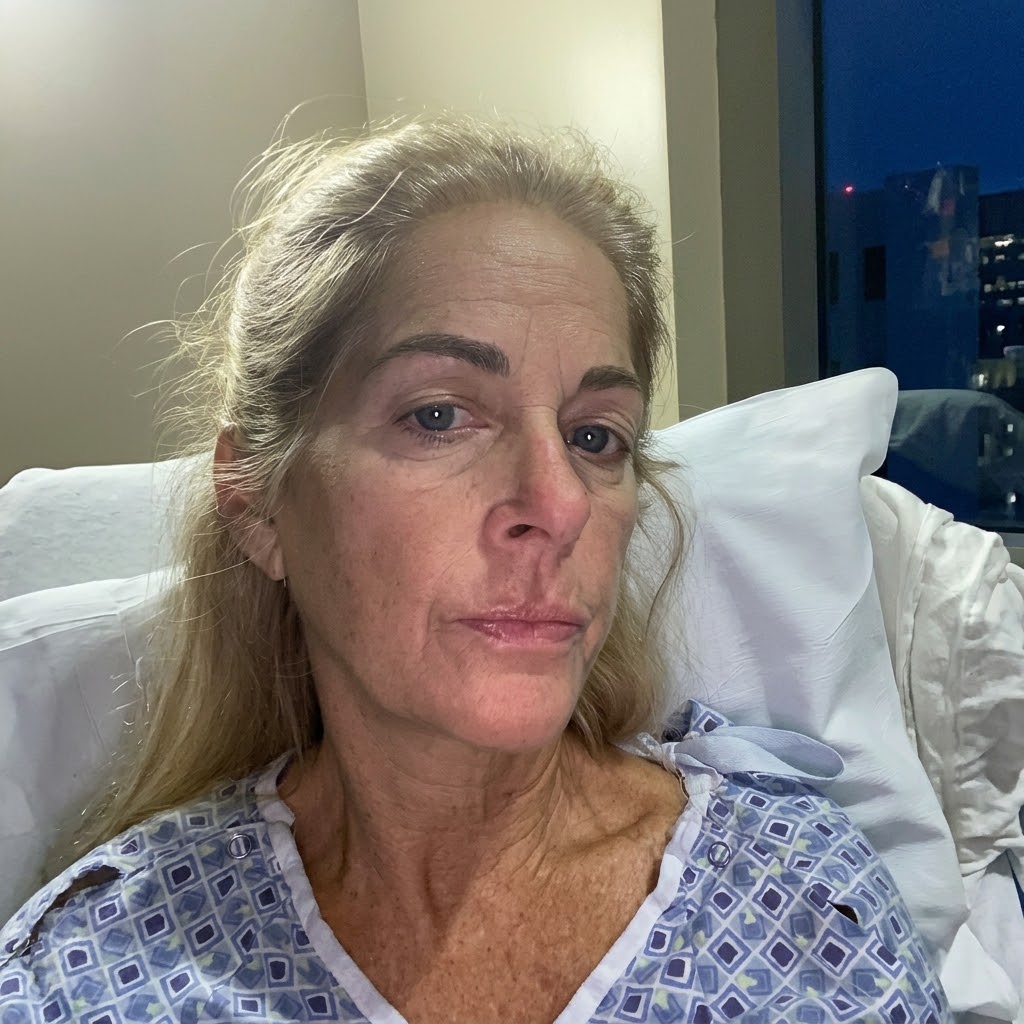
Running for 20 days since October 14, 2026. Crush last saw it on November 3, 2026.
Run by Sandra Keller, RN on Facebook. Crush is not the advertiser and does not verify its claims. See this ad in Meta's Ad Library(opens in a new tab)
Make your own version of this ad
Crush makes it, launches it in your own Meta ad account, scales the winners and pauses the losers.
About this ad
- Meta Ad Library ID
- 932610692969249
- Platforms
- Facebook, Instagram, Audience Network and Threads
- Relaunches
- 0
Ad text
I was peeing at a gas station on the way to work and it was foaming like beer. Not a few bubbles. Thick white foam. Covering the entire surface of the water like someone had poured dish soap into the bowl. I flushed. Washed my hands. Stared at myself in the mirror under the fluorescent lights. I'm an ICU nurse. I've been at the bedside for 27 years. I know what protein in the urine looks like. I know what it means. I've watched it lead to dialysis in patient after patient for decades. And I'd just watched it happen in my own body. My A1C had been sitting at 10.6 for 18 months. My fasting glucose was 187 most mornings. I knew I was in trouble. But seeing the foam turned knowing into a feeling. The kind that sits in your stomach like a stone. I drove to work. Did my shift. Didn't say a word to anyone. That evening I stopped at the pharmacy on the way home. I was standing in the supplement aisle pretending to look at something, really just trying to hold myself together, when the woman next to me set down her basket and exhaled like she'd been holding her breath for a year. She was maybe 63. Reading glasses on a chain. Comfortable shoes. A church bulletin folded in the pocket of her purse. The kind of woman who shows up early to everything and stays late to help clean up. She was holding a bottle of cinnamon capsules, turning it over, reading the back label with her lips moving slightly the way people do when they're trying to decide if something is real or a waste of money. Do those work? She looked at me. Her eyes were tired. Not the kind of tired you fix with sleep. The deeper kind. I don't know anymore. I've tried four different brands. My fasting glucose hasn't moved. My A1C is 9.4 and I'm seeing foam in my toilet and I just found out my kidneys are in trouble and I don't know what to do. My chest tightened. Because she was describing my life. What's your name? Ruth. Ruth Dalton. Ruth, I'm Sandra. I'm a nurse. And I know exactly what you're talking about. Every word of it. She looked at me and her eyes got wet. Not crying. Just the wet that comes when someone finally says the thing you've been carrying by yourself. Can I buy you a cup of coffee? There's a Waffle House across the parking lot. She almost said no. I could see the automatic politeness. Then she said yes. We sat in that Waffle House for almost two hours. Ruth told me everything. The whole story, start to finish, the way a woman talks when she's been carrying something alone for too long and finally finds someone who understands. It started three years ago. A routine blood panel at her annual physical. Her doctor called her on a Thursday afternoon. Ruth, your A1C came back at 9.4. Your fasting glucose is 174. You're diabetic. Type 2. She wasn't shocked. She'd been prediabetic for two years. Her mother had been on insulin. Her sister was on metformin. She'd watched diabetes move through her family like water through old pipes. She knew it was coming. She just didn't know it would feel like getting a door slammed in her face. Her doctor started her on metformin. The standard first move. Take it with food. Build up slowly. The metformin made her nauseous. Not a little. The kind of nausea where you can't eat dinner because the smell of food makes your stomach turn. She lost nine pounds in a month. Her daughter thought she looked great. She didn't feel great. She felt like her body was rejecting itself from the inside out. Her doctor said let's try the extended release. The extended release was better but not enough. Her fasting glucose dropped from 174 to 158. Still high. Still dangerous. Her doctor added a second medication. Glipizide. The glipizide worked faster. Her numbers dipped into the 140s. But then came the lows. She'd be standing in her kitchen at 3 PM and suddenly the room would tilt. Her hands would shake. Her vision would narrow. She'd have to grab the counter and eat something sugary immediately or she'd be on the floor. Her doctor said we need to find the right balance. Balance. That word again. Like her body was a recipe and they just needed to adjust the seasoning. She spent fourteen months on two medications that took her from 174 to 142 on the best days. $167 a month after insurance. She was still waking up three times a night to use the bathroom. Still crashing in the afternoon. Still foggy in the morning. Still watching the numbers hover in a range her doctor called better but she knew wasn't good enough. Then came the foam. Ruth set her coffee cup down when she told me this part. Her hands weren't steady. I went to the bathroom one morning and the water was white. Not a little foam. White. Like dish soap. Like someone had squeezed soap into the bowl. She flushed. Waited. Went again twenty minutes later. More foam. She called her doctor. The doctor ordered a urine test. Protein in the urine. Positive. Her creatinine was 1.5. Her EGFR was 58. Your kidneys are showing signs of damage, the doctor said. We call it diabetic nephropathy. The high blood sugar is putting stress on your kidneys. We need to watch this closely. What does 'watch this closely' mean? It means if this progresses, we're looking at further decline in kidney function. Possibly dialysis down the road. Dialysis. Ruth looked at me across that booth and I could see it in her eyes. The same thing I'd been carrying. The terror of that word. The image of sitting in a chair three days a week, four hours at a time, hooked to a machine that does what your kidneys can't, for the rest of your life. Sandra, I spent two years on medications that cost me $167 a month. Two thousand dollars a year. My husband is retired. We budget our groceries by the week. And those medications took me from terrible to slightly less terrible while the foam got worse. She paused. But the worst part wasn't the numbers. Wasn't the foam. The worst part was the sleep. She looked at her hands. Two years. For two years I haven't slept more than three hours in a row. I get up to pee at midnight. Again at 2. Again at 4. By 5 AM I'm lying there with my eyes open, exhausted, and my blood sugar is already at 168 before my feet hit the floor. My brain doesn't turn on until noon. I walk around the house in the morning like I'm underwater. My granddaughter asks me to play and I just sit there because I can't focus long enough to follow a board game. I stopped driving at night because the brain fog got so bad I didn't trust myself behind the wheel. I stopped going to my book club because I couldn't remember what I read the night before. I'm 63 years old. I retired last year. I was supposed to go to Branson with my church group. I was supposed to take my granddaughter to Disney. I was supposed to finally live. And instead I spend every day exhausted, scared, and within 30 feet of a bathroom. I was sitting across from this woman and every word was a mirror. Twenty-seven years at the bedside. I've watched diabetic patients code. I've held the hands of people whose kidneys failed. I've seen the trajectory dozens of times. And for the last 18 months I'd been living a version of the same thing Ruth was describing. My A1C was 10.6. My fasting glucose was 187 most mornings. I was exhausted by 2 PM every single day. The kind of exhaustion where your brain shuts off and you need coffee or you're going to fall asleep standing up during rounds. I was getting up twice a night to pee. My doctor kept adjusting my medications. I kept watching the numbers barely move. And two weeks before I met Ruth, I'd seen foam in my own toilet for the first time. White foam covering the entire surface. Like beer. I hadn't told anyone. Not my husband. Not my friend Maria. Because saying it out loud would make it real in a way I wasn't ready for. I knew what protein in the urine meant. I'd seen it in my patients for 27 years. I knew what came after. But I hadn't gotten tested yet. Because knowing was worse than wondering. I told Ruth. About the foam. About the 2 PM crashes. About the 187 fasting glucose. About the A1C that wouldn't move. About lying awake at 3 AM staring at the ceiling, wondering if I was going to end up in the same dialysis chairs I'd watched my patients sit in for decades. Ruth's eyes got wet. Not crying. Just the wet that comes when someone says the thing out loud that you've been carrying alone. Then Ruth told me about her daughter. Her daughter's name is Michelle. Michelle is 36. She works as a dialysis nurse at a kidney care center in Nashville. She spends her days with patients whose kidneys are failing. Patients hooked to machines. Patients watching their numbers decline month by month while their doctors adjust medications that slow the damage but never reverse it. Michelle called me one Sunday evening about four months ago. She doesn't usually call on Sundays. That's her day with her boys. But she called that night and she sounded different. Excited. Like she'd found something. She said, 'Mama, I need to tell you about something. Something I've been reading about for weeks. Something I think is going to help you.' I said, 'baby, nothing helps.' And she said, 'that's because everything you've tried is working on the wrong problem.' Ruth leaned forward in the booth. That's when Michelle explained what she'd been studying. Not a new drug. Not another dosage adjustment. Not another pamphlet about diet and exercise. Something that had been used for centuries in medicine. Something researchers had been studying in published clinical journals. Something that worked on the actual mechanism behind what was happening to my blood sugar and my kidneys. Ceylon cinnamon extract. I almost hung up on her. Cinnamon? Like the spice in my kitchen cabinet? That's your answer? But Michelle is not a wellness influencer. Michelle is a dialysis nurse who reads clinical journals the way I read the newspaper. With a pen in her hand, circling things that matter. And she asked me to listen. 'Mama,' she said. 'The reason your medications aren't working well enough is because they're managing the symptom. The high glucose number. But they're not fixing why your cells stopped absorbing glucose in the first place. And they're definitely not addressing why your kidneys are leaking, because your blood sugar and your kidneys are connected by the same mechanism. And nobody is explaining that to you.' 'Your cells have something called glucose transporters. Think of them like tiny doors on the surface of every cell in your body. In a healthy person, insulin comes along and opens those doors, and glucose flows from your blood into your cells where it gets used for energy. Steady flow. No backup. No problem.' 'But when you're insulin resistant, those doors stop opening properly. Insulin shows up and knocks, but the doors are stuck. So glucose just sits in your blood. And your liver sees cells that aren't getting fed, so it dumps more glucose into the blood trying to help. Now you've got glucose piling up in the bloodstream with nowhere to go.' 'Your kidneys are like two coffee filters,' she said. 'They're designed to handle a steady drip of glucose. A little at a time. All day. No problem.' 'But when your cells are broken, when those doors won't open, the steady drip turns into a fire hose. Your kidneys are trying to filter a fire hose of glucose 24 hours a day. They can't handle it. The filters shred under the pressure. Like running a coffee filter under full blast from a kitchen faucet. The filter tears. Protein starts leaking through those tears.' 'That foam you're seeing in the toilet? That's your kidneys tearing apart in real time.' Ruth looked at me. Sandra, when Michelle explained that, I sat on my couch and I felt something I hadn't felt in three years. Like someone was finally telling me the truth. Not 'let's adjust the dose.' Not 'we need to watch this.' The truth. A mechanism. A reason that connected my blood sugar and my kidneys and my exhaustion into one explanation. Michelle told me about Ceylon cinnamon extract. Not the cheap cinnamon in a grocery store shaker. Not the Cassia variety that fills supplement shelves and can damage your liver with daily use. The real thing. Cinnamomum verum, grown in Sri Lanka. Used in medicine for centuries. She said the research was extensive. Dozens of published studies. Real participants. Real measurements. She'd been reading them for weeks. She told me the extract contains a compound called cinnamaldehyde that activates the same metabolic pathways exercise activates. It opens those stuck glucose doors. It moves glucose into cells without relying on insulin to force them open. And it shuts down something called the NLRP3 inflammasome. The master switch behind chronic metabolic inflammation. The same inflammation that's driving the kidney damage. One mechanism. Addressing the blood sugar and the kidney damage at the same time. Because they were never two problems. They were always one problem at two stages. Michelle sent me a bag. She didn't ask. She just ordered it. Metabolae. Ceylon cinnamon extract. 7,200 milligram equivalent per softgel through a 12:1 concentrated extract. Suspended in MCT oil for absorption. One softgel a day with breakfast. She told me the MCT oil mattered. Most cinnamon supplements are dry powder in a capsule. But cinnamaldehyde is fat-soluble. It needs fat to absorb properly. Dry powder passes through your system without delivering the compound where it needs to go. The MCT oil changes the absorption completely. That's the difference between swallowing powder that does nothing and taking concentrated extract that actually reaches your cells. Ruth paused. Took a sip of coffee. I started taking it on a Monday. One softgel with breakfast like Michelle said. I didn't tell my husband because I didn't want to hear 'cinnamon, really?' from a man who thinks a multivitamin is alternative medicine. Day three, something shifted. My 2 PM crash didn't hit. I was sitting in my living room and I realized I'd been reading for two hours straight without losing focus. Without the fog. Without the heaviness behind my eyes. I just felt... steady. That night I went to bed at 10:15. I woke up at 5:40 AM. I hadn't slept past 3 without getting up to use the bathroom in over two years. I lay there in the dark listening to my husband breathe and I was afraid to move because I thought something was wrong. Seven and a half hours. I didn't get up once. I didn't tell anyone. Not yet. I've been tricked by hope before. Week two. My fasting glucose in the morning was 149. It had been sitting at 168 to 174 for a year. I tested it again the next day. 146. The day after: 143. I drove to my daughter's house, forty minutes each way, and I didn't stop once. I didn't even think about a bathroom until I was pulling into her driveway. Week three, the foam changed. It didn't disappear. But for the first time in months I could see water in the bowl instead of just white covering everything. Just a ring around the edge instead of a layer on top. I stood in my bathroom looking at a toilet bowl and crying. A grown woman crying because the foam was less. Week six, my husband said something. He didn't know I was taking anything. He just looked at me one morning and said, 'Ruth, you look different. I don't know what it is. You just look rested.' Rested. I hadn't heard that word pointed at me in three years. Week eight, my doctor appointment. Fasting glucose: 131. A1C: 8.1. Down from 9.4. Creatinine: 1.3. Down from 1.5. My doctor stared at the numbers. Looked at me. Looked at the numbers again. 'Ruth, your kidney function improved. That almost never happens at this stage. Once you're in decline, we try to slow it. Not reverse it. What changed?' I told her everything. Metabolae. Michelle. The Ceylon cinnamon. The mechanism. She didn't argue. She wrote it down. She said, 'Whatever you're doing, keep doing it. I want to see you again in three months.' Ruth reached into her purse and pulled out a bag. The Metabolae bag. She set it on the table between us. Sandra, Michelle sent me three bags when she ordered. I have one at home that's still sealed. I want you to take it. Ruth, I can't... You told me about the foam. About the 187 fasting glucose. About the 2 AM bathroom trips. About staring at the ceiling wondering if you're going to end up in one of the dialysis chairs you've spent 27 years watching patients sit in. You sat in this booth and told me the truth about what's happening to you. Nobody does that. Nobody sits in a Waffle House and tells a stranger these things. She pushed the bag across the table. Take it. One softgel with breakfast. Give it two weeks before you decide anything. That's all I'm asking. I took the bag home. Set it on the kitchen counter and looked at it while I made dinner. I thought about Ruth sleeping seven hours straight. I thought about a creatinine number going from 1.5 to 1.3. I thought about foam getting less instead of more. I thought about my own creatinine sitting at 1.4. About my own foam that I hadn't gotten tested yet because I was too scared of the answer. I thought about the dialysis patients I'd cared for. The ones who told me they wished they'd done something earlier. The ones who said they saw the signs and ignored them. The next morning I opened the bag. Shook out one softgel. Set it next to my coffee. Took it with a full glass of water. That afternoon at work, my usual 2 PM crash didn't come. The one where my brain shuts off and I'm standing at a patient's bedside trying to remember what I walked into the room for. It just didn't happen. I was steady. Clear. Functional. That night I went to bed at 10:30 PM. I woke up at 6:45 AM. I hadn't woken up once. Not to pee. Not with my mind racing. Not with that restless half-awake state where you know you're not sleeping but you can't wake up enough to do anything about it. I slept through the night for the first time in 14 months. I tested my fasting glucose. 162. Down from my usual 187. Day three: 154. Day five: the foam was less. Not gone. But I could see water instead of just white covering everything. Day seven: 147. And the foam was barely there. A faint ring around the edge. I didn't tell anyone. I just kept taking one softgel every morning with breakfast and I kept testing my numbers and I kept waiting for it to stop working because 27 years of nursing taught me that things that seem too good usually are. Week two: my brain fog started lifting. I could focus during rounds. I could remember patient details without checking my notes three times. The mental clarity was the thing I hadn't even realized I'd lost until it came back. Like someone turned on a light in a room I'd been stumbling through in the dark. Week four: fasting glucose consistently in the 130s. The foam was gone. Completely gone. Clear water. I took a picture and sent it to Maria, my friend who's been a paramedic for twenty years. She called me immediately. What did you do? Ceylon cinnamon extract. Metabolae. One softgel a day. She was quiet for a second. Then: I'm going to tell my patients about this. My husband noticed around week three. He's the kind of man who doesn't notice when I rearrange the furniture. But he looked at me on a Saturday morning and said, You look different. I don't know how. You just look like yourself again. Like myself again. That hit harder than any lab result. Three months in, I walked into my doctor's office with a printout of my glucose log. She looked at it for a long time. Your fasting glucose is consistently in the 110s. Yes. Your A1C is 8.4. Down from 10.6. Yes. She pulled up another lab result. Your creatinine is 1.1. It was 1.4 three months ago. I nodded. Kidney function doesn't improve, Sandra. Once you hit stage 2, the goal is to slow the decline. Not reverse it. But you reversed it. I know. She ordered a urine test. No protein. None. The foam is gone, I told her. She looked at me the way a doctor looks when the numbers don't match the textbook. Not skeptical. Just recalibrating. Your kidneys stopped leaking. The tears are healing. Six months later: A1C 7.3. Creatinine stable at 1.1. Waking up every morning in the 110s. Still no protein in my urine. Sleeping through every single night. The afternoon crashes are gone. The brain fog is gone. The foam is gone. My doctor pulled up my chart. Looked at the progression. You're not on the dialysis path anymore, she said. I almost cried. That was seven months ago. Ruth and I are friends now. Real friends. The kind you make in a Waffle House booth when you both tell the truth at the same time. She texted me last week. A photo of herself and her granddaughter at Disney World. Standing in front of the castle, smiling, wearing a t-shirt that said World's Best Nana. Her caption was: I'm finally doing the things I retired to do. Her latest labs: A1C 7.4. Creatinine stable at 1.2. No protein in her urine. No foam. Her doctor reduced one of her medications for the first time in three years. She called me from the parking lot of the clinic and neither of us could talk for about ten seconds because neither of us trusted our voices. Then she said, Sandra, I just saved $87 a month. Michelle's patients at the dialysis center have started asking her about Ceylon cinnamon extract. Three of them have seen improvements in their kidney markers. One patient, a man whose creatinine had been climbing for a year, came back after 10 weeks with his EGFR up 6 points. His nephrologist ordered the labs run twice because he didn't believe the first result. I've recommended Metabolae to four patients myself. All four came back and told me the same pattern: better sleep within the first week. Fasting glucose dropping within two weeks. Foam reduction by week three. One patient cried when she told me she'd slept through the night for the first time in two years. She'd been getting up four times a night. Another patient's A1C dropped from 9.8 to 7.6 in three months. His foam disappeared in week three. But here's what I need you to understand. Not all Ceylon cinnamon works. That's the part that matters. Most cinnamon supplements fail for the same reasons. They're not real Ceylon. What's sold as cinnamon in most supplements is Cassia, a completely different species grown in China. Cassia contains up to 250 times more coumarin, a compound linked to liver damage with daily use. The clinical benefits researchers found were for true Ceylon cinnamon, Cinnamomum verum. Not Cassia. They're underdosed. The clinical studies showing meaningful results for blood sugar and kidney markers used concentrated Ceylon extract equivalent to 6,000 to 7,200 milligrams daily. Most capsules on the shelf contain 500 to 1,500 milligrams of loose powder. A fraction of what was actually studied. They use the wrong delivery format. Cinnamaldehyde is fat-soluble. It needs fat to absorb properly. Dry powder capsules have poor bioavailability. They pass through your system without delivering the active compound where it needs to go. The right carrier is MCT oil, which increases absorption dramatically. They're not tested. Most supplements aren't third-party verified. You have no idea whether you're getting real Ceylon or mislabeled Cassia. The Ceylon cinnamon extract that actually worked for me and for Ruth and for every patient I've recommended it to is Metabolae. True Ceylon cinnamon. Cinnamomum verum, sourced from Sri Lanka. DNA-verified. Dosed at 7,200 milligram equivalent per softgel. A concentrated 12:1 extract. The amount that corresponds to clinical benefit. Suspended in MCT oil. The bioavailability is dramatically higher than dry powder. Third-party tested. GMP-certified. Every batch verified for purity, potency, and coumarin levels. It comes as one softgel per day. Taken with breakfast. Simple. It's not cheap. But after seeing what it did for my kidneys, after seeing what it did for Ruth's kidneys, after watching four of my patients come back with results I can explain with biochemistry, I understand why. You're either getting real Ceylon cinnamon at a clinical dose with proper absorption, or you're taking Cassia that could stress your liver and won't shut off the fire hose. I'm telling you this because I think you might be where I was seven months ago. Watching your fasting glucose sit above 160 every morning. Getting up two, three, four times a night. Seeing foam in your toilet and pretending it's nothing. Spending $100, $167, $200 a month on medications that take you from terrible to slightly less terrible while calling it progress. If your A1C has been stuck above 9 and the medications keep getting adjusted but the numbers barely move. If you're exhausted by 2 PM every day and you can't remember the last time you had a clear thought before noon. If you've seen foam and you're terrified to get tested. If your doctor has said we're watching it and let's adjust the dose and this takes time so many times that you've started to believe this is just how it is now. It doesn't have to be how it is now. The glucose that's sitting in your blood because your cells won't absorb it is the same glucose that's shredding your kidneys 24 hours a day. The inflammation that's keeping your cells resistant is the same inflammation that's accelerating the kidney damage. One root cause. Multiple symptoms. Treated by doctors as separate numbers to manage. Billed as separate prescriptions. Adding up to thousands of dollars a year in medications that manage what they weren't designed to fix, because they were never designed to address the mechanism. Metabolae addresses the mechanism. The cinnamaldehyde in concentrated Ceylon cinnamon extract activates glucose transporters and moves glucose into cells without relying on broken insulin signaling. It shuts down the NLRP3 inflammasome, the master switch behind chronic metabolic inflammation. Less glucose flooding the blood. Less pressure on the kidneys. Less shredding. Less foam. Not by overpowering your body. By removing the interference that's been there since your cells stopped responding to insulin properly. Metabolae. Ceylon cinnamon extract in MCT oil. One softgel per day. 7,200 milligram equivalent via 12:1 concentrated extract. Sourced from Sri Lanka. Third-party tested. GMP-certified. P.S. If you're reading this at 3 AM because you got up again and you're on your phone because you can't fall back asleep, I was you. Seven months ago I was standing in my bathroom staring at foam and pretending it wasn't happening. Now I'm sleeping through the night. Now I'm watching my fasting glucose stay in the 110s. Now I'm hearing my doctor say you're not on the dialysis path anymore. The first week is when you'll know. The sleep will tell you first. The fasting numbers will start dropping before anything else. Give it one week. P.P.S. Ruth's latest appointment showed her A1C at 7.4, down from 9.4 when I met her. Her doctor reduced her metformin for the first time in three years. She called me from the parking lot and we sat on the phone in silence for ten seconds because neither of us could trust our voices. Then she said, Sandra, I just saved $87 a month. That's $1,044 a year. The cost of Metabolae is a fraction of one month of the prescriptions she was on. P.P.P.S. Here's what I'd tell you to do. Take one softgel tomorrow morning with breakfast and a full glass of water. Do it for one week. Most people notice the sleep improvement first, within three to five days. The nighttime bathroom trips reduce. The morning fasting glucose starts dropping. That's not placebo. That's cinnamaldehyde activating glucose transporters and the NLRP3 inflammasome beginning to quiet. The kidney improvement takes longer, eight to twelve weeks before the creatinine numbers move. But the sleep and the fasting glucose will tell you this is working before the kidneys do. P.P.P.P.S. Metabolae has a 90-day money-back guarantee. If your numbers don't improve, if the foam doesn't disappear, you get your money back. Your metformin didn't come with a money-back guarantee. Neither did the glipizide. Neither did the $167-a-month combination that gave you nausea and crashes and still didn't get your A1C below 9. Think about what it means that a Ceylon cinnamon company is willing to stake their business on results and a pharmaceutical company won't. P.P.P.P.P.S. The sourcing matters. I cannot emphasize this enough. Most cinnamon supplements on the market use Cassia bark because it's cheaper to grow and process. The cinnamaldehyde concentration is lower. The coumarin levels are dangerously high for daily use. You are buying brown powder in a capsule that could damage your liver while doing nothing for your blood sugar. Metabolae uses true Ceylon cinnamon, Cinnamomum verum, sourced from Sri Lanka. That's the species the clinical studies used. That's the species with the beneficial compound profile and minimal coumarin. It's extracted as a 12:1 concentrate and suspended in MCT oil because cinnamaldehyde is fat-soluble and dry powder doesn't absorb. If you're taking a cinnamon capsule and your numbers haven't moved, that's why. The delivery format matters as much as the ingredient. P.P.P.P.P.P.S. I keep three bags in my house now. Not because I'm afraid of running out. Because Ruth's daughter Michelle told me that the demand for genuine cold-pressed Ceylon cinnamon extract is growing faster than the supply from Sri Lanka, and the companies doing it right can't always keep up. I ordered three bags two months ago and I'm glad I did because the multi-bag option saves per bag and I never have to worry about a gap. The consistency matters. The cinnamaldehyde needs to stay at therapeutic levels in your system to maintain the metabolic benefit. A gap means your cells start losing ground. Don't wait until your bag runs out to order the next one. ~ Sandra Keller, RN, ICU, 27 years
Where the ad sends people
metabolae.com
Ceylon Cinnamon 7200mg Equivalent with MCT Oil
Supports healthy blood sugar levels and metabolism with premium Ceylon cinnamon. Shop Metabolae's science-backed supplements. Free shipping available.
Learn more: metabolae.com(opens in a new tab)