Edema Care Tips
Edema Care Tips Facebook ad: “Read This If You Live With Lymphedema”
Ran for 12 days, from April 21 to May 3, 2026, the last day Crush saw it.
Run by Edema Care Tips on Facebook. Crush is not the advertiser and does not verify its claims. See this ad in Meta's Ad Library(opens in a new tab)
Want an ad like this for your product?
Crush makes new ad images for your product from this ad: your logo, your product photo, your offer.
Trials from $19.95 USD, then $79.95 USD a month. Cancel anytime.
About this ad
- Meta Ad Library ID
- 938182919064363
- Platforms
- Facebook, Instagram, Messenger and Threads
- Relaunches
- 0
- Niche
- Food & Beverage
Ad text
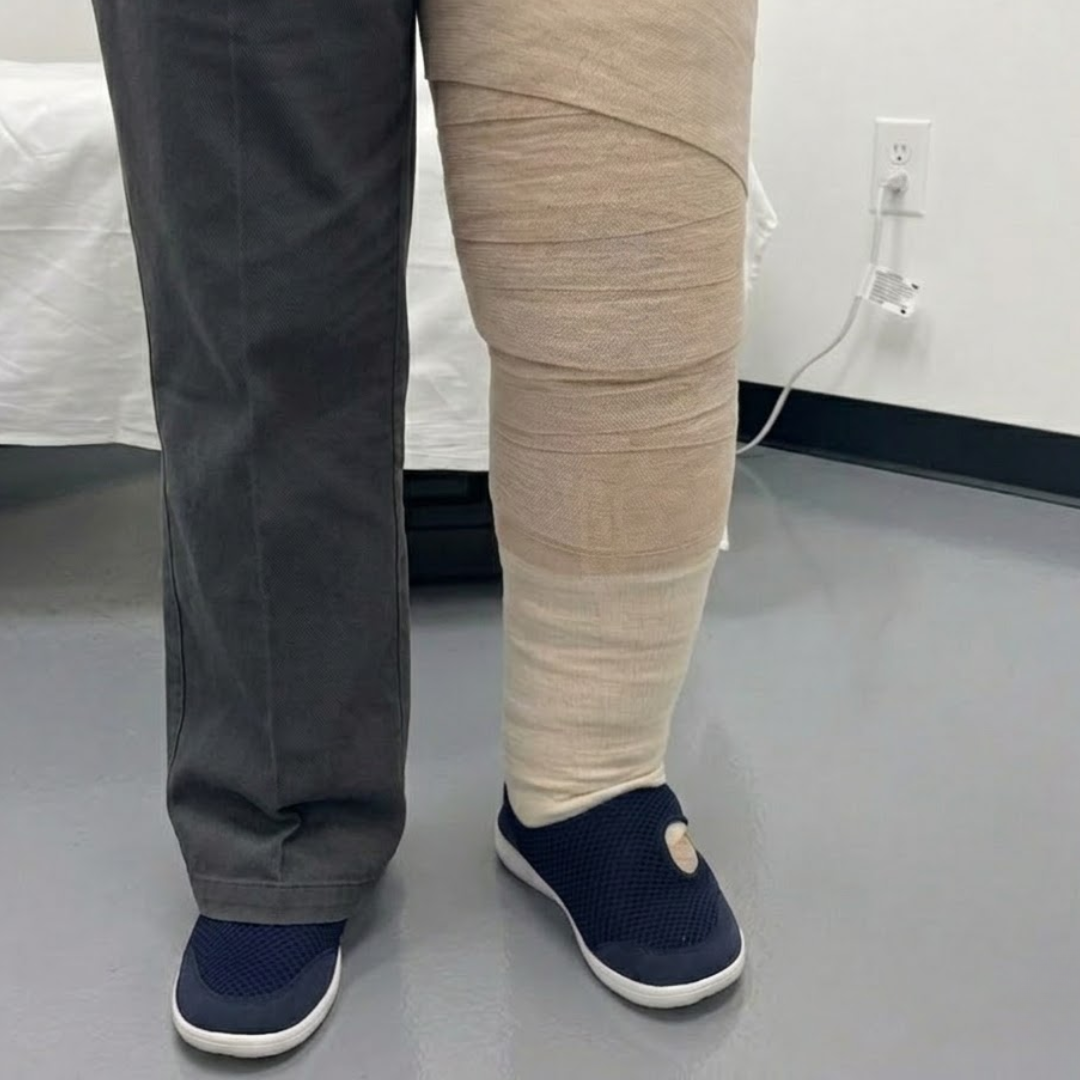
My daughter's been bugging me to post this. I said it was nobody's business. She said, "Dad, it could help someone." So I finally gave in. I spent $47,000 on my legs in three years. Not surgery. Not some experimental treatment. Just trying to keep the swelling down. Lymphatic drainage massage twice a week. $175 a session. Compression garments replaced every four months. $200 a pop. Specialist copays. Supplements. A pneumatic compression pump that cost $3,400 and now collects dust in the closet. $47,000. And my legs still looked like overstuffed sausages by 3 PM every single day. Let me back up. I'm a 61-year-old retired electrician from Tampa. Spent 34 years on my feet. Crawling under houses. Climbing ladders. Kneeling on concrete. About five years ago, I noticed my ankles weren't going down at night anymore. Used to be, I'd put my feet up after dinner, and by morning they'd be normal. Then one morning they weren't. And they never were again. My doctor said it was just fluid retention. "You're getting older. Drink more water. Elevate." So I elevated. I drank water. I cut salt. Nothing changed. Six months later, my calves were so swollen I couldn't pull on my work boots. The skin on my shins was tight and shiny, like it was about to split. I went back to the doctor. Different doctor this time — my wife made me see a specialist. He pressed his thumb into my shin. When he pulled it away, the dent stayed. Just sat there. Like pushing into dough. "That's pitting edema," he said. "Grade 3." He referred me to a certified lymphedema therapist. That's when I learned the word that would run my life for the next three years: Lymphedema. My lymphatic system — the thing responsible for draining fluid from my tissues — wasn't working. And here's the part nobody tells you: Your lymphatic system has no pump. Your heart pumps blood. Automatically. Every second. You don't think about it. But your lymphatic system? It relies entirely on your muscles contracting to push fluid through. Walking. Moving. Exercising. And when your legs are so swollen that walking feels like dragging sandbags through wet cement — you stop moving. When you stop moving, the pump stops. When the pump stops, more fluid builds. When more fluid builds, the pain gets worse. When the pain gets worse, you move even less. It's a cycle with no exit door. My therapist was wonderful. Truly. She'd spend 90 minutes manually draining my legs. I'd walk out feeling 10 pounds lighter. By the next morning, it was back. She told me the truth: "Robert, this is management. Not a cure. You'll need to do this consistently." Consistently meant twice a week. At $175 a session. That's $1,400 a month. $16,800 a year. My insurance covered none of it. I wore compression stockings from the moment I woke up until I went to bed. The kind that take 15 minutes to wrestle on because your fingers cramp and your swollen legs fight you every inch. They helped — while I was wearing them. The second I took them off, the fluid came rushing back. Like holding a water balloon and letting go. I tried elevation. Three pillows under my legs every night. Temporary. Gone by noon. I tried supplements. Horse chestnut. Diosmin. Butcher's broom. My pee changed color. My legs didn't. I tried dry brushing because someone in a Facebook group swore by it. Felt nice. Did nothing measurable. I tried a pneumatic compression pump. $3,400. Bulky. Loud. Took 45 minutes per session strapped into what looked like astronaut boots. It worked okay. But "okay" for $3,400 and 45 minutes twice a day felt like a bad deal. After three years of this, I was exhausted. Not just physically — although my legs weighed me down like I was wearing wet concrete boots every day. Emotionally exhausted. Tired of canceling golf with my buddies because my legs were too swollen. Tired of my wife looking at my ankles with that worried face she tries to hide. Tired of spending more on my legs than we spent on our last vacation. I was sitting in my recliner one night — legs up, compression off, ankles the size of grapefruits — and my daughter called. "Dad, have you ever tried a vibration plate?" I laughed. "Those shaking machines from the infomercials? Come on." "I'm serious," she said. "My physical therapist just recommended them for a patient with lymphedema. There's actual research." "There's 'research' behind every gadget on TikTok." She got quiet. Then she said: "Dad, I watched you try to tie your shoes last weekend. You couldn't reach your feet because your ankles were so swollen. You sat on the bench and waited for Mom to do it for you. And you didn't say a word." I didn't have a response to that. "Just read what I'm sending you. Please." She sent me a clinical study. Published in the American Journal of Physiology. Researchers at New York Medical College. Not some supplement company. Not a TikTok influencer. A medical college. They found that vibration at specific frequencies activates the skeletal muscle pump — the exact mechanism that moves lymph fluid. The same contraction your calves make when you walk, except triggered by vibration instead of movement. The results: Blood flow to the calves increased by 30%. Pelvic blood flow increased by 26%. Thoracic blood flow increased by 20%. And the one that stopped me cold: The pressure needed to cause edema — the threshold where fluid starts pooling — increased from 25 mmHg to 35 mmHg when standing. That's a 40% increase in the body's resistance to swelling. From one session. I read it twice. Then I read the Wong study from Florida State University — whole body vibration increased nitric oxide production, reducing blood pressure and arterial stiffness. Then the Park study from Boston University — WBV improves cardiovascular health and muscle strength in people who can't perform traditional exercise. Three independent universities. Three different research teams. All finding the same thing. I'm an electrician. I think in systems. My lymphatic system has no pump. That's a mechanical problem. Vibration activates the muscle pump. That's a mechanical solution. The logic was clean. But I'd been burned before. The supplements. The dry brush. The $3,400 pump gathering dust. So I told my daughter: "Fine. But I'm not spending $500 on some fancy medical platform." She said: "It's $199." "What?" "The one my PT recommended. VibratingWell. It's $199. And there's a 30-day guarantee." $199. That's less than one massage session. It arrived on a Thursday. I set it by my recliner. Sat down. Put my feet on it. Turned it on to speed 12. The vibration was gentle. Steady. I could feel it in my calves immediately. A tingling warmth spreading upward. I watched SportsCenter for 10 minutes and turned it off. That night, I noticed something. My ankles had shape. Not perfect. Not dramatic. But shape. Where there hadn't been shape in years. I didn't say anything to my wife. Too many times I'd gotten excited about something that didn't last. Day 3: I put on my shoes without the 10-minute wrestling match. They slid on. My wife watched me from the kitchen doorway but didn't say anything either. Day 5: I used it morning and evening. 10 minutes each. My calves felt lighter by afternoon than they usually felt first thing in the morning. Day 7: My wife finally said it. "Robert, your ankles look... normal." Day 10: I played 9 holes for the first time in over a year. My legs were tired but not swollen. My buddy Gary asked what I'd been doing different. I wasn't ready to tell him about a vibrating plate yet. Day 14: I went to my follow-up appointment. My doctor measured my legs. He looked at the numbers. Then at me. "What changed?" I told him about the vibration plate. He said: "Whatever you're doing, keep doing it." That was all I needed to hear. Day 21: I skipped my Tuesday massage for the first time in two years. Not because I was being cheap. Because I didn't need it. My legs felt better after 10 minutes on the plate than they did after 90 minutes of manual drainage. Day 30: I cancelled my standing massage appointments entirely. My therapist asked if everything was okay. I said: "Everything's finally okay." That was four months ago. I've used the plate every single day since. Morning and evening. 10 minutes each. Sitting in my recliner watching the news. My compression stockings go on easier because there's less swelling to fight. My shoes fit at the end of the day — not just the morning. I golf every week. I tied my own shoes last Saturday without thinking about it. My wife noticed before I did. My daughter called last month. "Dad, you sound different." "Different how?" "You sound like you again." I hadn't realized how much of myself I'd lost. Not just to the swelling. To the exhaustion of managing it. Every day organizing my life around my legs. Massage schedules. Compression routines. Elevation rituals. The plate didn't cure my lymphedema. I want to be clear about that. There is no cure. But it gave me back my pump. The one my lymphatic system was born without. The one that shuts down when you can't move. The one that three independent research teams proved vibration can activate. Now. Before you go looking for a vibration plate, I need to tell you something: Most of them are garbage. I know because after my results, three guys from my golf group wanted one. Two of them bought cheap ones from Amazon. $70 and $95. One broke in six weeks. Remote stopped working day three. The other one had 10 speed settings and felt like sitting on a washing machine during spin cycle. Neither of them felt what I felt. Neither got results. Here's why: Most vibration plates are built for fitness. They're designed for 25-year-olds doing squats, not for someone with lymphedema trying to activate a muscle pump. They have flat, featureless surfaces. No therapeutic benefit beyond vibration. They have 10-20 speed settings. Not enough range to start gentle and work up gradually — which is critical when your tissue is sensitive and inflamed. They don't include circulation support bands. They don't come with a condition-specific usage guide. And they definitely don't have anyone on their team who's ever read the Stewart study or the Schneider study or knows what a skeletal muscle pump is. The VibratingWell Harmonic Vibration Plate is different because it was built from the research — not from a fitness trend. 99 speed settings — from gentle lymphatic stimulation to active therapy. Shiatsu acupressure surface — dual benefit: vibration for drainage plus pressure point relief for pain. Wireless remote — adjust everything from your chair without bending down. Circulation support bands — engage your upper body for full-body lymphatic activation. 265 lb capacity — built for real bodies managing real conditions. Lymphatic drainage guide included — exact protocols, speed recommendations, exercises. It's the only plate I've found that was designed for what I actually have. My daughter bought one for my father-in-law. He's 74. Diabetic. Edema in both legs. He called me after two weeks. "Robert, my feet are warm." He said it like he was confessing something unbelievable. His feet hadn't been warm in three years. Poor circulation. Numbness. Cold all the time. Two weeks on the plate and blood was reaching places it hadn't reached in years. That's what the research says it does. Stewart's team measured it. 30% increase in calf blood flow. And for my father-in-law, that meant warm feet for the first time since his diagnosis. The VibratingWell plate sells out regularly. Every time a new study gets shared in a Facebook group or someone posts a before-and-after of their ankles, inventory disappears. Last month, a guy from my lymphedema support group waited. "I'll order it next week." Next week it was out of stock. Three weeks later it came back. By then, he'd had a cellulitis infection from the fluid buildup. He messaged me from the hospital: "I should've just ordered it." I don't want that to be you. If you're reading this and it's in stock — get it. Don't think "I'll do it later." Don't think "I'll ask my doctor first and order it next month." Because here's the thing about lymphedema: It doesn't wait for you to be ready. It progresses. Every day the pump isn't running, fluid is building. And every day fluid builds, the condition gets harder to manage. The VibratingWell Harmonic Vibration Plate comes with a 30-day money-back guarantee. If you don't feel lighter legs within 30 days, you get money back. But I'm confident you will. Because I felt it. My father-in-law felt it. Gary from my golf group — who finally bought the right one — felt it. My massage therapist charged me $175 twice a week for three years. This plate cost $199. Once. And it works better. $47,000 I'll never get back. But I'll spend the rest of my life making sure nobody I know makes the same mistake. Don't wait until you're spending $16,000 a year on massage. Don't wait until your ankles are so swollen you can't tie your shoes. Don't wait until your family is scared. Get it now. While it's in stock. While your legs can still feel the difference. 👉 https://www.vibratingwell.com/lymphedema — Robert, Retired Electrician, Tampa 34 years on my feet. 3 years fighting lymphedema. And someone who wishes he'd found this $199 plate before he spent $47,000 learning the hard way.
Where the ad sends people
vibratingwell.com
Read This If You Live With Lymphedema 👆
VibratingWell
Learn more: vibratingwell.com(opens in a new tab)