
Inactive· since Mar 18, 2026
- 75
- days it ran
- 0
- relaunches
Ad copy
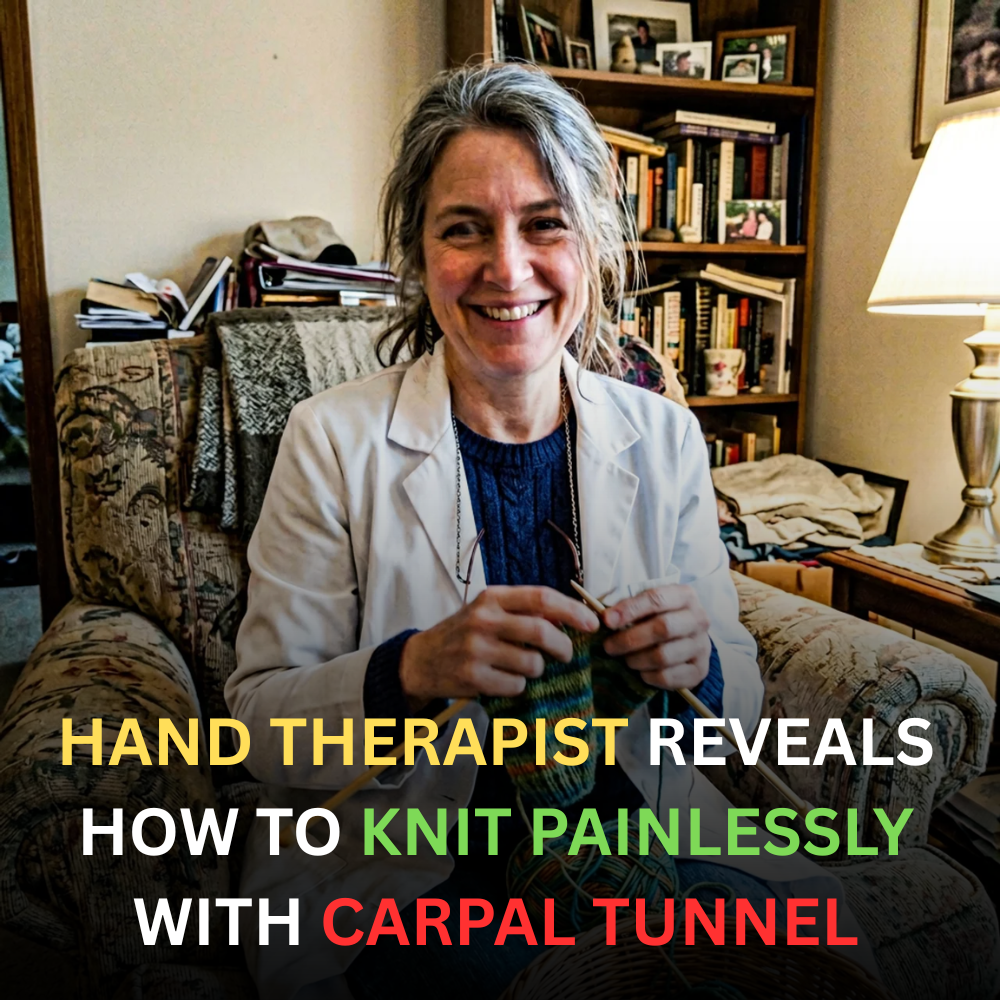
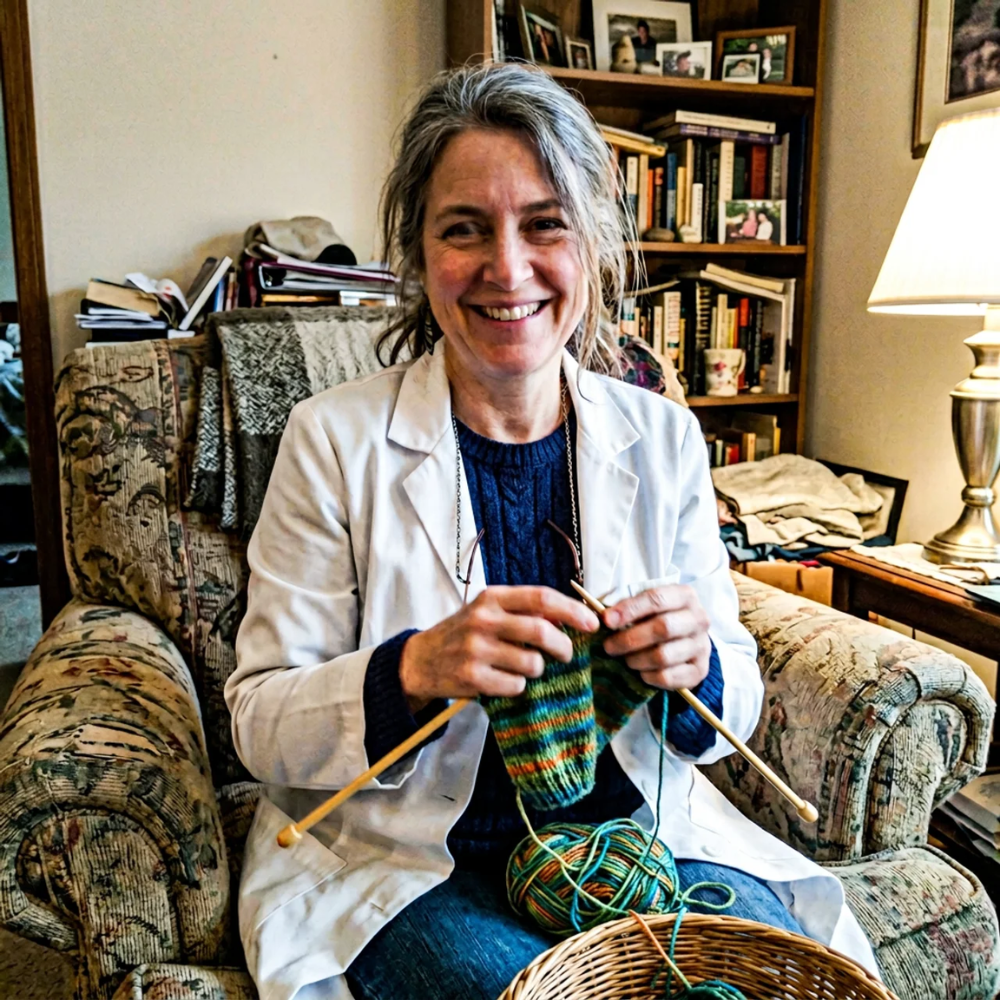
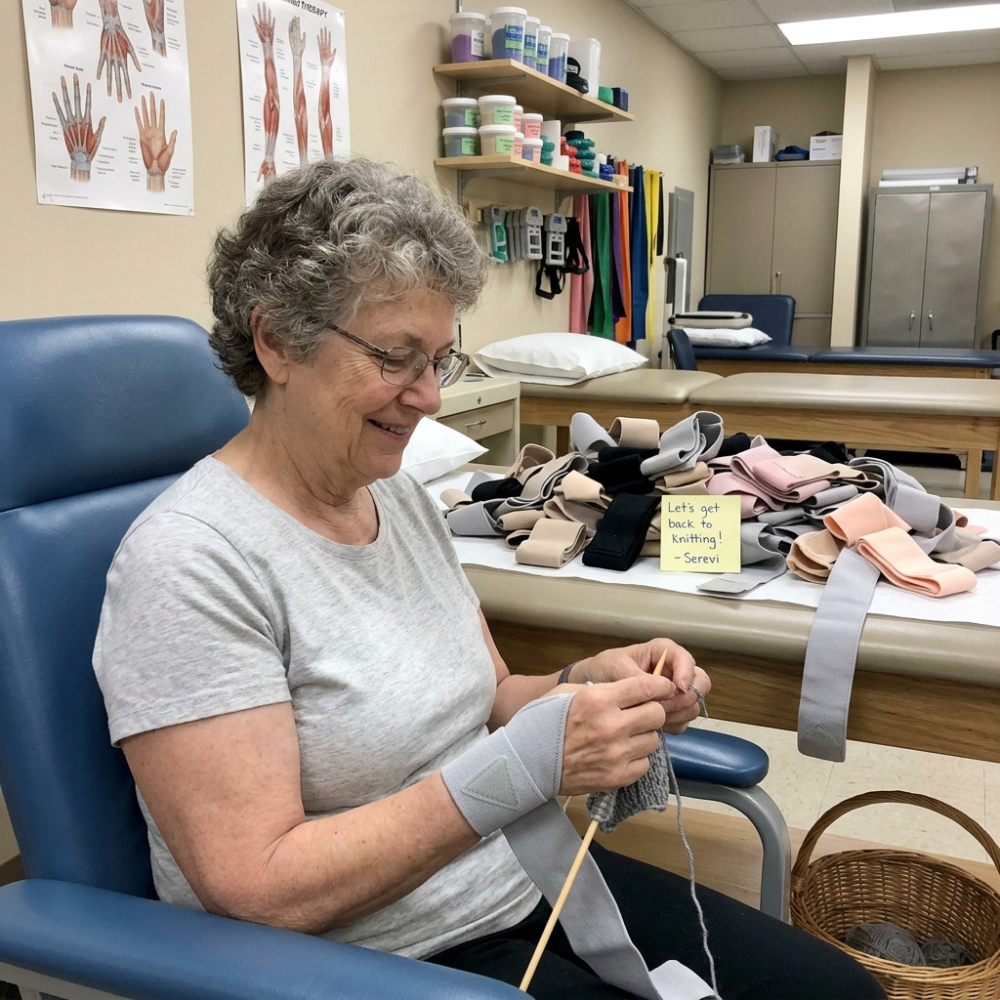
A wrist sleeve company sent 200 free units to my hand therapy clinic, and it’s making me rethink nine years of telling women to stop knitting. I’m Claire Ashford, certified hand therapist at Lakeview Rehabilitation Center. When Serevi reached out about sending 200 compression wrist sleeves for our patients to trial, I almost said no. Not because I didn’t want free products. But because accepting it would mean admitting that the advice I’d been giving my knitting patients for nearly a decade was incomplete. See, in hand therapy we’re trained to treat repetitive strain with a standard protocol. Rest. Immobilize. Reduce inflammation. If the patient won’t stop the activity, prescribe a rigid brace and hope they wear it at night. And for nine years, that’s what I did. When a knitter came in with carpal tunnel symptoms, I told her to rest. When she came back worse, I told her to rest longer. When she came back a third time, I referred her to a surgeon. I watched women give up the thing they loved most and I thought it was the only responsible answer. Then Serevi offered to send 200 sleeves. No contract. No promotional agreement. No requirement to post anything. No testimonial obligation. Just: “We think your patients need this. Please try it.” And I had to confront an uncomfortable question: If this company is confident enough to put 200 units on the line with zero guarantee I’d even use them, what have I been missing? So I did something I should have done years ago. I stopped looking at my knitting patients as people with chronic conditions. And I started looking at them as people with a wrist stability problem. Here’s what I mean. Every time a woman knits a stitch, her wrist makes a tiny lateral movement. Side to side. You can’t see it with the naked eye. But it happens hundreds of times per session. And the only thing supporting the wrist during those movements are tiny stabilizing muscles around the joint. After years of knitting—thousands of hours, millions of these movements—those tiny muscles fatigue. They’re too sore to hold the joint steady. The wrist starts shifting more than it should with every stitch. That excess movement irritates the tendons. Inflames the soft tissue. Compresses the carpal tunnel. And produces the exact symptoms I’d been treating for nine years: Numbness, tingling, weak grip, dead hand at 3 AM. But here’s what I’d missed. Every intervention I was prescribing treated the inflammation. None of them addressed the instability that was creating it. Rest lets the swelling calm down. But it doesn’t rebuild the fatigued muscles. The moment the patient picks her needles back up, the wrist can’t stabilize itself and the inflammation starts rebuilding. Faster every time. Rigid braces immobilize the joint. Useful for sleeping. Useless for knitting. The second the brace comes off, the unsupported micro-movements resume. Compression gloves squeeze the fingers and palm. But the fingers aren’t making the micro-movements. The wrist is. Every pair of gloves I’d recommended was compressing the wrong part of the hand. And surgery—carpal tunnel release—cuts the ligament to relieve the pressure. But it doesn’t address why the pressure built up. If the patient returns to unsupported knitting after surgery, the inflammation can rebuild around the scar tissue. And scar tissue doesn’t heal.. For nine years I was treating the symptoms, but ignoring the root cause. I looked at my clinic records with new eyes. 87 active female patients over age 50 with carpal tunnel or tendonitis. I pulled every file. 64 of the 87 were knitters, crocheters, or quilters. That’s 74 percent. Of those 64, I counted how many I’d told to stop their craft at some point during treatment. 58. That’s 91 percent. 91 percent of my handicraft patients had been told, by me, to stop doing the thing that gives their life structure, purpose, and emotional regulation. And of those 58, how many actually stopped? Maybe 12. The rest either ignored me, reduced their sessions to ten or fifteen painful minutes, or lied on their forms about how much they were still knitting. I wasn’t solving their problem. I was making them feel guilty for having it. We started the trial four months ago. I selected 43 patients. All knitters or crocheters. All with documented carpal tunnel or tendonitis. All previously told to reduce or stop their craft. I gave each one a wrist sleeve and asked them to wear it during every knitting session for eight weeks. I did not tell them to rest. I did not tell them to stop. I told them to knit with support. The results forced me to question everything I’d been trained to do. Week two check-ins: 34 of 43 reported reduced or eliminated tingling during sessions. That’s 79 percent. Week four: 29 of 43 reported no nighttime numbness. Down from every single one of them reporting it at baseline. Week eight: average knitting session had increased from 18 minutes to 94 minutes. Grip strength improved in 31 of 43 patients. Three patients who had been scheduled for carpal tunnel surgery cancelled their procedures. Three cancelled surgeries. From a wrist sleeve. One patient—a 62-year-old knitter named Donna—had been my patient for three years. I’d told her to stop knitting at least four times. She never did. She just knitted through the pain and the numbness and the guilt, twenty minutes at a time, and came to see me every eight weeks with the same symptoms getting slowly worse. At her eight-week follow-up after starting the sleeve, her grip strength had improved by 40 percent. Her nighttime numbness was gone. She was knitting two hours a night. She looked at me across the exam table and said: “You told me to stop. This let me keep going. I wish someone had given me this three years ago.” I didn’t have a response. Because she was right. Here’s what keeps me up at night: If accepting a free product revealed a gap this important, how many other therapists are making the same mistake? How many women are being told to stop knitting right now because their clinician was trained the same way I was? How many unnecessary surgeries are being scheduled because nobody thought to support the joint instead of just treating the aftermath? Here’s how confident I am now. When we run out of the donated supply, I’m purchasing more. With clinic funds. That’s not a decision I make casually. Rehabilitation clinic budgets are tight. Every equipment dollar is justified, debated, and defended. But after four months of watching this work across 43 patients, wrist sleeves are now a permanent line item in my supply orders. I will be purchasing them every time we run out. Serevi didn’t have to send 200 free units to get my attention. But the fact that they were willing to put that much product on the line with no contract, no promotional requirement, no follow-up asking for testimonials—nothing—tells me they’re not operating like a typical consumer health brand. Typical brands want endorsements and Instagram posts and clinician quotes for their website. This company just wanted to prove their product works. They sent 200 units and walked away. That kind of confidence is rare. And it made me pay attention in a way no sales pitch ever could. I don’t have a sponsorship deal. I’m not being paid for this. I have no financial relationship with Serevi. But when a company’s belief in their product is strong enough that they’ll give away 200 units to prove it helps, and when I watch it work across 43 patients in real time, and when the results are compelling enough that I’m adding it to my permanent budget and buying it with clinic funds every time we run out—I cannot stay quiet. If you knit, crochet, or quilt. If you’re over 50. If you’ve been told to stop or slow down or rest. If you’ve been told surgery might be your next step. If you’re wearing a rigid brace at night that does nothing for you during the day. If you’re wearing compression gloves that squeeze your fingers while your wrist—the joint that actually needs support—has nothing around it. You need to look into wrist stability. Wrist stability during the micro-movements your craft demands. The link is below. After watching what their donation did for my patients, after seeing them put product on the line with zero expectation of return, after deciding I’ll be purchasing this with clinic funds indefinitely—I consider this essential equipment for any woman who works with her hands. Your wrist deserves what my patients got. Not because I’m selling you something. Because someone proved it works by giving it away for free. P.S. — 5 months ago I would have told you to stop knitting. I was wrong. I have no financial relationship with Serevi, but the data speaks for itself.
Like this ad? Make it yours.
Crush rebuilds this exact creative around your product — your brand, your colors, your offer — in about a minute.