
Inactive· since Apr 28, 2026
- 77
- days it ran
- 0
- relaunches
Ad copy
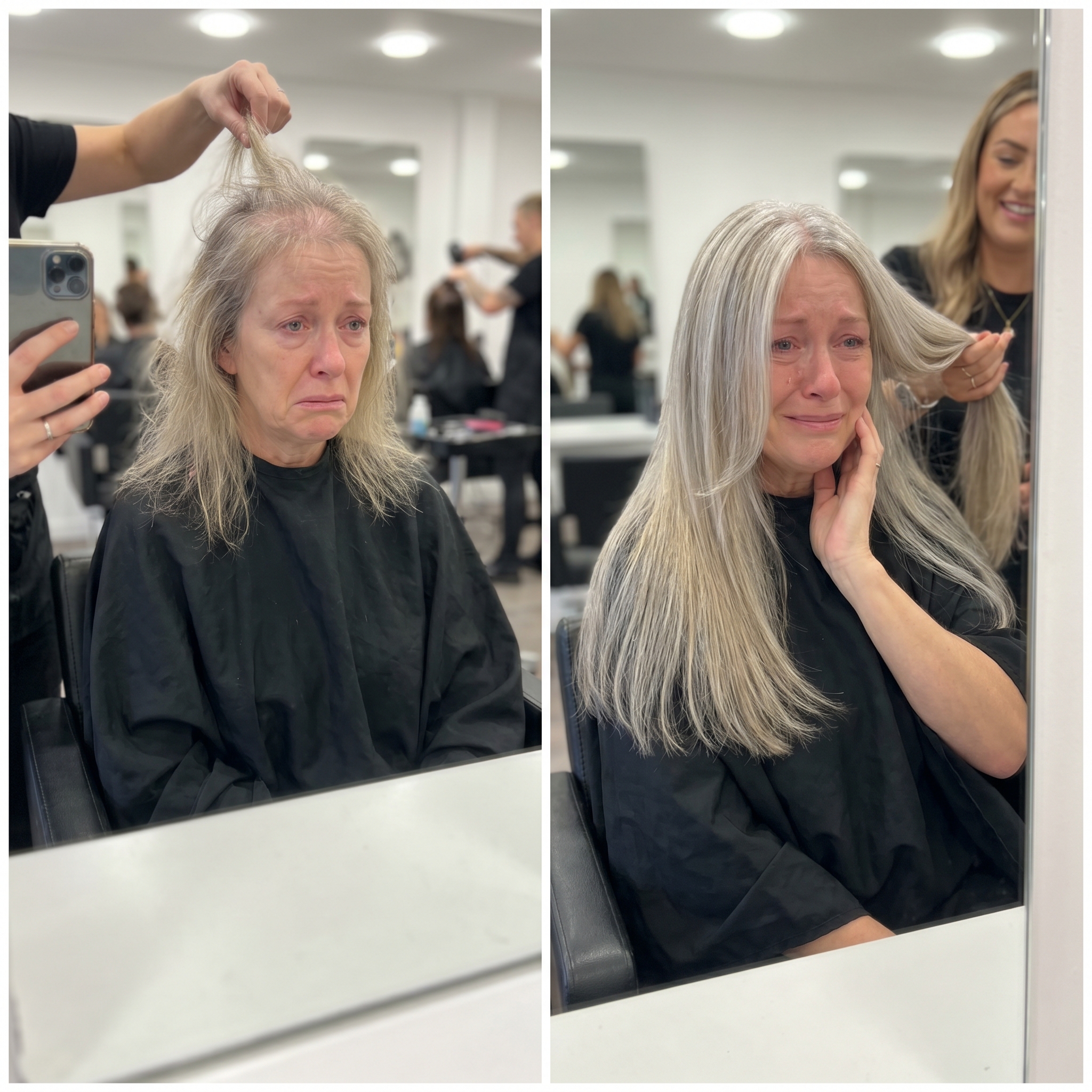
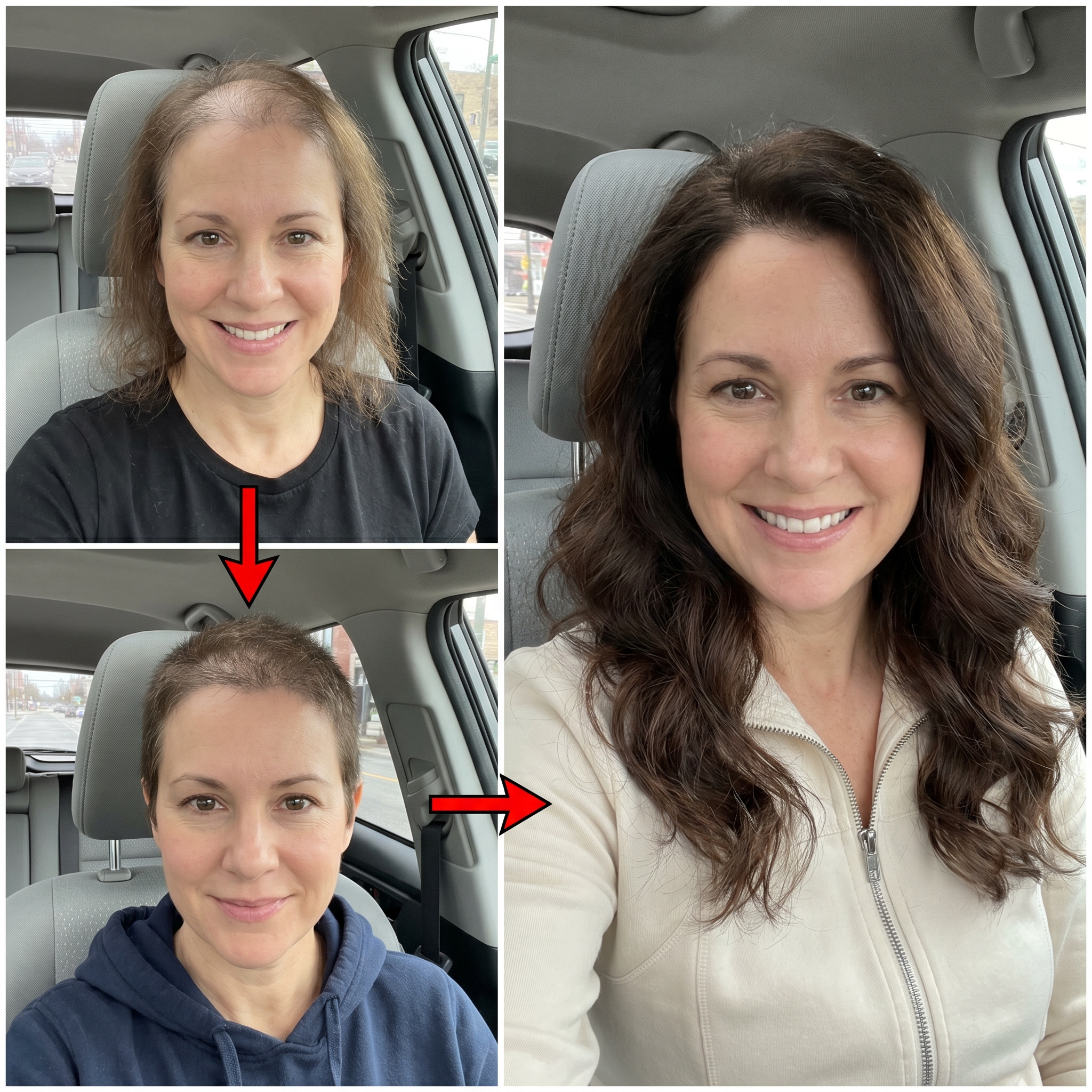
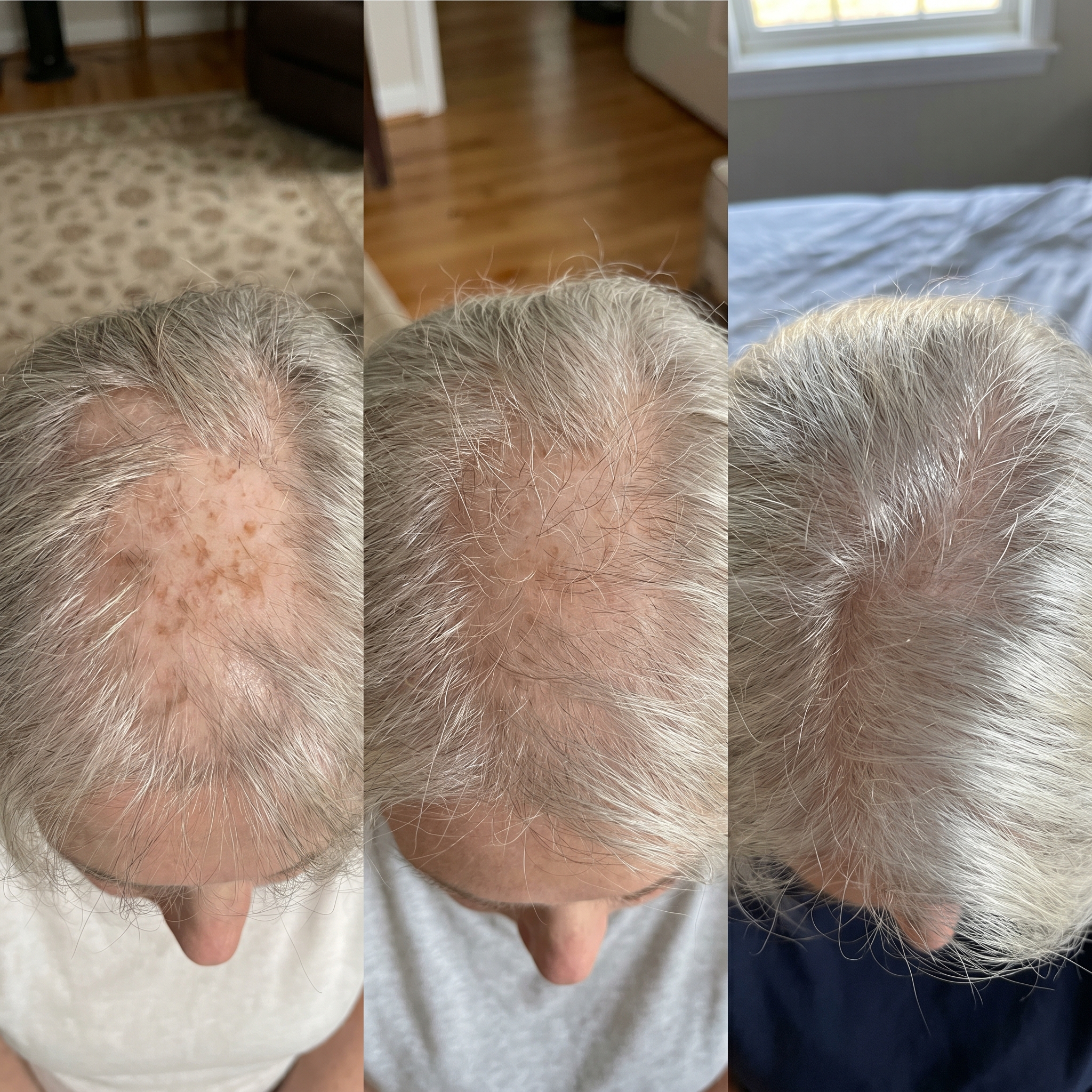
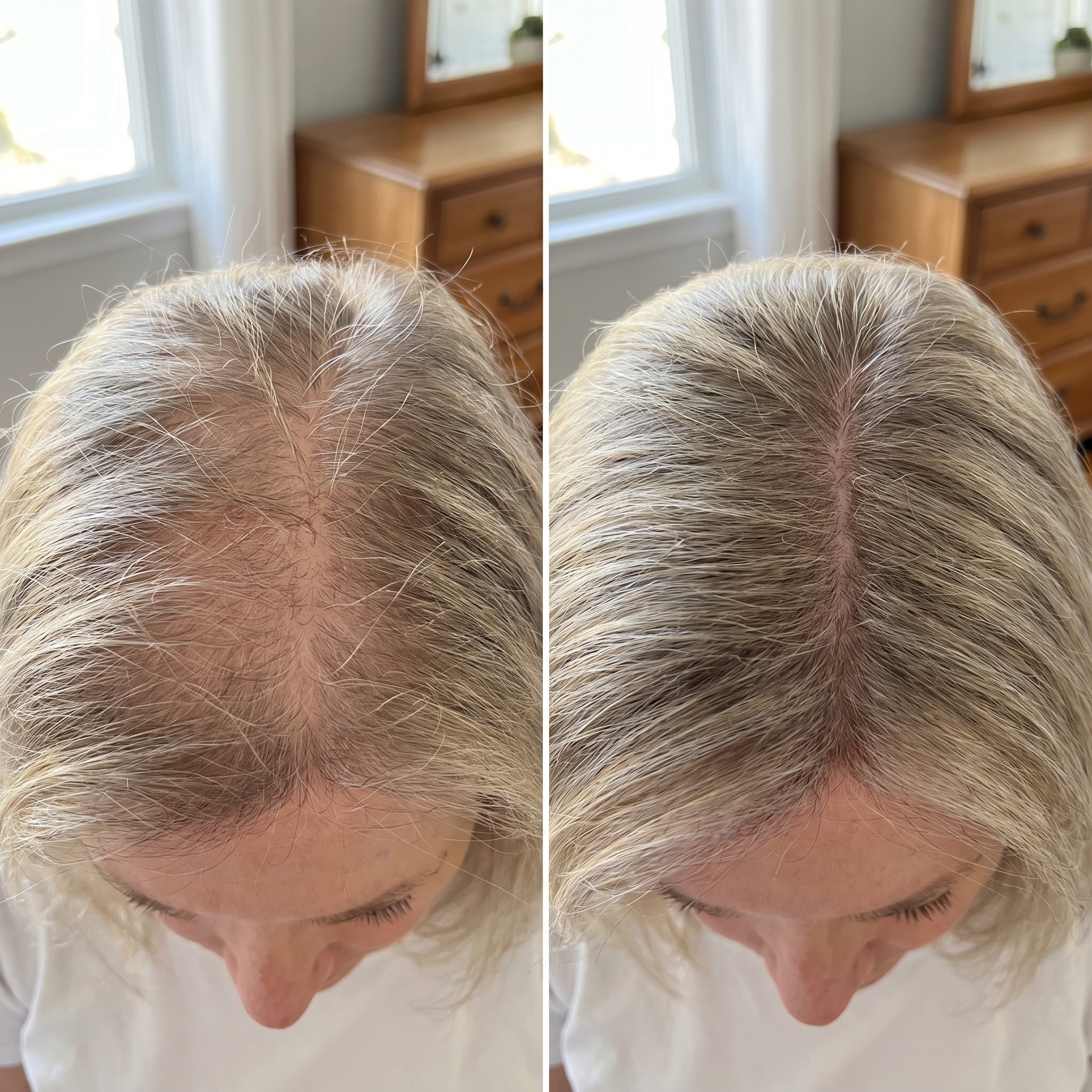
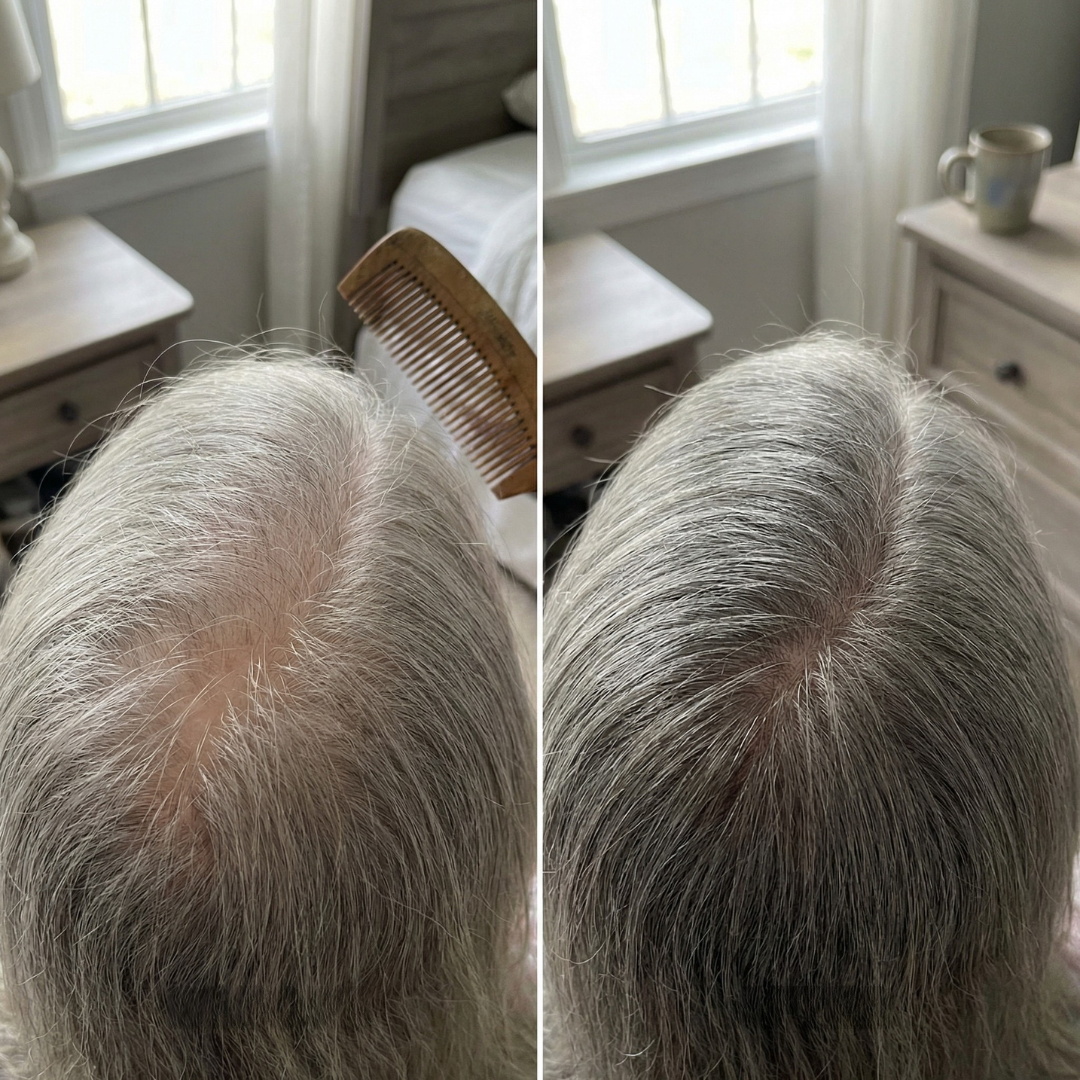
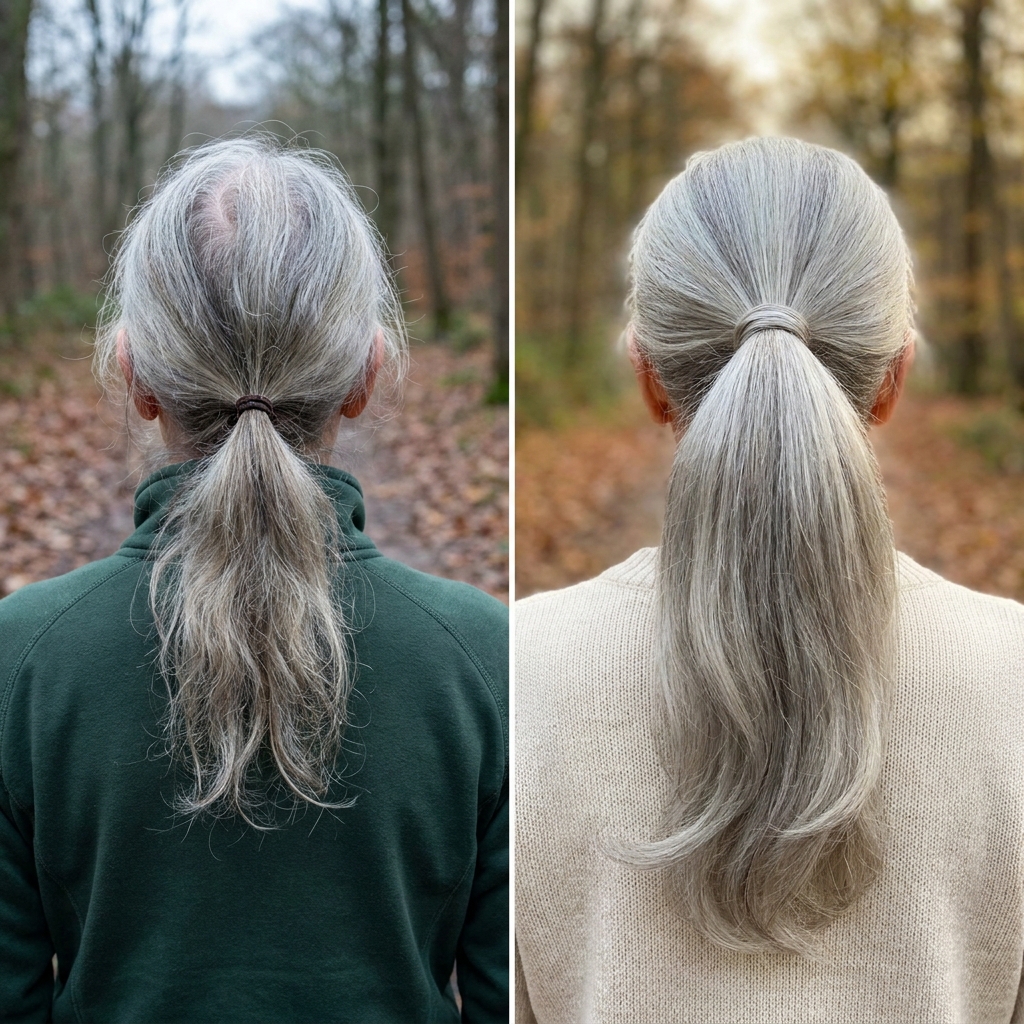
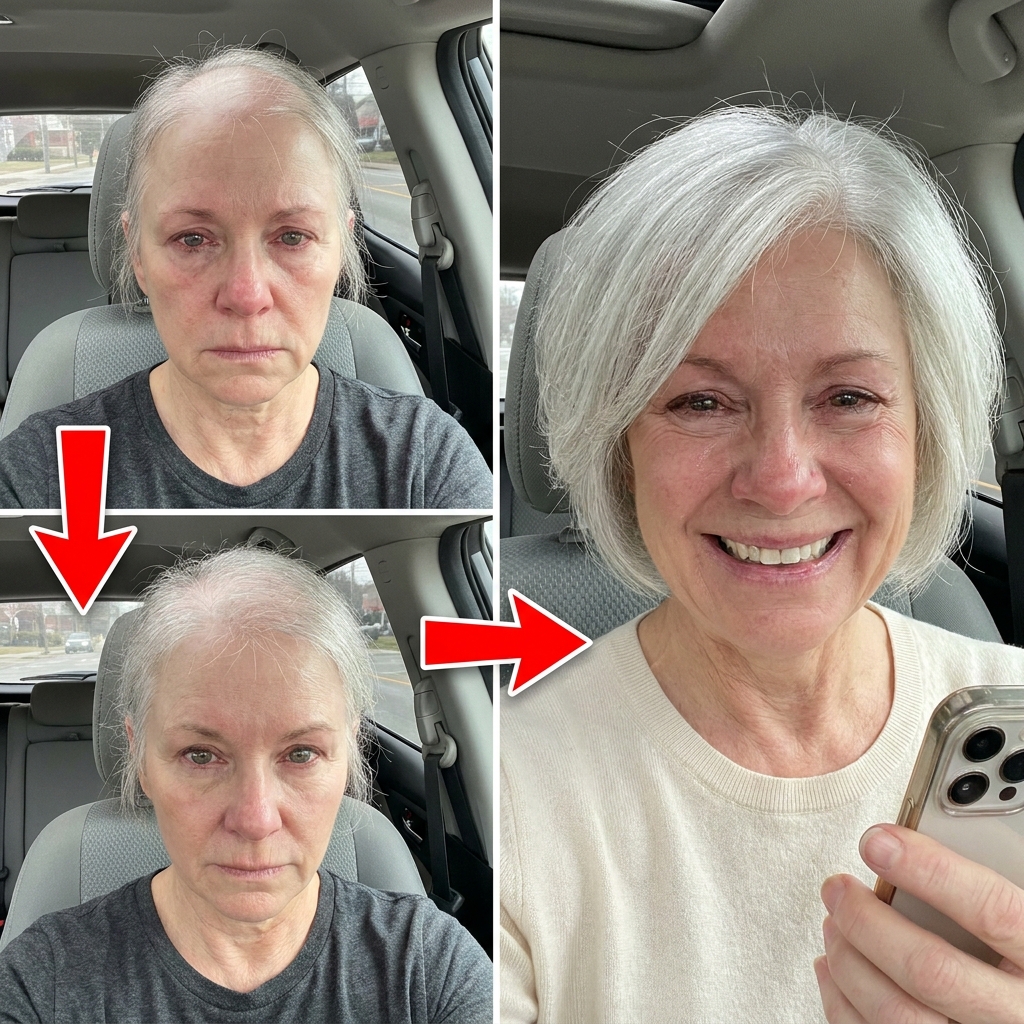
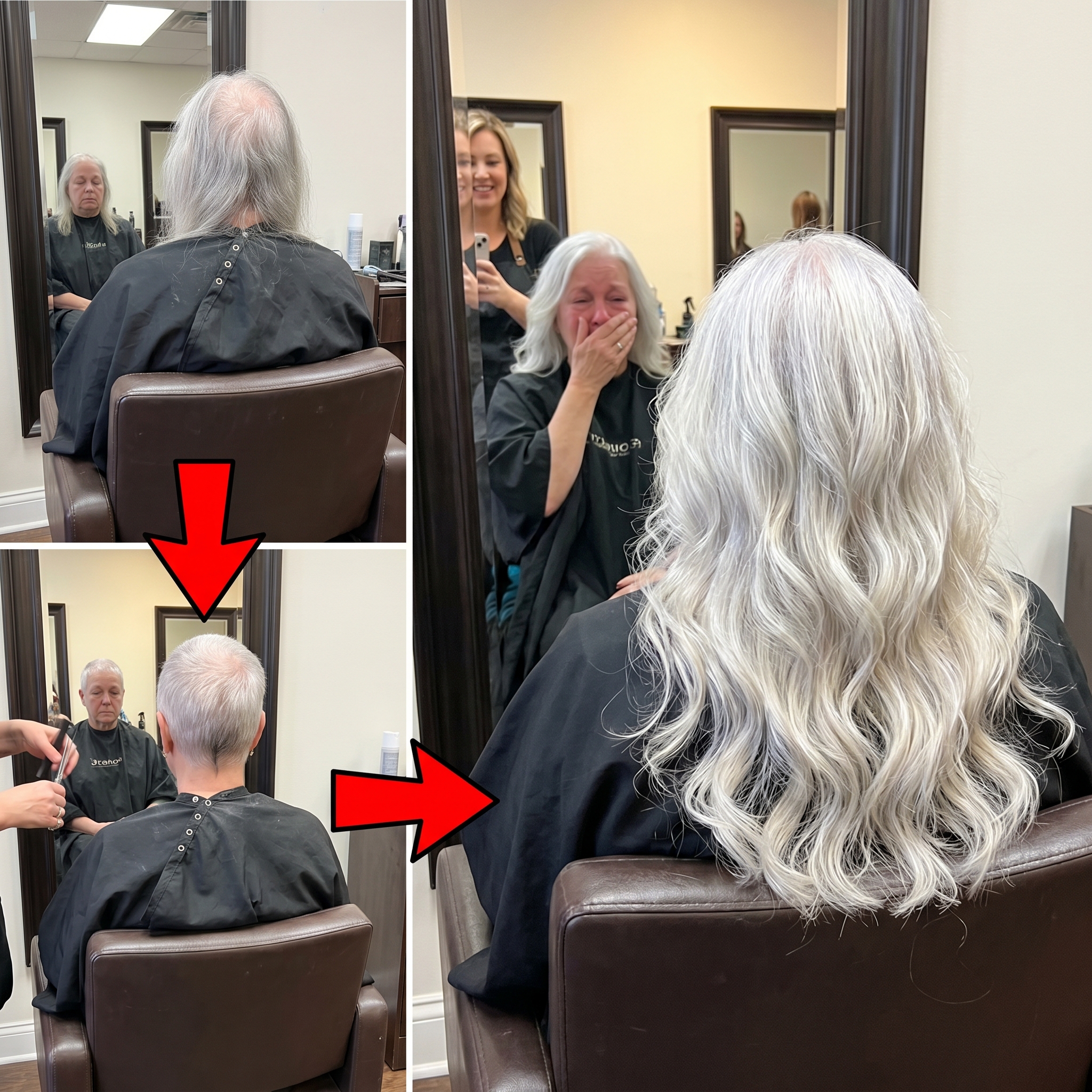
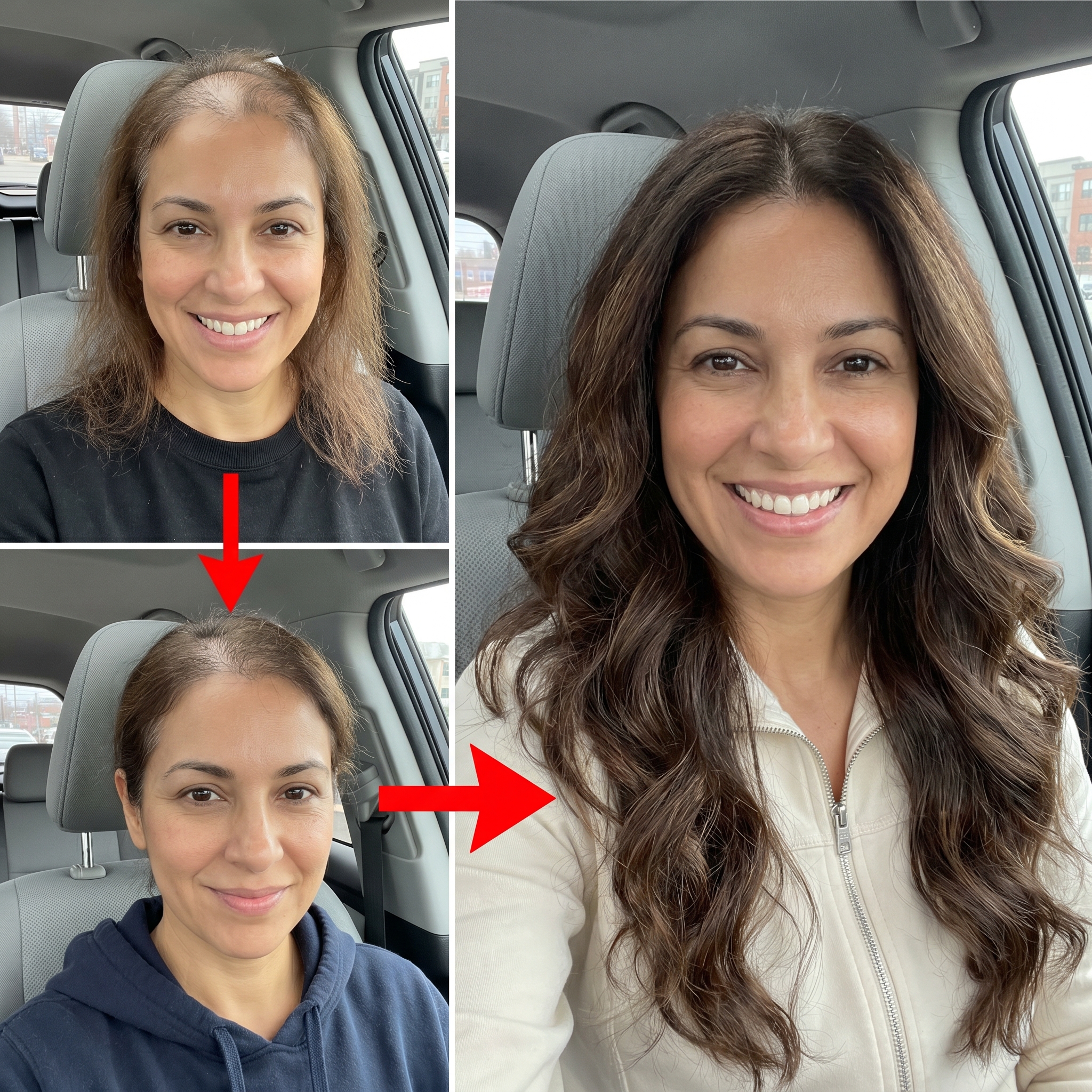
I am 54, I am a recently retired nurse, and I have a habit my husband finds odd, which is that I count things. I have done it since my training. I count drips, I count breaths, I count the number of times I open the dishwasher in a day if I am bored. When my hair started thinning at 50, I did the natural thing, which was to start counting that as well. I had a small tile in the shower that I cleared into the bin under the sink at the end of every wash. I kept a notebook on the windowsill above the basin and wrote the number down. For two years I knew, with the kind of unwanted accuracy that only a former nurse can have about her own body, what a normal day looked like. I knew what an ordinary brush-through produced. I knew, in the way you end up knowing once you start counting, the specific number that meant the crown had had a bad week. I knew that on stressed weeks the count rose, and that on the rare weeks I had been able to do nothing at all, it sometimes fell. For two years the count only went one direction. The hair had started thinning at 50 and accelerated through 51 and 52. Like many women who have written about this, I was not warned. Like many women, I went to my GP, was sent for bloods, was told my thyroid was fine, my iron was within range, and my B12 was normal. Like many women, I was offered minoxidil and HRT and was told, in the kindest of terms, that this was probably perimenopausal and I might find that nothing in particular brought it back to where it had been at 45. I tried, in order: Topical minoxidil. Eleven months. Partial coverage, dread shed, plateau. I logged the daily count throughout, and on the spreadsheet view it formed a small ridge in months one and two and a long, flat plateau thereafter that did not, on any reasonable reading, count as success. HRT. I went on it at 52, primarily for the joint pain and the night sweats, and I will not come off it. It transformed many things. The night sweats, gone in a fortnight. The joint pain in my right hip, gone in two months. The mood, lifted in three. It did not change the count. Biotin. Six months. The count was unchanged. My GP eventually asked me to stop because of the thyroid lab interaction. Nutrafol. Six months. £79 a month. The count was unchanged. Wellbel. Three months. £45 a month. The count was unchanged. A scalp treatment course at a clinic in Bath. £315 across four sessions. The trichologist was a woman about my own age who had, herself, been through two years of menopausal thinning before adding the qualifications that let her treat other women going through it. We spent more time talking about the experience than about the treatment. The count was unchanged. A laser cap a colleague had used and given to me with the warmest of intentions. Eight months. The count was unchanged. Collagen powder, rosemary oil, spearmint tea, the usual list. By month seventeen I had spent £670 and was clearing the same tile every wash. The notebook on the windowsill had a black plastic cover that had begun, in the moisture of the bathroom, to peel slightly at one corner. I had thought, more than once, of throwing the notebook away. The count was telling me only one thing, and the thing it was telling me had already been told. The part had widened. The crown had thinned. The temples, which had been my mother's first sign, had begun to do at 53 what they had done to her at 56. I was not, by any reasonable measure, getting better. My mother had died at 78 with hair that had gone, by then, from thinning to gone. I had, in the way daughters do, begun to assume my own trajectory would be hers. I came across the 2011 dermatology research in a long-form article that a friend had emailed me with the subject line "saw this and thought of you". I was annoyed for the first thirty seconds at the implication that my hair had become something my friends now thought about. I was grateful for the rest of the day. The article walked through the mechanism. In menopausal androgenetic alopecia, the follicle does not die. It is chemically silenced by DHT acting locally at the scalp. The growth phase of the hair cycle — anagen — is shortened by DHT. The follicle spends progressively less time producing hair and progressively more time in a dormant state. The hair becomes finer and shorter, until from the outside the follicle appears to have stopped functioning. But the stem cells are still there. The blood supply is still intact. The structure is still alive. The follicle is in dormancy, not gone. If you interrupt the local DHT, anagen extends. The follicle wakes up. This was the explanation no one had given me. Not the GP, not the dermatologist, not the trichologist, not any of the products. Each of those things had treated the loss as a problem of supply (give the follicle more nutrients) or as a problem of stimulation (push the follicle harder). The 2011 paper described it as a problem of silencing — and the answer was to interrupt the silencing, locally, at the scalp. I read the article twice. I did not, at first, tell my husband. I wanted to be sure I was not, after eighteen months and £670, allowing myself to be talked into another disappointment. Topical caffeine, applied to the scalp, blocks 5-alpha-reductase at the follicle and extends anagen directly. That is what makes it relevant to the mechanism the paper described. Mellenza is a topical scalp serum formulated for that mechanism. Caffeine. Polygonum multiflorum. Arginine. Biotin. Ginger. Sprayed on the crown, the part, and the temples at night. Not a shampoo. Not a volumiser. Not a supplement. A topical wake-up call for follicles that have been dormant too long. I started counting again the day I started using it. Twelve weeks before I let myself form a judgement. Week 1. The count was the same. Week 2. The count was the same. Week 3. The count was the same. I had begun to think, by the end of week 3, that nothing was going to change. Week 4. The count was lower. Not by a small margin. Across seven washes the count was, in my notebook, 31% lower than the rolling average for the prior three months. I checked it twice on different days because I have, after thirty years of nursing, a healthy distrust of single data points. Week 6. The texture in the comb at the end of a wash was different. Week 9. I let myself take a comparison photograph for the first time in fourteen months. Same bathroom, same light, same angle. The part was narrower. There was short, fine regrowth visible along the edge of the part. I sat on the edge of the bath for about fifteen minutes. Quietly. Not dramatically. I had not let myself look at that photograph in a long time. Month 4. My husband said it without me having mentioned it. He said, "Your hair has come back." He said it on a Tuesday morning, at the breakfast table, while I was reading something on my phone. He had not, in eighteen months, said anything about it that I had not asked him to. He said it the way he says small important true things — slightly too quietly, as if he had been turning the sentence over for a while before letting himself put it into the air. I did not look up immediately. I gave myself a minute. Then I looked up and said thank you. Month 5. I cleared the drain at the end of the wash and there were six hairs in it. I have written that down in my notebook because I want to remember the number. I had not, in three decades of nursing, written a number down in a notebook with that much specific quiet feeling attached to it. The notebook is still on the windowsill. I am still counting. The count is no longer the thing it used to be. The link is below.
I had been counting hairs in the drain. By Week 4 I was counting fewer.
Women's Health · Updated April 2026 Menopause · Hair Routine 7 Mistakes That Make Menopausal Hair Loss Worse, And the 30 Second Ritual 10,000 Women Used to See Regrowth in 8 Weeks Dr. Sarah Mitchell — Women's Health Writer. If you're standing in front of the mirror doing the 3-elastic ponytail t...
LEARN MORELike this ad? Make it yours.
Crush rebuilds this exact creative around your product — your brand, your colors, your offer — in about a minute.