
Inactive· since May 19, 2026
- 14
- days it ran
- 0
- relaunches
Ad copy
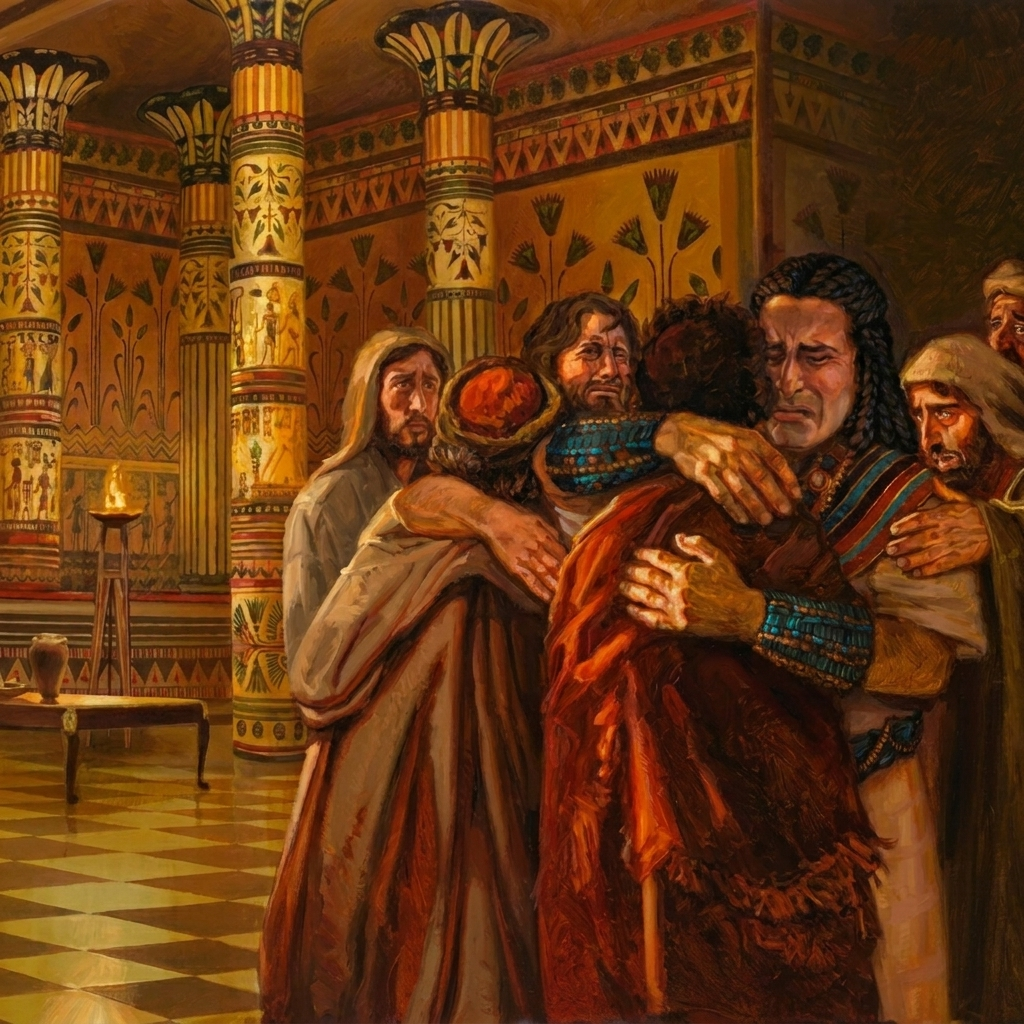
The story of Joseph is the gospel of Jesus told in advance. There are thirteen exact parallels between them. Most Christians have never been shown a single one. In Genesis 37, a teenage boy receives a special coat from his father. By Genesis 50, that boy has saved the known world from starvation. In between, his brothers strip him, sell him, fake his death, and assume he is gone forever. Every single thing that happens to Joseph in those thirteen chapters happens again, in exact order, to Jesus. Not symbolically. Not loosely. Thirteen parallels. In sequence. Across two stories written almost two thousand years apart. One. The beloved son sent by his father. Jacob loved Joseph more than any of his other sons. He gave him a special coat. Then he sent him alone, into hostile territory, to check on his brothers. The Father loved His Son. He set Him apart. He sent Him alone, into hostile territory, to His people. Two. Hated by his own brothers. "His brothers hated him and could not speak a kind word to him." Genesis 37:4. "He came to His own, and His own did not receive Him." John 1:11. The ones who should have welcomed him plotted his destruction instead. Three. Stripped of his robe. The brothers tore Joseph's coat off his back before they sold him. The Roman soldiers stripped Jesus of His robe before they crucified Him. The first act of betrayal, in both stories, was removing the garment that marked who he was. Four. Sold for silver. Joseph was sold by his brother Judah to the Ishmaelites for twenty pieces of silver. Jesus was sold by His disciple Judas to the chief priests for thirty pieces of silver. The brother and the disciple share the same name in Hebrew — Judah, Judas. Both took silver to betray the chosen son. Five. Placed in a pit. Before he was sold, Joseph was thrown into an empty cistern. A grave for the living. Before His resurrection, Jesus was placed in an empty tomb. Both pits were dry. Both pits were temporary. Six. Falsely accused. Potiphar's wife accused Joseph of a crime he did not commit. He was condemned on her word alone. The Sanhedrin produced false witnesses against Jesus. Their testimonies did not agree, but the verdict was reached anyway. Seven. Imprisoned with two criminals. In prison, Joseph met Pharaoh's cupbearer and Pharaoh's baker. He interpreted their dreams. One was restored to life. The other was executed. On the cross, Jesus hung between two criminals. He spoke to both. One was promised paradise. The other was not. Two prisoners. One restored. One condemned. Both stories. Eight. Raised up after his suffering. Joseph spent years in the pit and the prison before he was elevated to power. Jesus spent three days in the tomb before He was raised to glory. Nine. Given all authority. Pharaoh placed Joseph over his entire kingdom. "Without your word no one shall lift up hand or foot in all the land of Egypt." Genesis 41:44. Jesus told His disciples after the resurrection: "All authority in heaven and on earth has been given to me." Matthew 28:18. Both went from prisoner to ruler in a single day. Ten. Provided bread that saved the world. When the famine came, Joseph distributed the grain he had stored. The known world came to Egypt to be fed. Jesus broke bread and said, "This is my body, given for you." He said, "I am the bread of life." Both became the source of bread for a starving world. Eleven. His own brothers did not recognize him. When Joseph's brothers came to Egypt for grain, they stood face to face with him and did not know it was him. When Mary stood at the empty tomb, she looked directly at Jesus and thought He was the gardener. The disciples walked seven miles with Him on the road to Emmaus and did not recognize Him. The risen, restored, glorified one looked different. Familiar but transformed.Twelve. When they finally recognized him, they wept. Joseph revealed himself to his brothers. They were terrified — they knew what they had done. But Joseph wept loudly enough that the entire household heard him. He embraced them. When the disciples recognized the risen Jesus, they wept too. Peter, who had denied Him three times, was met not with rebuke but with breakfast on a beach. The one they betrayed wept when he saw them again. Thirteen. He forgave them with words every Christian has heard. Joseph's brothers fell at his feet, terrified he would now take his revenge. Joseph wept again and said: "You meant evil against me, but God meant it for good." Genesis 50:20. Jesus, from the cross, looked at the people executing Him and said: "Father, forgive them. For they know not what they do." Both forgave their betrayers. Both explained that the betrayal had been God's plan all along. Thirteen parallels. One man. One story told in advance two thousand years before it happened. The most famous Sunday school story in the Bible is not a children's tale about a boy with a colorful coat. It is the gospel of Jesus rehearsed in advance through the life of one of Jacob's sons. That is what I realized sitting in my pastoral office last spring. I have been teaching Scripture my whole adult life. More than 18 years. And last March I was asked to mediate a meeting between two brothers in my church who had not spoken in 22 years. The younger brother had been wronged. An inheritance dispute. Money taken. Trust shattered. They lived 30 minutes apart and had not exchanged a word in two decades. The older brother walked into my office first. His hands trembled. Then the younger brother walked in. There was a long silence. And then the younger brother said: "I forgive you. What you meant for evil, God meant for good." The older brother collapsed sobbing into his hands. The younger brother knelt down in front of his chair and held him. I sat at my desk and could not move. I had been pastoring for 18 years. I had preached on Joseph countless times. And in that moment, watching a real-life Joseph-and-brothers scene play out in front of me, something I had never seen suddenly came into focus. Joseph was not just a story about forgiveness. Joseph was Jesus. Beloved son. Sent by his father. Betrayed by his own. Stripped, sold for silver, thrown into a pit. Imprisoned with two criminals. Raised up. Given all authority. Provider of bread to a starving world. Unrecognized by his brothers face to face. Forgiver of his betrayers. Every parallel was right there on the first page of the Bible and I had been reading it for 18 years without seeing what it actually was. They could not see it. And it was not their fault. Nobody had ever given them the roots. The next morning I opened my computer and started writing. Genesis. Everything someone needs to know before reading Genesis. Who wrote it. When. Why. What was happening. The main themes. How it connects to the larger story. Not a sermon. Not a devotional. Just the roots. Then Exodus. Leviticus. Numbers. Every single book of the Bible. Sixty-six pages. One page per book. It took me three months. Three months of putting 18 years of studying into a format any believer could use completely on their own. No pastor required. I started giving copies to people in my church quietly. One at a time. Every single person said the same thing. "This is the first time I have ever understood what I was reading." Not because I am some brilliant teacher. But because I finally gave them what they actually needed. The roots. And once you have those roots, the Bible you thought you knew becomes something you have never actually encountered before. The Joseph story is just one thread. There are thousands more waiting in the pages you have already read. Did you know that when Jesus said "It is finished," the Greek word tetelestai was the same word stamped on receipts in the Roman Empire to mean "paid in full"? His final declaration was not a statement of ending but of completion. A cosmic debt marked as settled. Did you know that the name Barabbas literally means "son of the father" and that the crowd was given a choice between two men with the same title — the innocent Son of the Father and the guilty son of the father — and the guilty one went free? Context changes everything. Every single time. I call it FaithSprout. The 66 Roots Journey. 66 pages. One for every book of the Bible. Each page gives you what you need before you read. Who wrote it. When. Why. What was happening. The key themes. The symbolism. And how it connects to your actual life today. Written in plain language. No seminary terms. No complicated theology. Just the roots that make everything you have already read suddenly land with the full weight God intended. The Bible is not confusing because it is unclear. It is confusing because we are reading it without the foundation that made it clear to the people it was first written for. The first Christians read Genesis and saw Jesus on every page. They watched Joseph stripped and sold for silver and recognized the cross. We read Joseph as a Sunday school story and miss the gospel hiding in every chapter of it. This guide gives you that foundation back. If you have ever read Joseph as a children's tale about a colorful coat. If you have ever read a passage of Scripture and sensed there was something deeper underneath the words that you could not quite reach. If you have ever wondered what you would find in God's Word if someone just gave you the roots first. This is what you have been looking for. God did not write Joseph's life by accident. Do not let a lack of context be the thing that keeps you from seeing the gospel hidden in the first book of your Bible. Get closer to God by actually understanding His Word. Not just the familiar parts. All of it. The whole story. That is what The 66 Roots Journey was created for. And you can start yours by clicking below.
Read this if the Bible feels harder than it should. ☝️
Understand all 66 books of the Bible more easily
SHOP NOWLike this ad? Make it yours.
Crush rebuilds this exact creative around your product — your brand, your colors, your offer — in about a minute.