
Inactive· since Apr 10, 2026
- 51
- days it ran
- 4
- relaunches
Ad copy
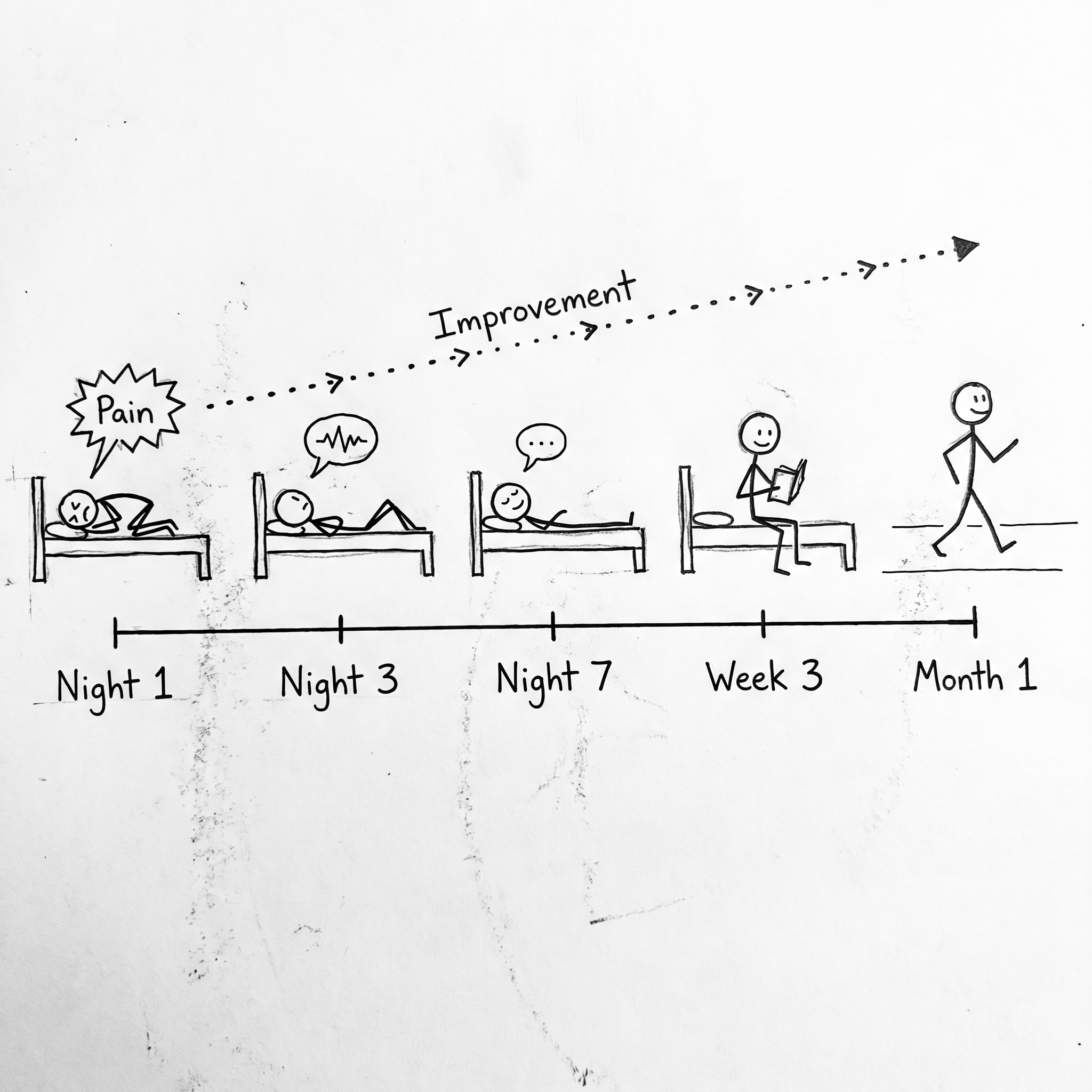
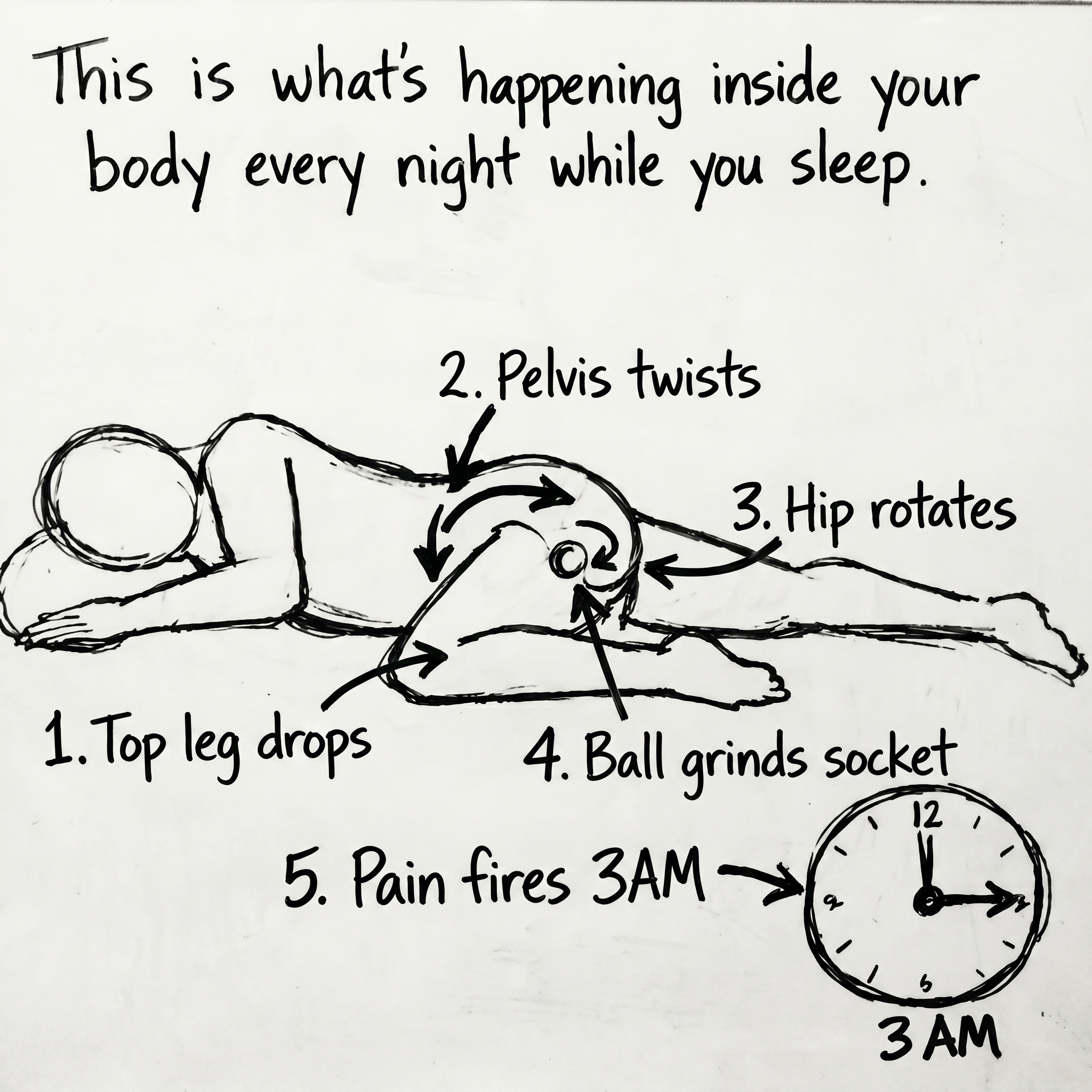
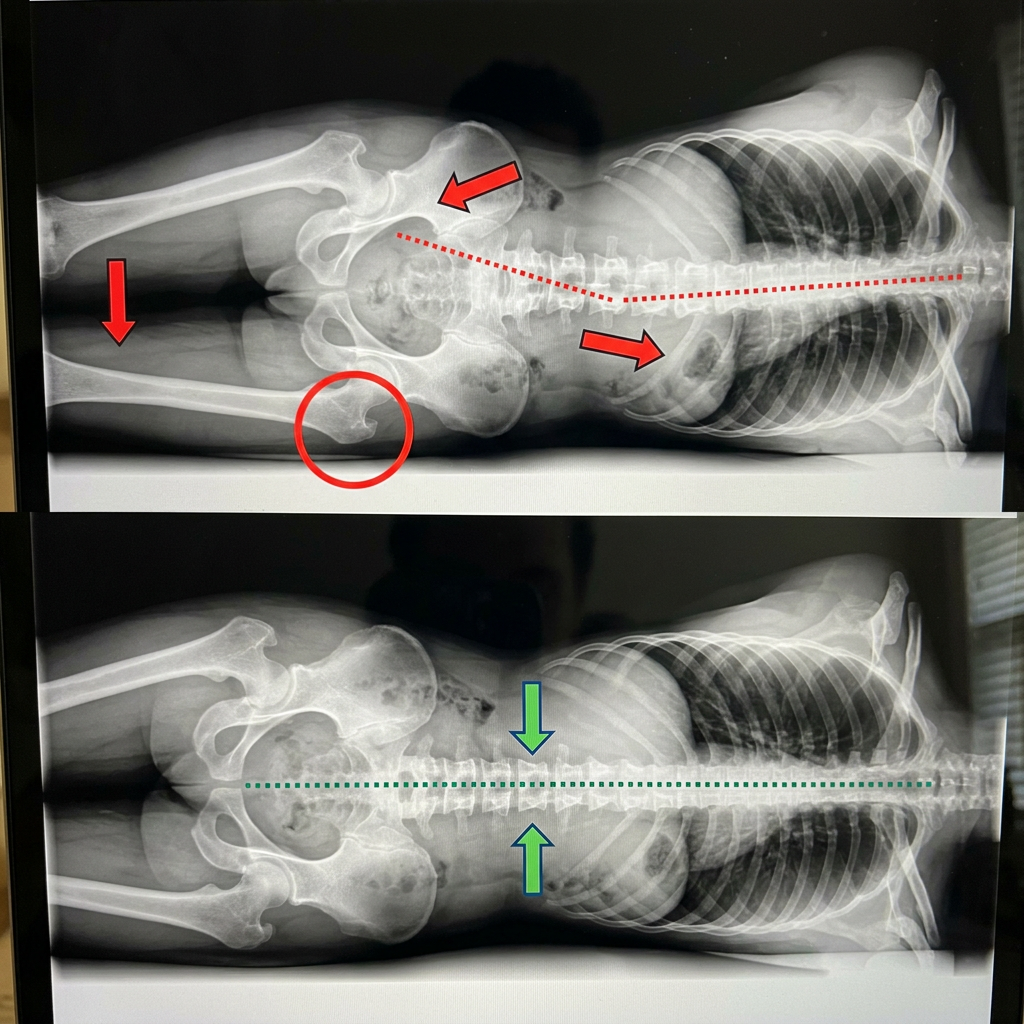
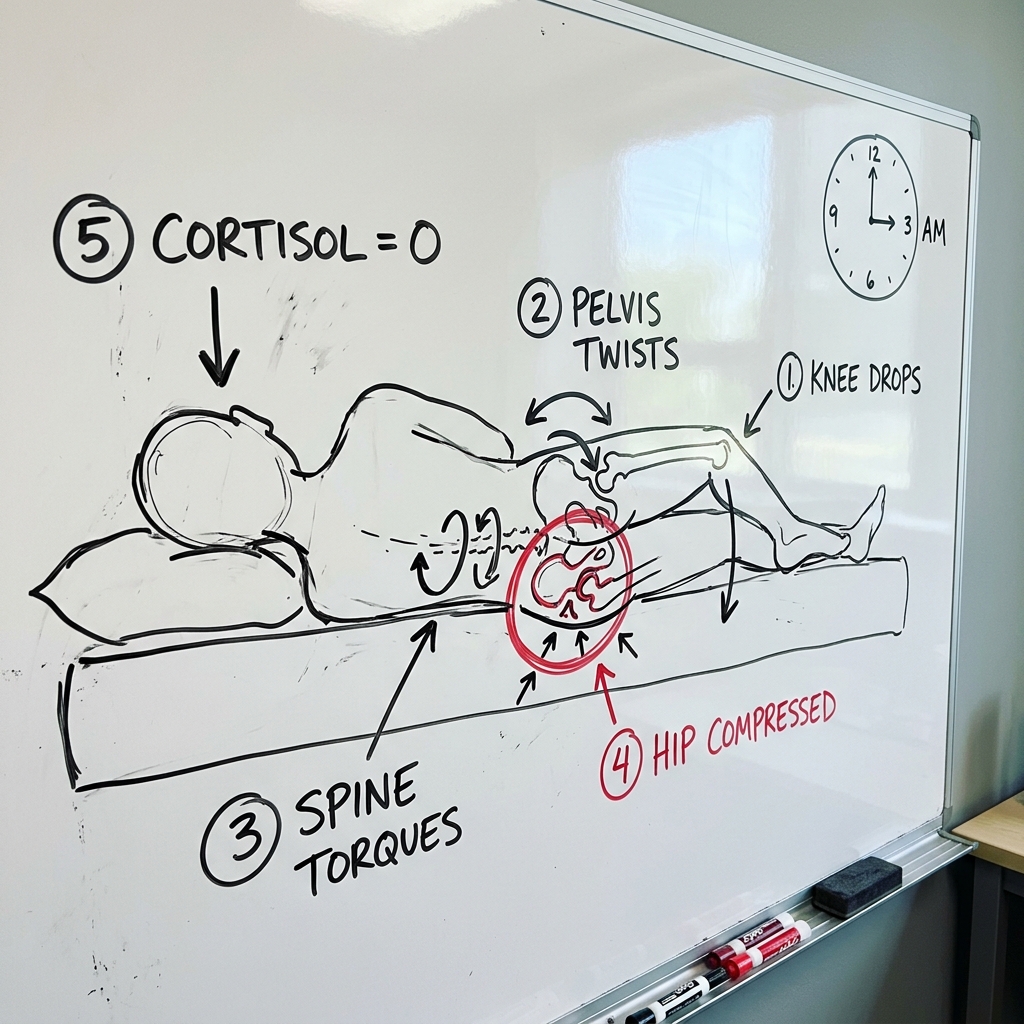
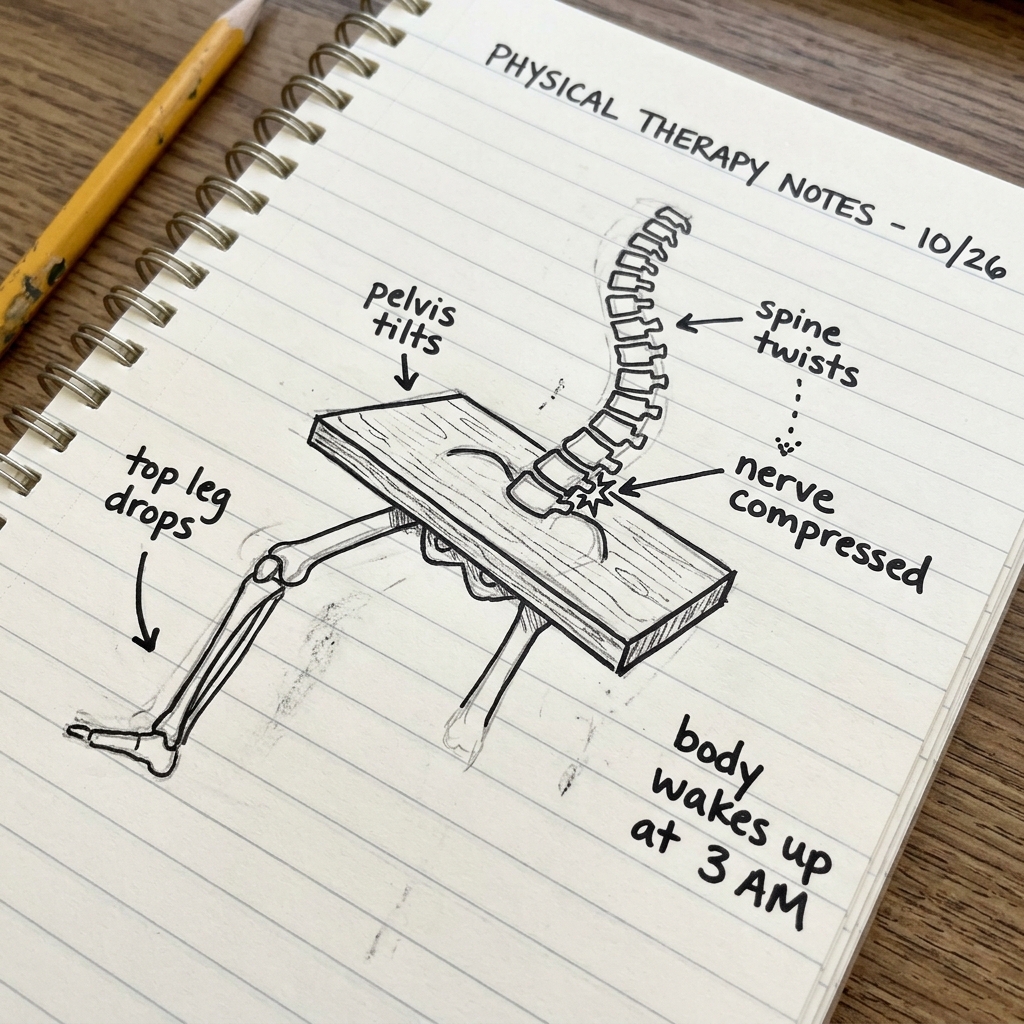
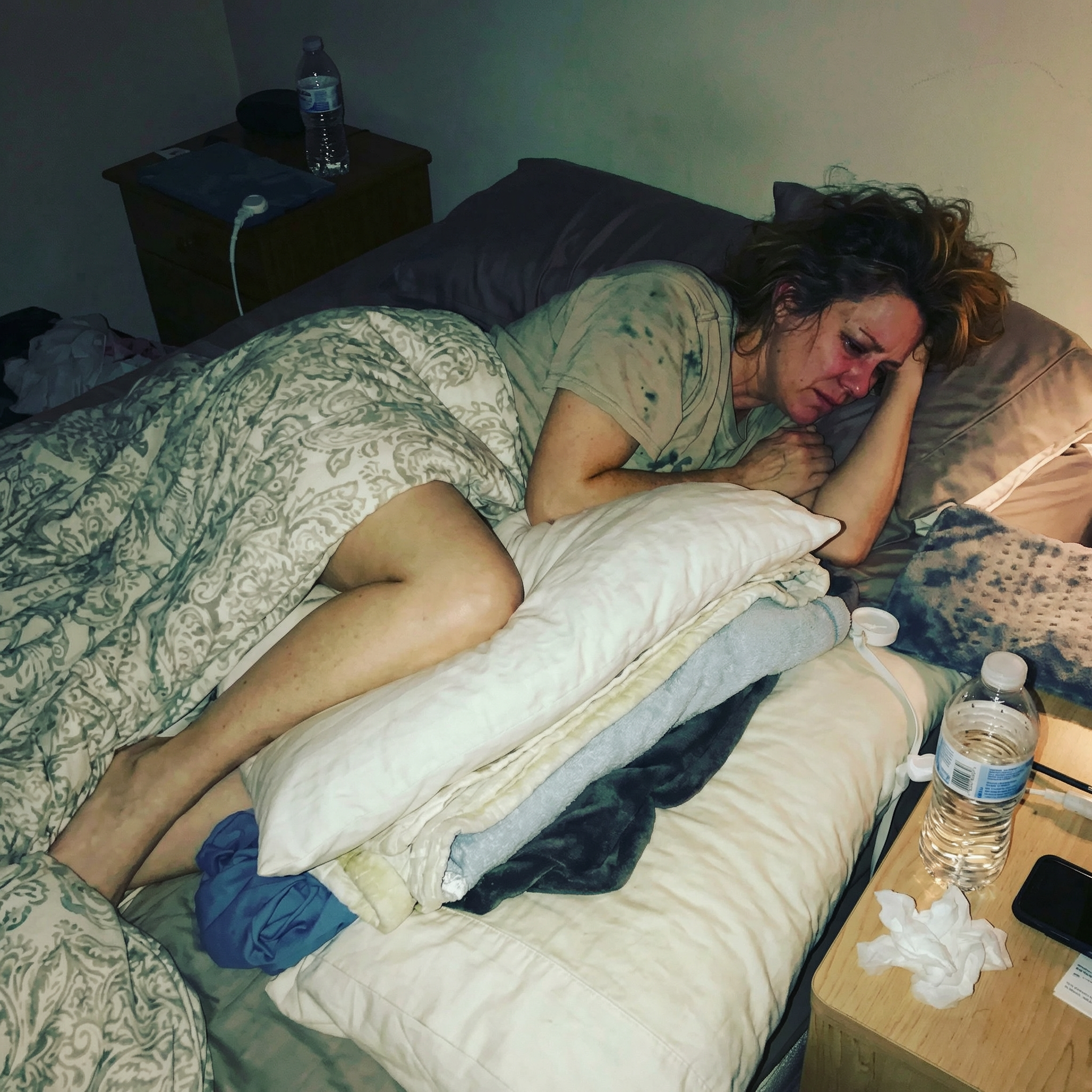
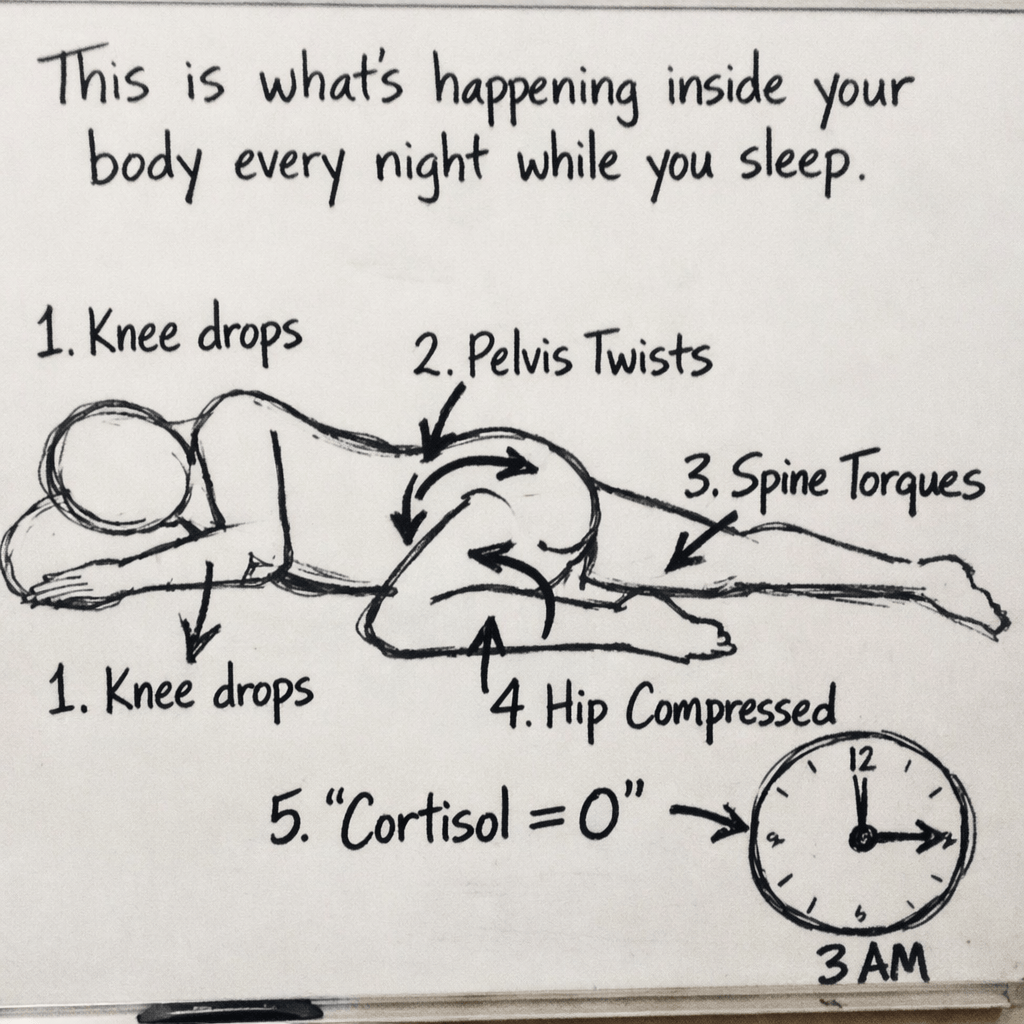
If you're a side sleeper who wakes up every single night grabbing your hip, flips from side to side like a rotisserie chicken until 5 AM, and starts every morning hobbling to the bathroom like you aged 40 years in your sleep... I need to tell you what's actually going on. Because the answer is so simple it's going to make you furious that nobody told you sooner. And by the end of this, three things are going to make sense for the first time: One — why you've spent hundreds or thousands of dollars on mattresses, chiropractors, and painkillers and NOTHING fixed it. Two — why doctors keep telling you it's "just your age" or "just your sleeping position" without ever explaining what that actually means. And three — why a fix that costs less than a dinner out is solving what $3,000 mattresses couldn't. Let me tell you what happened with my wife Sarah, because her story is probably going to sound familiar. --- For almost three years, Sarah didn't sleep through the night. Not once. Not because of insomnia. Not because of stress. Because of pain. Sarah is 41. Side sleeper her entire life. She's the mom of our two kids, 7 and 10. Works from home at a desk. Active, in shape. Not the kind of person you'd look at and think "she's falling apart." But every single night, the same thing. She'd lie down on her left side. Within about twenty minutes, her hip would start throbbing. Not a little ache. A deep, crushing pressure, like her hip bone was being pressed through the mattress. She'd flip to the right side. Same thing. Like a rotisserie chicken rotating all night long. Every night. And I know this because I was right next to her. Feeling every toss. Waking up every time she moved. Hearing her hold her breath from pain at 2, 3, 4 AM. By 5 AM the pain had already started her day. She'd swing her legs off the bed, try to stand, and just freeze. Hands on her knees. Waiting for her lower back to stop seizing up. Then the hobble to the bathroom. Gripping the doorframe. Moving like her joints had rusted shut overnight. Thirty minutes. That's how long it took every morning just to walk normally. Just trying to get her body to function. Our 7-year-old daughter asked her once: "Mom, why do you walk like grandma?" Sarah laughed it off and cried about it later. I was in the hallway and I heard it. And I didn't know what to do. --- And she did everything you're supposed to do. First: mattresses. Mattress number one, firm. Two weeks and her shoulders were destroyed and her hips were worse. Mattress number two, soft. Memory foam. Her hips sank in so deep her spine was twisted all night. Mattress number three. Hybrid. $2,800. The one that was supposed to be the "best of both worlds." It worked for about two weeks. Then her hips started hitting bottom again. Right back to flipping all night. Three mattresses. Over four thousand dollars. I signed off on every single one thinking the next one would fix it. Then: chiropractors. Twice a week for four months. And it helped — for about six hours after each visit. By bedtime? Right back where she started. Sixteen weeks. $3,200. Then: the nightstand pharmacy. 800mg of ibuprofen next to the bed. She'd take it at 3 AM when the pain woke her up, then just lie there for an hour waiting for it to kick in. Some nights she'd add a heating pad. Some nights lidocaine spray. Some nights she'd just lie there in the dark doing the math on how many hours of sleep she'd gotten that week. It was never enough. --- But the thing that hurt our marriage the most was me moving to the guest room. Not because I wanted to. Because she was tossing and turning so violently I was waking up three, four times a night. I had to work. I needed sleep. It ended up being the "practical" decision. But there's nothing practical about leaving the bed you've shared with your wife for fifteen years. We told ourselves it was temporary. "Just until we figure out the mattress situation." That was fourteen months ago. The intimacy we had in our marriage was gone. We'd become roommates. Sarah told me one night, after two glasses of wine: "I feel like you're going to leave me and honestly I wouldn't even blame you." And I didn't know what to say. Because the truth is I was never going to leave her. But we didn't look like a couple anymore. We looked like two strangers living in the same house. And the kids. Our daughter wanted to play on the floor. Build Legos. And most of the time we'd say: "let's do it at the table" because of Sarah. The kids didn't complain. That made her even sadder. Like it was normal. It wasn't normal. She was 41. --- Sarah went to her doctor. Described everything. X-rays. All "normal." "It's probably your sleeping position. Have you tried a firmer mattress?" Sarah just stared at him. "Maybe try some stretches before bed. And I can prescribe muscle relaxers if the ibuprofen isn't enough." Three years of waking up in agony every single night, and the advice was: "try stretches." --- I came home and found her asleep on the couch at 7 PM. Both pillows from our bedroom stacked under her leg. Heating pad on the floor. The ibuprofen bottle open on the side table. And our daughter was sitting on the other couch watching cartoons by herself. To her, this was normal — mom lying on the couch in pain before dinner. I stood in the doorway looking at that scene and something broke inside me. It wasn't anger. How were we accepting this? How was I sleeping in a separate room? How was my wife unable to sit on the floor with our kids? How was she passed out on the couch at 7 PM? I needed to understand what was happening. --- That night I sat down in the guest room and started researching. "Why would a side sleeper have severe hip pain." "Lower back pain that gets worse at night and doesn't show up on any test." Every mainstream site gave the same answers. "Bad mattress. Sleeping position. Age. See a chiropractor." But then I found an article from a sleep biomechanics researcher. Someone who actually investigated root causes. And he described something I'd never heard explained this way. A chain reaction that happens inside the body of every side sleeper — every single night — that explained every symptom Sarah had. Everyone talks about mattresses causing pain. About "sleeping wrong." About getting older. But nobody talks about what actually happens to your hips and your spine without proper support through the night. --- Here's the basic physics of what's happening inside your body every night. When you lie on your side, your top leg has nothing holding it up. Gravity pulls it down and forward. Sounds like nothing. But it's the first domino in a chain reaction. That leg falling pulls your hips out of alignment. Twisted hips twist your lower back. And now your spine is being wrung out like a wet towel. For seven hours straight. Without you knowing. But it doesn't stop there. At the same time, your hip bone is being crushed into the mattress under your full body weight. And the dropped leg tightens a band of tissue over that same bone. And the worst part: during the night, the hormone that fights inflammation in your body drops to its lowest levels. Basically, your body's fire department clocks out and goes home. Right when the inflammation is at its peak. That's what's waking you up at 3 AM. A chain reaction that starts with one unsupported knee. Think of it like a row of dominoes — the knee drops, the hips twist, the spine twists, the hip gets crushed, the inflammation spikes with no defense. --- When I figured this out, everything Sarah had been through suddenly made sense. And I was furious. Because now I understood exactly why nothing she tried had worked. The mattresses were never the problem. A mattress can't stop the top leg from dropping forward. The chiropractor was resetting alignment that was getting destroyed every single night. Every adjustment put her spine back in place. Every night, the rotation pulled it right back out. The ibuprofen was fighting inflammation that was being recreated every hour. Even "put a pillow between your knees" failed. It worked for an hour or two. By 3 AM the pillow was on the floor. Nobody ever caught the first domino. --- So I kept researching. And the more I read, the clearer one thing became: The fix wasn't a new mattress. It wasn't medication. It wasn't a better chiropractor. It was keeping that top knee in place. If the knee stays stacked — parallel with the other one — the hips stay level. The spine stays aligned. And the hip stops getting crushed. I told Sarah right away: "You need a knee alignment pillow. Not a regular pillow — one specifically designed to keep your knees stacked." Silence. "I already tried a knee pillow. It doesn't work." And she was right. Sort of. --- Because the first one she'd bought was a $15 generic from Amazon. Hourglass shape. Five stars. Sixty thousand reviews. First two nights: she felt something different. Her hips felt leveled. We thought it was going to work. Third night: the foam was already compressing. By the end of the week, flat. Her knees were pressing through and the pain was back. She bought another one. Firmer. Contoured. Too hard. Like sleeping with a brick between her legs. She couldn't fall asleep. Woke up with new pain on the insides of her knees where the rigid edges dug in. Third attempt. One of those big pregnancy body pillows. It was massive. Half the bed. By this point I was already in the guest room, but the thing was way too hot — she'd wake up sweating at 2 AM. The concept was right: Keeping the knee stacked to maintain alignment is biomechanically correct. Backed by research. Recommended by physical therapists. The problem was never the concept. The problem is that most products in this category are garbage. Foam that goes flat in a week. No strap. Generic shapes. Materials that sleep hot. Construction that falls apart. Sarah needed a real alignment tool. So I started looking for something that was actually engineered for the job. --- I was on a physical therapy forum, reading about hip alignment in side sleeping, and someone mentioned Nourial. I went to their site expecting to be disappointed. And the first thing I noticed was that it didn't look like any of the ones Sarah had tried. It was contoured — wider at the thigh, narrower at the knee. Like it was actually shaped to fit how your legs stack when you're lying on your side. It had a reinforced adjustable strap. It attached to the leg and moved WITH you when you changed positions. That was exactly what every other pillow was missing — at 3 AM, it would still be right where you put it. The foam was different. Not the cheap stuff that goes flat in a week, and not hard as a rock either. I'd read hundreds of reviews of other knee pillows while researching and the number one complaint was always the same: "smells like a burning tire for two weeks." This one had none of those complaints. And the cover was removable, washable, breathable. But what actually convinced me wasn't just the specs. It was who was behind it. This wasn't some pillow brand that decided to make a "knee version" to sell more units. These were people who understood the biomechanics — the hips, the rotation, the compression. They'd designed the product to solve the exact problem I'd just discovered. 60-night trial. Free returns. 5-year warranty. I ordered it right then. --- It arrived on a Tuesday. Sarah opened it. No excitement. She'd been through this three times already. Unzipped the cover. Squeezed the foam. Firm but not rigid. No smell. Strapped it on her leg and walked around the bedroom feeling a little ridiculous. I didn't say anything. I was just praying it would work. That night, she lay down at 11. Left side. Pillow between her knees. Strap adjusted. I was in the guest room. Wasn't going to change that on the first night. But I stayed awake. Waiting for the usual text — "can't sleep" or "the pain is bad." The text never came. 5:02 AM. My phone buzzed. "I'm scared to believe it." --- She told me over breakfast. She'd slept from 11:20 to 4:50. Woke up because of the cat. Not pain. Lay there in the dark waiting for the hip throb, the lower back seizing. Nothing. She shifted. The pillow was still there. Still strapped. Exactly where she'd placed it five and a half hours ago. She got out of bed. Stood up. And walked to the bathroom. No hobbling. No gripping the doorframe. No waiting for her body to unlock. While she was telling me this, I saw something in her face I hadn't seen in a long time. It wasn't just relief. It was hope. --- One night could've been a fluke. We both knew that. So she kept going. Night two. Fell asleep at 11. Woke up at 5:15. Alarm wasn't until 6. Awake — but not from pain. Night four. Slept past her alarm for the first time in over a year. I knocked on the door: "You okay? It's 7:30." One week. Four out of seven nights sleeping completely through. The morning hobble was gone completely. She'd get up and walk. Every morning. Day five. I heard her crying in the shower. I almost ran in. But she came out and said: "I can't believe I'm sleeping through the night and waking up without pain." She'd forgotten what it felt like not to hurt. It was like she was a different person. Two weeks. She moved the ibuprofen bottle off the nightstand. For the first time in years: a glass of water, her phone, and nothing else. No pills. No heating pad. No spray. Three weeks. The night I'll remember for the rest of my life. We slept in the same bed again. But I could see the fear in her eyes. What if the tossing and turning came back? What if we had to admit the guest room was permanent? We lay down at 10:30. Pillow in place. Strap secure. 6:15 AM. Alarm. I opened my eyes. She was there. Same side. Same spot. Sleeping. First time we'd slept in the same bed through the whole night in fourteen months. I'm not going to lie. I almost cried. Not because of the sleep. Because of what we'd lost and what we got back that morning. Month two. She cancelled the chiropractor because she didn't need it anymore. --- What happened with Sarah isn't magic. Nothing about her body changed. She didn't lose weight. She didn't start a new workout. She didn't get younger. What changed is that the chain reaction stopped. The knee stayed in place. Hips stayed level. Spine stayed aligned. Hip stopped getting crushed. Tendons stopped getting ground down. Her body didn't just stop hurting. It started repairing itself. Every night of alignment making the next night better. No medication. Just fixing the actual cause. --- I'm not saying a $40 pillow cures a herniated disc. I'm not saying cancel your doctor. What I AM saying is this: If you're a side sleeper with hip and lower back pain that gets worse at night — if you flip from side to side for hours — if you hobble every morning — if you've been through the mattress graveyard and the chiropractor cycle and the nightstand pharmacy and NOTHING has given you lasting relief... There's a very high chance the root cause is structural. Your top leg is pulling your hips out of alignment every single night, setting off compression and inflammation that wakes you up and breaks your body down while you sleep. The most effective thing you can do is catch that first domino. That's what this pillow does. Not by being soft. Not by being fancy. By being shaped right, staying in place all night, and keeping your hips aligned so the chain reaction never starts. --- And here's what nobody tells you: every night with alignment is a night of recovery. The tendons that were getting damaged start healing. The muscles that were shutting down start waking back up. The tightness that built up month after month starts releasing. Every night your body slept twisted was a night of damage. Every night it sleeps aligned is a night of repair. Sarah felt the difference on night one. Within a week the morning hobble was gone. Within a month she was back in our bed. Within three months she was sitting on the floor building Legos with our kids. The sooner you start, the faster your body recovers. It's that simple. --- If this is your life right now: You flip from side to side all night, every night. You can't remember the last time you slept through. You hobble every morning. It takes 20, 30, 40 minutes for your body to unlock. You've spent hundreds or thousands on mattresses and it didn't fix it. Chiropractors help for a few hours and then it's right back. Ibuprofen on your nightstand like it's part of the furniture. Your partner sleeps in another room. Or you haven't dated in years because you feel like you'd be a burden. You're starting to think this is just your life now. It doesn't have to be. I left the link for the Nourial Knee Alignment Pillow in the button below so you can check it out. $39.95. 60-night trial. Free returns. Use it for two months. If you're not sleeping through the night, send it back. But if your story looks anything like Sarah's — if you've been through the same cycle of failed mattresses and temporary fixes and nightstand pharmacies — you're not sending it back. I know. Because Sarah already bought three. One for her mom. One for her best friend. One for a coworker who complained about back pain every night. Link is in the button below 👇
Read this if you can't sleep through the night 👆
Physical Therapist Reveals: The Real Reason Side Sleepers Wake Up Every Hour in Pain (And the Simple Fix Most Doctors Miss)
LEARN MORELike this ad? Make it yours.
Crush rebuilds this exact creative around your product — your brand, your colors, your offer — in about a minute.