
Inactive· since May 17, 2026
- 117
- days it ran
- 0
- relaunches
Ad copy
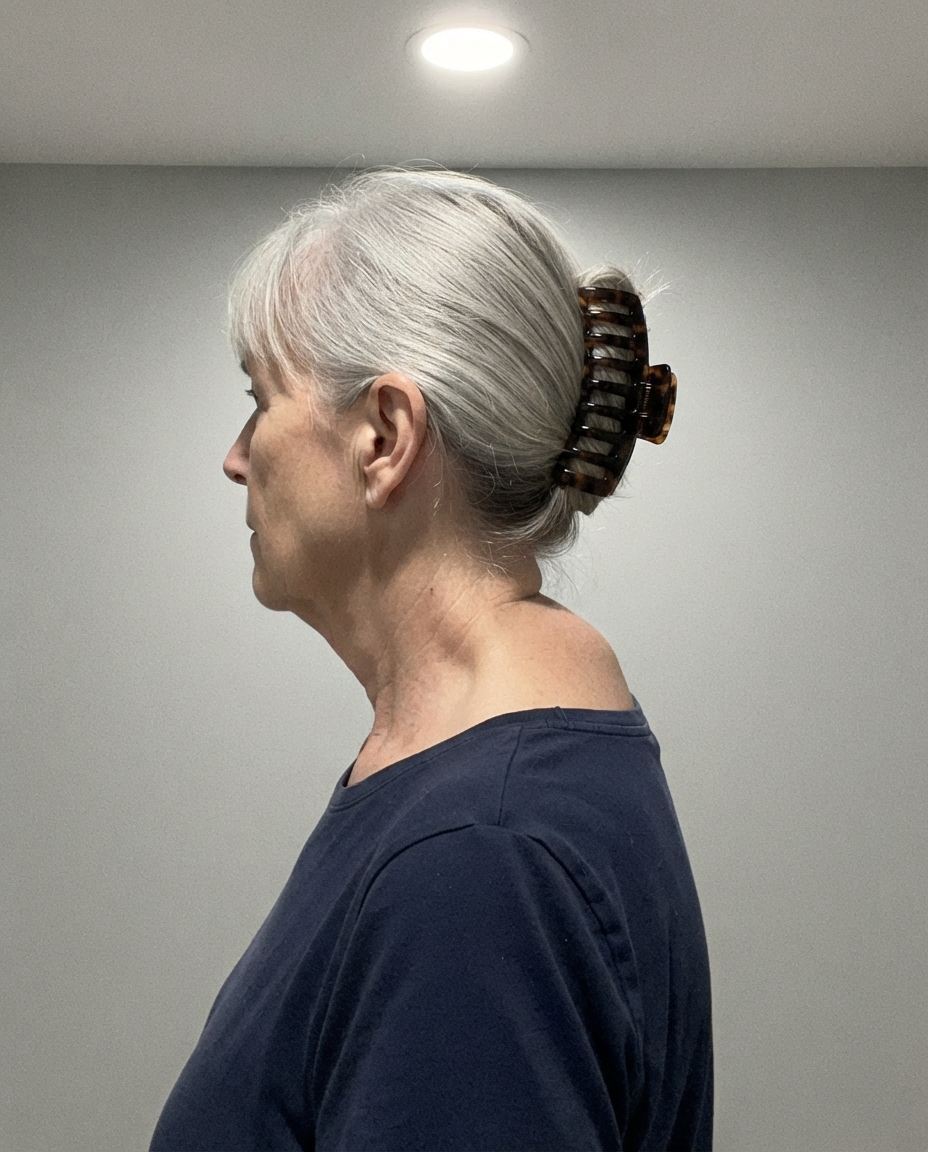
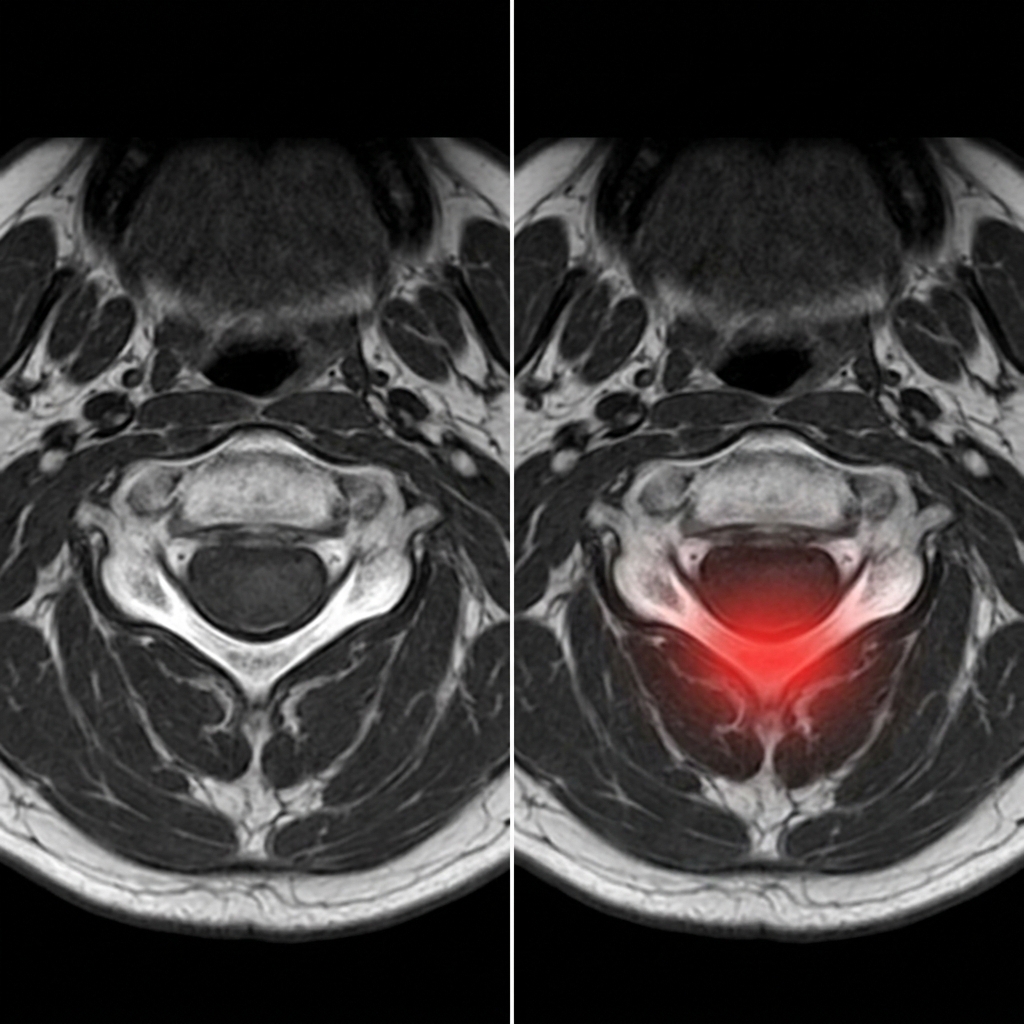
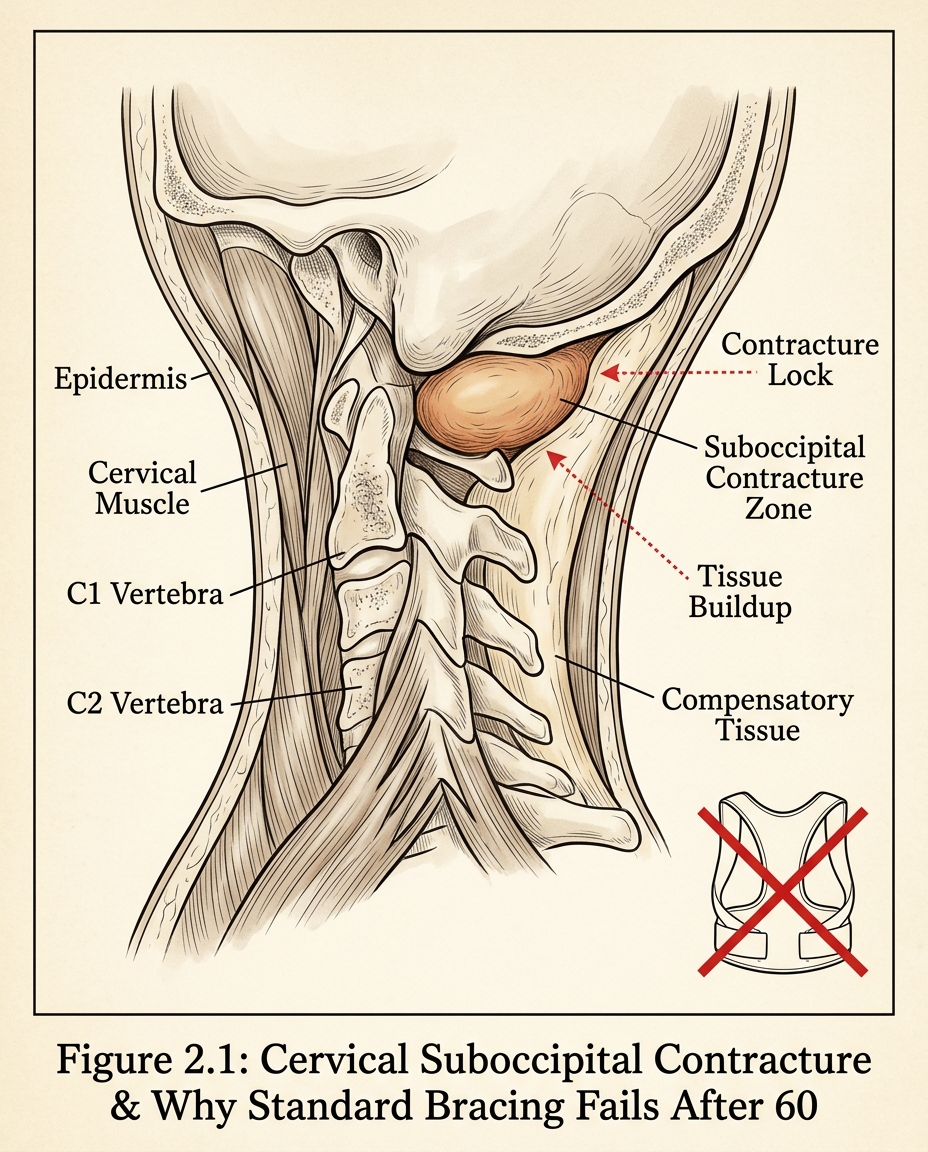
Neck humps aren't a posture issue. They're a contracture issue. And after 60, they don't reverse the way you've been told. My chiropractor pressed her fingers along the base of my skull and told me my forward head translation was elevated. "Classic cervical kyphosis," she said. "Very common in women your age. We'll monitor it. If it keeps progressing, we can discuss escalated management. Otherwise, just keep up with the adjustments." I was 62 years old. I'd had reasonable posture my whole life. Until one day while getting dressed, I caught my side profile in the mirror and froze. I thought maybe I was standing funny. Maybe I was tired. I'd be more conscious of my posture and it would sort itself out. That was four years ago. And in those four years, I learned something that the posture management industry desperately doesn't want you to know: they have no effective treatment for progressive neck hump in women over 60 except monitoring and management that keeps you coming back. Not because they can't help you. Because actually fixing the contracture doesn't generate recurring revenue. Let me explain what happened. That first assessment was in January. By March, my forward head translation had crept up again. By June, the tissue at my cervical base was more visible in photos than it had been at my last appointment. I did what everyone does: started doing posture exercises religiously and waited to see if it would stabilize. The tissue kept building. Slowly at first. Then faster. By month six, I had visibly more tissue at my cervical base than when I'd started treatment. That's when my chiropractor told me the measurements were elevated and recommended twice-weekly structured management. Here's what nobody tells you: You cannot manage your way out of progressive neck hump formation after 60. Every single week, more tissue deposits. The contracture that should release after every forward movement just... doesn't. It's locked. Pulling. Never stopping. Management becomes this maddening cycle where you're supposed to watch your tissue build while doing adjustments that help for 48 hours and then release back to where they were. But I tried. I really tried. I attended every appointment. Measured my forward head translation weekly. Tracked every millimetre. Nothing improved. And here's the part that bothered me almost as much as the tissue building: I started avoiding cameras obsessively. Every. Single. Gathering. I'd position myself behind someone. Step back. Find an angle. Like I was desperately seeking something my photos weren't giving me. My chiropractor said it was normal. Try a different exercise program. I switched programs four times. The camera avoidance never stopped. And the tissue kept building. By month eight, I had restructured my entire wardrobe. I was stiffening up in my morning routine. Moving through my neckline choices more carefully. Nothing with an open collar. Nothing that showed the base of my neck from the side. Forget wearing what I wanted. I went from choosing freely to calculating every outfit around what covered it. My entire relationship with getting dressed changed. Not because of a major health issue. Because of tissue my body couldn't clear. So I went back to my chiropractor. She recommended premium posture braces. Daily wear. Eight weeks. When that failed, she recommended escalated adjustment frequency. "We can address the largest areas of forward pull," she said. "Though I should mention — cervical kyphosis tends to re-establish between sessions, especially at your age." At your age. I paid $3,800 for six months of intensive management. The tissue came back within three months. Plus the forward pull was just as established as before. That's when I started researching what actually causes neck hump tissue to keep forming after 60. And I learned something that made me furious: Management doesn't fix neck humps. It temporarily addresses the joint while the underlying contracture continues building tissue. And in women over 60, the contracture is almost impossible to address indirectly because of something nobody in the posture system ever explained to me. Here's what nobody tells you: After age 60, your body's natural ability to reset the suboccipital contracture declines dramatically. The reset mechanisms that kept your head sitting where it belonged when you were younger — the ones that fired automatically after every forward movement, maintained cervical position, brought your head back to center after every screen session — they slowly fail. Suboccipital muscle elasticity decreases. Connective tissue stiffens. The proprioceptive feedback loop between C1-C2 and the brainstem slows. Your body stops resetting the contracture naturally. Not because of bad posture. Not because of aging in general. Because of a specific mechanical failure in one specific structure — and the failure accelerates dramatically after 60. And posture exercises? They work on the muscles around the contracture. When your suboccipital reset mechanism has degraded from decades of forward load, these exercises have almost zero chance of reversing tissue buildup. So neck humps, progressive tissue, chronic forward head positioning in women over 60 — they're not just age issues that need "more management." They're reset failures. And the posture system profits from that failure. Premium posture tools: Ongoing purchases that don't reach the contracture. $60-140+ per device working on the wrong structure. Management protocols: Temporary joint mobilization that doesn't fix the contracture and ensures tissue will re-establish. $3,000-5,000 per year, indefinitely. Monitoring: Endless appointments watching tissue build because the reset mechanism never gets addressed. $80-180+ per session with no solution. So I started researching alternatives. That's when I discovered direct suboccipital contracture release. A mechanism that uses gravity-assisted sustained compression — your own head weight providing the pressure — delivered at the exact C1-C2 anatomical pressure points. Something that could bypass the failed reset mechanism entirely. Release the neurological lock from the outside rather than waiting for the body to release it from within. The research was compelling. Studies showing contracture release and tissue reduction through direct suboccipital compression — even in patients where the natural reset mechanism had significantly degraded. But here's where I hit a wall: Most posture tools claimed "cervical release" or "neck decompression" but had zero direct contracture addressing. No C1-C2 precision. No sustained gravity-assisted delivery. No minimum hold threshold. Professional-looking designs. Endorsements. Online retailers full of five-star reviews from women who didn't understand why their tissue kept building. I ordered four different posture release tools from major retailers. All of them claimed "cervical decompression" or "posture correction." All had professional-looking designs. I started with a foam cervical wedge. Eight weeks. My tissue built exactly the same. Cervical traction device. Eight more weeks. Zero change. Third device. Fourth device. Not one of them did anything. And I was ready to conclude that posture tools were complete BS when I found a research paper that explained exactly why these tools don't work — especially in women over 60. The problem isn't the material. The problem is that standard posture tools can't deliver the three simultaneous inputs required for the neurological release signal to fire. And in women over 60, where the natural reset mechanism has already degraded, the threshold for what's required to trigger release is even higher than it is in younger women. Standard posture tools apply broad pressure to the thoracic spine or general cervical curve. The C1-C2 contracture stays locked because the exact inputs are never delivered. And for women whose reset mechanism has been declining for decades, near-threshold inputs produce near-zero results. You're paying $80 for ineffective pressure while your tissue continues consolidating. At 62, my body needed the full three inputs, precisely delivered. Nothing less was going to fire the release signal. Most posture tool companies know this. They know broad cervical tools don't deliver the three required inputs. They know their products deliver almost zero contracture release. But they sell them anyway. When I finally discovered precision-engineered direct suboccipital compression, everything changed. Two foam nodes positioned at exact C1-C2 anatomical pressure points. Gravity-assisted delivery through your own head weight — consistent, sustained, non-fatiguing. Ten-minute protocol before sleep. All three inputs simultaneously. At the exact address where the contracture lives. For a woman over 60 whose natural reset mechanism has degraded — this isn't just more effective than a foam roller. It's the difference between a signal that never fires and one that actually reaches the contracture. I found one company engineering to this standard: Cevera. Week 1: The camera avoidance reduced noticeably. First real shift in over a year. Week 2: Camera avoidance stopped. I stood in the center of a family photo without thinking about it. Week 3: The tissue at my cervical base felt different — softer, less prominent from certain angles. Week 4: I reached for a lower neckline without calculating first. Week 6: Largest tissue buildup at cervical base reduced by about 40%. Week 8: Getting dressed freely again. No coverage calculation. No second outfit. Week 12: Down to minimal stable tissue from significant buildup across four years. By month four, I was living without new tissue formation. Wearing what I wanted. Moving without thinking about angles. The progressive tissue buildup that two different practitioners told me would require ongoing management indefinitely... Stopped forming. Existing tissue shrinking. And it wasn't because Cevera is some miracle tool. It's because I finally gave my contracture the three inputs it required to release — inputs my body had stopped being able to generate naturally after 60. This is why exact C1-C2 placement matters infinitely more than general cervical support. Especially after 60. When the natural reset mechanism has degraded, you can't work around the contracture. You have to deliver directly to it. And here's what I experience now, four years after that first assessment, using Cevera every single night: ✓ Zero new tissue formation. Down to minimal stable cervical tissue. ✓ Camera avoidance completely stopped. I stand anywhere without thinking. ✓ No coverage calculation, second outfits, or neckline strategy. I just get dressed. ✓ My practitioner couldn't believe the measurements at my last appointment. ✓ Quality of life restored. I don't think about my neckline anymore. This isn't just about avoiding ongoing management. This is about understanding that most posture tools are selling you mechanical theater — products that look like they're addressing the issue but deliver zero contracture release to your suboccipital muscles. Especially in women over 60 where the threshold for release is higher and the tools that were already marginal become completely useless. Because the truth is, your body WANTS to release the contracture. After 60, it just can't do it on its own anymore. It needs the three right inputs delivered at the right address with enough sustained pressure to actually fire the signal. And when you deliver precision direct suboccipital compression — not broad tools that apply pressure to the wrong location — it starts working the way it's supposed to. Even at 62. Even at 68. Even after years of failed management. I use Cevera every single night. Ten minutes. Before bed. Non-negotiable. And I recommend it to nearly every woman over 60 I know struggling with: Progressive neck hump that keeps building despite everything tried. Tissue formation that management didn't stop. Camera avoidance that won't quit. Premium posture tools that aren't working. The progressive loss of wardrobe freedom from tissue buildup. Why? Because Cevera is the one tool that delivers the three simultaneous inputs the contracture requires — through precision engineering, exact C1-C2 placement, and gravity-assisted delivery that conventional tools can't match. And for women over 60, where the natural reset has failed, it's not just better than the alternatives. It's the only thing that actually reaches the contracture. Just 10 minutes a night could help you: 💧 Stop new tissue formation within weeks 💧 Reduce existing cervical tissue over 2-3 months 💧 Eliminate camera avoidance and constant angle-checking 💧 Enable actual contracture release vs near-zero with standard tools 💧 Stop the management cycle that doesn't fix the root cause 💧 Experience cervical function that women over 60 haven't felt in years 💧 Save thousands on failed tools and repeated management cycles That chiropractor who told me I'd need ongoing monitoring and eventual acceptance of permanent postural change? I saw her at a community event six months ago. She watched me standing freely, wearing an open neckline, not calculating anything. Then she asked what I did. I just smiled and said: "I found a tool that actually reaches the contracture. And works even after 60." If you want to stop tissue formation, restore full cervical function, and break free from the management cycle, I'd try Cevera before anything else. 👉 https://trycevera.com/pages/adv-womens-wellness-report ✅ 90-Day Money-Back Guarantee You don't have to keep managing a condition that has a direct solution. Even after 60.
Like this ad? Make it yours.
Crush rebuilds this exact creative around your product — your brand, your colors, your offer — in about a minute.