Dr. Nia Williams
Dr. Nia Williams Facebook ad: “I referred 23 patients to orthopedics. I was sending them…”
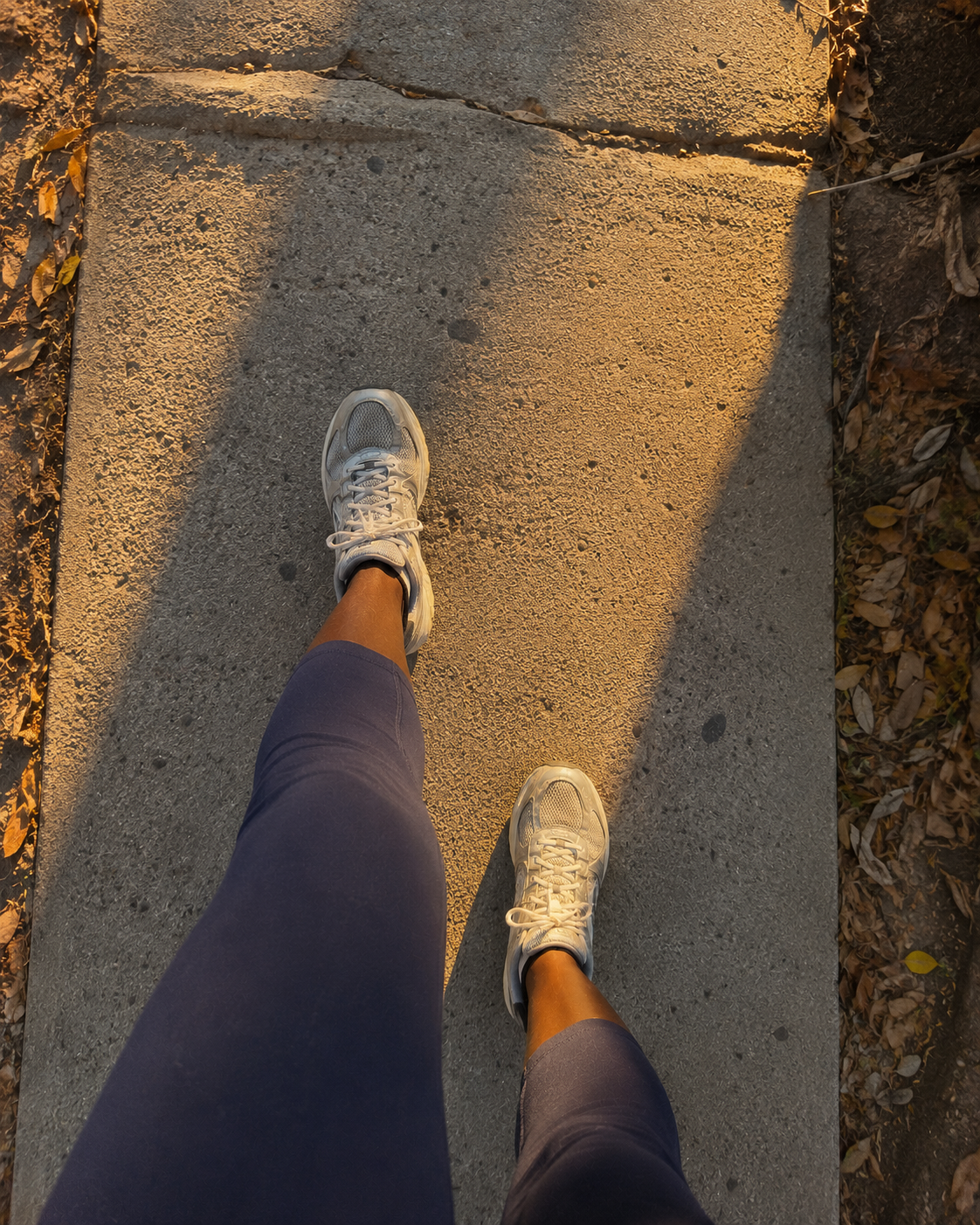
Ran for 22 days, from June 8 to June 29, 2026, the last day Crush saw it.
Run by Dr. Nia Williams on Facebook. Crush is not the advertiser and does not verify its claims. See this ad in Meta's Ad Library(opens in a new tab)
Want an ad like this for your product?
Crush makes new ad images for your product from this ad: your logo, your product photo, your offer.
Trials from $19.95 USD, then $79.95 USD a month. Cancel anytime.
About this ad
- Meta Ad Library ID
- 971160382374931
- Platforms
- Facebook, Instagram, Audience Network, Messenger and Threads
- Relaunches
- 0
Ad text
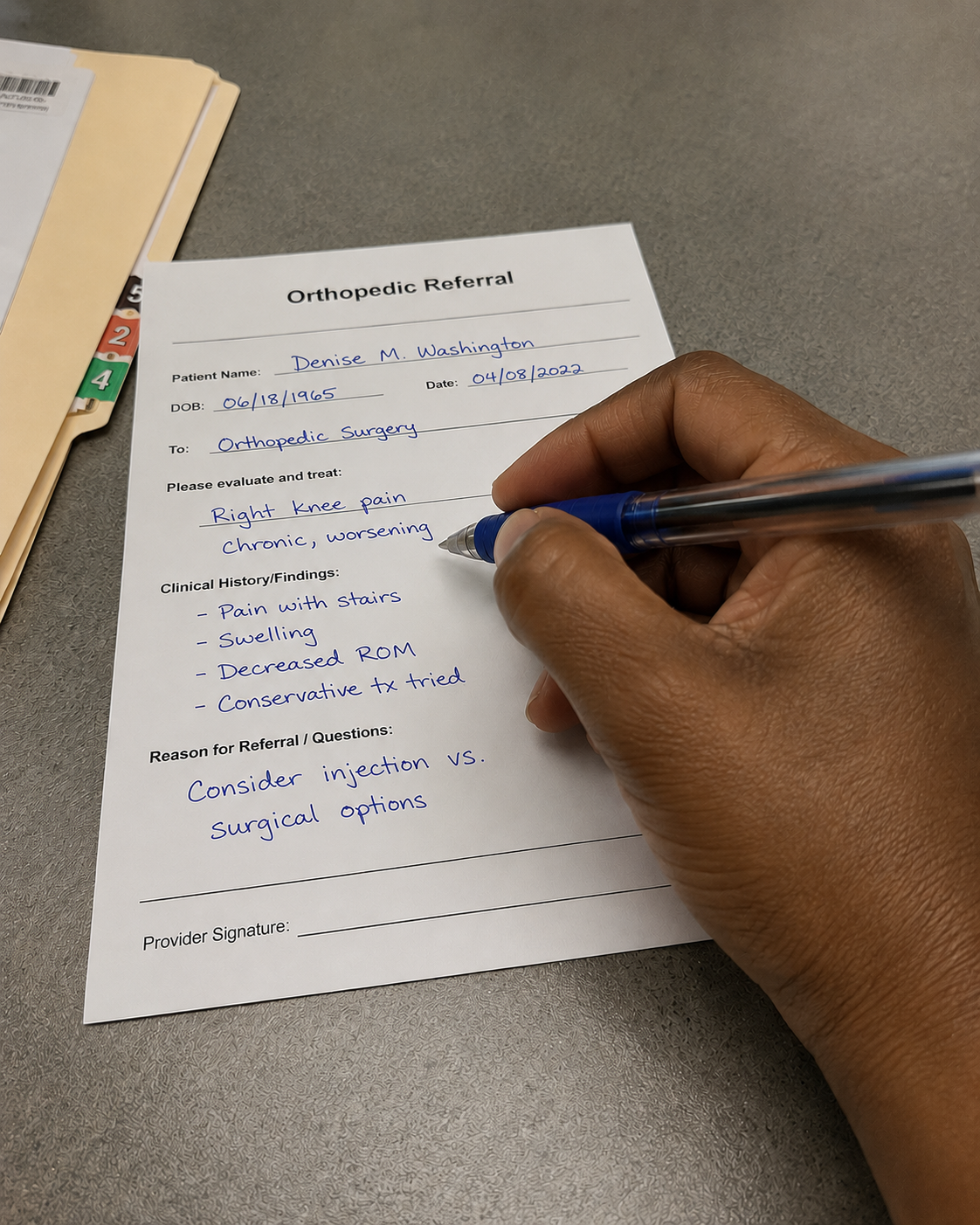
I am an OB/GYN. For 16 years I referred my joint pain patients to orthopedics. Last October I found out I had been sending them to the wrong specialty the entire time. I want to tell you what I found. Because I think about the women I referred to orthopedics over the years, and I wonder how many of them would have had a different outcome if I had asked a different question. My name is Dr. Simone Carter. I run a private OB/GYN practice on Peachtree Dunwoody Road in Sandy Springs, Georgia. I trained at Emory. I have been seeing patients in this building for 16 years. I have a waiting room with a plant I've been meaning to replace since 2021 and a front desk coordinator named Patricia who has worked with me for eleven of those sixteen years and knows my patients better than I do. I specialize in perimenopause and menopause management. Which means the women who come to see me are almost always between 38 and 62. Which means almost every single one of them is somewhere in the hormonal transition that defines that window of life. And for 16 years, when those women told me their knees hurt, I did what every doctor does. I referred them to orthopedics. I started noticing the pattern in 2021. Not dramatically. The way a pattern becomes undeniable once the numbers get too consistent to ignore. Woman comes in for a perimenopause consultation. We talk about hot flashes, sleep, mood, irregular cycles. Standard visit. At the end she mentions her knees have been bothering her. New onset. Nothing she can trace back to an injury or overuse. Just pain that started in the last year and has been getting progressively worse. I write the orthopedic referral. I move on to the next patient. By November of that year I had documented 23 patients in my practice who reported new-onset joint pain within 12 months of their first perimenopause symptoms. Twenty-three women, all in the same hormonal window, all describing joint pain that had appeared seemingly out of nowhere with no clear mechanical cause. I kept a yellow legal pad in my desk drawer specifically for clinical observations that didn't fit neatly into a chart note. Patterns I was seeing that didn't fit anywhere in the standard clinical picture. I wrote the number 23 at the bottom of the page and drew a circle around it. The patient who changed everything was named Denise. She was 49. She'd been coming to my practice since she was 41, first for annual wellness visits, then increasingly for perimenopause management starting around 46. She was a high school principal in Decatur. She had three kids. She walked two miles every morning before work, had done it for years, and mentioned it at every visit the way some people mention their blood pressure numbers, as a point of personal pride. In October 2022 she came in for a follow-up and told me she had stopped the morning walks. I asked why. She said her knees had gotten bad enough that two miles was no longer something she could do without significant pain afterward. She said she had gone to an orthopedist on my referral the previous spring. He had given her a cortisone injection. It had helped for about six weeks. She had gone back. He had given her a second one. That one lasted three weeks. He was now recommending a third. Then she said something I wasn't expecting. She told me she had been doing her own research late at night after her kids went to bed. She had read something about estrogen and joint tissue. She wasn't sure she understood it correctly. But she wanted to know whether what was happening to her hormonally could be connected to what was happening to her knees. I told her it was possible. I told her I would look into it. She nodded. She thanked me. She left. I sat in my exam room for a few minutes after she walked out. I had been practicing OB/GYN for 13 years at that point. I had a fellowship in reproductive endocrinology. I had spent years studying what estrogen does in the female body. And I had just told a patient I would look into whether hormones and joint pain were related, because she had found something doing her own research at midnight that I had not known to look for. I started reading that night. Not because I am the kind of doctor who does late-night research. I am honestly not. I have two kids of my own, a 13-year-old and a 10-year-old, and by 9 PM on a Tuesday I am usually done. But something about the way Denise had said it stayed with me on the drive home. She had been doing her own research at midnight because nobody in her medical care had connected those dots for her. That sat with me in a way I couldn't put down. I put the kids to bed. I sat down at the kitchen table with my laptop. What I found in the next three hours reorganized something fundamental in how I understood my own specialty. Estrogen receptors are not confined to the reproductive system. They are present throughout the entire musculoskeletal structure. Articular cartilage. Synovial membranes. Subchondral bone. Ligaments. Tendons. All of it is populated with estrogen receptors, specifically estrogen receptor alpha and estrogen receptor beta. All of it depends on estrogen signaling to maintain normal function. Under healthy estrogen levels, the joint environment is stable. Cartilage hydration is maintained. The enzymes that break down cartilage are suppressed. Most critically, the synovial fibroblasts, the cells responsible for producing synovial fluid, continue doing their job. Synovial fluid is the lubricant that allows the joint to function. It is what gives the knee its frictionless range of motion. Without it, cartilage has no cushion. Bone begins to contact bone with every step. When estrogen declines in perimenopause, synovial fluid production drops with it. The joint cavity desiccates. Dries out from the inside. The cartilage loses water content. The smooth surface the joint has relied on for decades becomes dry and compressed. There is a clinical name for this process that I had never once seen in 13 years of medical education or continuing education. Synovial Desiccation. The joint is not failing because of mechanical wear and tear. It is failing because the hormonal system that maintained the joint environment has been withdrawn. And that withdrawal accelerates precisely during the window of life that every single patient in my waiting room is navigating. I sat at my kitchen table at 11:30 PM on a Tuesday and felt something I rarely feel about my own clinical practice. Disbelief. Not at any individual doctor. At the gap. At the fact that 23 women in my own practice had been cycling through orthopedic offices getting cortisone injections and pain pills while the actual cause of their joint deterioration lived squarely inside my specialty. I had been practicing reproductive endocrinology for 13 years. Estrogen and its effects on the female body is what I do every single day. And I had not made the connection either. Denise had to make it herself at midnight before I looked. That is not acceptable. That is what I kept thinking sitting at that kitchen table. That is not acceptable. The cortisone injections Denise had been receiving were suppressing inflammation at the injection site for a few weeks. They were doing nothing for the desiccation. The joint kept drying out between shots. That was why each one lasted shorter than the last. Not because her knee was catastrophically worsening. Because the actual cause was never being touched. The glucosamine pills she had started taking on her own were largely wasted before they reached the joint. Pharmacokinetic data shows that from a standard oral dose, approximately 2% of the active compound reaches joint tissue. The rest is cleared by the liver during first-pass metabolism. She was swallowing glucosamine every morning and sending 98% of it to her liver. The Voltaren gel she had tried before the injections was working on the skin's surface receptors. Temporarily interrupting the pain signal. Doing nothing for the synovial environment underneath. She had done everything her doctors told her to do. Followed every instruction. Taken every pill. Attended every follow-up appointment. And none of it had reached the actual problem because none of us had identified what the actual problem was. I spent the next several weeks reading everything I could find on transdermal delivery of joint-rebuilding compounds. The science behind it is straightforward once you understand the desiccation mechanism. If the joint is drying out because the hormonal system that maintained its fluid has been withdrawn, the logical intervention is to deliver the compounds that support that environment directly to the joint tissue, bypassing the digestive system entirely. Glucosamine and Chondroitin are the structural building blocks of cartilage. Hyaluronic Acid is a primary component of synovial fluid. Delivered transdermally, in a formulation designed to penetrate the skin barrier rather than sit on top of it, these compounds can reach the joint environment that oral supplementation largely misses. I looked for formulas built around that specific principle. Not counterirritants that mask surface pain. Not pills that lose 98% in transit. A delivery system designed for the joint environment itself. That is when I found the formula I now recommend to my patients. I want to be direct about something before I tell you what it is. I am not affiliated with any supplement company. I do not accept referral fees. I have a practice to run and a reputation I have spent 16 years building and I will not put either of them at risk for a product that doesn't do what I believe it does. What I found was a topical formula with Glucosamine, Chondroitin, and Hyaluronic Acid in a transdermal delivery system, combined with Turmeric and Boswellia to address the inflammatory cascade that estrogen withdrawal triggers. A formula designed to reach the synovial environment, not decorate the surface of the skin. I called Denise in November. I told her I had been reading since her last visit. I told her what I had found about Synovial Desiccation. I told her about the estrogen-musculoskeletal axis and why I believed her joint deterioration had accelerated when it did. I told her I had found a topical formula I wanted her to try before she went back for a third cortisone injection. She was quiet for a moment. Then she said, "Why didn't the orthopedist tell me any of this." I said I didn't know. I said I should have told her myself sooner. She tried the formula. It carries a 30-day money back guarantee, which I told her about specifically because I wanted her to have a risk-free window to evaluate it. Six weeks later she called my office. Patricia took the message. It said: tell Dr. Carter I walked this morning. She has been walking every morning since January. I have now recommended this formula to 31 patients in my practice who presented with joint pain during perimenopause or menopause consultations. I built three specific questions into every subsequent appointment for each patient I recommended it to: Has your morning stiffness changed, have you reduced your pain medication use, and has your mobility improved enough to return to something you had stopped doing. The majority report noticeable reduction in morning stiffness within the first one to two weeks. Several have reduced or eliminated their NSAID use entirely. Two who had orthopedic consultations scheduled have postponed them with their orthopedists' knowledge and agreement after their follow-up appointments showed improvement. I am not claiming this is a cure. I am not conducting a clinical trial. I am a clinician in a private practice who found a connection that 16 years of medical training did not prepare me to find, and who has been watching the results in my own patient population since November of last year. What I am telling you is this. If you are a woman between 38 and 62 and your joints have been getting worse and nothing you have tried has touched it, there is a very specific biological reason that nobody may have explained to you yet. Your joint is not failing because you are aging. It is failing because a hormonal withdrawal has removed the internal environment that maintained it, and the standard interventions are almost uniformly aimed at the wrong target. The product I recommend to my patients is Rovia Joint Massage Cream. Thirty days. Full refund if it doesn't help. I still have that yellow legal pad in my desk drawer. The one with 23 entries and a circle around the number. I have not thrown it away. I added a 24th entry the day Denise called to tell me she walked that morning. I wrote her name and the date and one word next to it. Finally.
Where the ad sends people
rovia.shop
I referred 23 patients to orthopedics. I was sending them to the wrong doctor.
Rovia
Learn more: rovia.shop(opens in a new tab)