
Inactive· since May 6, 2026
- 53
- days it ran
- 2
- relaunches
Ad copy
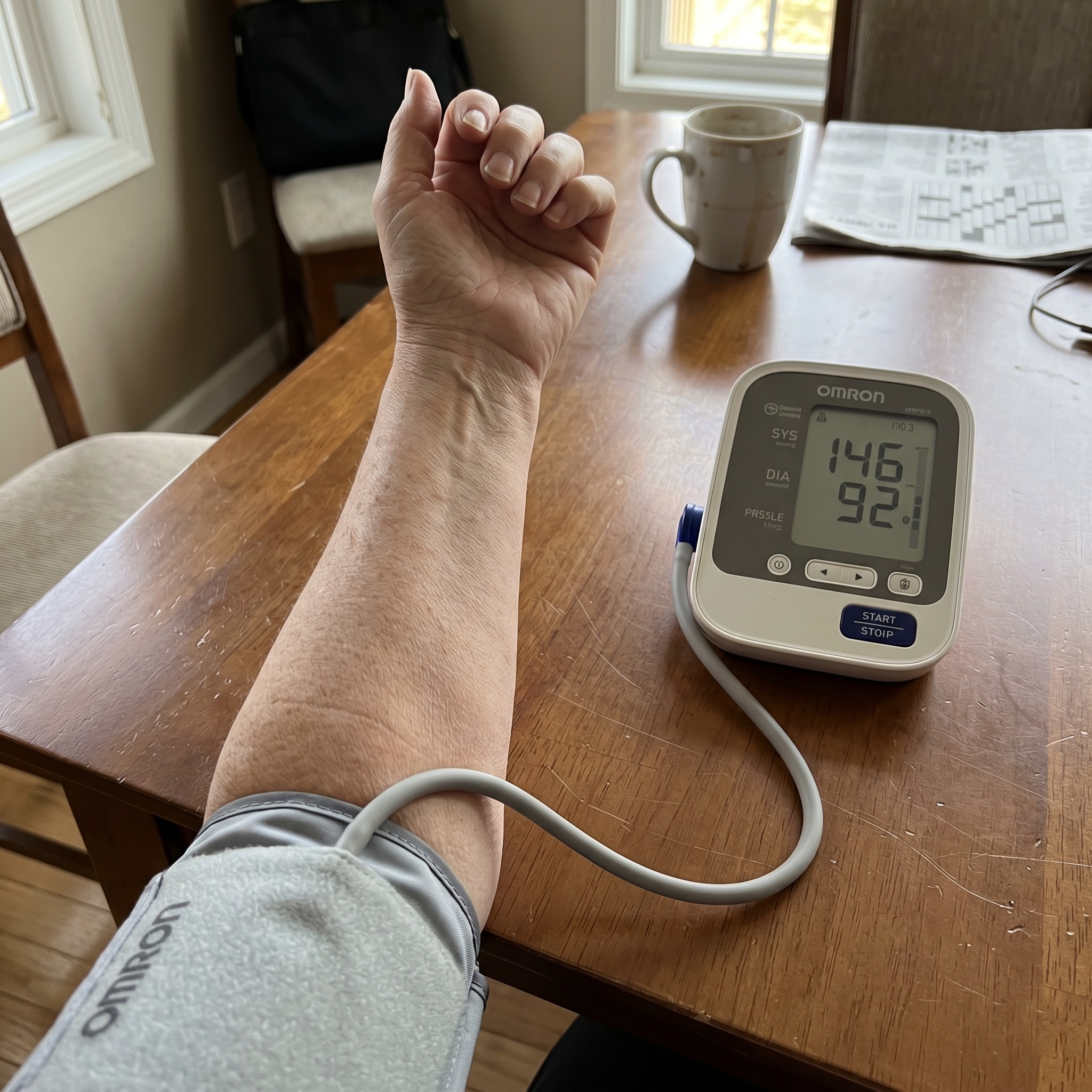
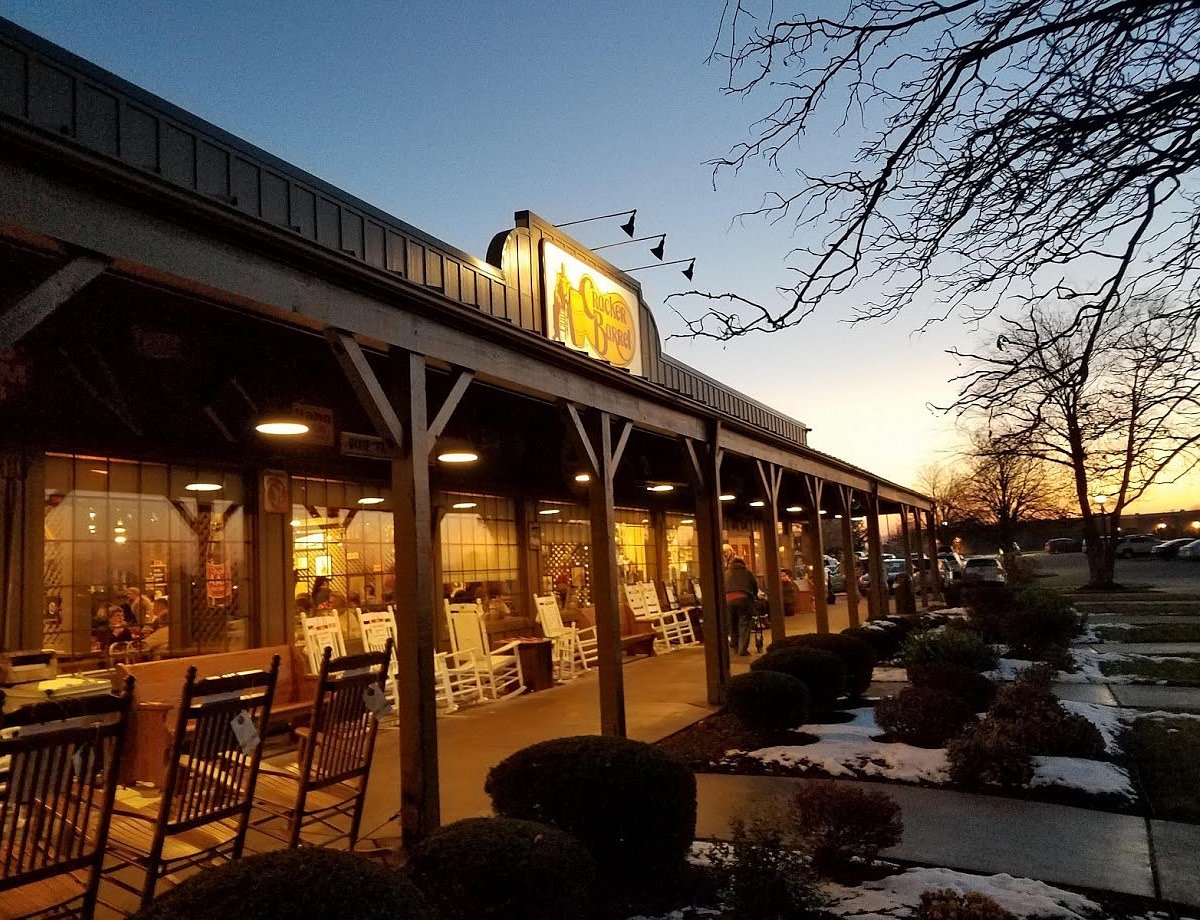
I was sitting in a Cracker Barrel parking lot in Bowling Green, Kentucky at 7:14 in the morning when my phone rang and my sister told me she was alive but she didn't know how. That's the sentence I keep coming back to. She didn't say I'm in the hospital. She didn't say I had a heart attack. She said I'm alive but I don't know how, and the way she said it, with this thin reedy quality I'd never heard come out of her before, is the reason I'm writing this 11 months later instead of going about my Tuesday. My name is Lorraine. I'm 61 years old. I live in Elizabethtown, Kentucky, which is about 45 minutes south of Louisville and not somewhere most people have ever heard of unless they had a relative stationed at Fort Knox. I taught third grade for 32 years at the same elementary school. I retired in May. My husband Phil drives a route truck for a uniform company and is gone 4 days a week. We have 1 daughter who lives in Lexington with her husband and our 2 grandbabies. My sister Brenda is 4 years younger than me. She lives outside Indianapolis with her husband Dean. She works as an office manager for a dental practice. She's the kind of person who keeps the family birthdays in a paper book even though she has a phone. She's the one who organizes Thanksgiving and remembers what kind of pie our father liked and calls me on Sunday afternoons just to talk about nothing. She was 57 the morning she called me from that hospital bed. And I want to be clear about something before I go any further. Brenda is not a person who has ever taken her health for granted. She walks. She doesn't smoke. She gave up sweet tea in 2013. She does the things you're supposed to do. What she had was high blood pressure. That's all. She had been managing it with a pill her doctor prescribed when she was 51. That was the whole story. She had been to the ER once before, the year prior, for what they called a "spell." Lightheaded. Pressure was through the roof when they took it. They adjusted her medication, sent her home, told her to monitor it. She did monitor it. She bought one of those little arm cuffs from CVS and she'd take her reading every morning before her coffee and write it down in a spiral notebook. The numbers were never quite where they should be. She'd tell me sometimes on those Sunday calls. She'd say, "It was 158 over 94 this morning, Reenie." She had been calling me Reenie since she could talk. I'd say, "Are you taking your pill?" She'd say, "Of course I'm taking my pill." And we'd talk about the grandbabies. The morning she called me from the hospital was a Tuesday in March. I had gotten in the car early to meet a friend named Patty for breakfast on her way through town. We were going to eat at the Cracker Barrel off the interstate because that's where you eat breakfast when you're 61 and your friend is driving from Nashville to Cincinnati to see her son. I was sitting in the parking lot with my engine off, watching the sun come up over the gas station next door, waiting for Patty's truck to pull in. My phone rang. The caller was Brenda's husband Dean, which was wrong, because Dean does not call me. Dean is one of those men who lets his wife handle all the relationships. If Dean was calling me at 7:14 on a Tuesday morning, something had happened. I answered and Dean said, "She's okay, Lorraine. She's okay, but I'm putting her on." Then Brenda was on the phone, and her voice did that thin reedy thing, and she said the sentence. She said she had been getting ready for work. She said she felt the room tip. She said the next thing she remembered was being on the bathroom floor with Dean kneeling over her, and Dean said she had been out for almost a minute. They drove to the ER. The pressure reading they took when she walked in was 198 over 116. A nurse who took the reading said the words "you got lucky" out loud. Brenda said it through the phone twice. "I got lucky, Reenie. I got lucky." I sat in that Cracker Barrel parking lot and I watched the sun come over the gas station and I felt something shift in my body that I had been ignoring for probably 4 years. Because here's the thing nobody knew until I sat in that parking lot. I was Brenda. I was Brenda in slow motion. I had been Brenda for years. My pressure had been creeping up since I was 55. My doctor had me on a low dose of something called amlodipine and told me to watch my salt and gave me a pamphlet. The same kind of pamphlet they gave Brenda. I had been taking the pill. I had been watching my salt. My morning numbers were not where they were supposed to be either, and I had been doing what people do when they're afraid, which is just not looking at the numbers very hard. I had a cuff from CVS too. Same brand as Brenda's. I'd take a reading and if it was bad I'd take another reading 5 minutes later and tell myself the second one was the real one. I had been telling myself things. I had been telling myself that the headaches behind my eyes in the afternoons were because I was looking at screens too much. I had been telling myself the buzzing in my ears at night was just what 61 sounded like. I had been telling myself my heart pounding when I bent over to tie my shoes was normal because I was, and I want to use the polite word here, a soft 61 year old woman who needed to lose some weight. None of those things are normal. I knew none of those things were normal. I just didn't want to be Brenda. And then Brenda was on the phone telling me she had been on the bathroom floor. I drove home that morning instead of having breakfast with Patty. I texted Patty in the parking lot and told her family emergency. I drove the 16 miles back to my house and I walked in the front door and I sat at my kitchen table and I did not move for almost an hour. Then I got up and I called my doctor's office and I asked them what else there was. The receptionist put me through to a nurse practitioner named Sheila who I had been seeing for years. Sheila and I had a long history. She had walked me through perimenopause and she had walked me through my mother's diagnosis and she was the kind of medical person who actually talked to you like a human being. I told her what had happened to Brenda and I told her my numbers had been bad too and I told her I needed to know what else there was beyond what I was already doing. Sheila said something I didn't expect. She said, "Lorraine, the medication you're on, it's a tool. It's not the whole story. The reason your numbers haven't moved is because we're treating the pressure but we haven't been talking about the wall." I said, what wall. She said, "The wall of your blood vessels. The inside lining." And then she explained something to me at the kitchen table over the phone for about 20 minutes that I had never had explained to me by any doctor in my entire life. The inside of your blood vessels has a living lining called the endothelium. It's a single layer of cells that runs through every vessel in your body. That lining is responsible for producing a molecule called nitric oxide that tells your vessels when to relax. When the lining is healthy, it's producing the nitric oxide your vessels need, and your vessels stay flexible and open the way they're supposed to. The problem, Sheila said, is that the lining takes damage over the years. From inflammation. From oxidative stress. From processed food. From all the same garbage that ages every other part of you. And when that lining is worn down, it can't produce nitric oxide the way it used to. So your vessels stay tight. Blood has to push harder to get through. The pressure goes up. The blood pressure pill, she said, forces the vessels to relax through a different mechanism. It bypasses the lining. It makes the vessels open up using a different door. Which is fine. It works. It moves your numbers. But it doesn't do anything to support the lining itself. Which means underneath the medication, the wall is still wearing down. The cycle is still feeding itself. And that's why so many people on blood pressure medication have to keep adjusting their dose upward as the years go on. Not because the medication stops working. Because the wall keeps deteriorating. She said this very plainly and not in a sales way and in fact she said she wasn't recommending I stop my medication, just that I should be thinking about the wall too. I said, what supports the wall. And she said, well, that's where it gets interesting. She told me about a fruit. I'm going to admit something. When she said the words "Indian gooseberry" on the phone that morning, I almost laughed. Not because I thought she was lying. Because I had spent 4 years on a prescription medication for high blood pressure and the most basic conversation about the actual mechanism of my disease was happening with a nurse practitioner because of a phone call from a hospital bed in Indianapolis. I almost laughed and then I almost cried. Sheila said the fruit was called amla. She said there were compounds in it called emblicanins that had been studied for their effect on the vascular lining. She said the research suggested those compounds appeared to support the endothelial lining's ability to produce nitric oxide. Which meant, in plain English, that they could potentially help the wall do its job again, instead of bypassing the wall like the medication did. She said she had several patients on it. She said she'd been taking it herself for about 8 months. She said her own pressure had come down 14 points and her energy had come back and her doctor at her own physical had asked what she was doing differently. I asked her what she took specifically. She told me she took Alevia Amla, that she'd tried 2 other brands first and not noticed much, and that this one had been different for her. I wrote the name down on the back of a grocery receipt that was sitting on my kitchen table. I still have that receipt. I keep it in the drawer with my batteries because I don't know where else to put it. I'd love to tell you I ordered it that day. I didn't. I sat with the information for about 6 days. I went and saw Brenda the following weekend. I drove up to Indianapolis on Friday afternoon and I sat with her in her living room and I held her hand and we cried a little and then we did what sisters do, which is talk about everything except the thing we'd just cried about. She told me a lot of things that weekend. She told me she had been afraid to call me sometimes because she didn't want to worry me. She told me she had been having headaches like mine. She told me she had also been ignoring the buzzing in her ears. She told me she had a moment, the second before she went down on the bathroom floor, where she thought, oh, this is what it feels like. She said it just like that. She said, "I thought, oh, this is what it feels like." I drove home Sunday night down 65 with that sentence in my head the entire way and I pulled into my driveway around 11 and I sat in my car and I ordered Alevia Amla on my phone in the dark before I even went inside. It came on Wednesday. I started taking 2 capsules every morning with my coffee. Phil noticed the bottle on the counter and asked what it was. I told him. He said, "Whatever you say, Reenie." Phil is not a curious man about supplements. Phil is curious about lawnmower engines and the Cincinnati Reds and that's about it. He let me do my thing. The first 10 days, my numbers didn't really move. I want to be honest about that. My morning reading was still high. I want to say this because I think the dishonest version of these stories is when somebody says they tried something for 3 days and everything was perfect. That's not what happened. What happened in the first 10 days was something smaller. The buzzing in my ears at night got quieter. Not gone. Quieter. I noticed it the third night. I was lying in bed waiting to fall asleep and I realized I'd been listening for it and it wasn't there the way it usually was. I rolled over and went to sleep without thinking too hard about it. By day 14, the buzzing was gone. Just gone. I noticed because I noticed its absence. By day 21, my morning reading was 142 over 88. Which is still not where it's supposed to be, but it was the lowest morning reading I had taken in over 2 years. I took it twice to be sure. Both readings were the same. By day 30, the headaches behind my eyes had stopped. By day 45, my morning reading was 134 over 84. By day 60, I was walking faster on my morning loop around the cul-de-sac without my heart pounding when I got back. I had been adding distance without realizing it. Phil came home that Friday and asked if I'd lost weight and I said no, and he said, "Well something's different." By day 75, I called Brenda and I told her everything I'd been doing. I told her about Sheila. I told her about the wall. I told her about the lining and the nitric oxide and the emblicanins and the bottle on my counter. I told her if she wanted to try it, I'd send her one. She said send it. She had been doing some reading too. Her doctor in Indianapolis hadn't said anything about a wall. She had been on her phone late at night looking up things she didn't understand. I sent it that afternoon. By day 90, when I went in for my follow up with Sheila, my pressure in the office was 128 over 80. Sheila looked at the screen and looked at me and she didn't say anything for a second. Then she said, "Tell me what you've been doing." I told her. She wrote in my chart and we talked about the next 90 days. I drove home crying with my hands on the wheel and the radio off. I want to address some things directly because I know what you're thinking when you read something like this. You're thinking, this lady doesn't know if it was the amla or the placebo effect or just paying more attention to her health. I'd say, you might be right. I'm not a doctor. I'm a retired third grade teacher. I cannot prove to you in a rigorous way that the capsules in the bottle on my counter are the reason my buzzing stopped or the reason my morning numbers dropped 24 points. What I can tell you is that I am 61 years old and I have lived in this body for the entire time and I know the difference between what I usually feel like and what I have felt like for the last 9 months, and the difference is not subtle and it is not in my head. You're also thinking, if this works the way I'm describing, your doctor would have told you about it. I'd say, my doctor didn't tell me. A nurse practitioner who I have known for 17 years told me. And she only told me because I called her in a moment of fear after my sister almost died and I said I needed to know what else there was. None of the doctors I have seen in my life ever opened a conversation about the wall of my blood vessels. They opened conversations about a number on a chart and a pill that moves the number. That's what they're trained to do and I don't think most of them are bad people. I just think the conversation has been narrow for a very long time, and the people having broader conversations are not always the ones with MD after their name. You're thinking, a berry. How could a berry do anything. I'd say, I had the same thought. The first time Sheila said the words Indian gooseberry I almost laughed. Then I read the actual research, and the actual research is not about the berry. It's about specific compounds that have been studied in real clinical trials with real protocols. The berry is the delivery vehicle. The compounds are the thing. You're thinking, why hasn't anybody else heard about this. I'd say, people are starting to. Sheila told me she has 30 something patients on it now. The reason it doesn't get talked about loudly is because it doesn't have a pharmaceutical company behind it and there's no advertising budget. It just spreads quietly through people like me telling people like you what happened. Brenda has been on Alevia Amla for 7 months now. Her last reading was 138 over 86 and her doctor in Indianapolis has reduced her medication by half, on his recommendation, and is talking about reducing it further. She walks 2 miles every morning. She told me last Sunday she feels like she did in her 40s. We talk every Sunday. She still calls me Reenie. I think about that morning in the Cracker Barrel parking lot a lot. I think about what it would have been if Dean hadn't been home. I think about what would have been if my sister had gone down on the bathroom floor by herself and stayed there. I think about how the wall of her blood vessels was wearing down for years and nobody had ever said the word wall to her. I think about how close it got. If you have been quietly watching your own numbers creep up year after year, or you've been watching it happen to someone you love, and the only conversation you've ever had about it is the one about the medication and the salt and the pamphlet, I would say what Sheila said to me. The pill is a tool. It is not the whole story. There is a wall, and the wall takes care can be supported, and the body is not as broken as it looks from the outside. Alevia Amla is what I take. It comes in a 30 day bottle. The company offers a 90 day money back guarantee, which is the same window of time that mattered for me. If you try it for 90 days and nothing changes, you call them and they refund you and you're out nothing except a phone call. That's the part that mattered to me when I was deciding. There was no risk. There was just a chance. I'm 61 years old. I took the chance. I haven't had a buzzing in my ears in 9 months. 👉 https://alevia.com/amla/33 P.S. Brenda asked me to mention that her doctor in Indianapolis, the one reducing her medication, did not know what she was taking when he reduced it. He just looked at her numbers. She told him after. He didn't say much. She thinks he was a little annoyed. She doesn't care. P.P.S. The 90 day guarantee is what made me try it. I want to say that plainly. I am a careful person with my money. I do not buy things off the internet on faith. The fact that I could try it for 3 months and send it back if nothing happened is the reason I clicked the button in my driveway that Sunday night. If the company didn't stand behind it, I wouldn't have. They do, so I did. P.P.P.S. Sheila is still my nurse practitioner. She still takes the amla every morning. She has 32 patients on it now, by her last count. None of them are on Facebook writing about it. I'm the first one she knows of. She told me to be honest and not to oversell anything, which is why I have tried not to oversell anything in this post. The capsules are not magic. They are something that, in my body and in my sister's body and in 30 something other bodies in Sheila's practice, appears to be doing something the medication couldn't. That's all. I hope this helps somebody. 👉 alevia.com/amla/33
Like this ad? Make it yours.
Crush rebuilds this exact creative around your product — your brand, your colors, your offer — in about a minute.