
Inactive· since Jun 3, 2026
- 75
- days it ran
- 1
- relaunches
- 20,655
- EU reach
Ad copy
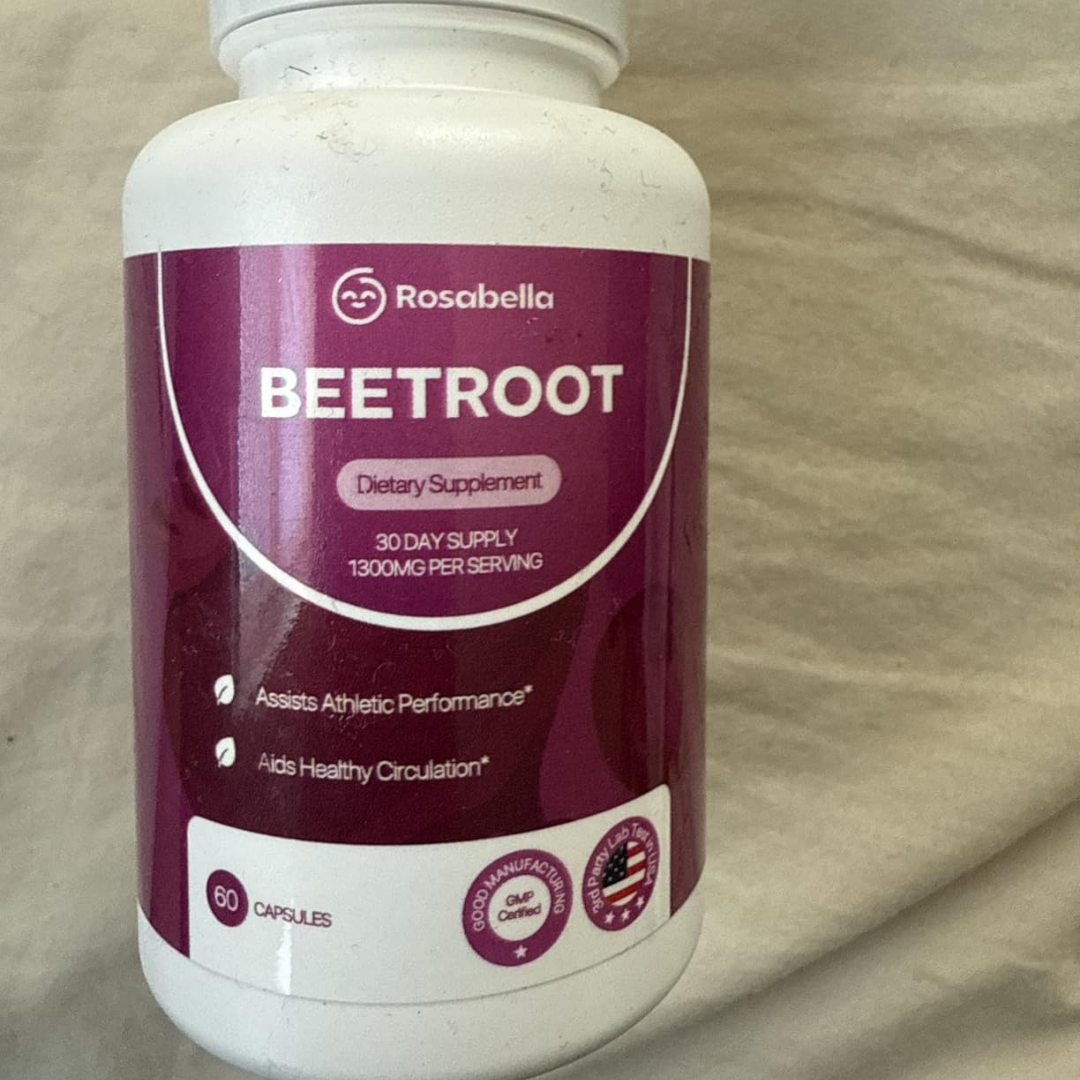
I met a woman on a plane to Phoenix who told me something about my heart I haven't been able to stop thinking about. I'm fifty-six. I went through menopause at fifty-one, the way the women in my family tend to, and for the four years after that I mostly didn't think about my heart at all. I should say something honest at the top here. I had been told, over the course of those four years, that I should start thinking about my heart. My doctor mentioned it at every annual. My older sister, who is sixty-one and an emergency-room nurse, mentioned it every time we got on the phone. The articles in the magazines at the dentist's office mentioned it. After menopause, the rules change for women. I had heard the sentence, in one form or another, a hundred times. But hearing a thing and taking it in are two different things, and I was not taking it in. My numbers were in range. My energy was, for the most part, fine. My mother is eighty-three and still drives herself to her bridge group on Wednesdays. I came from sturdy people. I had a busy life — I run the office for a small accounting firm, two daughters in their twenties, a husband, a dog who needs more walking than I have time for — and the heart conversation kept getting filed under next month. This is a story about the conversation I had with a stranger on an airplane who is the reason I finally stopped filing it. I was flying to Phoenix in February to help my mother sort through some of my father's things — he passed two years ago and she is finally ready to start, slowly, with the books and the closet — and the flight was full. I was in the middle seat, which is a particular kind of indignity at fifty-six, and the woman in the aisle seat was, I would guess, in her late sixties. She had silver hair cut short, the kind of practical haircut a woman gets when she has decided she's done with the salon, and she was reading a paperback. We exchanged the small nods you exchange with seatmates and didn't talk for the first half hour. What started the conversation was that the man in the window seat ordered a vodka and the flight attendant came back with the wrong kind, and the three of us got into one of those small shared moments that turns strangers into temporary acquaintances. After he settled in with his book and his correct vodka, the woman next to me looked at me and asked, in the unforced way some older women have, what was taking me to Phoenix. I told her about my mother. She said she'd lost her own husband eight years ago and her own mother three years after that, and she said it the way women that age say things — without performance, just the facts of a life. Her name was Margaret. She was sixty-eight. She lived in Tucson now, was flying home from visiting her son in Pittsburgh, and she had been a librarian for thirty-two years before she retired. We talked about our mothers for a while. Then we talked about our daughters. Then, somewhere over New Mexico, she said something that I have been turning over in my head ever since. She said: The thing nobody told me about being a widow in my sixties was how much paying attention to my own heart became a part of every day. I asked her what she meant. She said her doctor had sat her down about six months after her husband died — she had been losing weight she couldn't afford to lose, she'd been forgetting to eat, her sleep was a mess — and her doctor had said, Margaret, you are in the window of your life where this is the conversation. Estrogen used to do some of this work for you. It doesn't anymore. We need to talk. She said she had heard the sentence before, the way all of us have heard it before, but in that office, with her husband nine months in the ground and her own pulse a little fast on the cuff, she finally heard it. She said her doctor had her start walking, every morning, regardless of weather. She said her doctor adjusted some of what she was taking. She said her doctor told her to start paying attention to her sleep the way she paid attention to her bank account. None of it was dramatic. It was the patient, careful, conventional advice that good doctors give. And then she said: I added one other small thing, after I asked her about it, that I've been doing every morning for about three years now. Beetroot, in a capsule. There's a small company that cold-presses it. I don't know what it does, exactly. I just know I added it to everything else I was doing, my doctor said go ahead, and I've had a quiet three years. She said it the way she'd said everything else. Without performance. Just the facts of a life. The plane landed. We exchanged a polite goodbye at the jet bridge. I do not have her phone number and I will probably never see her again. But I sat in my mother's kitchen that night, after we'd had soup and gone through one box of my father's books, and I thought about Margaret on the plane and about the sentence my doctor had been saying to me for four years that I had not been hearing. The next morning, I started looking into beetroot. I am, by training and temperament, a person who reads carefully. I run an accounting office. I do not buy anything I cannot account for. I spent about three weeks reading, in the evenings, after my mother went to bed. I read about the deep crimson pigment in beetroot — it's called betalain, that color that stains your fingers and your cutting board. I read about the dietary nitrates that are naturally present in the root. I read about the long, patient relationship the research community has had with this vegetable for decades, in the context of cardiovascular wellness, supporting healthy circulation, and supporting cellular energy. It was not a fireworks story. It was the opposite of one. It was a vegetable that has been quietly studied for a long time. I picked Rosabella — the brand Margaret had mentioned, the small company that cold-presses — and I picked it for the same reason she had implied without saying. The betalain pigment is heat-sensitive. That is the chemistry of the molecule. If you process beetroot with heat, you lose some of the compound to the heat. The people at Rosabella decided to cold-press the root at low temperatures because they wanted as much of the compound as possible to make it from the field into the capsule. That is a slower way to make a supplement and it tells you something about who is running the operation. The other thing I liked, frankly, was that it was one bottle. Two capsules in the morning with a glass of water. I am fifty-six and I have a daughter getting married in October. I am not interested in a protocol that requires its own shelf. Before I started, I called my doctor's office and asked the question I was supposed to ask. The nurse looked at my chart, checked the small things I take — a low-dose blood pressure medication my doctor put me on last year, a calcium supplement, a vitamin D — and called me back the same afternoon to say my doctor had no concerns, that I should go ahead, and that I should keep doing the walking and the sleep and everything else we'd been working on. I was adding it. I was not replacing anything. I was not adjusting any of my prescriptions on my own. I want to be especially clear about that because the women I'm writing this to are women who are, like me, often on at least one cardiovascular-adjacent medication, and the very last thing I would want is for anyone reading this to make a change to that medication without their doctor in the loop. Whatever your doctor has you on, stay on. Call them and ask before you add anything. That is the entire rule and I will say it again before this letter is over. Two capsules. Morning. Glass of water. I started on a Monday because I had nothing better to anchor it to. The first two weeks I felt nothing in particular and I want to tell you that honestly, because the temptation in a letter like this one is to compress the timeline and pretend something dramatic happened on day five. Nothing dramatic happened on day five. I had read enough to know that bodies are different. Some women notice something within the first week or two. Some women take much longer than that. Some women don't notice much at all. I was prepared to land in any of those camps. What I noticed, I noticed in pieces I did not connect at the time. The first thing I noticed was that I started taking the stairs at work. We are on the third floor of a 1920s building in downtown Hartford, and I had been taking the elevator for most of the last two years, telling myself it was about the time it saved. Around week four I started taking the stairs in the morning out of some impulse I didn't examine, and by week six I was taking them in the afternoon too, and I didn't have to stop on the second-floor landing, which I would have, two years ago. I am not saying the supplement did that. I am saying I started taking the stairs again, and I was the same woman who had not been taking them, and I was doing the same walking and eating and sleeping I had been doing all along. The second thing I noticed was the morning fog. I have, since menopause, had a particular kind of morning fog that I called the slow start. Not severe — not anything I would have mentioned to a doctor — just a sense that the first hour of the day was a hill I was hiking up rather than a road I was walking down. Somewhere around week eight, the slow start started moving. I would be at my desk at seven-thirty with my coffee and the books open and I'd realize, around eight, that the morning hadn't felt like a hill. It had felt like a morning. The third thing I noticed was that my older sister — the ER nurse — called me on a Sunday in June and said, you sound like yourself again. I asked her what she meant and she said, I don't know. You just do. And we talked for forty-five minutes about her grandchildren and our mother and what we should do for our nephew's wedding. I want to be careful, here. I am not telling you Rosabella did any of those things on its own. I had been doing the walking. I had been on my medication. I had been working on my sleep — I bought a better pillow in March and that probably helped too. I had been doing the things my doctor had been telling me to do for four years, only now I was doing them with one small additional thing on the kitchen counter every morning. All I am telling you is that I added that one thing, kept everything else the same, and a quiet stretch of months followed that had not been preceded by an equally quiet stretch of months. That's the honest version. I would not trust anyone who gave you a cleaner one. I went back to my doctor at my next annual, which fell about seven months after Margaret on the plane. I told her about Margaret. She smiled the way doctors smile when a patient is finally taking in a conversation they've been having for years. She looked at my bloodwork on the tablet — which was where she wanted it, the same range it had been the visit before — and she said, whatever you're doing, keep doing it. Don't change anything. She told me to come back in a year. She did not mention beetroot specifically. She did not need to. I drove home that day thinking about Margaret again. I do not know what happened to her. I hope she is well. I hope she is having more quiet years. That is the whole story. If you are a woman somewhere in the window I have been describing — post-menopausal, paying attention to your heart in a way you didn't have to before, in the part of your life where the conversation has finally landed — I want to say a few things to you carefully, because I am aware that this kind of letter can get read in a hurry. I do not know you. I do not know your bloodwork or your medications or your family history or what your doctor told you at your last annual. Bodies are different. Some women notice something within the first week or two of adding something like this. Some women take much longer. Some women don't notice much at all. That is the honest version, and anyone selling you a cleaner one is selling you harder than I am. Here is how I think about Rosabella now, in the words I would actually use. It is something the body uses. The research community talks about it in the context of supporting healthy cardiovascular wellness, supporting healthy circulation, and supporting the body's own cellular energy, in women whose numbers are already in the range their doctors want them in. It is not a fix for anything. It is one small thing you add to the long list of things you are already doing for your heart and for the rest of you. Please — and I really do mean this, I am not saying it because somebody told me to — call your doctor or your pharmacist before you add it. If you are on any medication for blood pressure or anything cardiovascular, this is non-negotiable in my book. The people who know your chart will tell you in two minutes whether it makes sense for you to add. I am a woman who met a woman on a plane to Phoenix. I am not the person to ask. Your doctor is. The company has a ninety-day satisfaction guarantee. If you are not satisfied — for any reason at all, including just changing your mind — they refund you. It is not tied to your bloodwork. It is not tied to anything you have to prove to anybody. If you are not satisfied, you are not satisfied. That is the whole policy. The beets are grown on a small operation that harvests on its own schedule, which means there are stretches when they are in stock and stretches when they are not. I mention that not to push you — please do not let anybody push you into a health decision — but so that if you go to the site and they are out, you know why. That is all I have. Thank you for reading this far. I hope something here was useful to you. And I hope, somewhere in the country today, Margaret is having a quiet morning of her own. — Helen P.S. I wanted to come back to the cold-press for a second, because I rushed past it earlier. The betalain pigment — the deep red, the part the research community keeps circling back to — is heat-sensitive. If you process beetroot the fast way, with heat, you lose some of the compound to the heat. Rosabella chose the slow way. Cold-press, low temperatures, more of the compound through to the capsule. That choice costs them money and time and they made it anyway. That was a piece of why I picked them. P.P.S. Two capsules. In the morning. With a glass of water. That is the entire protocol. No powder to blend, no afternoon dose to remember, no schedule taped to the inside of the cupboard door. I run an accounting office, I am planning a wedding, and I am taking care of my mother. I do not have room in my life for another protocol. I appreciated being given one I didn't have to remember. P.P.P.S. I am going to say it one more time, because the women I am writing this to are women who are often on at least one cardiovascular medication, and I would not be able to live with myself if anyone reading this letter made a change to her prescription on the strength of what I have written here. Please. Talk to your doctor or your pharmacist before you add anything new, especially if you are on anything for blood pressure or anything cardiovascular. They have your whole picture in front of them. I have written you a letter. There is a difference, and the difference matters. P.P.P.P.S. The guarantee, again, in case you skimmed. Ninety days. Any reason at all. You don't have to prove a single thing — not to them, not about your bloodwork, not about how you feel. If you tried it and you are not satisfied, you are not satisfied, and they send the money back. That is the whole policy and it is a small-company policy, the kind of thing companies used to do when companies still answered their phones. P.P.P.P.P.S. The thing Margaret said, that I have been turning over for almost a year now, was the thing nobody told me about being a widow in my sixties was how much paying attention to my own heart became a part of every day. I do not have to be a widow to take that sentence in. None of us do. The conversation about the post-menopausal heart is a conversation that gets quieter the longer you avoid it and louder the longer you sit with it. I sat with it. I hope you sit with it too. And if a stranger on a plane to Phoenix can be one small piece of the reason you do, then I will count that as one of the small good things that came out of a hard February. — H. https://track.tryrosabella.com/cdc16426-3e48-40a7-9fad-21098084f6cf DISCLAIMER Individual experiences vary. These statements have not been evaluated by the FDA. This product is not intended to diagnose, treat, cure, or prevent any disease.
Support stamina and heart health every day
LEARN MORELike this ad? Make it yours.
Crush rebuilds this exact creative around your product — your brand, your colors, your offer — in about a minute.