
Inactive· since May 19, 2026
- 29
- days it ran
- 3
- relaunches
- 94,572
- EU reach
Ad copy
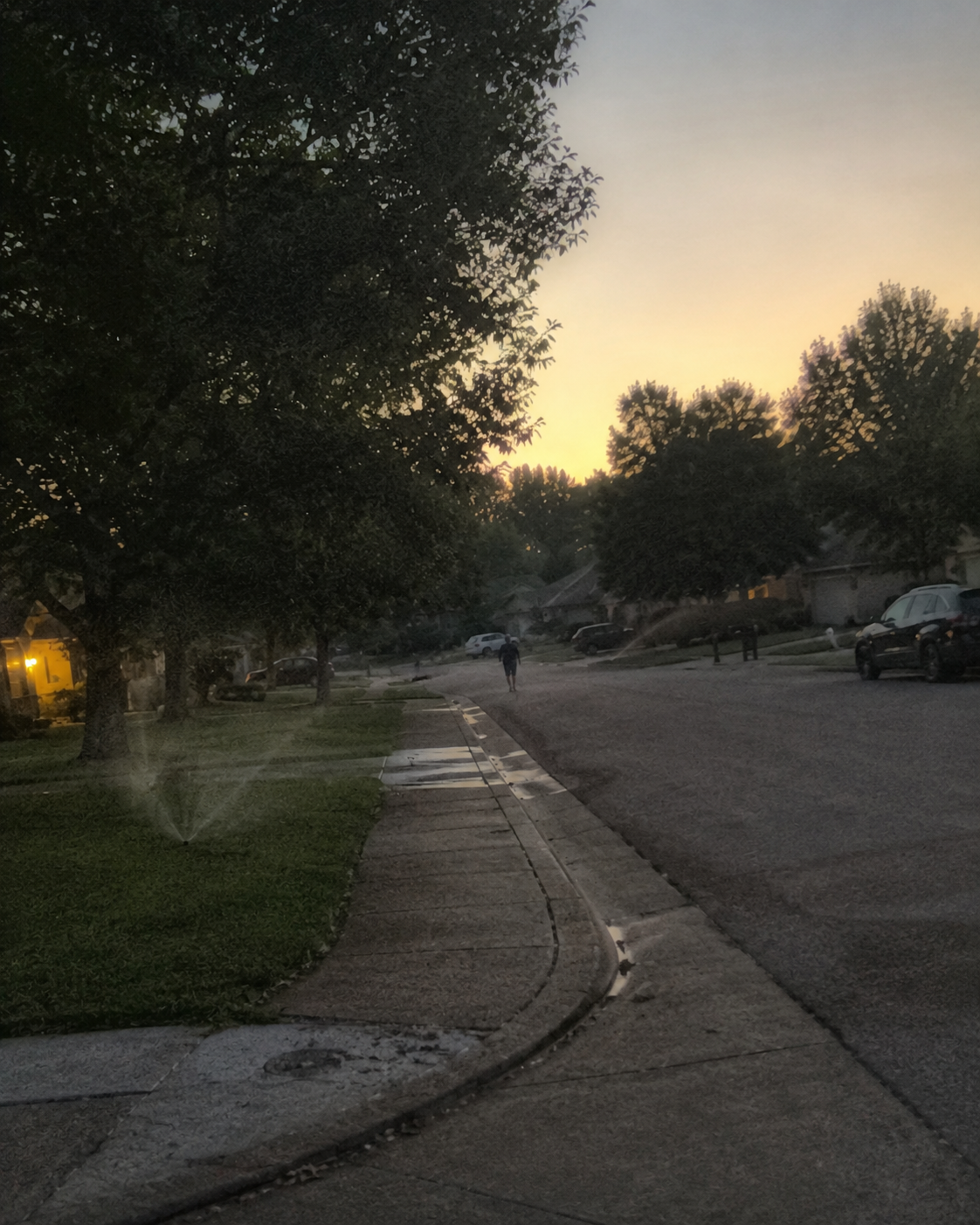
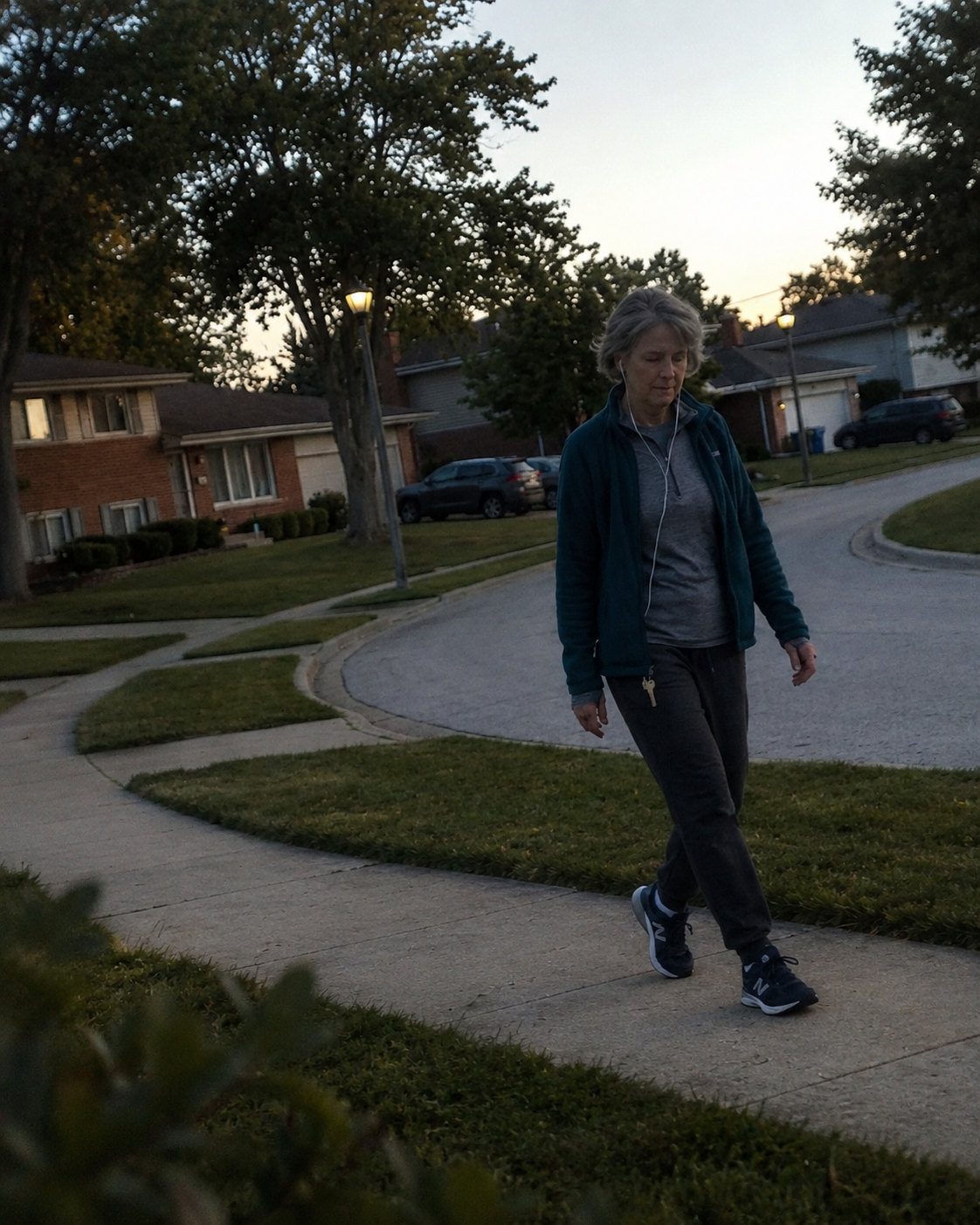
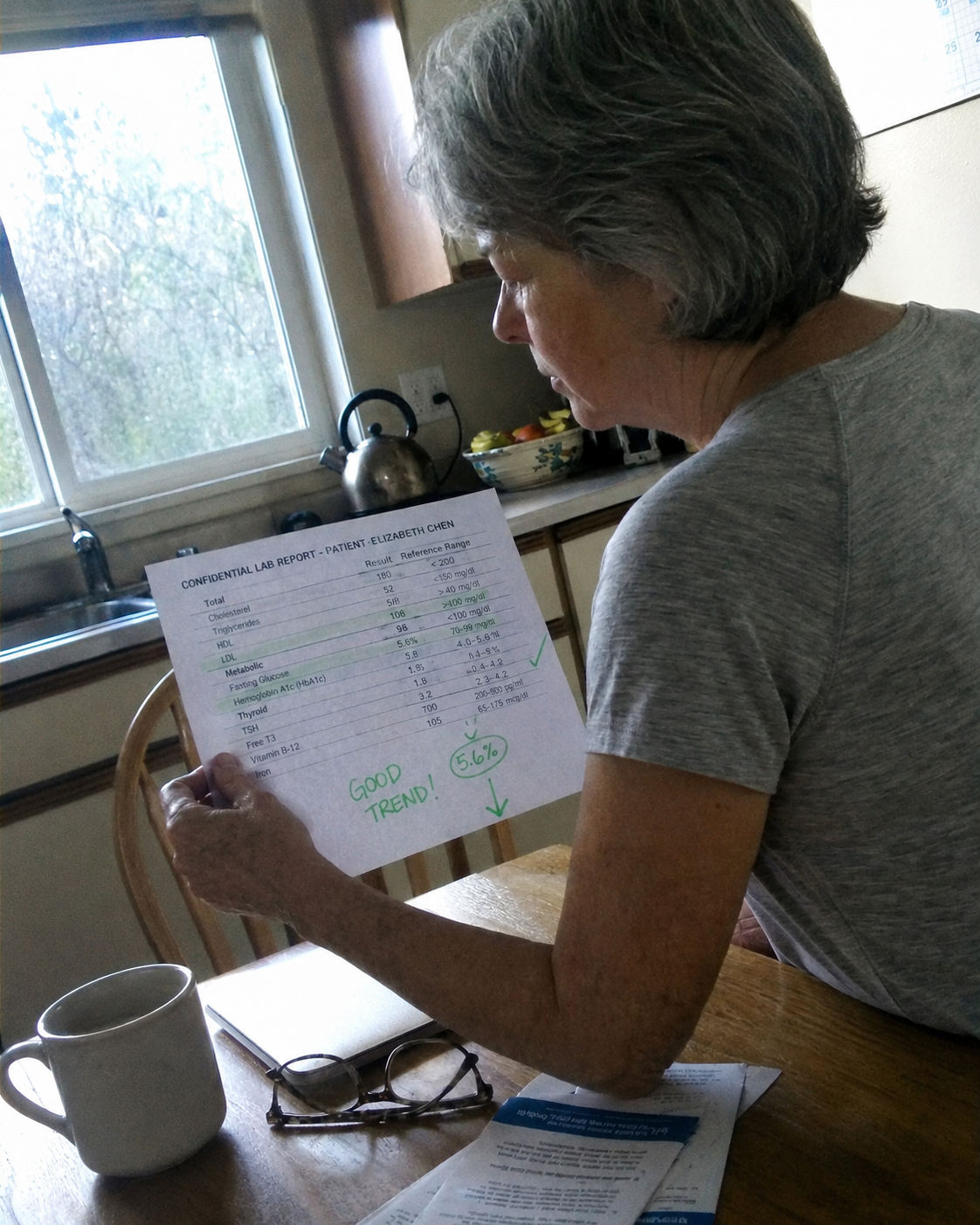
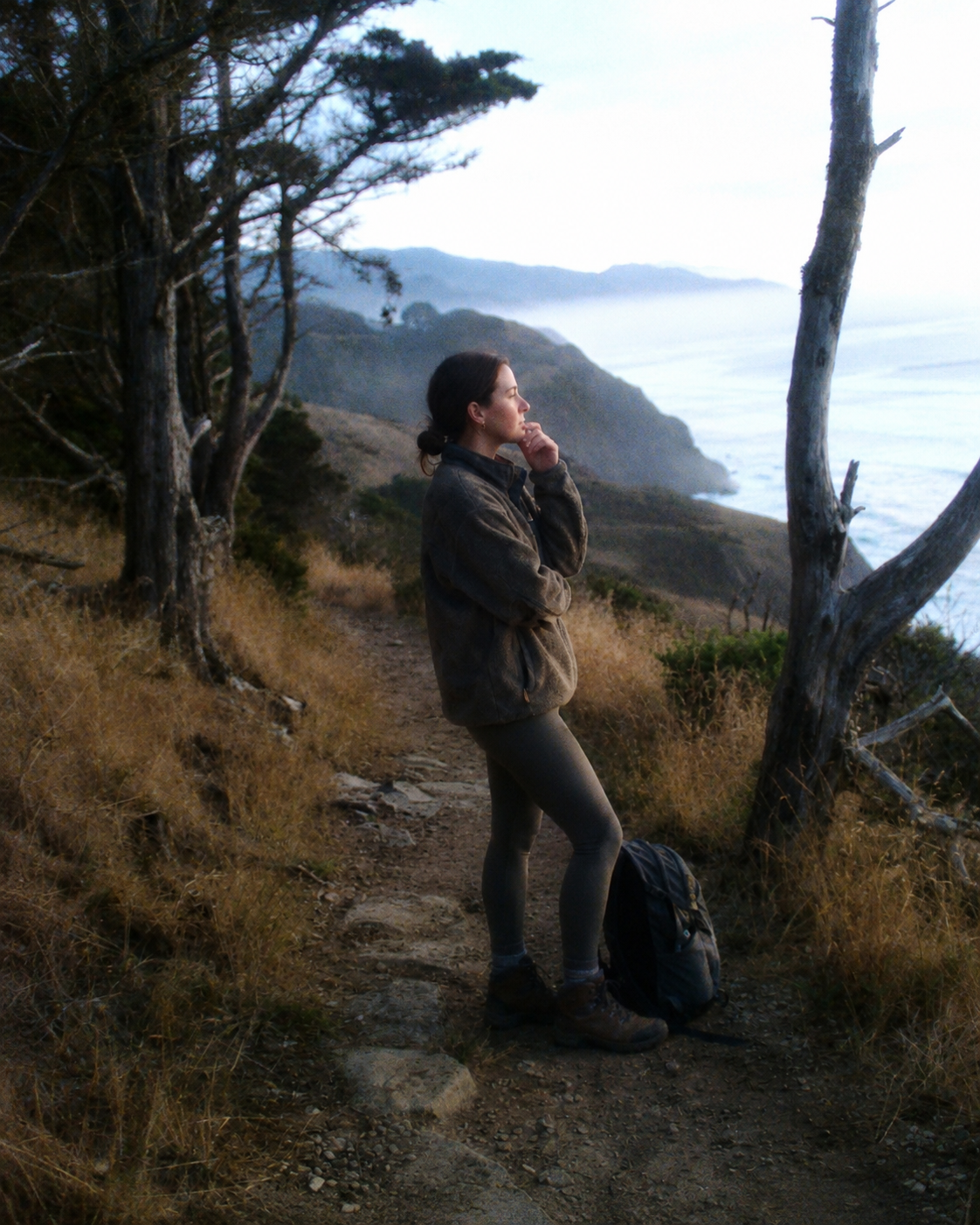
There's a Flight of Stairs at My Granddaughter's School I'd Been Quietly Losing to for Two Years. There's a flight of stairs at my granddaughter's elementary school. Two flights, actually — twenty-two steps each, with a small landing between them. The auditorium where her spring piano recital happens every May is at the top. For her first three recitals I climbed those stairs without thinking about them. At her fourth recital, two springs ago, I stopped on the landing. Just for a moment. I told myself I was admiring a watercolor that some fifth grader had taped to the wall. At her fifth recital, last spring, I stopped on the landing again. And then halfway up the second flight. By the time I got to the auditorium I sat in my seat for two minutes before I could really focus on the program. A man at least ten years older than me passed me on the way up. He didn't stop. I sat there in the auditorium that afternoon listening to children play "Für Elise" with one hand, and I made myself a small, careful promise. The next time I saw my cardiologist, I was going to tell her about the stairs. She looked across her desk at me a week later and said something I think about almost every day now. She said: "Marilyn. Your bloodwork is in the ranges I want it in. Your medication is doing what we hoped it would do. But you're three years past the change now, and the conversation I want to have with you today is a little different from the ones we've been having." Then she sat back in her chair and asked me — and these are her exact words — "what your body has been telling you that you haven't been telling me." I sat there for a long moment. I am sixty-four years old. I was a high school guidance counselor for twenty-eight years before I retired. I have spent most of my professional life asking other people careful questions and waiting for them to answer honestly. I had not expected to be on the receiving end of one. But I had walked into her office that morning prepared to answer one. I told her about the stairs. That was one thing. The other thing was the hill to our church. We've gone to the same small church for thirty-one years. The parking lot is on the lower lawn. The church itself is at the top of a small slope — maybe forty paces, an incline you wouldn't call a hill if you were younger than fifty. I had walked that slope every Sunday morning for thirty-one years without registering it. Sometime in the year before my granddaughter's fifth recital, I had started parking in the upper lot instead, by the office. It's only twenty paces, on the flat. I told myself it was easier when I was carrying a casserole for the Sunday lunch. I had not been carrying a casserole every Sunday for thirty-one years. I had been carrying my body up a slope that was telling me something I was not in a mood to hear. There was one more thing I told her too. The way I sometimes notice my own heartbeat at night now, the way I didn't notice it ten years ago. Not loudly. Not alarmingly. Just present in a way it hadn't been present before. I told her I knew none of it was anything, exactly. My numbers were in the ranges. The medication was doing its work. The annual EKG had been unremarkable. I told her I was probably making something out of nothing. She did not say I was making something out of nothing. She said: "Your numbers are in good shape, Marilyn. The medication is doing what we wanted it to do. A lot of women in their sixties start paying closer attention to what their bodies are telling them, especially the small physical things they used to do without noticing. That's a healthy instinct. The chart is one piece of information. What you've just told me is another. Both are useful." She was quiet for a moment after that. Then she said: "I'm not going to change anything today. Your medication is doing what we want it to do. But if you'd like to think about whether there's one small additive thing you might bring into your mornings — something general, structure-function, well-researched, that supports what your body is already doing — I'd be happy to have that conversation at your next appointment. Or sooner, if you call." I drove home from her office that afternoon thinking about the difference between a doctor who treats a chart and a doctor who reads a person. I started reading the next day. I want to be clear about something before I describe what I read. I am not a doctor. I am not a nurse. I do not have any medical expertise of any kind. I am a retired high school guidance counselor with a husband, two grown sons, a granddaughter who plays piano, and a relationship with my own body that I have been paying closer attention to in recent years. What follows is one careful woman's experience told the way I'd tell a friend at the kitchen table. Nothing more. I am a careful reader. Twenty-eight years of working with teenagers and their parents teaches you to be suspicious of anything that arrives loud. I skipped past the supplement companies promising things no supplement can promise. I skipped past the protocols and the morning routines and the influencers and the people selling certainty. I was looking for the careful, quiet, structure-function corner of the conversation. The thing that kept coming up there was beetroot. Not beetroot juice. Not the beetroot powders at the health food store. The active compound in beetroot — a family of pigments called betalains. The research is real. It has been built carefully over decades by careful people who have not, to their credit, been making outlandish claims. The betalains in beetroot are studied in the context of supporting healthy circulation, supporting cardiovascular wellness, and supporting the body's natural antioxidant balance — particularly in people whose numbers are already in the range their doctor wants them in. That was the shape of the language I had been looking for. Not "fixes." Not "treats." Not "reverses." Just supports. In women whose cardiovascular wellness was part of the long, careful conversation they were having with their own doctors. One brand kept showing up in the more careful sources. Rosabella. The thing I liked about it was a small thing. Betalains are heat-sensitive — that's just the chemistry of the molecule — and most processing methods involve high temperatures, which is the cheaper and faster way. Rosabella cold-presses their beetroot at low temperatures. It costs them more to do it that way. It takes longer. They do it anyway, because more of the active compound survives the processing. After twenty-eight years of telling teenagers to pay attention to what people do rather than what they say, I have come to believe the same thing about companies. The other thing I liked was the simplicity. Two capsules in the morning with a glass of water. That is the whole protocol. I am sixty-four years old. I have already lived through the years of complicated routines. I am not interested in another one. Before I added it, I made two phone calls. I want to talk about both, because they are the most important part of any honest letter about a supplement. I am on a low-dose cholesterol medication. I have been on it for eight years. My doctor and I are happy with how it has been working. I would not add anything to that medication without checking first whether the addition was sensible — and "sensible" is not a thing I, as a retired guidance counselor in suburban Pittsburgh, am qualified to determine on my own. I called Dr. Tanaka's office on a Tuesday morning. I left a message with her nurse with the brand name and the dosage. She called me back that afternoon. Dr. Tanaka had said it was a reasonable thing to add, that there were no concerns with the dosage on the label alongside my current medication, and to let her know how I was feeling at our next appointment. I called the pharmacy where I have been filling my prescription for nine years. I told the pharmacist on duty what I wanted to add. She pulled up my profile. She confirmed what Dr. Tanaka had said — no concerns at the dosage on the label, given the medication and dose I am on. She told me to take the capsules at the same time I take my morning prescription, with water, the way the bottle suggested. I want to be plain about this. Both calls together took me less than ten minutes. If you are on any cardiovascular medication — a cholesterol medication, a blood pressure medication, a blood thinner, anything — those minutes are the most important minutes you will spend on the supplement. The people who know what's on your chart will tell you in two sentences whether adding something is safe for you. I am a retired guidance counselor in suburban Pittsburgh. I am not the person to ask. They are. I started on a Monday in late April. I put the bottle on the counter next to the coffee maker. I took the two capsules with my first sip of coffee, right alongside my prescription. I did not feel anything in particular for the first two weeks. I had read enough to know I shouldn't expect to. A supplement is not a drug. It doesn't switch on the way a drug switches on. It is something the body uses, slowly, in the work the body is already doing. What I noticed, I noticed in two specific moments. The first one was at my granddaughter's end-of-year recital in June. Same school. Same auditorium on the second floor. Same two flights of stairs. I climbed them without stopping on the landing. It wasn't that I climbed them quickly. I didn't. I climbed them the way I had climbed them at sixty-one, before I started quietly stopping on landings. I got to the auditorium and I sat down in my seat and I noticed, with my purse in my lap, that I was not catching my breath. I did not say anything to my husband. He was already engrossed in the program. I made a quiet note. I kept paying attention. The second moment was on a Sunday morning in early August. I was at the church parking lot. I had a casserole in my hands — a real one this time, a chicken and wild rice for the women's group lunch. I started toward the upper lot by the office, where I had been parking for over a year. Then I stopped. I turned around. I walked back to the car. I drove down to the lower lot and parked there instead. I carried the casserole up the slope. I did not stop. I got to the top and I stood on the church porch for a moment and I noticed, with the casserole still in my hands, that I had walked up the slope I had been quietly refusing for a year and a half. I did not tell anybody at church. I went inside and put the casserole on the women's group table and sat down for the service. That was the morning I let myself notice it. I want to be careful with what I am saying here. I am not telling you that Rosabella climbed those stairs or carried that casserole. I had been doing other things alongside the supplement. I had been walking a little more deliberately after my conversation with Dr. Tanaka. I had been taking the steps in our own house at home, on purpose, three times a day, rather than avoiding them. Something had shifted in me the afternoon I drove home from her office in April that had nothing to do with a capsule on a saucer. There were several things changing at once. The way there are when a careful woman finally tells a careful doctor the thing she has been carrying alone for two years. What I can say is that I added one small thing to a list of small things I was newly doing. I kept everything else exactly the same — including the medication Dr. Tanaka has me on. And the months that followed were qualitatively different from the eighteen months that preceded them. I saw Dr. Tanaka in October. New bloodwork. New EKG. She read the results for a few minutes. Then she looked up. She said: "Your numbers are in the same good place they've been. But you look like someone who hasn't been measuring her own breath lately." I told her about the stairs and the casserole. I told her about the beetroot. I told her I'd called the office before I started. She nodded. She said: "That was the right way to do it. Antioxidant support in this range is well-researched. Keep going." She did not change my medication. She did not change anything else. She told me she'd see me in March. I drove home from her office that afternoon thinking that there is a quiet, careful conversation happening between a woman's body and her doctor in the years after the change. And that the bloodwork only tells half of it. The other half is what the body tells you on the stairs. I'm telling you this because I think you might be a woman where I was two springs ago. Post-menopausal. In fine shape on paper. On a medication that's doing its job. With a quiet, persistent awareness that something has shifted in the way your body handles the small physical work of your day — the stairs, the slopes, the things you used to do without noticing them. If that's you, please don't ignore what your body is telling you just because your chart is fine. The chart is one piece of information. Your body is another. A good doctor wants both. Mine asked me directly, and I'm grateful she did. If yours hasn't, you can be the one to bring it up. If you decide to think about adding a structure-function supplement to what you're already doing, please make the call before you start. If you're on any cardiovascular medication — cholesterol, blood pressure, blood thinner, anything — this is not optional. Call your doctor's office. Call your pharmacist. The two minutes it takes is the most important two minutes of your engagement with anything you put in your body. The brand I added to my morning is Rosabella. Two capsules with water, alongside my prescription, with my coffee. 1,300 milligrams of organic beetroot per serving, cold-pressed at low temperatures. It is not a fix for anything. It is not a substitute for hormone therapy or any cardiovascular medication. It is not a treatment for menopause or for post-menopausal anything. It is one small thing some women add to the long list of things they are already doing for themselves, alongside everything else. Bodies are different. Some women notice something within the first two weeks. Some women take a couple of months. Some women don't notice much at all. That is the truthful version, and I would rather you hear it from me now than be disappointed later. P.S. Rosabella has a ninety-day satisfaction guarantee. Any reason at all. You don't have to prove anything to anyone — not to them, not about your numbers, not about how you feel. If you tried it and you're not satisfied, you're not satisfied. They refund you. That is the whole policy. I appreciate that kind of policy at sixty-four. P.P.S. They're a small operation working with a farming community in Lancaster County. The cold-pressing takes longer than the conventional methods, so they sometimes run out between harvests. I keep an extra bottle in the cupboard now. I learned to stay one bottle ahead. P.P.P.S. If you take only one thing from this letter, please take this: Call your doctor's office and your pharmacist before you add anything new to a cardiovascular medication. Not because anything bad will happen — probably nothing will. Because the people who know your chart are the right people to confirm the addition is sensible for you. The call takes two minutes. Your doctor's office wants the call. Your pharmacist wants the call. Mine both said as much. https://track.tryrosabella.com/cdc16426-3e48-40a7-9fad-21098084f6cf DISCLAIMER Individual experiences vary. These statements have not been evaluated by the FDA. This product is not intended to diagnose, treat, cure, or prevent any disease.
Support stamina and heart health every day
LEARN MORELike this ad? Make it yours.
Crush rebuilds this exact creative around your product — your brand, your colors, your offer — in about a minute.