
Inactive· since May 19, 2026
- 91
- days it ran
- 2
- relaunches
- 6,354
- EU reach
Ad copy
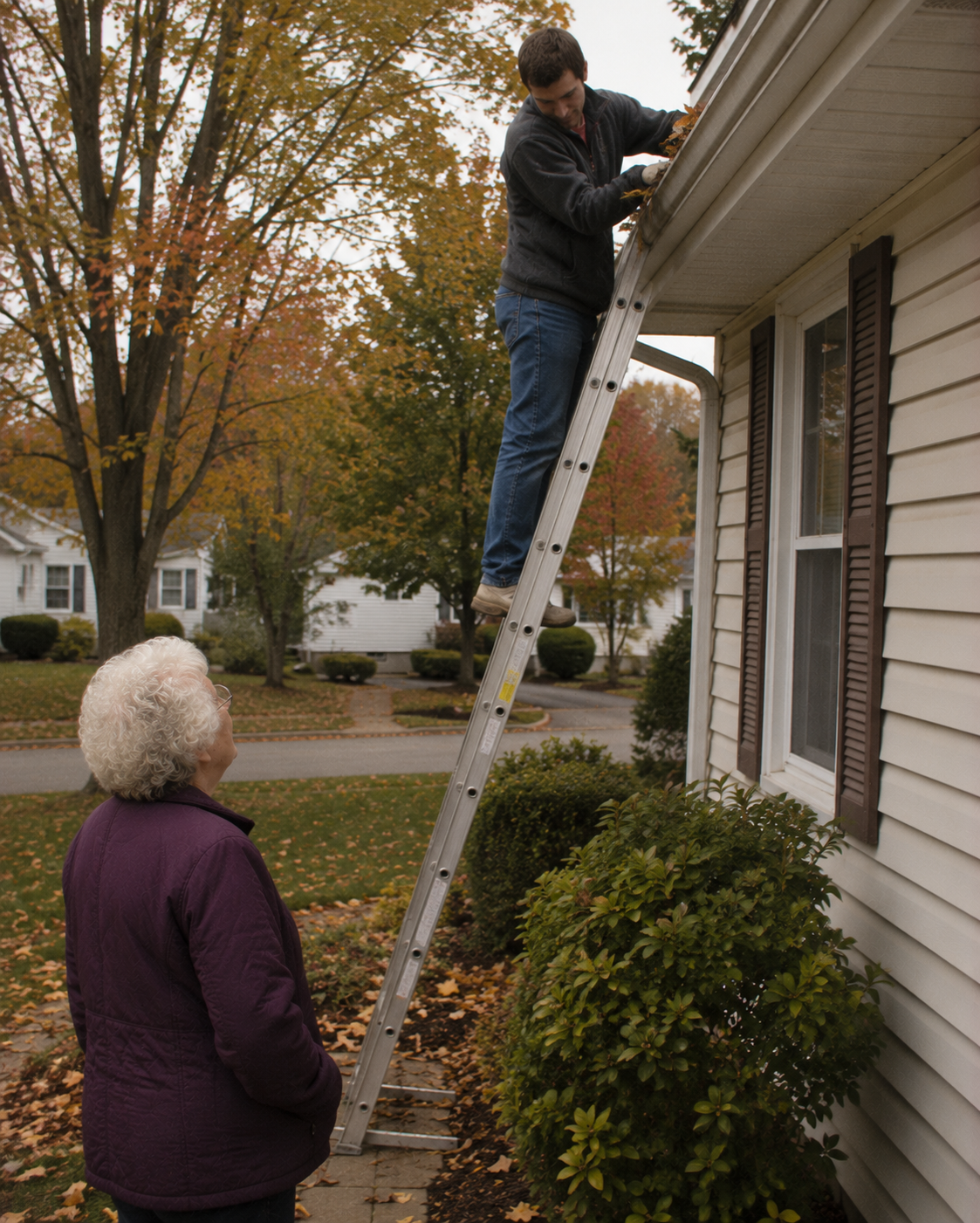
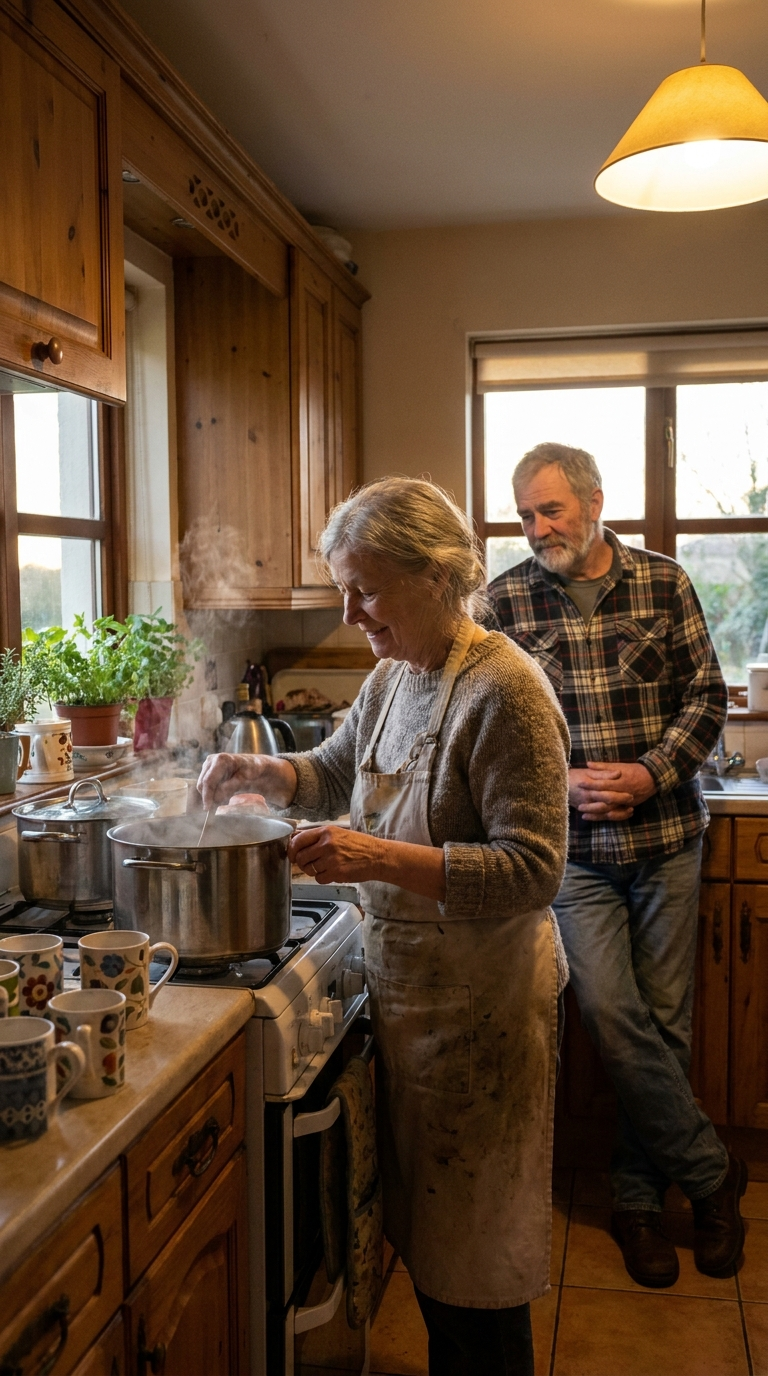
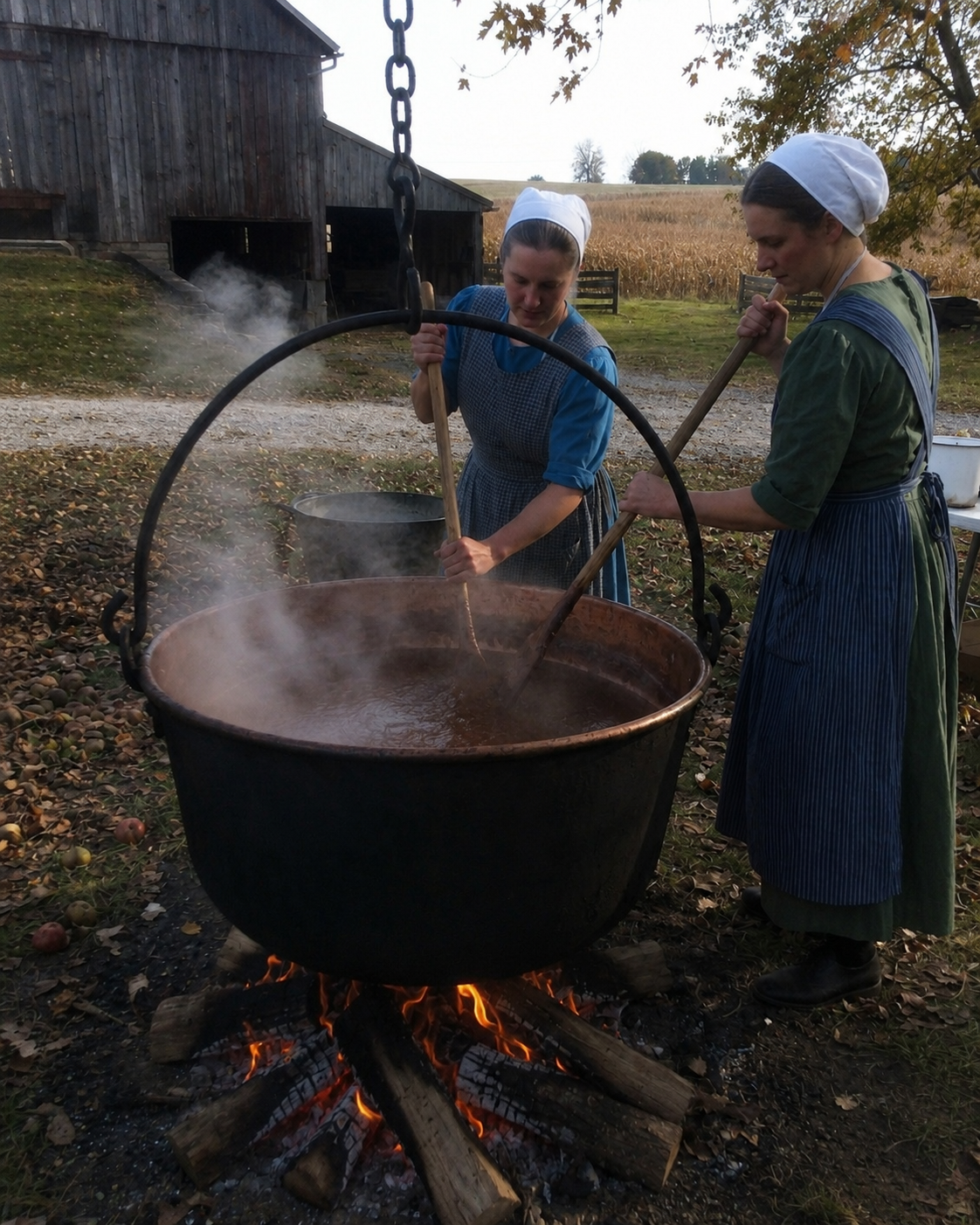
This is the letter about what he said. My name is Maureen. People have called me Reen since I was a girl. I am sixty-one. I live just north of Indianapolis with my husband, Doug. Doug is sixty-four. He was a regional sales manager for a building supply company for thirty-eight years. He retired three years ago. We have one son and one daughter. Our daughter is in Nashville with two small children. Our son is named Nathan. He is twenty-eight. Last June, in Daviess County, Indiana, he married an Amish woman named Anna Graber. I retired five years ago after twenty-six years as an insurance claims adjuster at a small office two miles from our house. We were, on paper, finally at the years a person works for. I want to tell you, before I tell you about the wedding, about the gap I had been quietly living in for the two years since Doug retired. It was not a medical gap. Doug's annual physical was clean. His doctor — Dr. Marshall, a careful woman in her mid-fifties whom we have been seeing for ten years — was happy with his numbers. His bloodwork was in the ranges she liked. He was on no prescription medications. He took a multivitamin and a vitamin D and that was the entirety of his pill organizer. On paper, Doug was a sixty-four-year-old man in fine shape. The version I was living with was harder to put into words. It looked like this. It looked like the push mower in our garage, which Doug had used to cut our front lawn every Saturday morning for twenty-nine years, sitting under a layer of dust for almost two years. He had switched to the riding mower. He had told me the push mower was bad for his shoulder. His shoulder was fine. It looked like the annual fishing trip to Canada with the three men Doug had worked the road with for thirty years, which he had skipped two summers in a row, because he had told them — and told me — that the drive was a lot. It was not a lot. It looked like the books on his nightstand. Doug used to read three books a month for forty years. He had not finished a book in nine months. The bookmark in the one on his nightstand had not moved since October. It looked like the mornings. Doug used to be at the kitchen counter at five-thirty in the morning with coffee for forty years. He had been sleeping until eight, then eight-thirty. He had been getting to the kitchen counter slowly, with one hand on the wall. He had been sitting at the kitchen table with his coffee at nine, where he had been sitting at his desk at six-fifteen six years ago. None of it was alarming. None of it would have raised a hand at his physical. I had been telling myself it was retirement. I had been telling myself it was sixty-four. I had been telling myself a great many things for twenty-four months. Nathan met Anna during his last year of graduate school. He was doing agricultural science at Purdue, focused on heritage corn varieties. His advisor had connected him with families in Daviess County who had been growing the same heirloom corn for a hundred and forty years. The Grabers were one of those families. Anna was the second daughter of the family. She was a year younger than Nathan. She had been raised on the farm, did the milking with her mother and sister at four in the morning, and could bake bread the way her grandmother had baked it. I would have told you, three years ago, that this was the last woman on earth my son was going to marry. I would have been wrong. He told us in February. He told us he was engaged. He told us he was going to be baptized into the church. He told us he was going to live without electricity, learn to keep the farm Anna's family had been farming for six generations, and become someone he had not been raised to be. Doug sat at the kitchen table and didn't speak for a long time. I watched him hold his coffee cup with both hands wrapped around it. He had been holding it that way for almost a year. Not for the warmth. Because one hand alone had become more effort than holding a coffee cup should have been. He looked at Nathan and said: if she is good to you, son, your mother and I will love her. Then he stood up and walked out to the back porch and sat by himself for almost an hour. I let him have that hour. We drove to Daviess County in March. The first visit. Doug was quiet most of the four-hour drive. He kept his hands on the wheel. He didn't talk much. He doesn't talk much when he is working something out. The farm was beautiful. I want to say that first. A white farmhouse with a wraparound porch. A red barn that looked like it had been there since before the Civil War and would be there for another hundred and fifty years. Fields beyond the barn, plowed in straight lines, the soil so dark it looked like it would never give up its water. Anna met us at the end of the lane. Mose, Anna's father, came out a moment later, followed by Edna, Anna's mother. Mose was sixty. He was wide-shouldered, sun-tanned, quiet. He had the forearms of a man who had been pitching hay since he was twelve. Mose is four years younger than Doug. Edna was fifty-eight. She is three years younger than me. She took my two hands in her two hands and she said: your son is a gift. We have begun to love him. I cried a little. She let me. Then Jacob came out of the barn. Jacob is Anna's grandfather. He is eighty-three years old. He walked across the yard toward us, and I want to tell you exactly how he walked, because it matters for what comes later. He didn't shuffle. He didn't reach for anything to steady himself. He didn't pause halfway across the yard. He walked the way a man walks when his body is still answering questions his mind is asking it. Straight back. Steady stride. A wooden mallet in his right hand, because he had been pegging a joint in the barn when we drove up. He was eighty-three. It was ten in the morning on a Saturday. He was building something. He came up to us and shook Doug's hand. His grip was firm. Doug registered it silently. We sat on the porch for almost three hours. Edna brought coffee and a fresh pan of cornbread. We talked the way people talk who are trying, on both sides, to find each other. I learned that Mose had been working the land since he was thirteen. I learned that Edna had baked the family's bread three times a week for thirty-eight years. I learned that Jacob had built almost everything we could see from the porch — the porch itself, the chairs, the barn, the small workshop next to the barn, and the smokehouse beyond it. I watched Jacob while he ate his cornbread. Eighty-three years old. He held his fork the way a man holds his fork when he has been holding a fork for seventy-six years. Without thinking about it. Without a single small adjustment. I looked at Doug. He was holding his coffee cup with both hands. He had been holding it that way for over a year. I had been pretending not to notice for over a year. The wedding was in June. Three months after the engagement was settled. Three months that felt like six. Amish weddings are not what you might think. They are long. They are in the home or barn. There is no music. There are no flowers in the way we think of flowers. There is no white dress. The beauty is in the simplicity. Anna wore a dark blue dress that Edna had sewn for her. Nathan stood across from her in a black coat and white shirt. They did not exchange rings. They made promises. I cried. Not because I was sad. Because my son had chosen a life I had not understood and I could see, standing in that barn, that he was where he was supposed to be. The reception was in the farmhouse. Long tables. Food cooked by the women of the community. Roast chicken. Mashed potatoes. Creamed celery. Fresh bread. More pies than I had seen in one room in my life. No alcohol. No music. Just people eating and talking and laughing in a house that smelled like food and wood and kerosene lamps. The toasts came after dinner. In Amish weddings, the toasts are informal. People stand up and speak when they feel moved to. Mose spoke first. Then Edna. Then my sister, who had driven up with us, kept hers short and warm. Then Doug stood up. Doug is not a public speaker. He has not given a speech in our forty years together that was longer than three sentences. But he stood at the head of the table and he spoke about Nathan. About the morning Nathan was born. About teaching him how to throw a baseball. About watching him graduate from college and knowing, the way fathers know, that his son was going to go somewhere he could not follow. His voice cracked twice. He held his water glass with both hands because one hand alone would have shaken too much to hold it. He finished. People clapped. He sat down. He reached for my hand under the table. His grip was lighter than it used to be. I squeezed back harder to make up the difference. Then Jacob stood up. The room quieted the way a room quiets for a man who does not speak often. You could hear the kerosene lamps hissing on the walls. He looked at Nathan first. He smiled at him. Then he looked at our side of the table. At me. At Doug. At my sister. He looked at us the way you look at people you have been thinking about for a long time before you decide what you want to say. He said: I want to welcome Nathan's family into ours. You raised a son who chose us. That is a serious thing. It means he saw something here he was willing to give up his world for. He paused. He took a breath. Then he said the sentence that has been with me every day since. There is no such thing as old, in my opinion. There is only used and unused. A used body keeps. An unused body forgets. He didn't say anything else. He just nodded once, and he sat back down. People raised their glasses. The room slowly came back to itself. But I sat there with my own glass in my hand and I could not move. Jacob had not said anything dramatic. He had not pointed at anyone. He had not named anything. He had simply looked at my husband — sixty-four years old, holding a water glass with both hands at our son's wedding — and he had said, in a voice gentle enough to be a blessing, that the body that is used is the body that keeps. I had been watching my husband become an unused body for two years. I had not let myself say so. We drove home the next morning. Doug was quiet for the first hour. Then he said: the old man knows something. He does. Doug didn't answer that. He looked out the passenger window. His hands were in his lap. They were still. I want to tell you what I had been refusing to see. I am going to tell it the way I told it to myself in our kitchen the morning after we got home. The push mower. The push mower had been under a tarp in the garage for almost two years. Doug had been telling me his shoulder bothered him. His shoulder did not bother him. He had stopped using the push mower because the push mower was a question his body had stopped answering. The fishing trip. Doug had skipped two summers of the Canada trip with the men he had known on the road for thirty years. He had been telling all of us that the drive was a lot. The drive was not a lot. He had been telling all of us a great many things that were not true. The books. Doug had been a three-books-a-month man for forty years. The bookmark in the book on his nightstand had not moved since October. I had been pretending not to look at it for eight months. The mornings. Doug had been a five-thirty-a.m.-coffee man for forty years. He had not seen five-thirty in almost a year. I had been getting up at five-thirty and making the coffee and reading the paper alone in the kitchen, and not telling anyone that the man I had been married to for forty years had been sleeping above me, in the quiet, until eight. I had been calling all of it retirement. I had been calling all of it sixty-four. Mose is sixty. Mose was pitching hay the morning of the wedding. Jacob is eighty-three. Jacob was pegging a joint in the barn when we pulled into the drive. That is not what sixty-four looks like. That is what sixty-four can look like. Something else was in place for those men that was not in place for Doug. I did not know what it was the morning after the wedding. But I knew it existed. Because I had spent three days watching it. I carried it for three weeks. I didn't say anything to Doug. I didn't say anything to my sister. I didn't say anything to anyone. I watched Doug sleep until eight. I watched the push mower under its tarp. I watched the book on the nightstand with the unmoved bookmark. I watched the man I had been married to for forty years move through our house carefully, like a man who had stopped asking his body for anything. Then Nathan called. Mom, can I drive up on Saturday? I have something I have been thinking about since the wedding. Nothing serious. Just something I would like to bring you and Dad. He drove up on a Saturday. I made coffee. He sat at our kitchen table. He set a small bottle in front of me. Mom, he said. I am not a doctor. I am not pretending to be one. Nothing I am about to say is medical advice. I am your son, and I have been doing field research, and I have come across something I think might be worth talking to Dad's doctor about. Go ahead, sweetheart. He took a breath. My research at the Graber farm wasn't really about hearts. It wasn't really about energy either, even though that is what I keep noticing. It was about how rural communities live in their bodies. What I noticed, after enough visits, was that the men in Anna's family have certain things in common that the rest of us mostly do not have anymore. Some of it is obvious. Hard physical work. Food they grow themselves. They don't sit for twelve hours a day. He paused. But the part of my research that surprised me was the food itself. They eat a lot of root vegetables. They eat a lot of beets specifically. The deep red color in the beet is a class of compounds called betalains. They are one of the more potent antioxidants in the food supply. They support the body's natural antioxidant balance. And the cardiovascular research community talks about them in the context of supporting healthy circulation, cardiovascular wellness, and the body's own cellular energy. He slid a folder across the table. Beetroot has been studied for a long time, by careful people. The research is not a fringe area. It is decades of patient work in the structure-function corner of the conversation. I nodded. The brand I came across is called Rosabella. The betalain pigment is heat-sensitive — that is the chemistry of the molecule — and the way the beetroot is processed matters for what makes it from the field into the capsule. Rosabella cold-presses the root at low temperatures, because they want as much of the compound as possible to survive the processing. The capsules are a deep crimson. That is the betalain being intact. He looked at me carefully. Mom, I am not telling you this is going to fix Dad. I am not telling you it is a substitute for anything his doctor recommends. I am telling you Dad has been quietly slowing down for two years. You have been watching it. I have been watching it on the holidays. Jacob noticed it at the wedding. Maybe it is worth adding one small thing to his morning routine, with his doctor's blessing, alongside everything else. Talk to Dr. Marshall first. Make sure there is nothing that would interact. If she says it is a sensible thing to add, give it a few weeks. If it does nothing, you have lost a few weeks. If it helps, it might be one small additional thing that supports what Dad's body is already trying to do. I picked up the bottle. I held it in my hand. Does Anna know you are here? She does. She is the one who told me to bring it. That afternoon I called Dr. Marshall's office. I spoke to her nurse first. I told her what Nathan had brought, what brand, what the dosage was, what Doug was currently taking. Doug is on no prescription medications. He takes a multivitamin and a vitamin D. The nurse listened. She told me she would talk to Dr. Marshall and call me back. She called back inside an hour. She told me Dr. Marshall had said it was a sensible thing to add — antioxidant support, no concerns at the dosage on the label, nothing to interact with what Doug was taking — and to let her know how Doug was doing at his next appointment. I want to say something now, plainly, to every reader of this letter. If your husband — or your wife, or you — is on any prescription medication, especially anything cardiovascular, please make the call before you add anything new. Beetroot supplements and cardiovascular medications can interact. The interaction is not necessarily anything. But it depends on the specific medication, the dose, what else is being taken, and what the prescribing physician would want. That is the kind of question your pharmacist or your doctor's office can answer in two minutes. It is not a question to answer on your own. I called Dr. Marshall's office and Doug was on nothing. I would have called twice as fast if he had been on a cardiovascular medication. So should you. I told Doug that night. I told him about the wedding. About Jacob. About Nathan driving up with the folder. About the bottle, and the call to Dr. Marshall. I told him I wanted him to try it for me. He looked at the bottle. He looked at me. We have been married forty years. He knows when I am asking something that matters. Dr. Marshall said it was alright? She said it was a sensible thing to add. He nodded once. Alright. For you. In the morning I set two capsules on a saucer next to his coffee. He took them with his first sip. I did not say anything more about it. He started on a Monday. The first two weeks he felt nothing in particular. I had read enough alongside what Nathan had said to know that bodies are different. Some people notice something within the first week or two. Some take much longer. Some don't notice much at all. I was prepared to land in any of those camps. I was prepared to be honest with myself about the result. What I noticed, I noticed slowly. The first thing I noticed, around week six, was the push mower. It was a Saturday morning in late July. I was at the kitchen window with my coffee. The big garage door was open. The tarp was off the push mower. Doug had pulled the cord on the second try. He mowed the front lawn with that push mower for almost an hour. He came inside with sweat on the back of his shirt and asked me what I wanted for lunch. I made him a sandwich. I did not say anything about the push mower. I did not want to make a thing of it. I had read enough not to make a thing of one observation. The second thing I noticed, around month three, was the phone call. Doug came into the kitchen on a Wednesday evening with his cell phone in his hand. He said: I just talked to Bill. The boys want me back at the cabin in August. I told them I'd come. He had not talked to Bill in two summers. He had not been to the Canada cabin in two summers. He went to the cabin in August. He came home on a Sunday afternoon with two boxes of frozen walleye and four photographs of himself and three men he had known on the road for thirty years. He was smiling in all four photographs. I had not seen him smile like that in over a year. The third thing I noticed was the kitchen. I woke up on a Tuesday morning in September at six-twenty. I came down the stairs. The kitchen light was on. The coffee was made. The newspaper was open on the table. Doug was at the counter, looking out the window at the bird feeder, with his cup of coffee in his hand. He turned when I came in. He said: the cardinals are early this year. He had been a five-thirty-a.m.-coffee man for forty years. He had not been one for almost a year. He was one again. I poured myself a cup and I sat down at the table and I did not say anything about it. I did not want to make a thing of it. I made a quiet note and I kept paying attention. I want to be careful with what I am telling you. I am writing this to people I do not know. I am not telling you Rosabella did any of those things on its own. Doug had been walking more after the wedding. I had been quietly leaving his shoes by the back door. He had started, on his own, the week after we got home from Daviess County, to do small things — take out the trash, sweep the porch, water the back garden — that he had not done in over a year. He had been moving more deliberately for several weeks before the push mower came out. Something had unlocked in him the night of the wedding that had nothing to do with a capsule on a saucer. There were several things changing at once, the way there are when a person finally decides to start asking the body again. All I am telling you is that he added one small thing to a long list of small things he was newly doing. He kept everything else exactly the same. And a stretch of months followed that was qualitatively different from the twenty-four months that had preceded it. That is the honest version. I would not give you a cleaner one. Doug went to Dr. Marshall for his annual physical about eight months after he started. Bloodwork the week before. She studied the results. She looked at Doug. She said: whatever you are doing, your numbers are in better shape than they have been since you retired. Keep doing it. Doug told her about the walking. About the push mower. About the trip to the cabin. About the beetroot. About starting to ask his body for things again. She nodded. She said: that is a sensible thing to add. There is good research on antioxidant support. Keep doing what you are doing, and come back at the usual time. Doug called me from the parking lot. He didn't say anything at first. Then he said: Reen. I think I am back. I was standing in our kitchen. I sat down at the table. I cried the way a woman cries when something she thought was leaving comes back to her instead. We drove to Daviess County the following month. Nathan met us at the end of the lane. He was wearing a black coat and a brimmed straw hat. He looked like he had been living in sunlight for four months. Which he had. Mose shook Doug's hand. Doug gripped his back. Really gripped it. Mose smiled. Your hands feel different. They do. Jacob was in the barn. Because Jacob is always in the barn. He was planing a board for a long cabinet door. He looked up when we walked in. He set the plane down. He walked over and took Doug's hand in both of his own. He held it for a long time. He did not shake it. He just held it. You came back. I came back. What changed? Doug told him. About the wedding. About the toast. About the three weeks afterward. About Nathan and the folder. About Dr. Marshall's office. About the months since. Jacob listened. He nodded slowly. Then he said: you started using the body again. That is the only thing. The capsule is a small thing. The using is the whole thing. Doug's eyes were wet. He did not try to hide it. Edna brought coffee out to the porch. I watched Doug hold his cup with one hand. Steady. No tremor. No compensation. Just a man holding a cup. Mose came in from the field a little later. Sixty years old. Four years younger than Doug. They sat next to each other on the porch and talked about hay equipment for almost an hour. Two men. Different worlds. Almost the same age. Both of them, that afternoon, present in their own bodies. I sat there and I finally saw, clearly, what Jacob had been gently pointing at at the wedding. Not as a judgment. As an observation from a man who had lived a long time and watched a lot of bodies. I am telling you all of this because I think you might be where I was the night of the wedding. Watching someone you love hold a glass with both hands. Watching him sleep until eight when he used to be at his desk at six. Watching the small things he used to do quietly stop being things he does. Watching his doctor look at his chart and tell you he is fine. If you have been calling it retirement, or sixty-four, or just aging, because that is what everyone calls it, maybe it is worth asking whether there is something missing in his day-to-day that used to be there. Not as a replacement for anything his doctor has recommended. Just as a question. A thing to add. A conversation to have at his next appointment. Here is how I think about Rosabella now, in the words I would actually use. It is something the body uses. The research community talks about it in the context of supporting healthy circulation, supporting cardiovascular wellness, and supporting the body's own cellular energy. In people whose numbers are already in the range their doctors want them in. It is not a fix for anything. It is not a substitute for a medication. It is not a treatment for tiredness, or for aging, or for the slow quiet decline a man can have in his sixties. It is one small thing you add to the long list of things he is already doing for himself, alongside everything else. Please call his pharmacist or his doctor's office before you add it. If he is on any blood pressure medication, cholesterol medication, or anything cardiovascular at all, this is non-negotiable. I called Dr. Marshall's office. I would not have added anything to a prescription without that call. Neither should you. The people who know his chart will tell you in two minutes whether the supplement is safe to add, given what he is already taking. I am a sixty-one-year-old retired insurance claims adjuster in Indiana. I am not the person to ask. His pharmacist or his doctor is. The company has a ninety-day satisfaction guarantee. If you are not satisfied — for any reason at all, including just changing your mind — they refund you. It is not tied to anything you have to prove. If you are not satisfied, you are not satisfied. That is the whole policy. The beets are grown on a small operation that harvests on its own schedule. There are stretches when they are in stock and stretches when they are not. I mention that not to push you — please do not let anybody push you into a health decision — but so that if you go to the site and they are out, you know why. That is all I have. Thank you for reading this far. I hope something here was useful to you. I hope, somewhere today, your own Jacob is in a barn planing a board, and that you find your own way to listen to what he is gently saying. — Maureen P.S. I want to come back to the cold-press for a second. The betalain pigment — the deep crimson, the part the research community keeps circling back to — is heat-sensitive. That is the chemistry of the molecule. Process beetroot the standard way, with heat, and you lose some of the compound to the heat. Rosabella chose the slow way. Cold-press. Low temperatures. More of the compound through to the capsule. It costs them money. It costs them time. They made the choice anyway. At sixty-one, I have come to pay attention to the small decisions companies make when no one is watching. Those decisions tell you everything. P.P.S. Two capsules. In the morning. With a glass of water. That is the entire protocol. No powder to mix. No afternoon dose to remember. No schedule taped to the inside of the cupboard. Doug keeps the bottle on the counter next to the coffee maker. He takes the capsules with his first sip. He makes the coffee now. That has been the rhythm of our morning for almost a year. We have earned a simple one. P.P.P.S. I am going to say it one more time, because I have to. Please. Call his pharmacist or his doctor's office before you add anything new to what he is already taking. Especially if he is on a blood pressure medication, a cholesterol medication, or anything cardiovascular. They have his whole picture in front of them. I have written you a letter. There is a difference, and the difference matters. The two minutes it takes to ask are the most important two minutes of your engagement with any supplement. P.P.P.P.S. The guarantee, again, in case you skimmed. Ninety days. Any reason at all. You do not have to prove a single thing — not to them, not about his numbers, not about how he feels. If he tried it and you are not satisfied, you are not satisfied. They send the money back. That is the whole policy. A small-company policy. The kind of thing companies used to do when companies still answered the phone. P.P.P.P.P.S. The sentence Jacob said at my son's wedding — there is no such thing as old, in my opinion; there is only used and unused — has been with me every day for almost a year. He did not point at anyone. He did not name anything. He looked at a roomful of people, eighty-three years old, and said it once, gently, like a blessing. I had been thinking some version of that sentence about my husband for two years before Jacob said it. I had not let myself say it. I do not know what your Jacob is. I do not know whether you have one. Maybe he is a man at a wedding. Maybe he is a man at the diner you stop at on the way home. Maybe he is a man in your husband's own family. Maybe he is a man you have not met yet. I hope, if you have one, that you let yourself hear what he is saying. I hope you go home and read carefully. I hope you make the call before you add anything. I hope, in a year from now, you are at your kitchen window on a Saturday morning, watching the man you love pull the cord on a push mower that has been under a tarp for too long. I hope that for you. That is the whole reason I wrote this. — M. https://track.tryrosabella.com/4a8944d3-6841-4daa-bcd5-c063901eeae6 DISCLAIMER Individual experiences vary. These statements have not been evaluated by the FDA. This product is not intended to diagnose, treat, cure, or prevent any disease.
Support stamina and heart health every day
"Best customer support ever. My issue was resolved quickly and professionally. I so love how the beetroot capsules are helping manage my blood pressure."
LEARN MORELike this ad? Make it yours.
Crush rebuilds this exact creative around your product — your brand, your colors, your offer — in about a minute.