
Active· since Jun 24, 2026
- 82
- days running
- 0
- relaunches
Ad copy
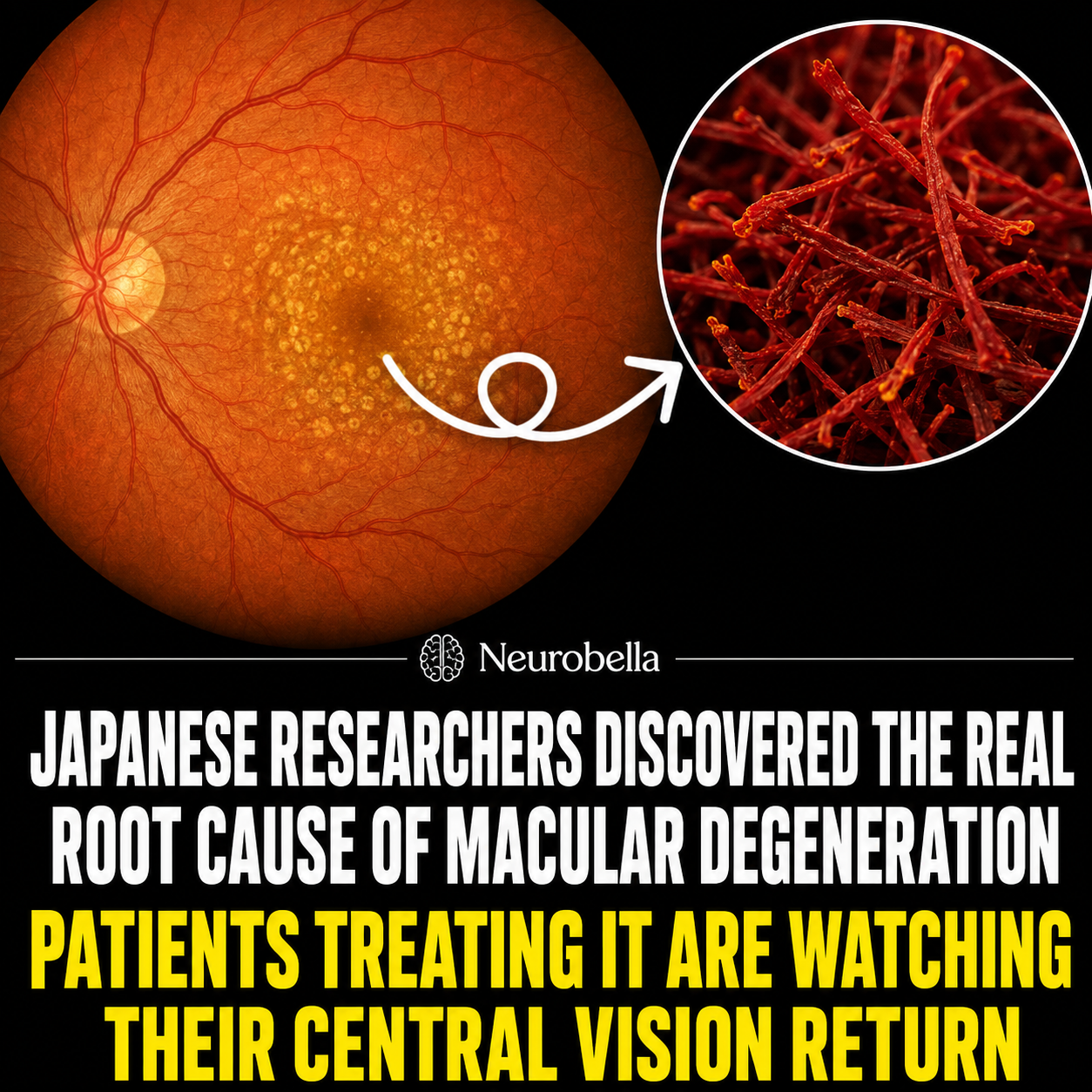
Japanese Researchers Discovered The REAL Root Cause Of Macular Degeneration. Patients Who Treated It Are Noticing Their Central Vision Returning. For years, patients with macular degeneration were told the same thing: There's no cure. Manage it. Come back for checkup in six months. It's part of aging. Part of genetics. Nothing you can do to stop the progression. And for years, millions of people across the world accepted that. They checked their Amsler grid every morning. Took their AREDS2 every day. Watched the dark spot in the center of their vision slowly grow larger. They truly believed there was nothing else they could do. Until a team of researchers from Keio University School of Medicine in Tokyo started researching deeper into the ACTUAL root cause. Not aging. Not genetics. Not risk factors that couldn't be changed. Their lead researcher, Dr. Hiroshi Tanaka published the findings in the Journal of Ophthalmological Research in 2023. His conclusion stopped the entire team cold: "We discovered that macular degeneration isn't primarily a disease of aging or genetics." "It's the result of chronic macular starvation — a progressive depletion of the protective carotenoid pigment your macula needs to shield itself from damage that goes completely unaddressed." Here's what that means in plain language: Inside your macula, there are carotenoid pigments. When you're young, they're thick and dense. Fully protective. Absorbing blue light and UV radiation before they can reach the delicate photoreceptors underneath. Think of them like a shield. You don't notice the shield thinning while it's happening. It wears down silently. Losing density year after year. When you're in your 20s, your body naturally replenishes that pigment layer. Before any damage can get through. But somewhere in your 50s, that replenishment slows to a crawl. The pigment keeps depleting. And for macular degeneration patients, it thins to the point where photoreceptors start dying from unfiltered damage — the part of your eye responsible for everything you see directly in front of you. That's macular degeneration. Not aging. Not genetics. A protective shield that was never rebuilt. So the Keio University team started searching for something that could do what the body no longer could. Rebuild the macular pigment. They went through every eye supplement in the research. PreserVision. Ocuvite. MacuHealth. ICaps. Every AREDS formula on the market. All of them containing some form of macular carotenoids. But they all had the same problem. One or two ingredients. Sub-clinical doses. Missing the most critical nutrient entirely. Like trying to rebuild a wall with half the bricks and a quarter of the mortar. You can stack what you have, but the wall never holds. The damage comes right through. Partial formula. No lasting protection. But only one approach worked differently. A complete macular carotenoid complex. Unlike every other supplement, it didn't just provide one or two nutrients at reduced doses. It delivered all three macular carotenoids at the exact levels proven in clinical research. Becoming a complete shield. Rebuilding the macular pigment layer before the damage could reach the photoreceptors underneath. Every other supplement addressed one piece of the problem. This formula addressed all of it. That's why it was the only one that made sense. But here's where the team hit a wall. Most eye supplements already contained Lutein. So if Lutein was part of the answer… Why weren't their patients getting better? Why was the dark spot in the center of their vision still growing? Why were faces still getting harder to recognize? That's when one of the researchers found a study published in the American Journal of Clinical Nutrition that explained everything: "The macula requires three specific carotenoids working together — Lutein, Zeaxanthin, AND Meso-Zeaxanthin — at precise clinical doses to rebuild its protective pigment layer." "Most supplements only contain one or two at doses far below what the research actually used. The macular pigment cannot rebuild from incomplete nutrition." Incomplete. Underdosed. That was the problem. Not the nutrients themselves. But the formula. They looked at every supplement on the market. PreserVision. Ocuvite. ICaps. All incomplete. Every single one. The most trusted AMD supplements in the world. The ones ophthalmologists had been recommending for decades. The team searched everywhere for a complete formula at clinical doses. Nothing existed. So they decided to build one themselves. A formulation that delivered all three macular carotenoids plus twelve supporting nutrients at the exact doses used in clinical research. They called it the Complete Macular Defense™ protocol. But before they brought it to market, they wanted to test two hypotheses. One: Whether macular starvation was truly the root cause of macular degeneration the way their research suggested. Two: Whether a complete carotenoid complex at full clinical doses could actually rebuild the macular pigment that incomplete formulas couldn't. So they ran a clinical trial. 100 AMD patients. Different stages. Both wet and dry AMD. All given the same instructions: Two capsules every morning with breakfast. Week one. Some patients started noticing colors looked slightly more vivid than before. Most of them didn't trust it. They'd been told for years there was nothing that could change. They assumed it was placebo. The researchers told them to keep going. Week three. Nearly 50% of patients reported being able to recognize faces across the room again. The faces of their spouses. Their children. Their grandchildren. The dark spot was still there… but it was lifting. Margaret Davis, 72, dry AMD for four years, said: "I can see my grandchildren's faces again. They grow up so fast. I was terrified I was going to miss it. I needed to see them grow." Week five. 70% of patients could read text again without a magnifying glass or zooming in on their phone. Robert Harrison, 69, intermediate AMD, said: "I used to read every single day. Books. Newspapers. Anything I could get my hands on. Then AMD took that from me. I thought it was gone forever. Last Tuesday I picked up a book and read twelve pages." Week eight. They were back behind the wheel again. No longer waiting for their children to drive them. No longer planning their entire lives around who could take them where. Dorothy Patterson, 71, said: "I finally got my independence back. For five years, my kids had to bring me everywhere. Every appointment. Every grocery run. Every family event. Last week I drove myself to my granddaughter's birthday party. I walked in on my own terms." The researchers brought all 100 patients back in for their final scans. OCT imaging. Macular pigment density measurements. Full retinal analysis. What they saw confirmed both hypotheses. 92 out of 100 patients showed measurable improvement in macular pigment density. Numbers the team had never seen produced by incomplete AREDS2 formulas in any previous study. Their conclusion: "Macular degeneration is caused by chronic pigment depletion leaving the macula exposed. A complete carotenoid complex at clinical doses rebuilds it. Incomplete formulas don't." To bring what they'd discovered to patients around the world, the Keio University team decided to partner with Visiovance — one of the world's leading eye health manufacturers with the production capability to bring the formulation to millions of patients. But before signing anything, the team had two non-negotiable conditions. Every single batch had to be independently third party lab tested before it shipped. Verified pure and manufactured in an FDA-registered, GMP-certified facility. And every customer had to be protected by a 90 day money back guarantee. Every cent returned if they saw no improvement. Since launching, over 45,000 patients around the world have already tried it. And the pattern the Keio University team saw in their trial is showing up again and again. Dark spots lifting. Faces becoming recognizable. And people getting back behind the wheel for the first time in years. But here's what the researchers want every macular degeneration patient to understand: Every single day you wait, your macular pigment continues to deplete. The dark spot doesn't stay the same size while you decide. It grows. And the longer the starvation goes unaddressed, the more central vision is taken. Until one day the damage crosses the point of no return. Legal blindness. You still have a window. The researchers at Keio University didn't spend years finding this so it could sit in a journal. They found it so patients like you could finally stop losing ground. If you want to see what they discovered and try what 92 out of 100 trial patients responded to, the link is below 👇 https://visiovance.com/products/visiovance-15-in-1-advanced-eye-formula P.S. — Macular degeneration isn't just aging or genetics you have to accept. It's macular starvation depleting your protective pigment every single day. That's what the Keio University research confirmed. And the longer it goes untreated, the more central vision you lose.
Like this ad? Make it yours.
Crush rebuilds this exact creative around your product — your brand, your colors, your offer — in about a minute.